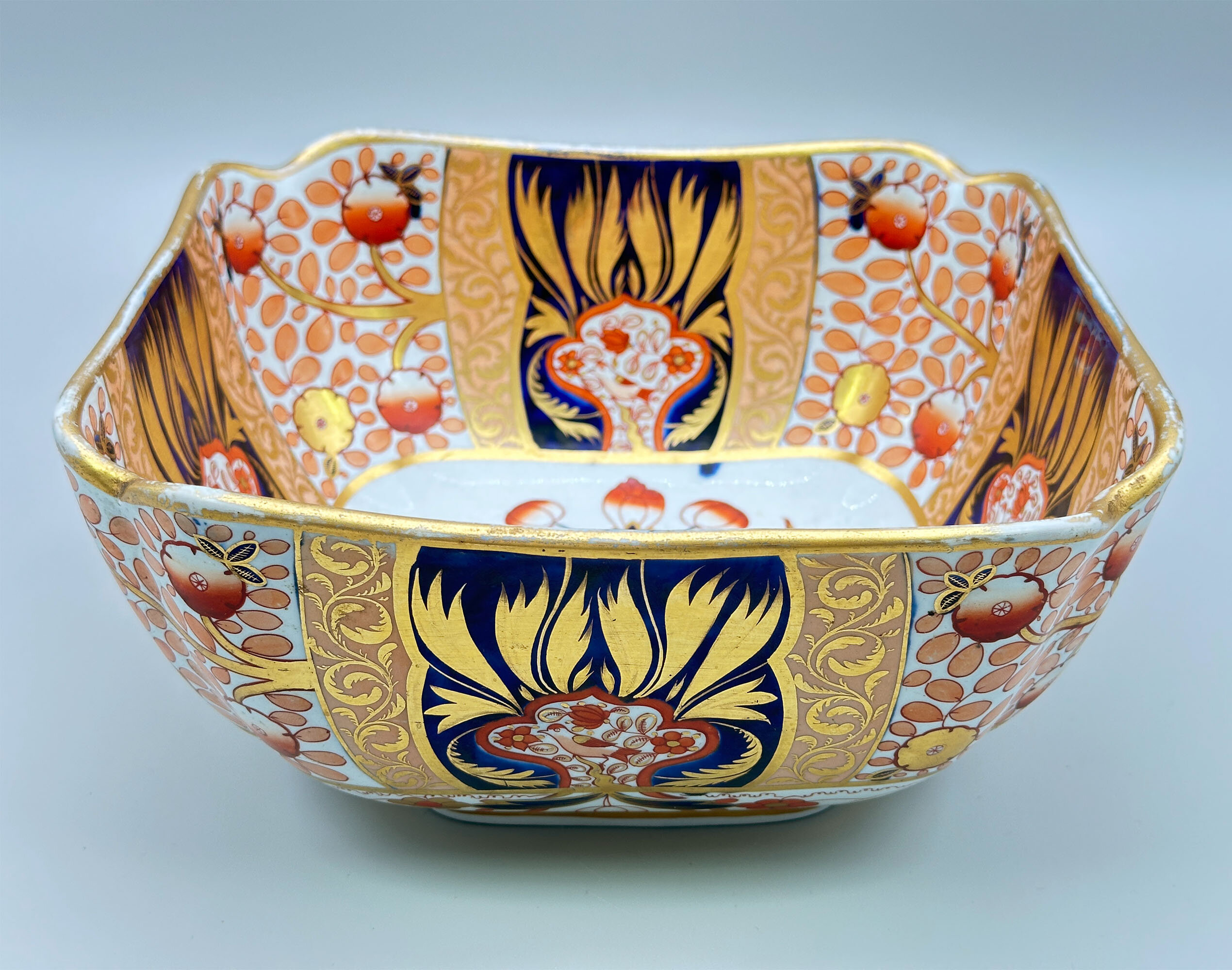
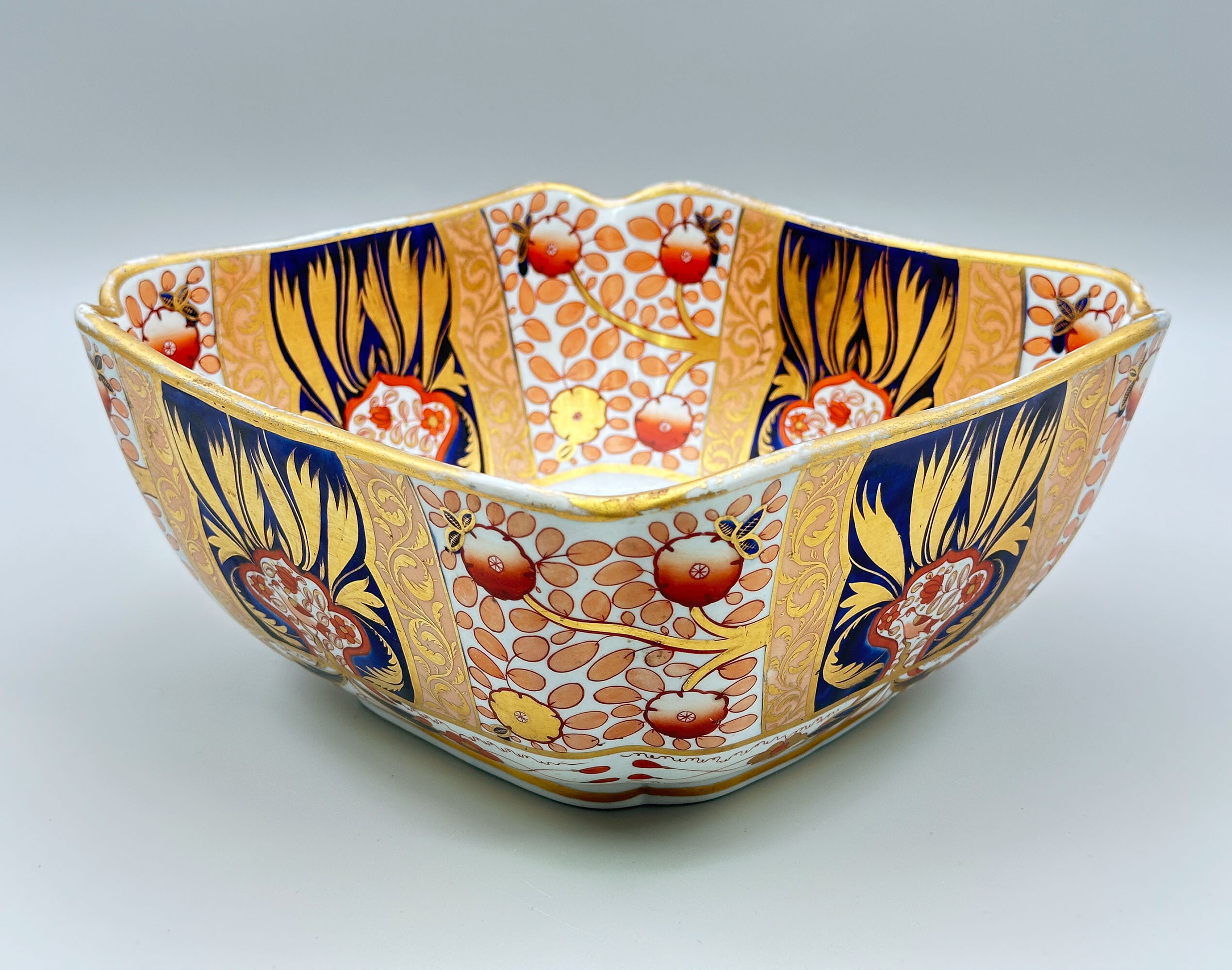
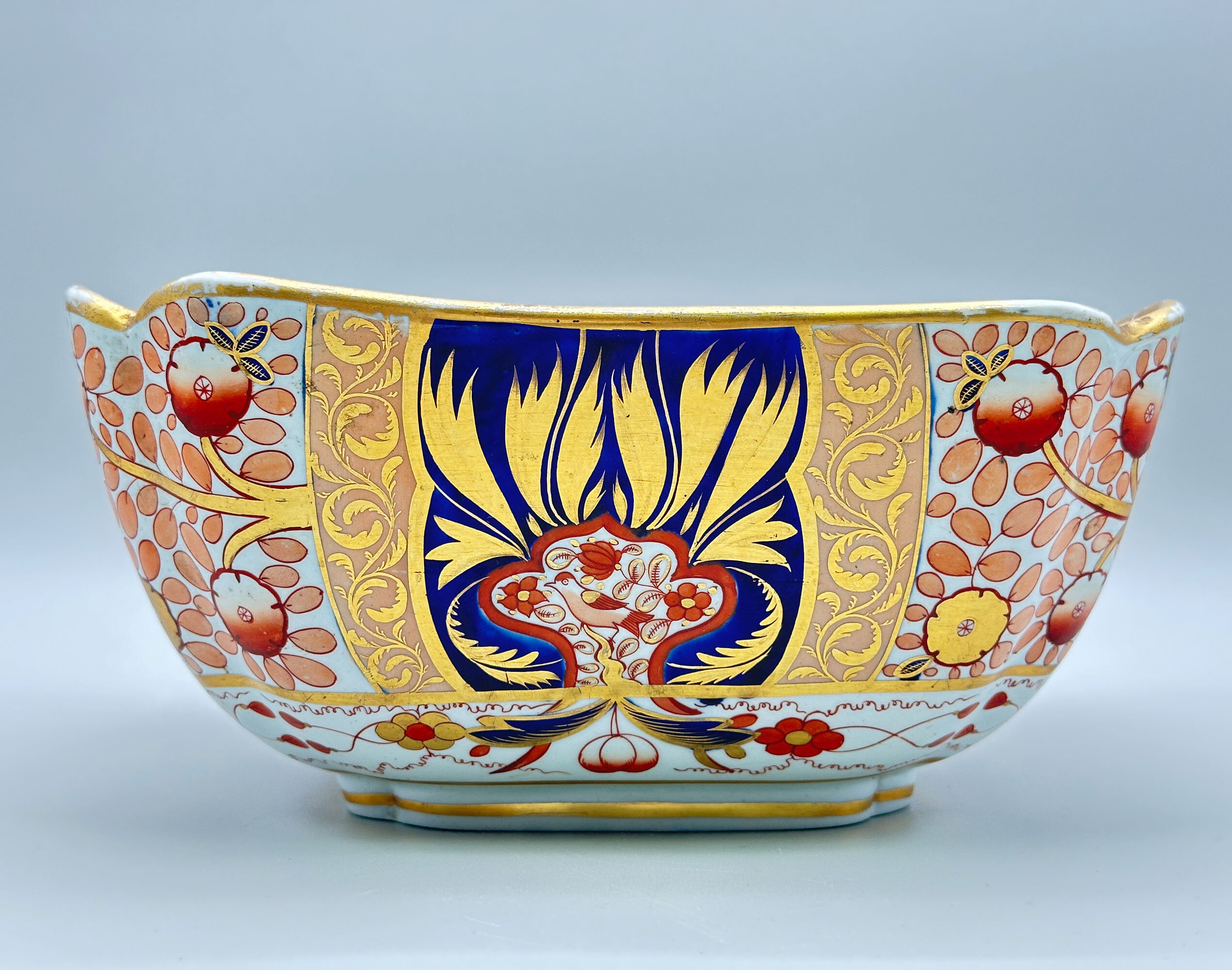
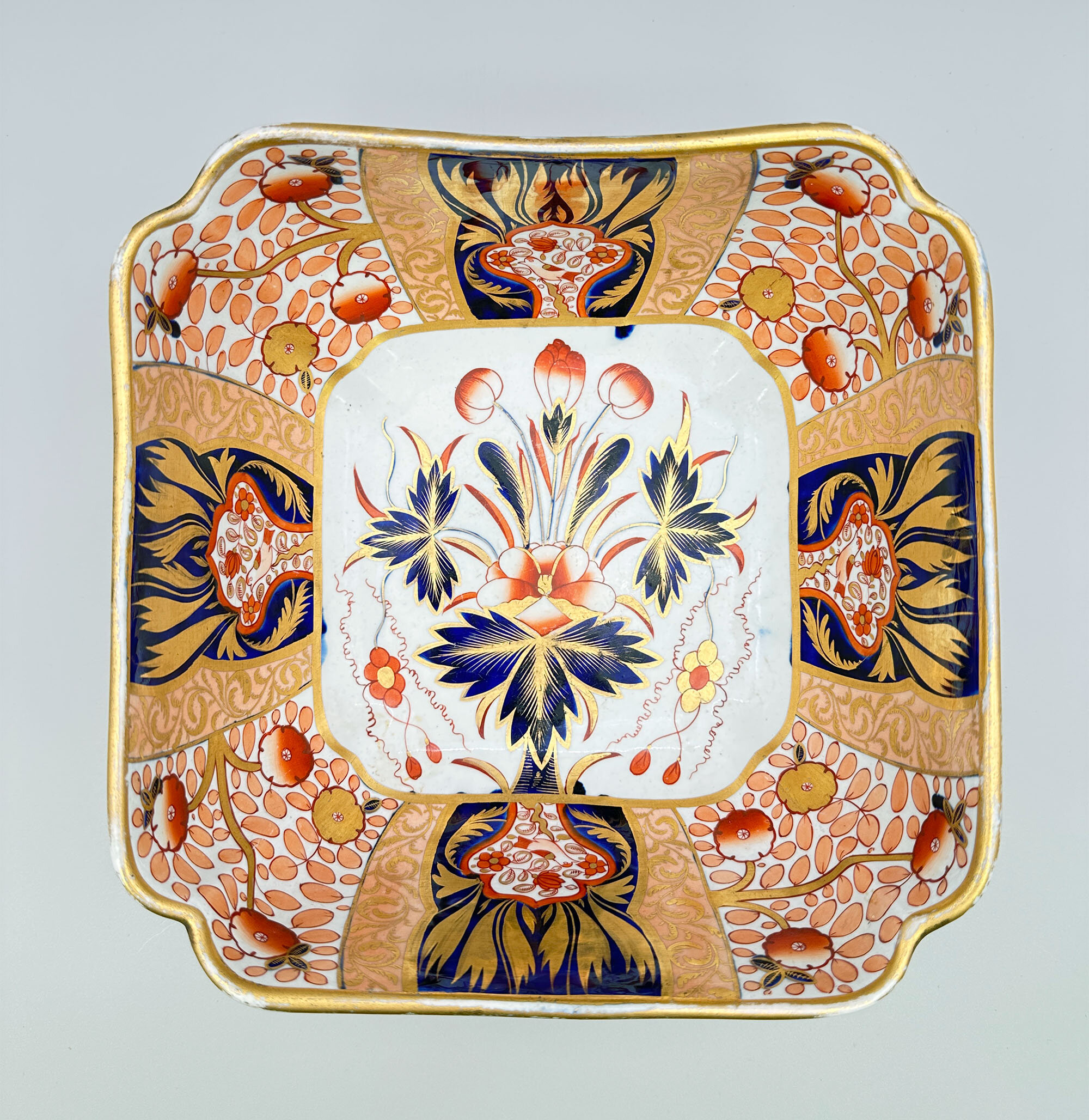
Spode Imari Salad Bowl, pattern no 1409, early C19th
| Starting Bid: | £100.00 |
| Bid Increment: | £10.00 |
| Next Min Bid: | £110.00 |
| Buyer’s Premium: | £24.00 |
| Total Amount: | £124.00 |
| Number of Bids: | 0 |
| Location: | United Kingdom |
| Highest Bidder: | |
| Auction Start: | 25/03/26 19:05:00 UTC |
| Auction Ending: | 09/04/26 20:00:00 UTC |
| Time Remaining: | 14d 22h 54m |


Spode Imari Salad Bowl, pattern no 1409, early C19th
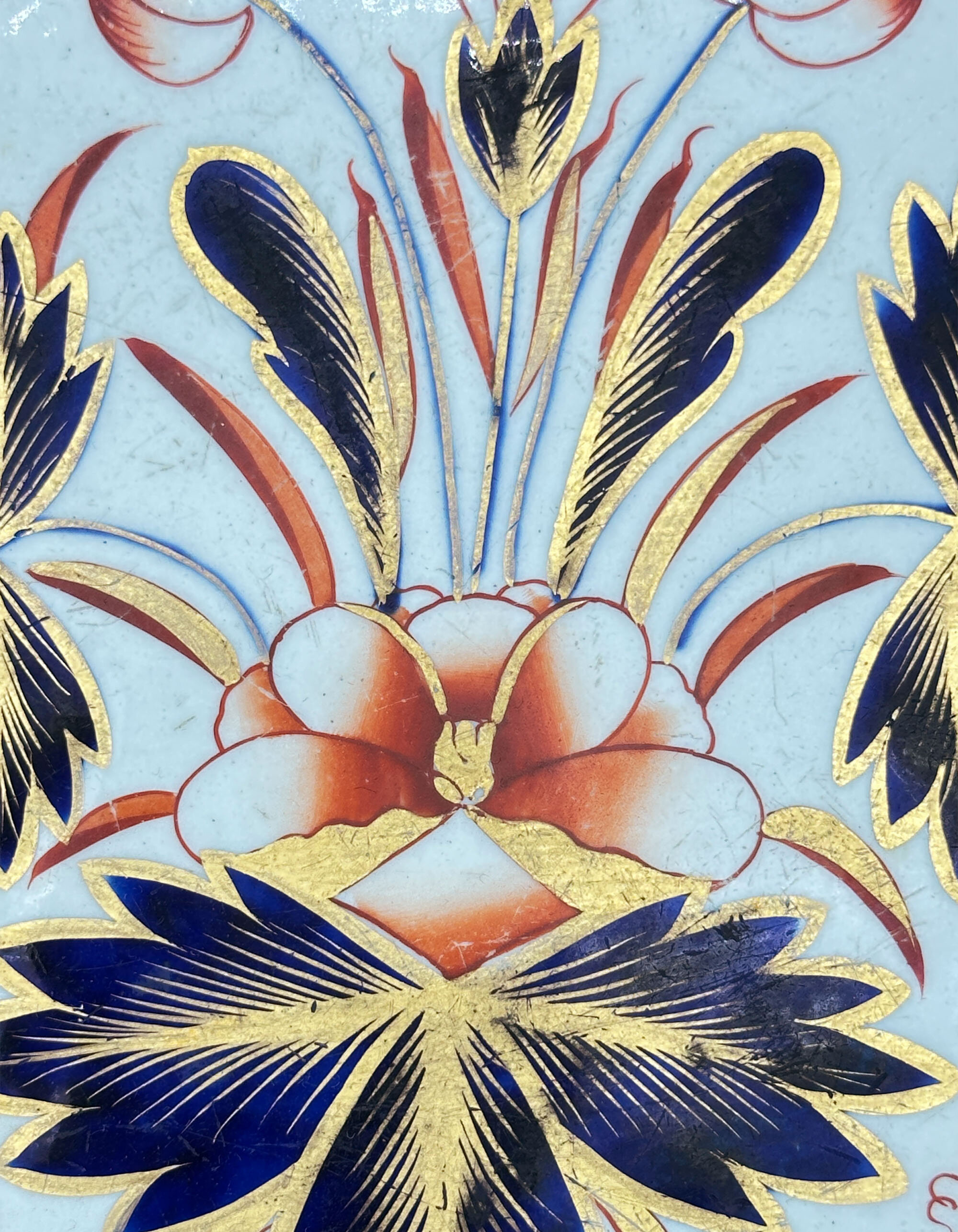
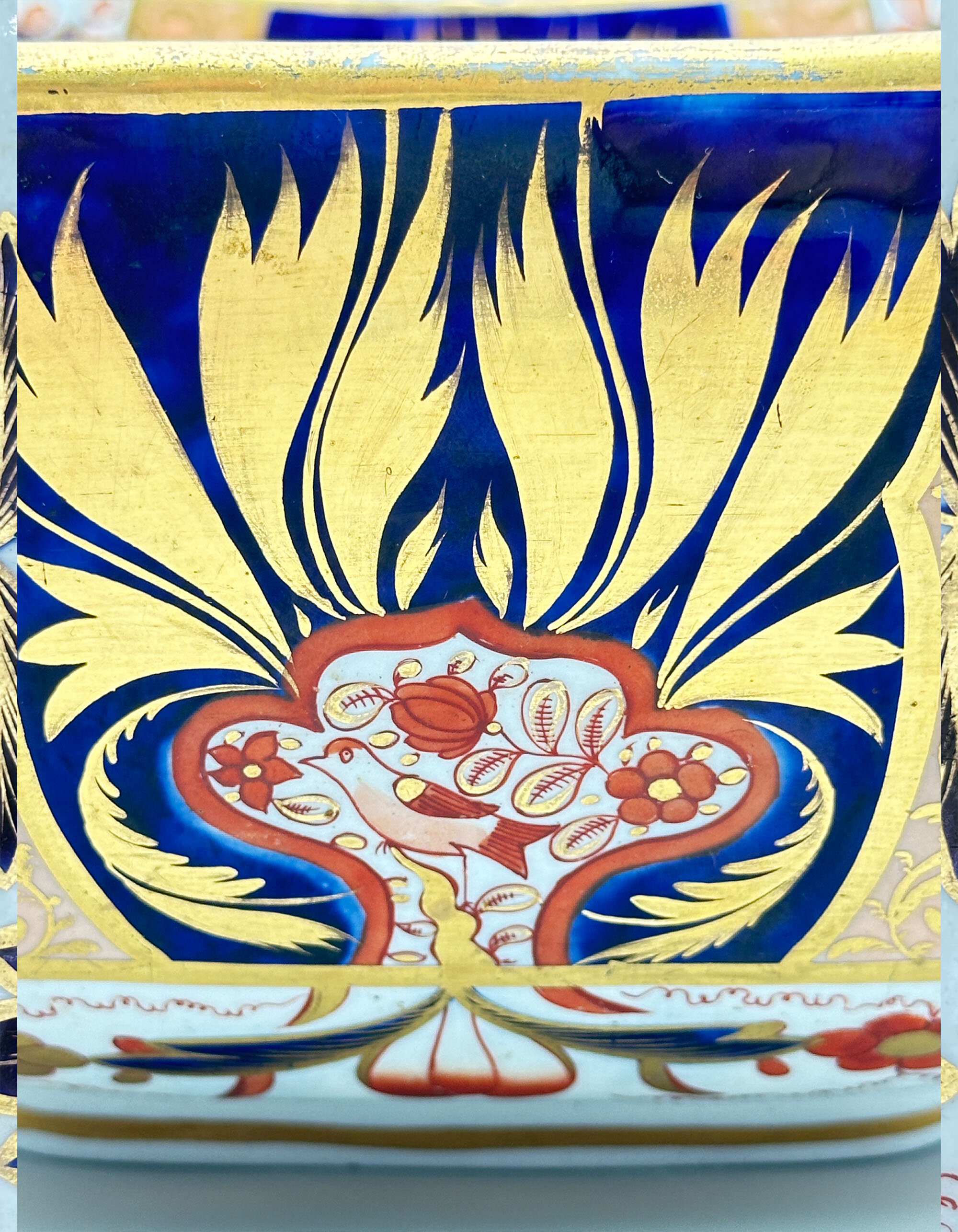
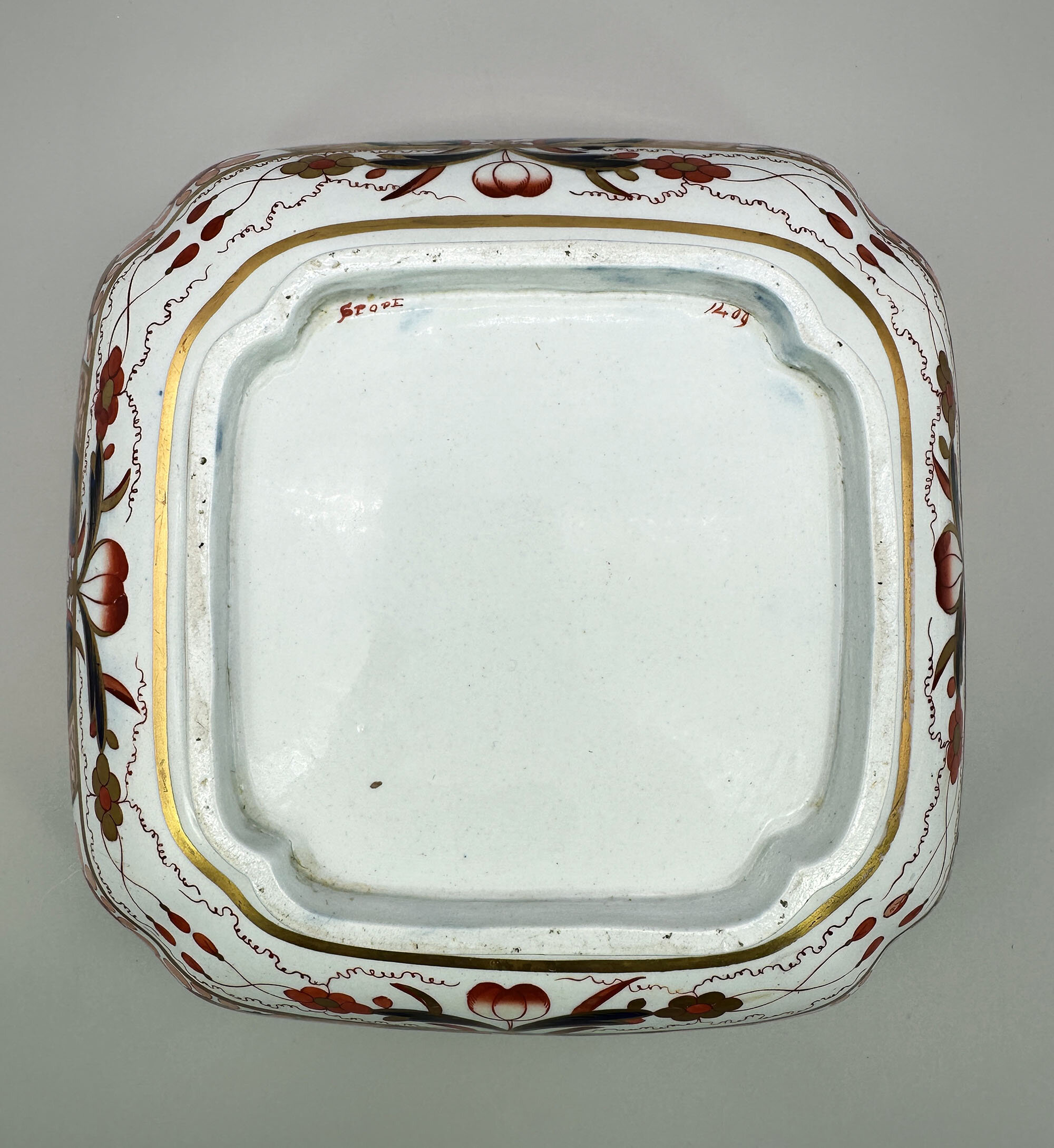
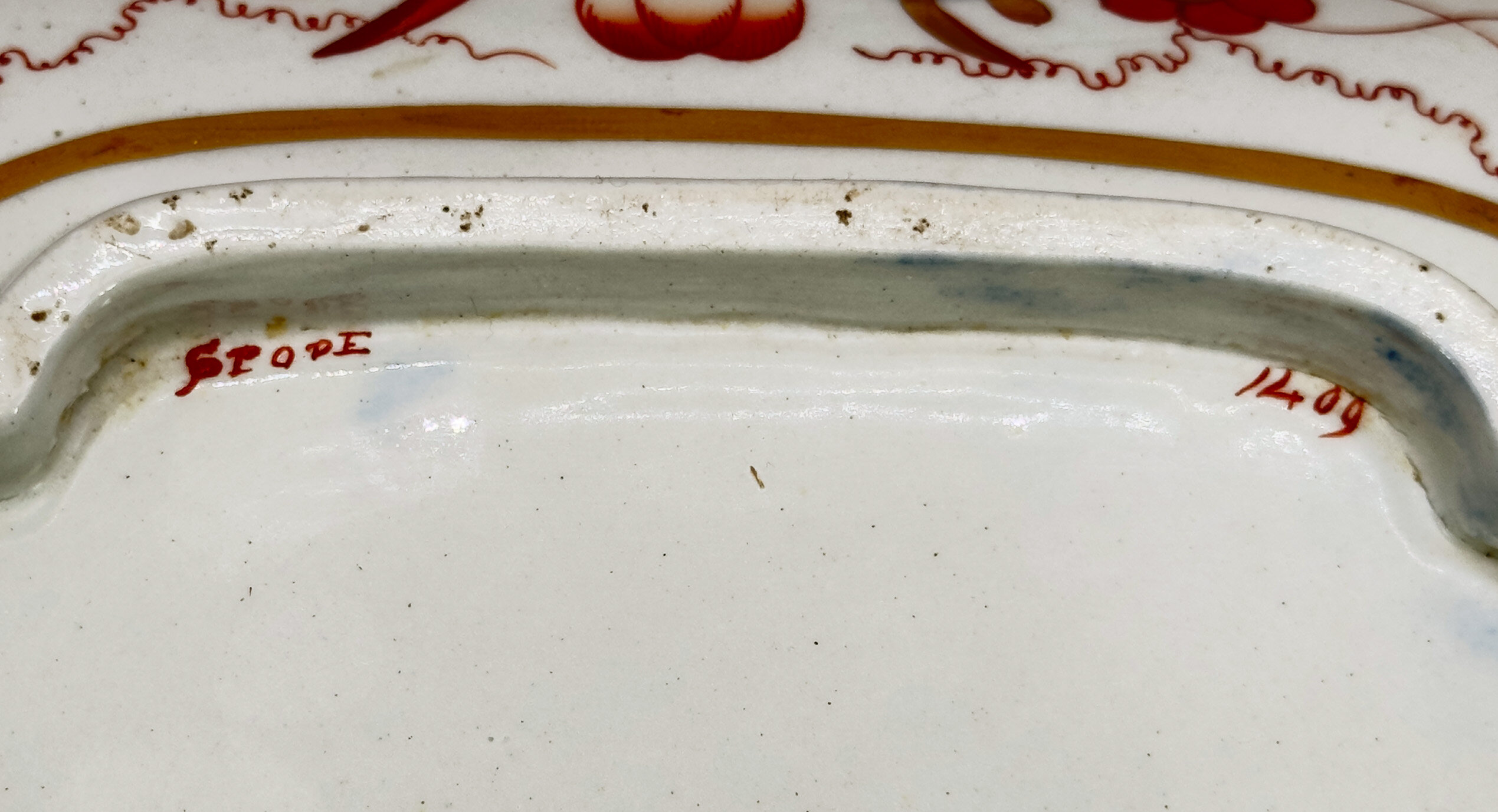
Spode is one of the great names amongst the English potteries of the eighteenth and nineteenth centuries. Founded by Josiah Spode in 1770 it saw under his leadership the development of innovatory techniques for transfer decoration onto earthenware and the production of bone china. But there was another important invention which was introduced by Josiah’s son, Josiah II, who took over the running of the firm after the death of his father in 1797. ‘The Times’ in 1817 referred to a range of ceramics now produced by the firm called ‘Stone China’ which it described as ‘newly invented’. There is some mystery about this. The technique of producing ‘stone china’ was invented by the sons of the Staffordshire potter John Turner and by repute Josiah Spode II bought their patent in 1805 when they went bankrupt. This conflicts with the reference in ‘The Times’ and according to Leonard Whiter in his authoritative book on Spode, examples of the ware decorated with patterns introduced before 1813, when it began to be manufactured in volume, ‘are rare in the extreme. I can recall seeing only one – a magnificent service in the freehand Imari-style pattern, 1409, introduced c1810’ (Leonard Whiter : Spode p191).The bowl featured here is indeed marked ‘1409’ (see image 8) alongside a form of the name ‘Spode’ which dates to before 1821 (Leonard Whiter : Spode p224). It most likely derives from the service which Whiter once saw complete but has now, presumably, been dispersed. The pattern with its vivid palette of red, blue and gold and floral decoration is a lavish reinterpretation of the ‘Imari’ wares which had been exported to the West in great quantities by the Chinese in the eighteenth century and the Japanese before them. These pieces took their name from their port of export in Japan, Imari; they were actually made at Arita in the former Hizen province. Amongst the wares exported by the Chinese were extensive dinner services and their popularity caused them to be copied and imitated by many of the English potteries from early 1800s onwards, indeed a near identical and contemporary version of this pattern was produced by Coalport.
The square form bowl, indented at the corners and curving inwards towards the base, was a classic Chinese form and is usually referred to as a salad bowl. The standard Chinese dinner service would have had a pair of these, but the shape is rarely found in the English dinner wares made in imitation. Its occurrence here combined with a firmly dateable early nineteenth century pattern in an opulent design which has survived in a remarkable state of preservation makes this very much a ‘one off’ piece and a highly desirable addition to a collection of nineteenth century decorative ceramics.
| Size: | Width (max) 23.7cm square, Ht (max) 12cm, Base (max) 13.5cm |
| Weight: | 1.46 kg |
| Date: | Early C19th |
| Condition: | Good condition, no issues. |
| Estimate: | £200 – 300 |
Global shipping is available. We use standard Royal Mail Tracked and Signed For service.
If you would like a quote for the shipping cost please email us at shipping@intercollector.com.
Please see our Terms and Conditions Section 13 for more details.
Dispatched usually within 5 days from receipt of payment.