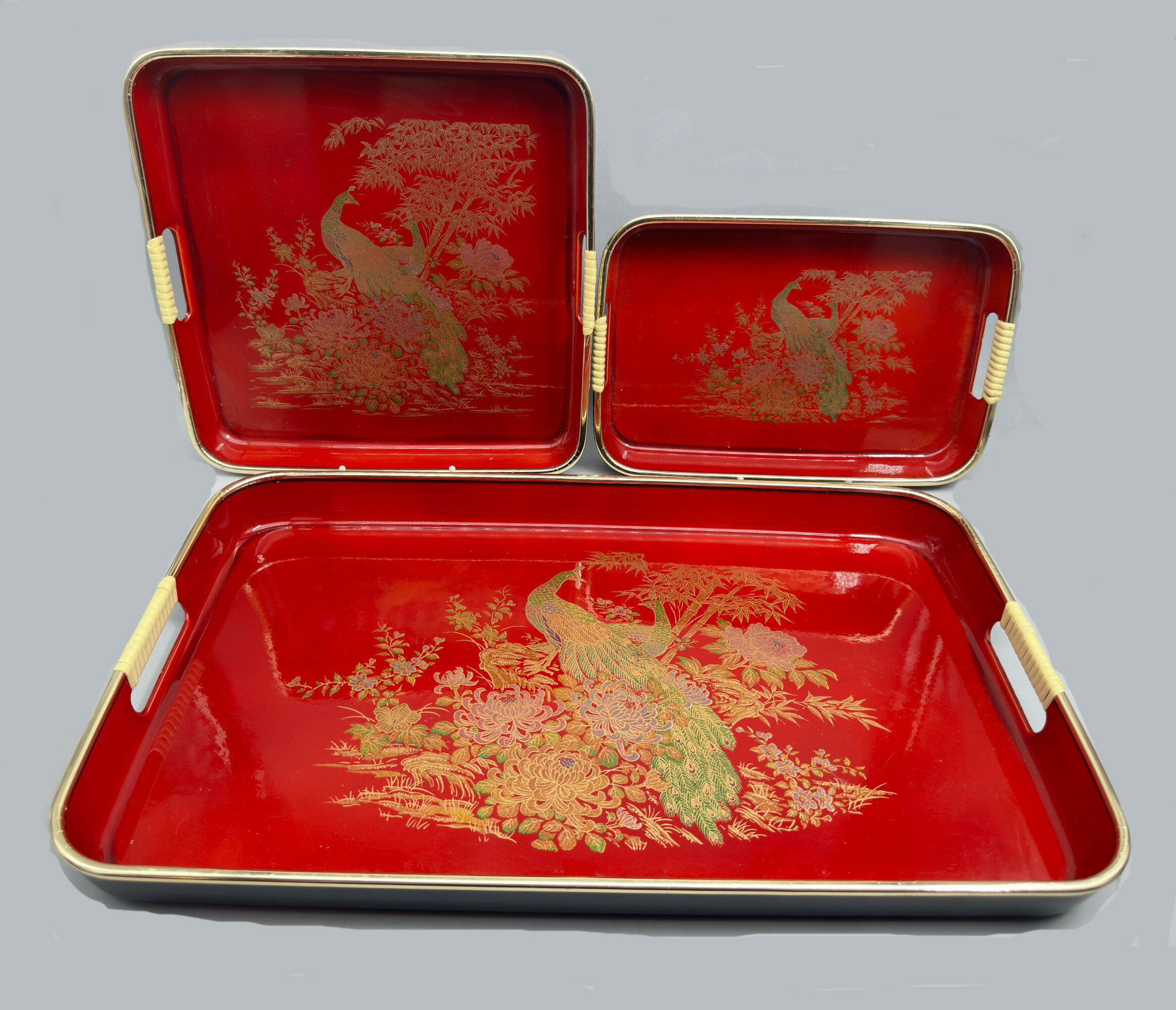
Set of Three Japanese Lacquer Nesting Trays, mid to late C20th
Price: £45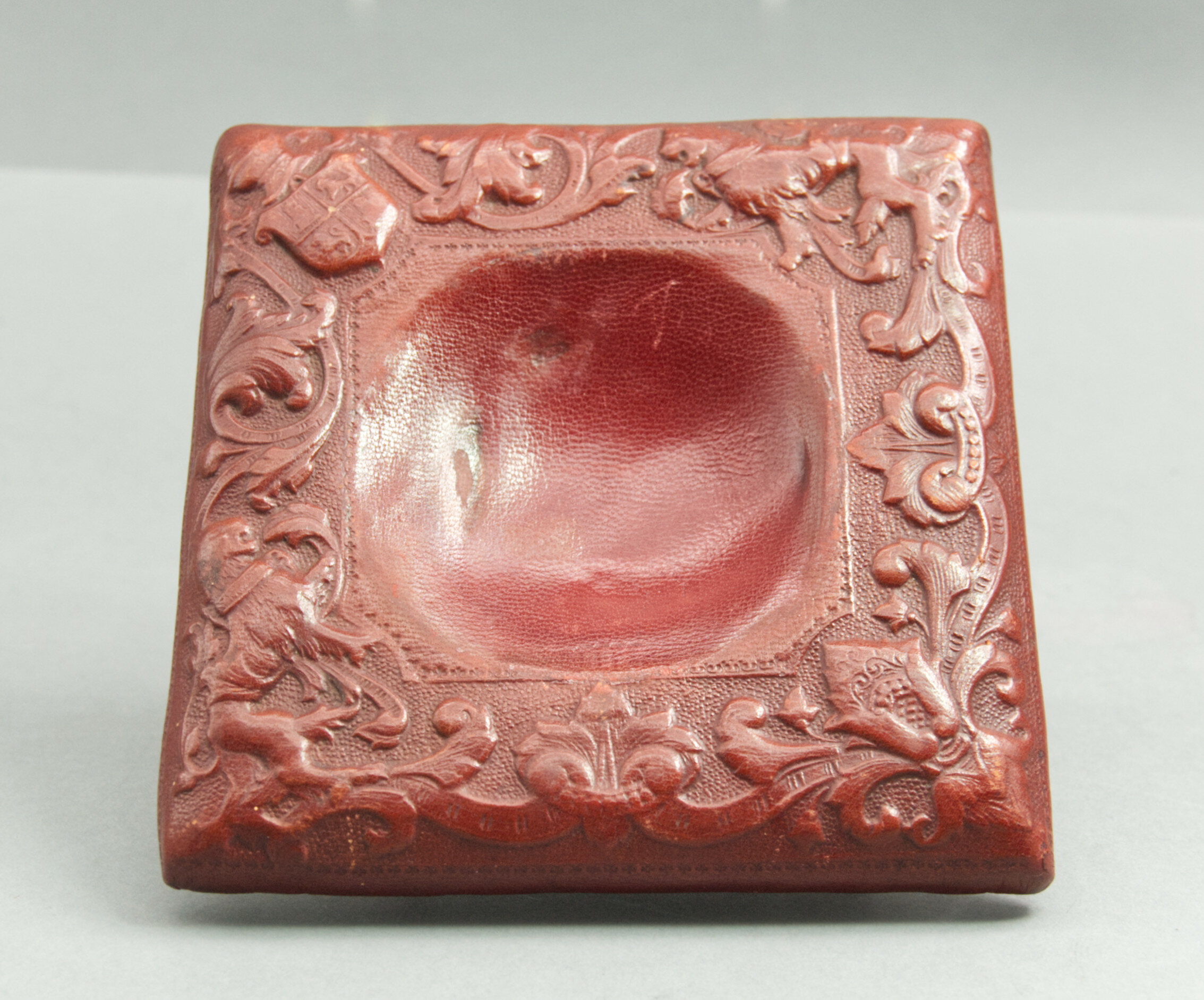
Spanish red tooled leather trinket dish with the coat of arms for Castile and León, C20th
Price: £25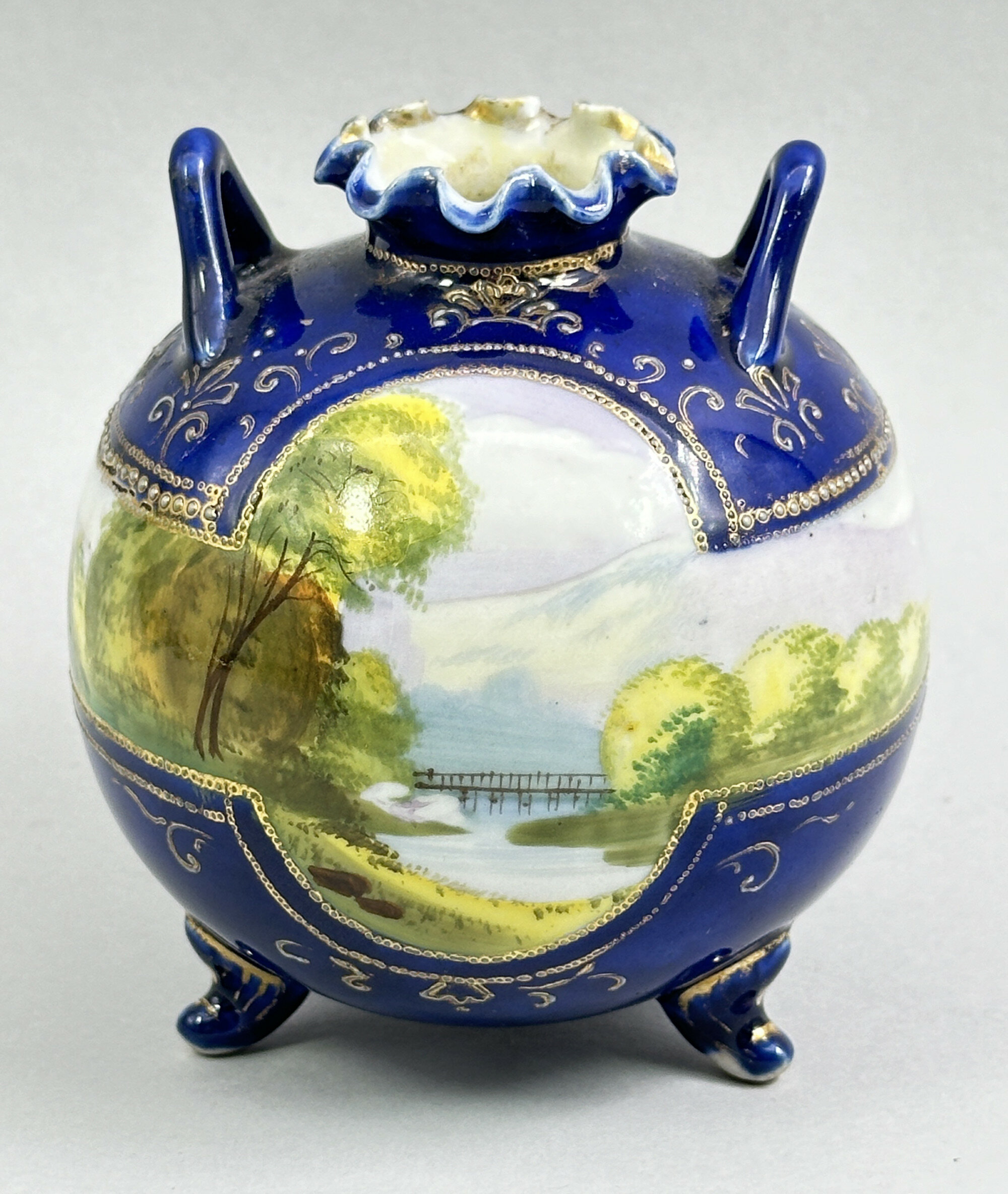
Noritake Vase in the Form of a Pomegranate, marked, Japanese, early 20th Century
Price: £25The Noritake compnay was set up by the Morimura family at Noritake near Nagoya in the early twentieth century. Called at first 'Nippon Toki Kaisha Ltd' on its founding in 1904, the business soon changed its name to 'Noritake' and began the manufacture of porcelains for the domestic and export markets. The mark seen here is interesting. It comprises a 'Komaru' symbol, crowned with "Noritake" and with the mark 'Made In Japan'. The centre symbol said to be taken from the Japanese character "Komaru", meaning "overcoming difficulties". According to the Noritake company tradition this mark was designed when contact with the different culture of the west early in the 20th century caused problems of adaptation. It is also known as the 'tree crest mark' which is the clan crest of the Morimura family. This mark is said to have been registered in London for the UK market by 1908. The curled up ends of the Komaru symbol seen here distinguish this mark from later versions and allow a dating of this piece to the early twentieth century.
Noritake porcelain became synonymous with finely potted tea and breakfast services made in great quantities for export. This vase is a rather more unusual production and shows the factory capable of producing high quality pieces.
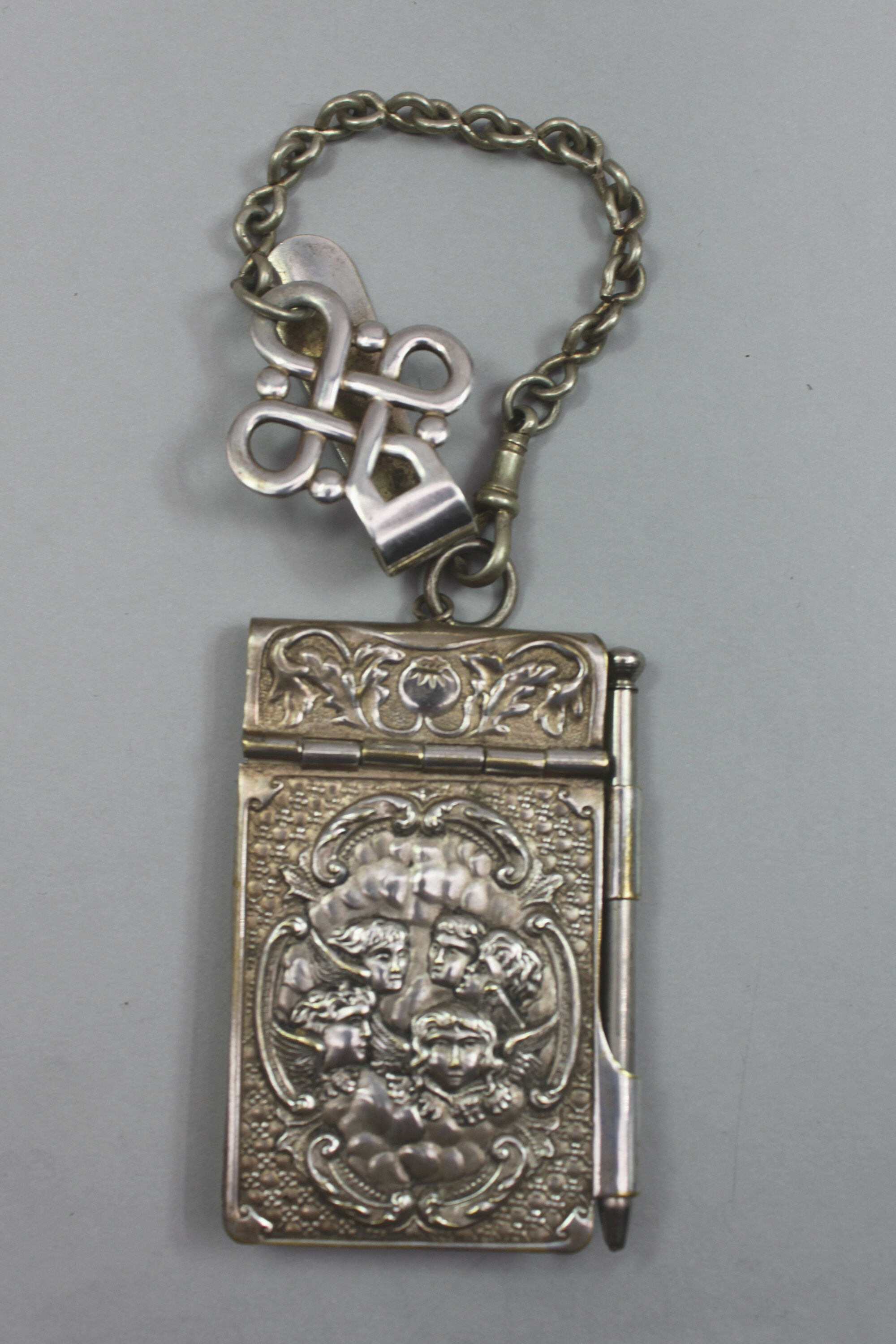
Victorian small note pad for chatelaine
Price: £45
Framed Stumpwork Panel depicting a Bowl of Flowers, English, 1930s
Price: £45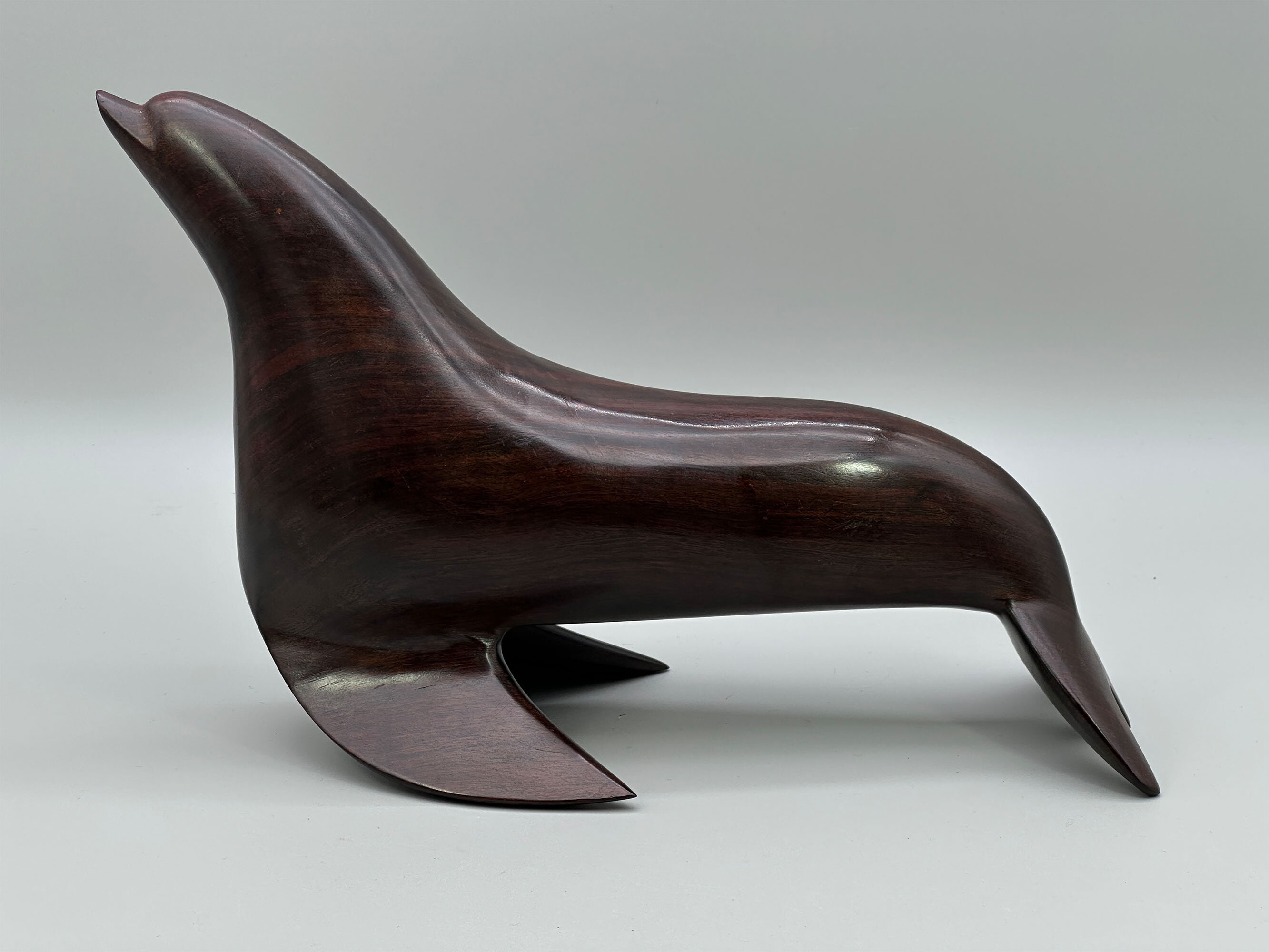
Ironwood (palo fierro) carving of a seal, Mexico, second half C20th
Price: £55Carving was originally done by the Seri people, a nomadic tribe of no more than 500 who live in Mexico and then by town and city dwellers from Sonora and Baja California, who embarked on the trade after the figures became commercially popular. Seri carvings were essentially hand made whereas the mass produced pieces were created with the use of power tools.
The forms are derived from wildlife and are often abstract in style. While it may owe some elements to the use of machine tools, this carving is a fine example of the ‘ironwood’ style with its sleek lines imaginatively representing its subject. The modelling is expressive and well complemented by the patina and finish of the wood. From the above, dating is clearly to the second half of the twentieth century and perhaps more to its later years if this is an example of the ‘commercial’ pieces produced at that time.
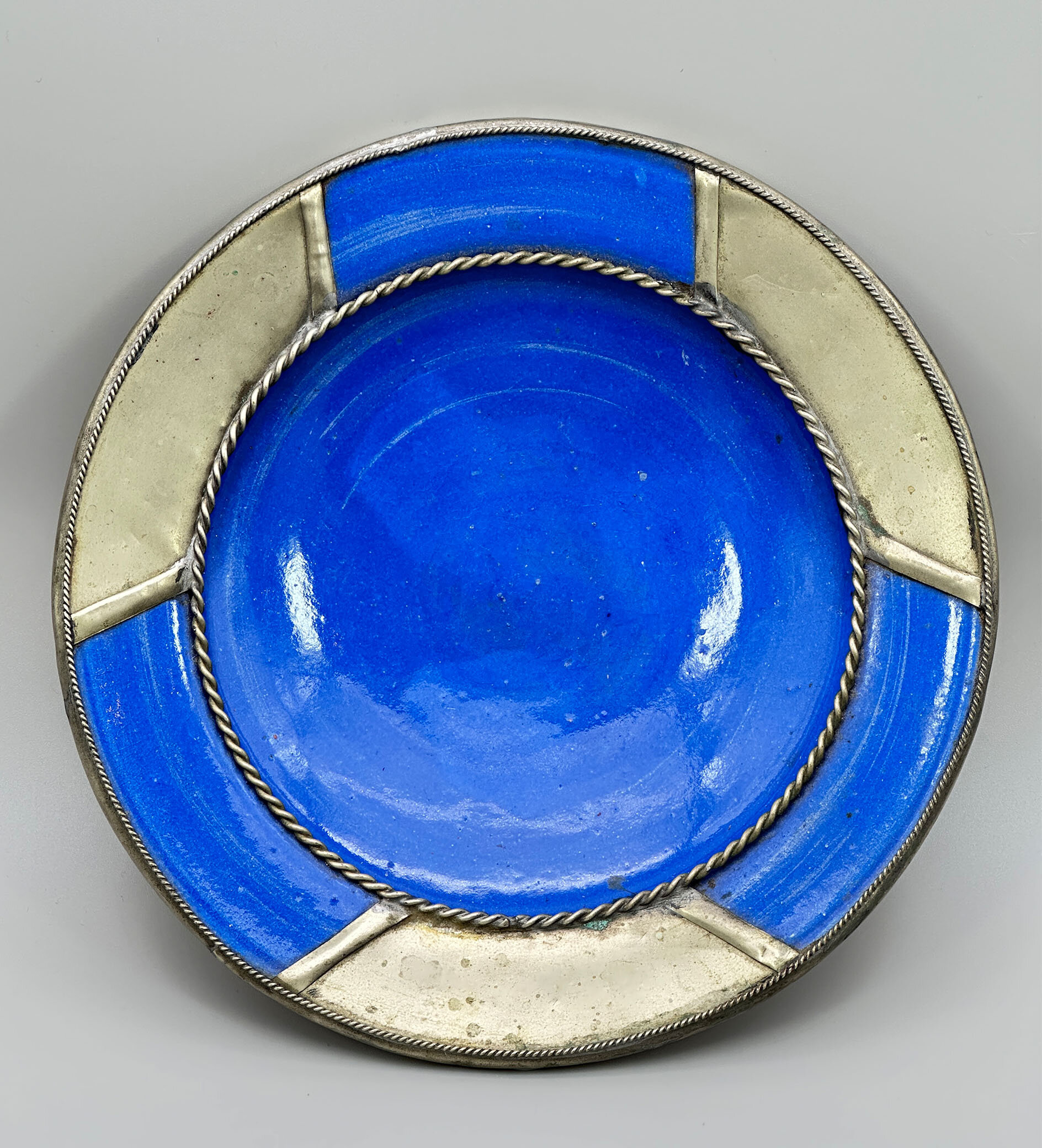
Morrocan safi ware Dish, silver metal bound, signed La Médina Paris, modern
Price: £45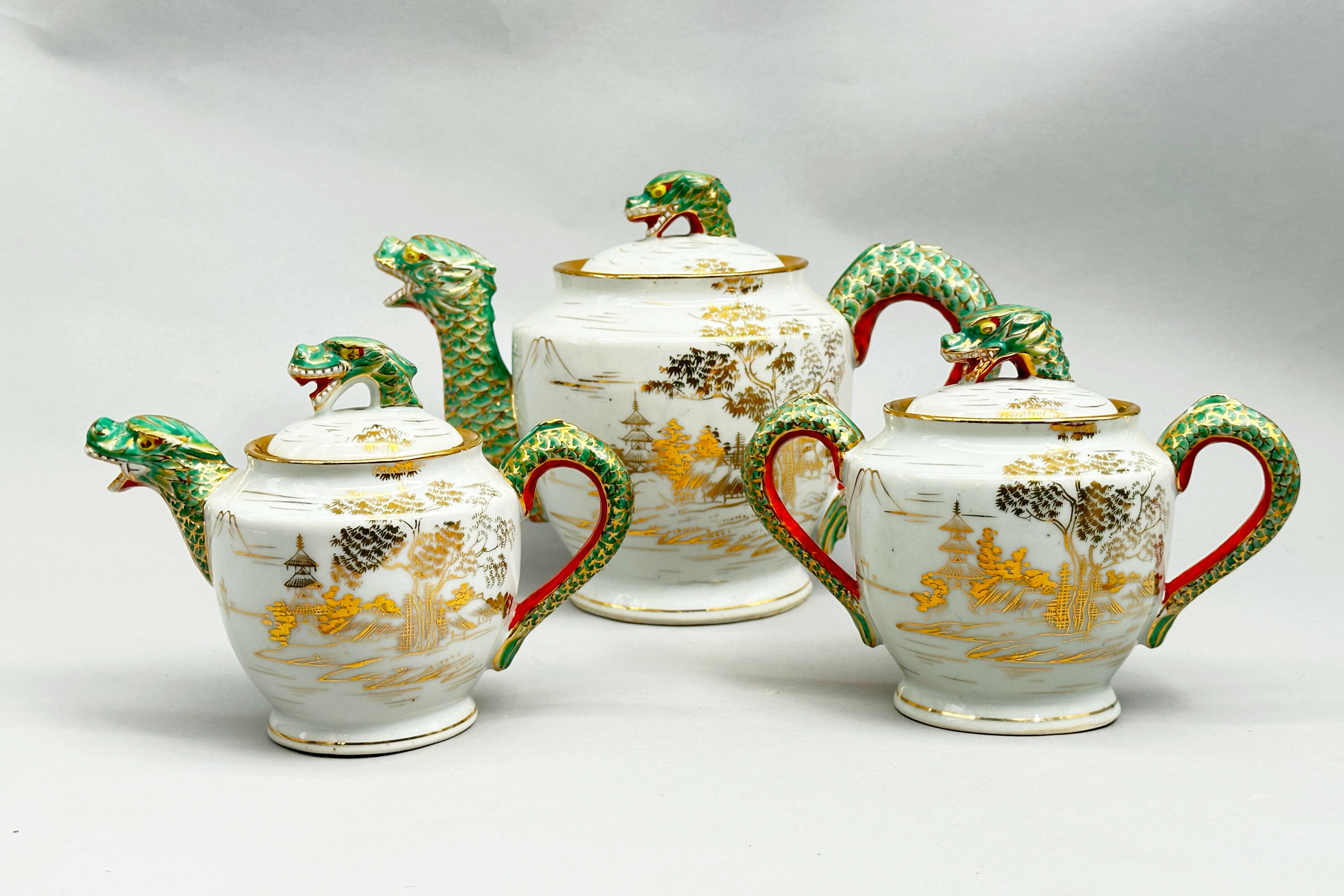
Japanese Kutani Part Tea Service circa 1920
Price: £75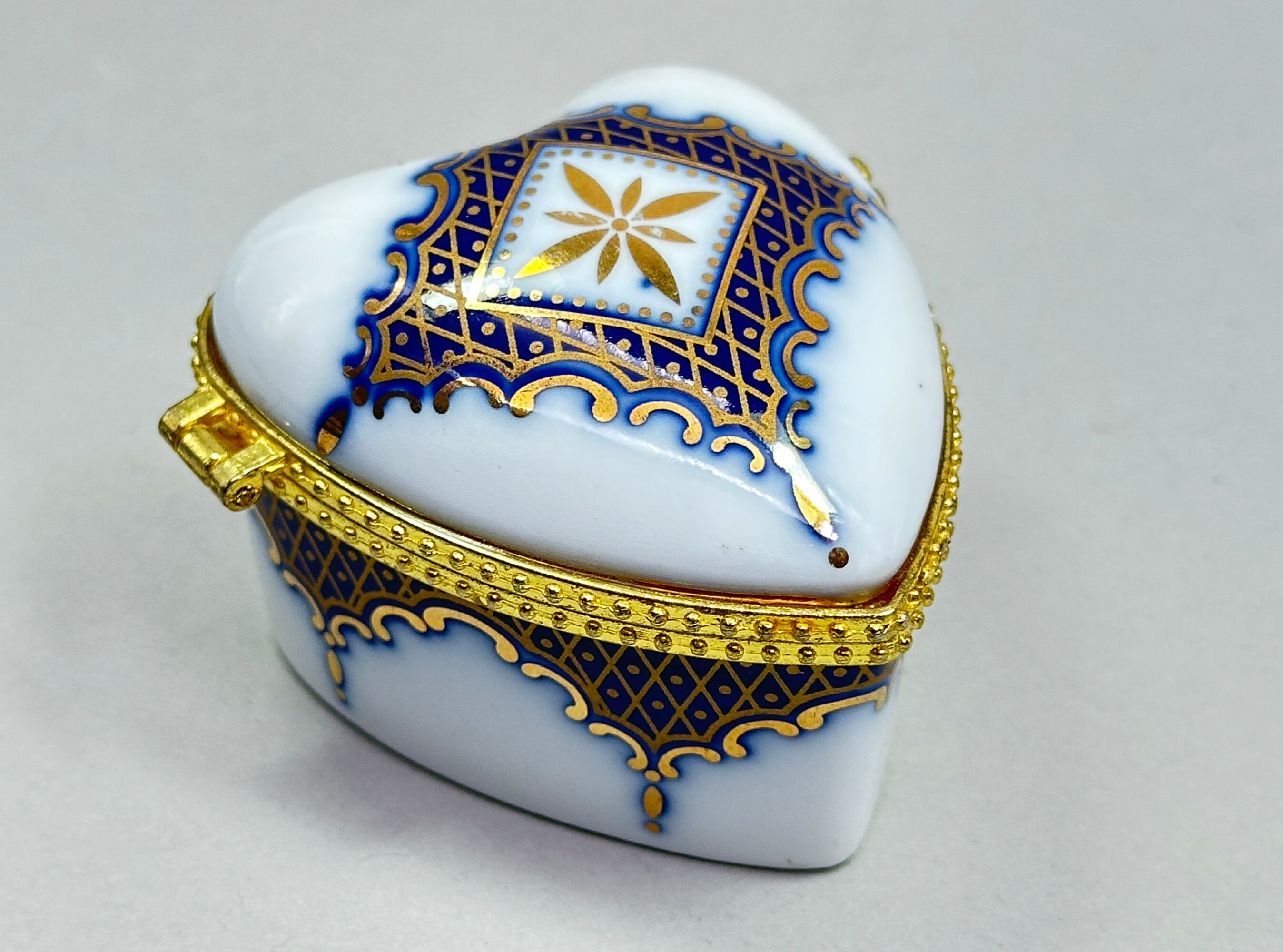
Oriental porcelain European Style Heart Shape Box and Cover, OC & CO, late C20th
Price: £15
An Arts and Crafts small Brass serving Tray, English early twentieth century
Price: £95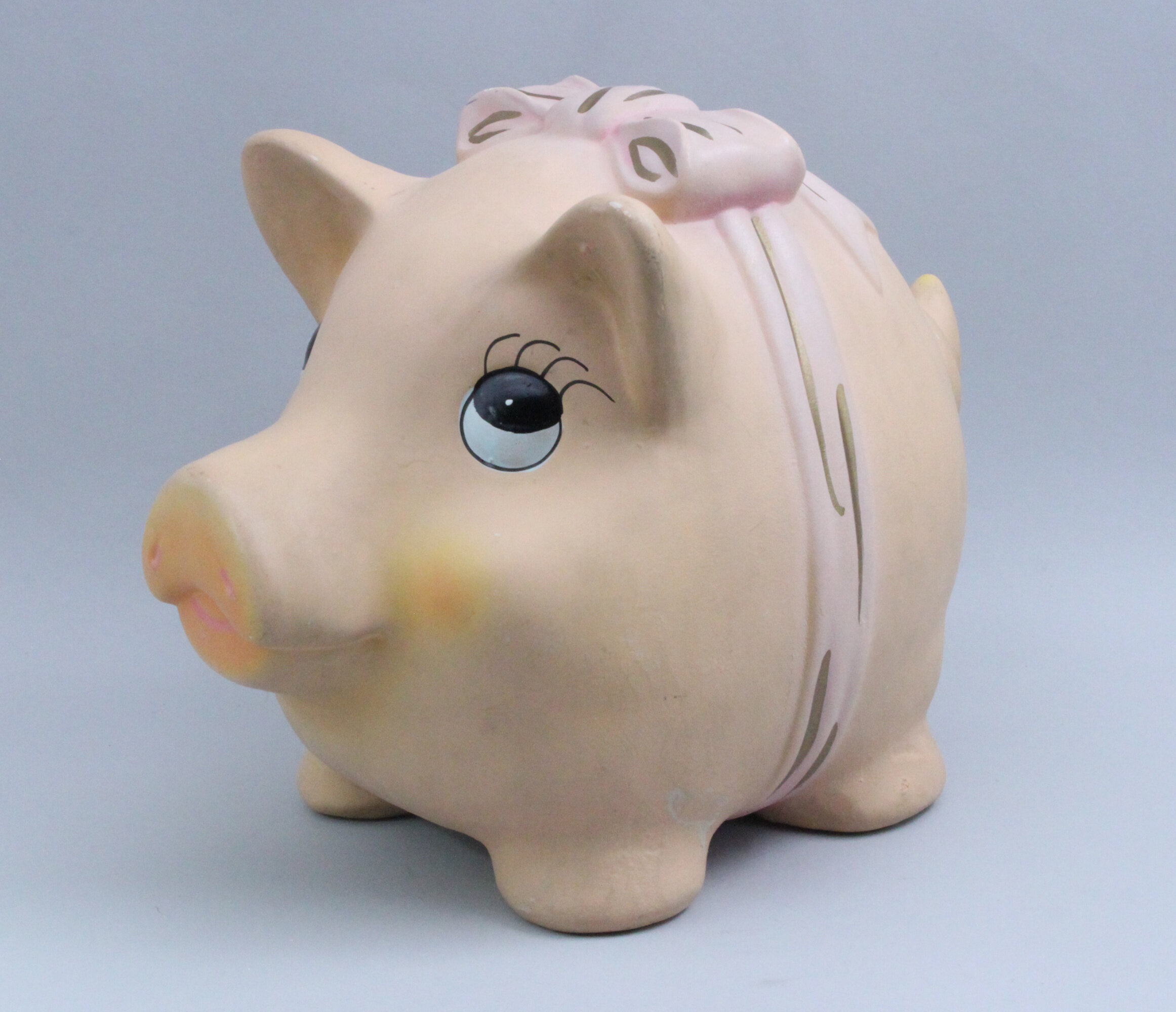
A Ceramic Moneybox in the form of a Pig, Helensgate Ceramics, mid twentieth century
Price: £25
Ceramic Model of a Fish, Jema Holland, signed, 1950s/1960s
Price: £30The Jema factory in Holland was started by two brothers, Jelis Mager ( born 1912 in Rotterdam, Netherlands) and his brother Johan Willem Mager (born 1919 also in Rotterdam) both living in Maastricht who took over an existing ceramics factory, founded originally by J.Meussen, in 1942 and traded together in a partnership which was dissolved in 1955 when the firm JEMA KERAMISCH ATELIER N.V. (jema ceramic studio; the first JE standing for Jelis and MA standing for Mager) was created under a new agreement between them. Ceramic products of many types were produced with figurines a speciality and the business continued until 1984 when it became insolvent and closed its doors.
Most of the pieces seem to have been marked, usually with an impressed script as here indicating the factory itself and the model number of the piece. For modest decorative items the quality of the manufacture is of a high standard as can be seen in both the modelling and the glazing of this piece. Their animal figurines were immediately approachable and provided modest but amusing items of decoration.
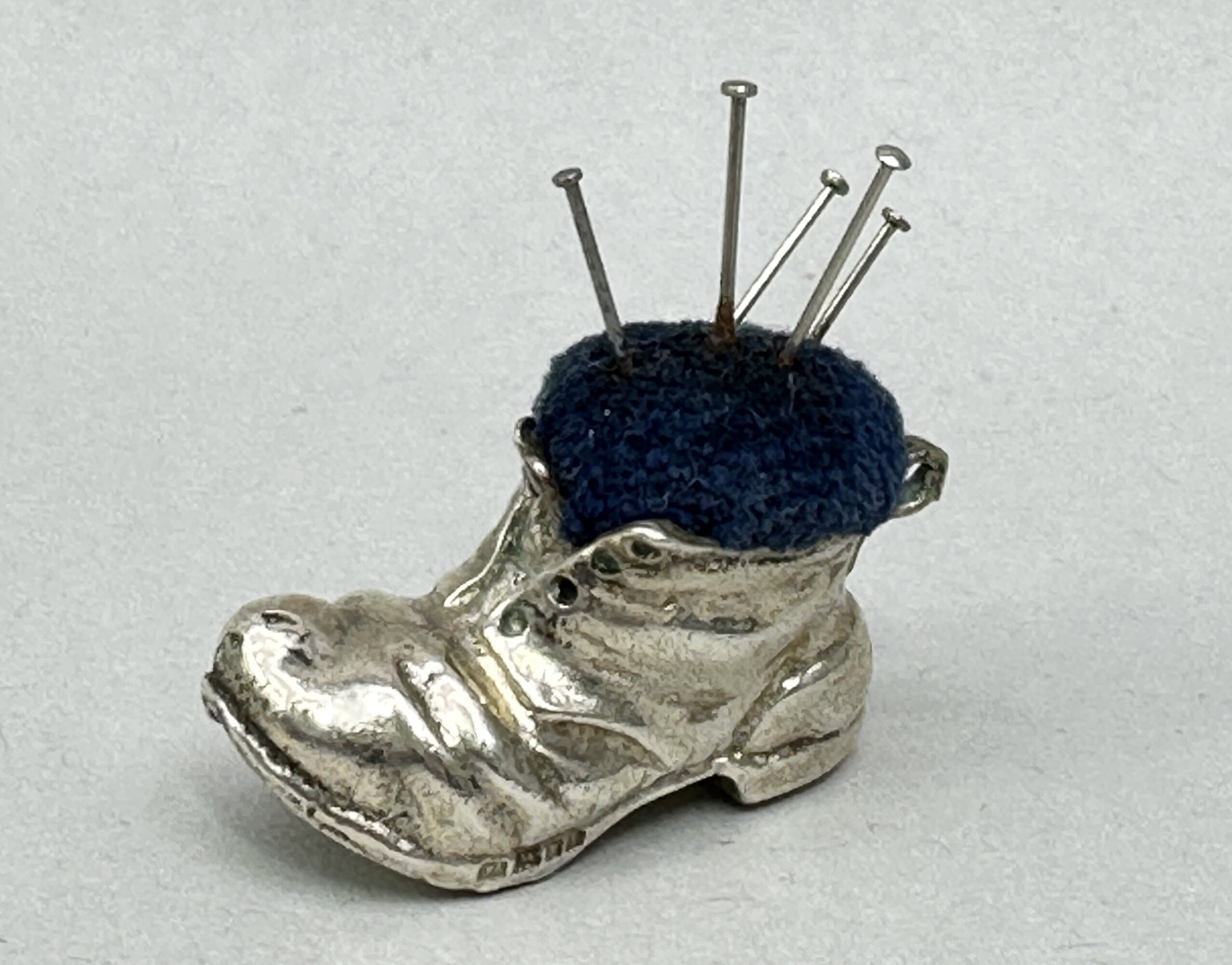
English Silver pin cushion in the form of a boot, London 1991
Price: £75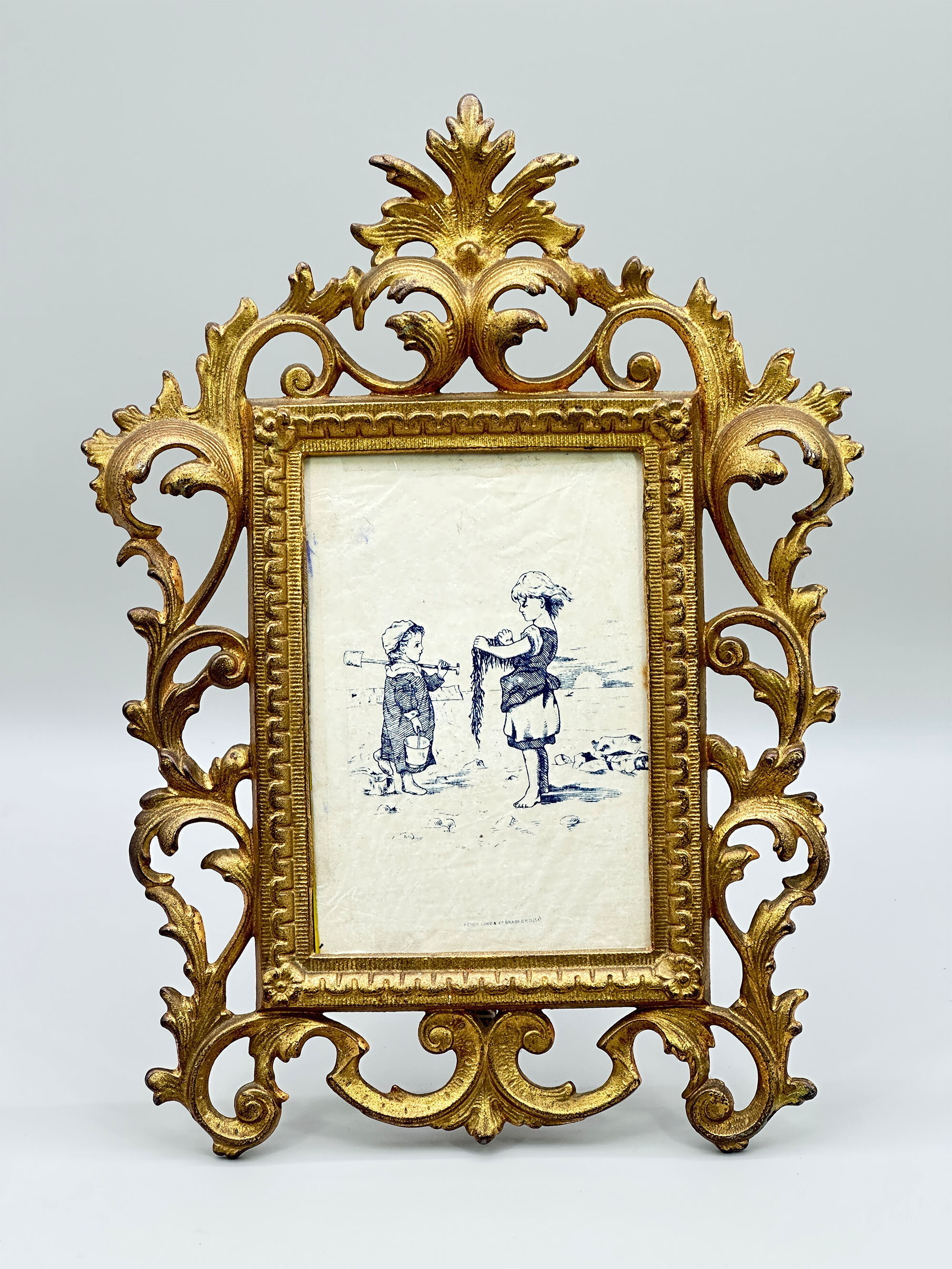
Rococo style gilt metal picture frame and antique photo tissue cover by Percy Lund & Co, 1890s/1920s
Estimate: £30 – 40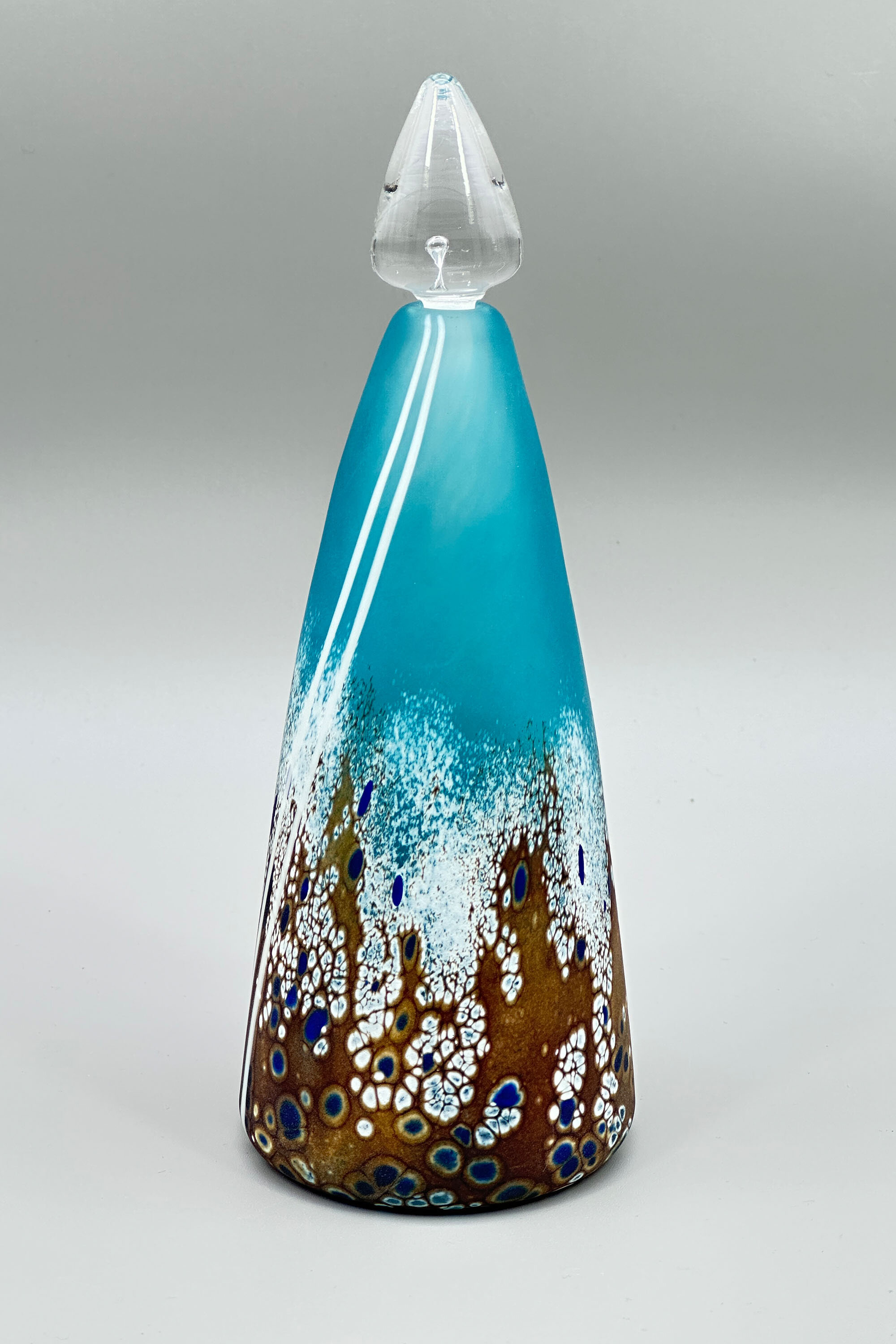
An art glass Perfume Bottle and Stopper, Martin Andrews Glass, C21st
Price: £75Martin Andrews (see image 9) graduated from West Surrey College of Art and Design with a BA (hons) Glass in 1991. Following this he was based in London until 2000 when he then launched his current workshop at the Ruskin Glass Centre in Stourbridge. His work often draws on the earth's natural forms and patterns and his ‘beach’ range is a prime example of this. Most of his pieces are signed, but this bottle is not, perhaps because of its size, but its inclusion in the studio’s inventory makes its provenance beyond doubt.
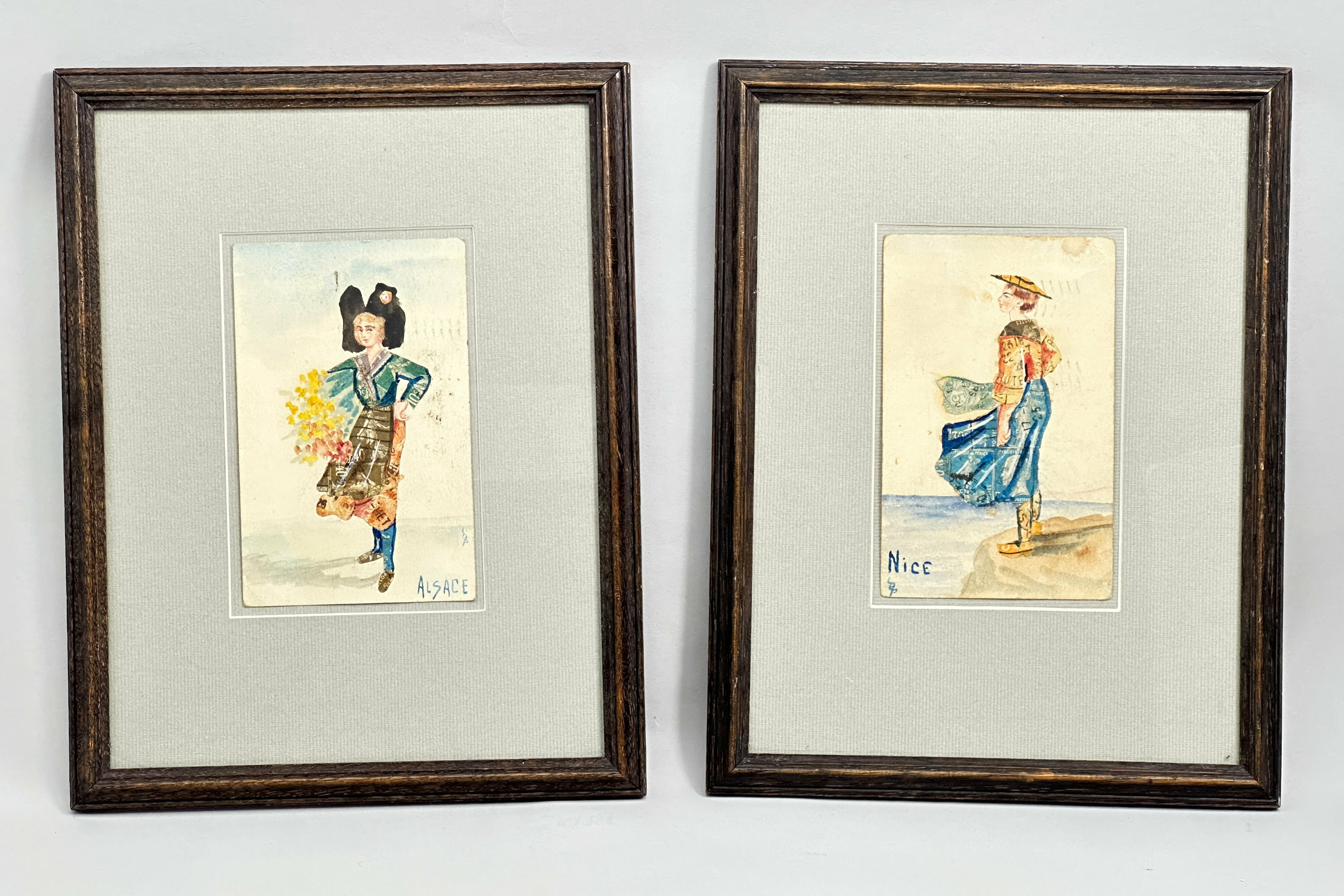
A pair of stamp collage Postcards, Alsace and Nice, framed, early C20th
Price: £45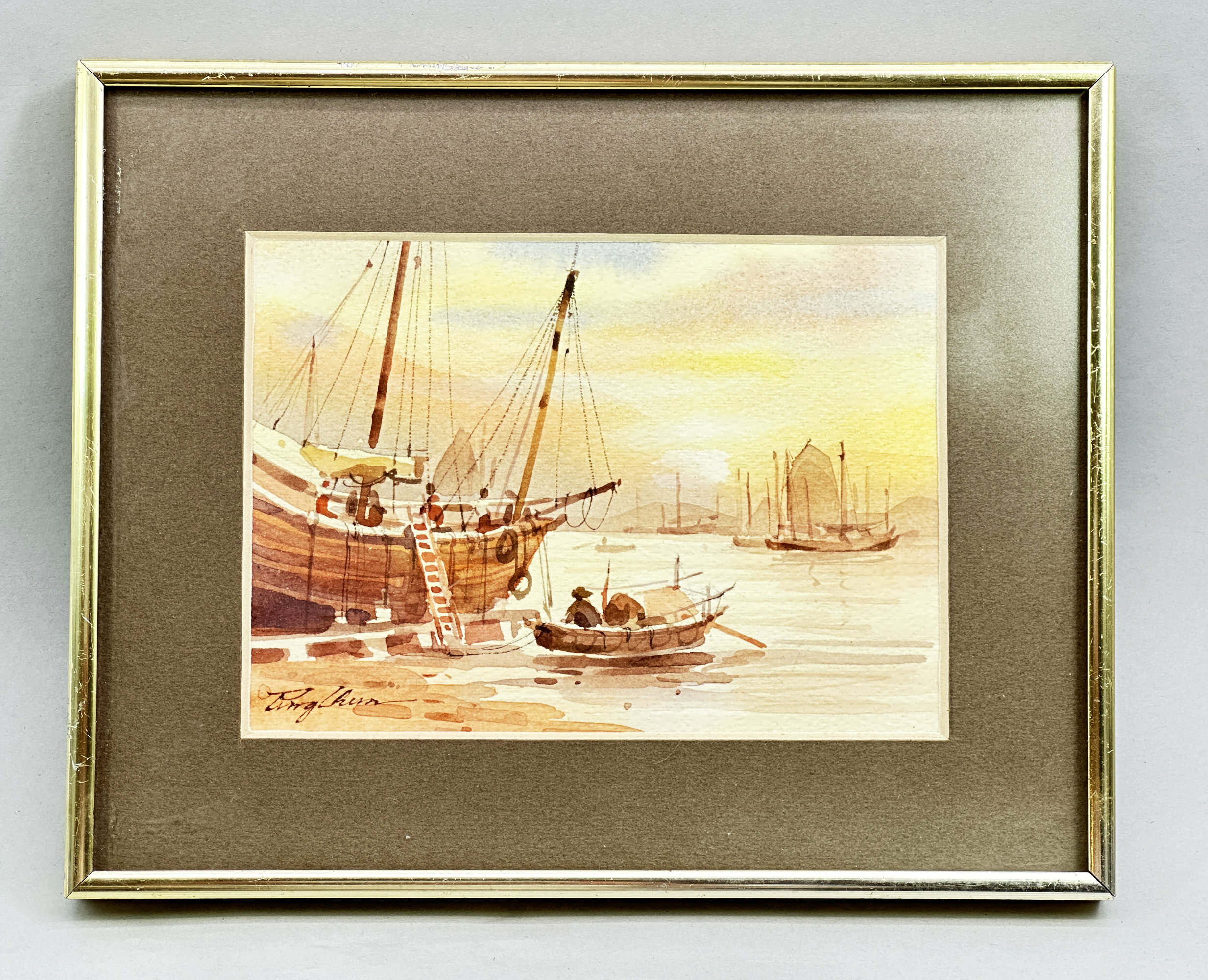
Framed Watercolour, Harbour or Beachside Scene, signed, C20th
Price: £25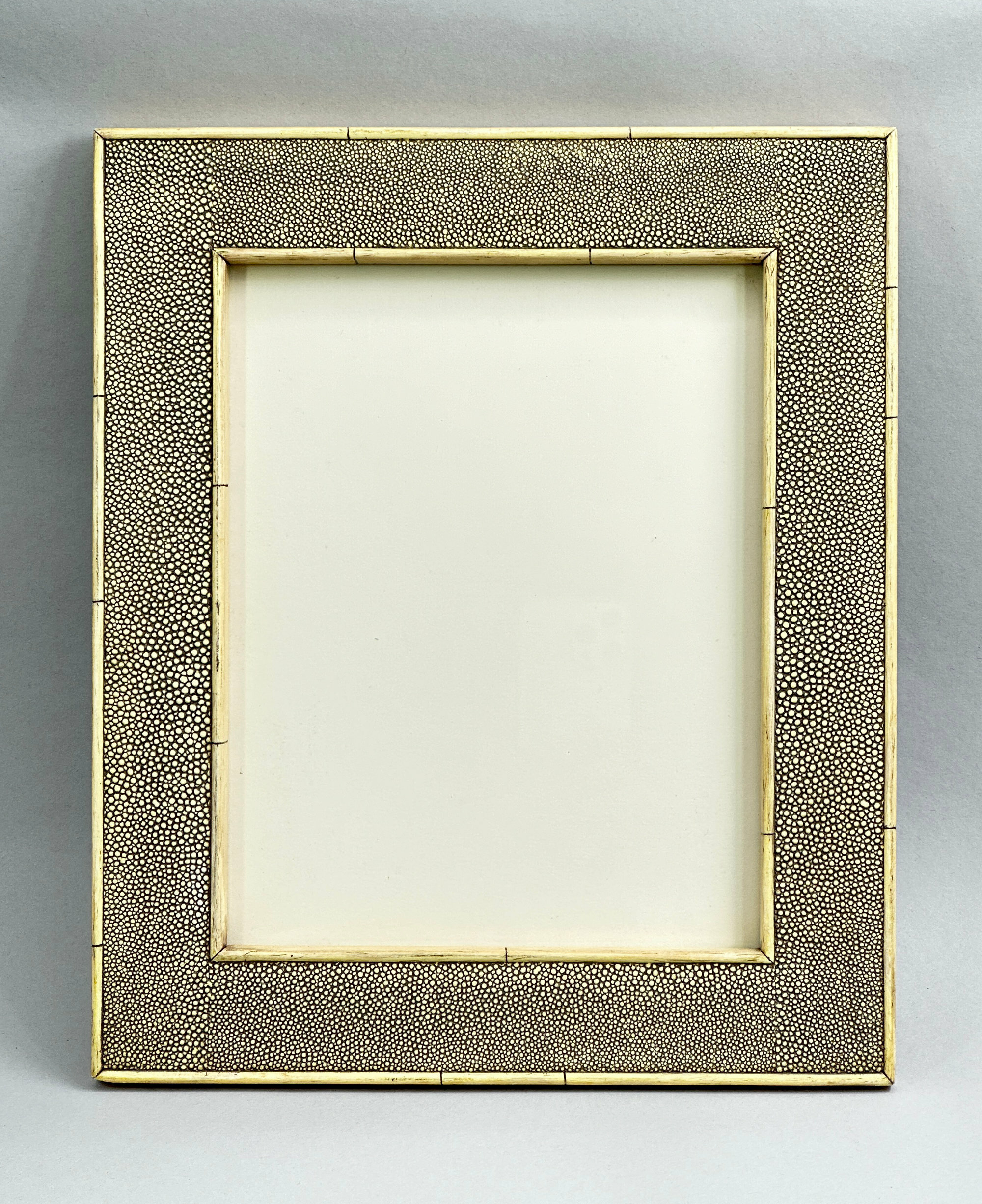
Art Deco Shagreen Picture Frame, 1930s
Estimate: £80 – 120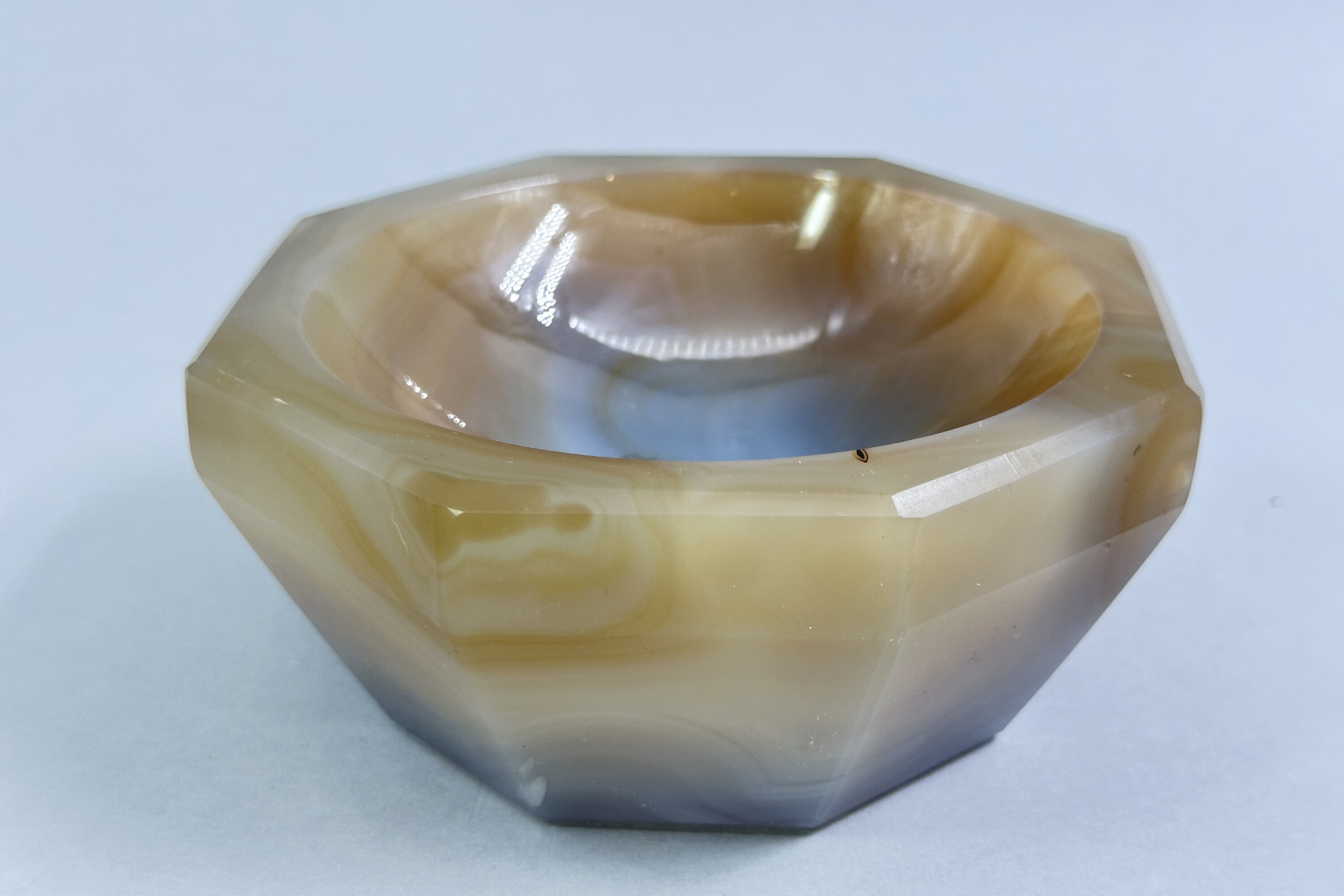
Octagonal Agate Mortar Bowl, C20th
Price: £25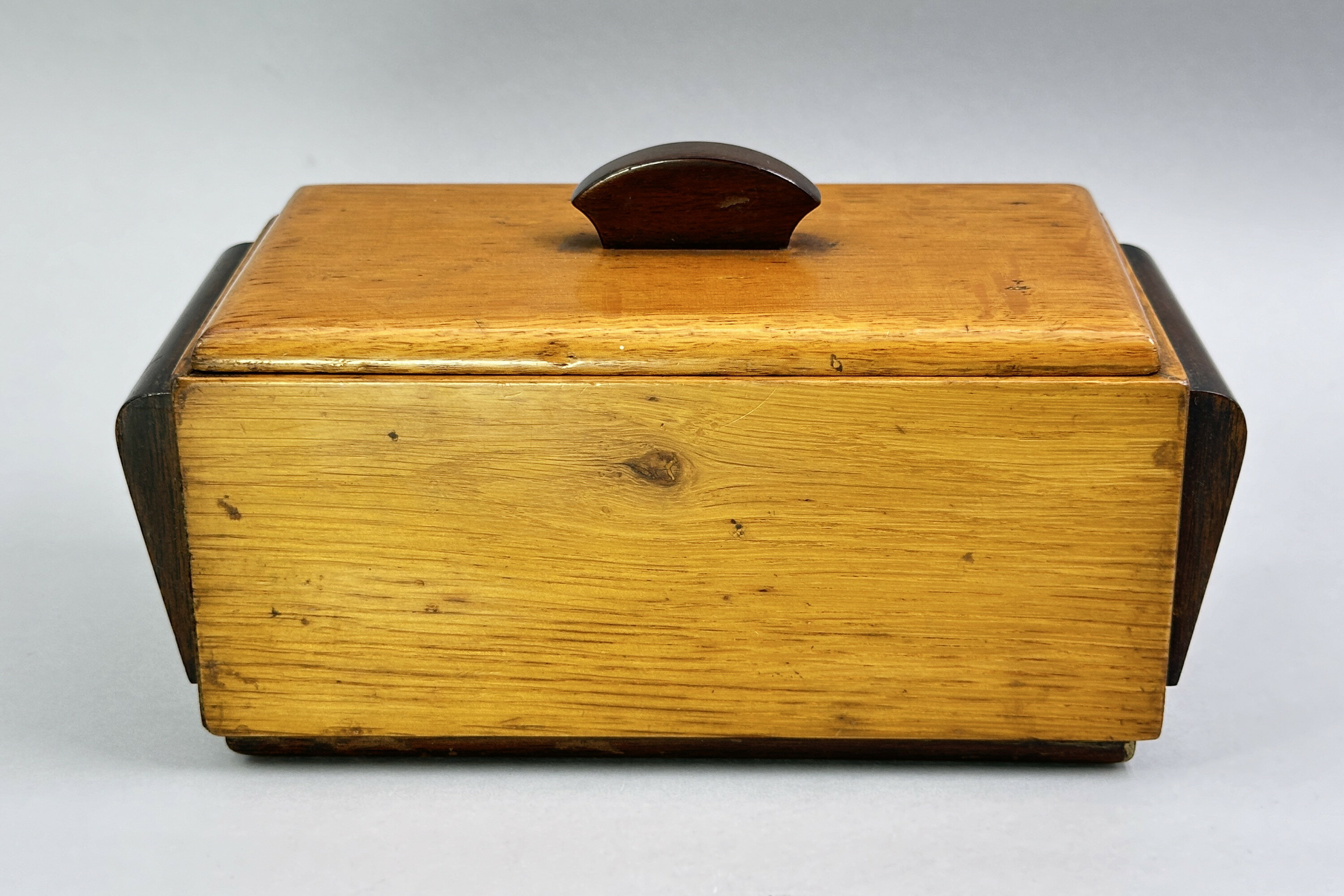
Art Deco Wooden Cigarette Box, 1930s
Price: £25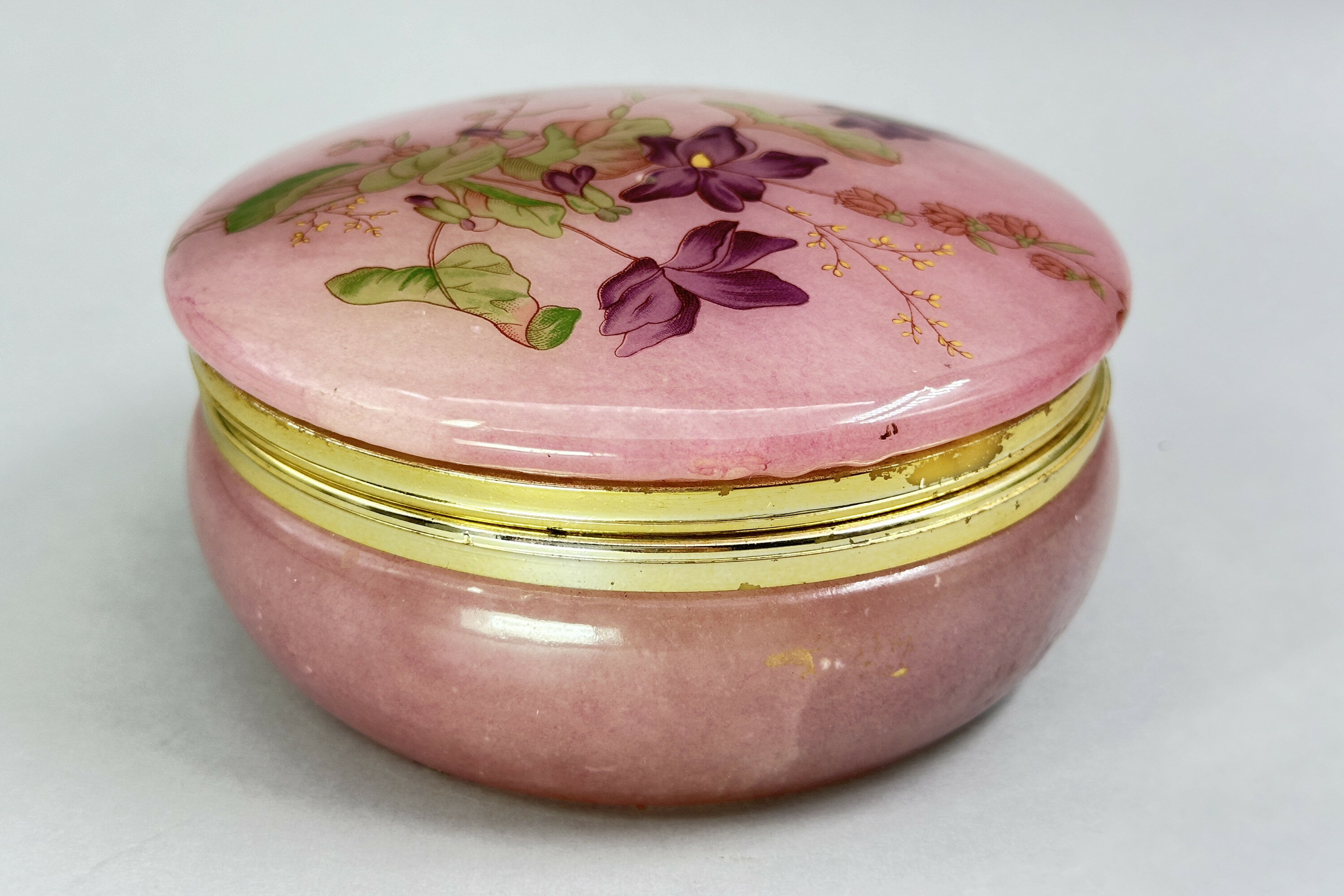
Pink Alabaster Box and Cover, Italy late c20th
Price: £25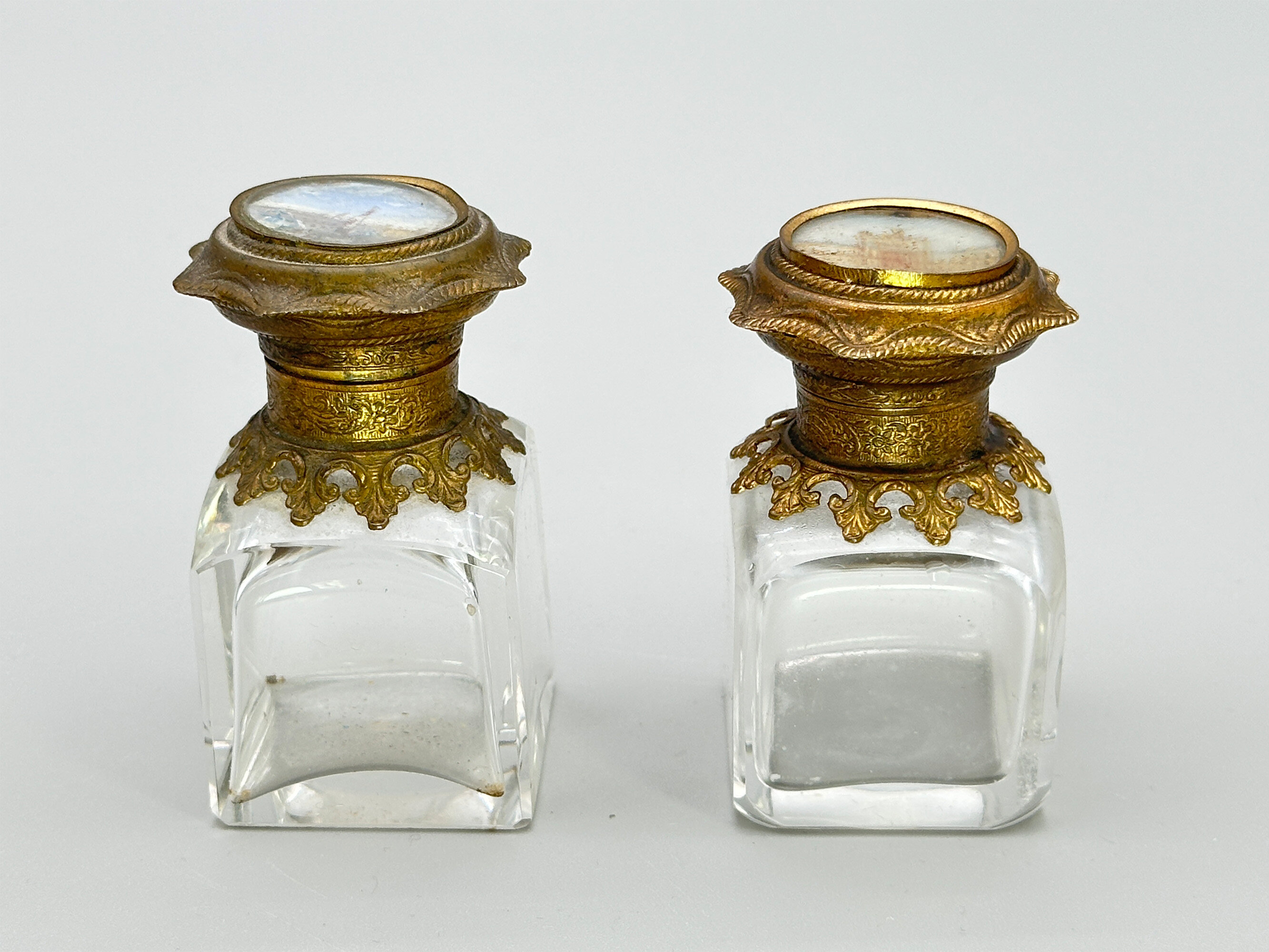
Two Palais Royal or Grand Tour Perfume Bottles, French, second half C19th
Estimate: £80 – 120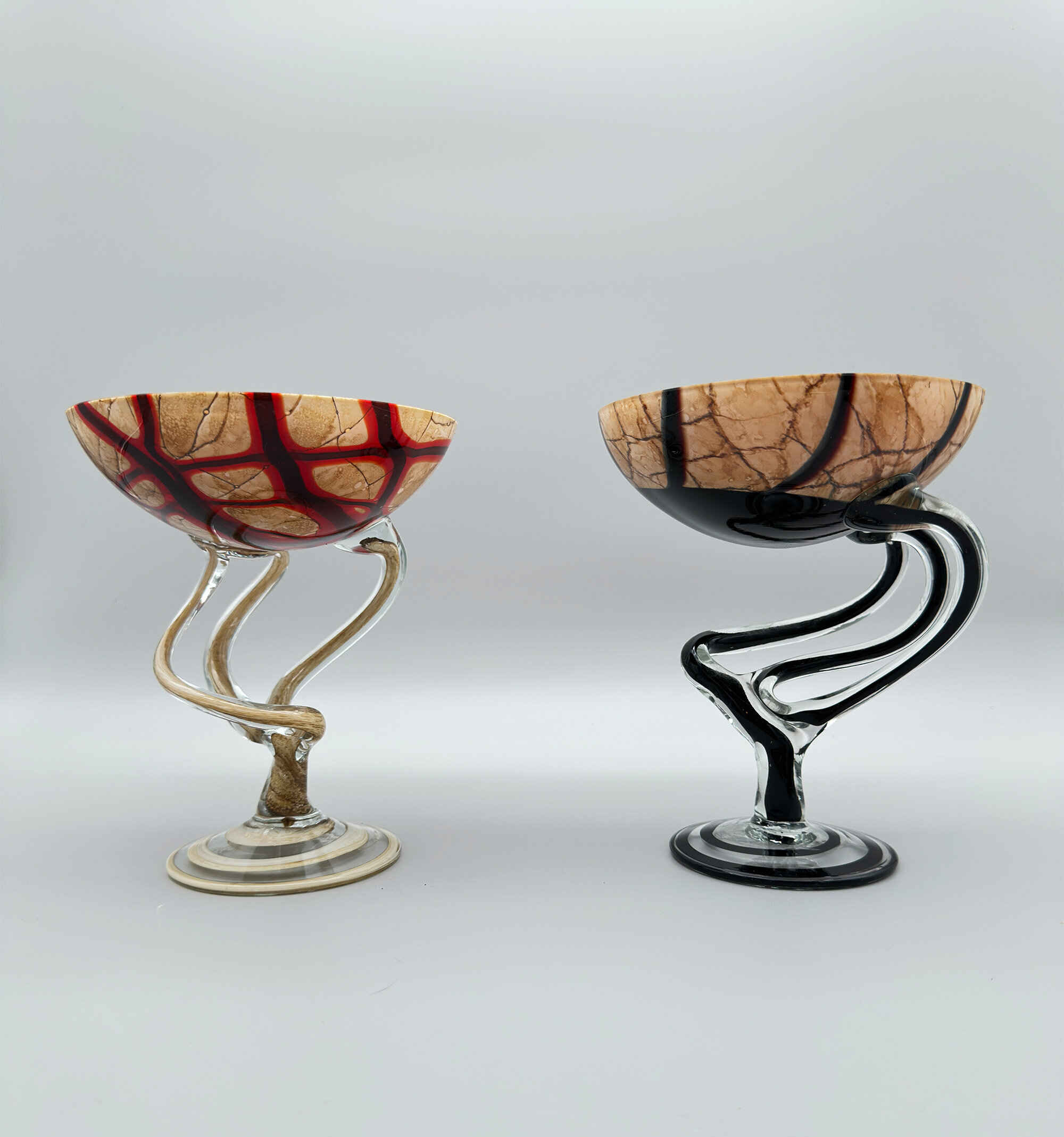
Two art glass pedestal Bowls, Jozephina Glassworks, Krosno, Polish c1980
Price: £75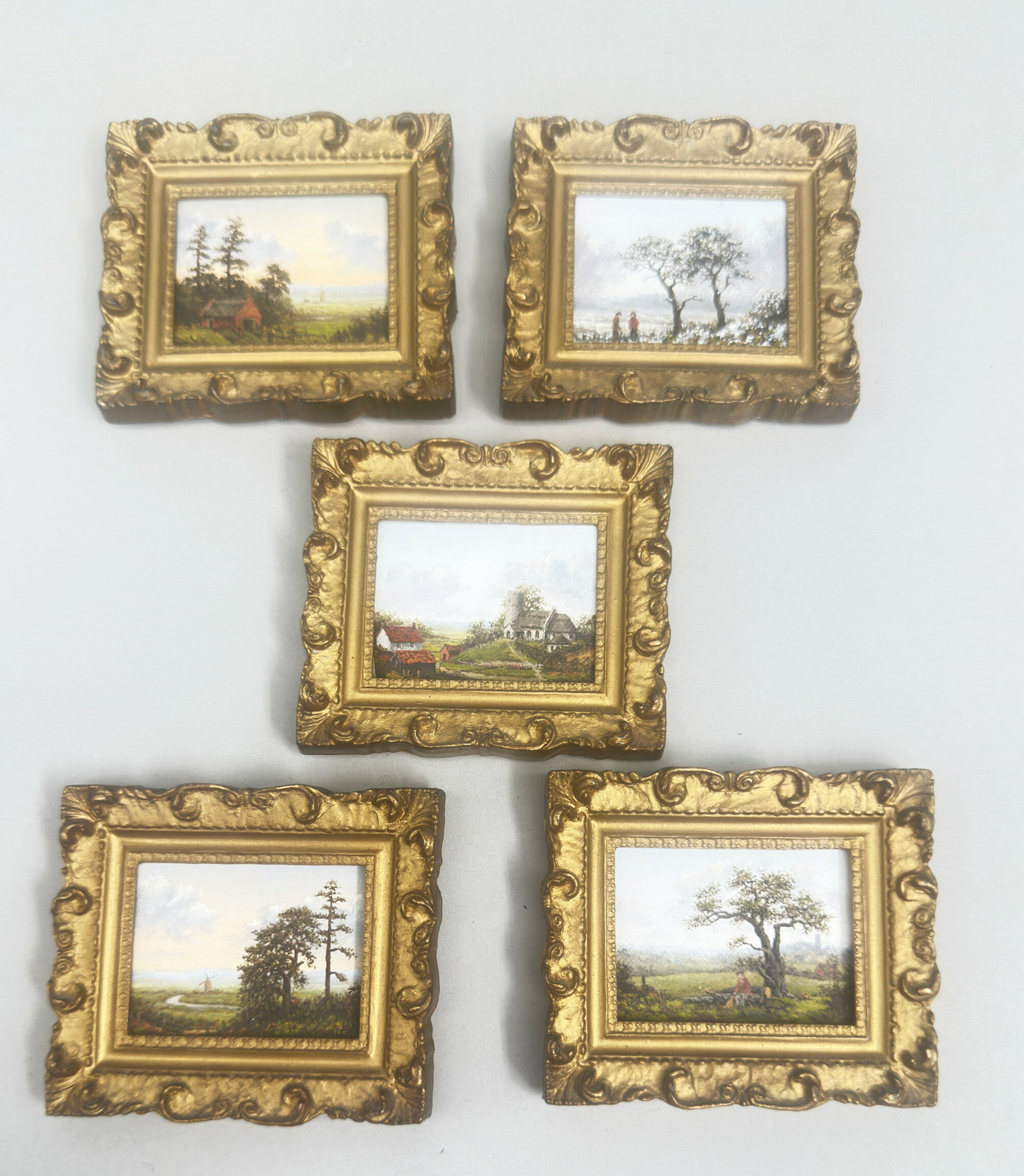
Set of five small landscape paintings attributed to Charles Boyland Turner, C20th
Price: £110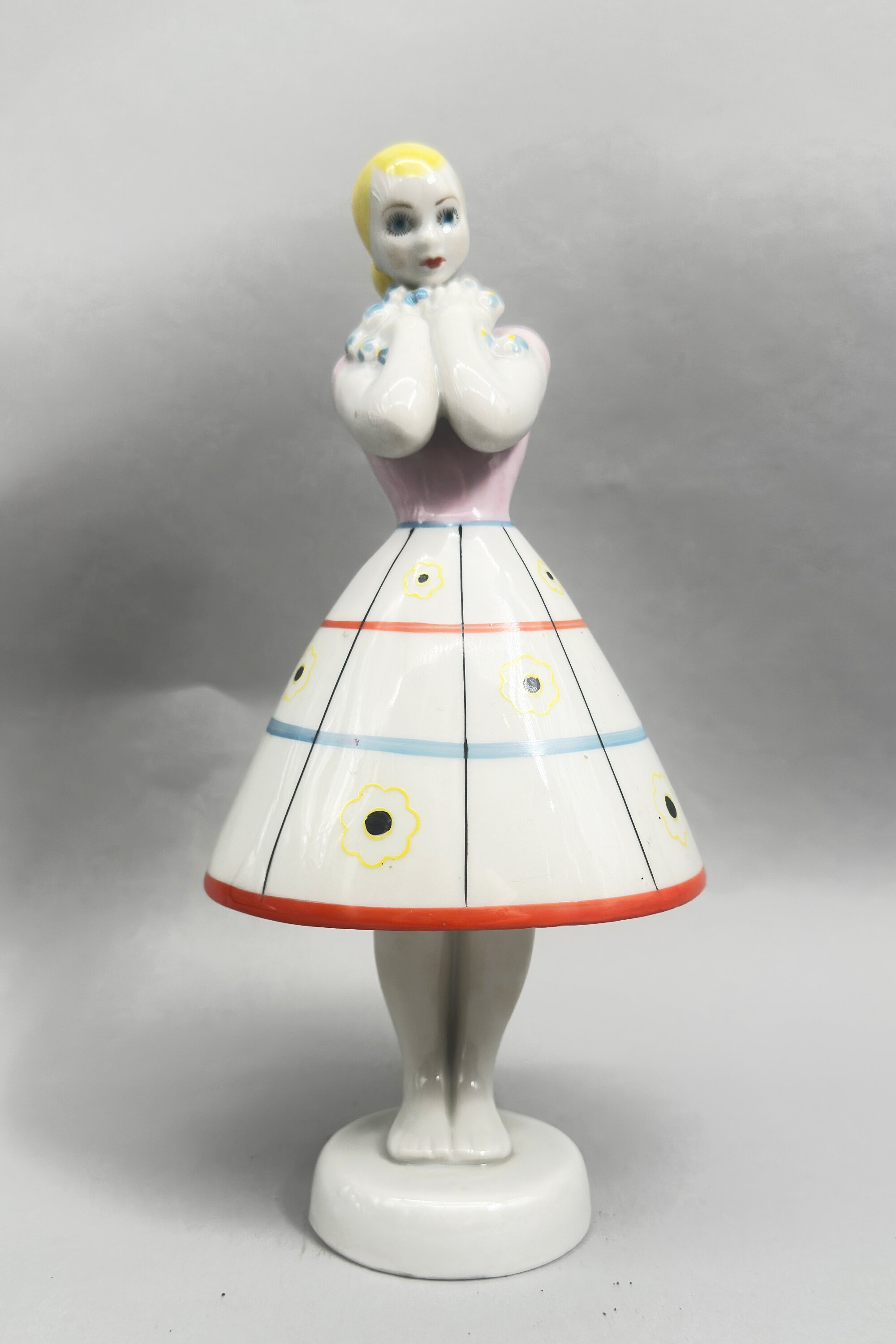
Figurine of a girl, Baranivka Ukraine, 1950s
Price: £55The Baranivka Porcelain Factory, one of Ukraine's oldest porcelain manufacturers, was founded in 1802-1804 by Mykhailo Mezer. Situated at Baranivka, at the time in Poland but now part of Ukraine, the factory was considerably assisted in its development by the discovery of rich clay deposits in the area. Production was continuous even during the Soviet era until the early twenty first century. Both the angular modelling and the abstract decoration of this piece point to a dating in the 1950s when production would have revived after the second world war and more contemporary styles adopted.

Vintage Brass Pocket Case with a lid, probably a Vesta case for Matches, circa 1900
Price: £55
Vintage Brass Vesta Case in the form of a Violin, circa 1900
Price: £55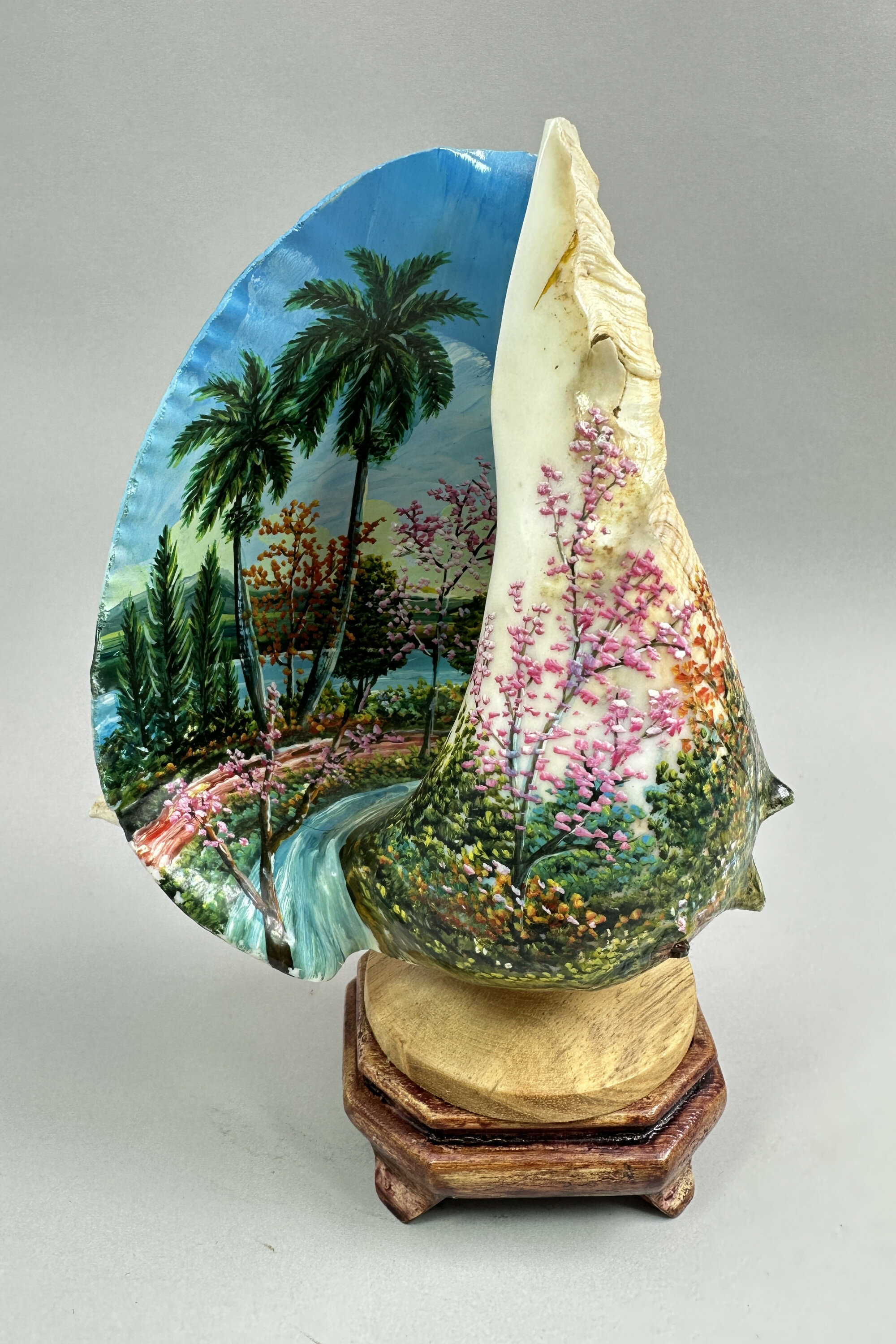
Kitsch Style Conch Shell with painted landscape decoration, C20th
Price: £45
Chinese style Vase and Cover decorated with ladies and courtiers in a garden scene, C20th
Price: £55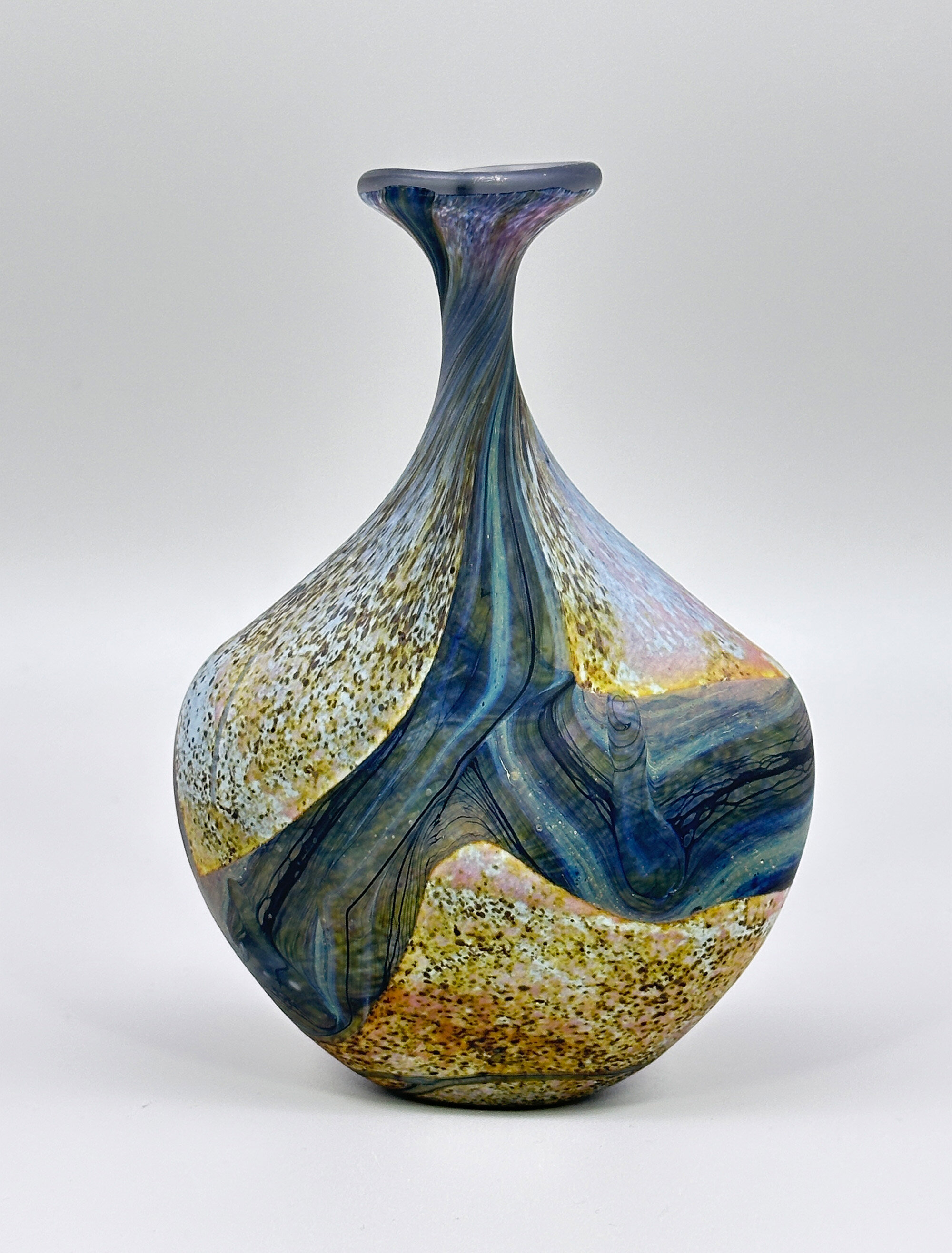
Frosted art glass lollipop form vase, Peter Layton, signed, late C20th
Price: £150Peter Layton is one of Britain’s most celebrated glass artists. Born in 1936, his initial interest was in ceramics but in 1965, while on a teaching post at the University of Iowa, his focus changed and he began to study the art of glass blowing, at a time when the art glass movement in America had an enthusiastic following. Returning to England in 1968, he started a a small glass studio in the Highlands of Scotland while relying on pottery to earn a living. Eight years later, in 1976, he opened the ‘London Glassblowing’ studio which continues to this day and where Peter Layton, now in his eighties, continues to train and supervise upcoming glass artists as well as producing his own work.
This vase is probably one of his earlier pieces and derives its inspiration from the celebrated glass workshops at Mdina and the Isle of Wight whose productions tended to draw heavily on landscape and nature and some of whose shapes clearly influenced it. There are a few other pieces in a similar form, but the colourings and design here are particularly pleasing making this a highly desirable addition to a collection of British studio glass.
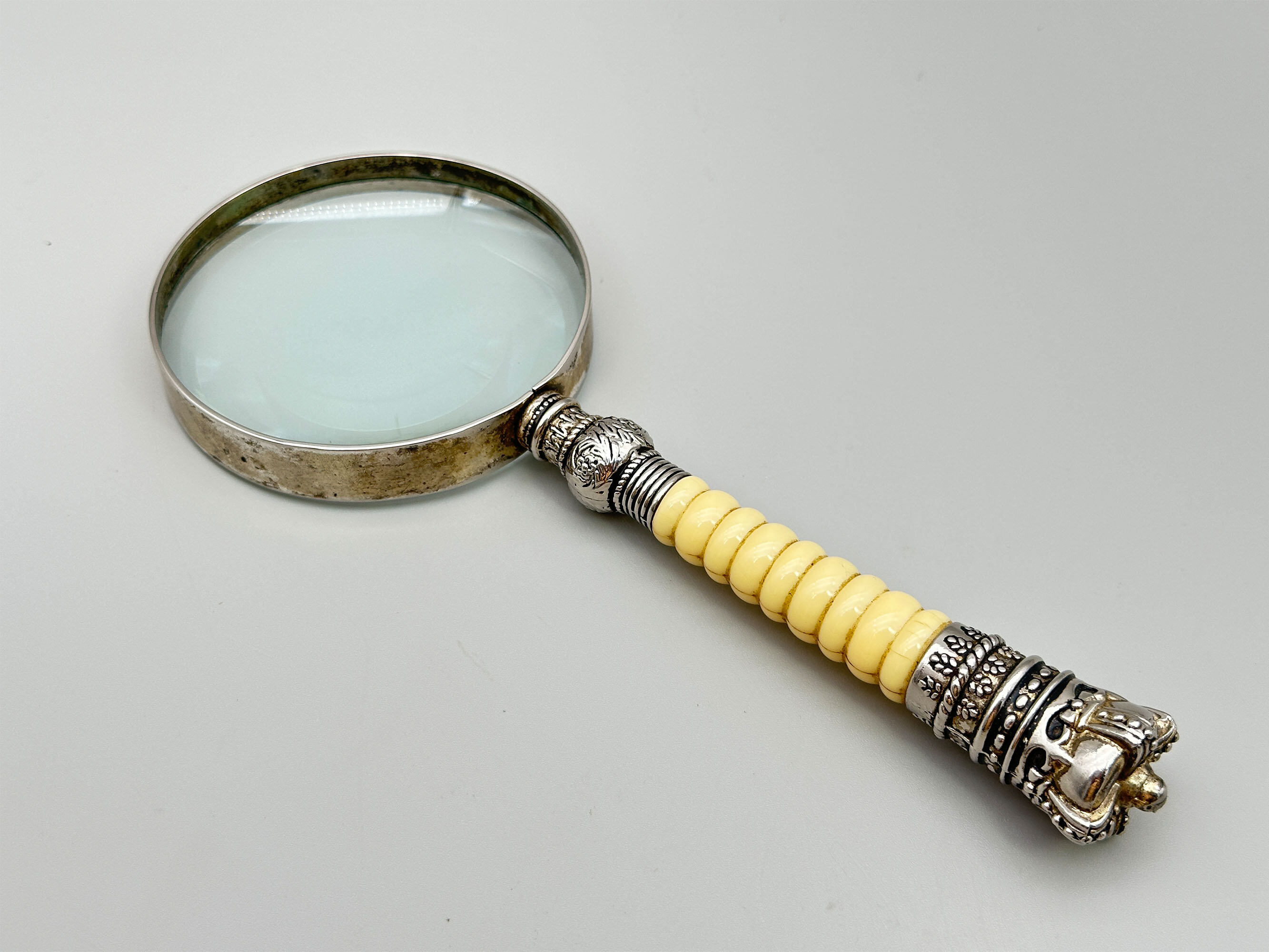
Magnifying Glass with Crown Handle, C20th
Price: £45
Cranberry hobnail glass Vase, Fenton Art Glass USA, mid C20th
Price: £45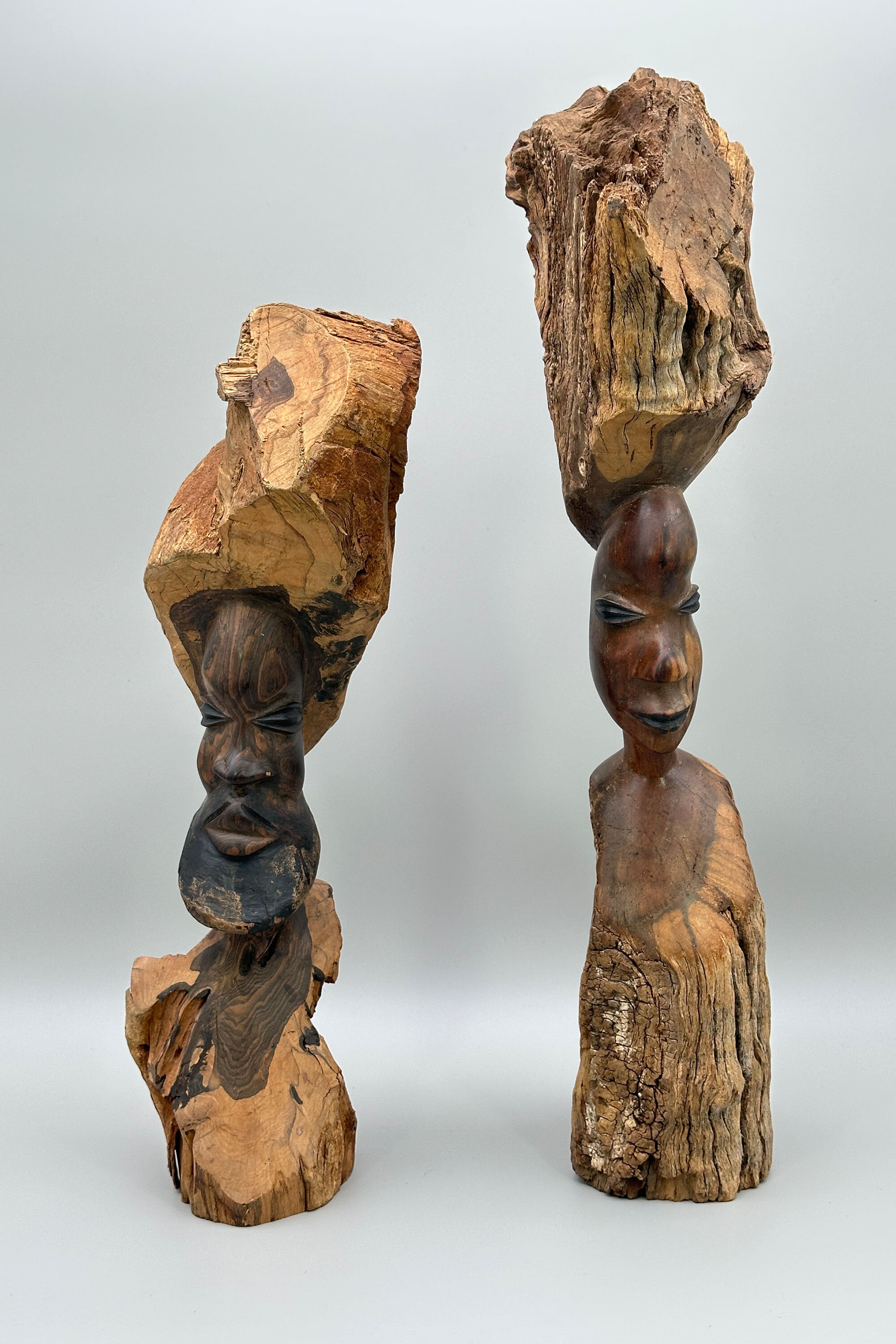
Pair of African wood Makonde style Busts of a man and a lady, C20th
Price: £95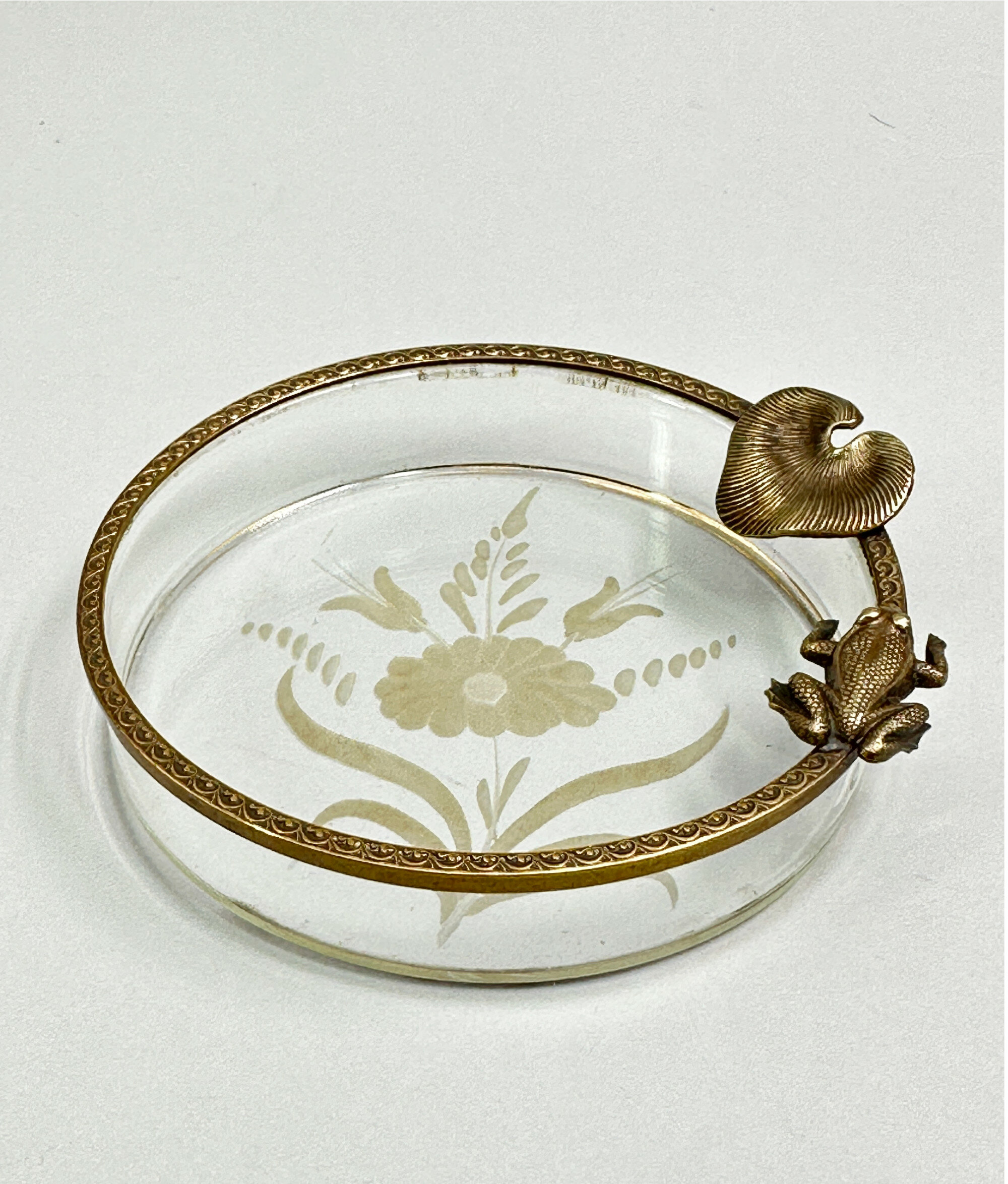
Fine Quality engraved French Glass Dish with naturalistic Ormolu Mounts, early C20th
Price: £25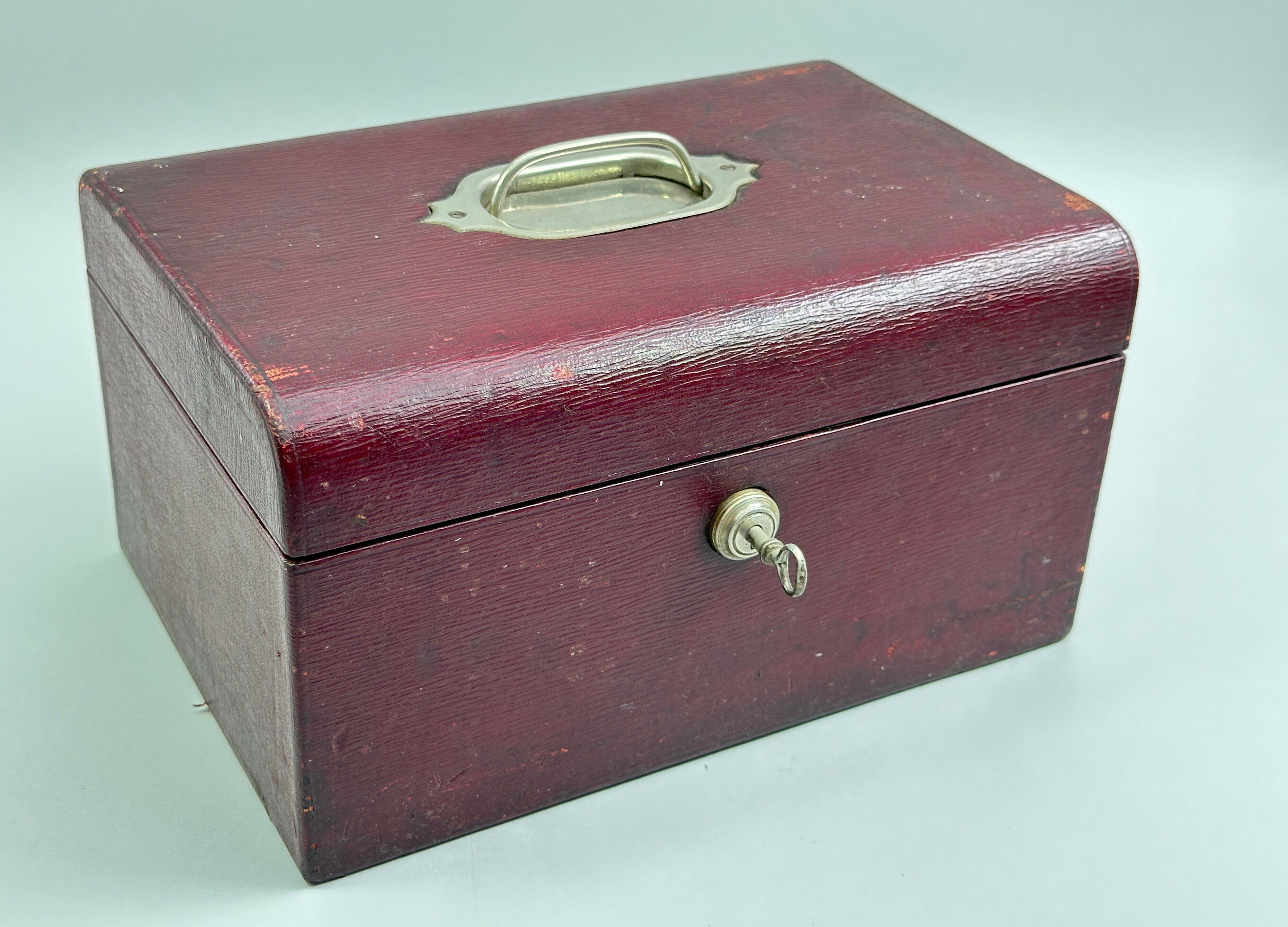
Burgundy Leather Jewellery Box with Bramah Lock, early C20th
Price: £95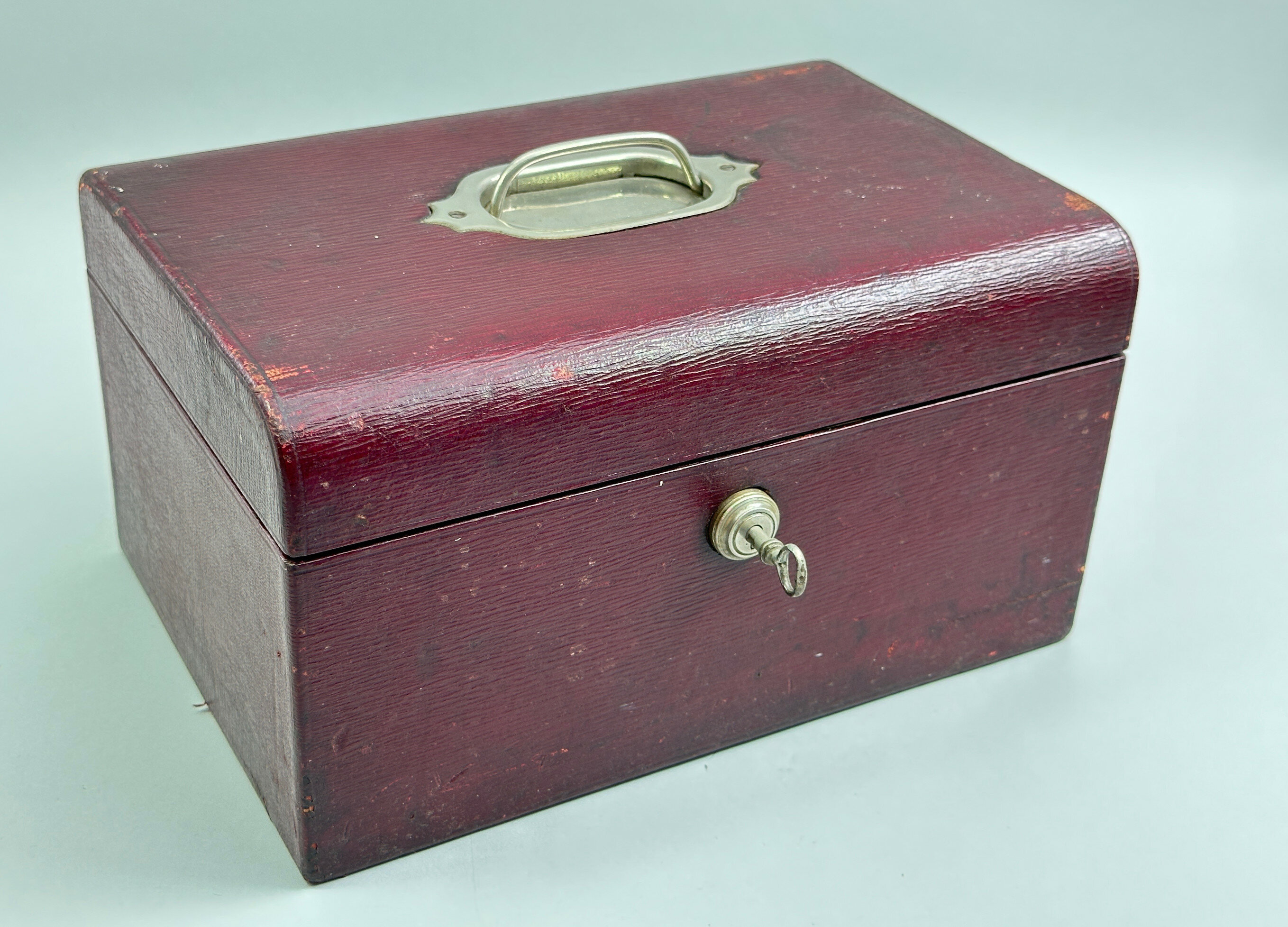
Burgundy Leather Jewellery Box with Bramah Lock, early C20th
Price: £95
A pair of Art Deco style Onyx Bookends, C20th
Price: £35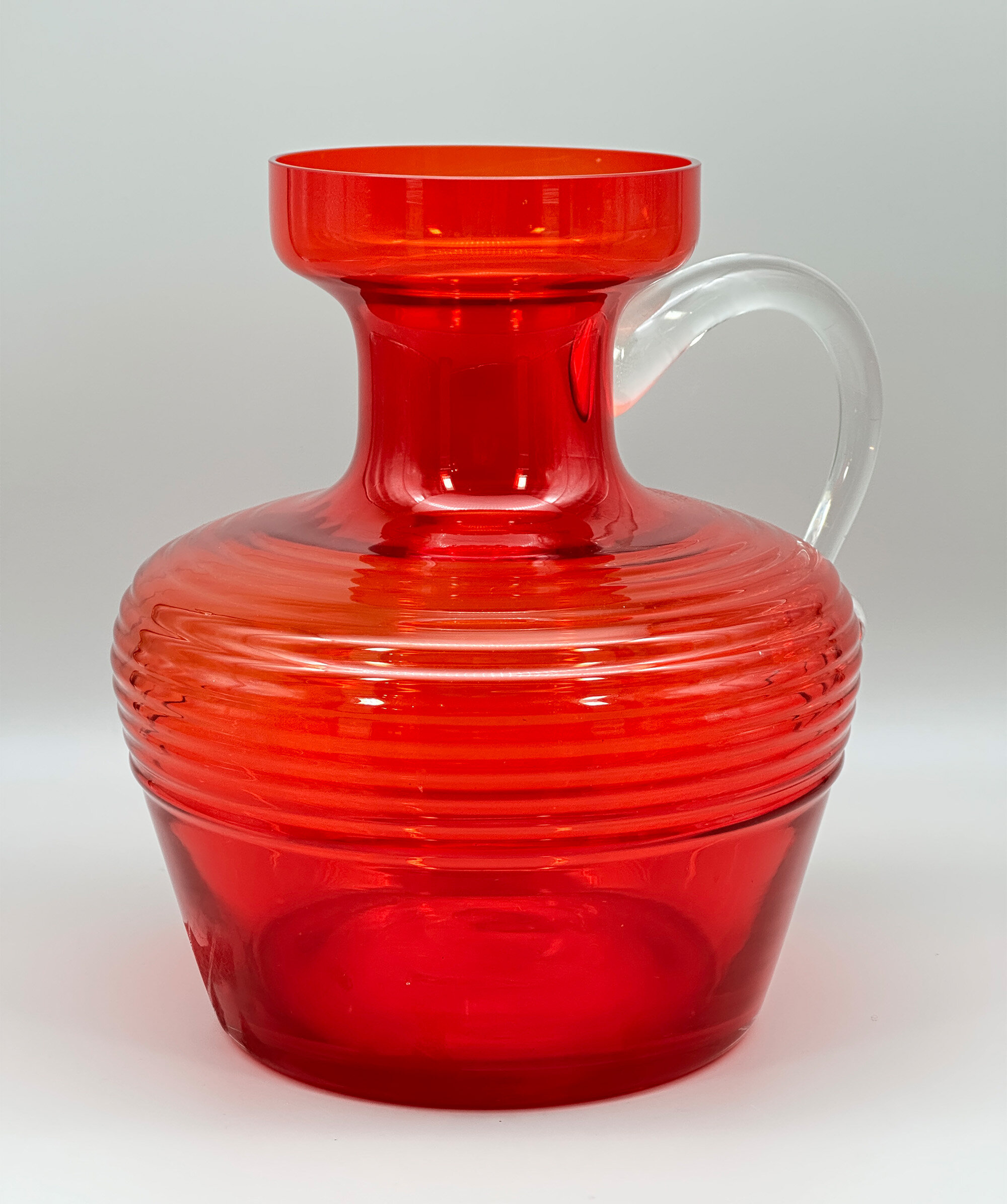
Red glass jug, Cleopatra range, Tamara Aladin for Riihimäen Lasi, Finnish 1970s
Price: £55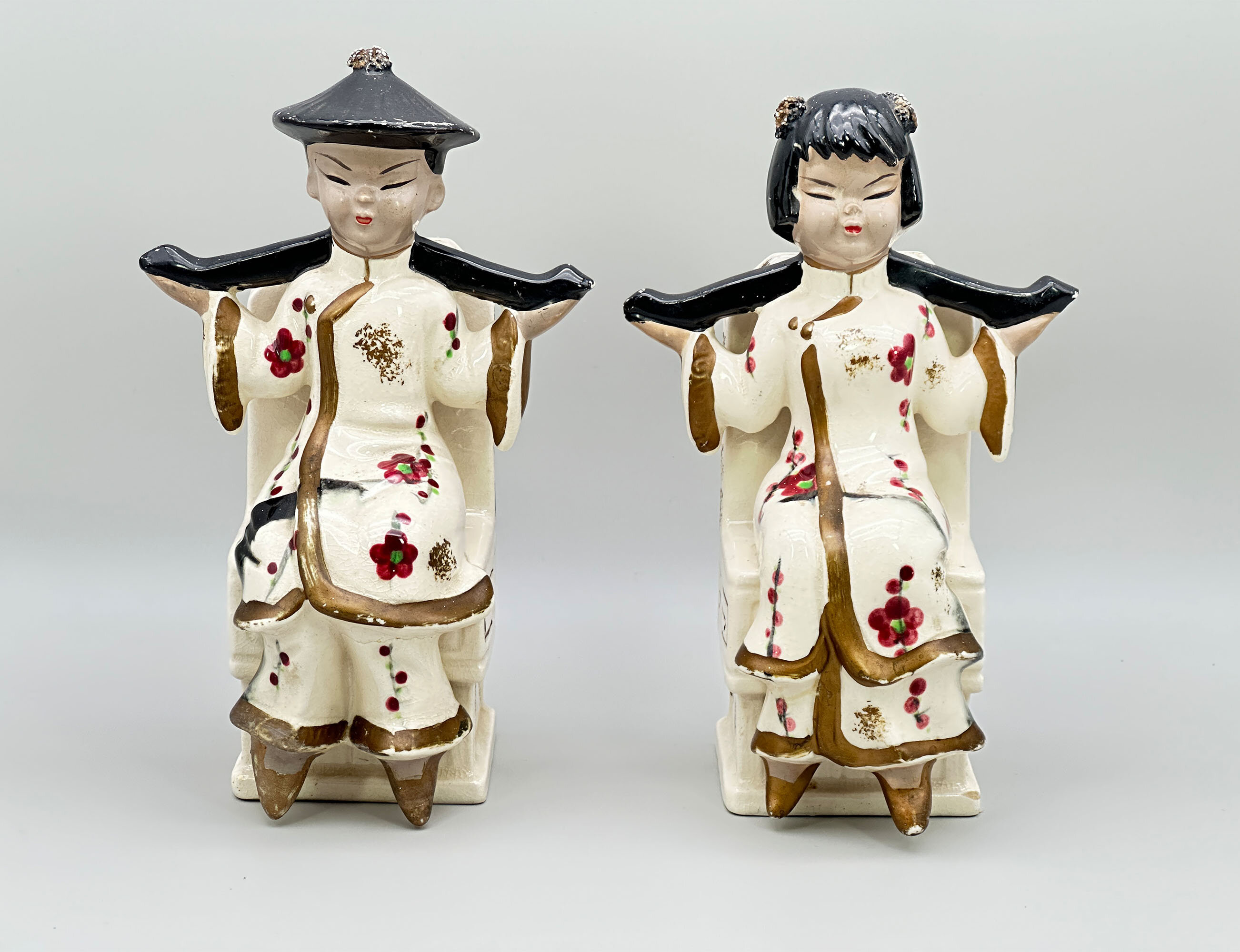
Pair of Japanese ceramic Bookends, seated Boy and Girl, mid C20th
Price: £55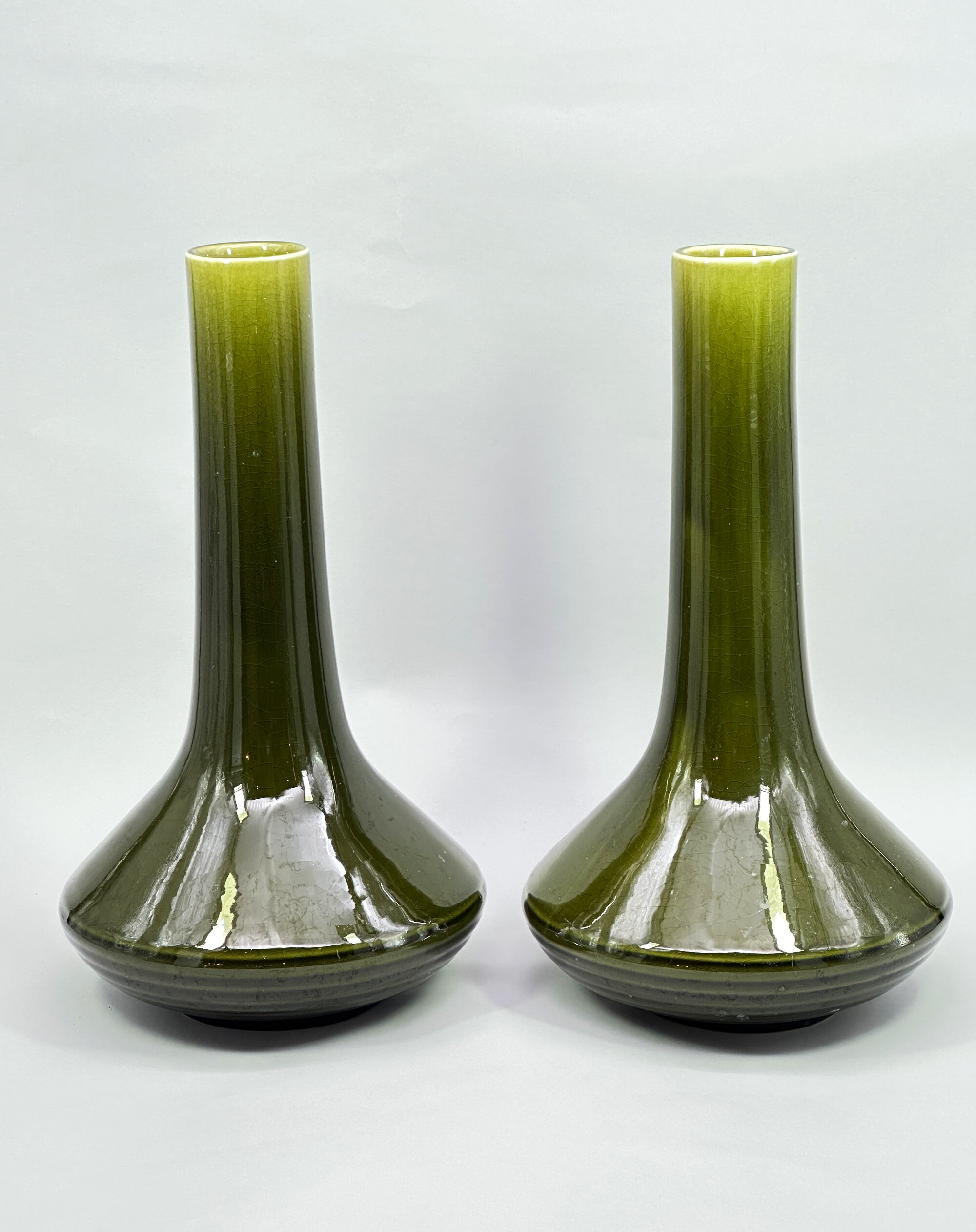
Pair of Green Glazed Bottle Vases, possibly French C20th
Price: £180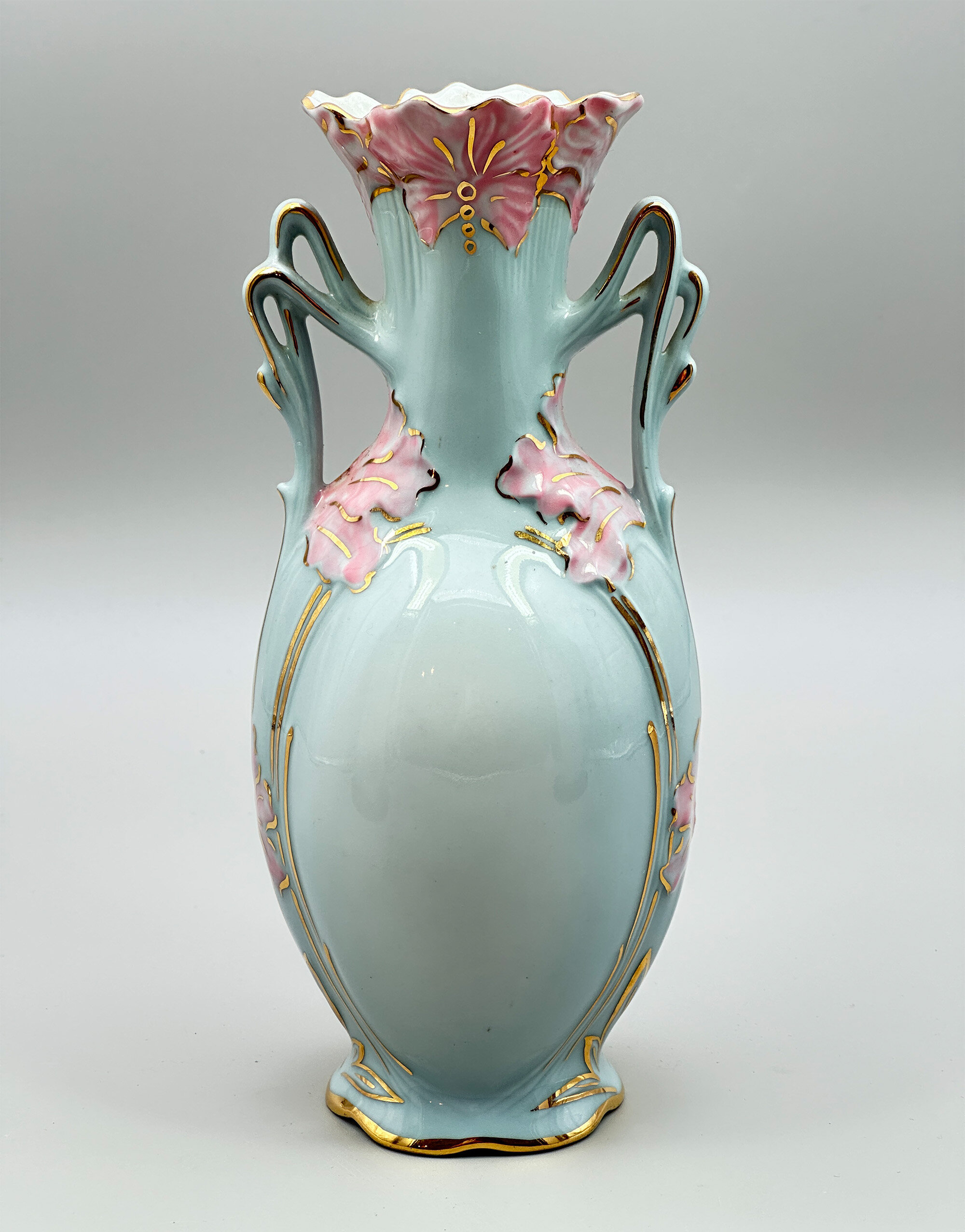
Art Nouveau style Vase, Royal Dux, late C20th
Price: £55Duxer Porzellanmanufaktur, or the Dux Porcelain Manufactory, was started in 1860 by Eduard Eichler in what was then Duchov, Bohemia, later to become part of Czechoslovakia. Production was to continue until the beginning of the second world war and beyond and their later pieces are now generally referred to by the abbreviated name, ‘Royal Dux’. The distinctive pink triangle plaque mark was first used in the late nineteenth century but appears on pieces from all dates, the version found here indicating late twentieth century work which is also confirmed by format of the stamped blue mark.
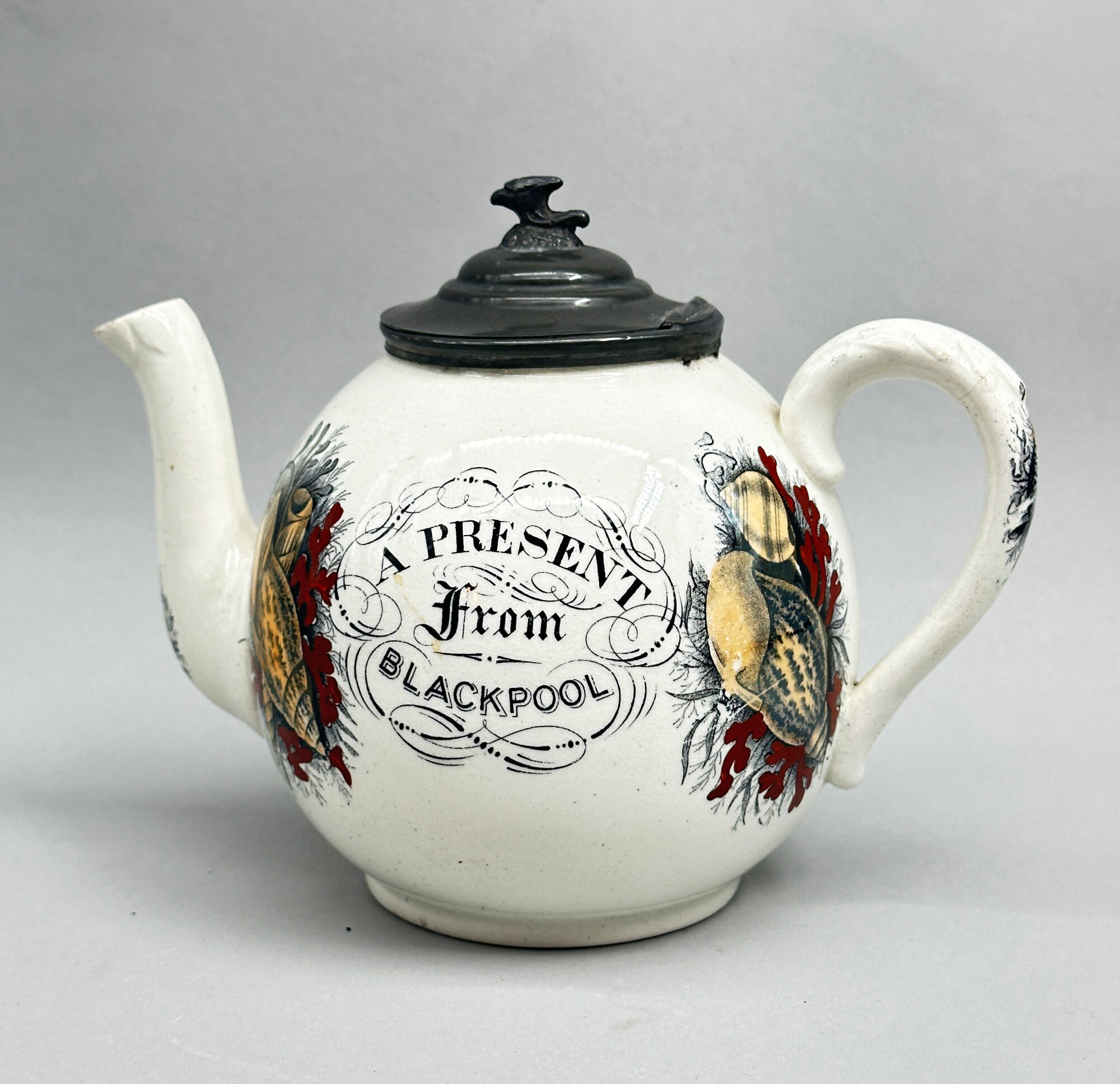
Blackpool souvenir teapot c1920
Price: £35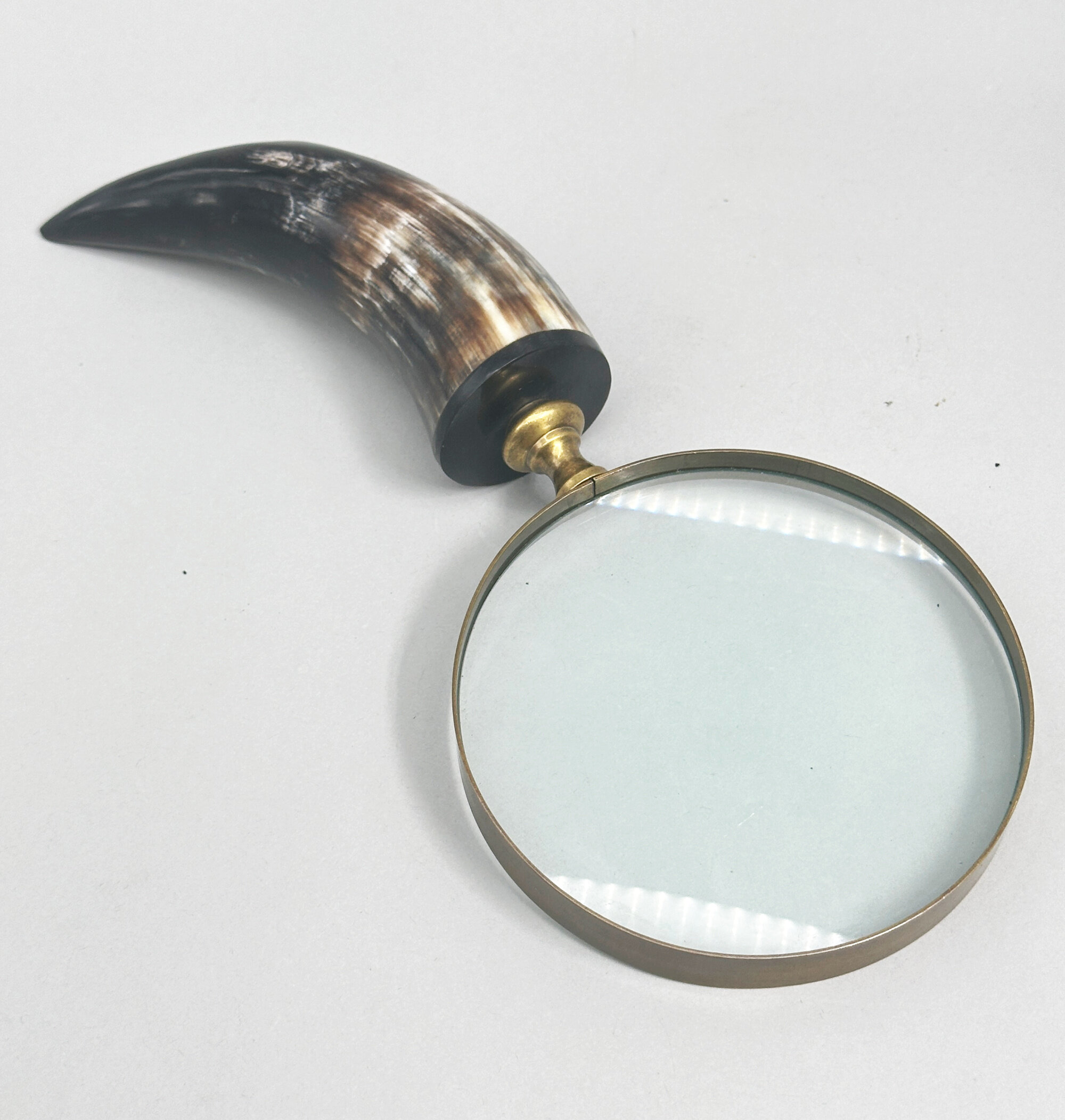
Edwardian large text magnifying glass with horn handle, early C20th
Price: £25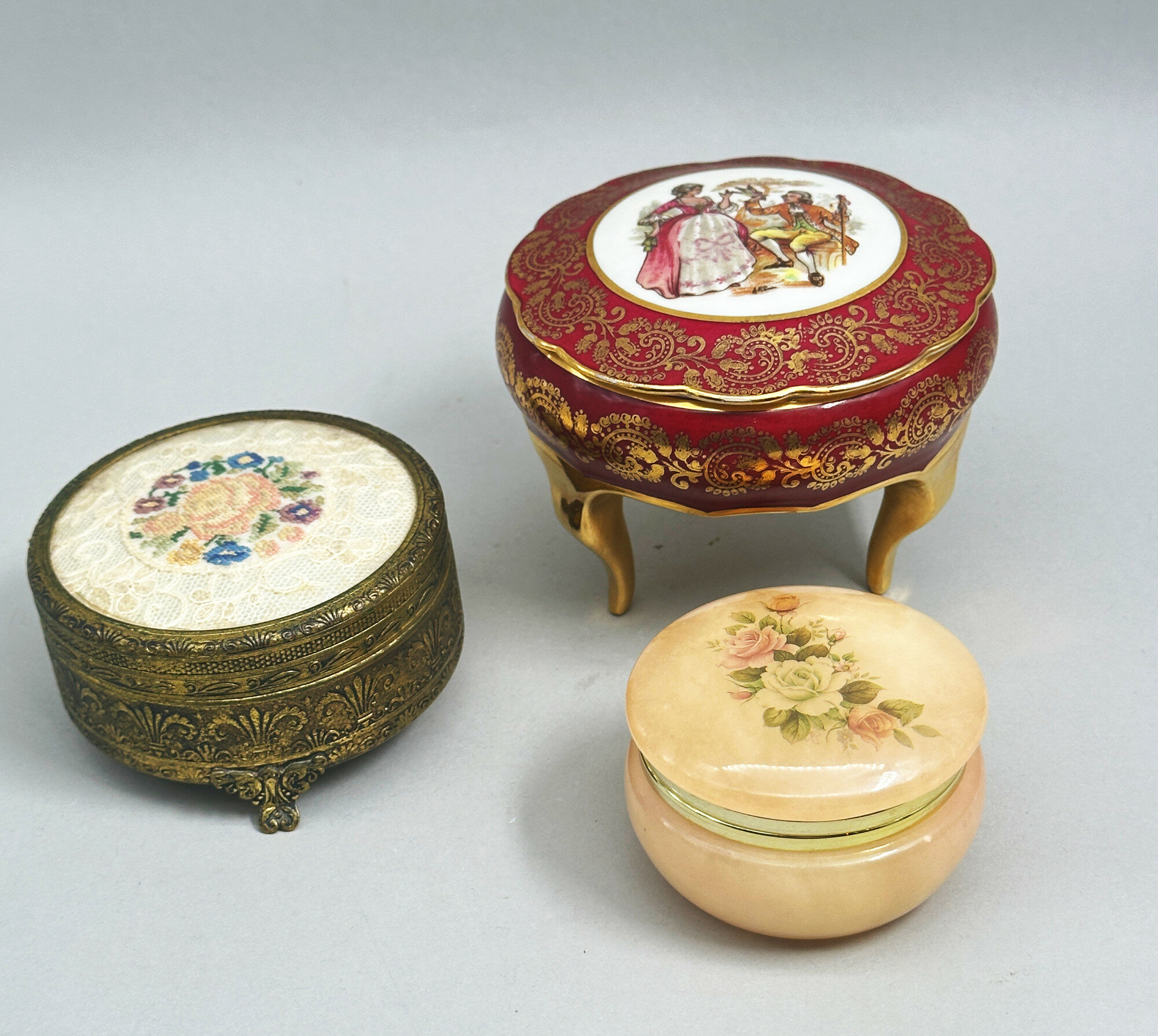
Three Powder Boxes, gilt metal, alabaster and porcelain, mid C20th
Price: £45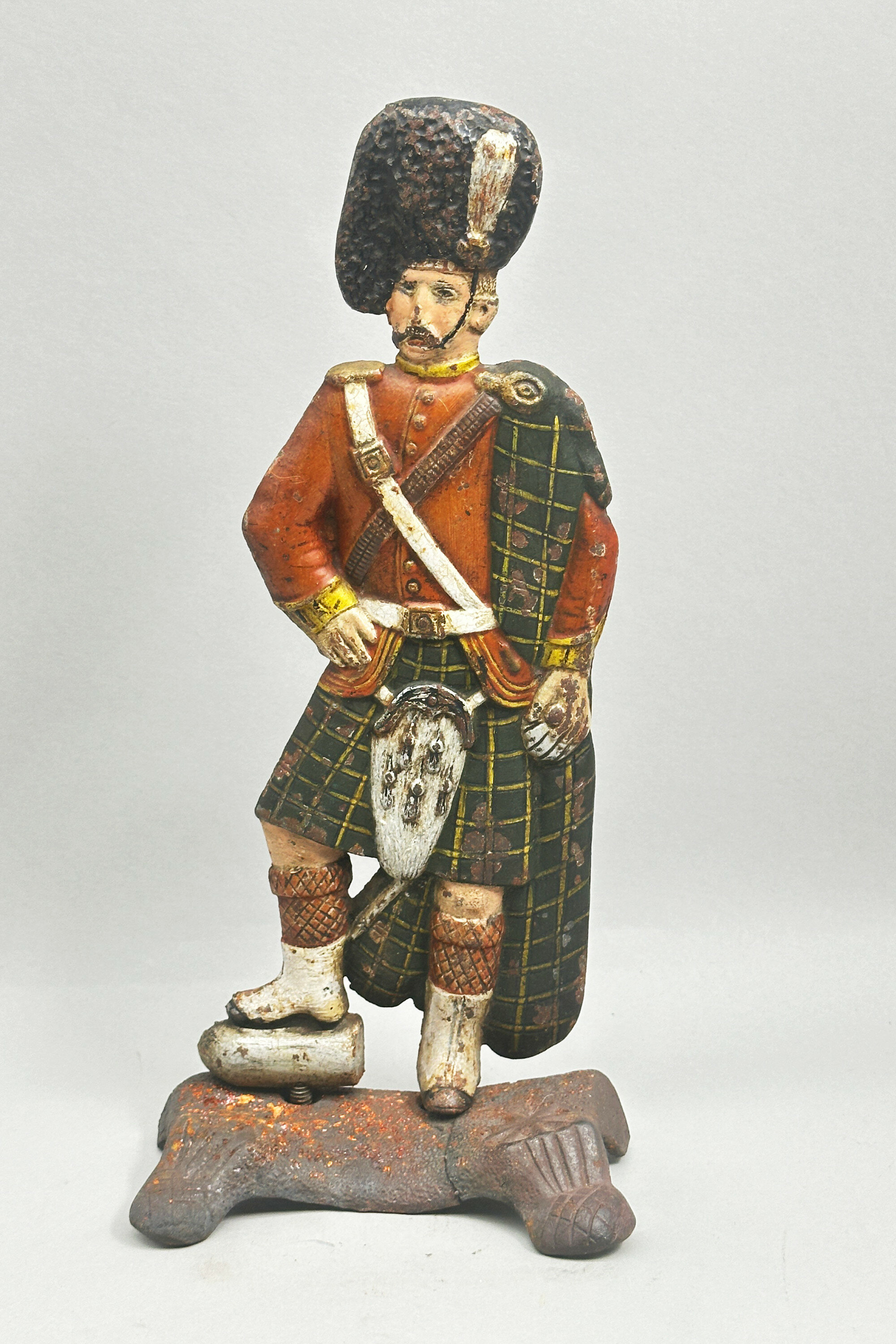
Victorian Black Watch iron doorstop c1890
Price: £25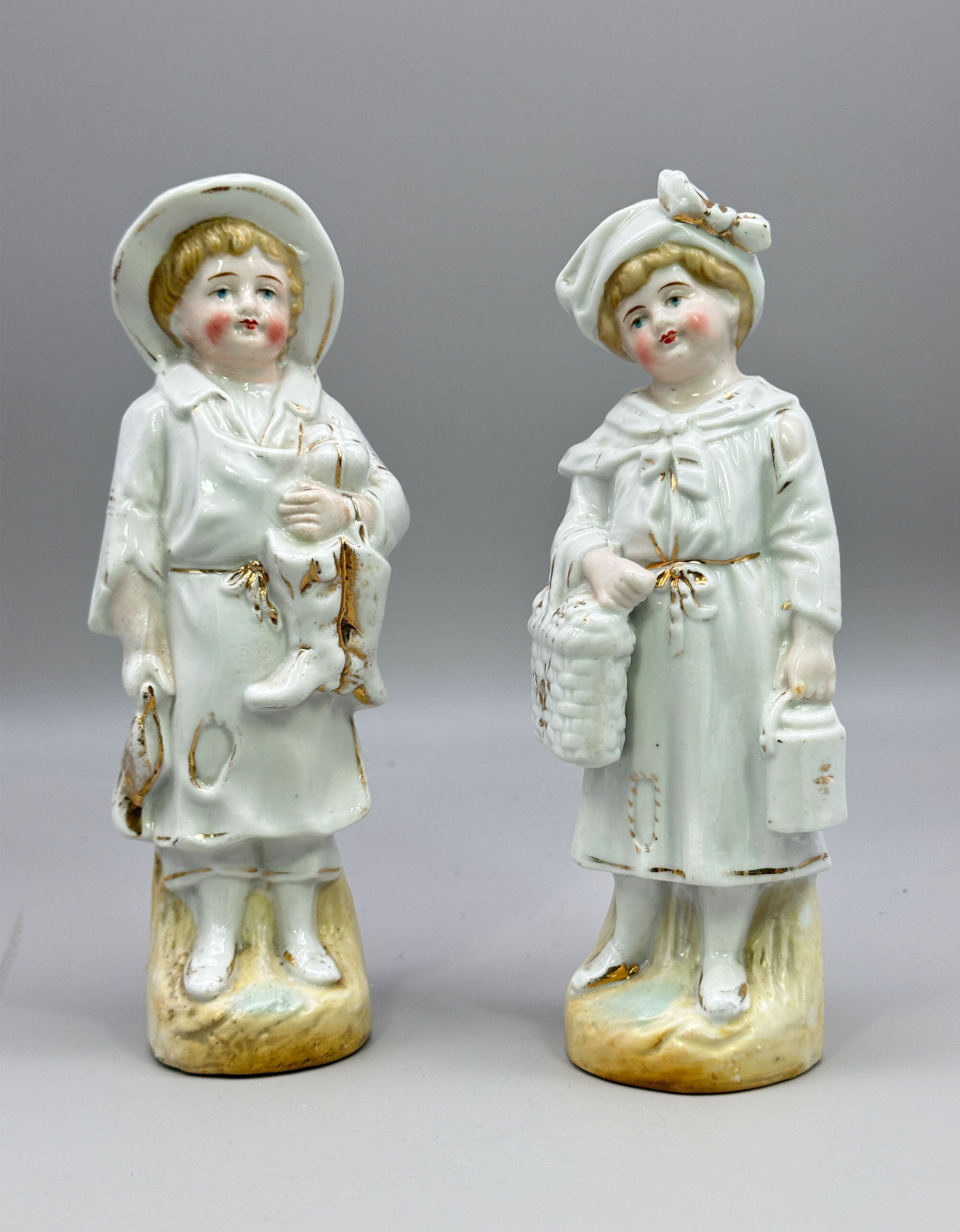
Pair of Staffordshire style figures, Boy and Girl, probably German, late C19th
Price: £75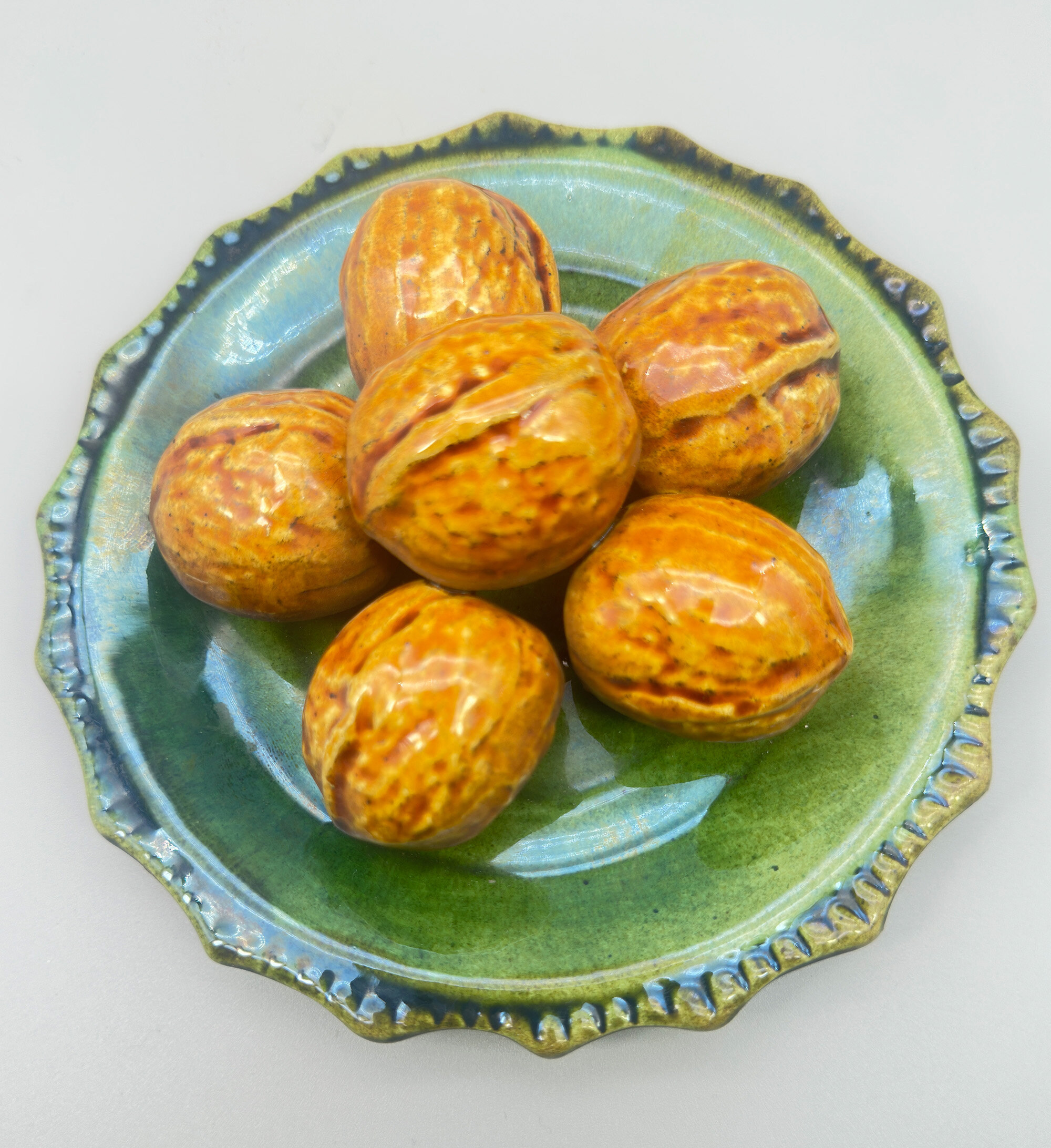
Majolica palissy style Walnut Dish, Roque Gaeiras, Portugal, second half C20th
Price: £45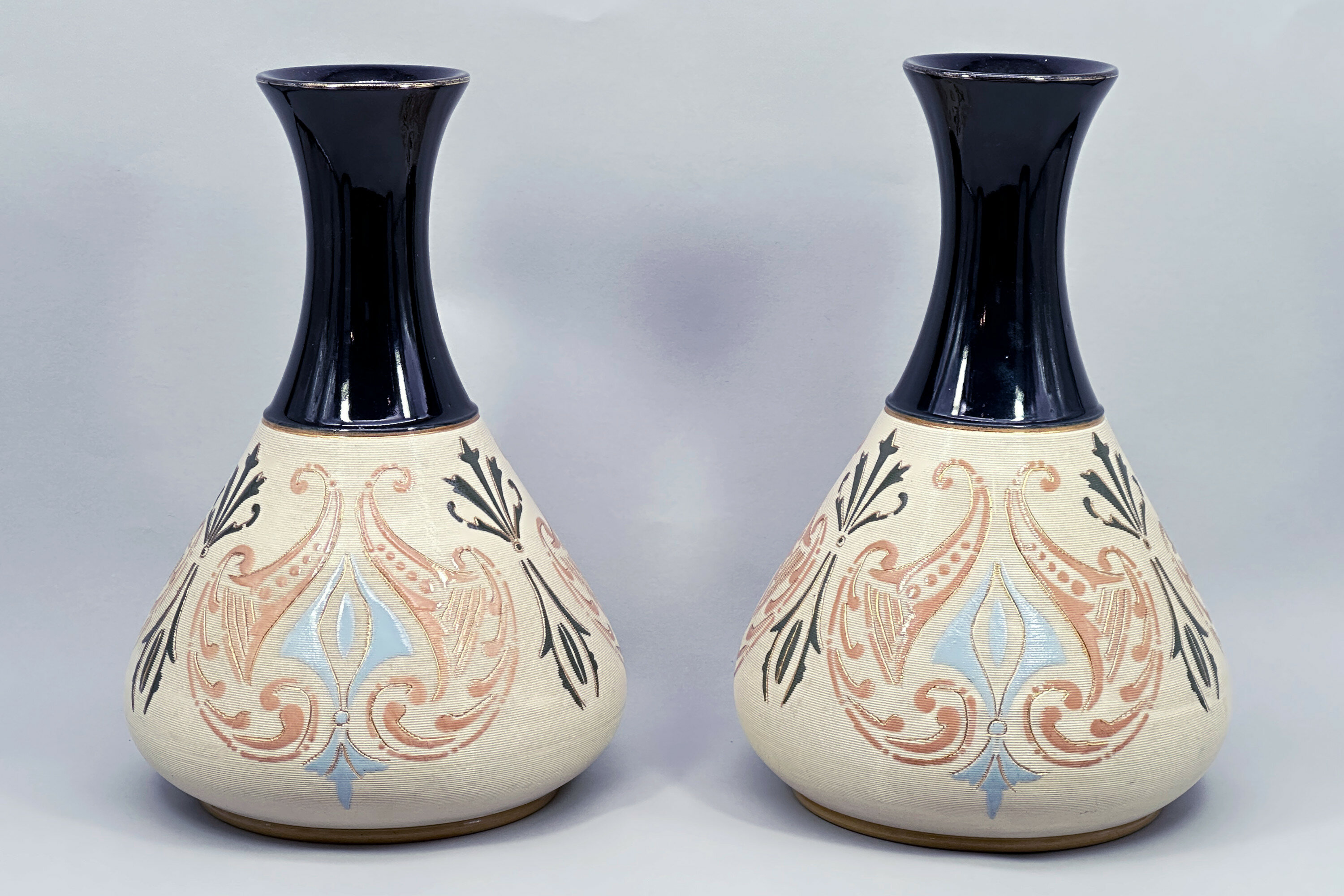
Pair of Lovatt and Lovatt Earthenware Vases, early C20th
Price: £95The Langley Mill Pottery was located in Langley Mill, Derbyshire on the Derbyshire – Nottinghamshire border. From its establishment in 1865 to its final closure in 1982, it went through five distinct periods of ownership, producing a wide range of stoneware ranging from utilitarian items and to high quality art pottery. This pair of vases dates from the third company that traded there, Lovatt and Lovatt. The Lovatt family had entered into partnership with the owner of the founding business at Langley Mill, James Calvert. From 1895 the business was in sole control of the Lovatt family and traded as ‘Lovatt and Lovatt’ until 1935. The early years of the twentieth century proved to be something of a zenith for them and a wide range of art pottery pieces were made which enjoyed great popularity. Production techniques were streamlined without a reduction in quality and in 1905, leadless glazes were introduced. These are proudly announced on the base of this pair of vases which are a fine example of the Lovatt and Lovatt style and probably date to 1913, indicated by the impressed numbers for that year.
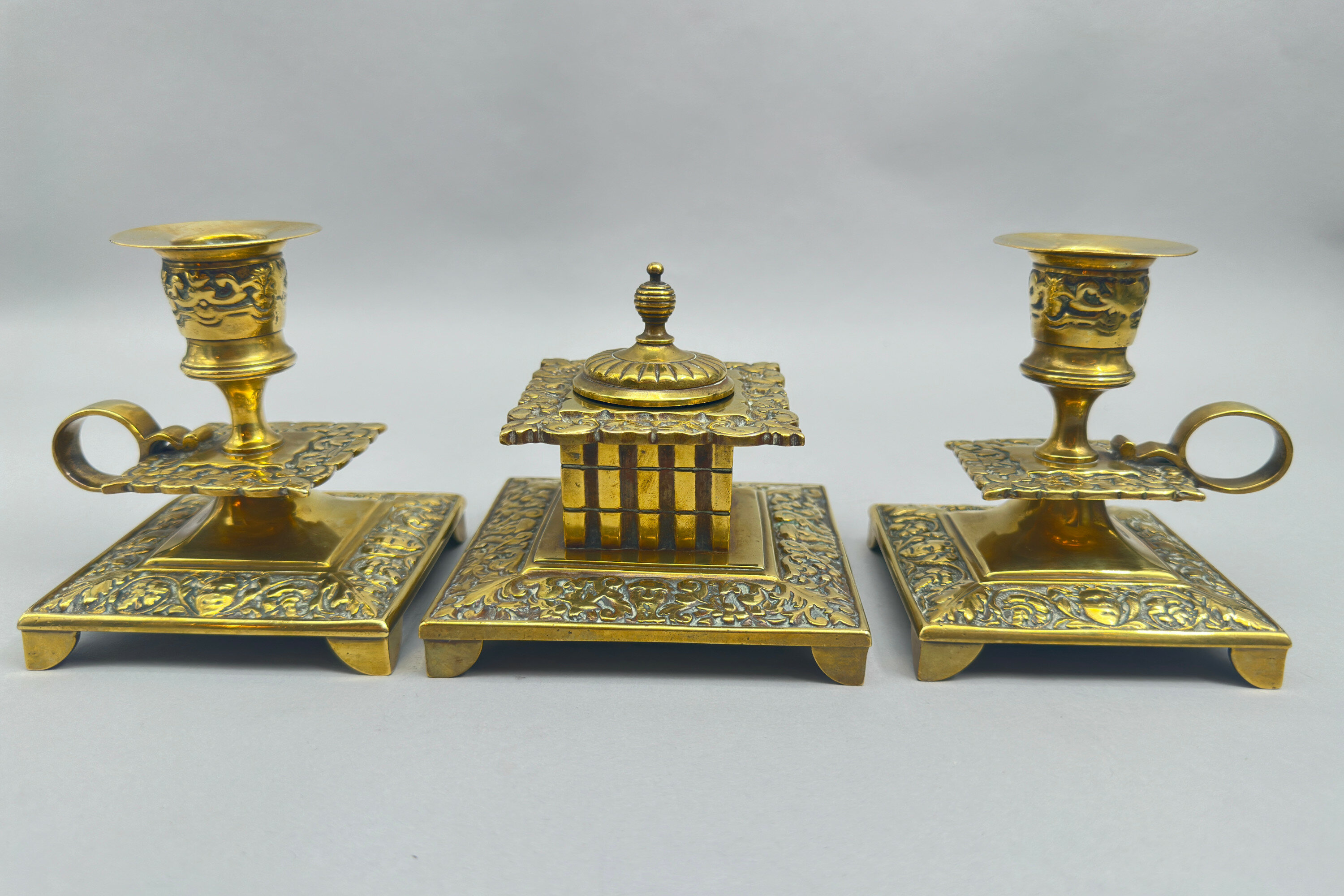
Renaissance Revival Brass Desk Set, English c 1900
Price: £55
Pair of Capodimonte ceramic Wall Hanging Plaques, boy and girl praying, Italian 1960s
Price: £25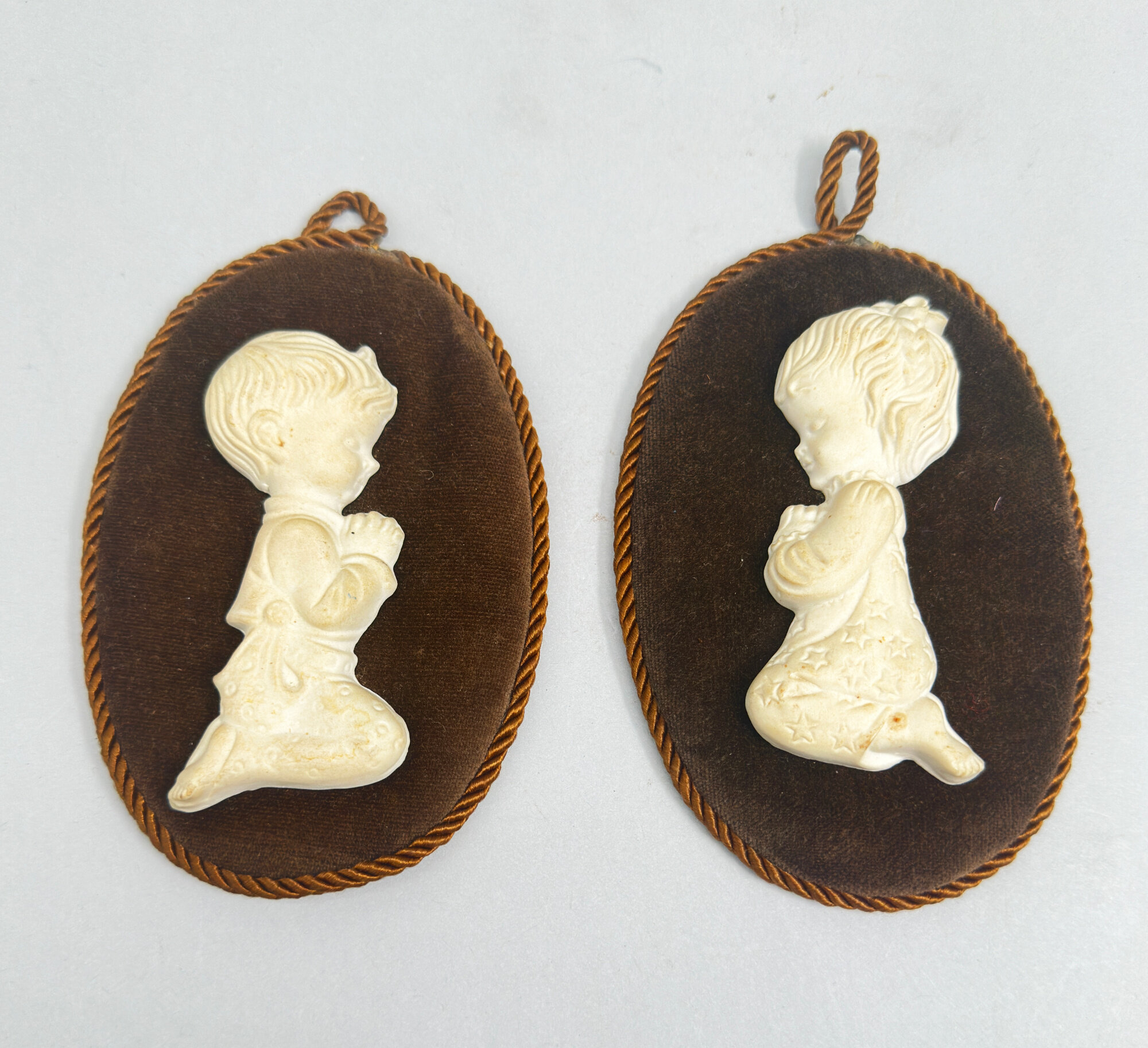
Pair of Capodimonte ceramic Wall Hanging Plaques, boy and girl praying, Italian 1960s
Price: £25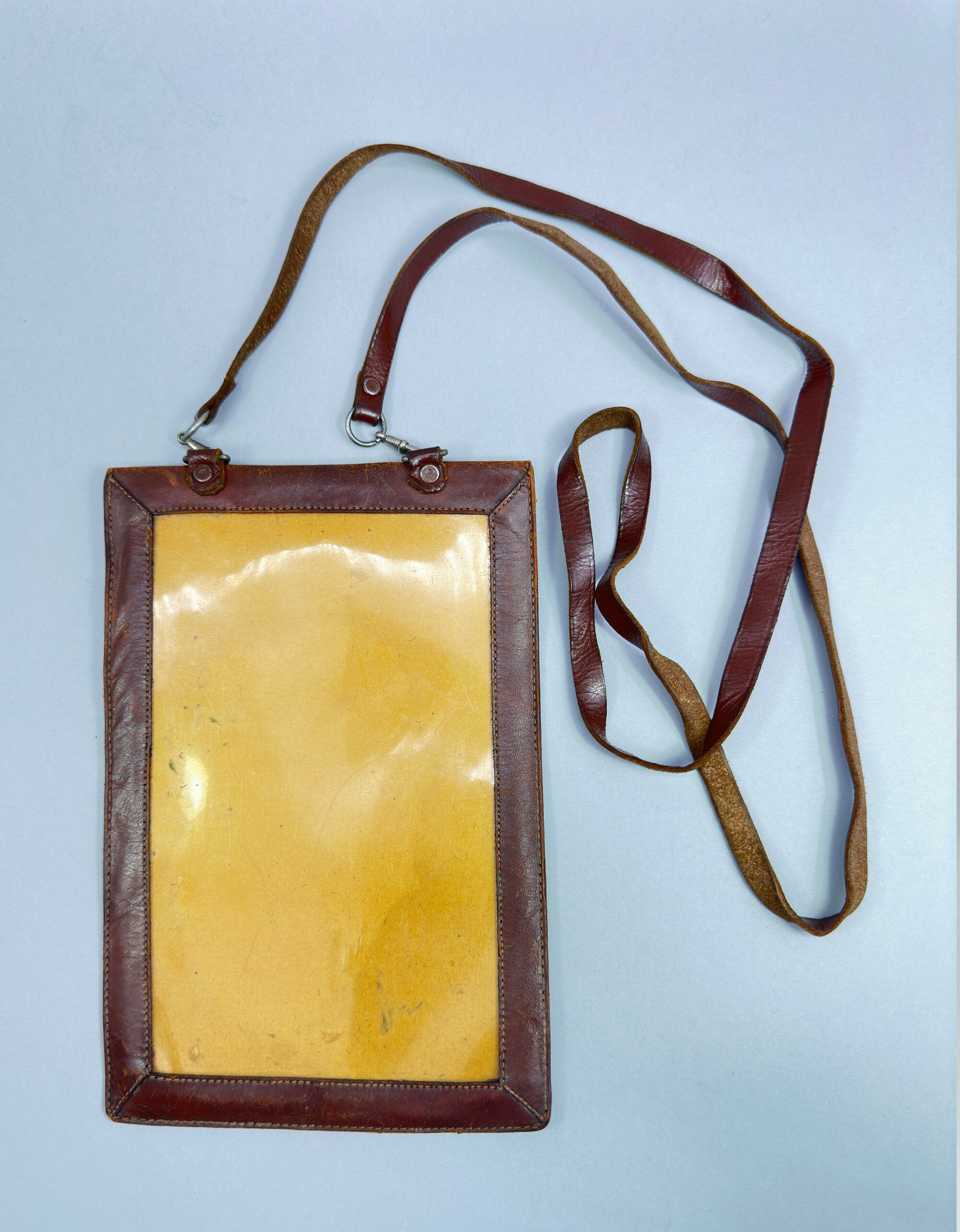
Vintage Leather Map Case, probably 1940s
Price: £45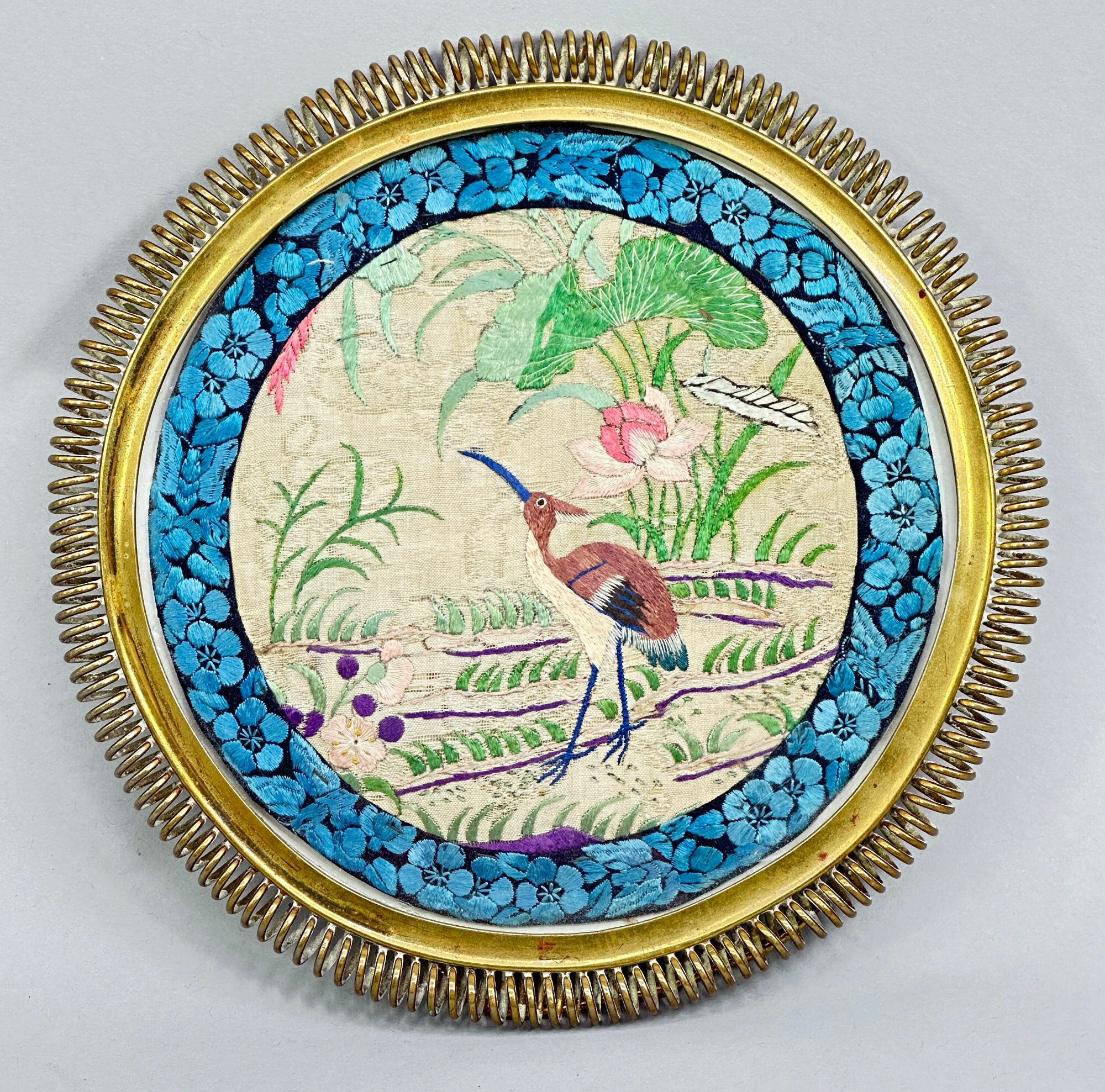
Chinese circular silk textile Panel in later European brass metal Frame, C19th/C20th
Estimate: £40 – 60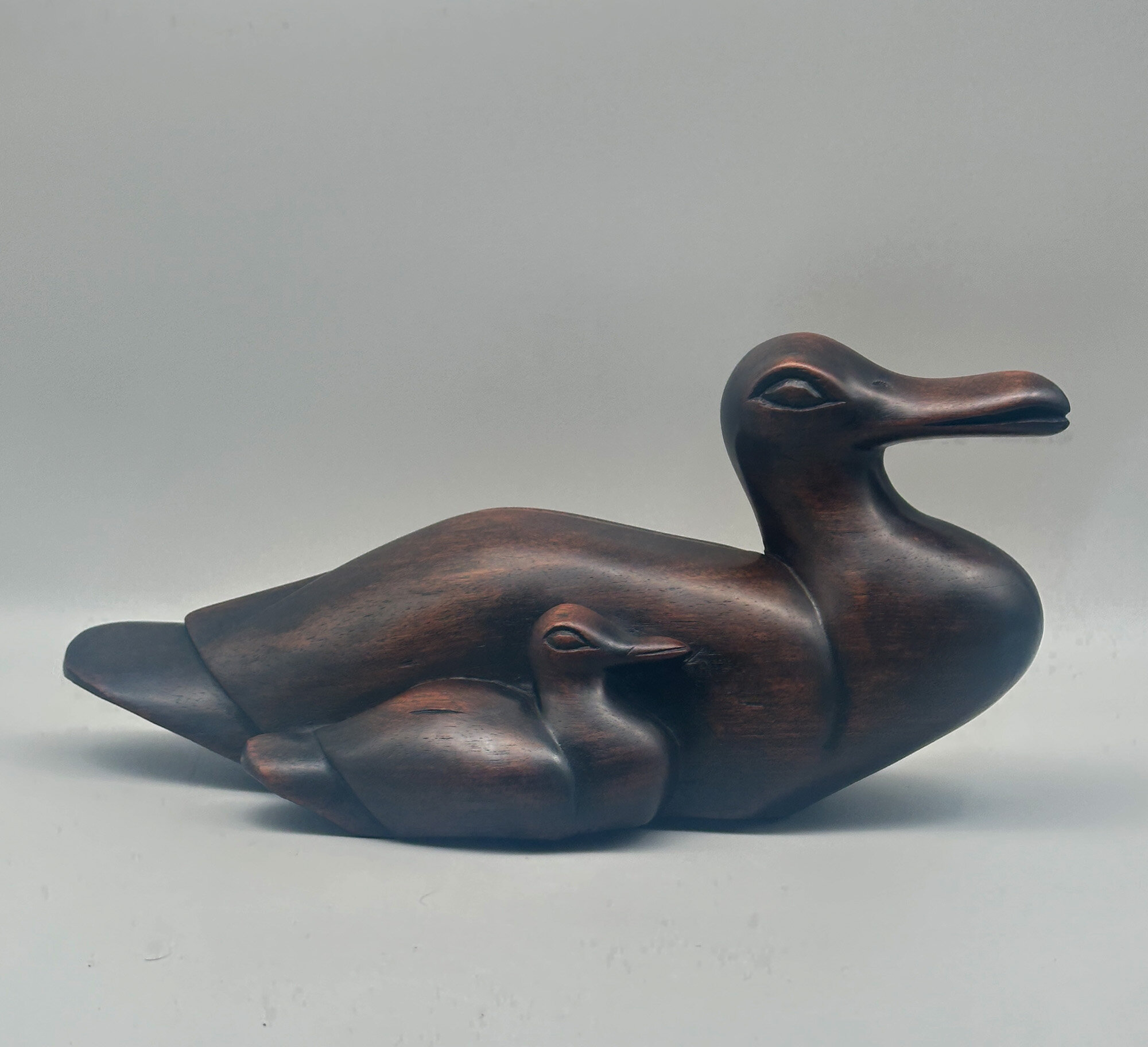
Large ironwood (palo fierro) carving of a duck and baby, Mexico, second half C20th
Price: £75Carving was originally done by the Seri people, a nomadic tribe of no more than 500 who live in Mexico and then by town and city dwellers from Sonora and Baja California, who embarked on the trade after the figures became commercially popular. Seri carvings were essentially hand made whereas the mass produced pieces were created with the use of power tools.
The forms are derived from the wildlife to be found in Mexico and are often abstract in style. While it may owe some elements to the use of machine tools, this carving is a fine example of the ‘ironwood’ style and is, in fact, an unusual composition with the mother and baby duck carved in one piece. The modelling is expressive and well complemented by the patina and finish of the wood. From the above, dating is clearly to the second half of the twentieth century and perhaps more to its later years if this is an example of the ‘commercial’ pieces produced at that time.
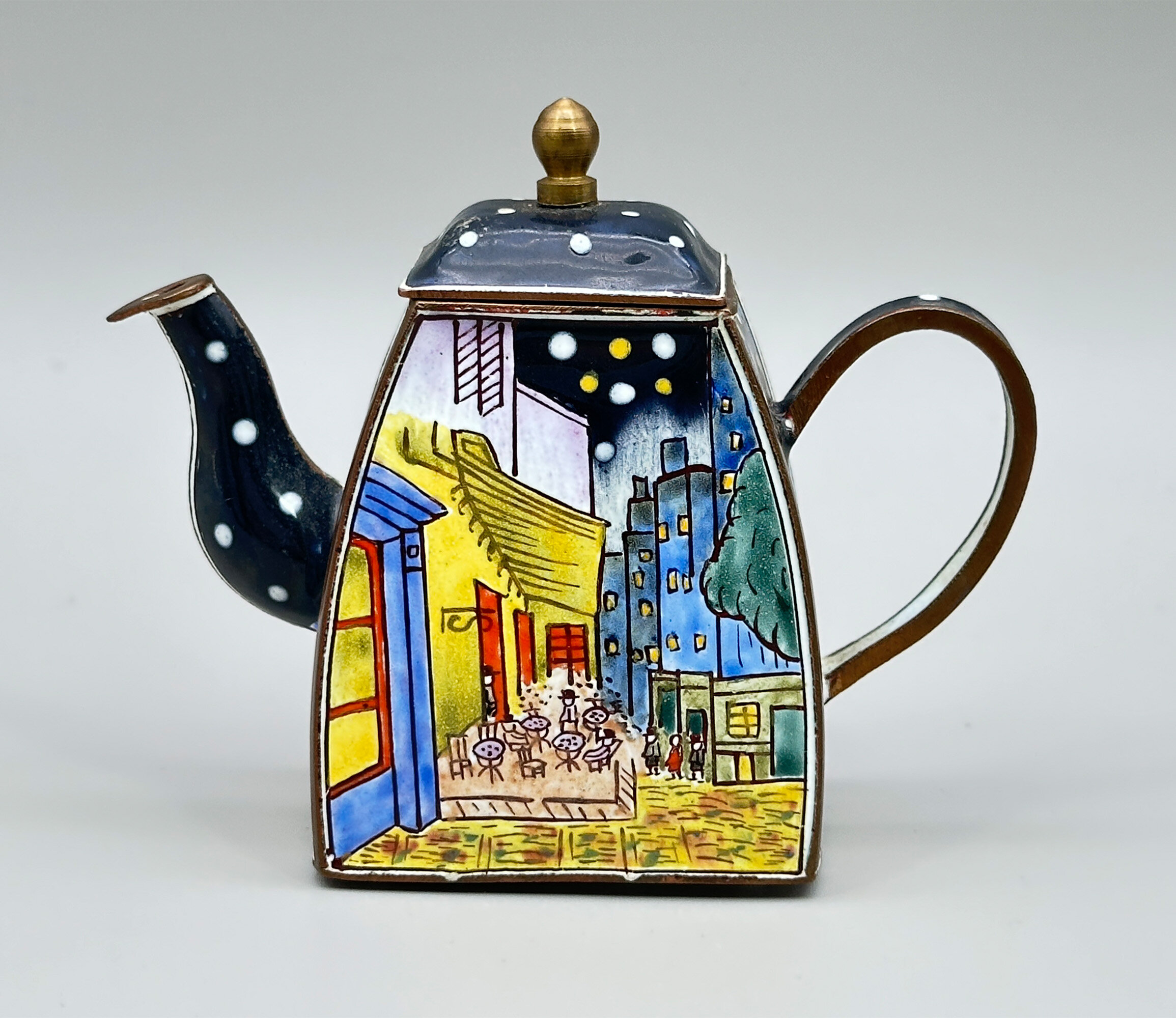
Trade+Aid Teapot, Van Gogh Café Scene, UK 1990s
Price: £25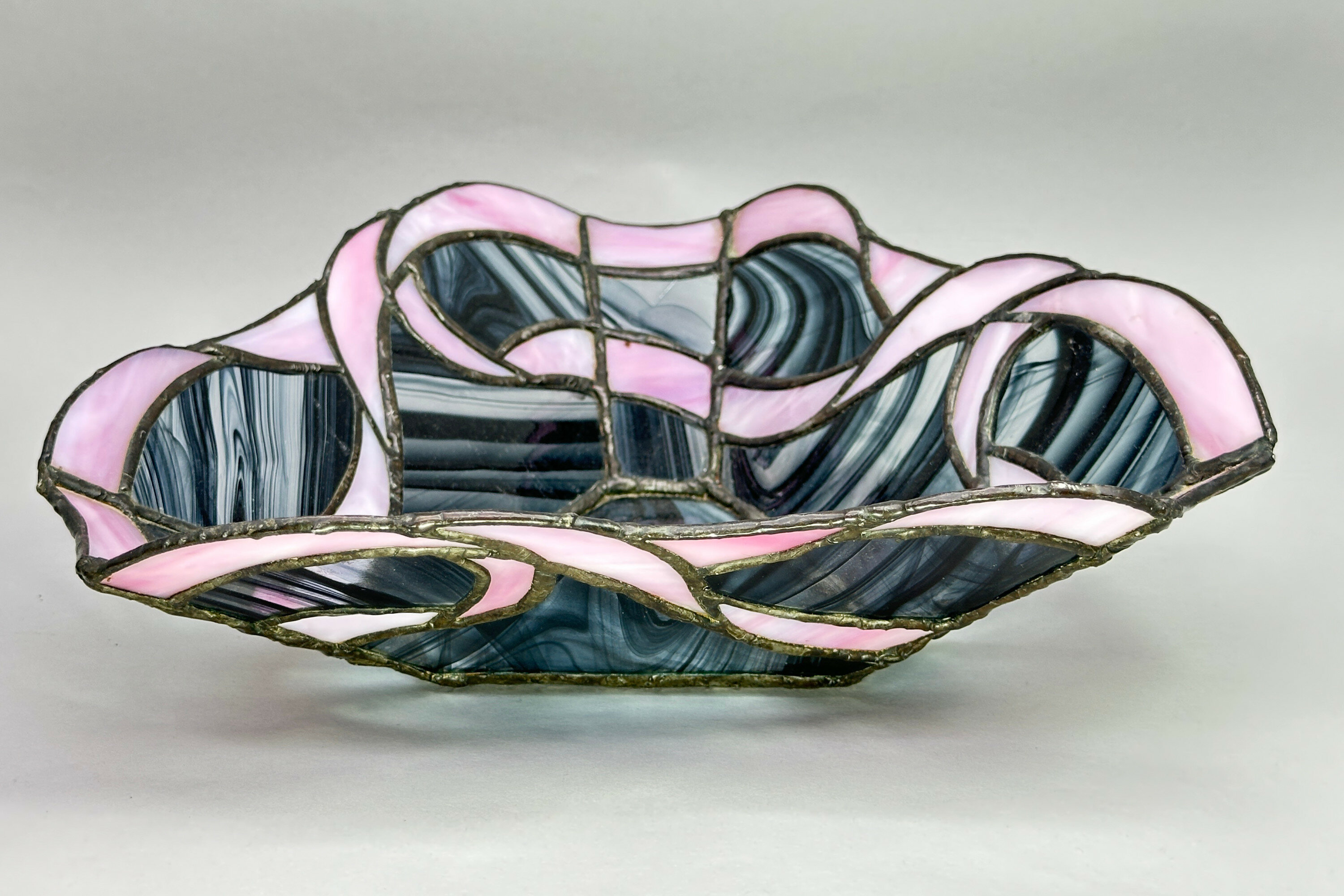
Leaded Slag Glass Bowl, C20th
Price: £45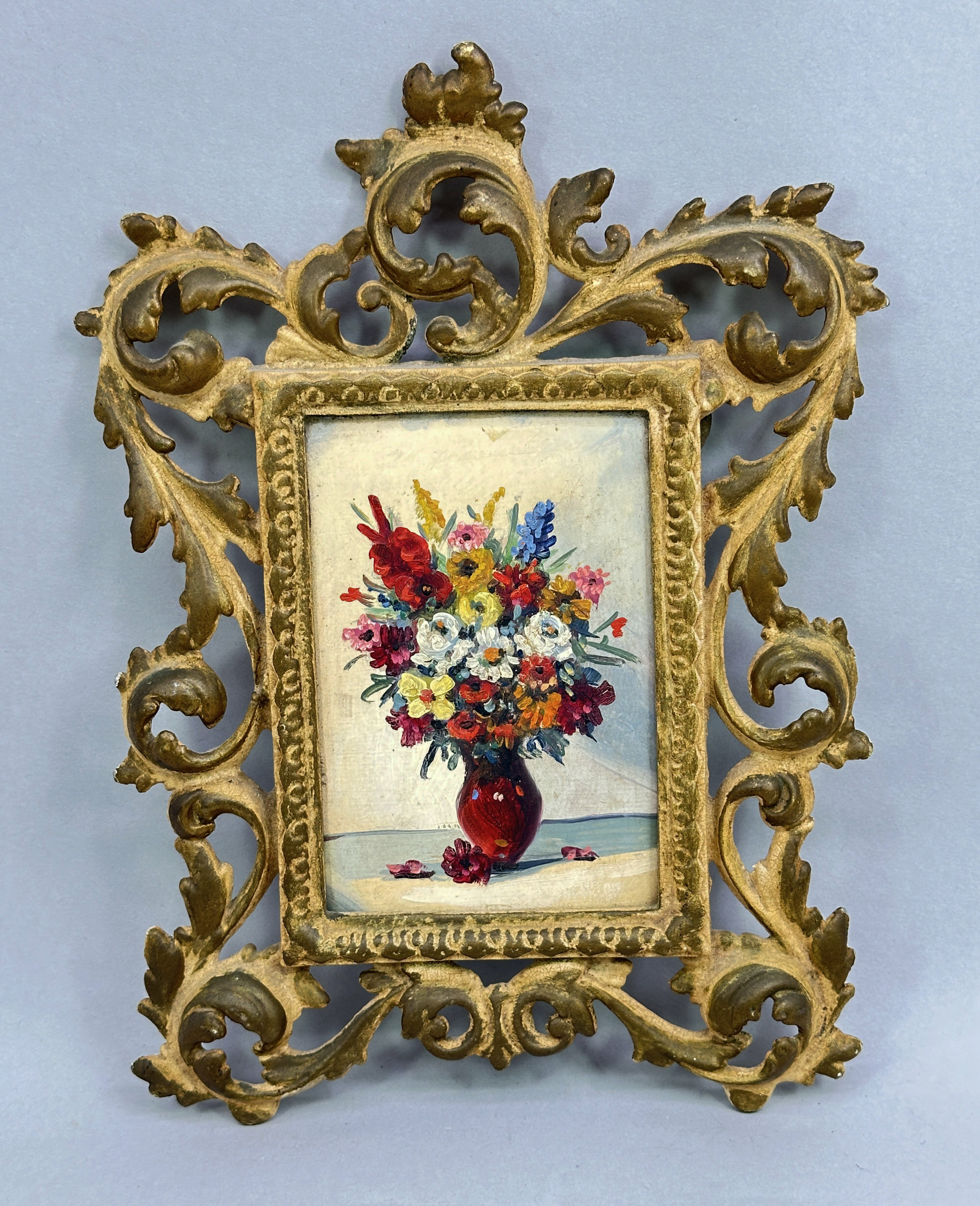
Baroque Style Picture Frame with Still Life, C20th
Price: £25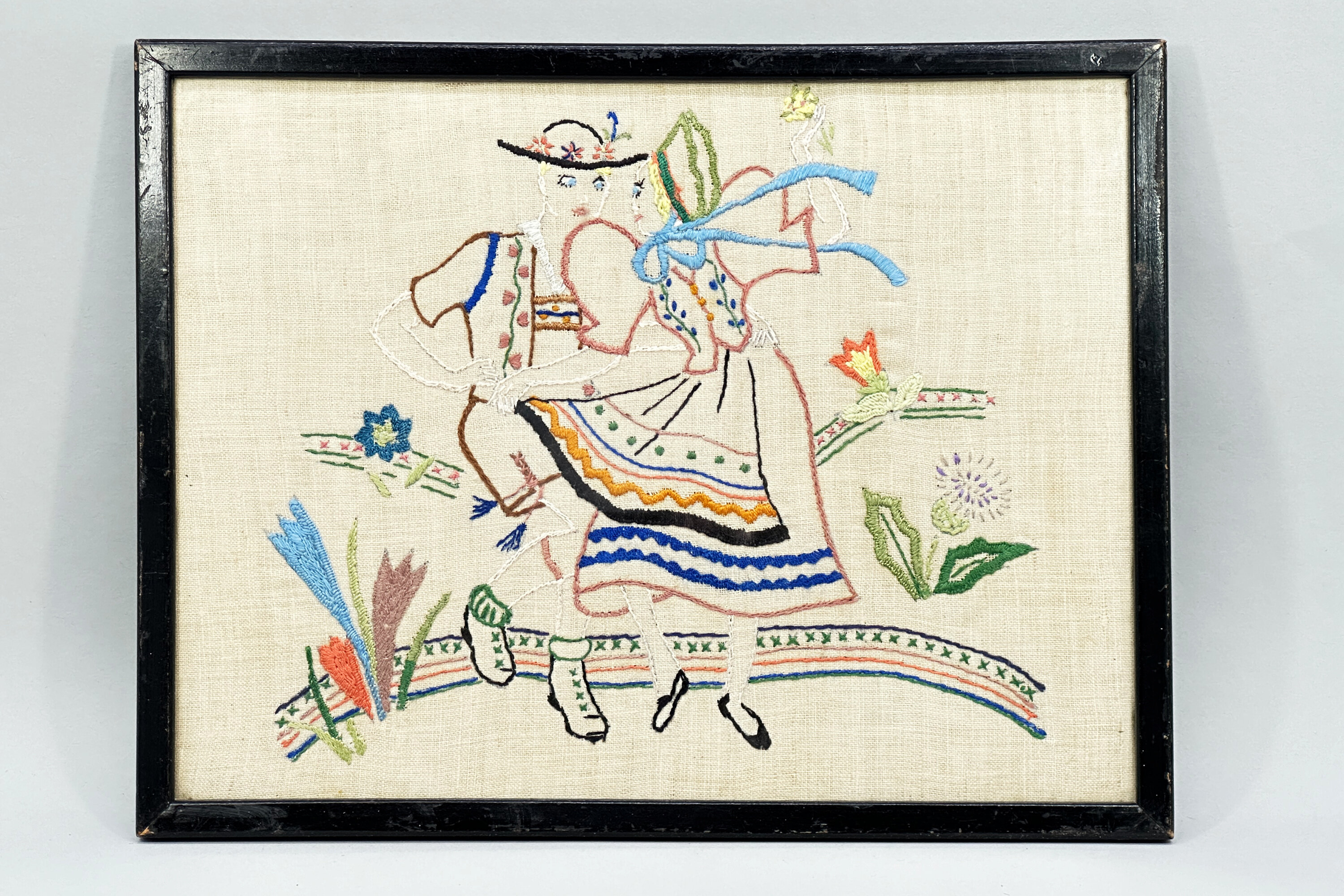
Stumpwork embroidery picture of a Young Couple dancing, C20th
Price: £25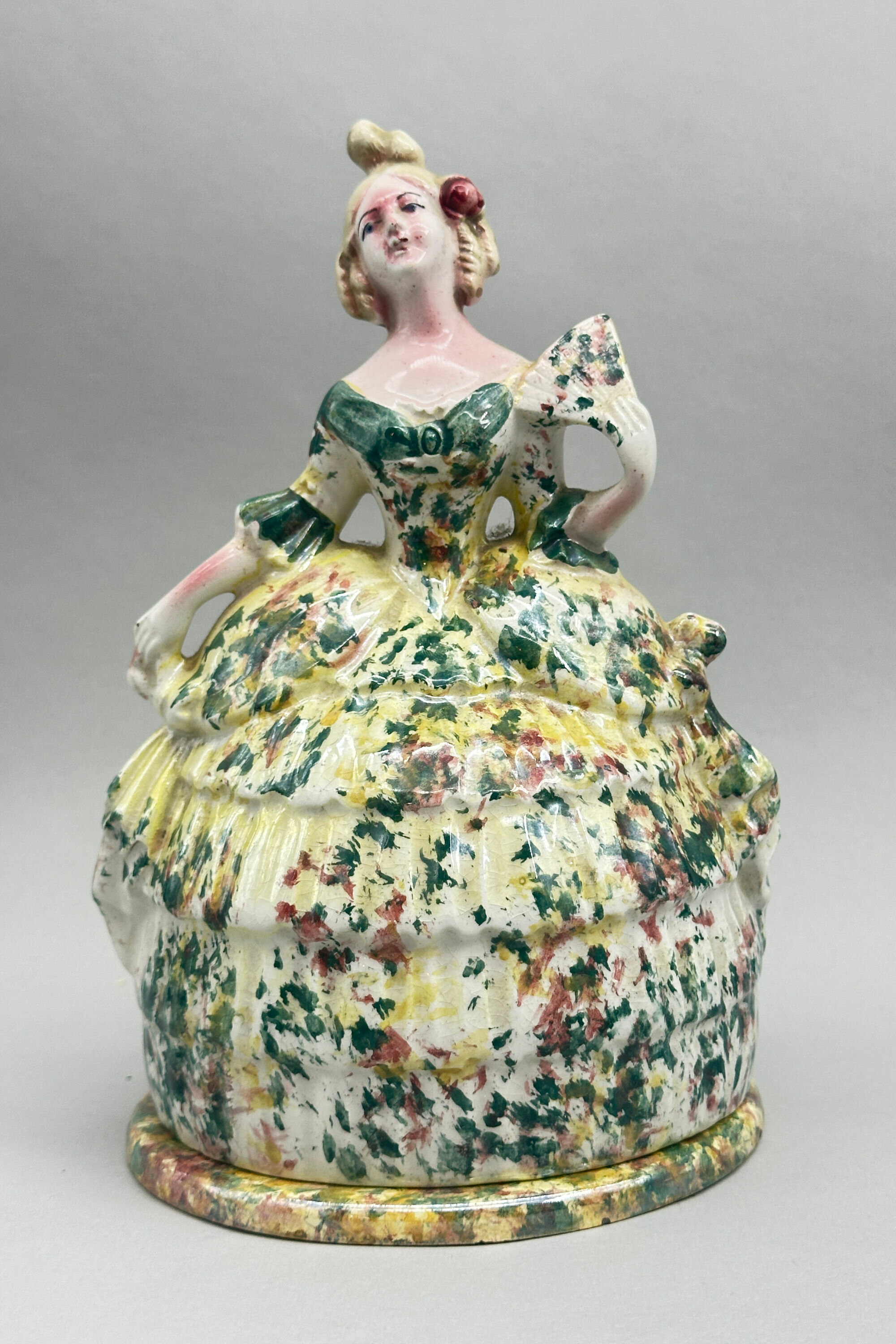
Lustreware Vanity Box, Lady in Crinoline, probably continental early/mid C20th
Price: £35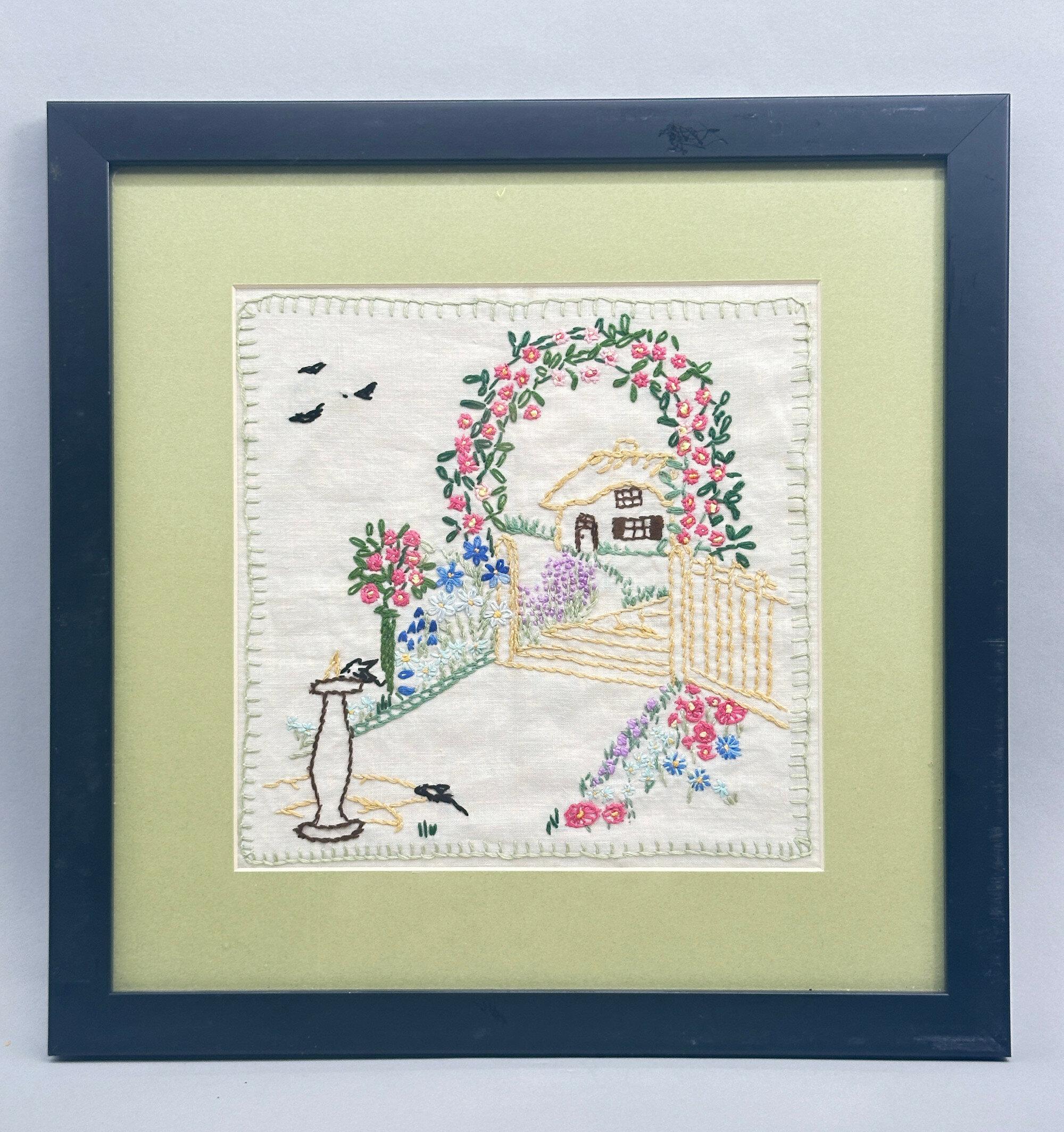
Vintage Needlepoint Picture of a Garden Scene, framed, second half C20th
Price: £25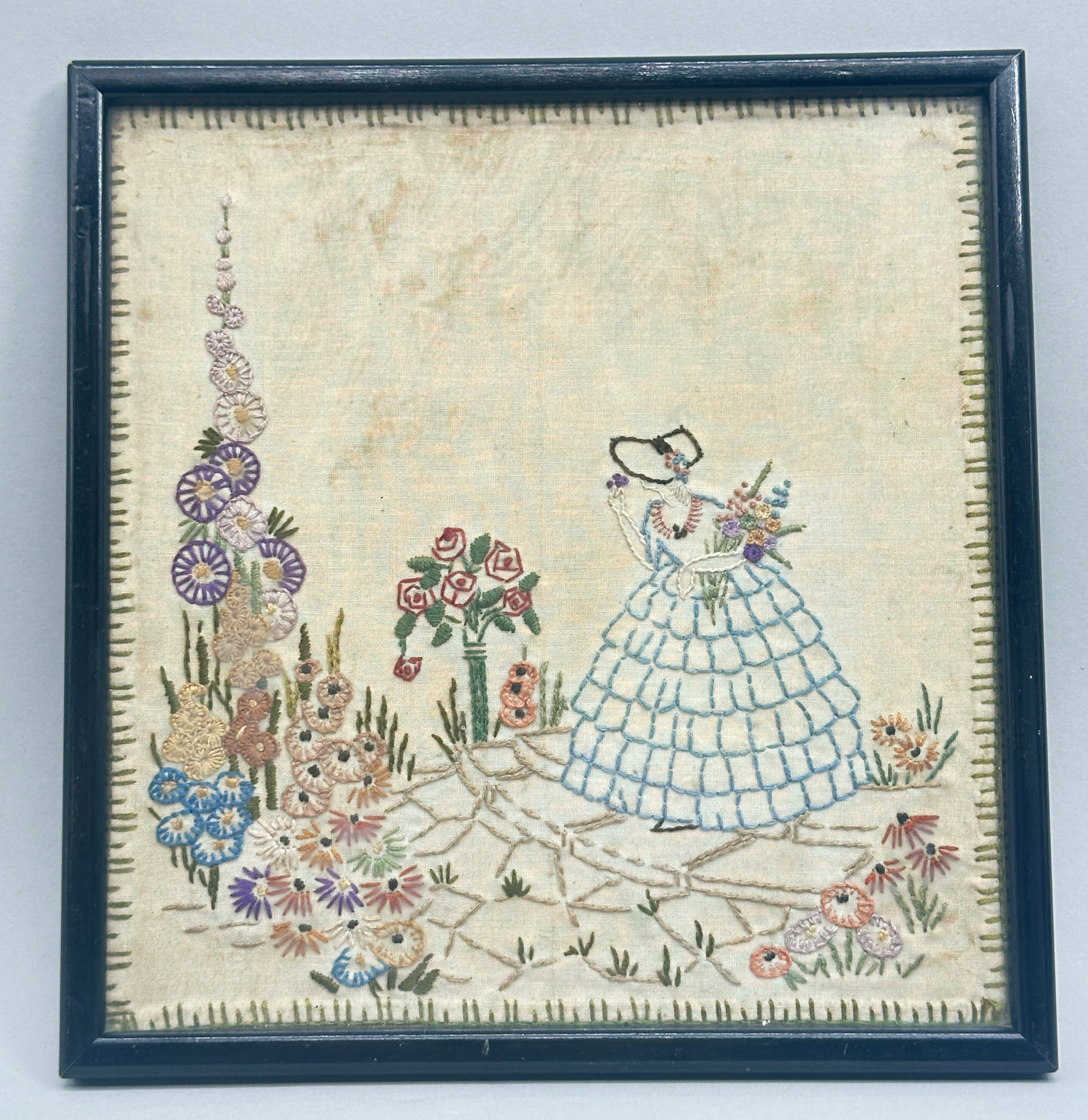
Vintage Needlepoint Picture of a lady dressed in a crinoline, framed, probably 1930s
Price: £25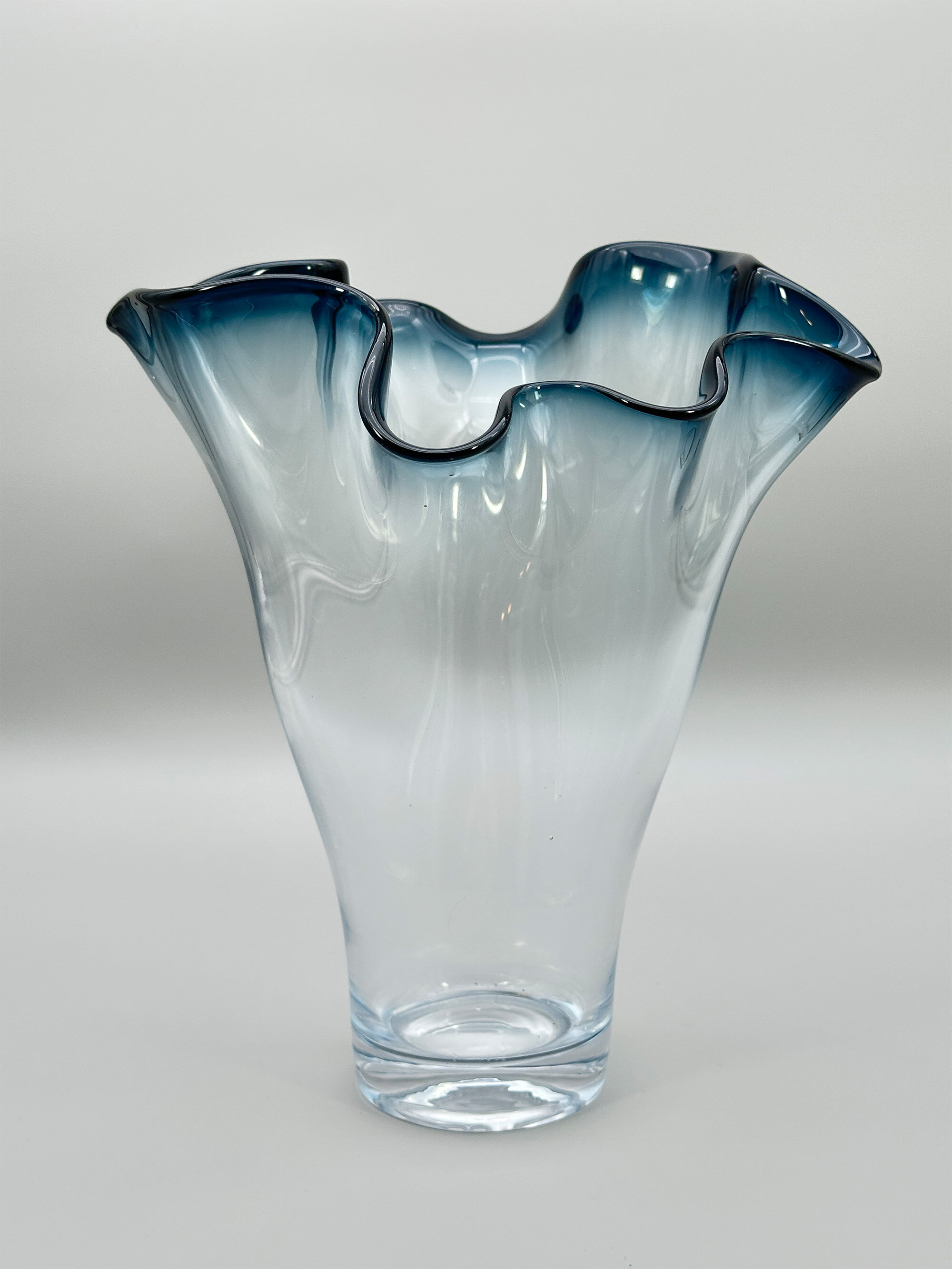
Blue glass handkerchief Vase, possibly Poland, late C20th
Price: £45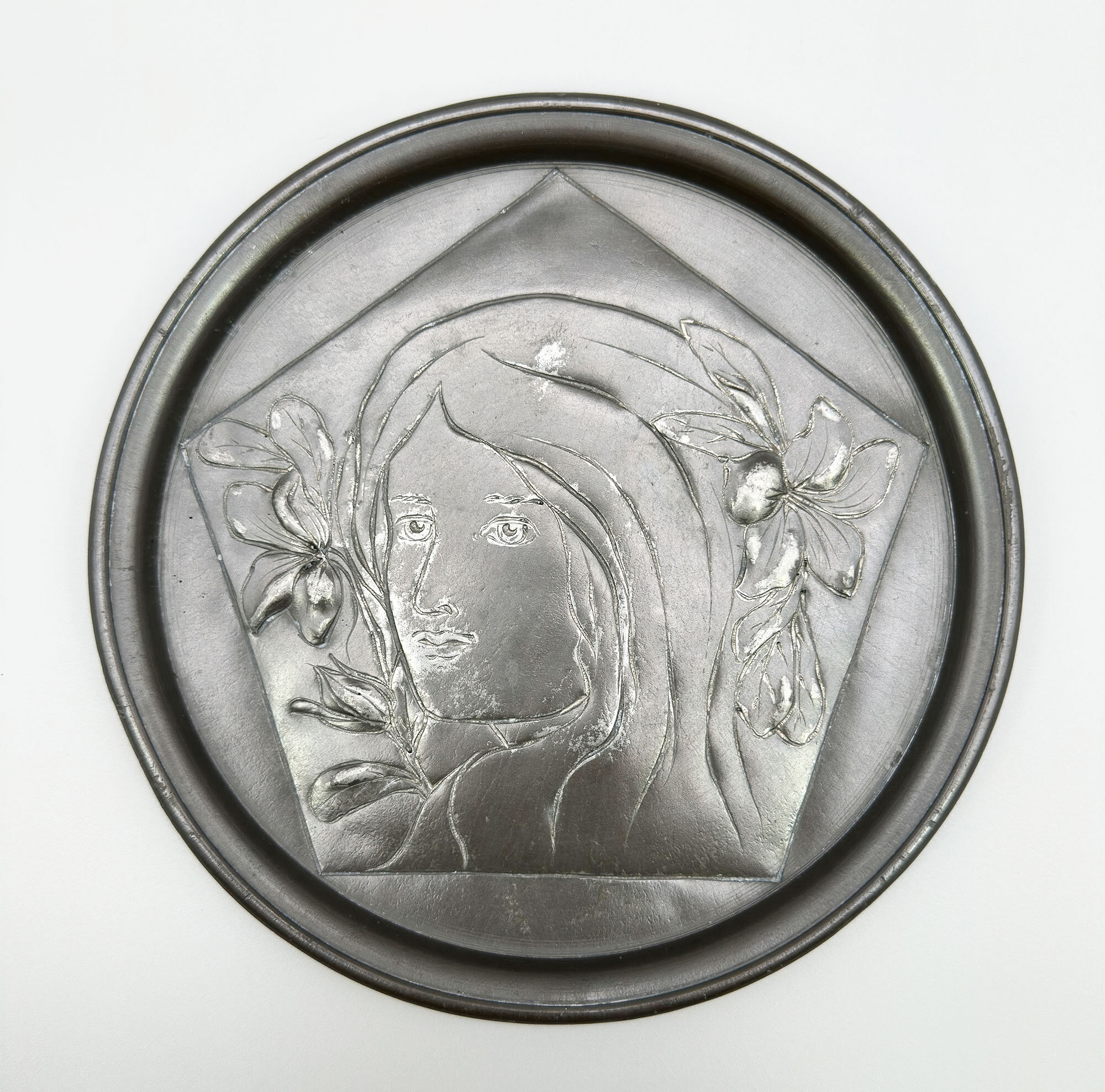
Pewter Plate in the Art Nouveau style, marked Joh. Heidl, C20th
Price: £20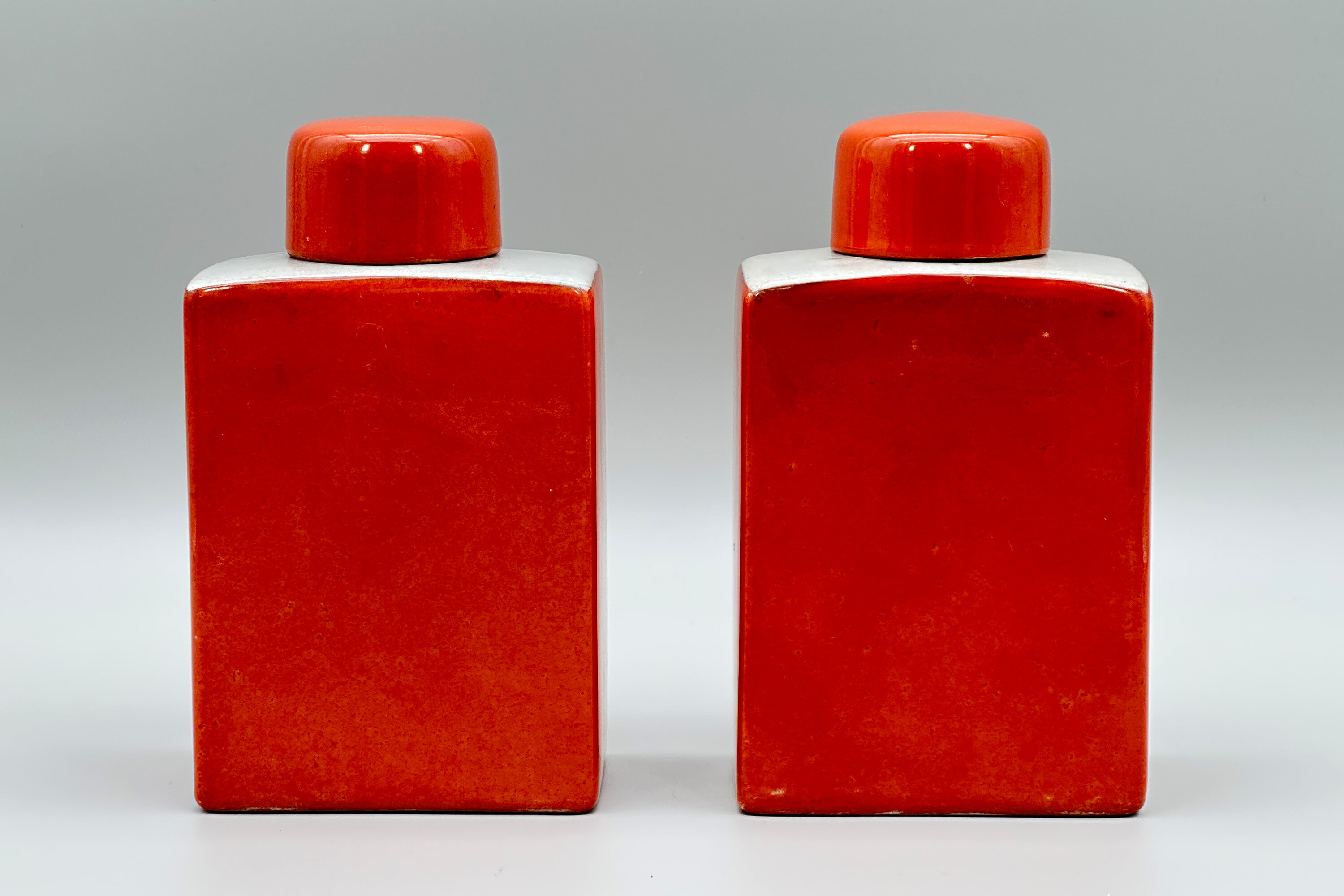
Pair of Orange Glazed Flasks and Covers, Fabienne Jouvin Paris, C20th
Estimate: £60 – 80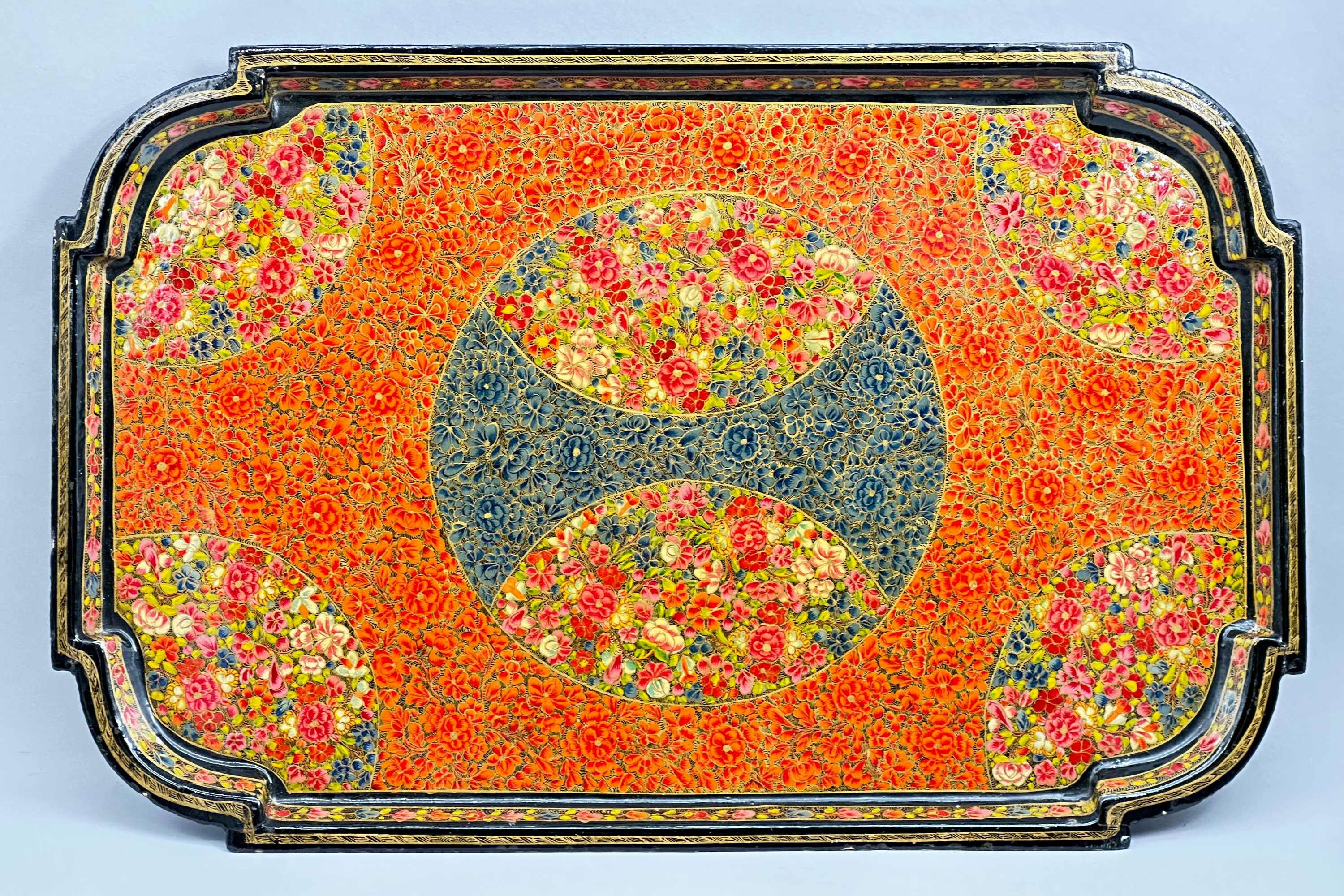
Papier Mâché Tray with Millefiori Decoration, Kashmir, C20th
Price: £55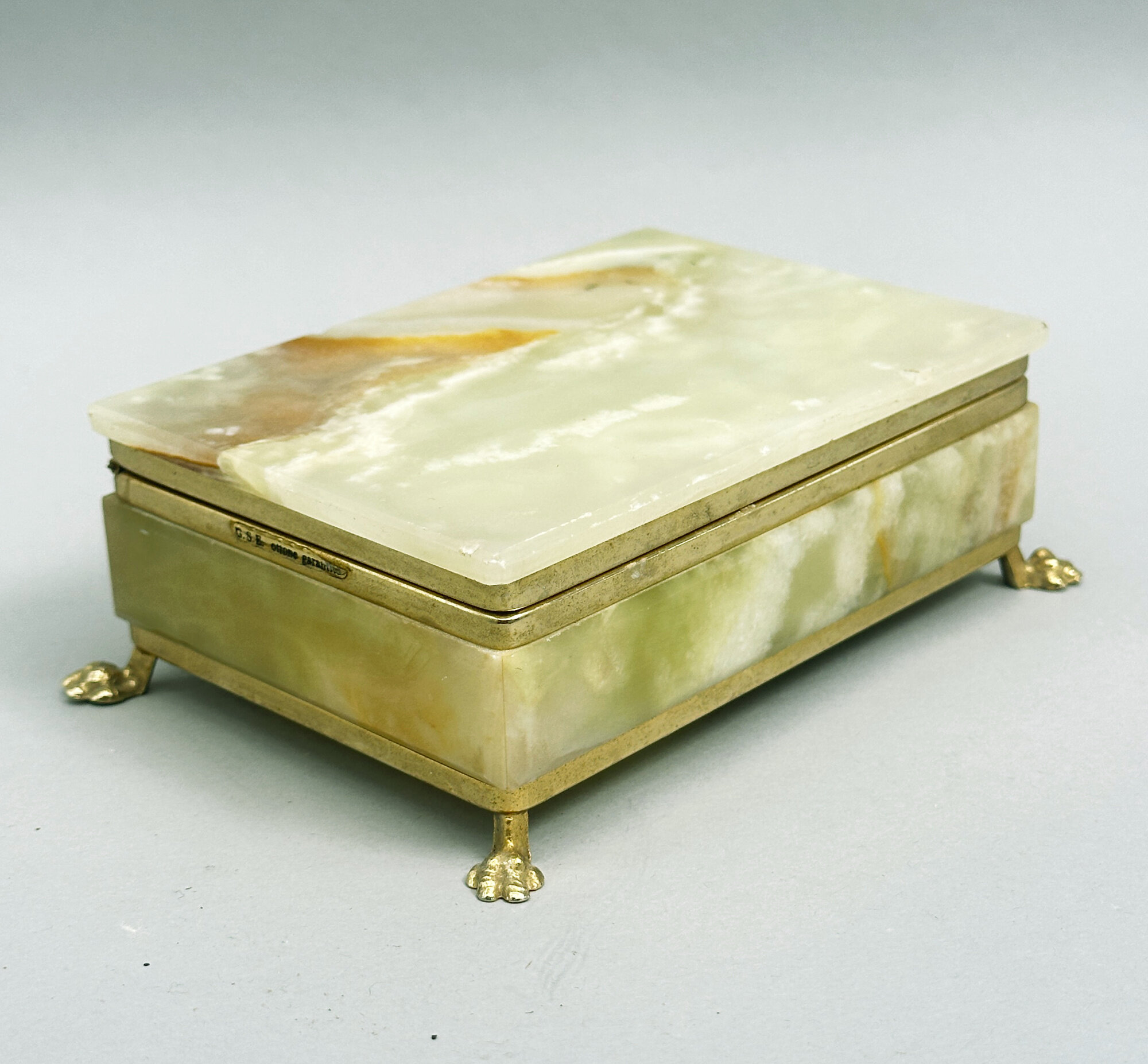
Rectangular Footed Green Onyx Box and Cover, G.S.E. Ottone Garantito, 1960s
Price: £45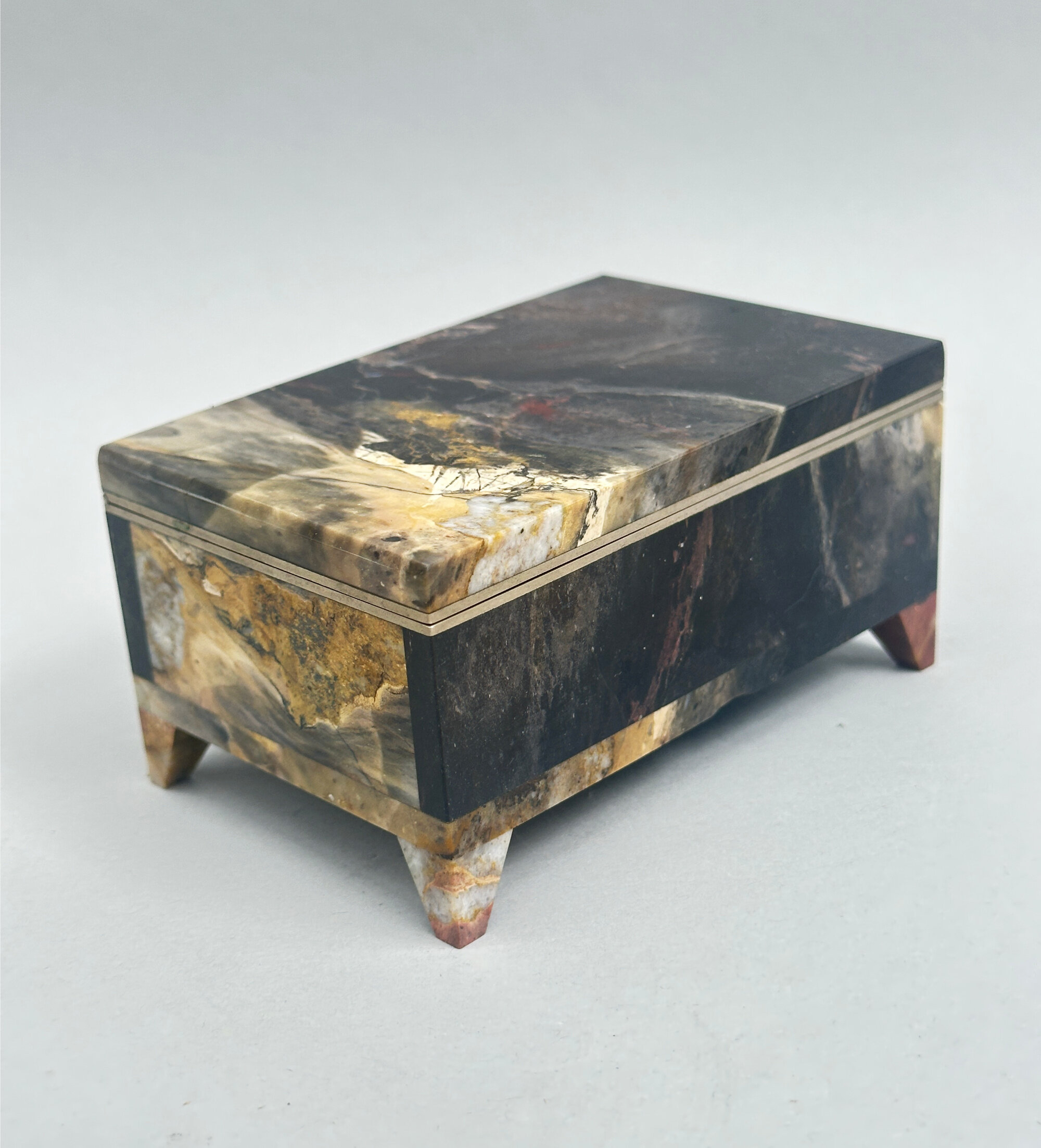
Rectangular Box and Cover, Basanite Jasper, C20th
Price: £95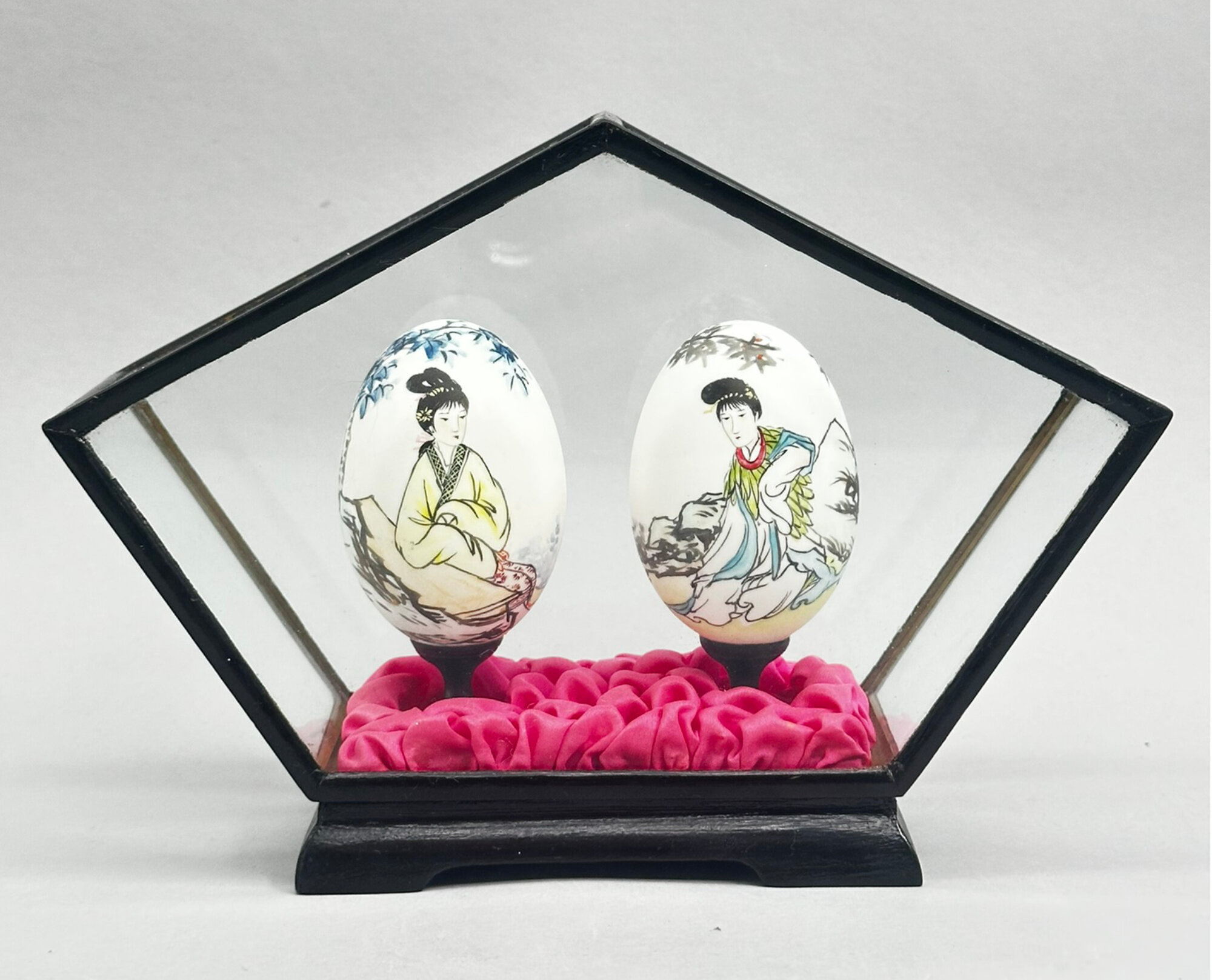
Pair of Chinese Hand Painted Eggs in Case, 1970s
Price: £25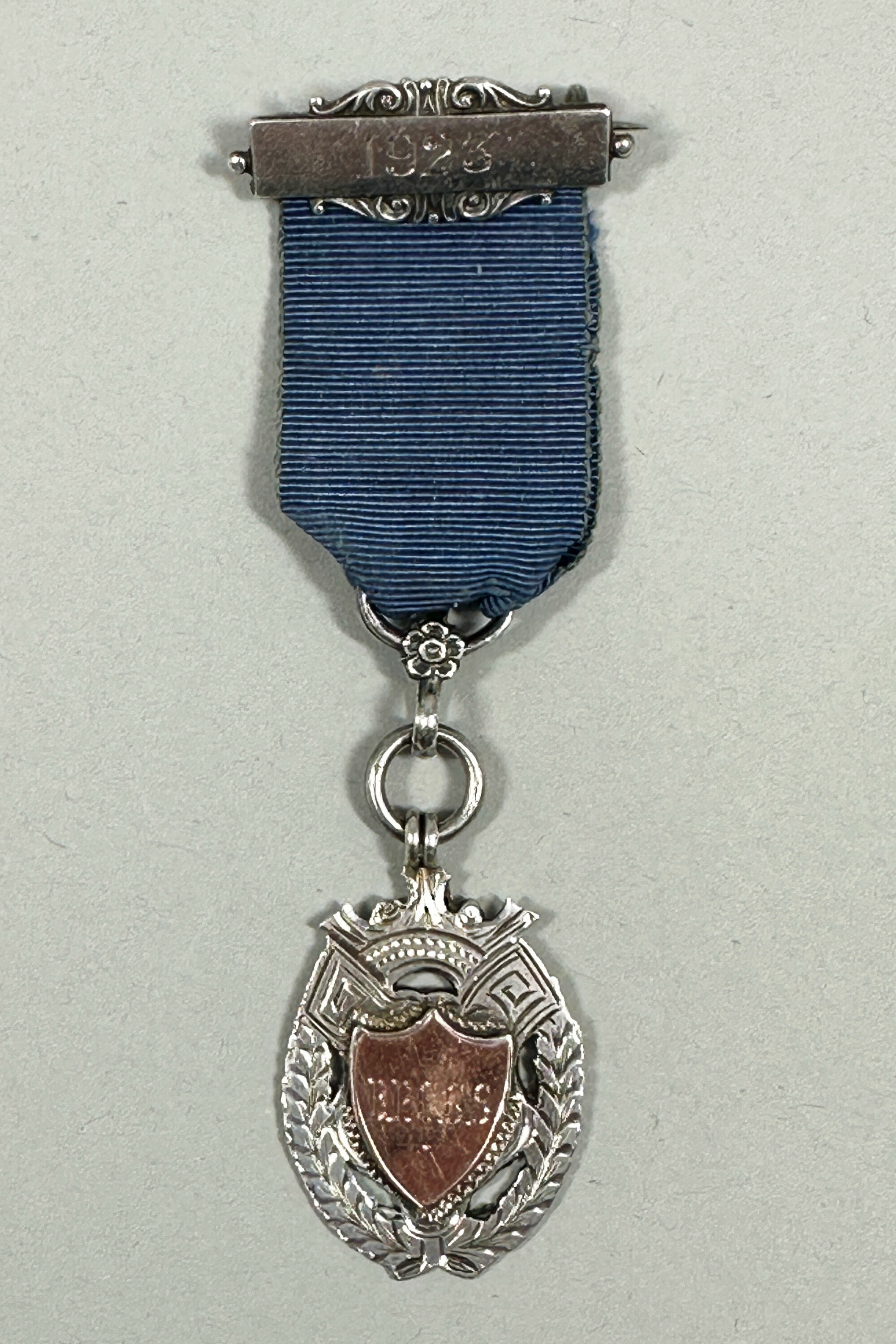
Silver Medal or Watch Fob dated 1923, B.P.C.G.S.
Price: £35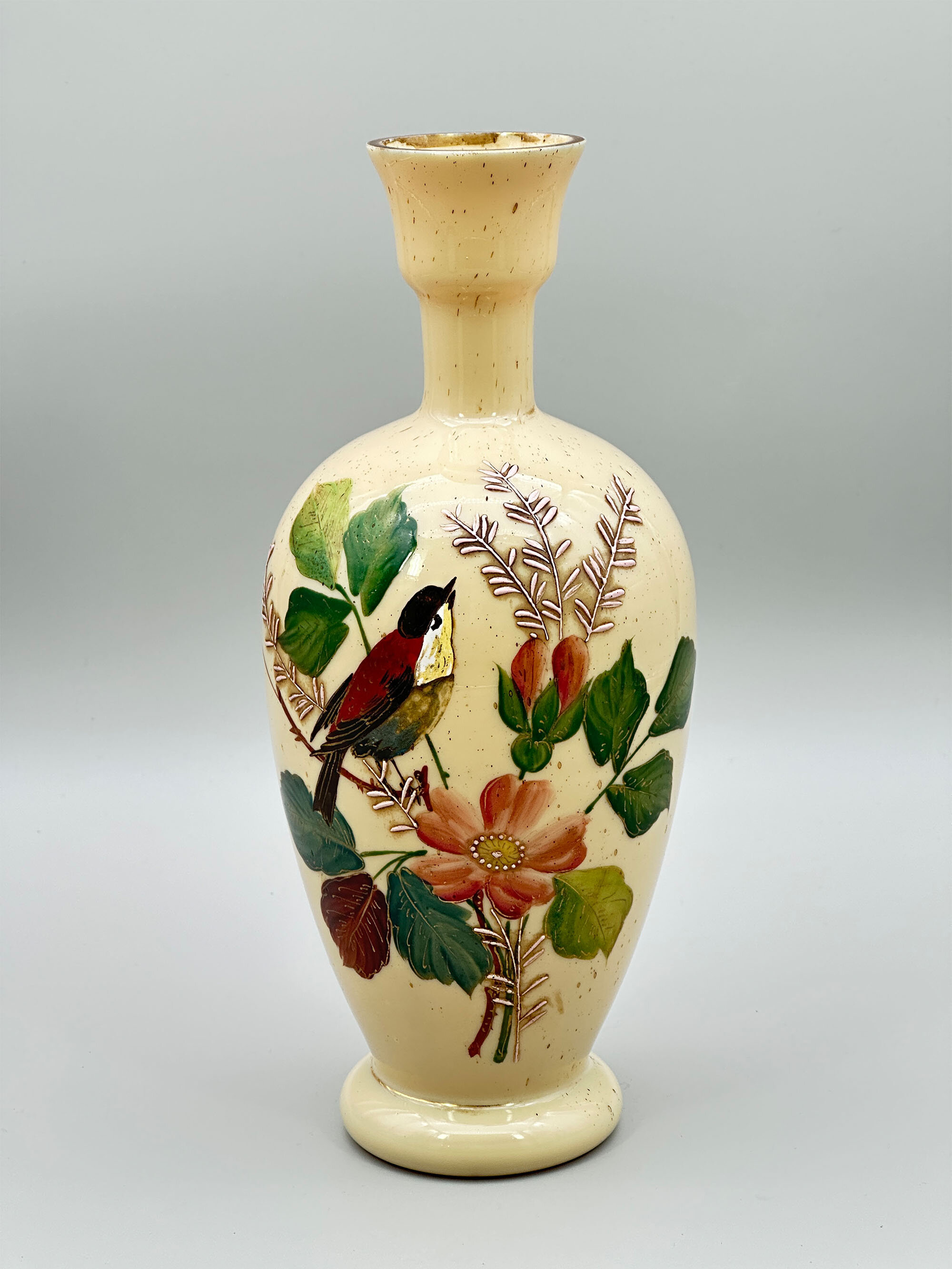
Cream coloured milk glass vase with bird, French early C20th
Price: £45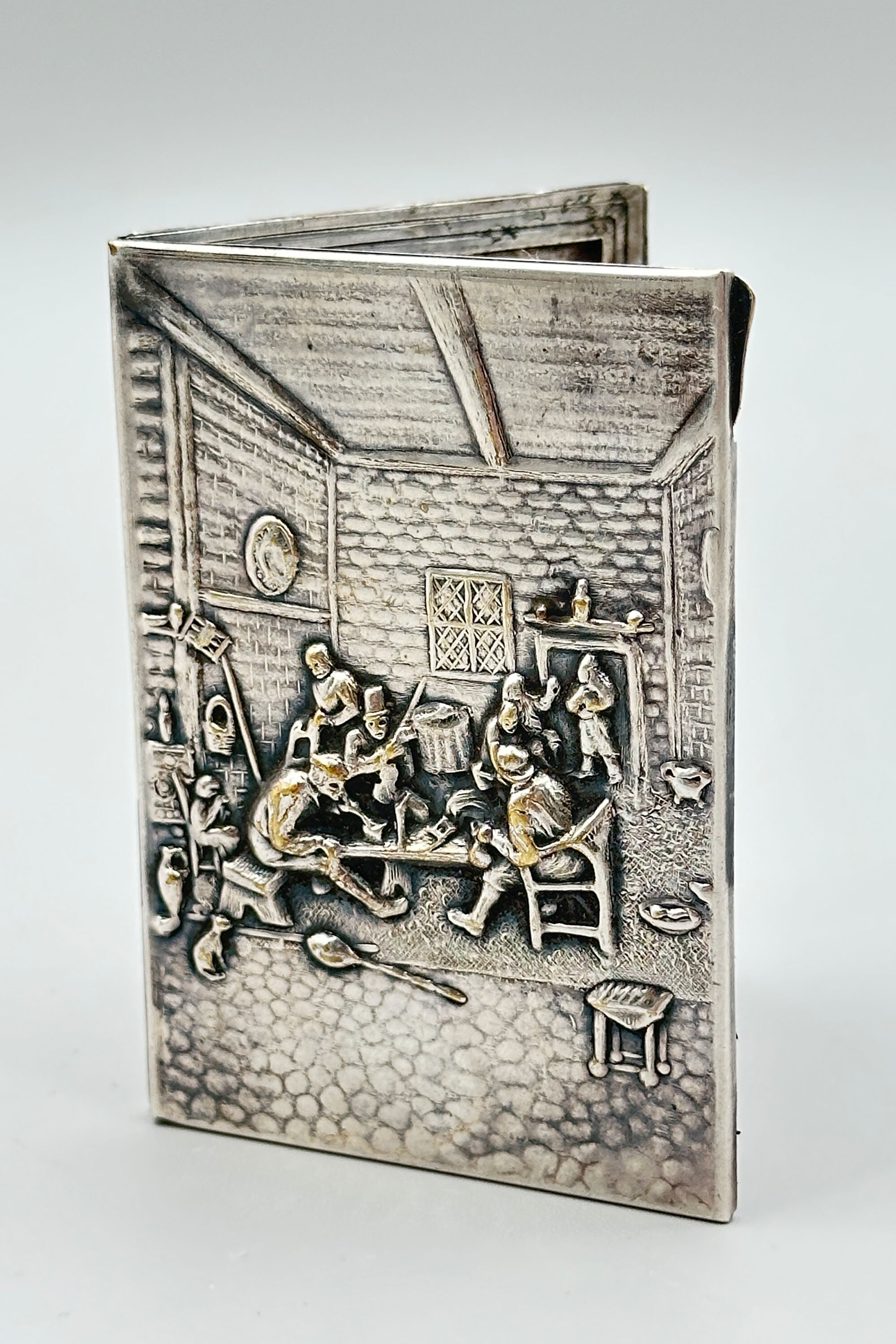
Danish silver plate Photograph Holder,with repoussé decoration, 1970s/1980s
Price: £45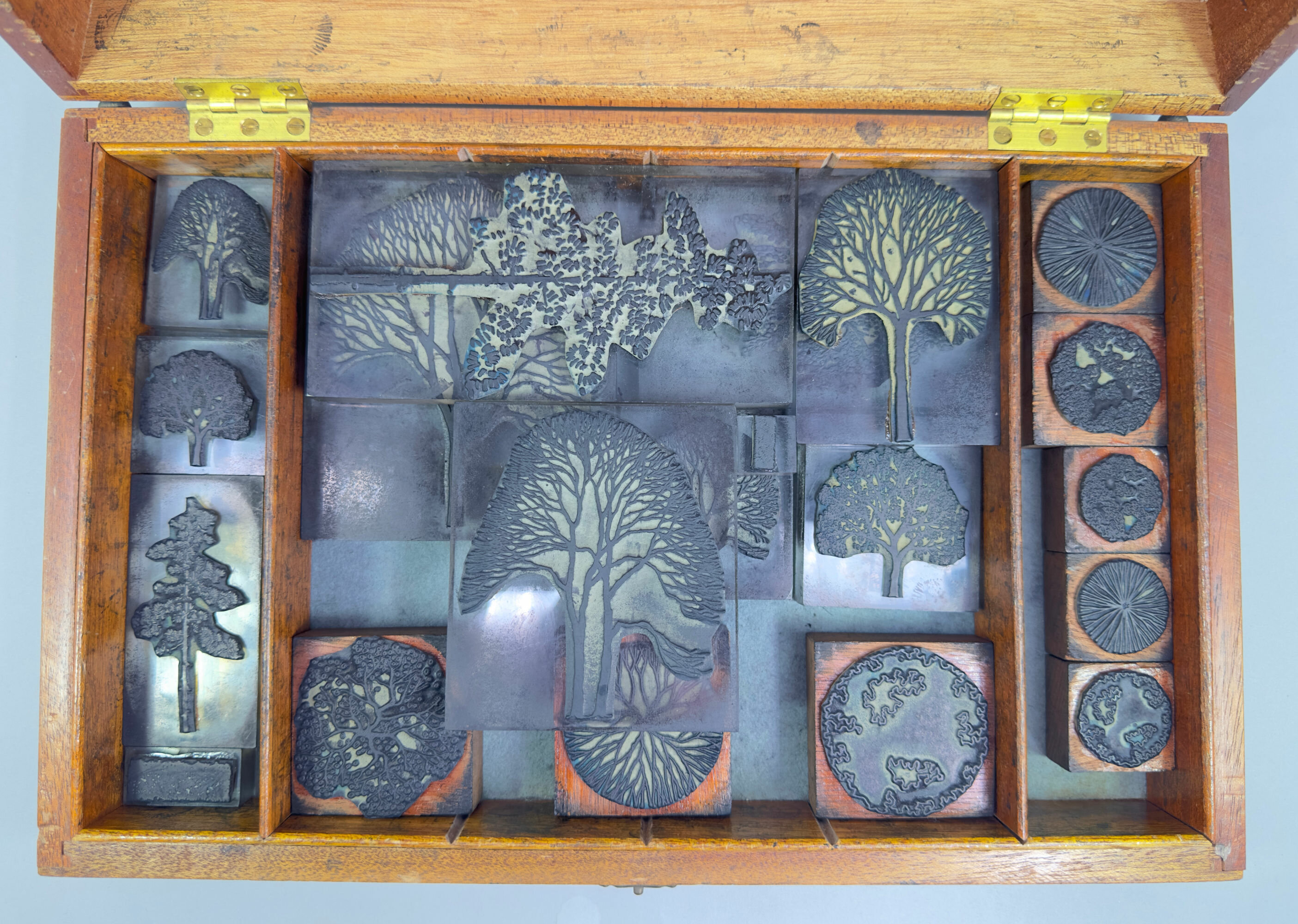
A group of twenty assorted artists Stamps in H&R Johnson sample Box, C20th
Price: £75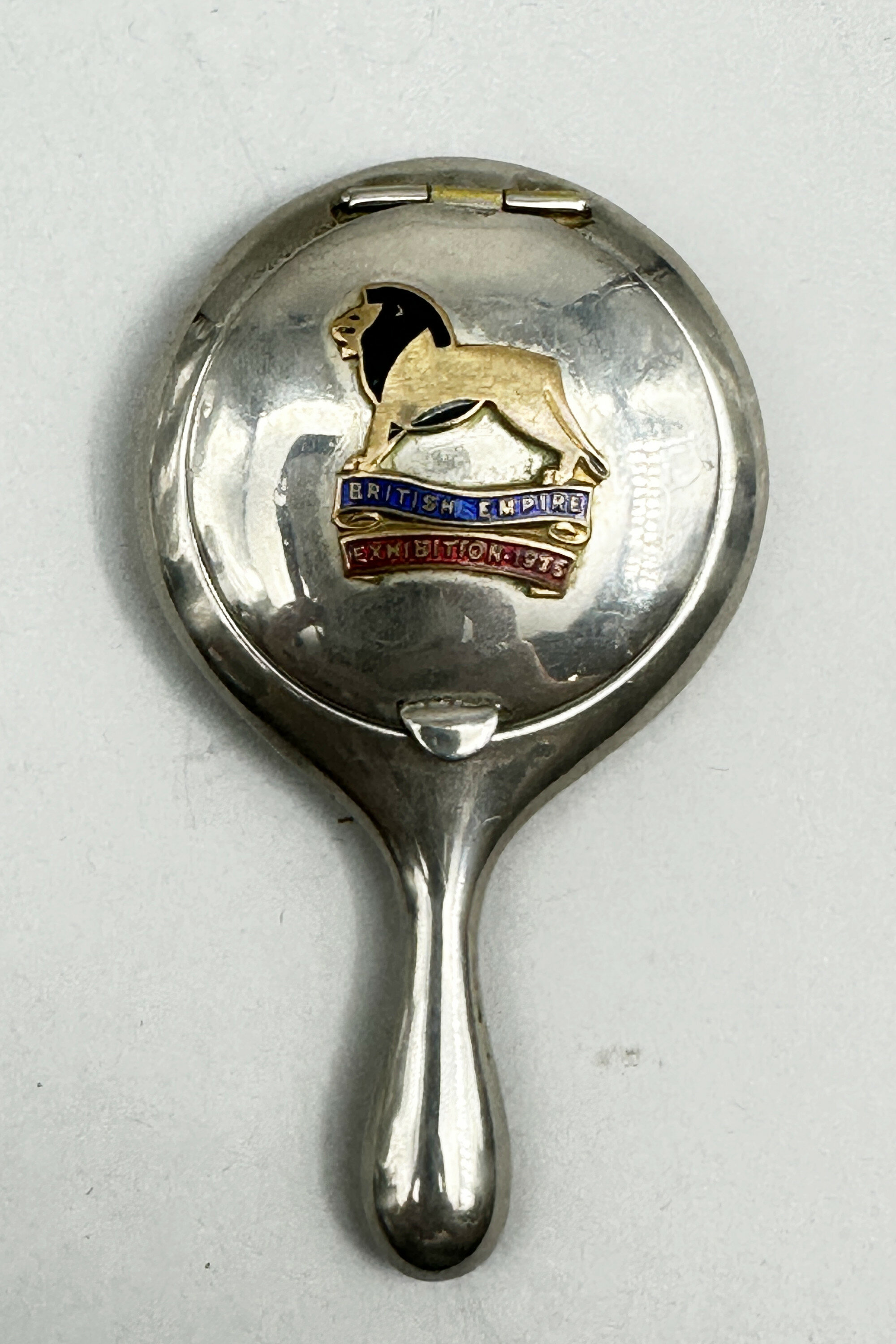
Powder Compact, British Empire Exhibition (1924-1925), dated 1925
Price: £45Souvenirs and medals were produced, amongst which were silver plated powder compacts as here. The round container for the powder has a hinged lid revealing the powder well below, originally fitted with a mauve ribbon tasseled powder puff, and a mirror above. On the surface of the lid, which has a tab for lifting, is a stylised brass lion, a symbol of the British Empire, vitreous enameled in black, red and blue with the wording ‘British Empire Exhibition 1925 ’ There is a short rounded handle and the back has an engraved mark ‘Rd [registered] 689177’ for the patent number. While many were doubtless made (and there is another version with a more slender handle, with a ring at the end, and the background colourings of the lettering reversed) few of these compacts seem to have survived making this a desirable addition to a collection of British memorabilia.
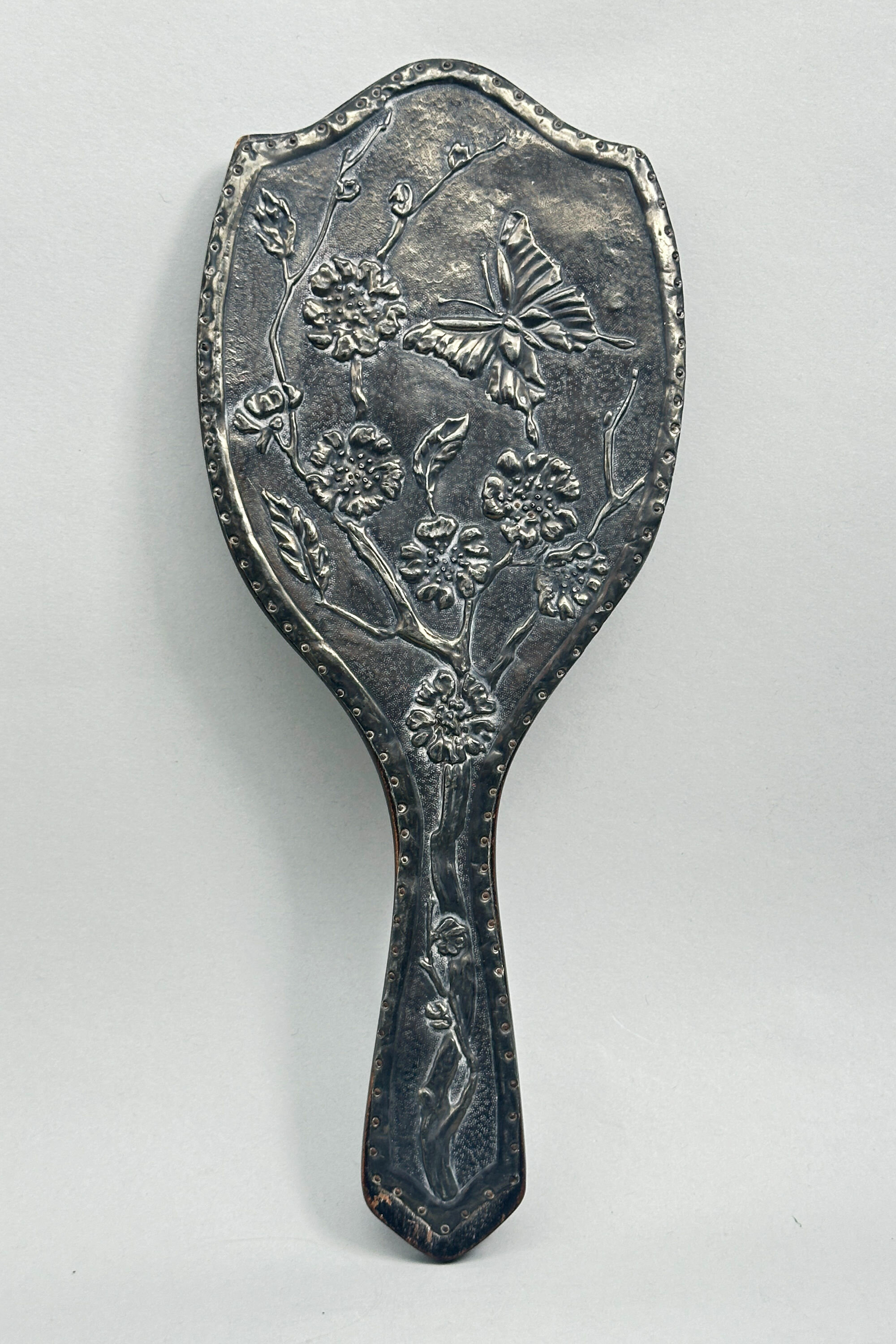
Arts and Crafts Hand Mirror with Repousse Decoration, circa 1900
Price: £55Elements of two contrasting contemporary styles combine here with features from both the Arts and Crafts and the Art Nouveau movement. The hammered pewter with the almost rustic nail head fixings and the red bead reflect the former but the elegant depiction of the lotus and butterfly, with more than a hint of the Orient, reflect the latter. The maker is anonymous but doubtless British and clearly a highly skilled craftsman. Much thought and expertise went into the design of this piece which would be a desirable addition for collectors of either or both of the pieces made under the influence of these two highly popular design movements.
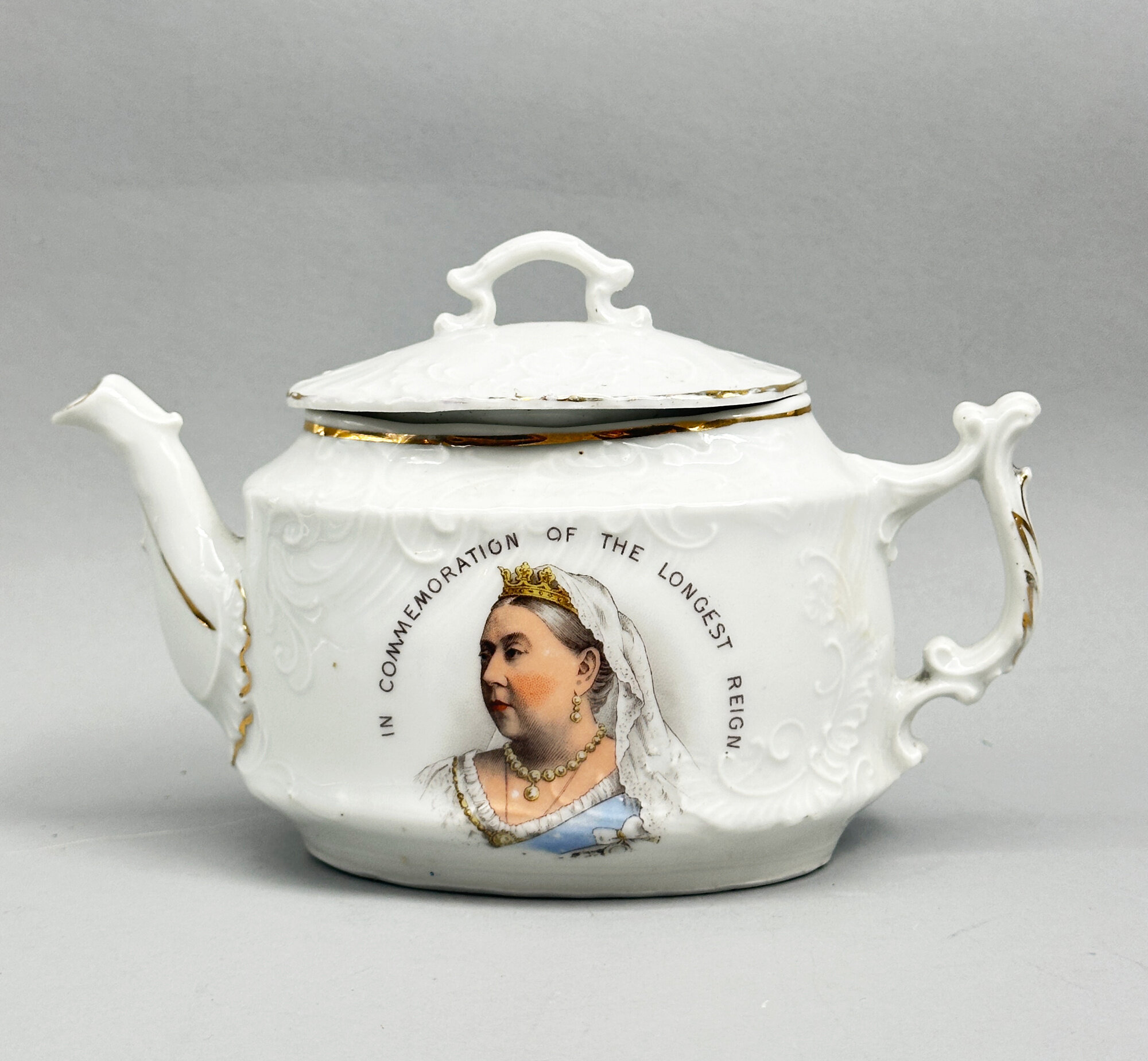
Reproduction Queen Victoria Diamond Jubilee Teapot, Modern
Price: £35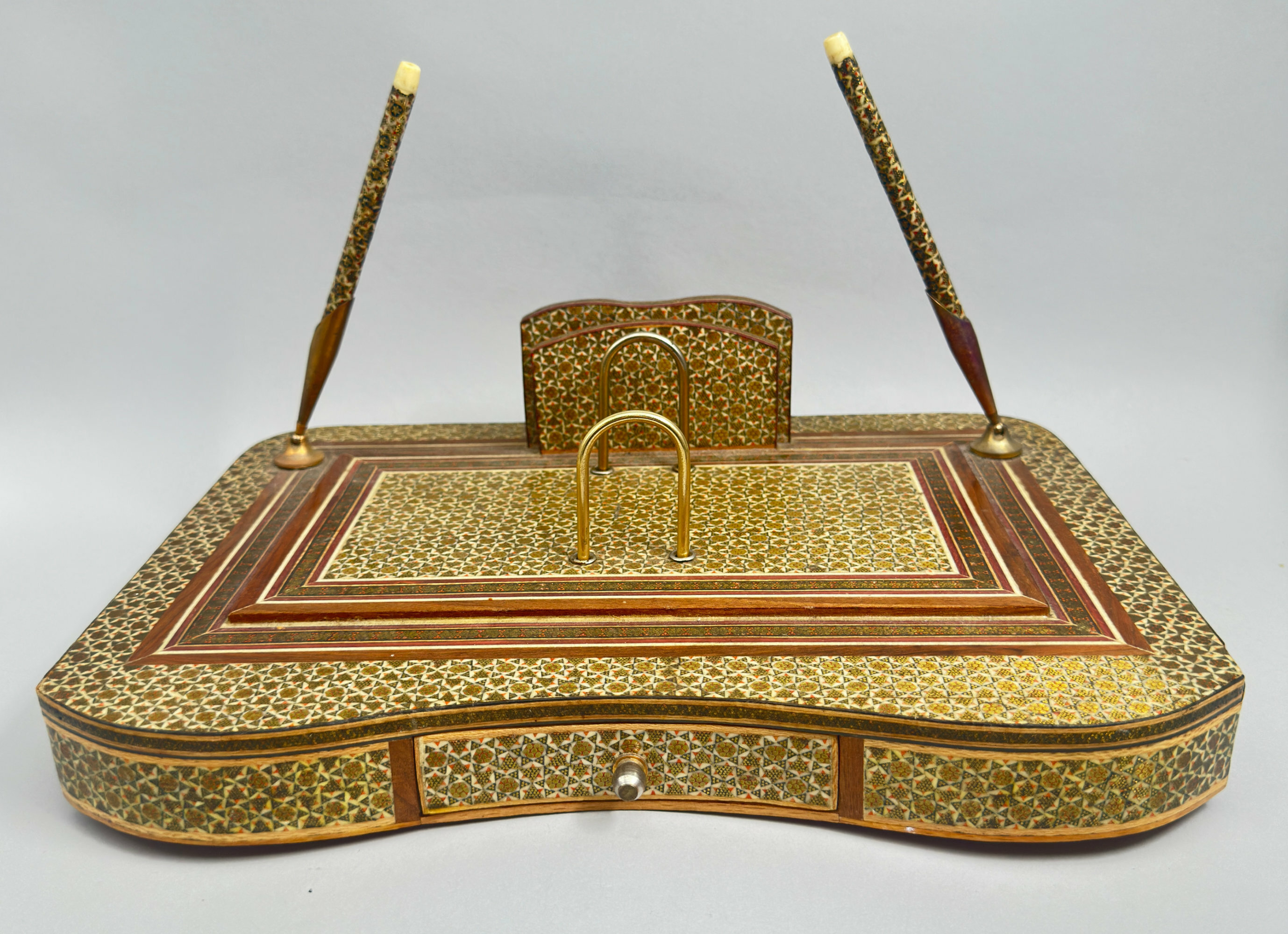
Persian Marquetry Khatam Kari Desk Set, second half C20th
Price: £55The intricate marquetry decoration used here, with its repeating star form pattern, is called ‘Khatam’ work. Khatam is the capital of Khatam County in Iran and is the centre for craftsmen working in this technique. Khatam is a Persian version of marquetry in which the surface of wooden articles is decorated with small pieces of wood, bone and metal formed into precisely-cut geometric shapes. The process is time consuming involving the cutting of the shapes and gluing them in place, followed by smoothing, oiling and polishing. In Persian, the work is known as ‘Khatam kari’, ‘the art of crafting Khatam ware’.
These desk sets occur in a wide variety of forms. The drawer is less commonly found and decorated pen holders are, as said above, most unusual. These sets seem to have been made from the 1950s onwards. The use of a ‘biro’ pen indicates a dating from the 1960s onwards and perhaps this example is a bit later than that, but the workmanship speaks for itself and the piece has survived in excellent condition with minimal damage, providing a truly elegant ‘desk tidy’ for the contemporary study!
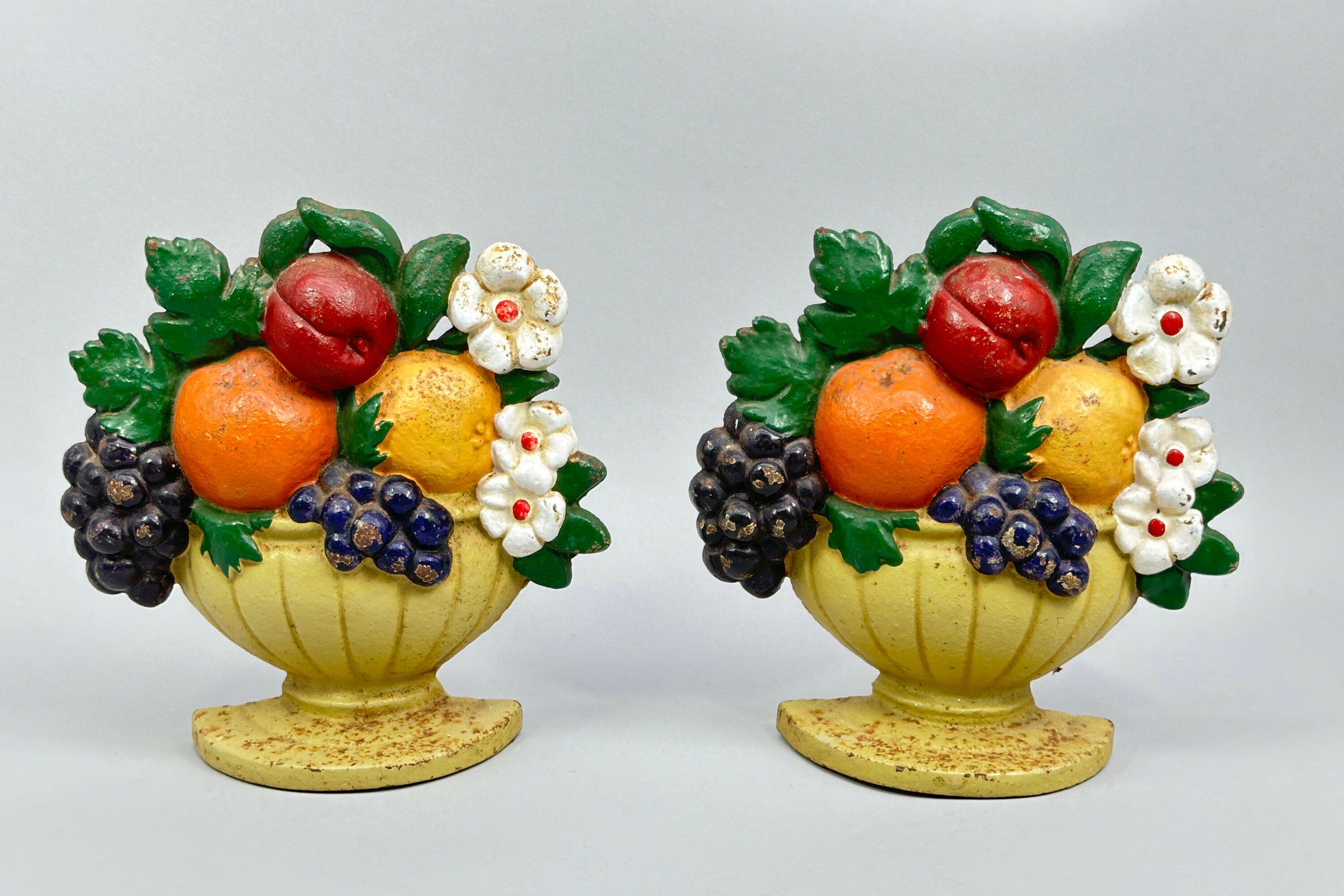
Pair cast iron Doorstops, Basket of Fruit, probably American mid C20th
Price: £45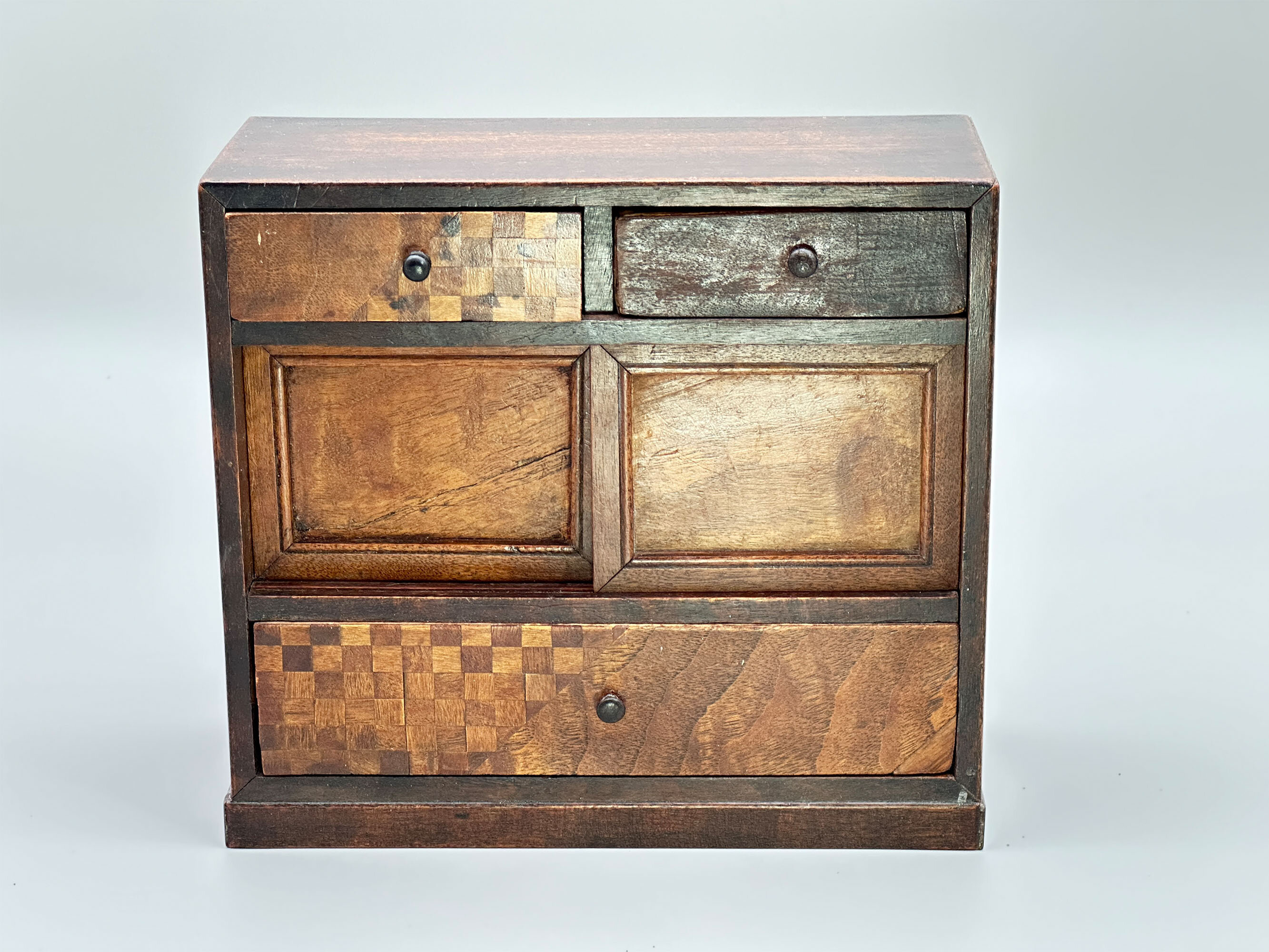
Japanese miniature wood sample Cabinet, late nineteenth century
Price: £55This is an example of Japanese marquetry technique known as ‘Yosegi-Zaiku’ in which intricate geometric patterns made from small pieces of wood were used to decorate the surfaces of small pieces of furniture such as jewellery cabinets or ‘kotan-su’ (kodansu). The technique originated in the town of Hakone, near to Tokyo, in the Edo period (1601/3 to 1868) but continued into the Meiji era (1868-1912) and beyond. Some of the pieces produced have an elaborate array of designs, but what we appear to have here is a sample or specimen piece showing the types of effect the craftsman could produce. This is further complicated by the fact that the top right drawer, which has no decoration at all and is not signed underneath like the other two, appears to be a later replacement with a different form of handle. But there is still some charm and no small amount of skill here. Dating is most probably to the late nineteenth century and this experimental ‘kodansu’ could easily find a place in an early twenty first century setting.
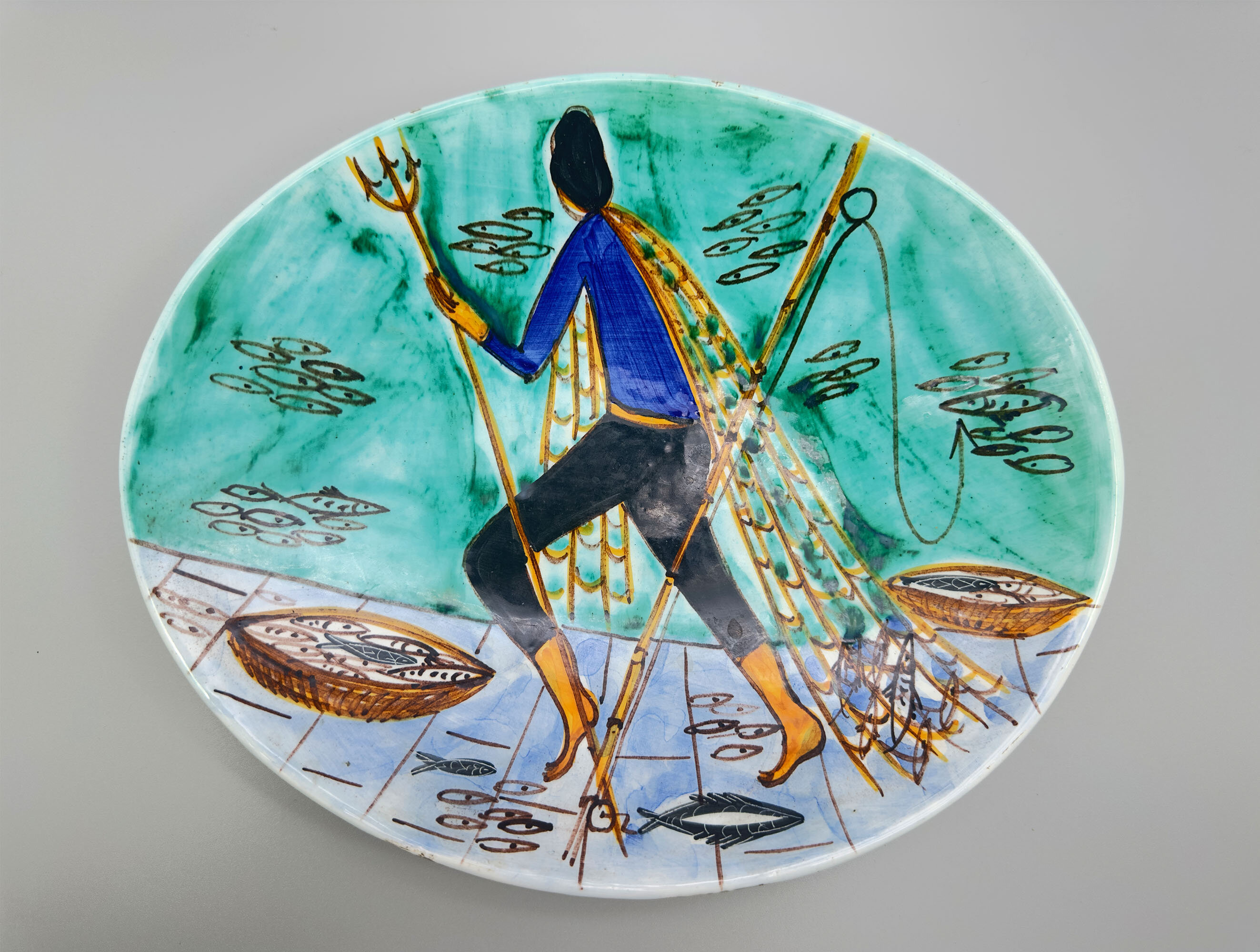
Italian oval dish decorated with a fisherman, S.IC.A. Vicenza, mid C20th
Price: £25There are similar plates found, all marked ‘Italy’ to the reverse and some with the lettering ‘SICA’ on the front. This stands for the ‘Società Italiana Ceramica Artistica’ which was founded in Nove, in the province of Vicenza, by G. Battista Cogo, Giovanni Grappiglia, Stefano Guzzo, and Angelo Perin in 1946 and concentrated on the production of modernist domestic earthenware. The style of decoration here and the bright colourings used are typical of the 1950s and this plate most likely dates to that time. There is a naif charm here which is most attractive and this decorative piece could also be used today for serving at the dinner table.
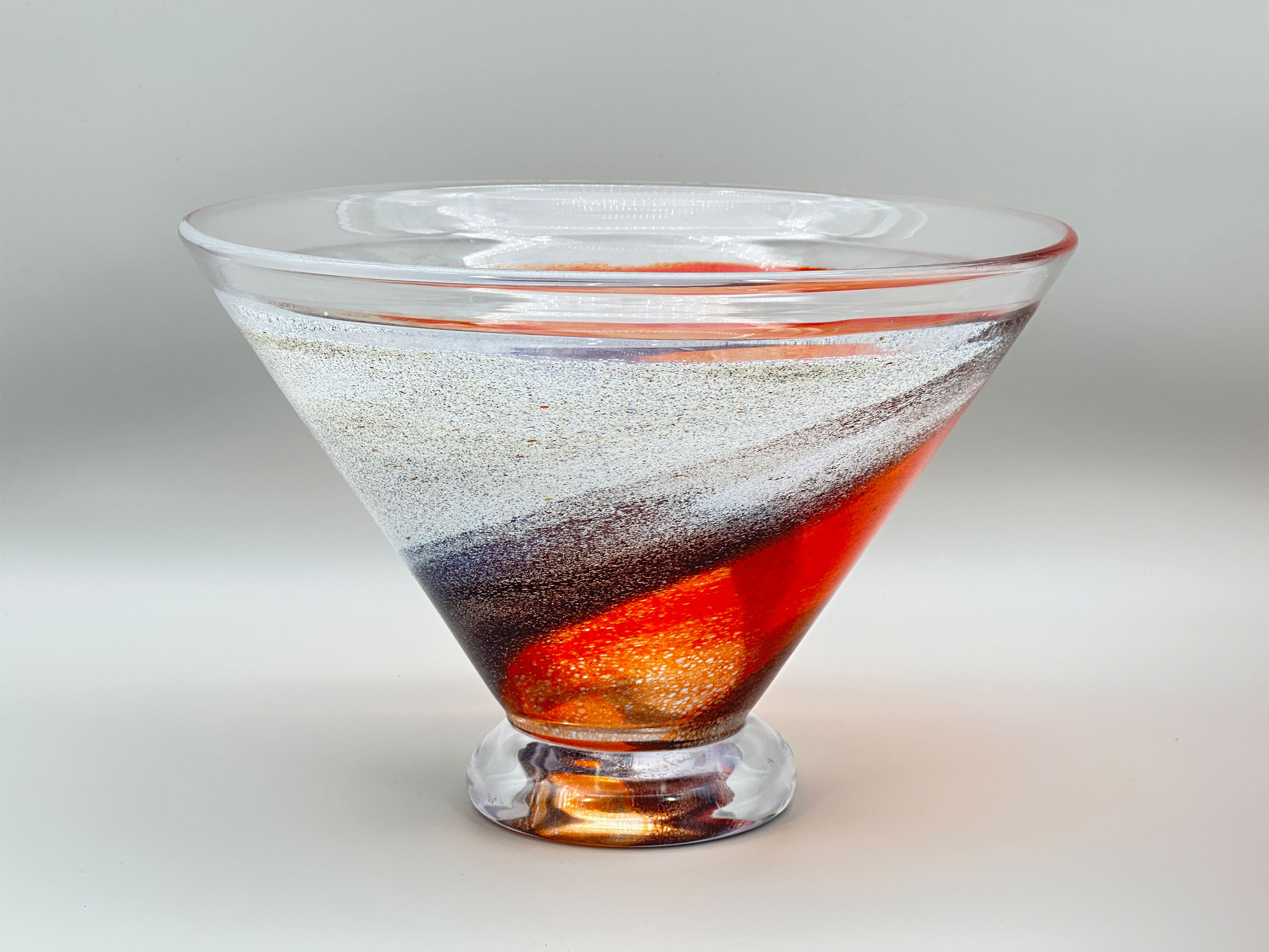
Twister glass Bowl, Kjell Engman for Kosta Boda, signed and with label, late C20th
Price: £180Kosta Boda, previously known as Kosta Glasbruk, is a Swedish glassmaking company founded by two foreign officers in Charles XII's army, Anders Koskull and Georg Bogislaus Staël von Holstein, in 1742.It is located in Kosta, Sweden. Early production consisted of window glass, chandeliers and drinking glasses. From the 1840s, the factory was at the forefront of new trends and technical developments, producing pressed glass, and in the 1880s setting up a new glass-cutting workshop. In 1903, the company merged with the Reijmyre glassworks but both retained their own names and Kosta went on to maintain its reputation as one of the leading Swedish manufacturers with a range of fine art glass and tableware by distinguished designers such as Vicke Lindstrand, artistic director from 1950-1973.
Kjell Engman (see image 11) has been a designer at Kosta Boda since 1948. Also a professional rock musician, his works are often held to display a dancing feel and joie de vivre derived from his musical background. On the Kosta Boda website he writes “In my view, the glass is the pen for writing my stories. I don’t want to depress my audience; rather, I want to offer them joy and fantasy. My art should make people smile; it should be something positive.” Perhaps something of his sense of fun can be seen in this bowl, one of the largest of the range produced by Kosta Boda. which incorporates colour with movement and is often termed ‘Twister’. These bowls seem not now to be available from the firm direct and probably date to the late twentieth century. This example is of exceptional size and in pristine condition, an imposing centrepiece for a modern interior.
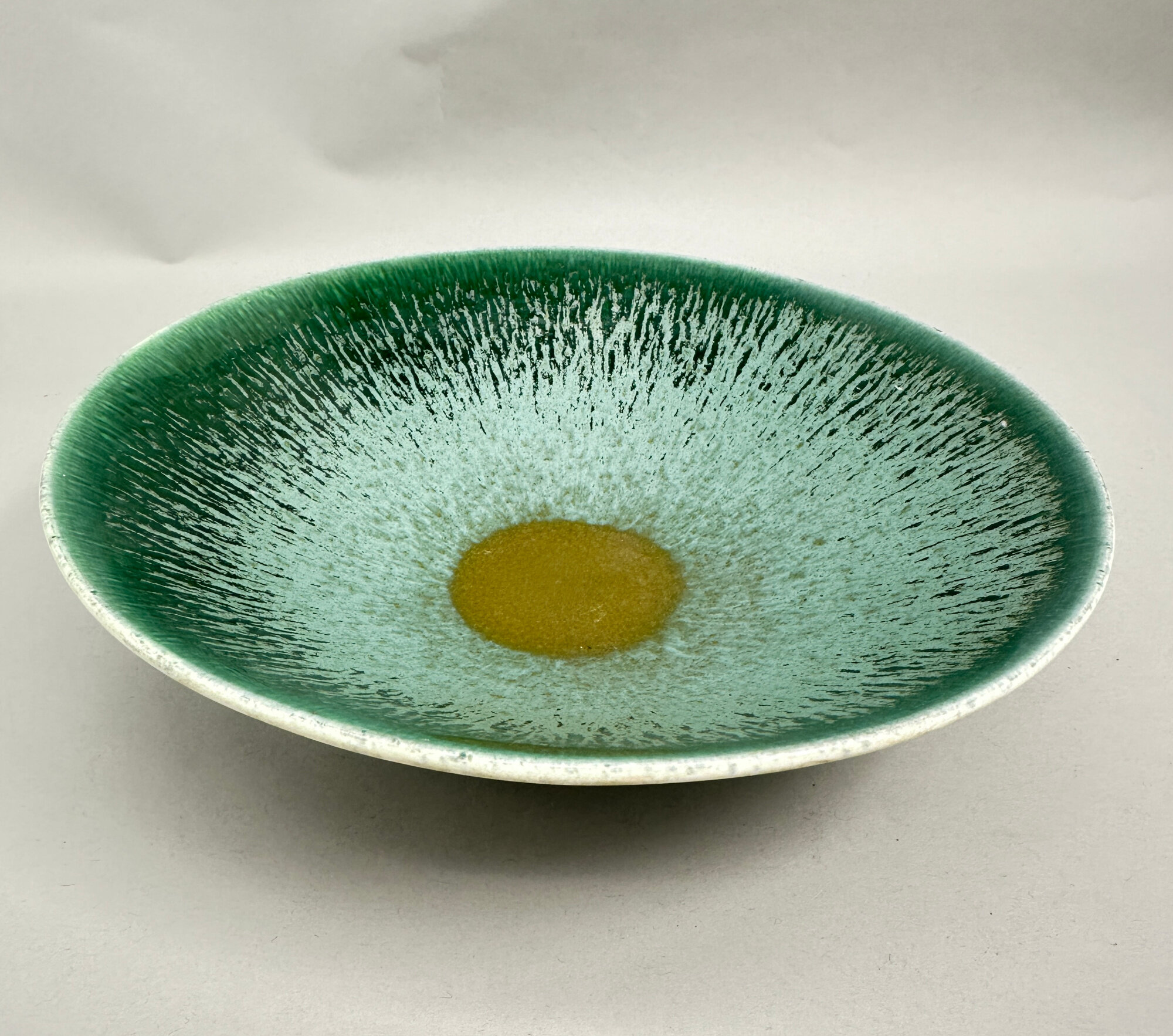
Poole Pottery Studio Bowl with splash glazes, 1960s
Price: £45Both the form and some of the glaze effects here reflect much earlier Chinese ceramic pieces which is fully consistent with the ‘studio pottery’ style of this piece. Poole Pottery established an art pottery studio within their factory in 1958 which, following the Scandinavian model, produced high quality studio ceramics alongside designs for new ranges until 1966 when they were replaced by the new Delphis, Atlantis and Aegean pottery lines which began production a year later. Dating here is therefore fairly precise and this bowl is an excellent example of ‘studio’ wares produced which could often equal the work of other independent studio potteries.
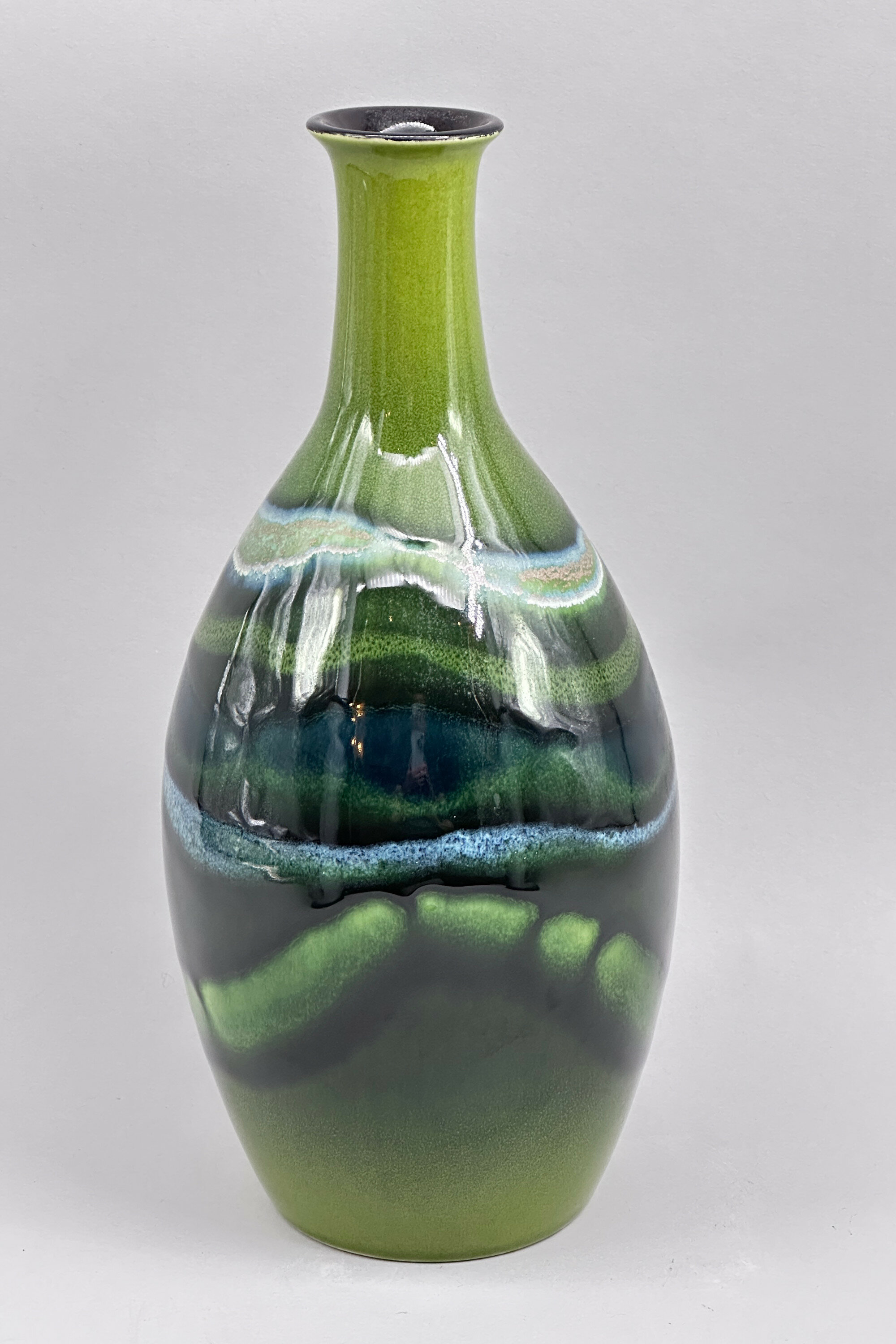
Poole Pottery Maya Pattern Bottle Vase, early C21st
Price: £85This fine quality vase is from the Maya range made by Poole Pottery, some of the pieces still being in production today and described in the maker’s catalogue as follows “Poole Pottery’s Maya collection is inspired by British landscapes and earthy tones. The greens and blues in this stunning range represent the earth meeting the sky in a natural yet bold design. Here at Poole Pottery, all our Maya ceramics are hand-cast and made using our signature reactive glaze in the famous Middleport Pottery in Staffordshire. The distinctive pieces you see here are created via our Living Glaze technique, where layers of colourful glazes react with one another to create a unique, glossy and dynamic finish.” But this particular form does not appear in the current catalogue and does not seem to be otherwise available. The form of the mark appears on other Poole pieces of more recent manufacture and dating is probably to around twenty years ago. The initials are for the artist’s signature and Poole write “Items are personalised with the artist's own individual mark, adding value to the collectability of each piece.” Given its scarcity, this vase would make an interesting addition to a collection of Poole Pottery aside from being a highly decorative item in its own right.
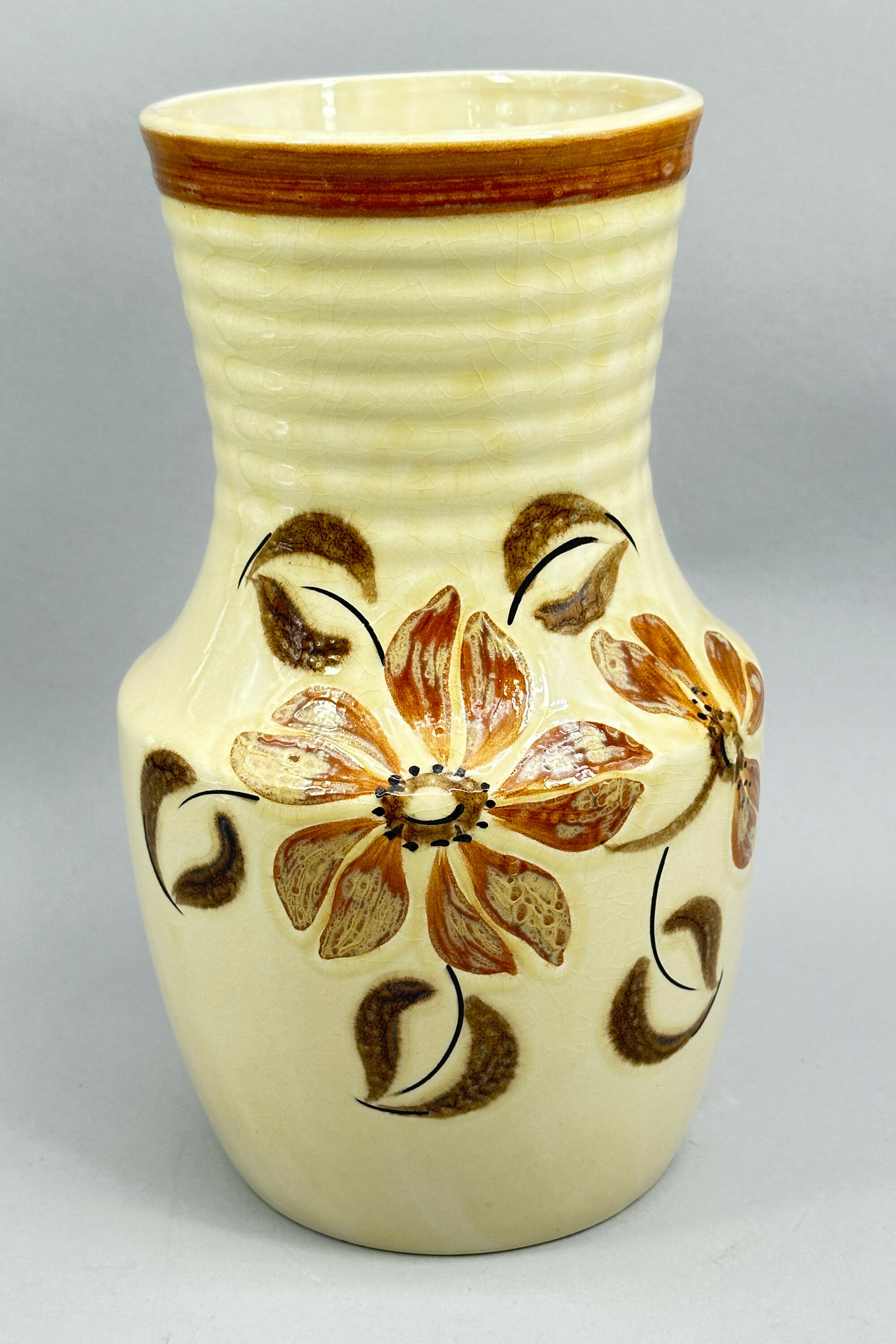
Vase with signature E.Radford and numbered 1267, mid C20th
Price: £45There were, in fact, two craftsmen working in the C20th British pottery industry with the name Edward Radford, father and son. Radford senior worked for Pilkington’s Royal Lancastrian Pottery in Manchester from 1903 until his retirement in 1936, acting as their main thrower. Radford junior joined his Father in 1905, but the First World War intervened, in which he won a Military Cross for his actions at Passchendaele in 1917 and afterwards he settled in Stoke on Trent, the heart of Britain’s pottery industry. An association developed with H.J.Wood’s Alexandra Pottery in Burslem who produced a range of wares bearing his name in the 1930s, although Radford himself may have acted as more a salesman than the designer. Production continued after the war and even after Radford’s retirement in 1948. The form of mark used here implies a later dating and both the shape, indicated by the model number underneath which is found on other vases with different decoration, and the decoration itself suggest the post war era, probably in the 1950s. There is, though, a modest charm here which would blend comfortably with a modern interior.
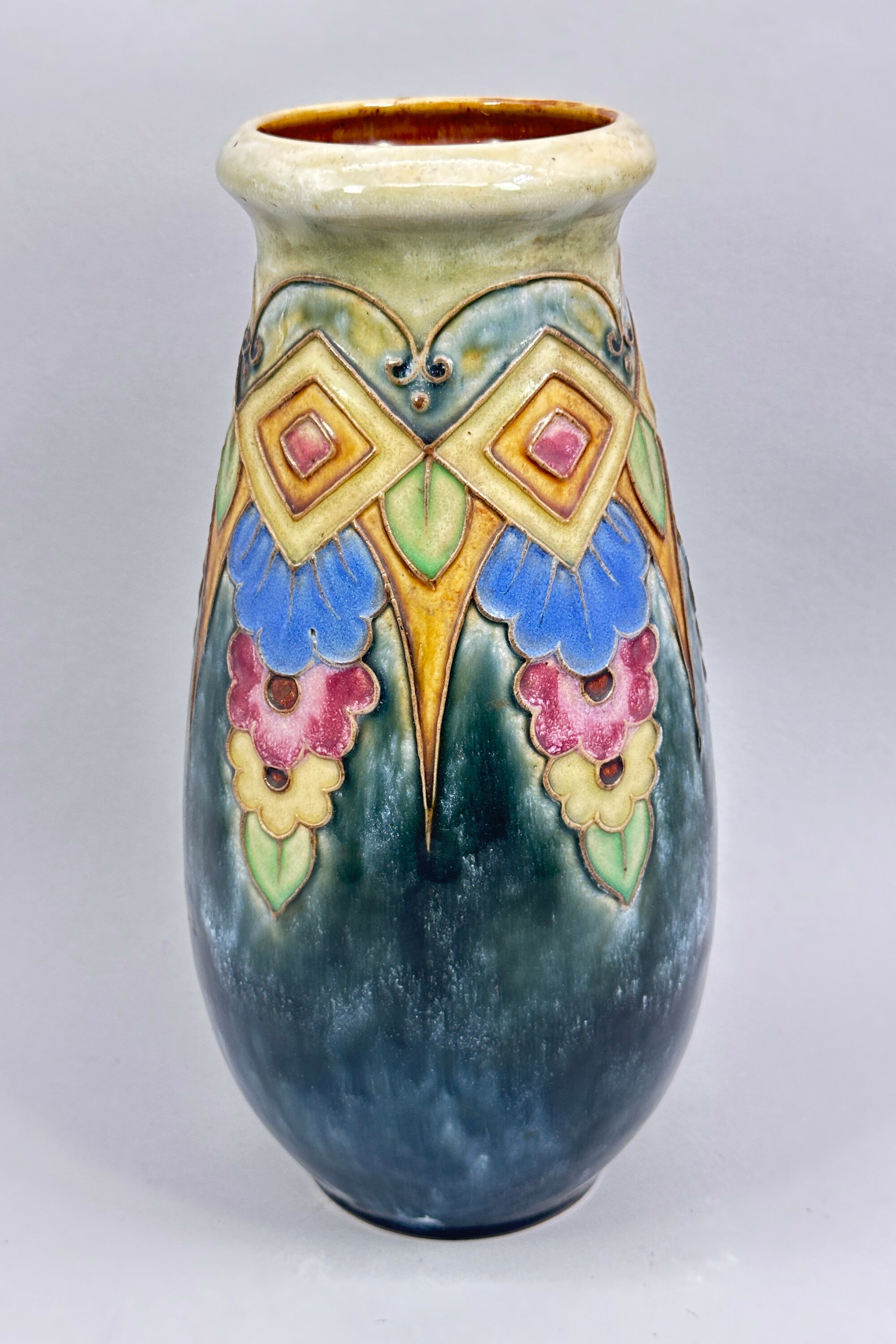
Doulton Vase with geometric and floral designs, late 1920s
Price: £75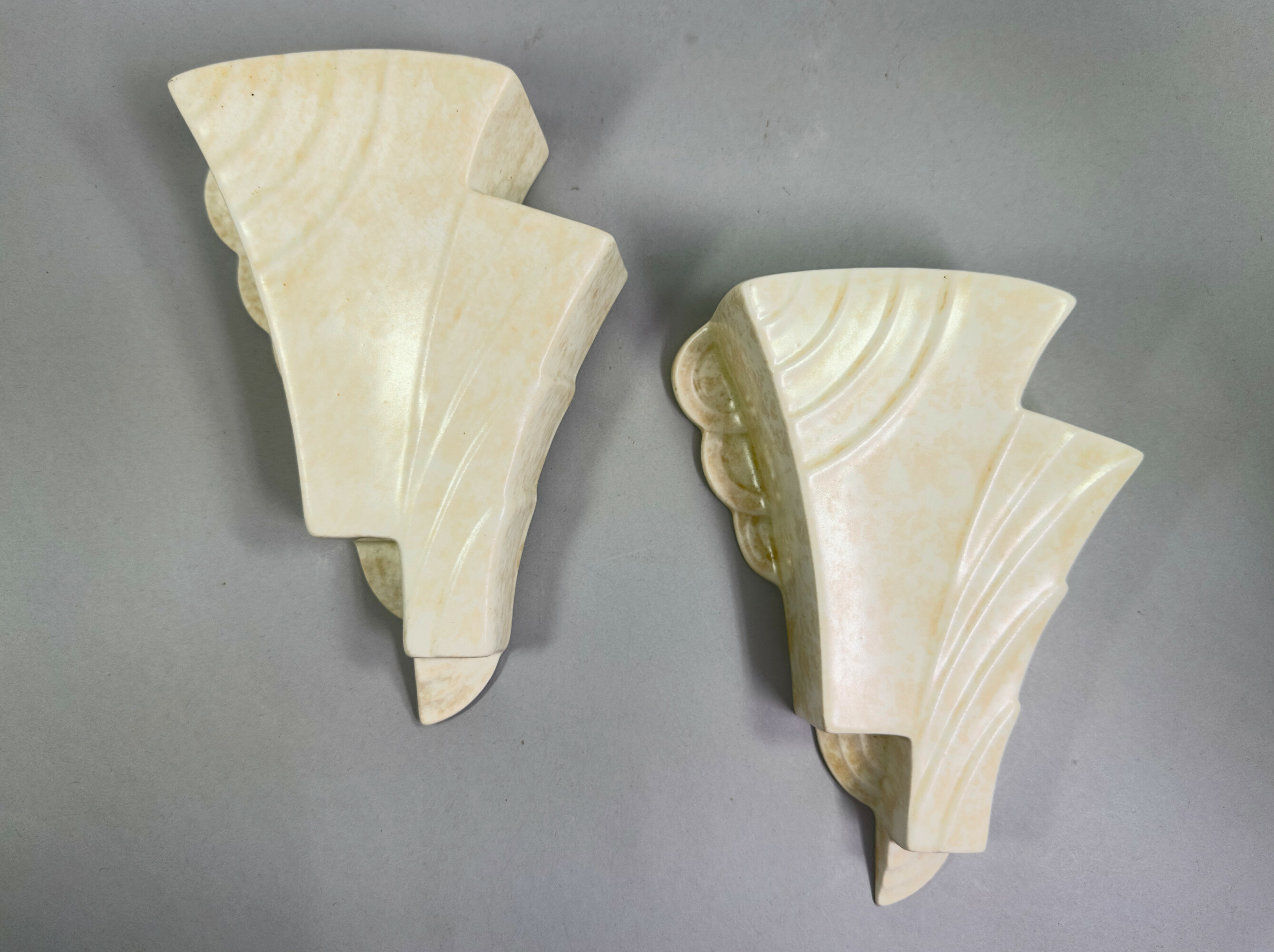
Pair of Art Deco Style Wall Pockets, C20th
Price: £55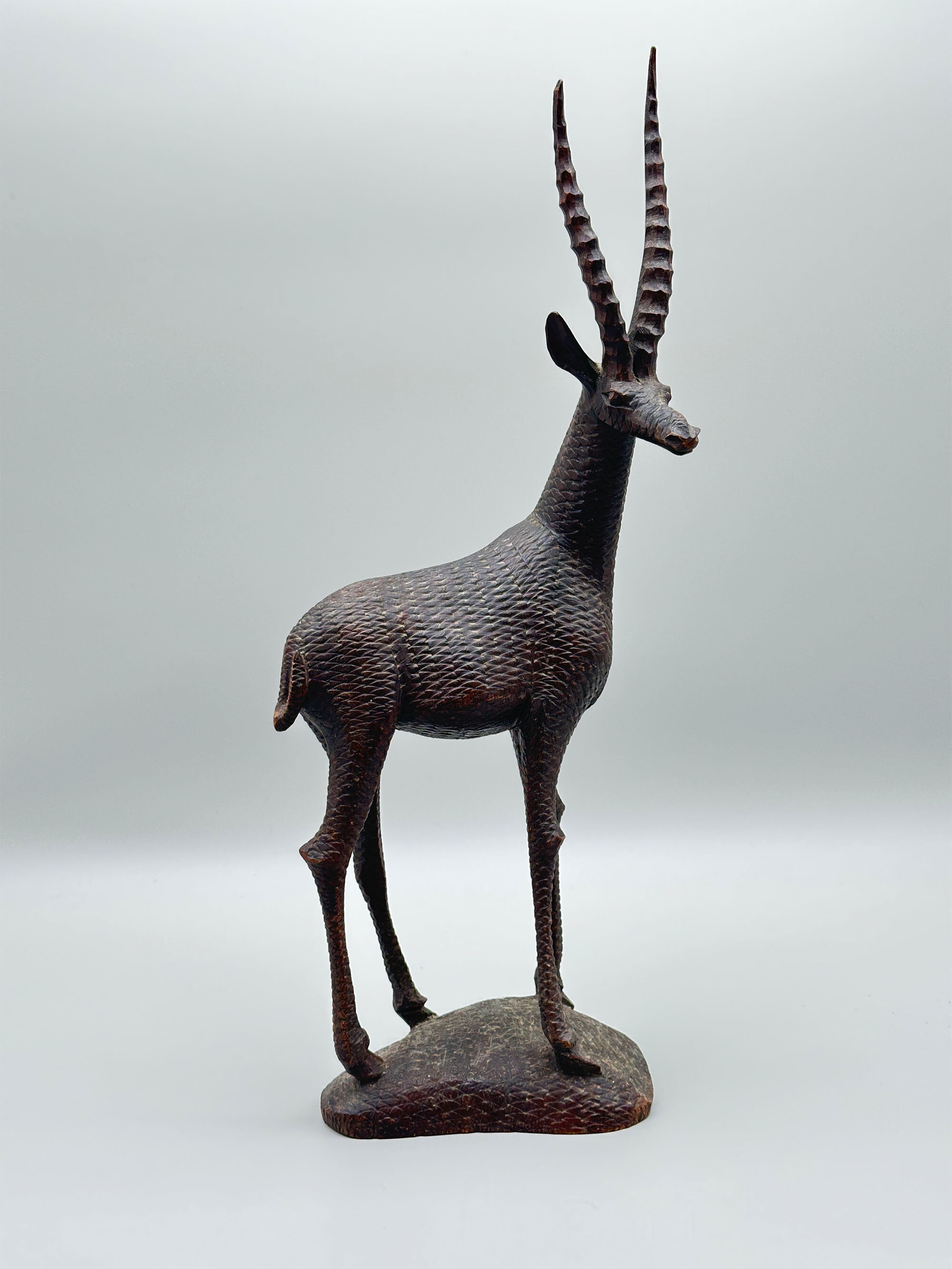
Ebony carved wood figure of an Impala (antelope), African, second half C20th
Price: £75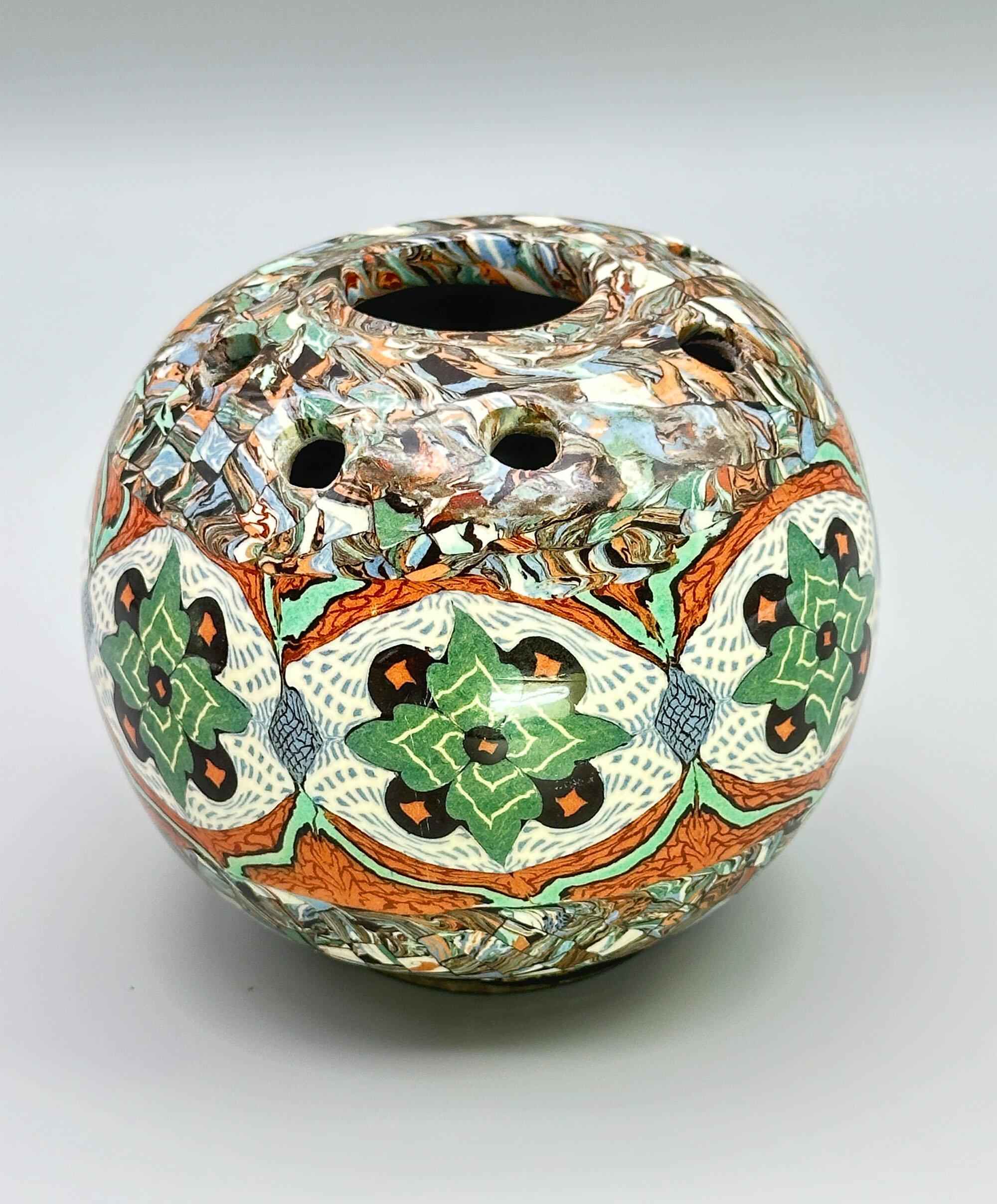
Vallauris Mosaic Pattern Vase, Jean Gerbino, signed, mid C20th
Estimate: £40 – 60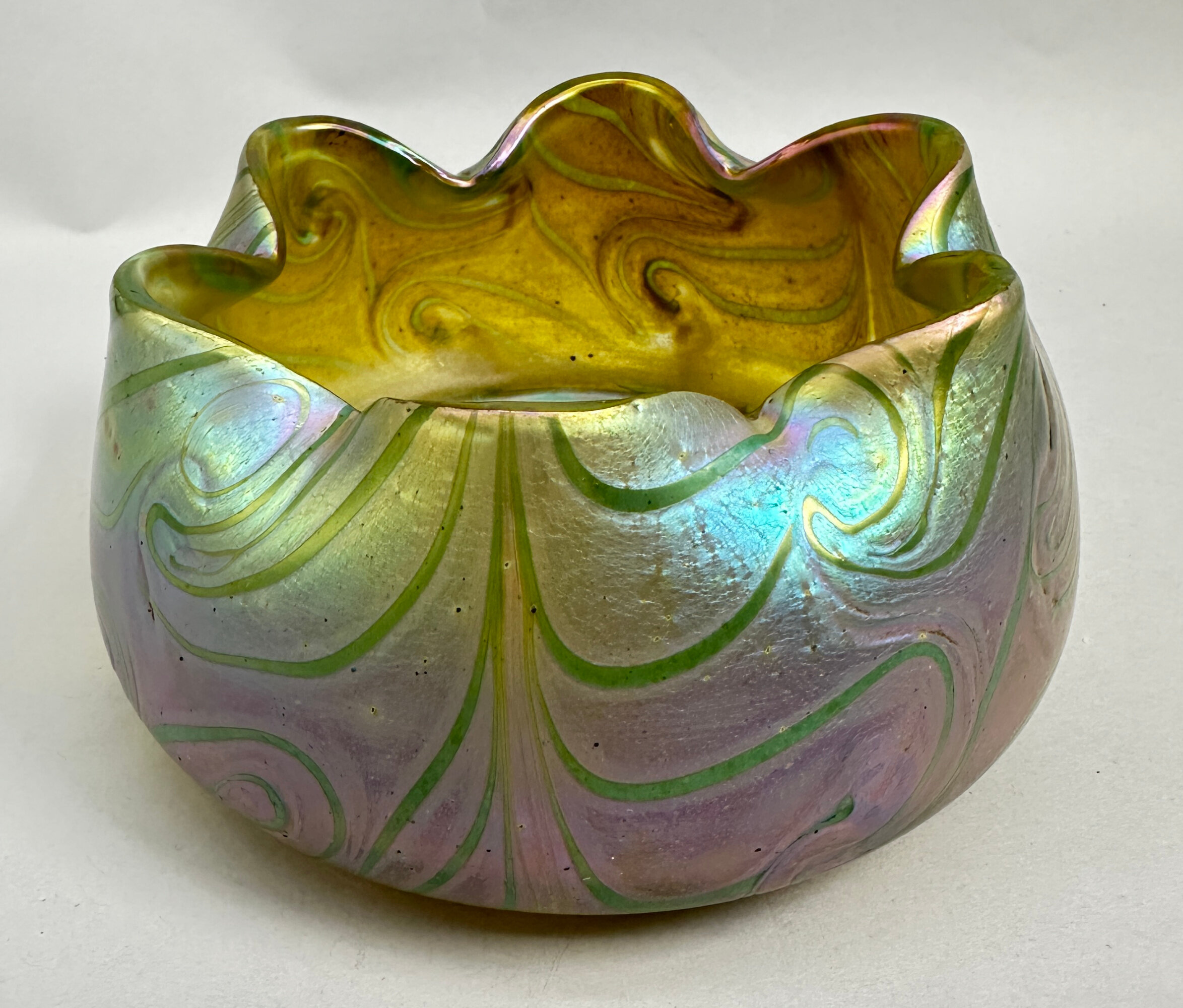
Loetz style glass Bowl, early C20th
Price: £110Most of the original Loetz pieces were not signed and there were many contemporary manufacturers making pieces in a similar style. There are, furthermore, modern reproductions. The attribution ‘Loetz’, is, inevitably, generously and loosely applied but sometimes true certainty is hard to achieve. Much information and assistance can be obtained from the website Loetz.com. On that basis this attractive bowl with its crimped rim and wavy line design on a purple ground is best regarded as Loetz style but probably contemporary with the output of the Loetz factory itself. It has great decorative appeal nevertheless.
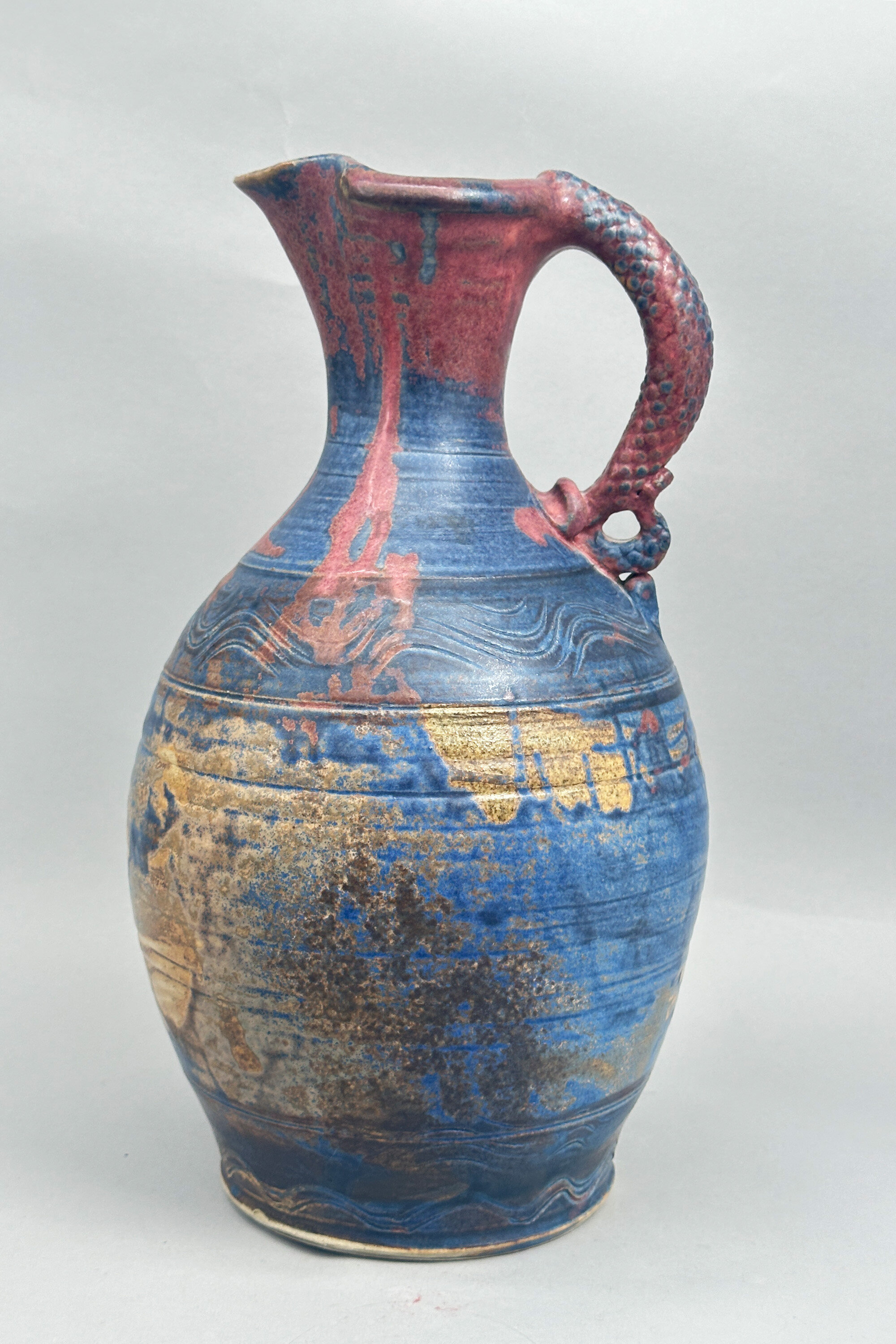
Studio Pottery Jug, Michael Kennedy, signed, late C20th
Price: £75Both the incised mark at the base and the small round sticker (see image 9) show this to be the work of the distinguished Irish Potter, Michael Kennedy who established his first studio at Sligo, Co Sligo, in 1979 and then a second studio at Gort, Co Gallway. Kennedy was a prolific and popular ceramic artist who was also happy to pass on his skills guiding many young potters at the start of their careers, some of whom went on to open successful potteries of their own. His work at Sligo was distinguished by the imaginative use of purple, pink and blue glazes of which this jug is an excellent example. There are various forms of his signature but the one here, possibly mainly used on his earlier works, is perhaps the most typical, a stick figure within a circle followed by the letters ‘Kennedy’. Michael Kennedy sadly died unexpectedly in 2021, but his works live on and can be seen in homes and galleries in Ireland and abroad.
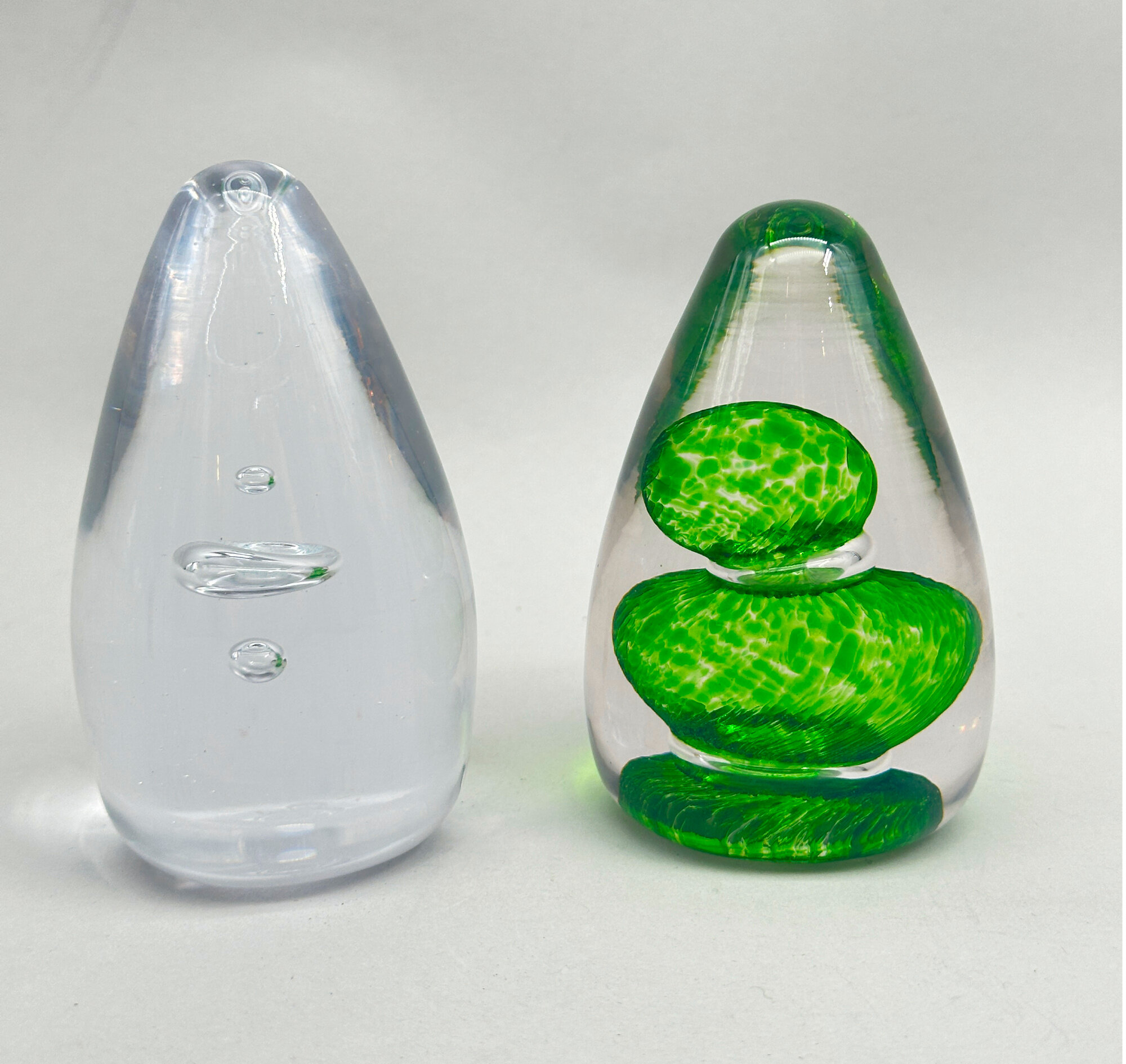
Two Wedgwood Glass paperweights designed by Ronald Stennett-Wilson, late C20th
Price: £40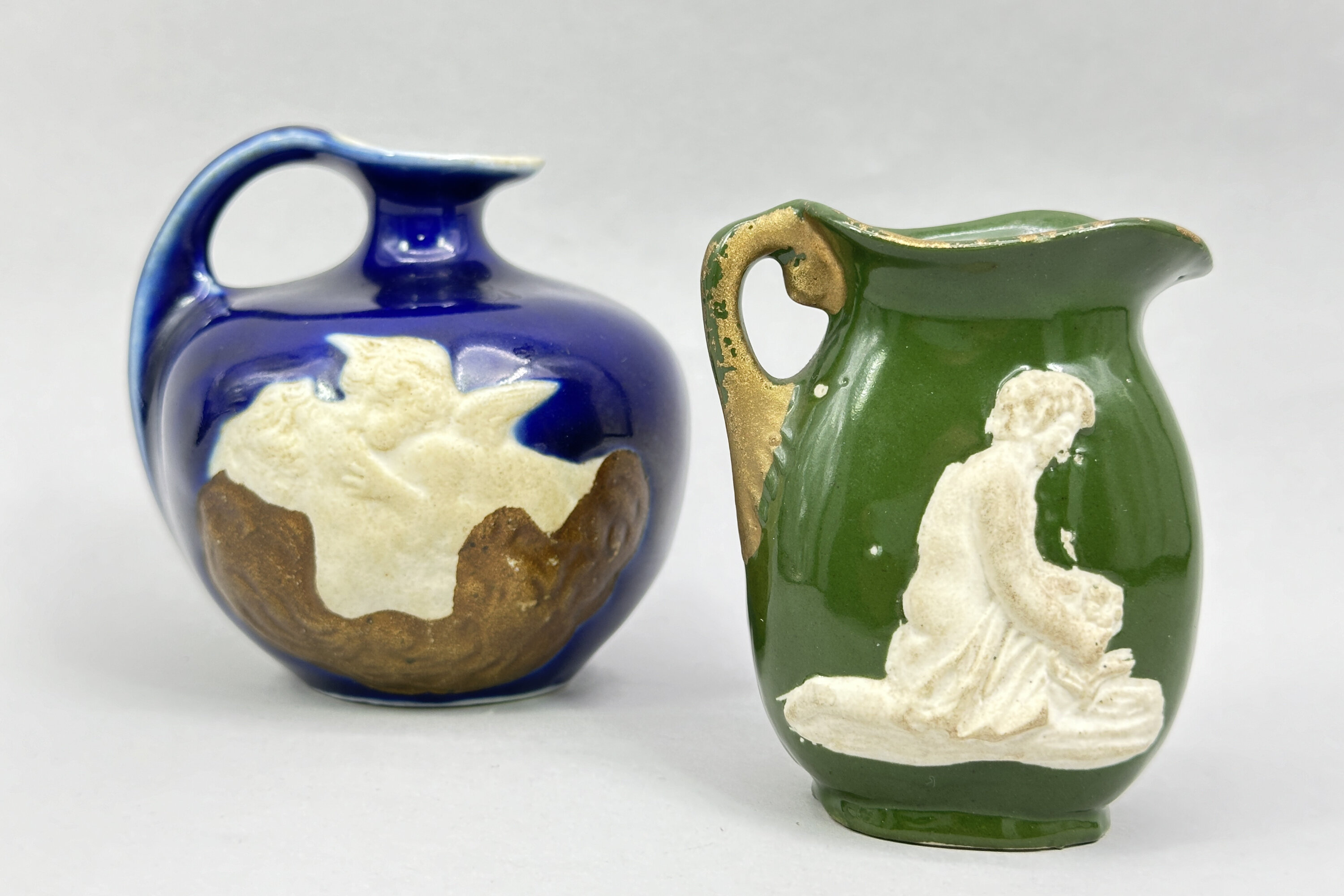
Two Ceramic Jugs with Erotic Decoration, continental perhaps German, circa 1900
Price: £25These pieces represent something of a puzzle. Seen the right way round (with the handle on the right) they are plain and the decoration only reveals itself on the reverse. This suggests a playful intent to conceal which, when combined with the subject matter, suggests something a bit ‘naughty’ which could confirm the second interpretation of what the seated man is holding! The paste, and general style of the pieces, looks continental and a German origin might be a good guess, but no more than that. The blue glazed jug has an impressed mark to the base ‘186 [plus an unidentifiable number]’ which might be the date but is more likely the pattern number; a dating of around 1900 for both seems reasonable - certainly there is an ‘old’ look to the pieces. There are one or two similar examples but little in the way of firm information. One for a collector to puzzle out!
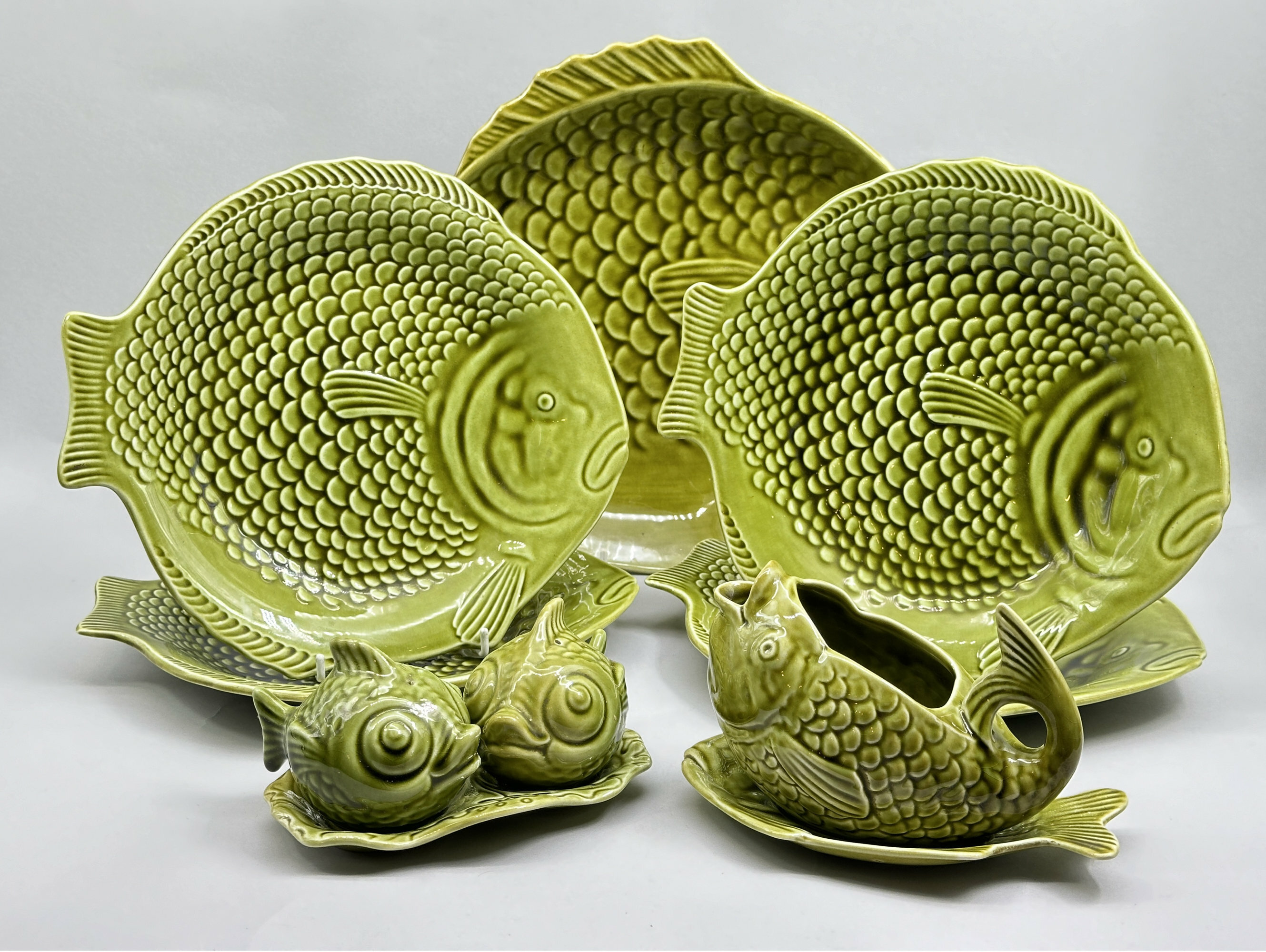
Shorter and Sons Green glazed Fish Service, 1950s/1960s
Price: £75The firm which later became Shorter and Son was first set up by Arthur Shorter in 1878 with a partner James Boulton in Stoke on Trent. Their products were solidly in the main-stream of Victorian taste - majolica wares of all types predominated. Time saw another generation join the firm and various amalgamations took place. One of the sons, Colley Shorter, developed a close association with Clarice Cliff whom he eventually married. Her designs, while concentrated on the wares signed with her name, also fed in to the productions of Shorter and Sons and the range of their wares expanded considerably in the 1920s and 1930s.
‘Fish Ware’, as it became known was introduced in the late 1920s and rapidly became one of their best selling lines. Initially production was confined to flat ware and in 1935 a part service was acquired by the Duchess of York, later to become Queen Elizabeth. The range expanded and the design of the gravy boat and stand, introduced in 1936 (and included in the present selection), was attributed to Cliff herself. There were further additions and the late 1950s saw the addition of salt and pepper pots on a wavy tray (also included in the present selection). This service, then, probably dates to around 1960 a little before the firm was effectively taken over by Crown Devon in 1964 and the eventual loss of the identity of its wares. The popularity of the line is easily understood and our present selection is an excellent memento of the design.
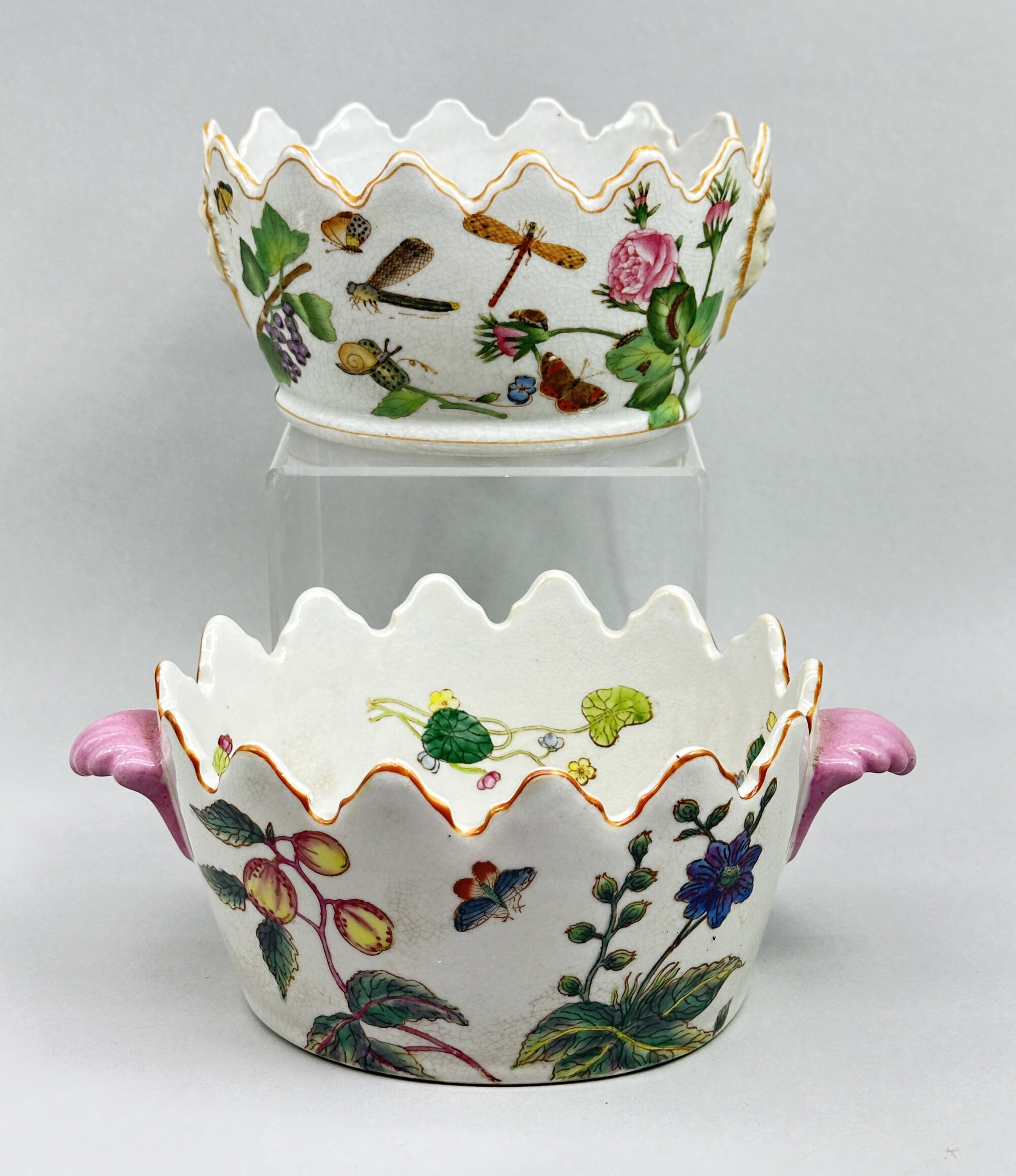
Two similar Chinese Export Style Monteith Form Jardinieres, C20th
Price: £75The form here is a miniature version of the Chinese ‘Monteith’ first produced in the early to mid eighteenth century. The wavy rim was designed to hold the stems of glasses which were stood to cool in iced water placed in the interior. The style of the decoration is in Chinese Export taste as well, but dating here is to the C20th probably around the 1960s. Some similar examples have Chinese seal marks and one the name of a Chinese manufacturer implying that these pieces were most likely made in China but this does not assist with establishing their age. Purely decorative objects then with no intent to deceive but amusing creations in themselves and pleasing to a contemporary eye.