
Pair of Staffordshire style Vintage Busts of Children, C20th
Price: £75
Japanese white metal Tobacco Box, Liner and Cover, mark to the base, Early C20th
Price: £25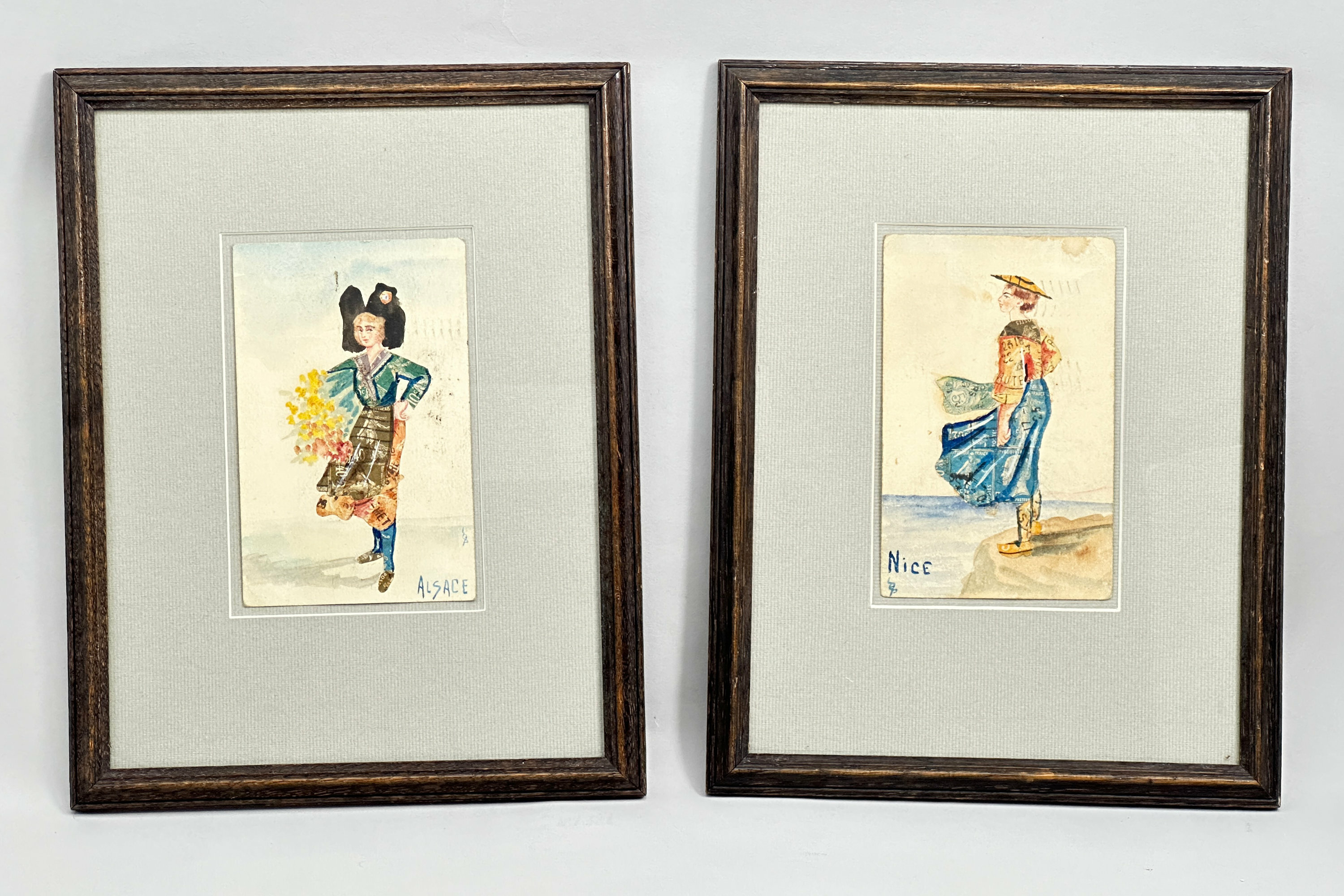
A pair of stamp collage Postcards, Alsace and Nice, framed, early C20th
Price: £45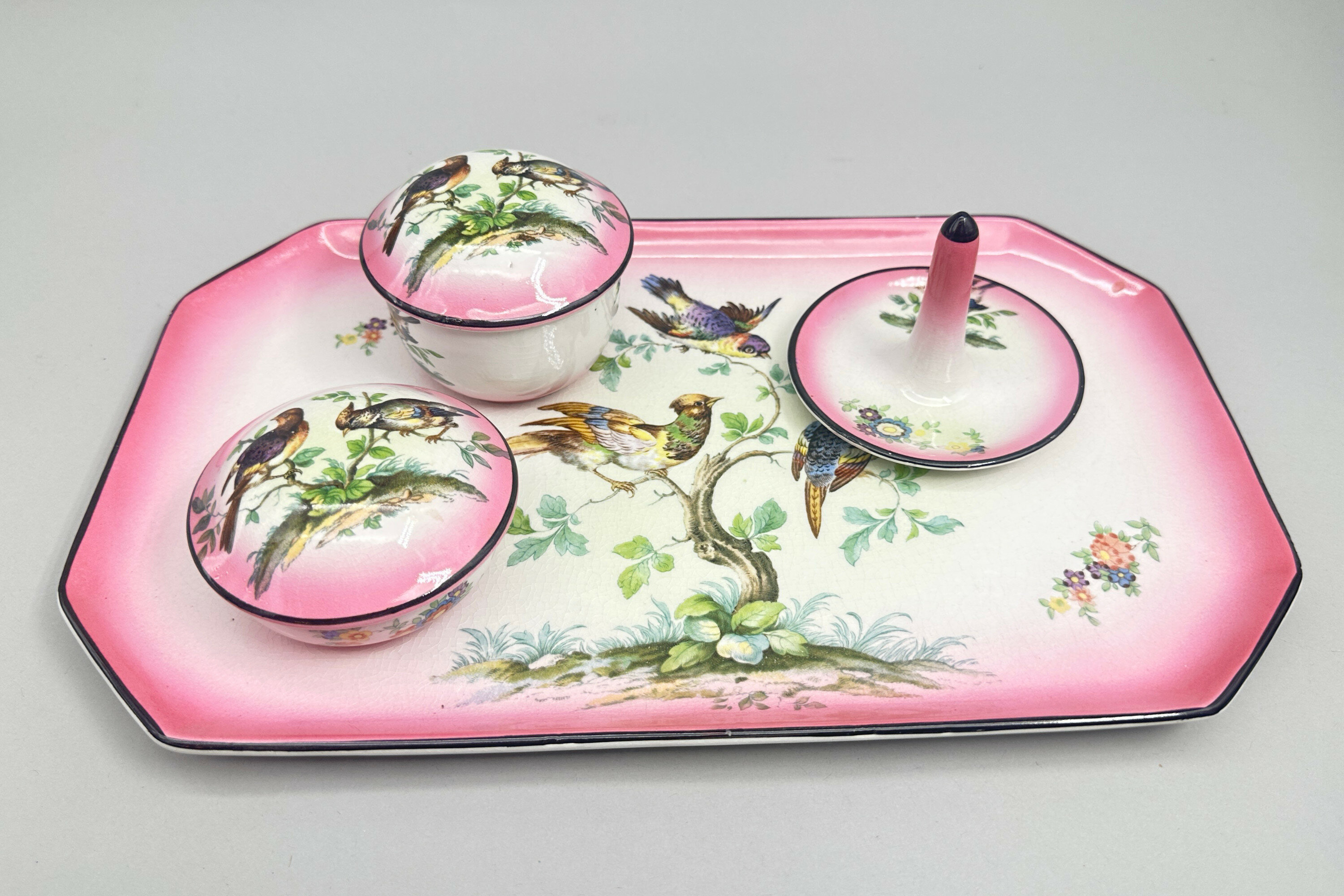
Kiralpo ware Dressing Table Set, marked, 1930s
Price: £35Kiralpo ware was one of the trade names used by Kirkland and Co, earthenware and ceramic manufacturers based at the Albion Pottery, Etruria, Stoke-on-Trent, England who traded from 1891 to 1938 when the business was bought and renamed by Mr A.E.Gray. The format of the mark gives a dating between 1928 and 1938 with ‘E’ standing for Etruria. Kirkland and Co made various modest but colourful decorative items to furnish the home. In a 1907 guide they are described as ‘general earthenware, fancy goods, and majolica manufacturers’. Their designs were not sophisticated but obviously had a popular appeal and this set with its bold transfer decoration of birds set within a rather vivid pink border is typical of their work.
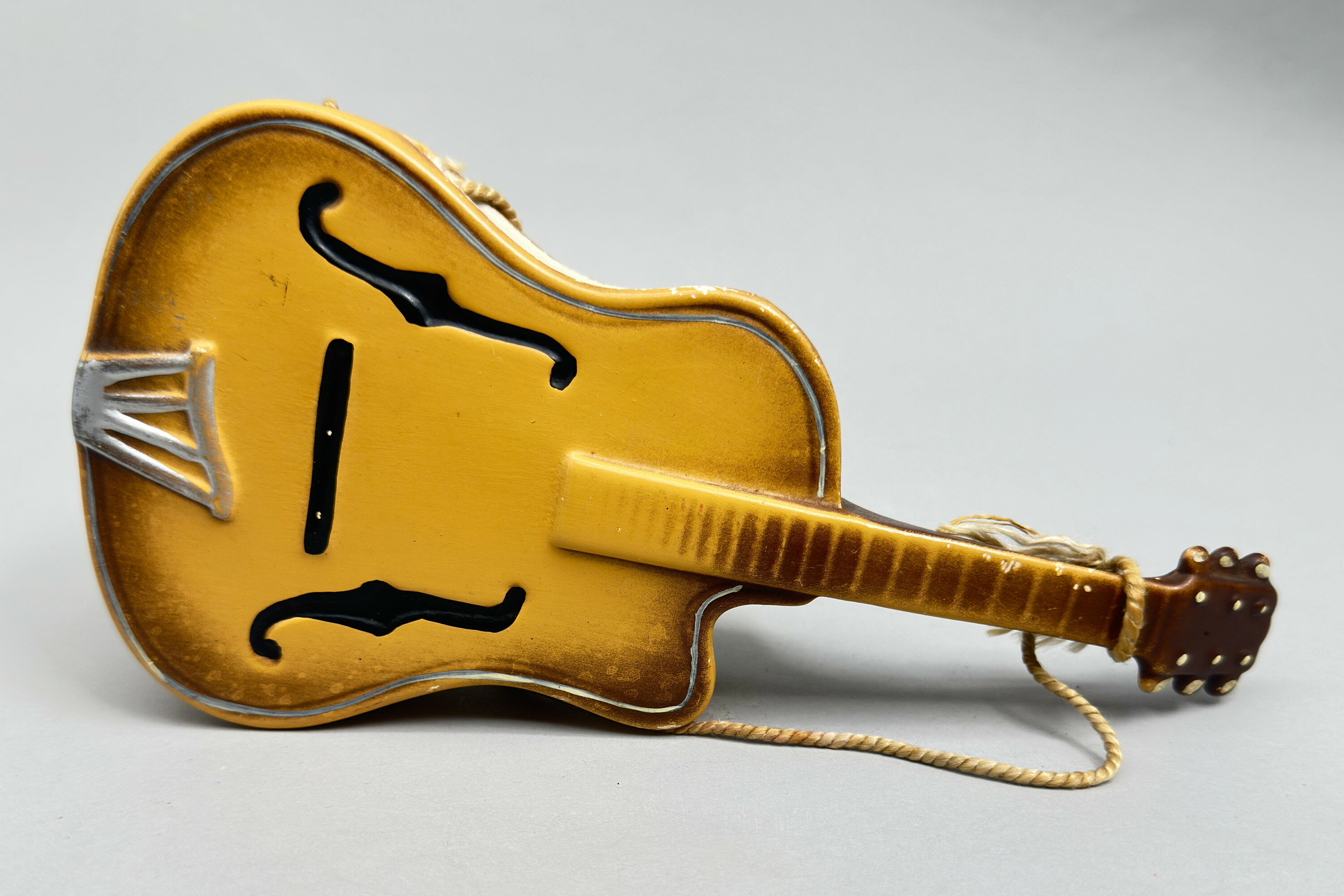
Novelty ceramic Wall Vase in the form of a Gretsch Guitar, English, 1950s
Price: £25
Novelty ceramic Wall Vase in the form of a Gretsch Guitar, English, 1950s
Price: £25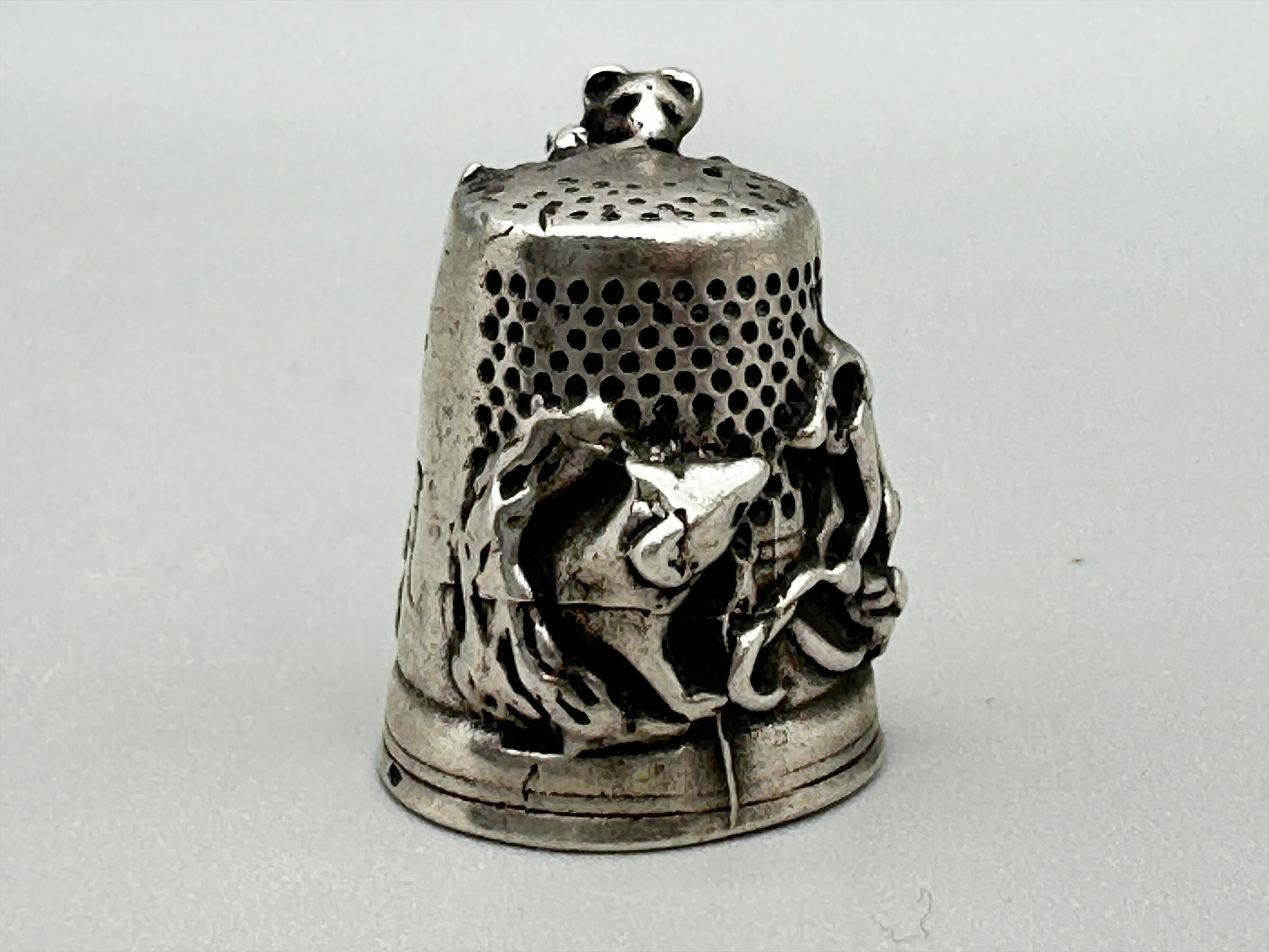
Silver Thimble with Mice, Hallmarks for London 1920
Estimate: £100 – 150
Cruet set in the form of three Friar Tuck Monks on a Tray, Hummel, West Germany, 1960s
Price: £55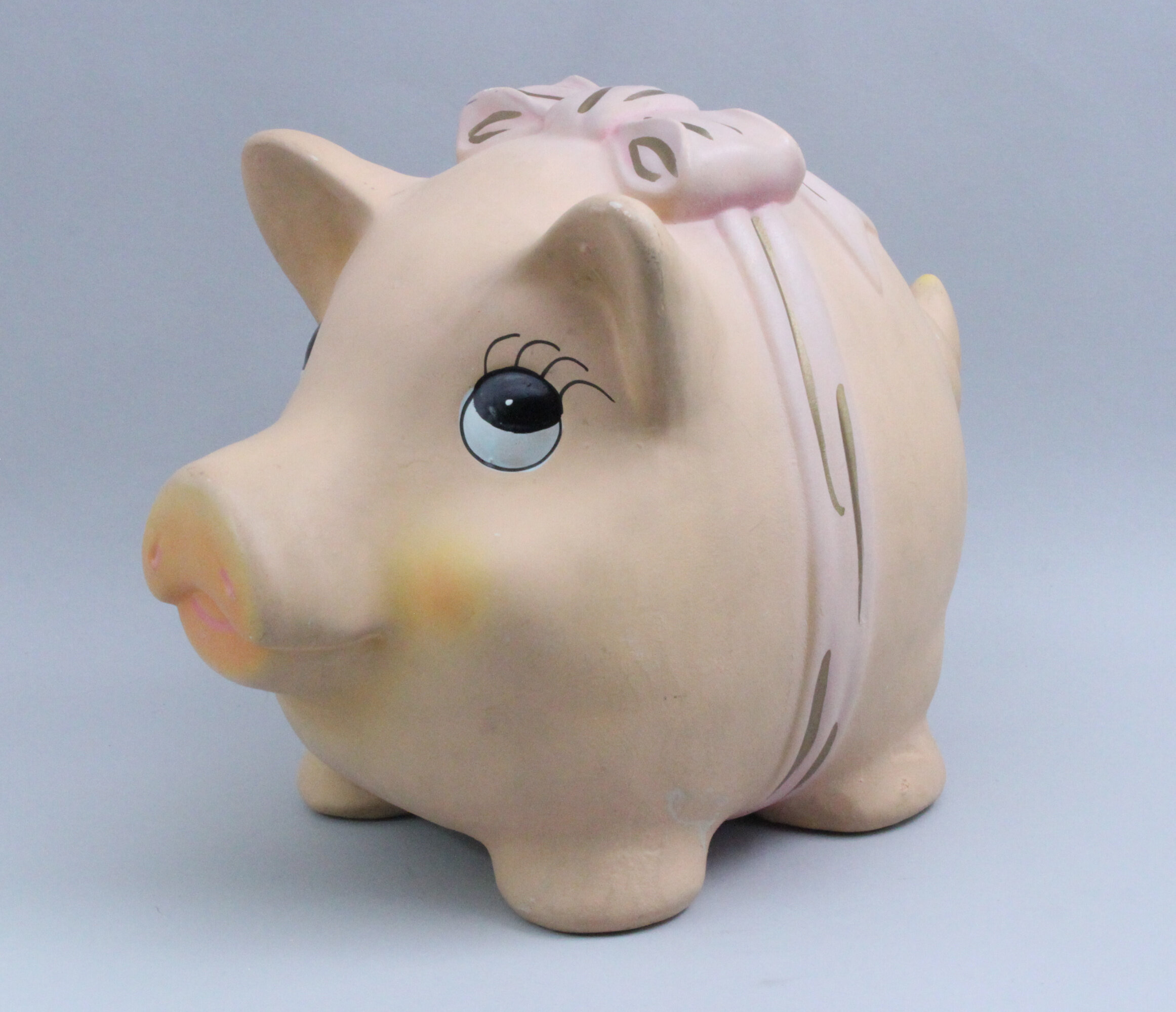
A Ceramic Moneybox in the form of a Pig, Helensgate Ceramics, mid twentieth century
Price: £25
10 Chromolithographs from Illustrated London News publication celebrating Queen Victoria’s Diamond Jubilee 1897
Price: £85Print 1: This print depicts the weddings of Queen Victoria and Prince Albert and on the bottom depicts the marriage of Mary of Teck to the then Duke of York. The portraits surrounding these images are of the two brides and other royal family members. (numbered Plate 17)
Print 2: This print depicts the development in the modes of transportation during her reign. Clipper ship to steamer, carriage to train, walking and carriages to bicycles and automobiles. The portraits will be the inventors and visionaries of these developments. (numbered Plate XI)
Print 3: This print depicts the House of Commons with Prime Minister Salisbury and the House of Lords. The surrounding portraits are politicians of the day. The bottom centre is of Gladstone. (numbered Plate A)
Print 4: This print depicts the development of the Royal Navy during her reign. it starts with tall mast sailing ships (1836 fleet) and proceeds to steam ships (1853 fleet) and then finally to the most modern ships and even submarines (1897 fleet). The portraits are a bit random - but probably are naval officers and Royal family members. (numbered Plate IX)
Print 5: This print depicts three important battles during her reign. The portraits depict military officers and other influencers during these wars. (numbered Plate VIII)The portraits depict military officers and other influencers during these wars. (numbered Plate VIII)
Print 6: This print depicts the christenings of Victoria's first two children, Victoria Adelaide Mary Louise, Princess Royal and Albert Edward, Prince of Wales. The large portrait on the upper left is the Arch Bishop of Canterbury. (numbered Plate V)
Print 7: This print depicts the Queen's marriage to Prince Albert and the image below is a well known family portrait. The portraits are members of the Royal Family such as parents and possibly siblings. (numbered Plate IV)
Print 8: This print depicts Victoria's accession council, the opening of parliament and a royal procession. The portraits are very difficult to pinpoint but they would be politicians and influencers of the day. (numbered Plate III)
Print 9: This print depicts Queen Victoria's coronation in 1838. The top image is the ceremony followed by the procession with Buckingham Palace in the background. The portraits depict monarchs that came before here. Edward the IV is the large central top portrait. (numbered Plate II)
Print 10: This print depicts a later family portrait and three of her residences, Windsor, Balmoral and Osborne. The larger portraits are Edward Prince of Wales, George Duke of York and probably Prince Edward Albert.
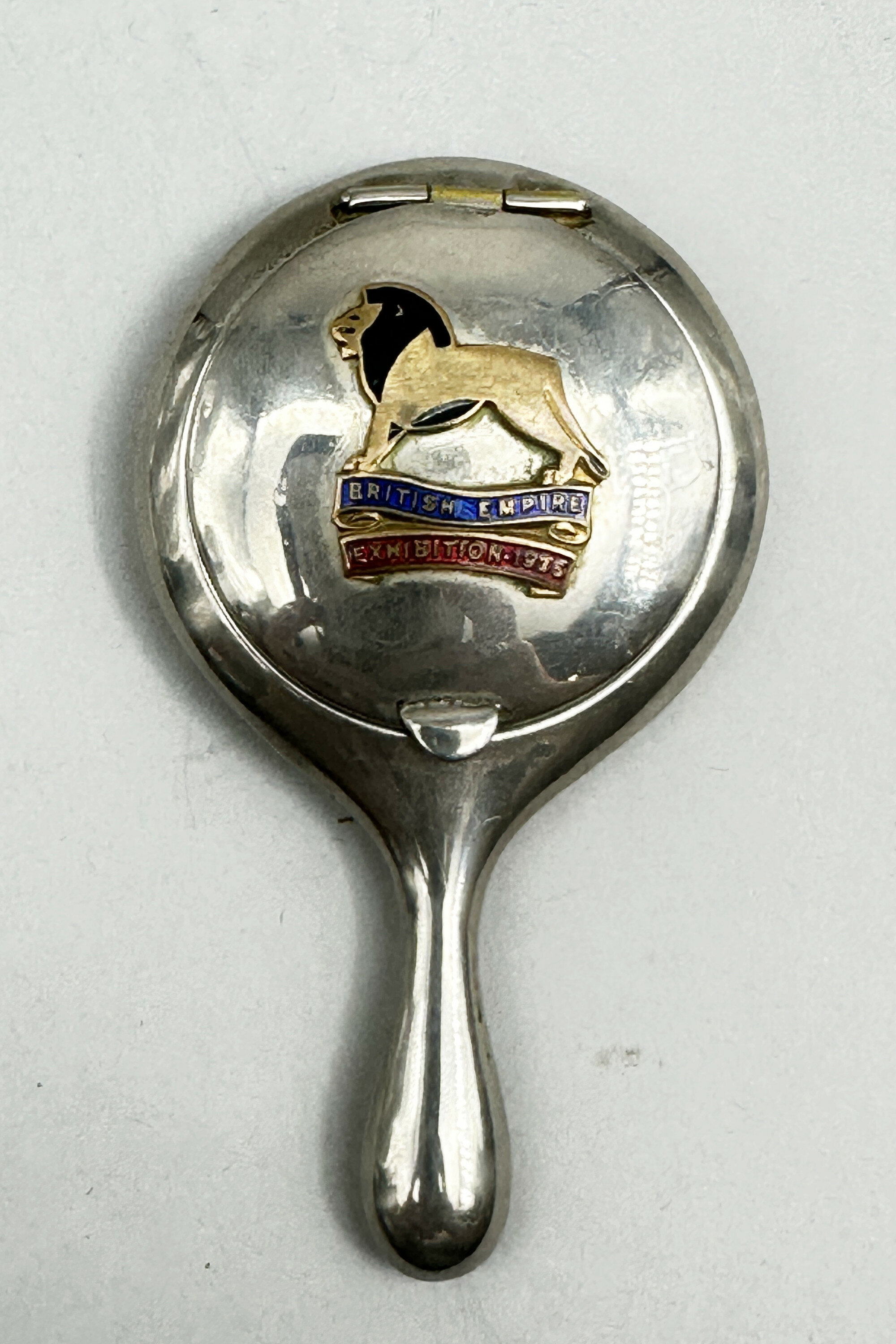
Powder Compact, British Empire Exhibition (1924-1925), dated 1925
Estimate: £30 – 40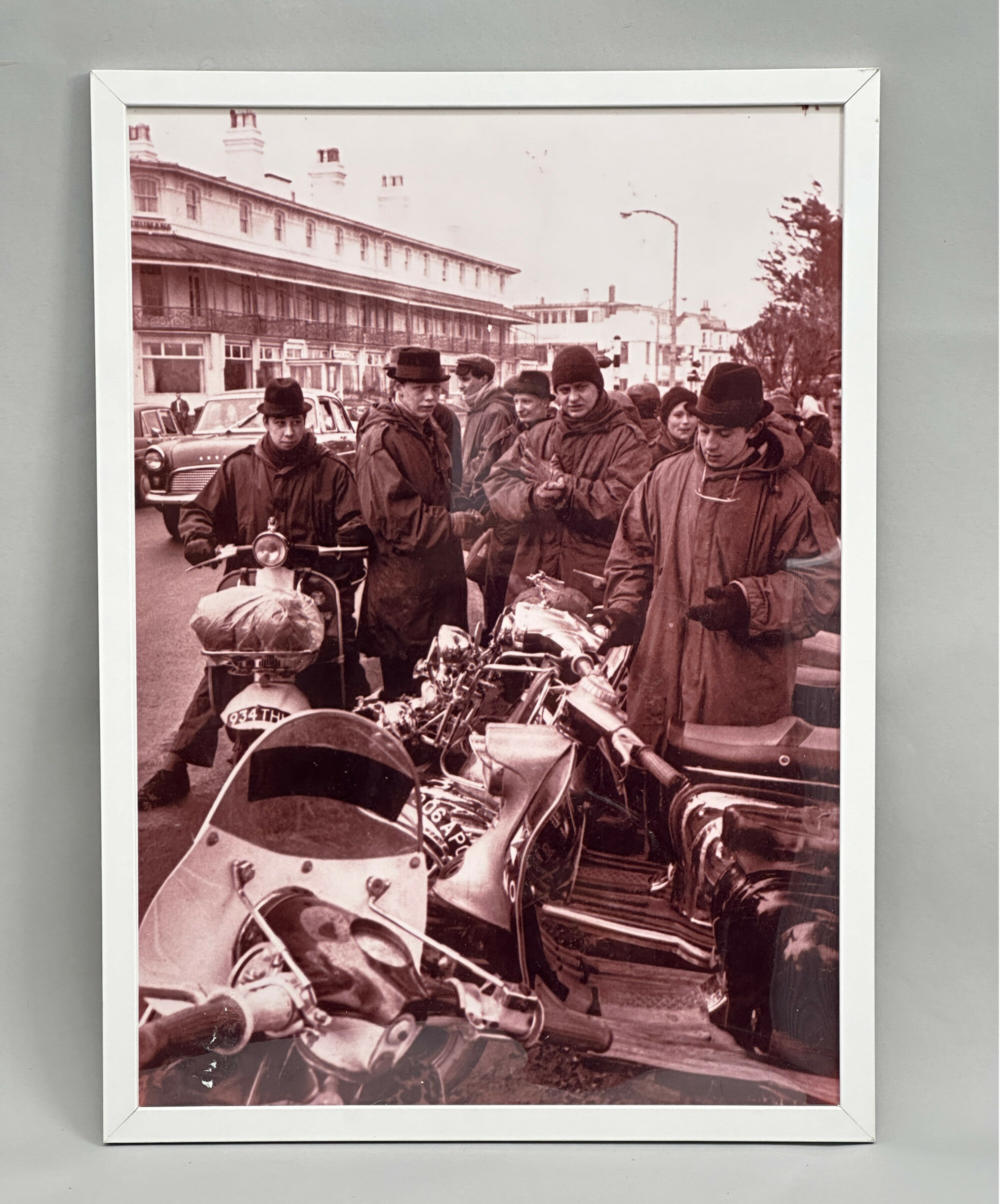
Mods at Clacton 1964, Photograph by Terry Disney for the Daily Express
Price: £45It was, though, a newsworthy confrontation and press photographers were sent in to record events. The most notable of these was Terry Disney who worked for the Daily Express newspaper. Disney was a distinguished and prolific photographer from the 1960s onwards and many of his striking images survive, not least those capturing the major personalities of the entertainment world at the time, including the Beatles themselves. His images of the ‘mods’ (he seemed less interested in the ‘rockers’) capture the atmosphere of the scenes vividly and this photograph is an excellent example of his work on that Easter weekend (for another see image 5). Often only obtainable under licence, this print is an ideal opportunity for a collector to acquire a near iconic image. It is offered with a very basic frame which might well be replaced with something which would enhance the photograph more sympathetically.

Souvenir White House Enamel Box and Cover
Price: £15
Two Corgi Silver Jubilee Toys Boxed, (41) State Landau, (417) London Bus, 1977
Price: £45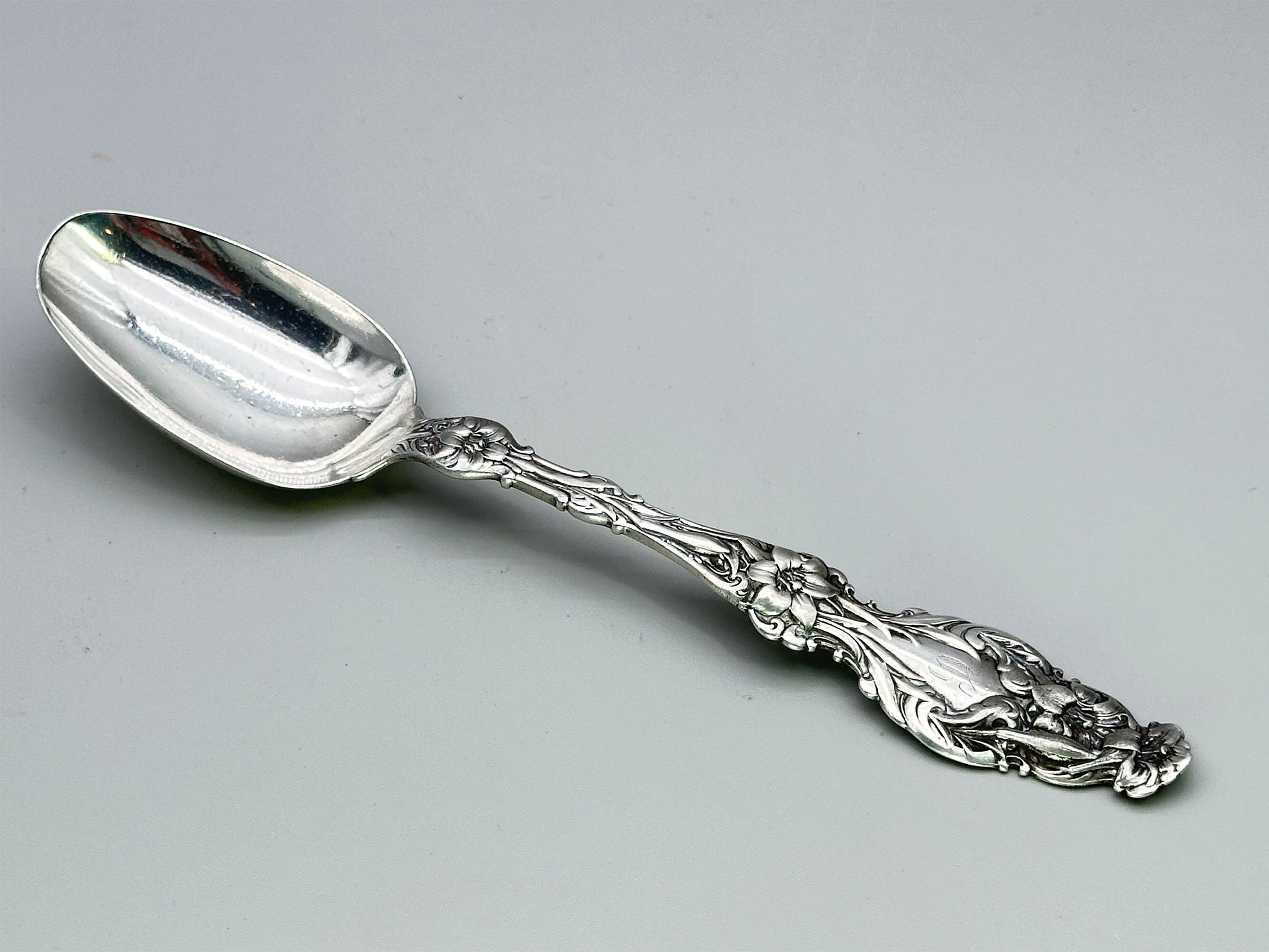
Silver serving Spoon with monogram, Lily Pattern, Whiting Manufacturing Co, marked, 1902
Estimate: £100 – 150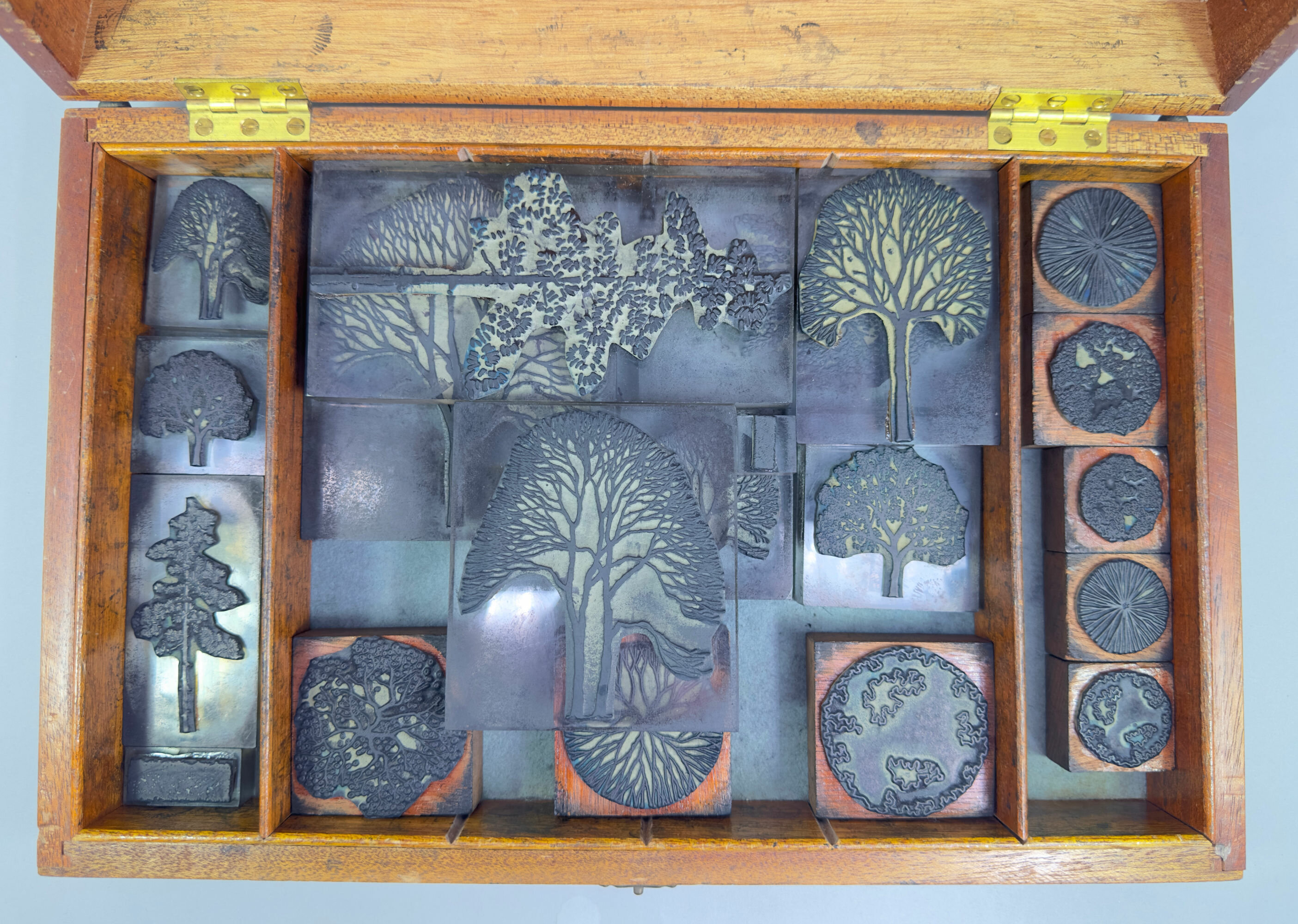
A group of twenty assorted artists Stamps in H&R Johnson sample Box, C20th
Price: £75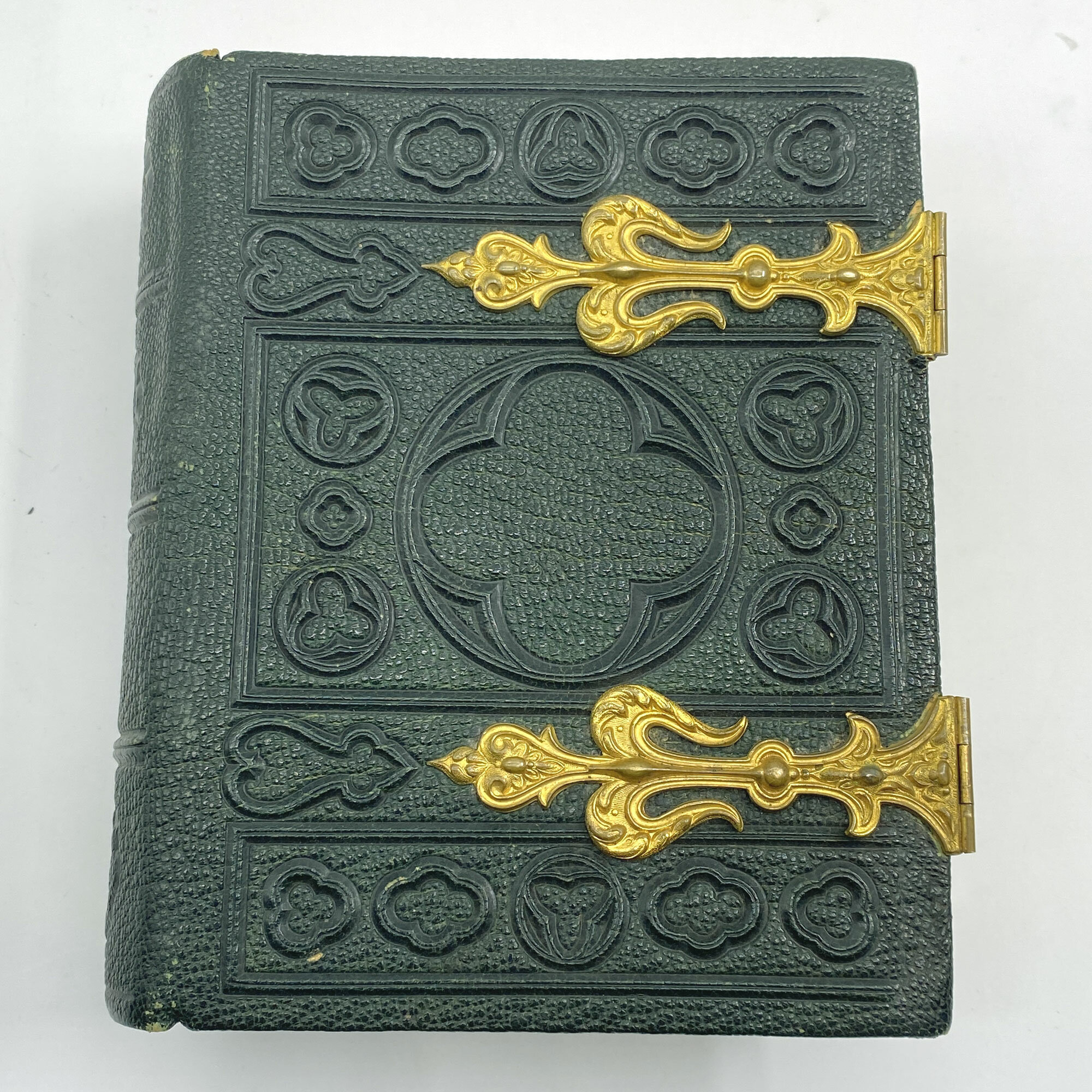
Victorian leather bound photo album made by Mechi and Bazin c.1870
Price: £110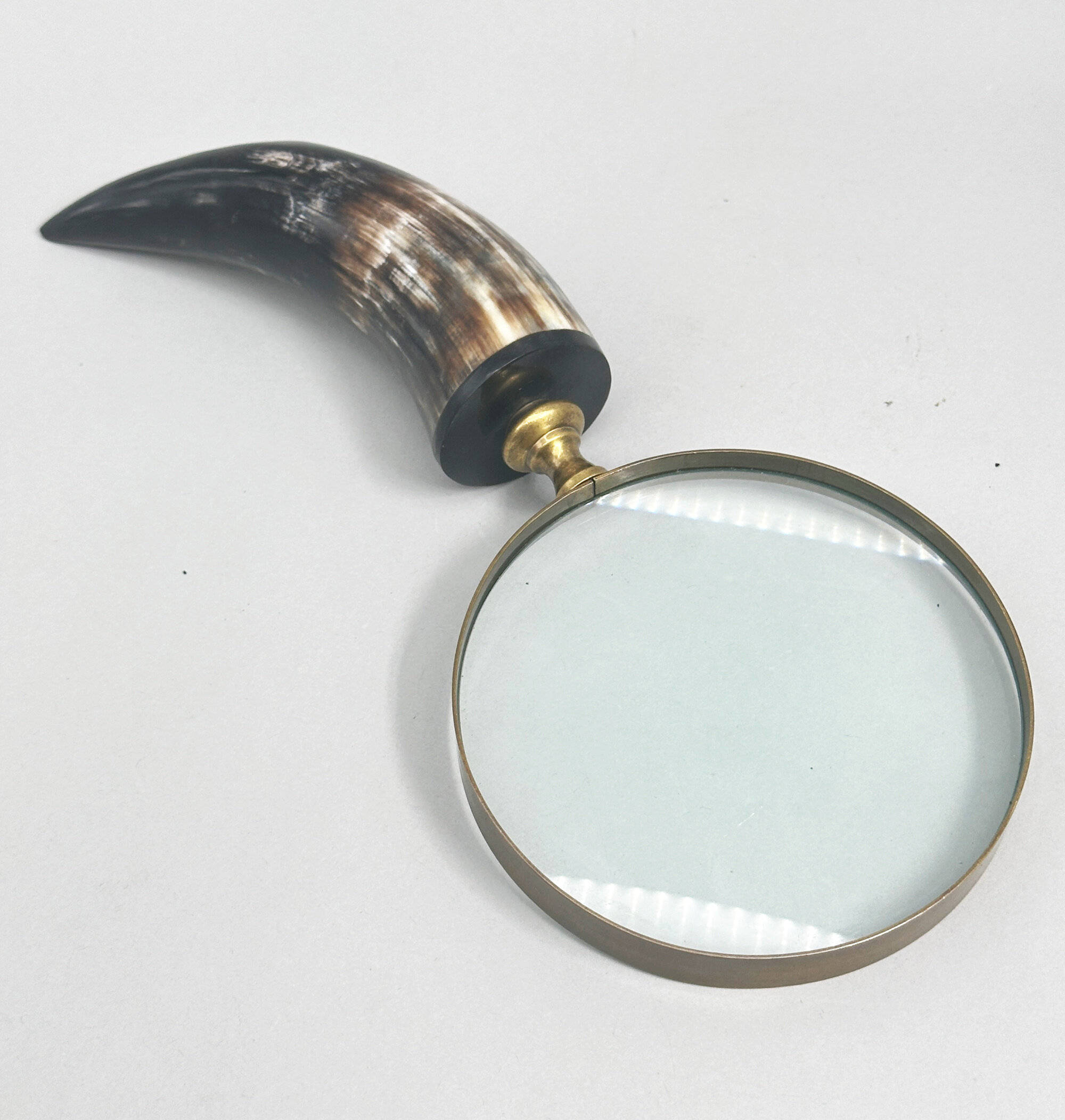
Edwardian large text magnifying glass with horn handle, early C20th
Price: £25
Bisque Scottish boy character doll c. 1900
Price: £60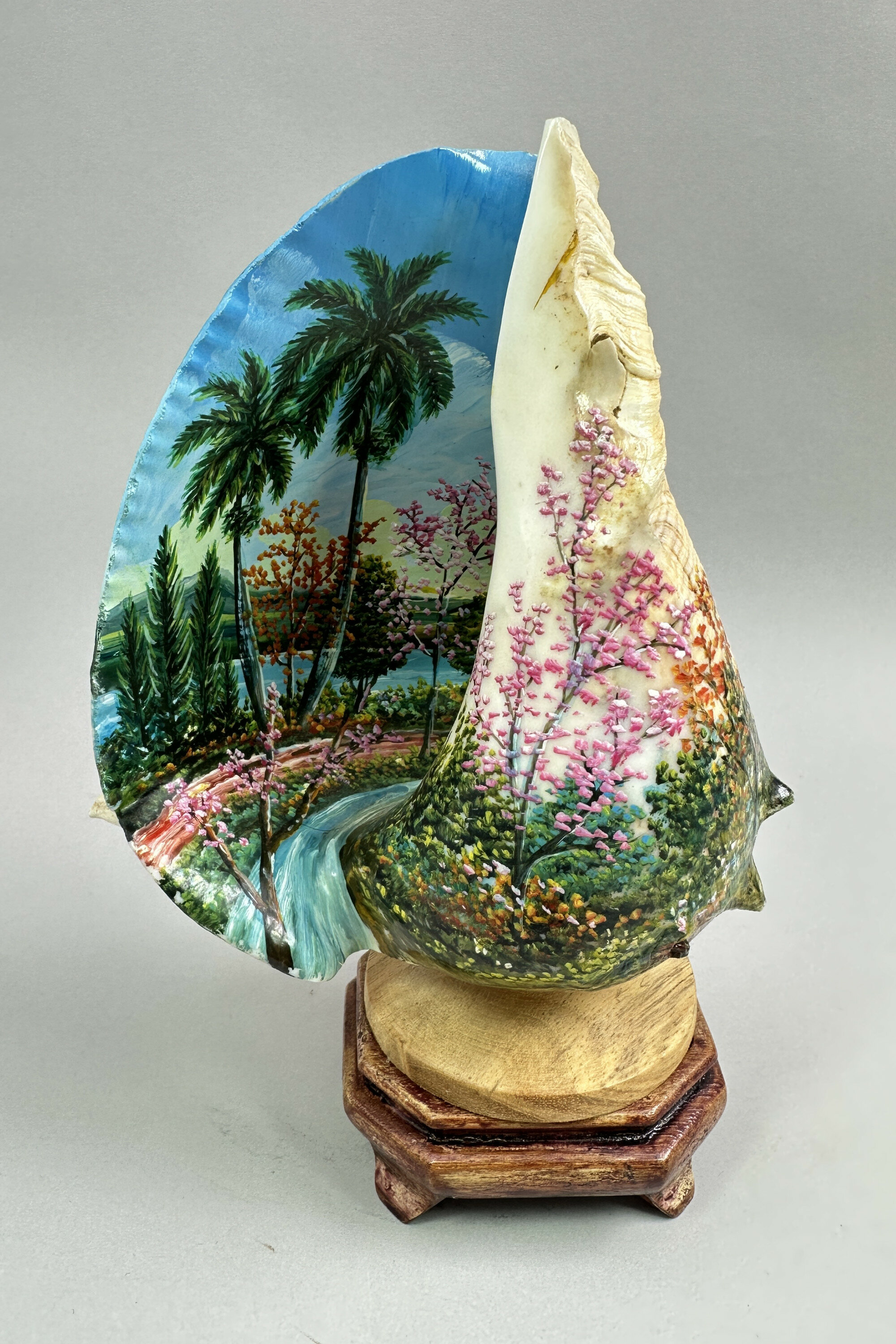
Kitsch Style Conch Shell with painted landscape decoration, C20th
Price: £45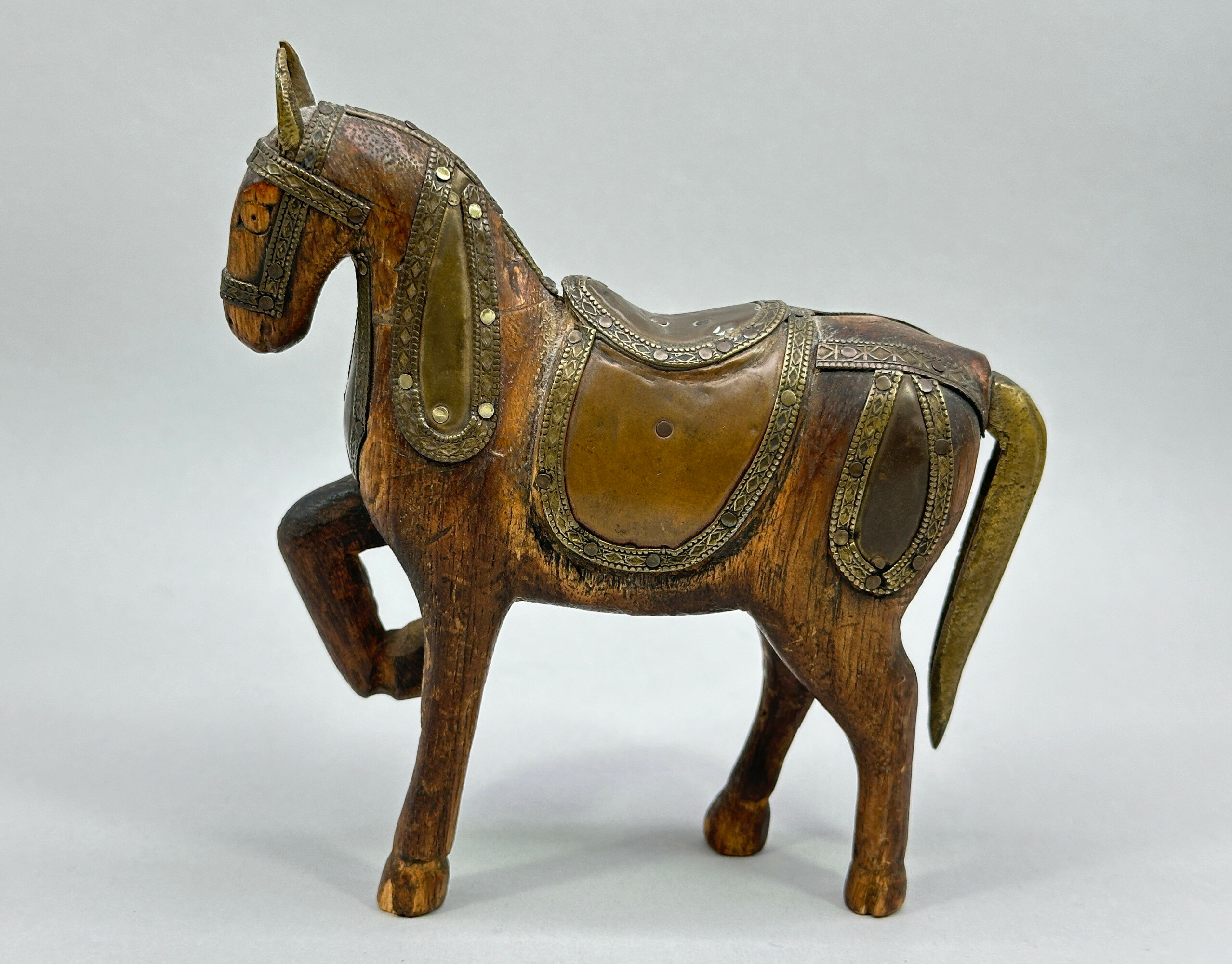
Indian wooden toy model of a Horse with metal fitments, early C20th
Price: £25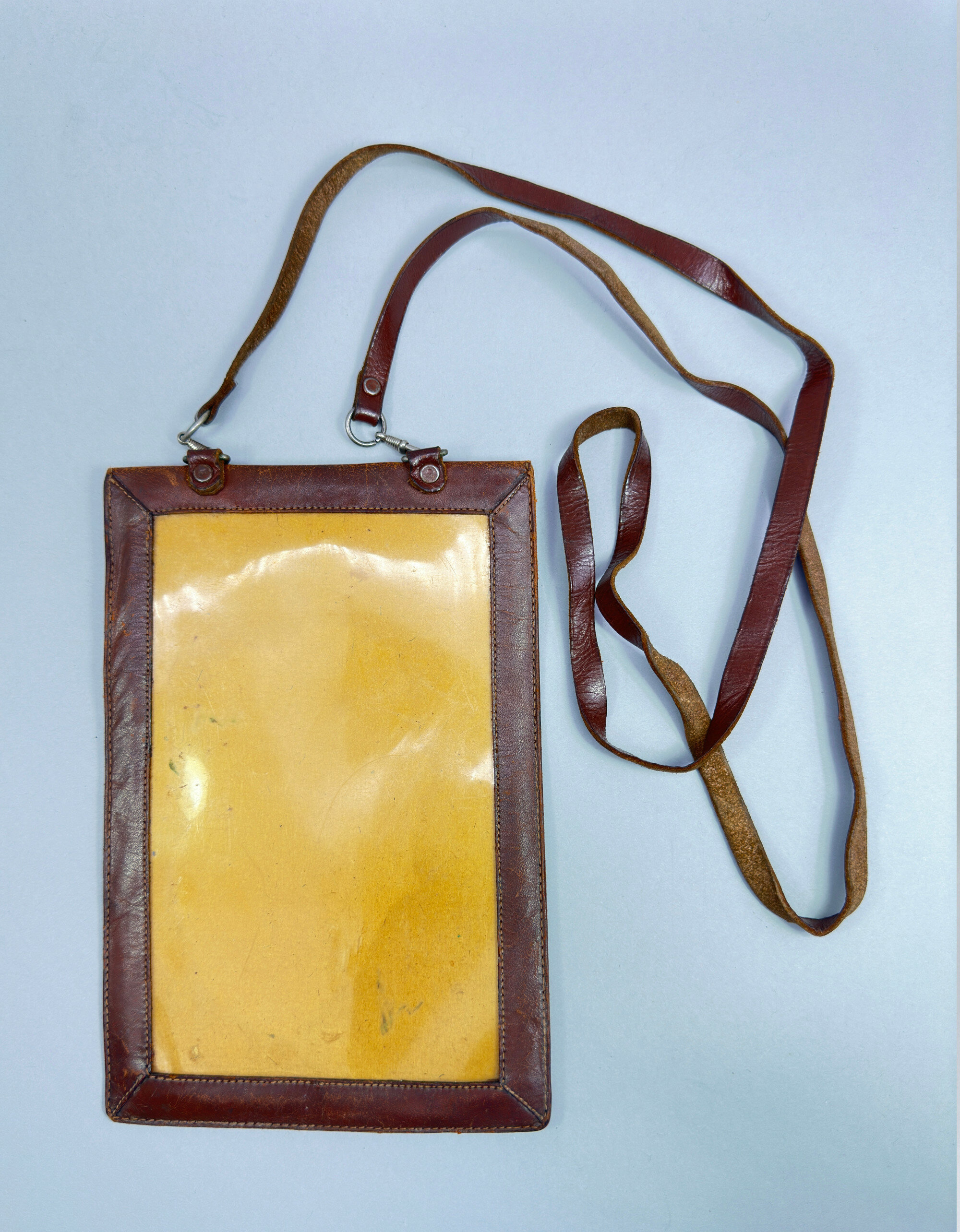
Vintage Leather Map Case, probably 1940s
Price: £45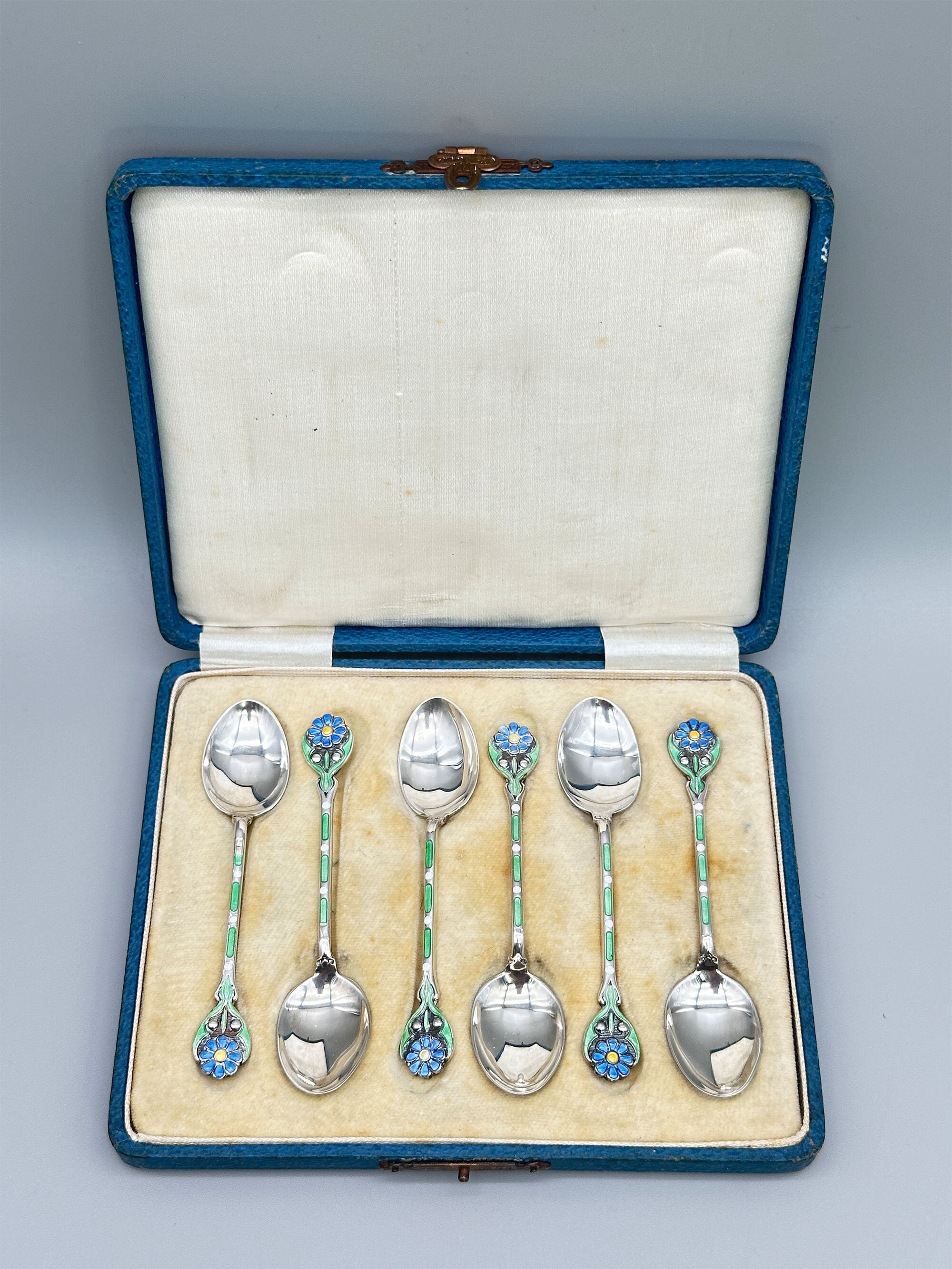
Set of six silver and floral enamel demitasse spoons, boxed, Walker & Hall, Birmingham, marked, 1932
Estimate: £180 – 220
Two Avon Perfume Bottles, Lady and a Girl, 1970s
Price: £20
Two Avon Perfume Bottles, Lady and a Girl, 1970s
Price: £20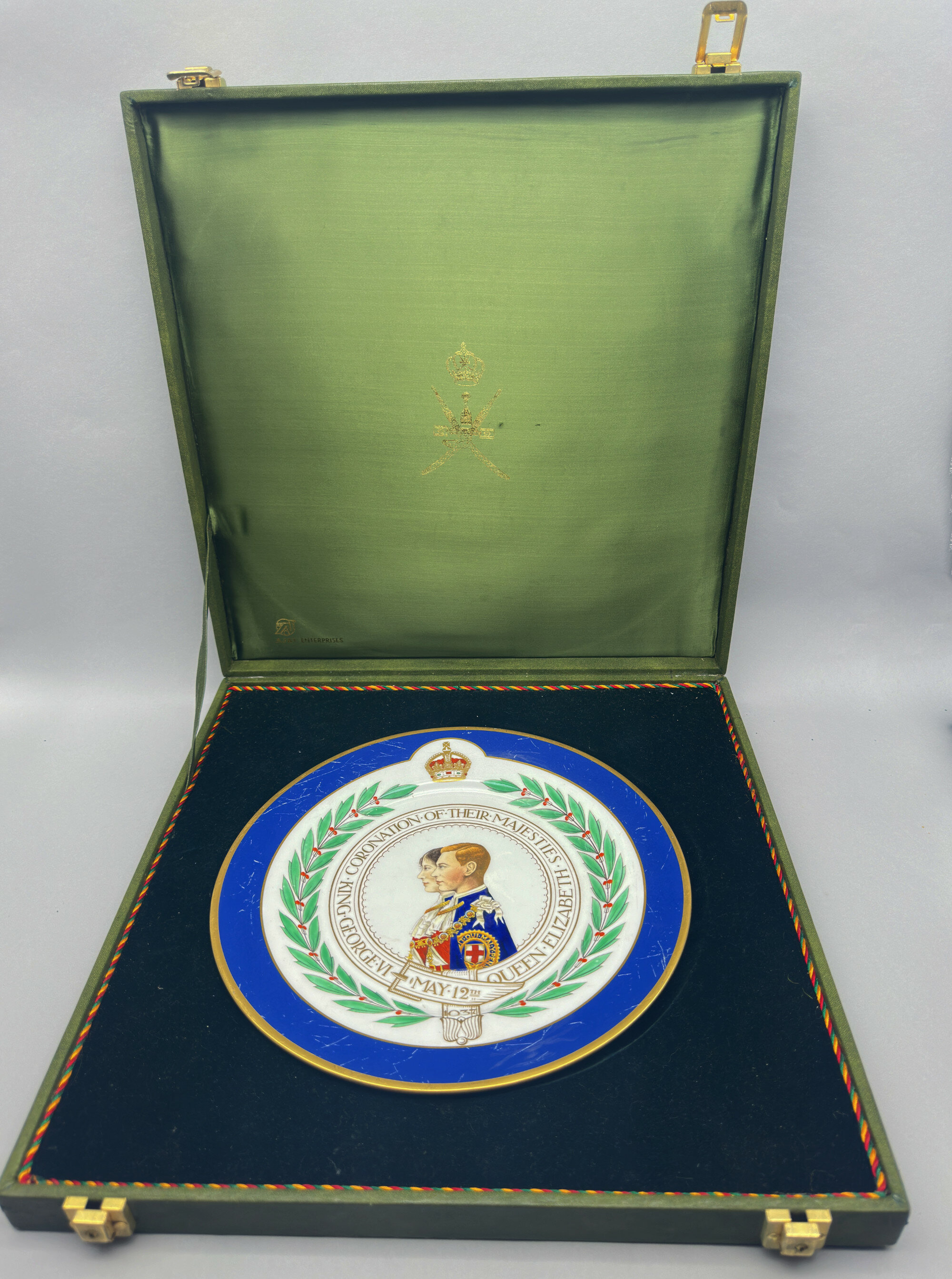
Mintons Coronation Plate, King George VI and Queen Elizabeth 1937, boxed
Price: £25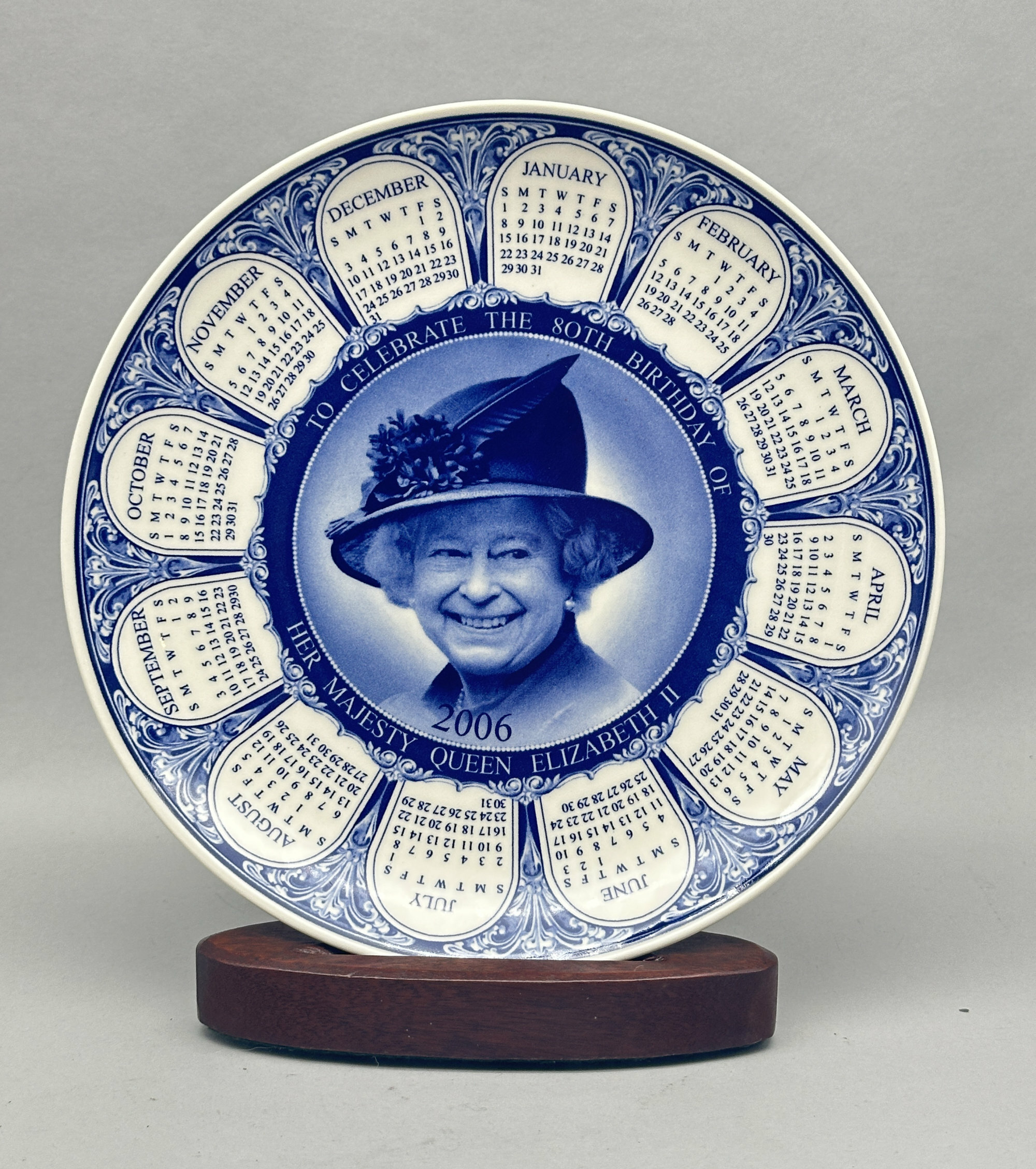
Wedgwood Calendar Plate, 80th Birthday of Queen Elizabeth II, 2006
Price: £10
Queen Victoria Golden Jubilee Jug, 1887
Price: £10
VE Day, 50th Anniversary Commemorative Mug, 1995
Price: £10
Two Beakers : Wedding of the Prince Charles and Lady Diana Spencer, 1981
Price: £15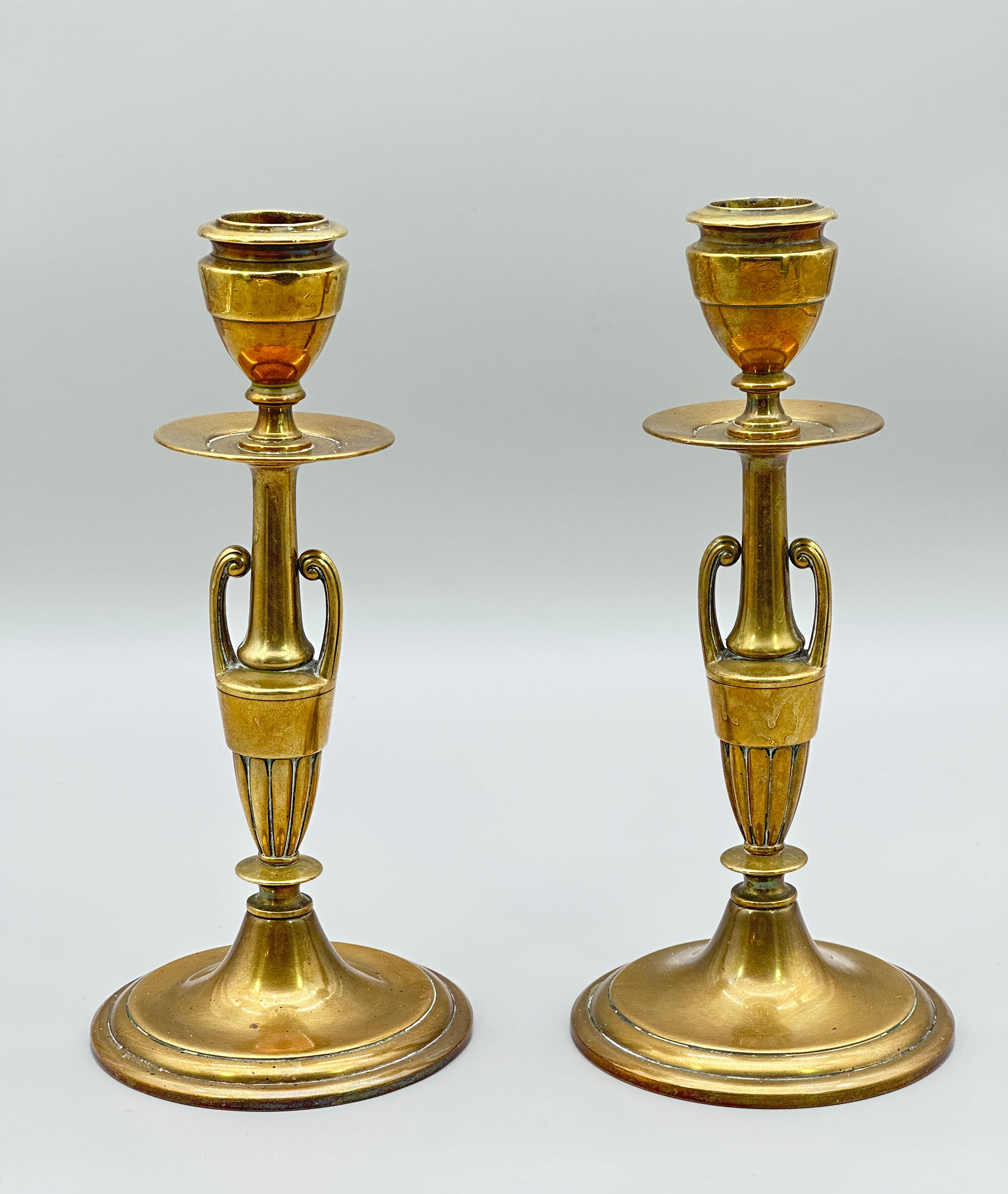
Unusual pair of Brass neoclassical style Candlesticks, probably English, C19th
Estimate: £40 – 60
Cup : Marriage and Coronation of King George V and Queen Mary, 1911
Price: £10Production of this piece was presumably contemporary with the coronation in 1911 and many similar pieces were made by other factories at the time, more often in a straight sided mug shape. The form here suggests that there might have been an original saucer but none seem to have survived.

Porcelain Mug : Buckingham Palace 1997
Price: £10
Teapot and Cover : Golden Jubilee Queen Elizabeth II, 2002
Price: £10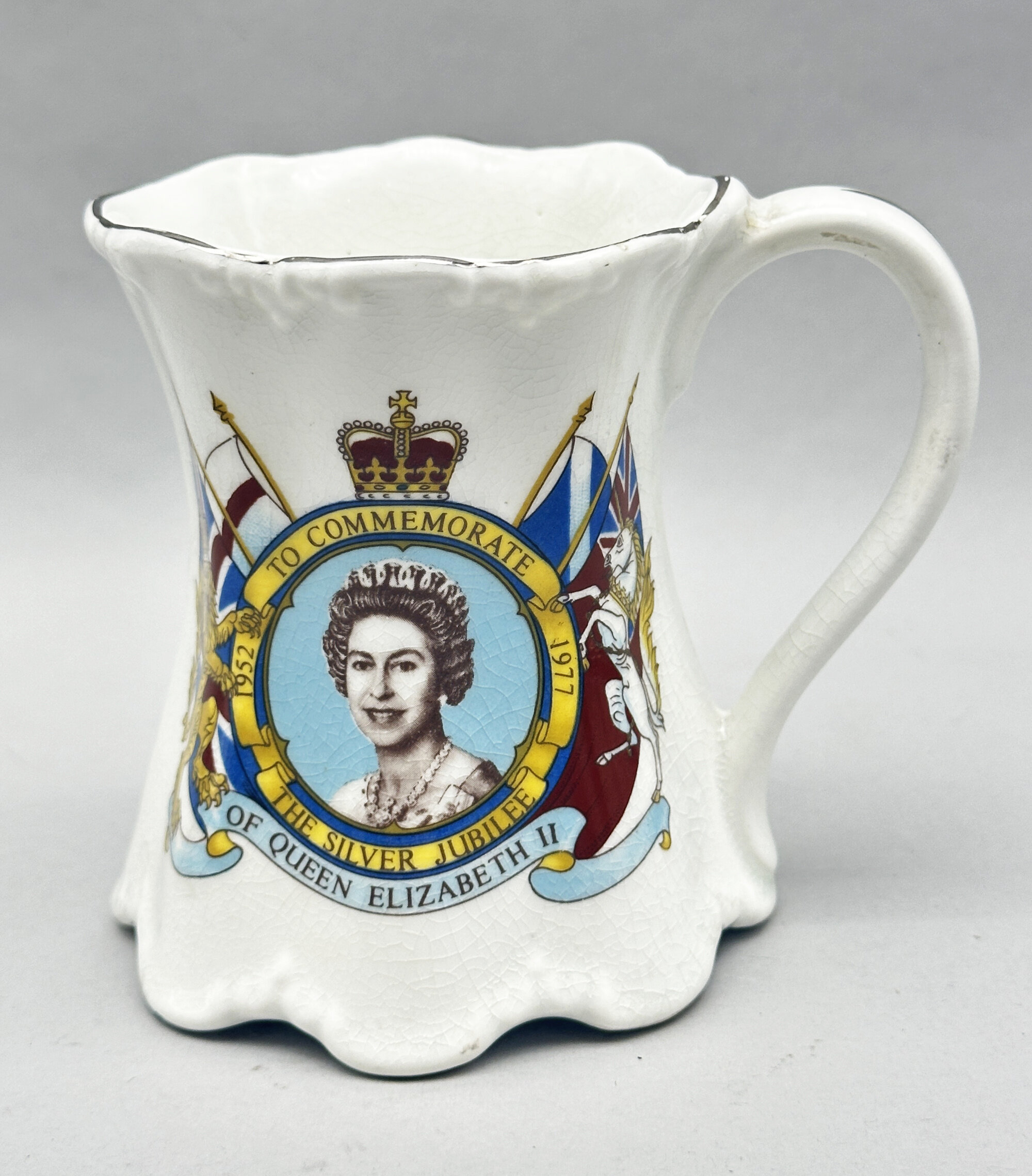
Queen Elizabeth II Silver Jubilee China Mug, 1977
Price: £10
Cup : the Silver Wedding Anniversary of Queen Elizabeth II and Prince Philip in 1972
Price: £25The Paragon China Company, formerly the Star China Company (see Lot XX), produced high quality gift items from 1920 to 1971, at first independently and then in alliance with other companies, finally being absorbed by Royal Doulton in 1972 who kept the ‘Paragon’ name until 1991. Commemorative wares were a speciality and this cup is a fine and typical example.

Mug Commemorating the Coronation of Edward VIII in 1937
Price: £25
Cup Commemorating the Silver Jubilee of King George V and Queen Mary in 1935
Price: £55The Paragon China Company, formerly the Star China Company (see Lot XX), produced high quality gift items from 1920 to 1971, at first independently and then in alliance with other companies, finally being absorbed by Royal Doulton in 1972 who kept the ‘Paragon’ name until 1991. Commemorative wares were a speciality and this cup is a fine example.
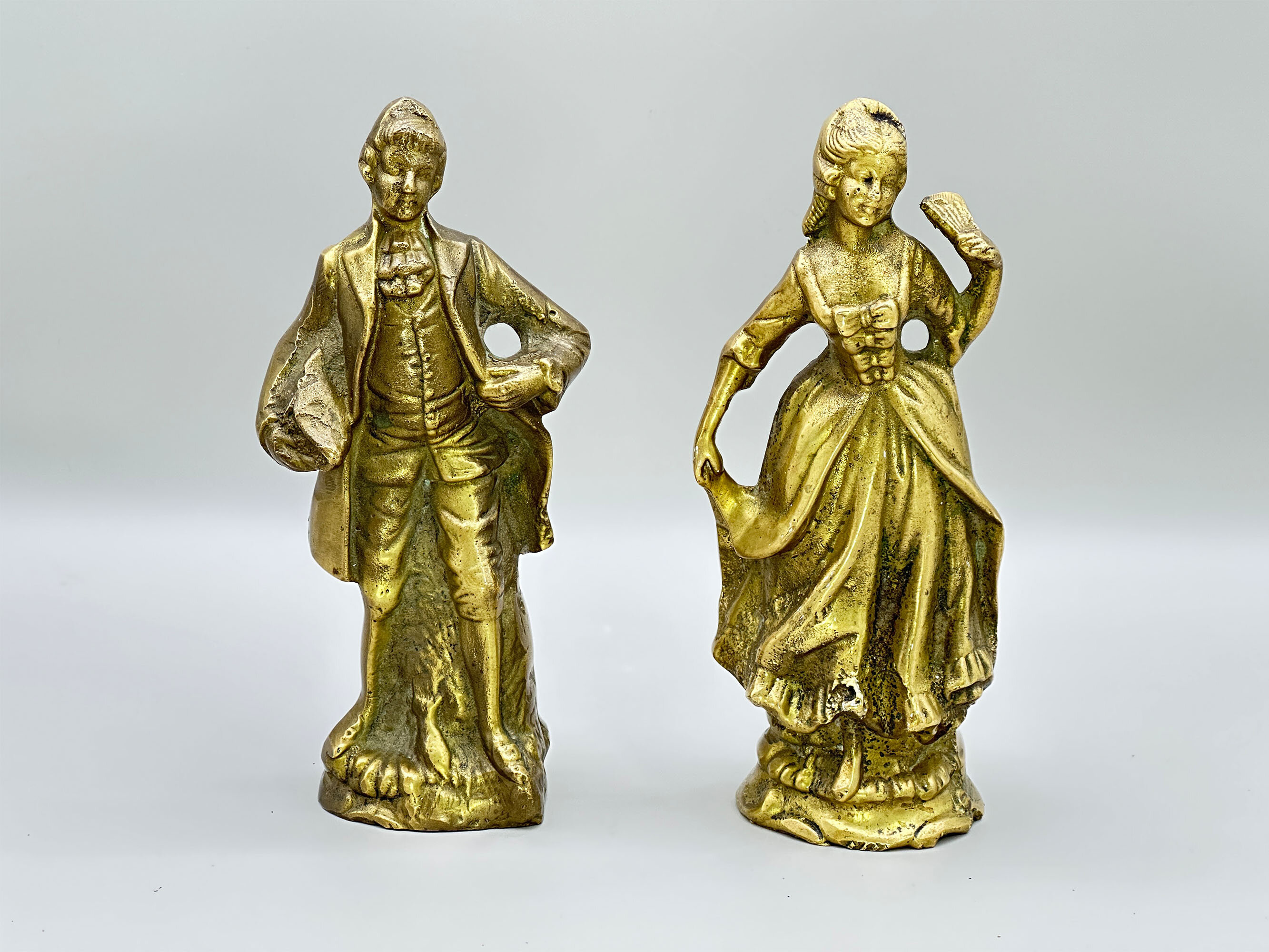
Pair of Brass Doorstops, eighteenth century style lady and gentleman, probably English, C20th
Estimate: £40 – 60
Pair of Ceramic Goblets : the Wedding of Prince Charles and Lady Diana Spencer in 1981
Price: £20
Crown Winsor Jockey Teapot, 1980s
Price: £35Crown Winsor was a short lived earthenware manufacturer at the Sylvan Works, Longton, Stoke-on-Trent, England, previously the premises of the firm Shaw and Copestake, who traded under the well known name ‘SylvaC’ and went into voluntary liquidation in 1982. A workers co-operative trading under the name of Longton Ceramics attempted to take the business over but with little success and eighteen months later the enterprise was fully taken over by United Co-operative Society and run under the name of Crown Winsor. The Co-operative society already owned the Windsor Pottery works and the Crown Clarence Pottery works which was the source of the ‘Crown Winsor’ name. Production centred on whimsical and novelty items, sometimes made from the old SylvaC moulds but demand proved weak and the business ceased trading in 1989. This teapot is typical of their range and the elaborate cipher underneath seems to read ‘CW’ grandly announcing a trade name which unfortunately had a very short life
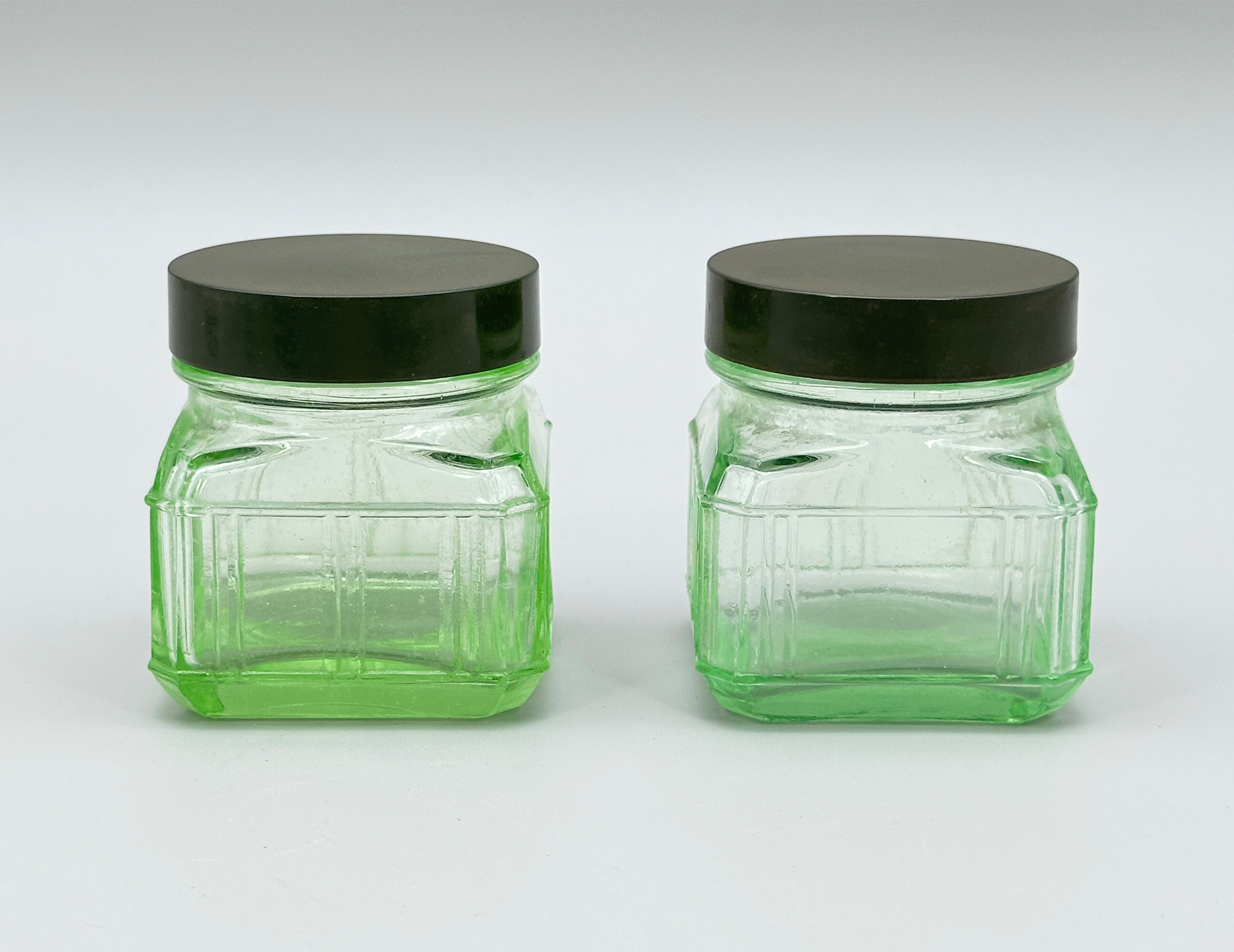
Pair of small green depression glass Jars with bakelite Covers, 1930s
Price: £45
Novelty match holder with cat, Klimax Japan, mid C20th
Price: £20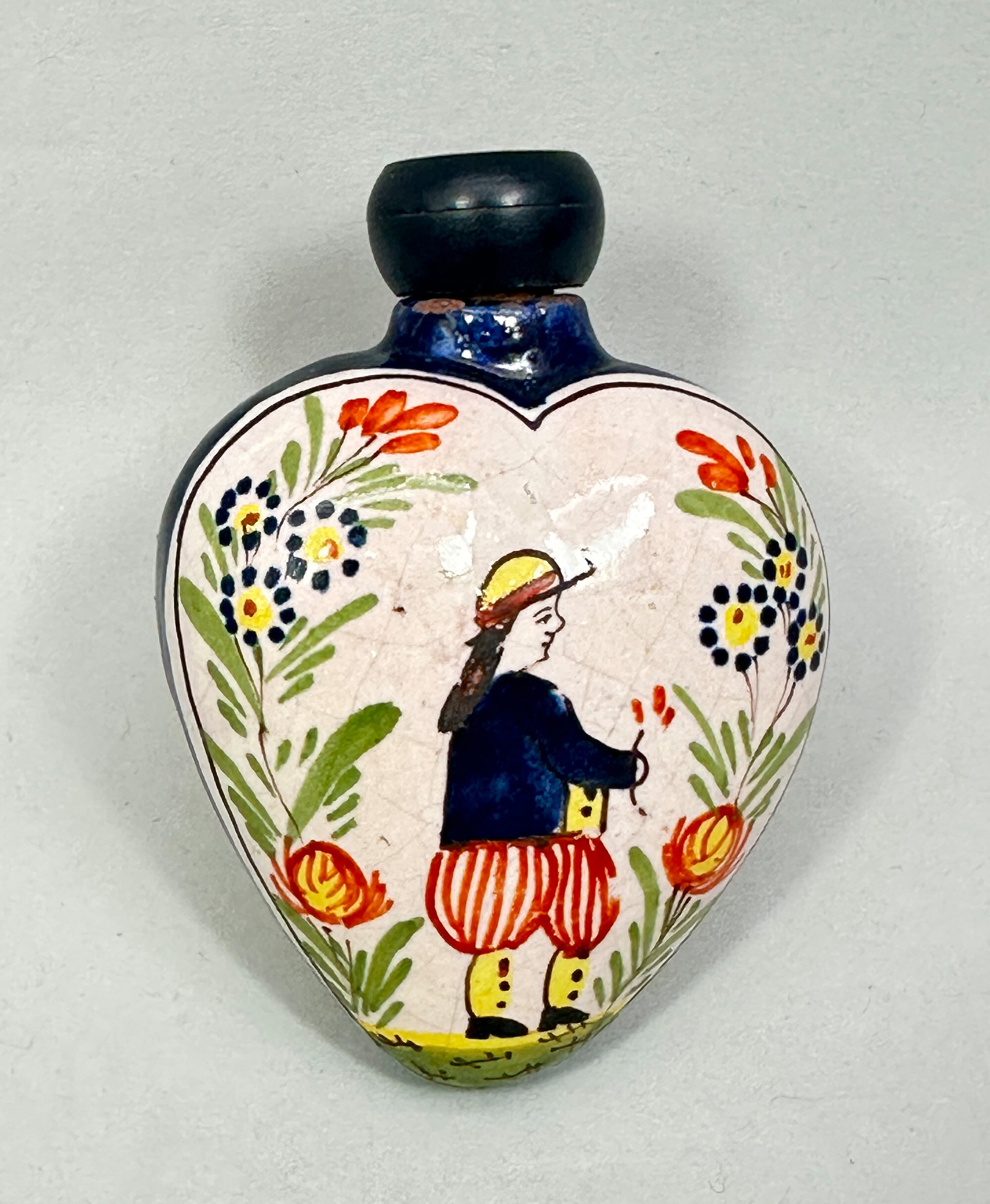
Faience Perfume Bottle and Stopper, Quimper France, C20th
Price: £75This bottle has the Breton gentleman on its front face and a fleur de lis to the reverse. The stylised lily, known as fleur de lis, became a symbol of the French royal family and France in general. It occurs, for example, on the Canadian flag but was also regularly used as a decorative motif by the Quimper potteries. These bottles can date to as early as the beginning of the twentieth century but a later time of production is probably a safer assumption here, perhaps to the 1950s. Few of these bottles survive with their fitted stoppers and the traces of cork to the top interior suggest that this stopper has been in place for some time and probably since the date of manufacture.

Small circular ceramic plaque after Fragonard marked Limoges, framed, late C20th
Price: £25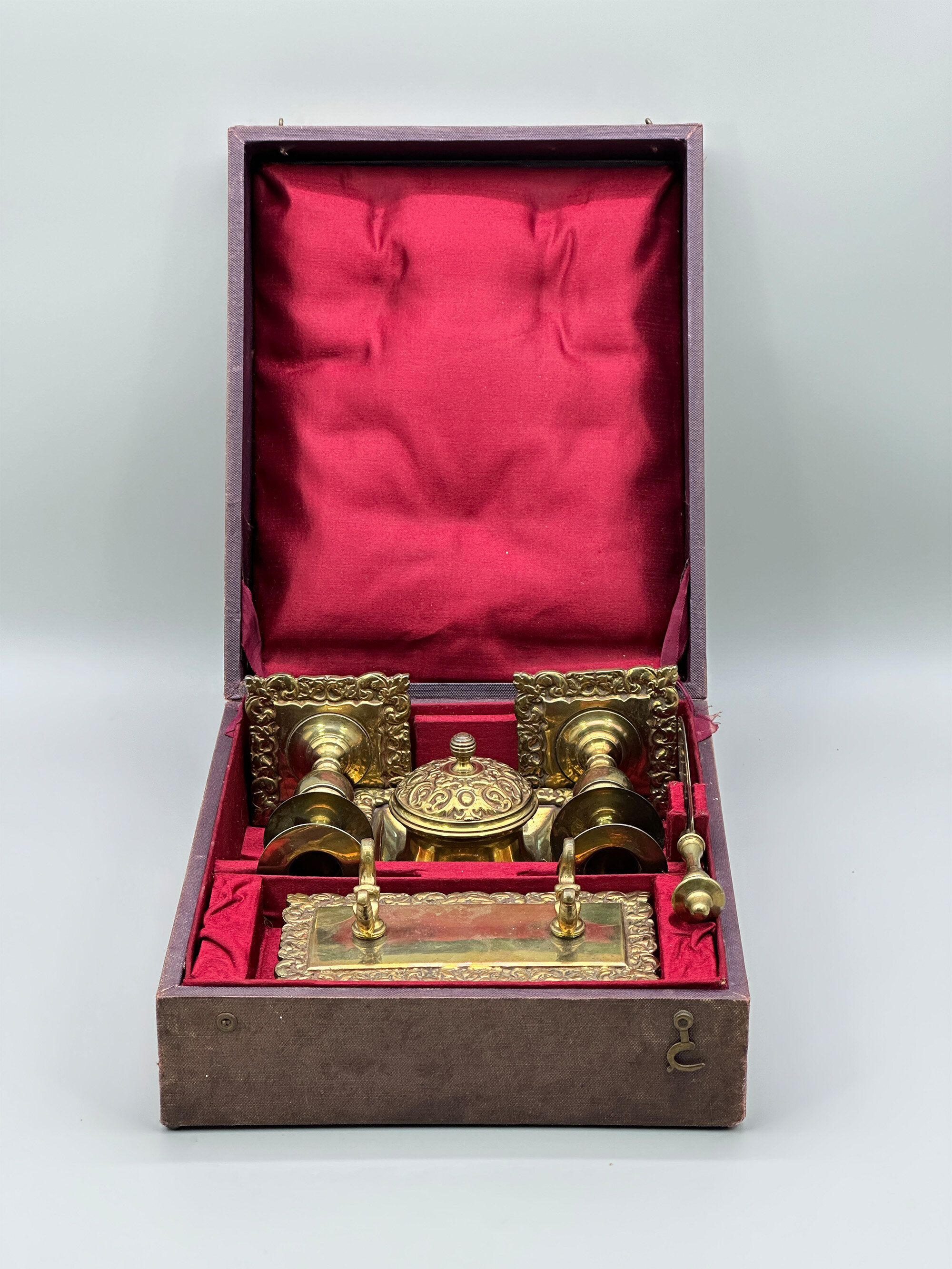
Renaissance style brass Desk Set in case, late C19th/early C20th
Estimate: £40 – 60
Perfume Bottle Brooch, probably French mid C20th
Price: £55
Pair of petit point Tapestry Pictures, The Needlewoman Shop London, mid C20th
Price: £55The fine stitching used here is a version of needlepoint termed ‘petit point’ because of the small size of stitches used. In general needlepoint, designs are stitched onto fine canvas using a simple tent stitch, a small, diagonal stitch that crosses over the intersection of one horizontal and one vertical thread of the canvas forming a slanted stitch at a 45-degree angle. Petit point uses the same technique but with much finer stitching and thread on a much finer canvas often requiring magnification for the work to be carried out. It allows more intricate designs and shading effects as can be clearly seen here. The technique was particularly popular in France amongst the aristocracy in the early eighteenth century which perhaps determines the choice of subject here but with their intricate stitching and complementary frames, this pair of tapestries would definitely be a candidate for boudoir accessories in the present day.
Pair of petit point Tapestry Pictures, The Needlewoman Shop London, mid C20th
Price: £45The fine stitching used here is a version of needlepoint termed ‘petit point’ because of the small size of stitches used. In general needlepoint, designs are stitched onto fine canvas using a simple tent stitch, a small, diagonal stitch that crosses over the intersection of one horizontal and one vertical thread of the canvas forming a slanted stitch at a 45-degree angle. Petit point uses the same technique but with much finer stitching and thread on a much finer canvas often requiring magnification for the work to be carried out. It allows more intricate designs and shading effects as can be clearly seen here. The technique was particularly popular in France amongst the aristocracy in the early eighteenth century which perhaps determines the choice of subject here but with their intricate stitching and complementary frames, this pair of tapestries would definitely be a candidate for boudoir accessories in the present day.
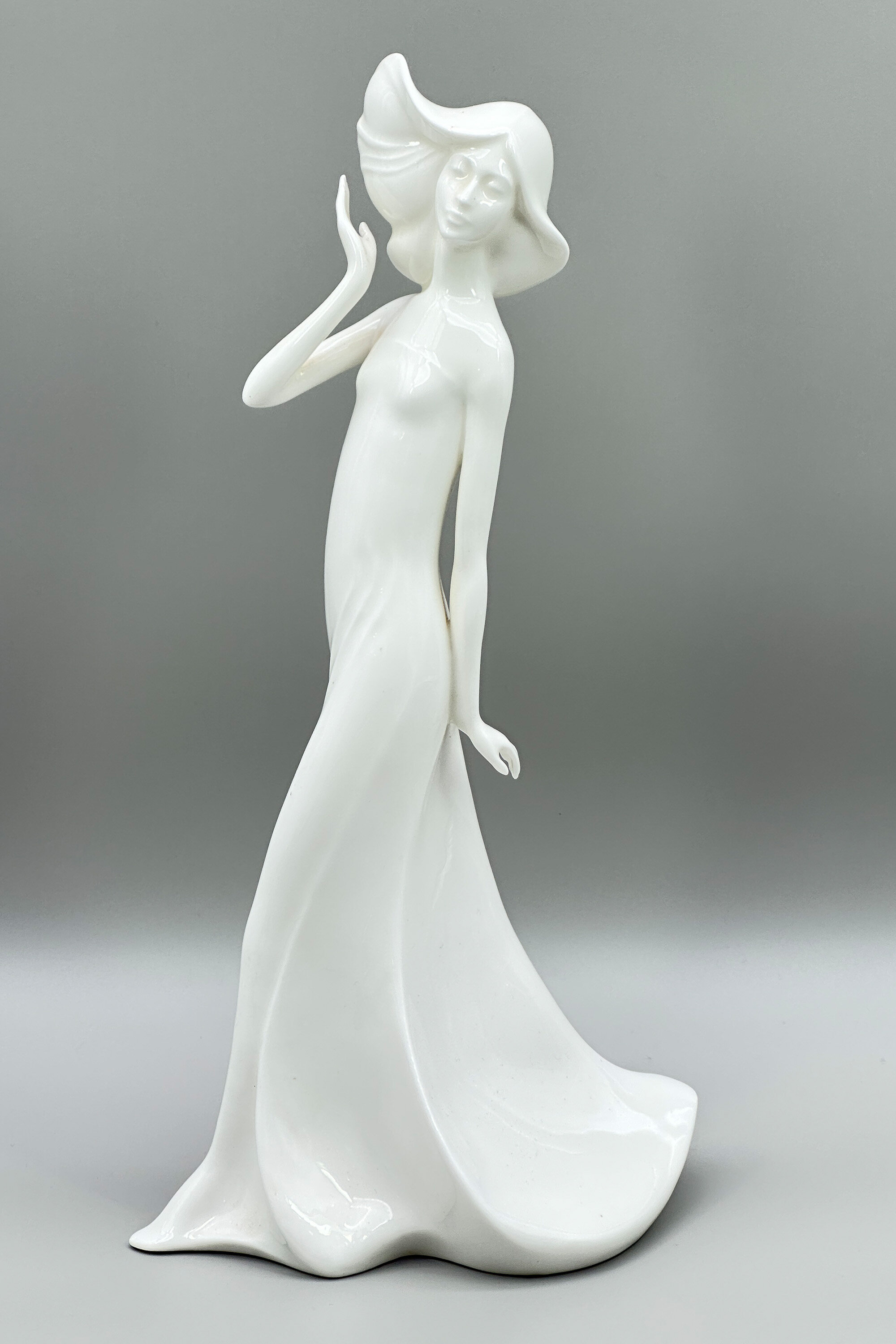
Royal Doulton figure of a lady, Images Collection – Carefree, 1980s
Price: £35
Art Deco style crystal glass Perfume Bottle and Stopper, late C20th
Price: £35
Perfume Bottle and Stopper, Stuart Akroyd, signed J S A, late C20th
Price: £75The signature here, which occurs on other pieces by the same artist, is for Stuart Akroyd, a celebrated English glassmaker who worked from studios in Sunderland then Sheffield from 1991 to 2021(see image 8). Born in 1966, Akroyd studied at Sunderland University, following this with a Post Graduate Diploma at the International Glass Centre, Brierley Hill. After working as the head maker at Lakeland Crystal, Cumbria he went on to establish his own business, Stuart Akroyd Glass Designs, in 1991, renaming it Stuart Akroyd Contemporary Glass when he moved from Sunderland to Sheffield in 2000. Best known for his sculptural pieces which were inspired by the ‘Skylon’ structure, the well known symbol of the 1951 Festival of Britain, Akroyd also worked on a smaller scale and there a number of small bottles by him of which this is an excellent example. The glass effects are skilful and inventive and the flat panel to the body is both decorative and functional, allowing the level of fluid in the bottle to be seen clearly. Many of his sculptural pieces were made in his later Sheffield workshop which, with its greater space, allowed him to employ the techniques necessary to create them, so it is a reasonable guess that this bottle and its companions belong to the first phase of his output.

Novelty Teapot in the form of an apple, probably English, late C20th, early C21st
Price: £35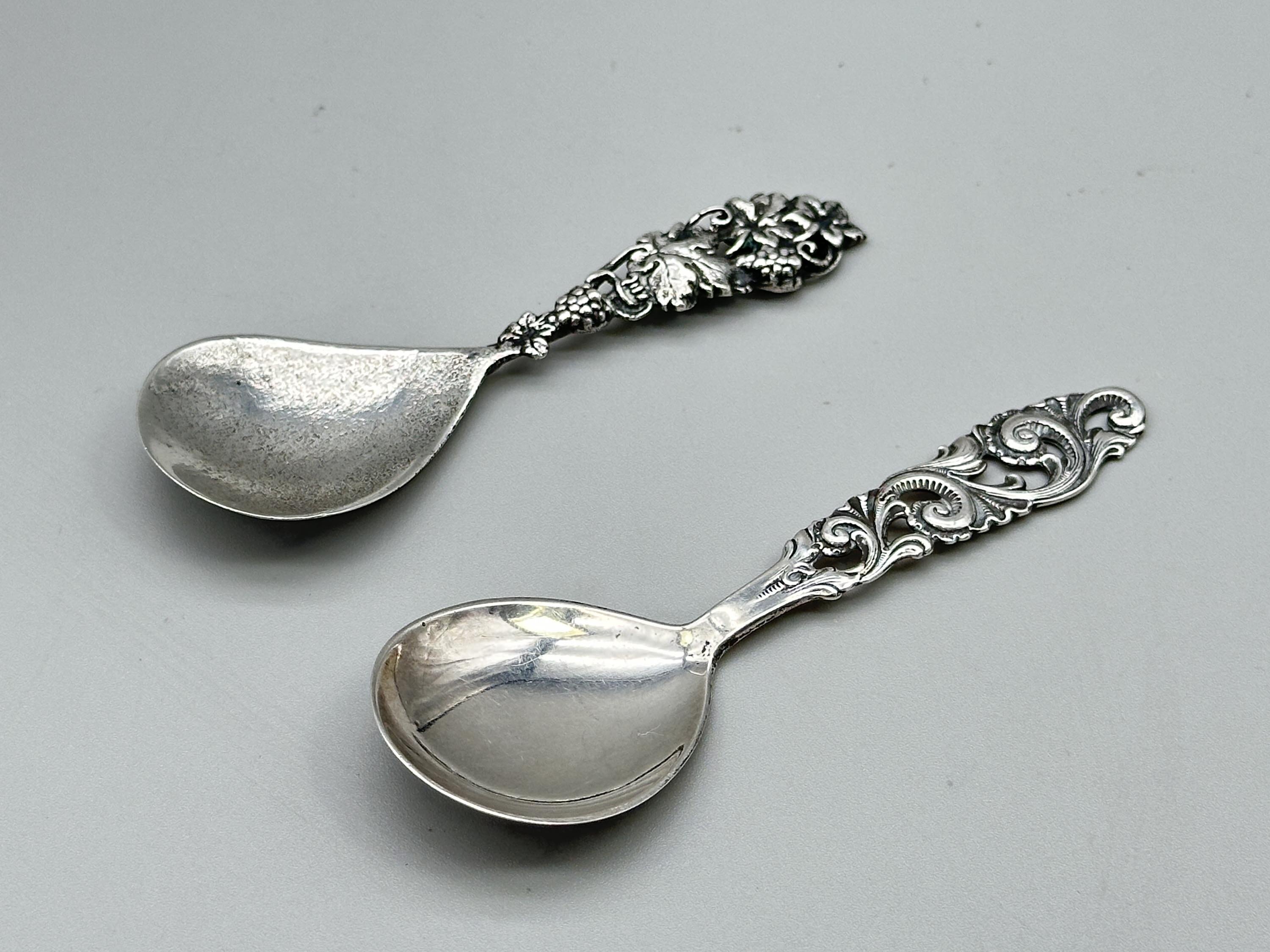
Two silver Caddy Spoons (i) American early C20th (ii) Norwegian, Brodrene Mylius, mid C20th
Estimate: £60 – 80
Novelty matchstick holder, Boot with Cat and Dog, probably Japan 1950s
Price: £25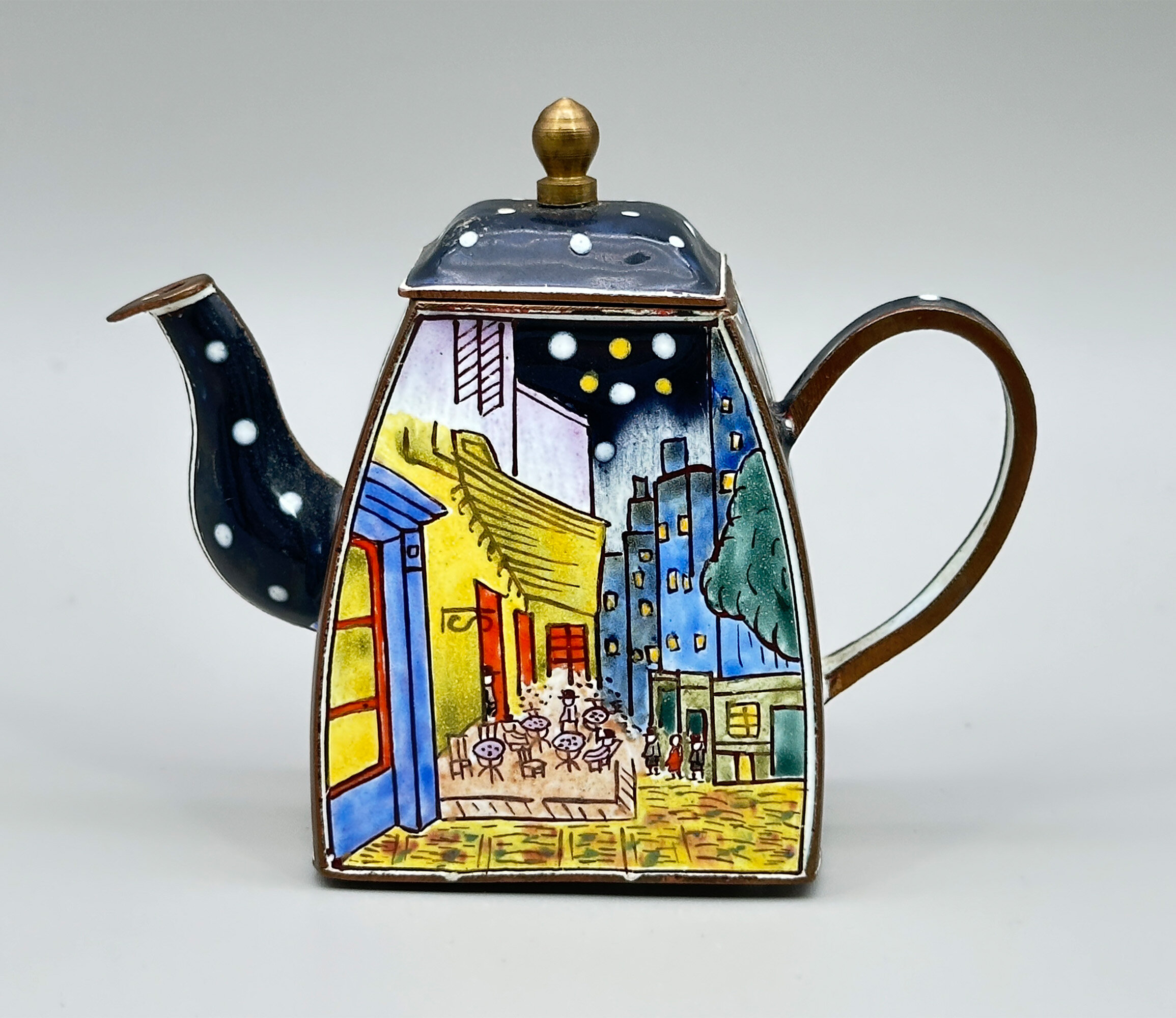
Trade+Aid Teapot, Van Gogh Café Scene, UK 1990s
Price: £25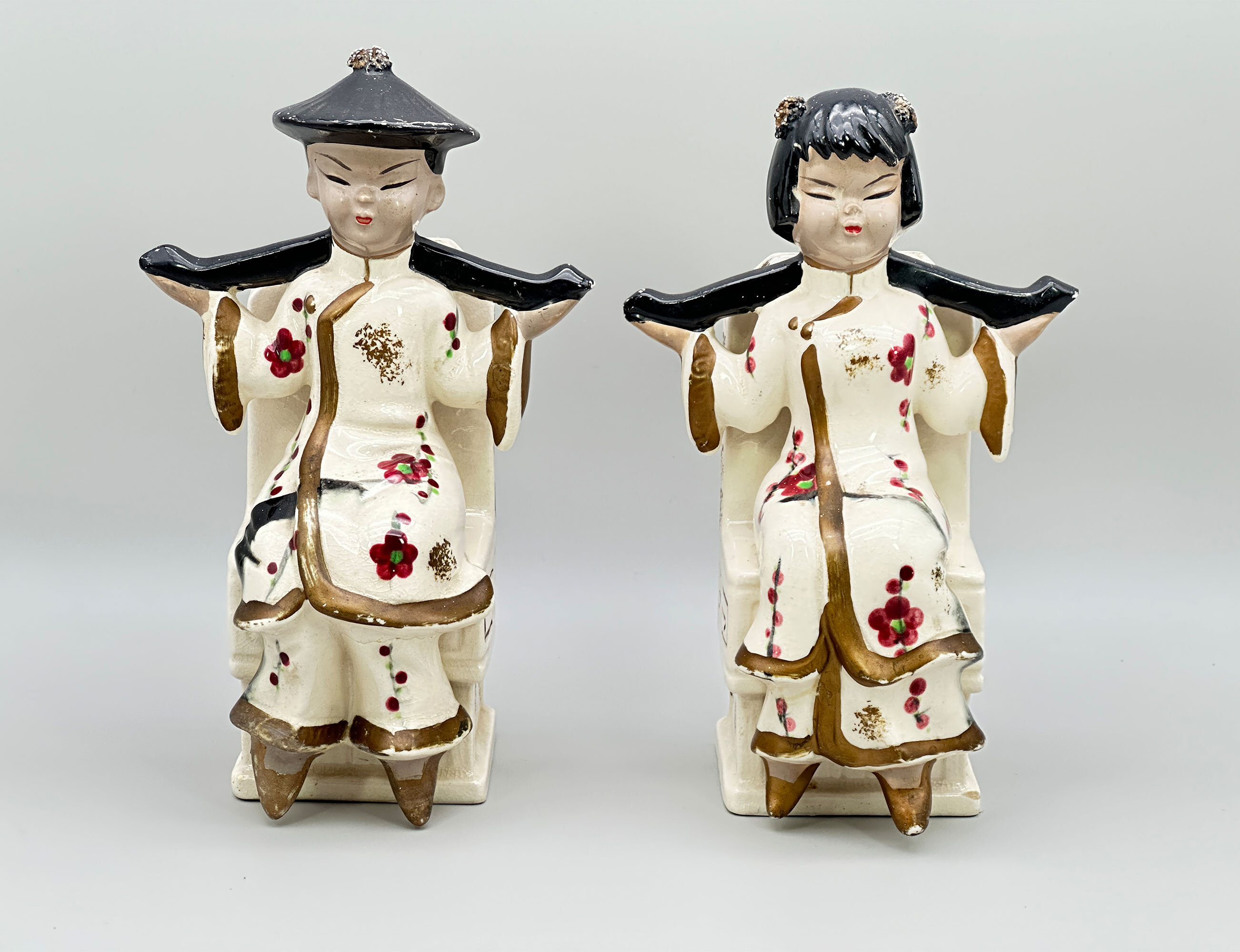
Pair of Japanese ceramic Bookends, seated Boy and Girl, mid C20th
Price: £55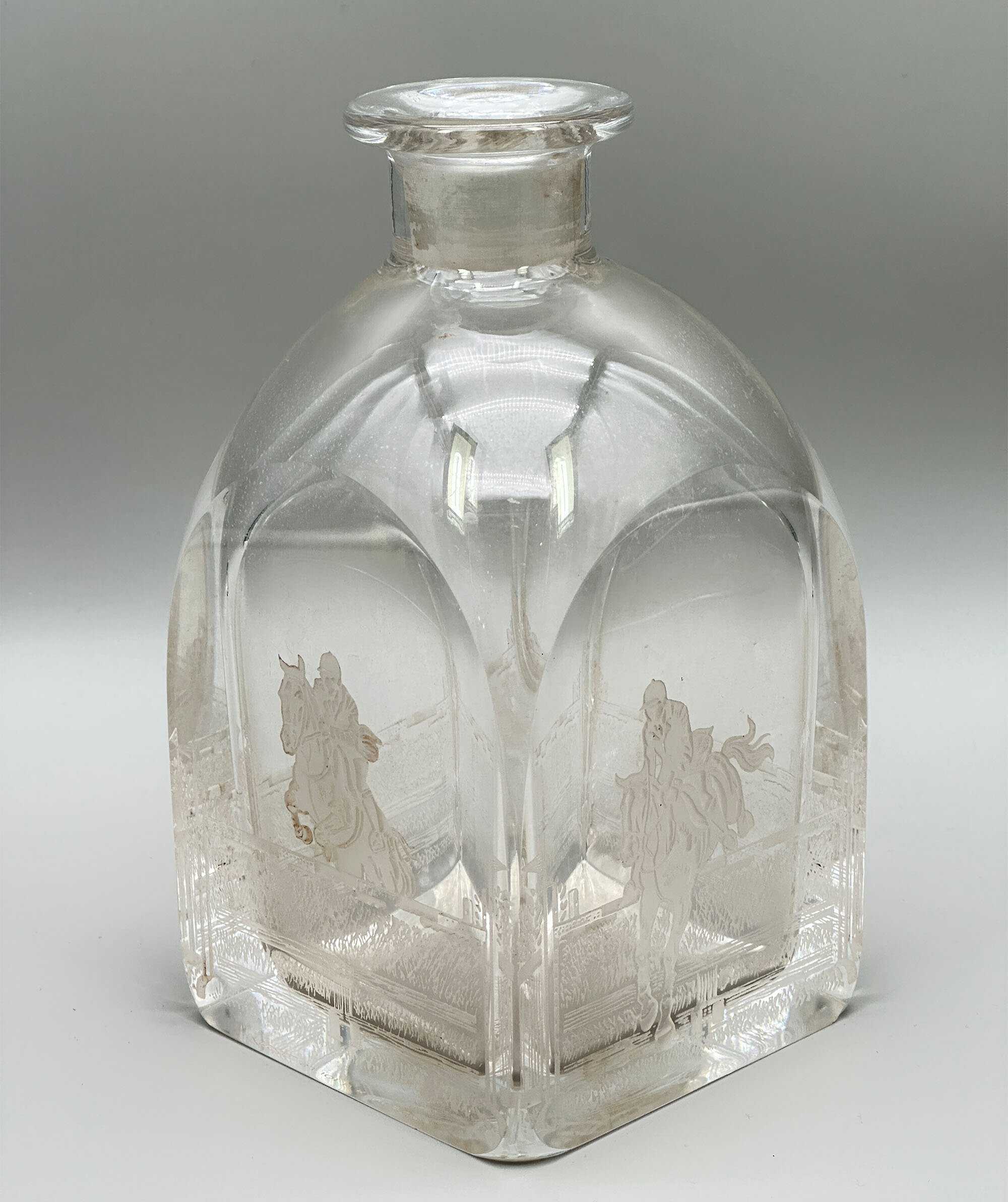
Orrefors Zaglo signed crystal glass Decanter, Riding Scene, mid C20th
Price: £30Orrefors was founded in Sweden in 1898 by Johnan August Samuelson. It then went through a variety of ownerships and also acquired many of its rival glass companies including Kosta Boda. Orrefors became Orrefors Kosta Boda in 1990 and joined The Royal Scandinavia Group in 1997.
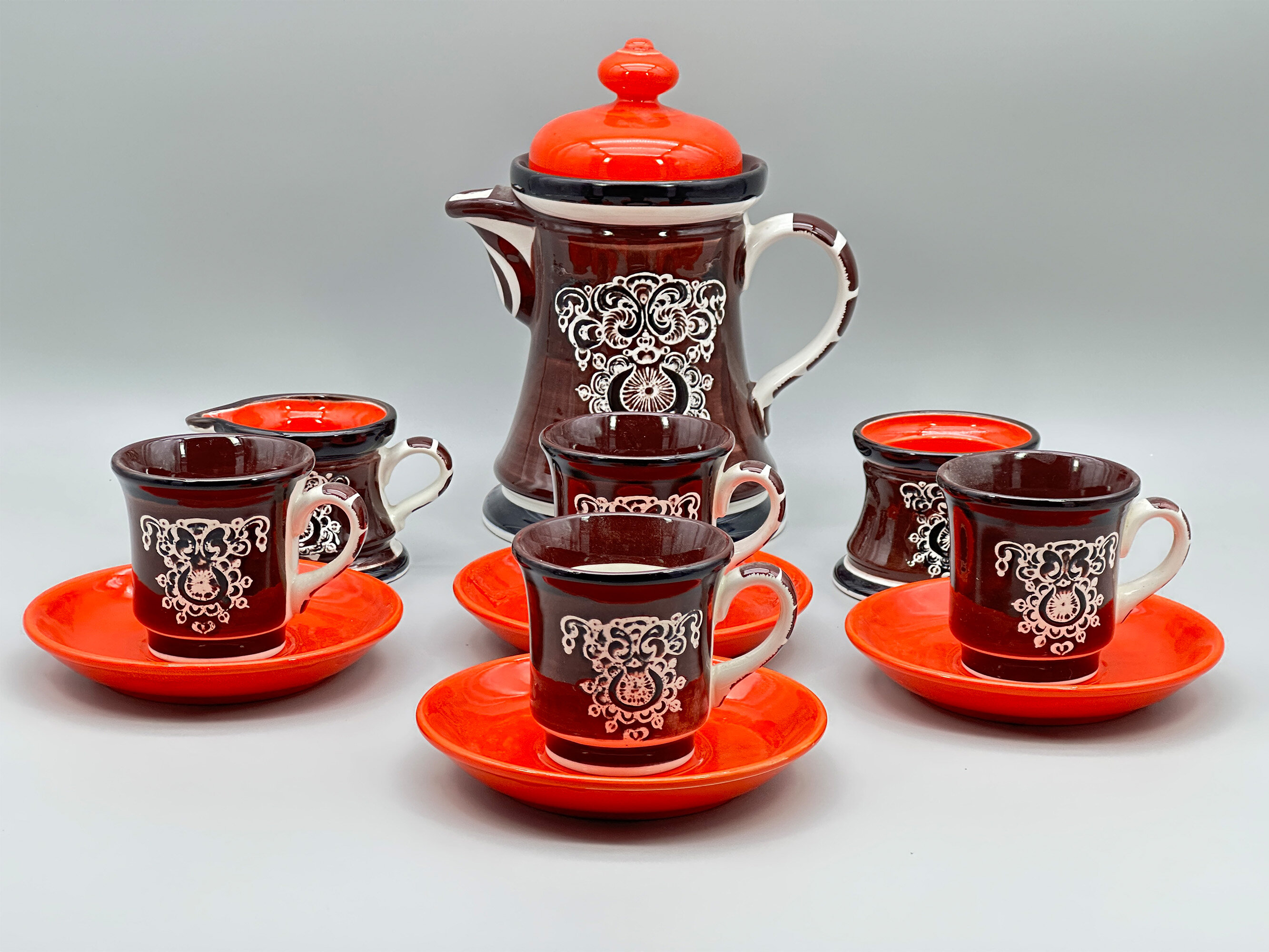
Coffee Service, Schramberger Majolikafabrik, Adlon pattern, 1960s
Price: £55Schramberg were best known for their colourful majolica pieces and worked with well known artists, notably the Hungarian Eva Zeisel, who created innovative designs on their behalf. The pattern here, Adlon, was first produced in the early twentieth century and shows the influence of Art Nouveau. It was reissued in the 1960s, which is the date of this set, and indeed the shapes and decoration equally complement that later era.
Size
(i) Coffee Pot : Ht (max) 23cm, Ht (pot) 17cm, Diam (top) 12cm, Width (max) 19cm, Base 14.6cm (ii) Milk Jug : Ht (max) 7cm, Width (max) 12cm, Base 9cm (iii) Sugar Basin : Ht (max) 7cm, Top diam 8.2cm, Base 9.7cm (iv) Cup : Ht 7.9cm, Width (max) 10cm, Top diam 8cm, Base 5.3cm (v) Saucer : Diam 15cm, Ht 2.5cm, Base 9.5cm
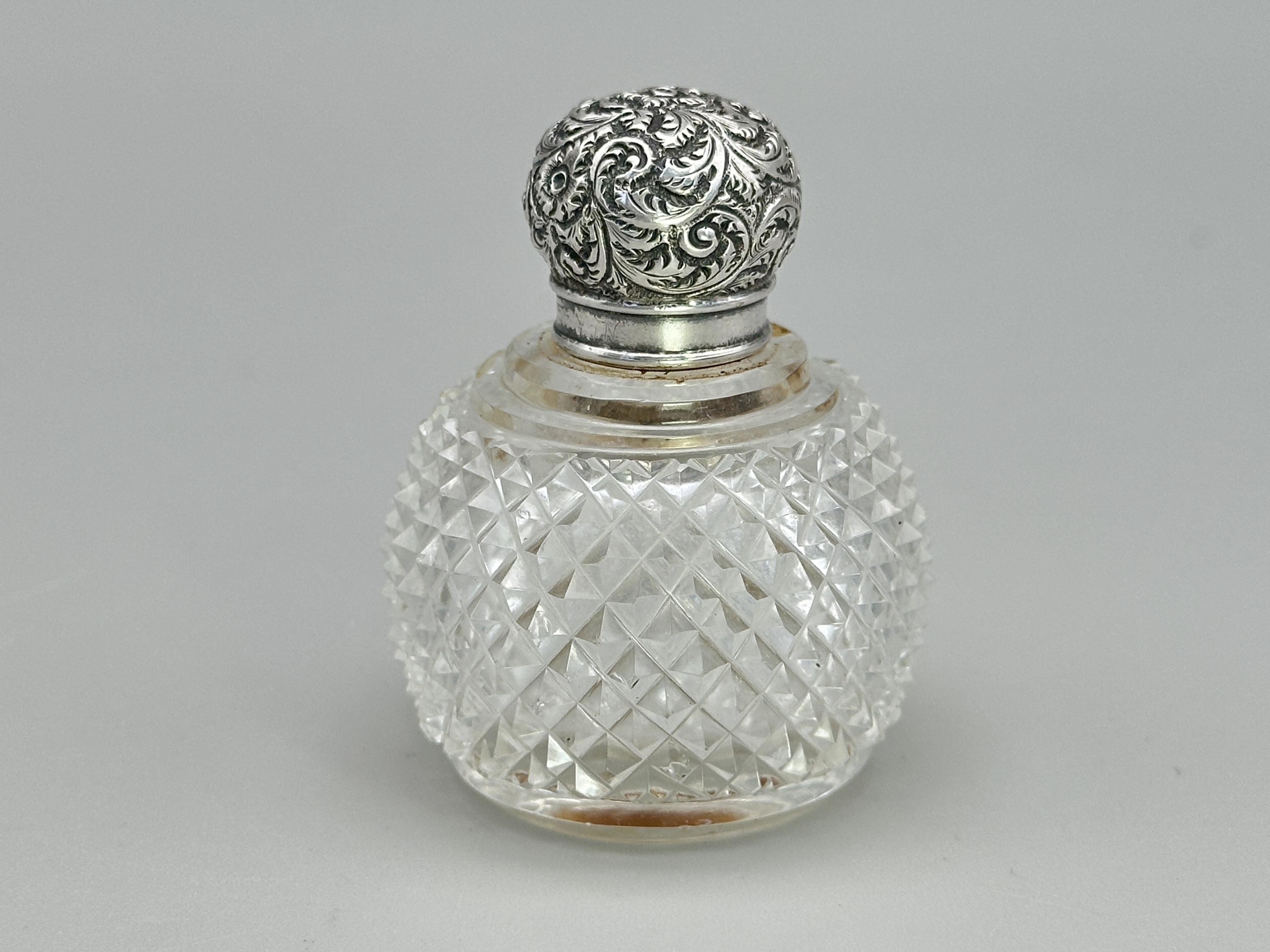
Round cut glass scent bottle with silver screw top, John Fenton & Sons, hallmarked Birmingham 1887
Estimate: £30 – 40
Aquatint panoramic engraving of Windsor castle, maple veneer frame, C19th
Price: £350This is an excellent example of the Victorian static panorama view allowing a broad sweep of the subject to be represented. It was, perhaps, a deluxe souvenir, for visitors to Windsor Castle at that time. The shading effects in the printing suggest an aquatint rather than an engraving, the acid technique used allowing gradations of tone. It is possible that there was the addition of some hand colouring as well. The maple veneer frame along with gilt edging is most likely original and probably fitted with the original glass making it a fine and complementary setting for this virtuoso production.
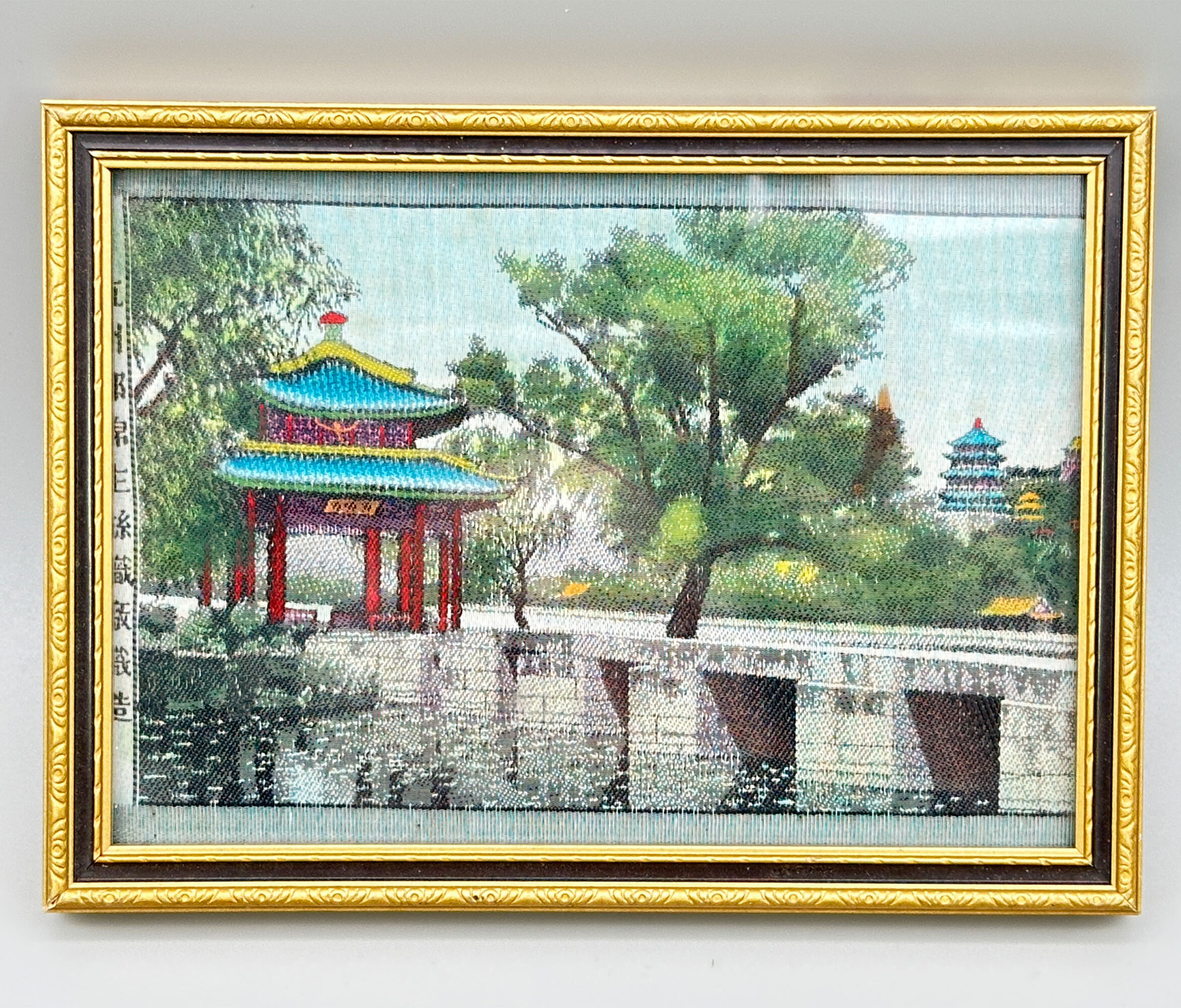
Chinese silk textile picture, Zhichun Pavilion, the Summer Palace, C20th
Price: £25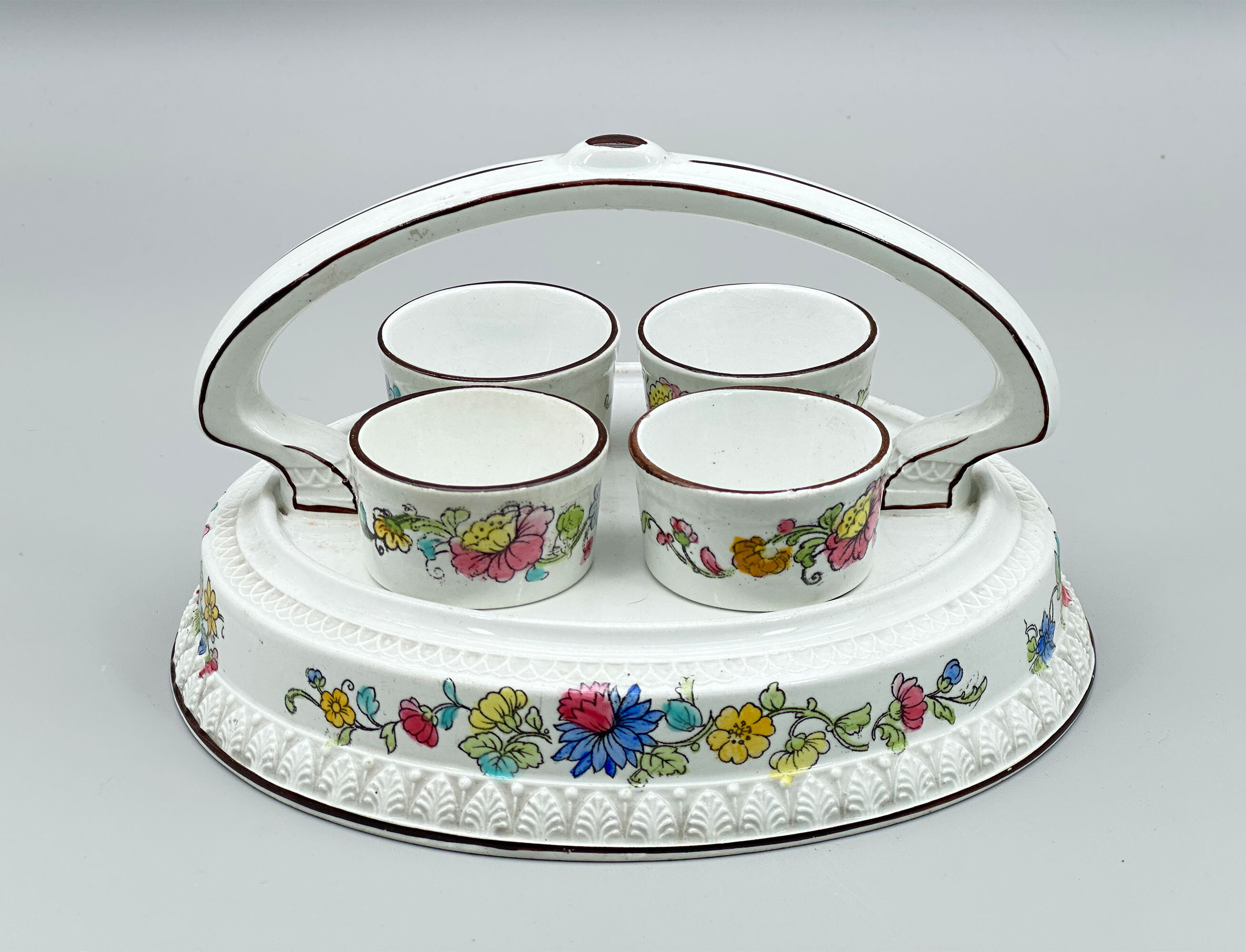
Egg cup holder, Royal Bonn Porcelain, Germany, marked, early C20th
Price: £55The firm Royal Bonn had its origins in the eighteenth century when by order of the Elector of Cologne, Clemens August of Cologne, the factory Kurfürstliche Fayencerie Poppelsdorf (Poppelsdorf Faience Fabrique) was founded in 1755 to discover the secret recipe of porcelain. Two years later, when no results had been achieved, Clemens August withdrew his support and there began a long period of multiple and varying ownerships of the business culminating in the involvement of the Mehlem brothers, Paul Joseph Mehlem and Everhard Joseph Mehlem, in 1836, who renamed the business after their own name, eventually using that of their Father, Franz Anton. After the death of the last remaining member of the family, Everhard, in 1865, the business was taken over yet again, still though retaining the family name, until it was sold to Villeroy and Boche in 1920. Shortly after this, the production of fine porcelain ceased and the factory closed in 1931.
The form of the mark here was used between 1885 and 1920 and this set was probably made in the early years of the twentieth century. The quality of the porcelain is easily appreciated and this is a highly decorative set which could also have a practical value today.
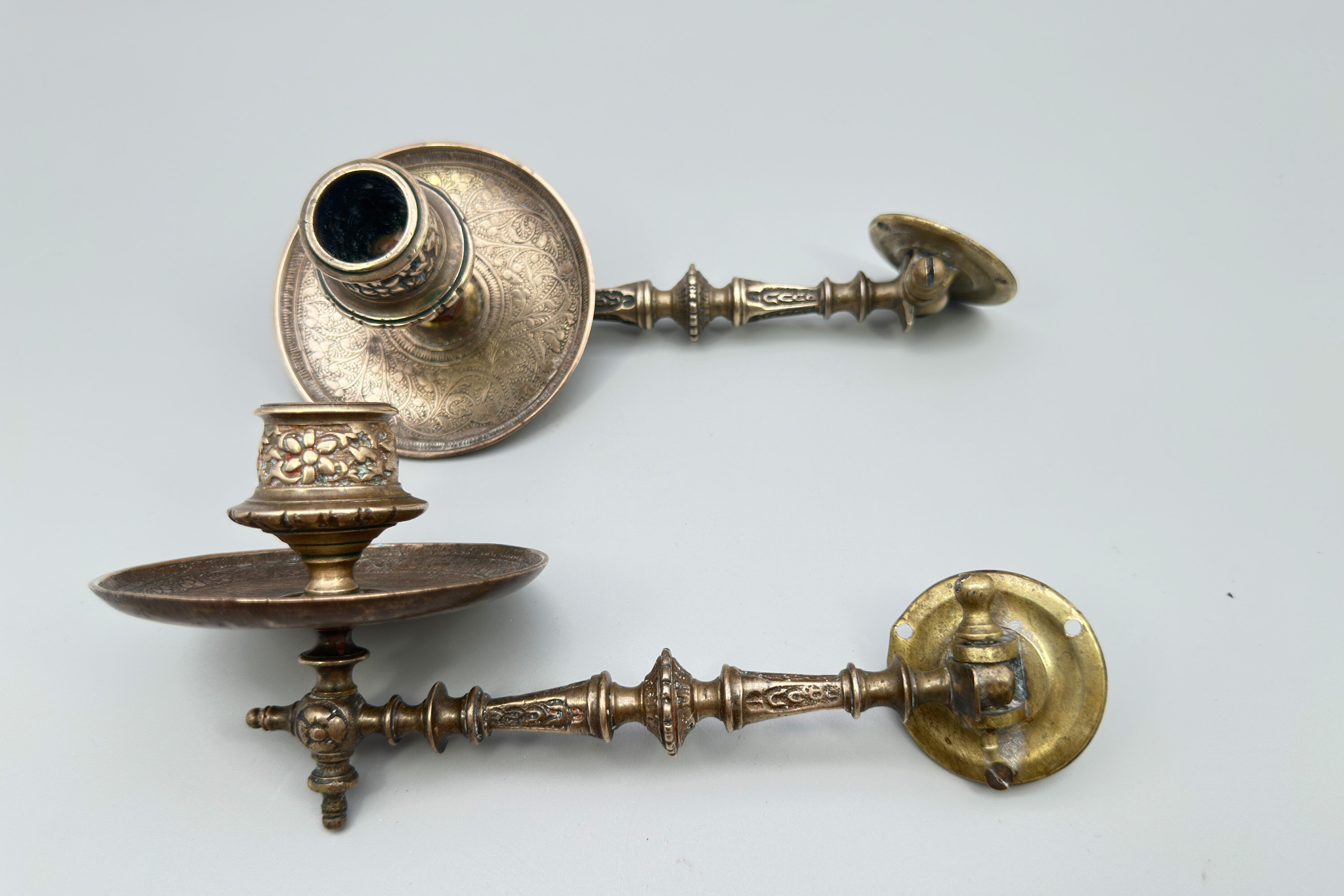
Pair of Indian brass Piano Sconces, early C20th
Estimate: £40 – 60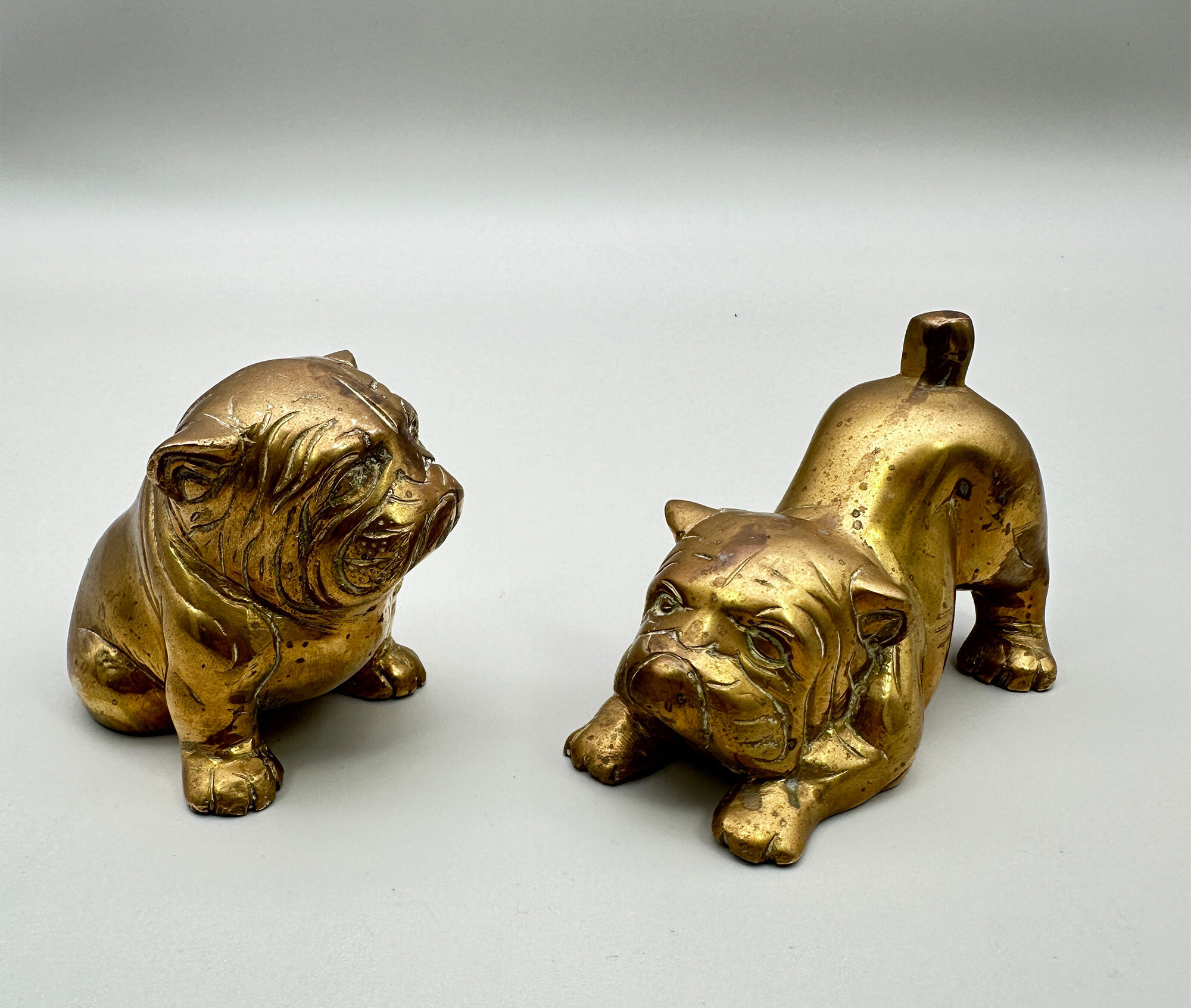
Two brass bulldog paperweights, British mid C20th
Estimate: £30 – 40
Vesta case in the form of a fly, C20th
Price: £25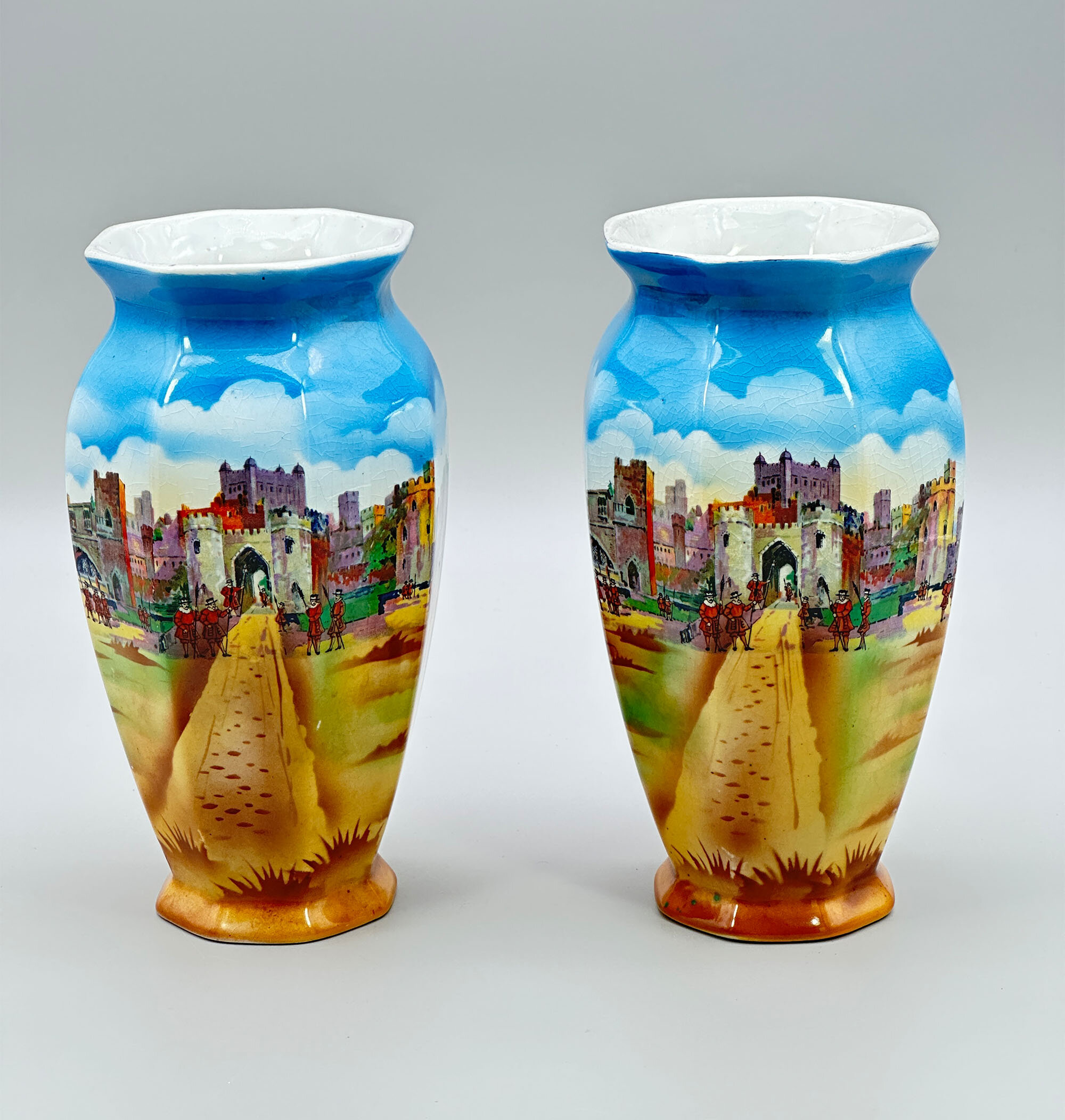
Pair of Tower of London Vases, New Hall Pottery, first half C20th
Price: £45The mark is for New Hall Pottery Co Ltd which traded in Hanley, Stoke-on-Trent, from 1899 to 1956. During the early years of the twentieth century, the firm was mainly known for the production of toilet sets and jugs, in 1908 producing and selling more than 50,000 toilet sets of the Waverley shape alone. After the First World War, demand for these pieces slackened and the firm turned towards producing dinner and hotel wares. Trading was difficult in the years before the Second World War but production was allowed to continue during it, mainly for supplying the armed forces, and was able to return to normal afterwards with an overseas trade nearly exceeding that of past years until the firm ceased trading in 1956.
A variety of marks were used of which the one seen here was the simplest version. Since it also appears on toilet sets, a similar date of production seems likely and perhaps these vases were a part of the attempt to diversify as the demand for the staple product of the business was beginning to decline. Certainly, while modest pieces in themselves, they do have something of an ‘Art Deco’ look and can be regarded as amusing decorative items today.
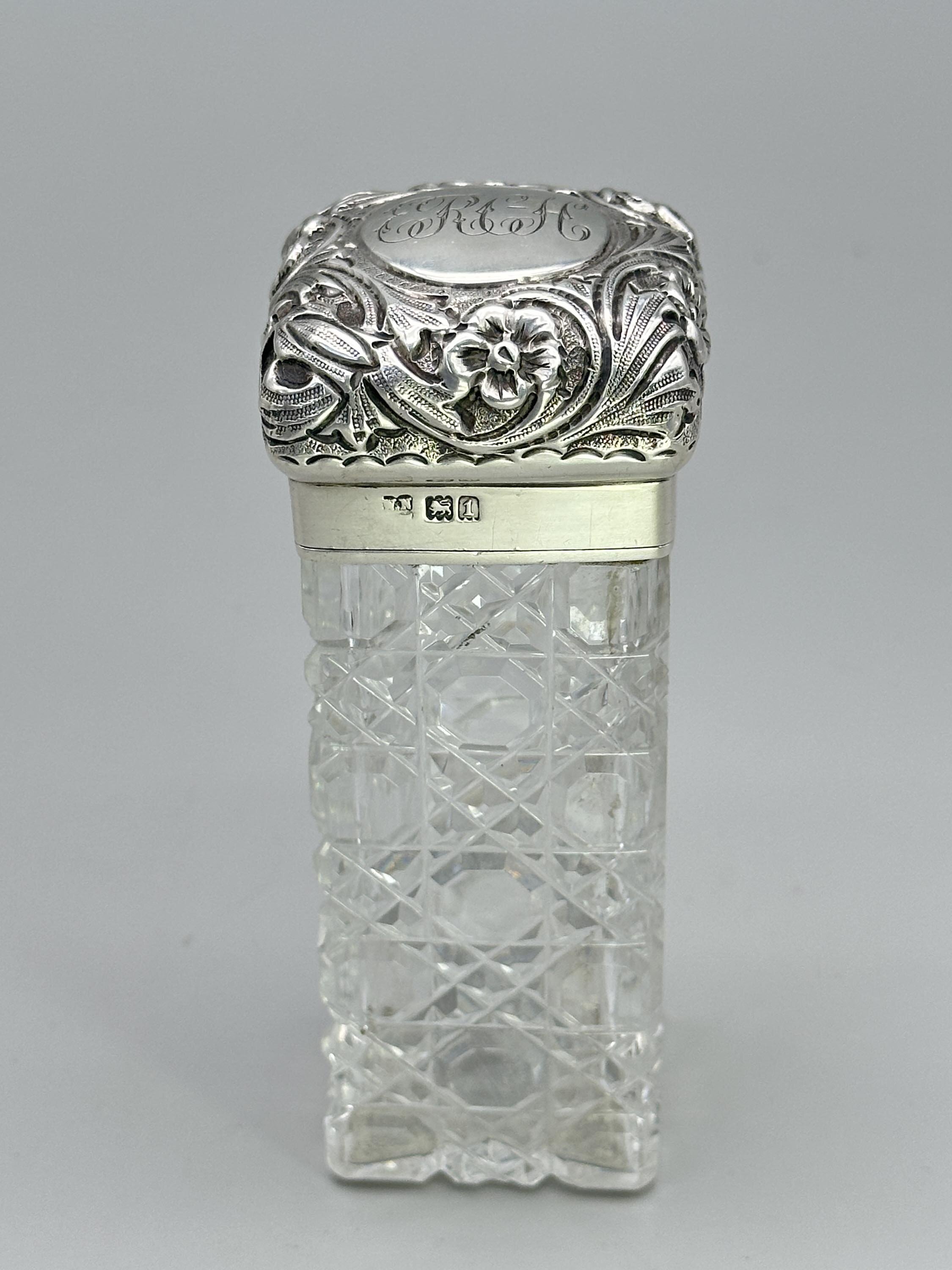
Square cut glass Scent Bottle with monogrammed silver top, probably W&G Neal, hallmarked London 1906
Estimate: £30 – 40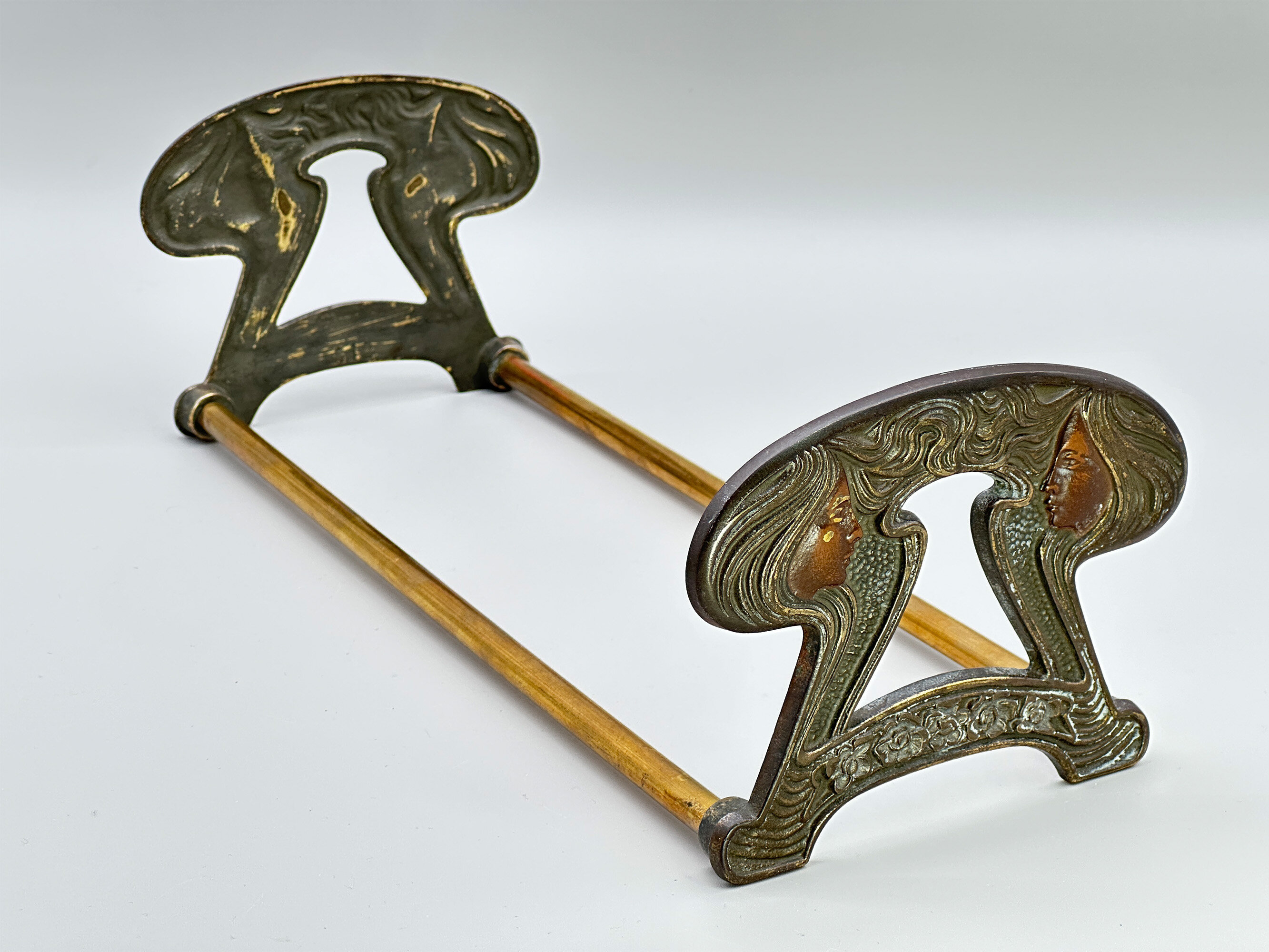
Expanding Book Stand, probably H.L.Judd Company, marked 512, American early C20th
Estimate: £100 – 150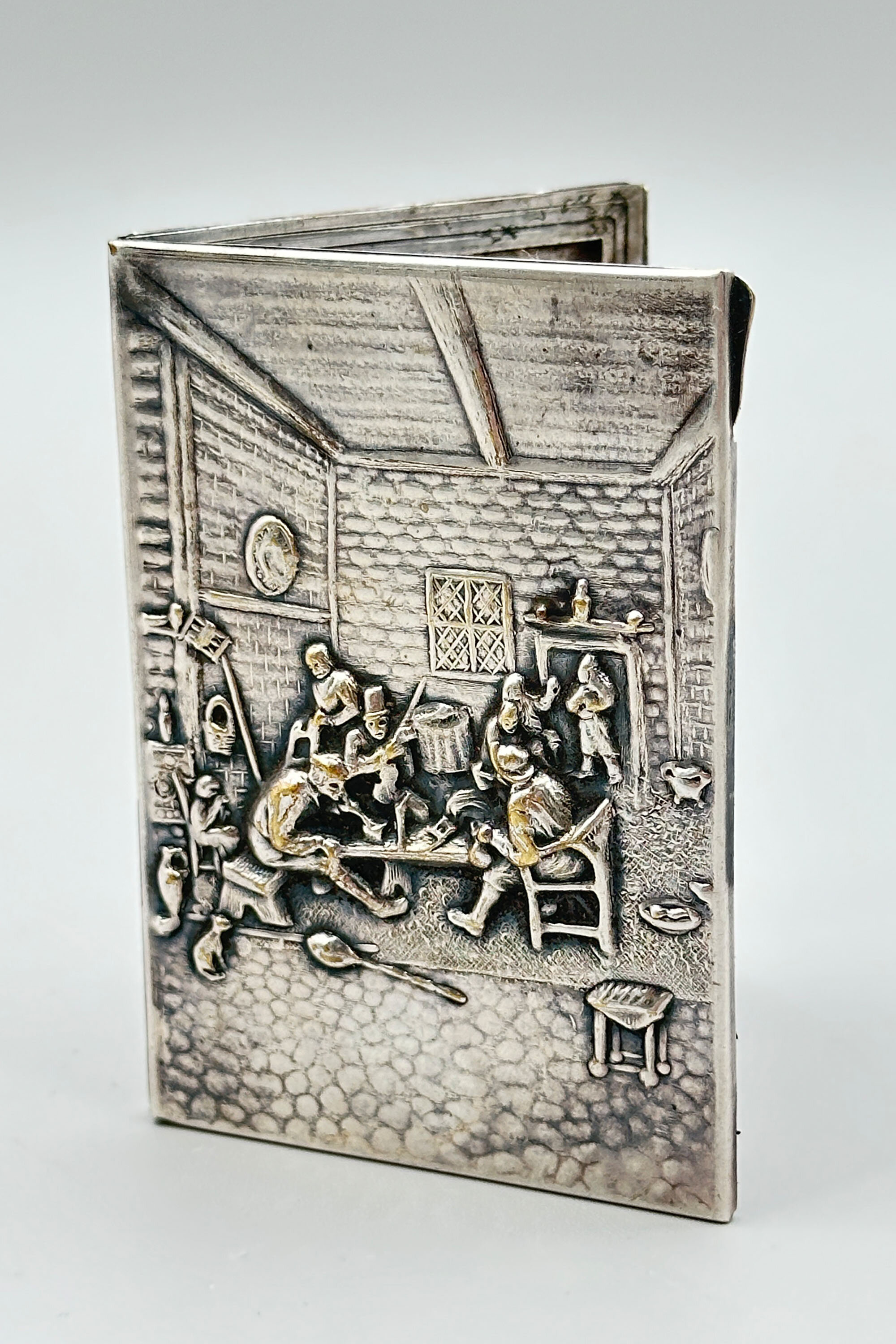
Danish silver plate Photograph Holder,with repoussé decoration, 1970s/1980s
Estimate: £30 – 40
Indian carved wood Box with miniature Plaques, second half C19th
Price: £150
Carved oak wood Box, possibly German, late C19th
Price: £55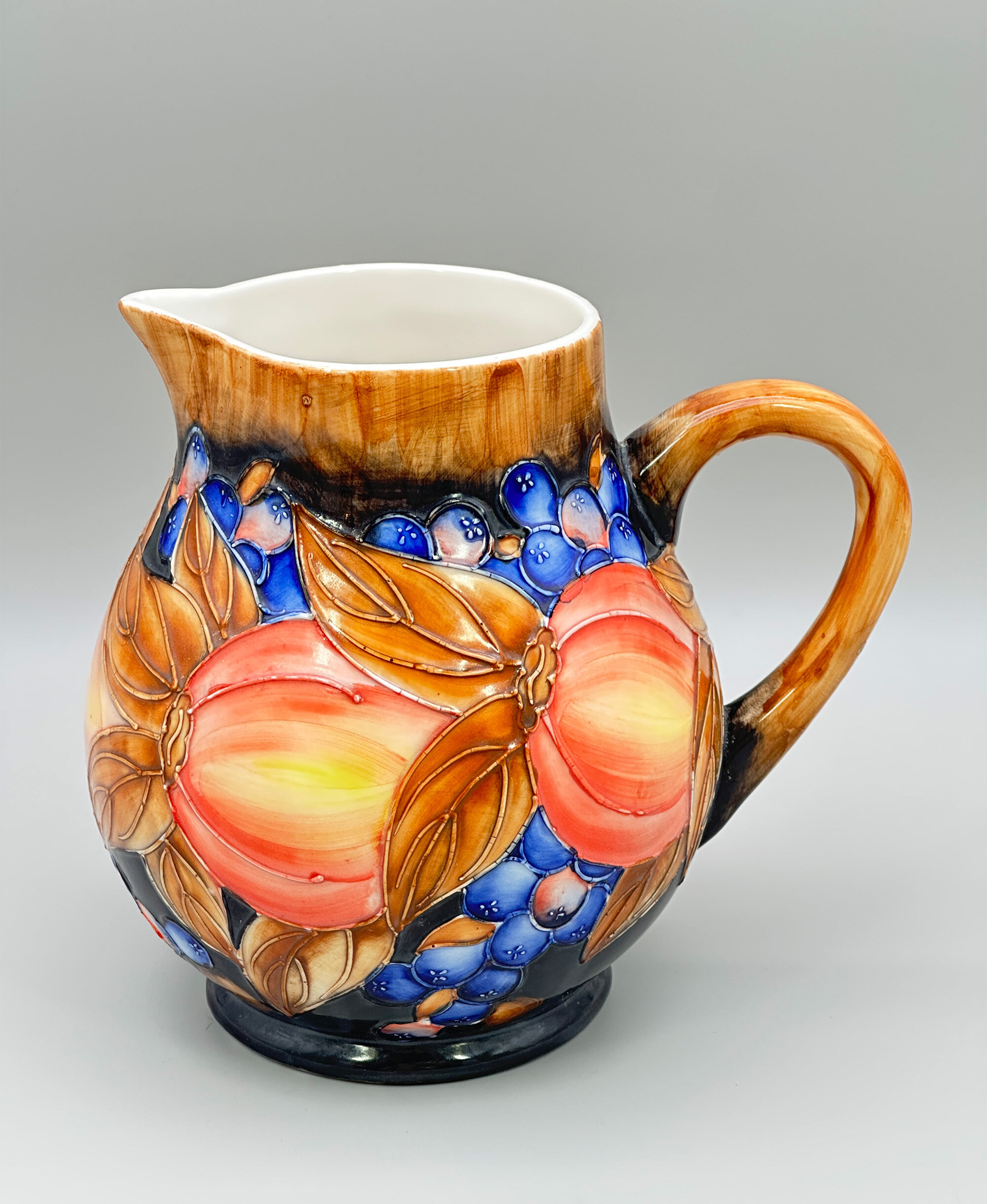
Old Tupton Ware jug with tubular floral design, Crown mark, early C21st
Price: £30
Bursley Ware Coffee Service, Bacchus pattern, 1920s
Price: £220Bursley Ltd was the creation of Frederick Read who, in collaboration with Harry Wood, bought the Crown Pottery works in 1920 and began manufacturing art pottery there under this new name. Previous to this Read had been employed as the Art Director for Wood and Sons, a firm which traced its origins back to the mid nineteenth century and of which Harry Wood, a descendant of the founders, was to become Chairman in 1921. Bursley Ltd, while independent, was a subsidiary of Wood and Sons who also had associations with other potteries in the area. Frederick Read was soon joined by his daughter Charlotte, whose designs became famous, but the designs and pattern here may well have been his own creation. Since the marks include the wording ‘registration applied for’, this service must have been one of Bursley’s first productions and it may have been taken over from Wood and Sons themselves since other pieces are found in identical shapes and decoration and titled ‘Bacchus’ but with a mark for H.H.&Co Ltd, the early name, used from 1913 to 1922 of the firm Hales Hancock and Godwin who were agents and retailers for various of the Staffordshire potteries including Wood and Sons.
There is, then, a slightly complex history here but we most likely have an early example of Read’s designs for his newly established business which went on, with the help of his daughter, to produce many innovative pieces of art pottery in the 1920s and 1930s.
Sizes
(i) Coffee Pot : Ht (max) 20.3cm, Width (max) 19cm, Depth (max) 10.5cm, Base 8cm (ii) Sugar Basin : Ht (max) 6cm, Width (max) 10cm, Depth (max) 7.5cm, Base 5.6cm (iii) Milk Jug : Ht (max) 11.5cm, Width (max) 10.5cm , Depth (max) 6cm, Base 5cm (iv) Coffee Can : Ht 5.2cm, Diam 5.2cm, Width (max) 7cm [One with three minute chips at the top] (v) Saucer : Diam 11.5cm, Ht 1.8cm, Base 4.5cm

Powder compact with a lizard skin lid made by Patrys, France, 1950s
Price: £25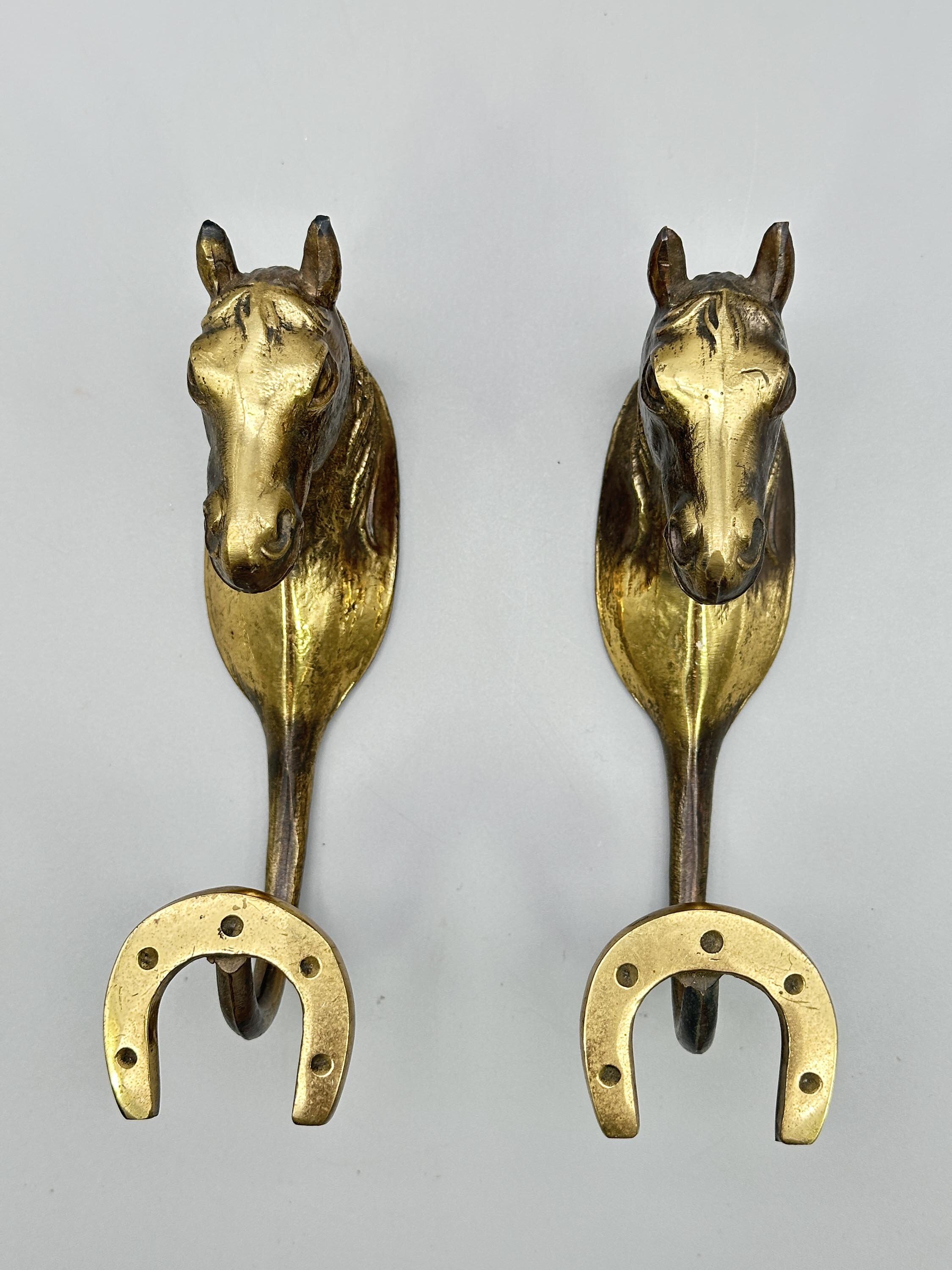
A pair of brass horse head Coat Hooks, English C20th
Estimate: £30 – 40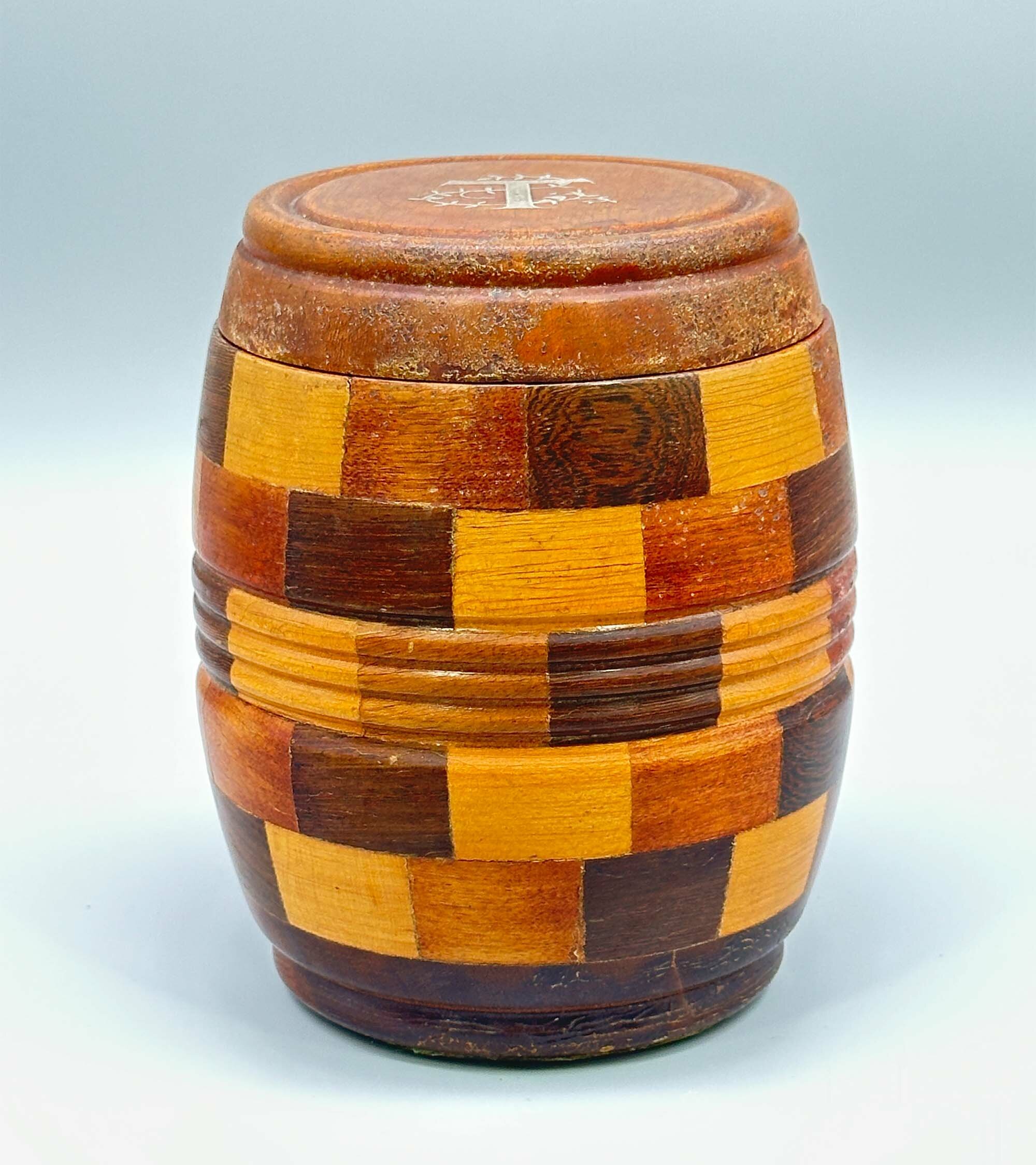
Cambridge ware tea caddy and cover with T monogram on the lid, mid C20th
Price: £25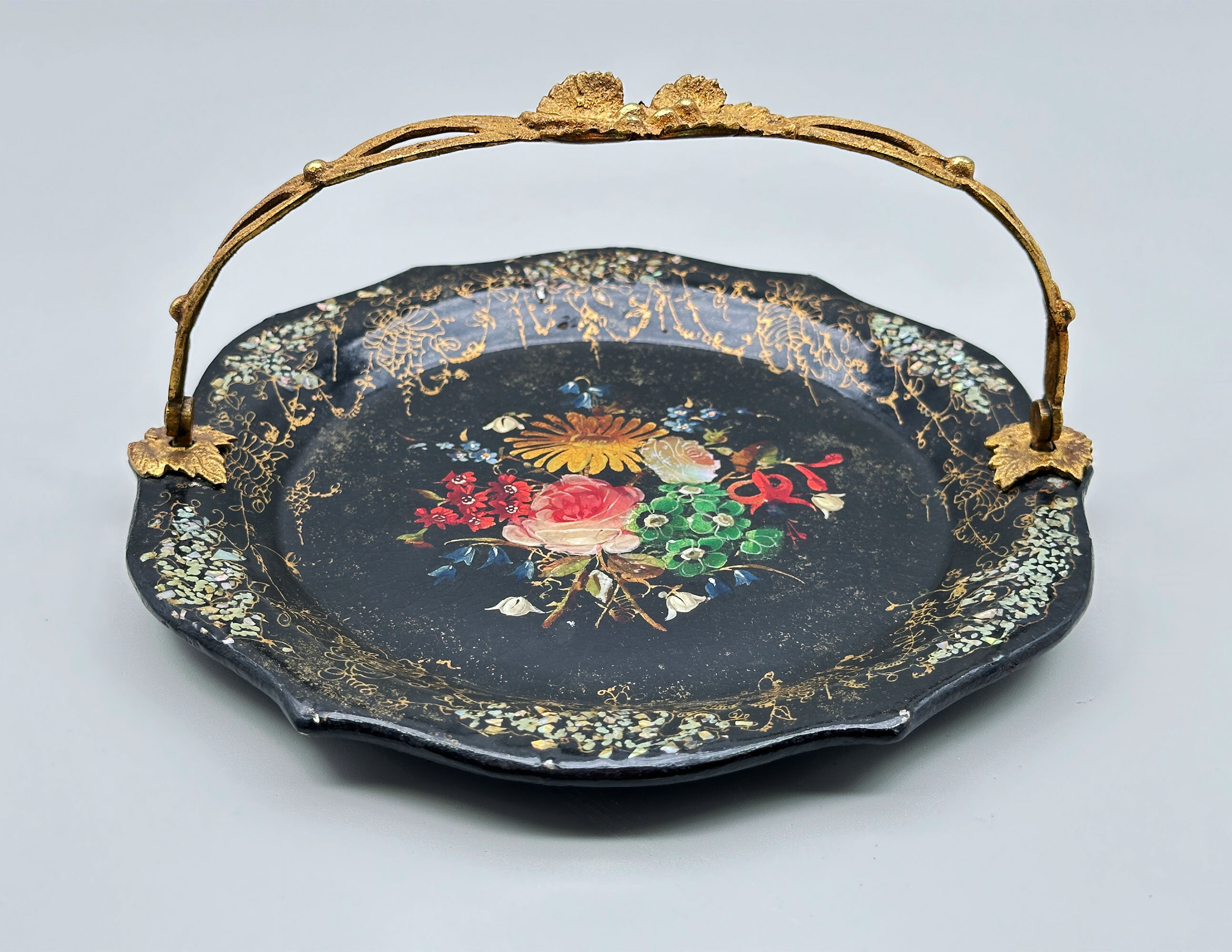
Victorian papier-mâché Tray with brass handle, English second half C19th
Price: £75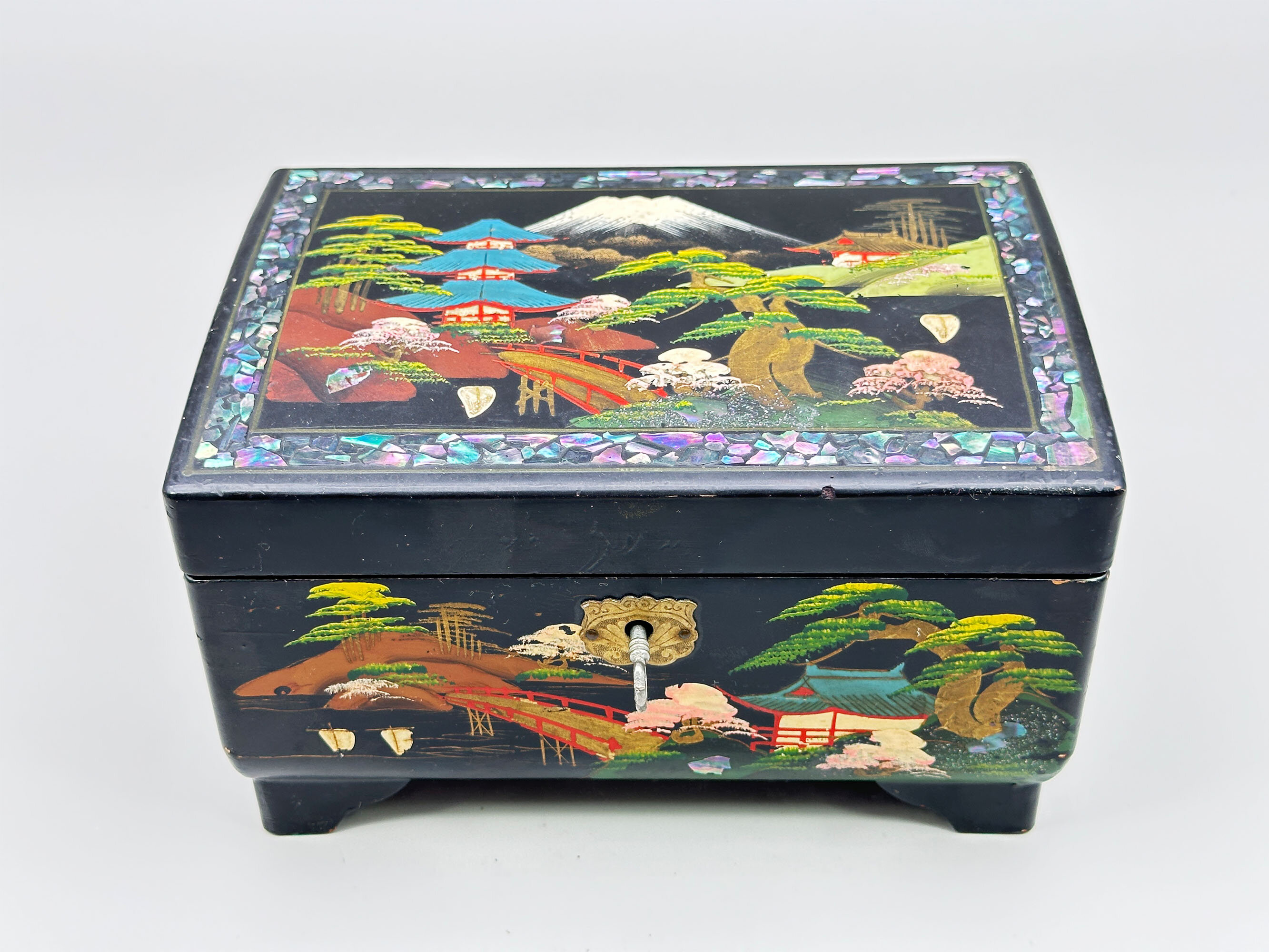
Japanese black lacquer musical jewellery Box, mid C20th
Price: £45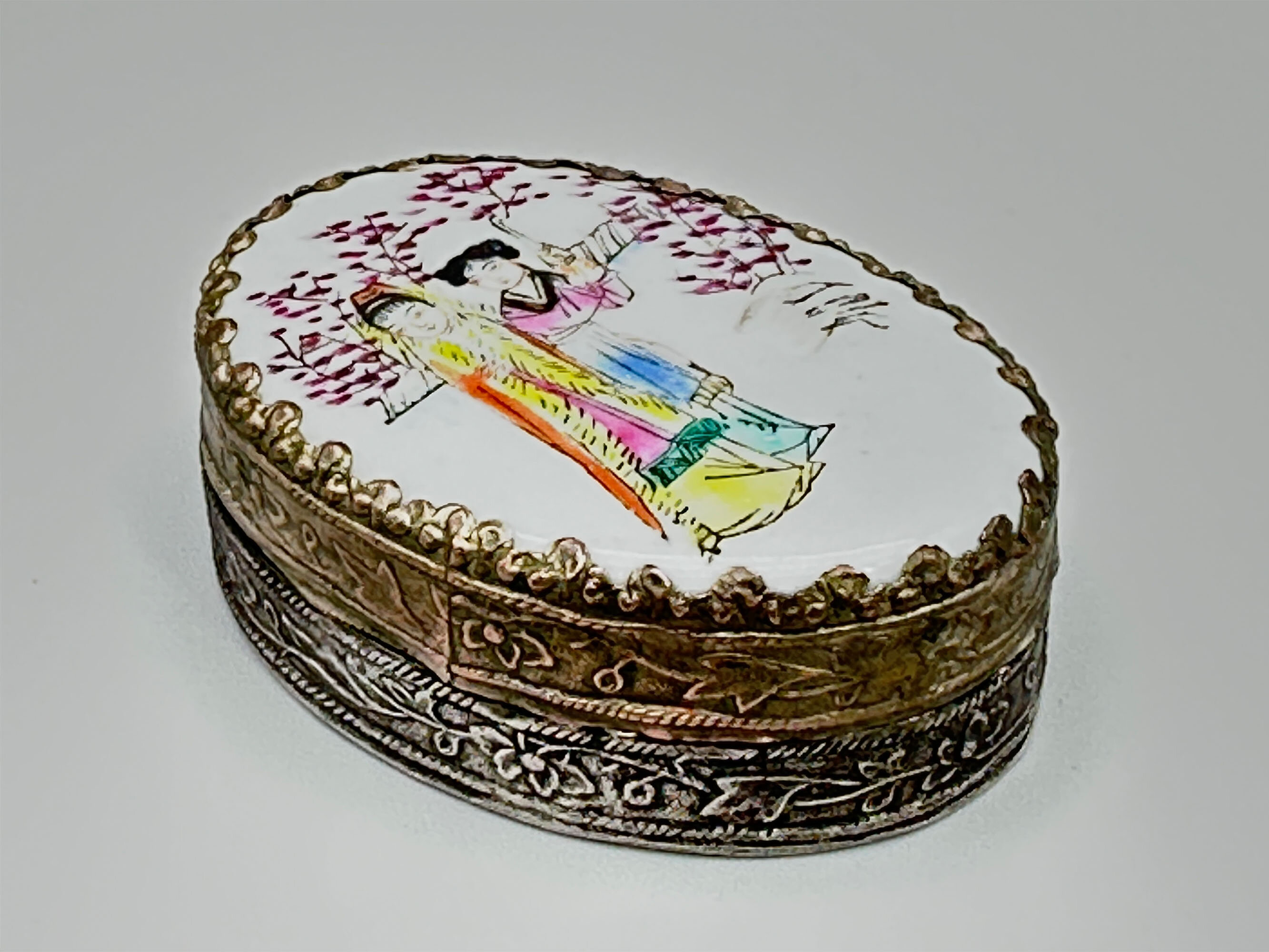
Chinese silver plate Trinket Box with ceramic plaque, C20th
Price: £25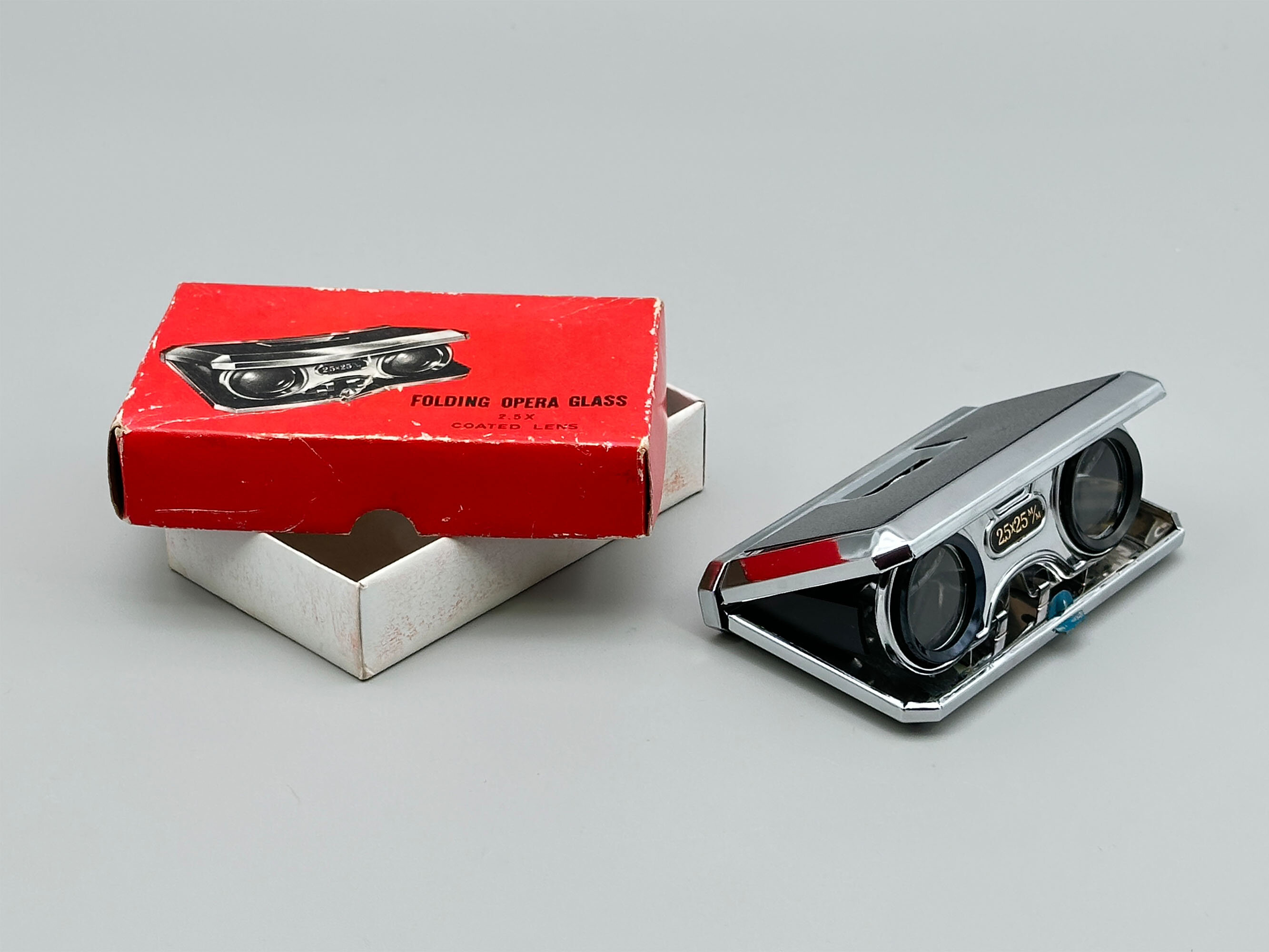
Pair of Sport Glass folding Binoculars with box, Japan 1950s
Price: £25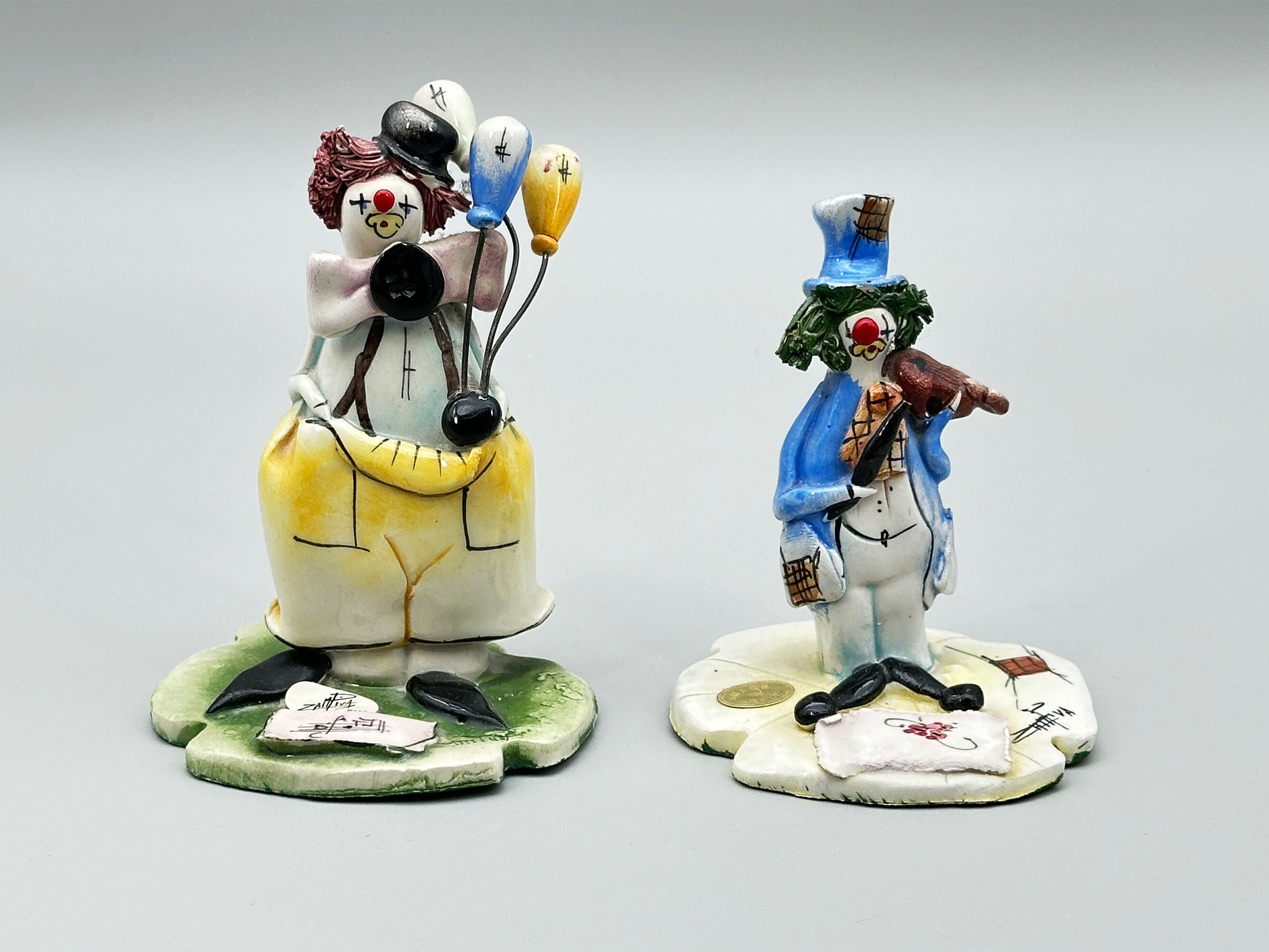
Two ceramic Clown Figures by Lino Zampiva, Italian late C20th
Price: £25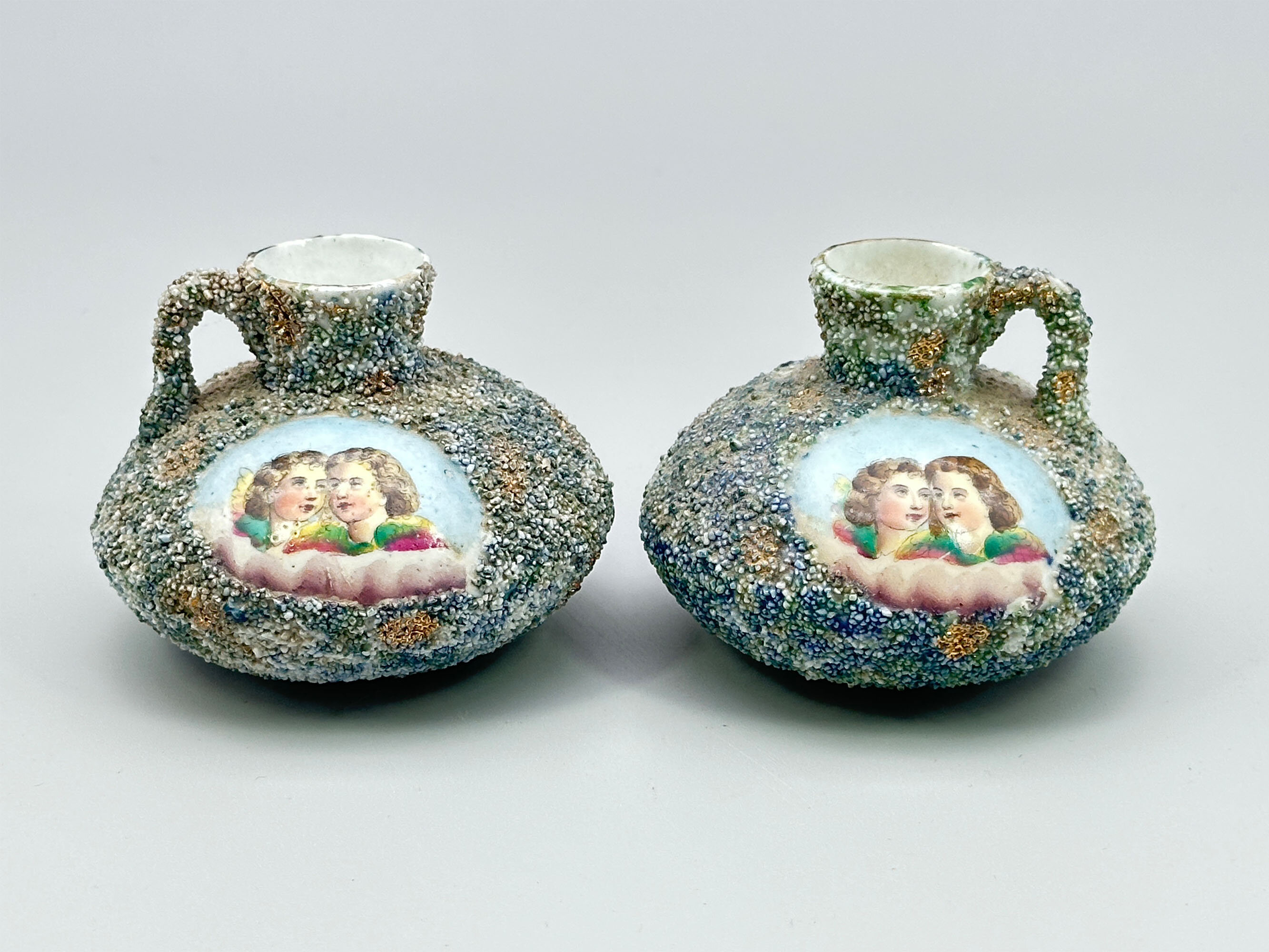
Pair of Palissy style Ewers, probably continental, first half C20th
Price: £35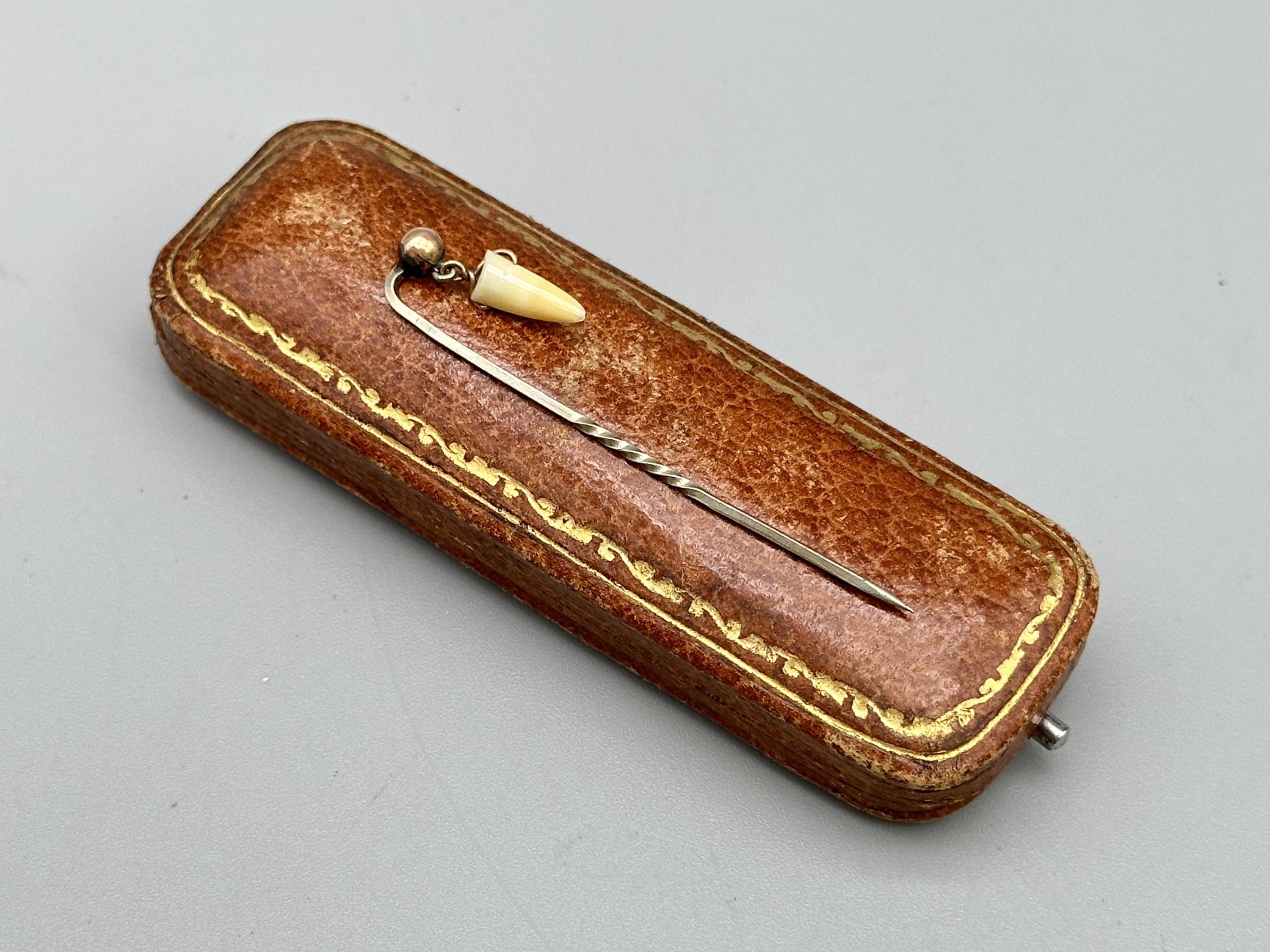
Memento Mori Stick Pin with pet's tooth in original box, c1880
Estimate: £50 – 80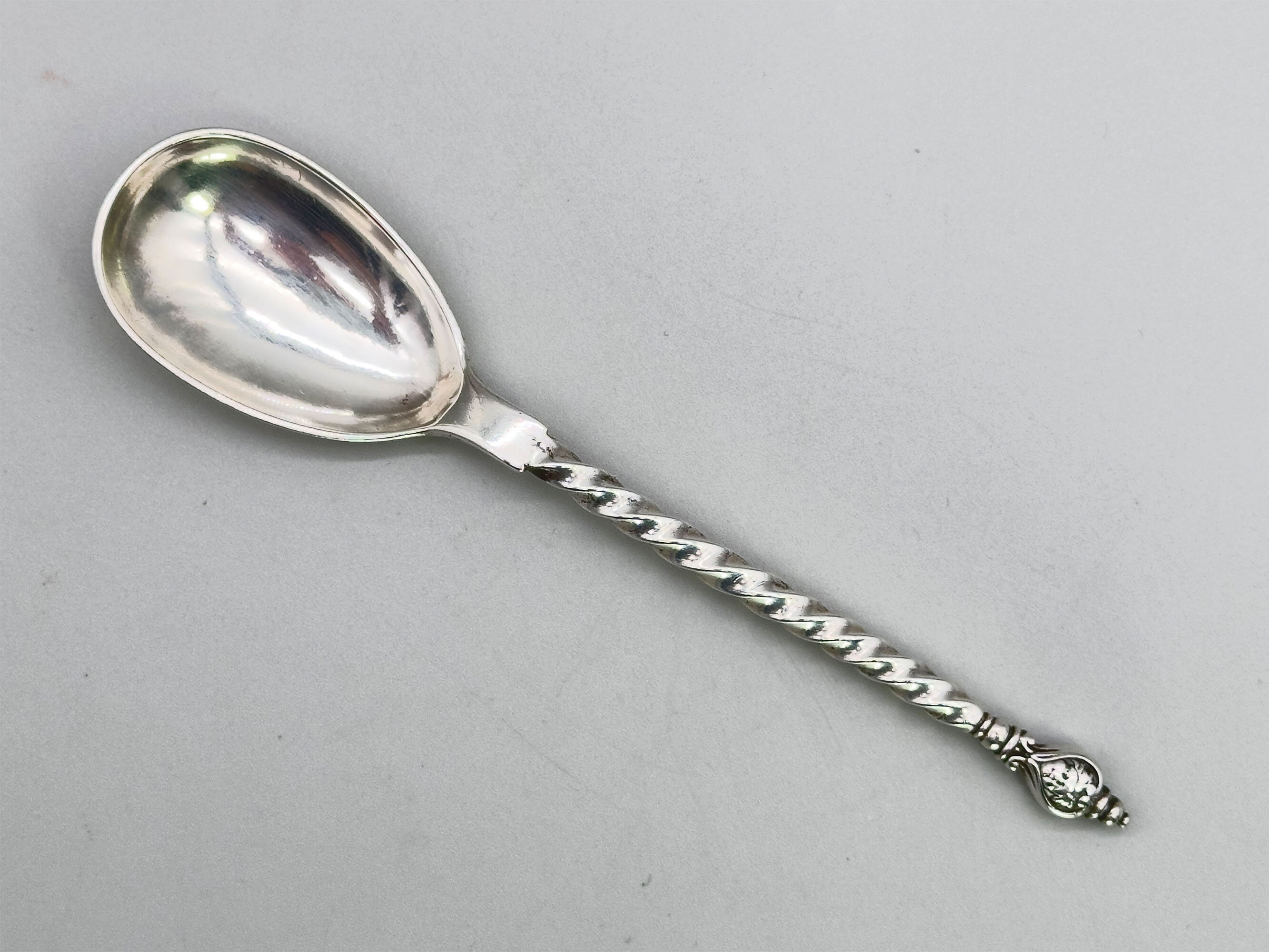
Silver spoon with cherub head terminal, A. Halberstadt, Copenhagen, Denmark, marked, 1893-1895
Estimate: £80 – 120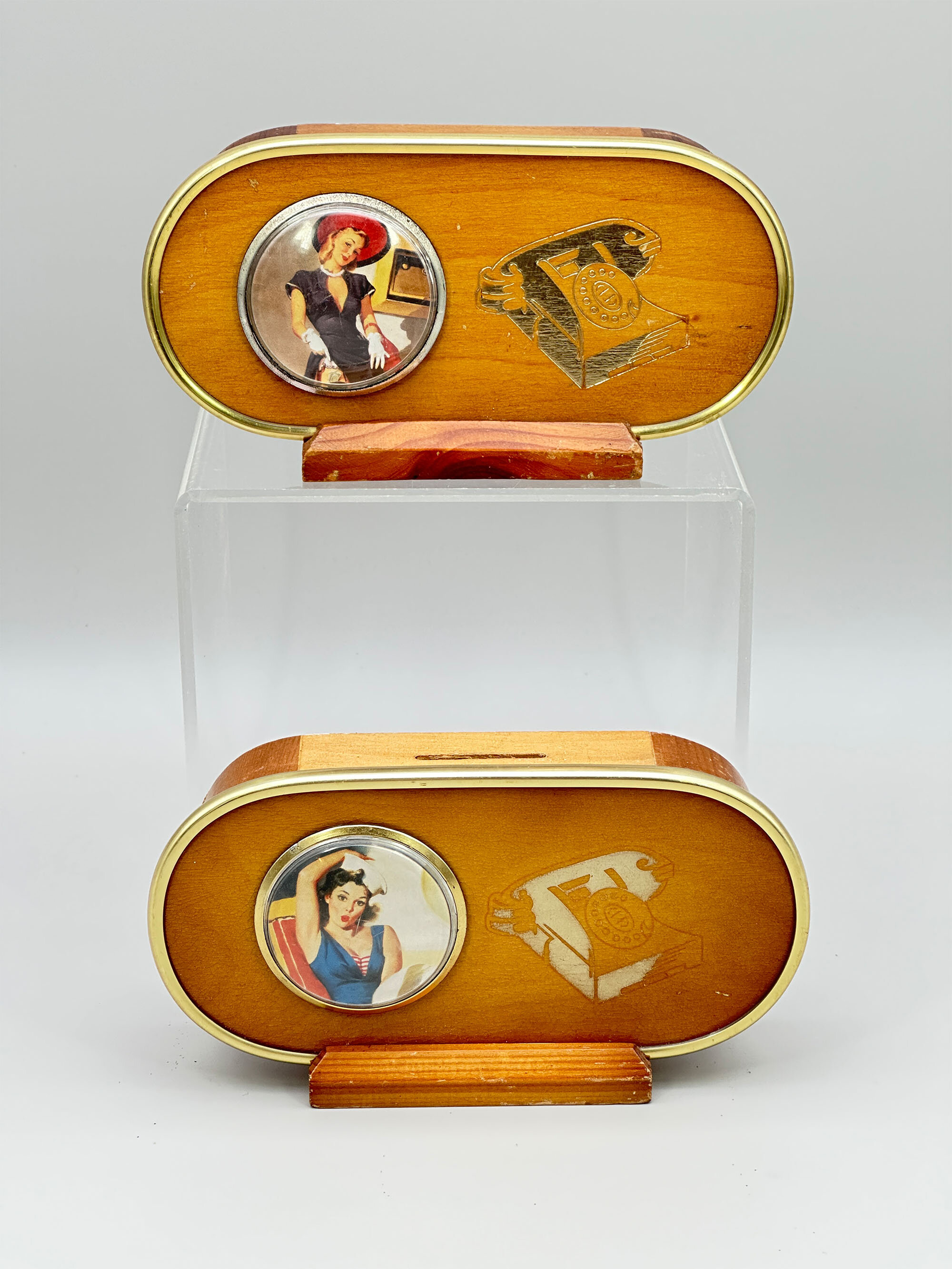
Avon Brand vintage wood telephone Money Boxes, 1950s/1960s
Price: £20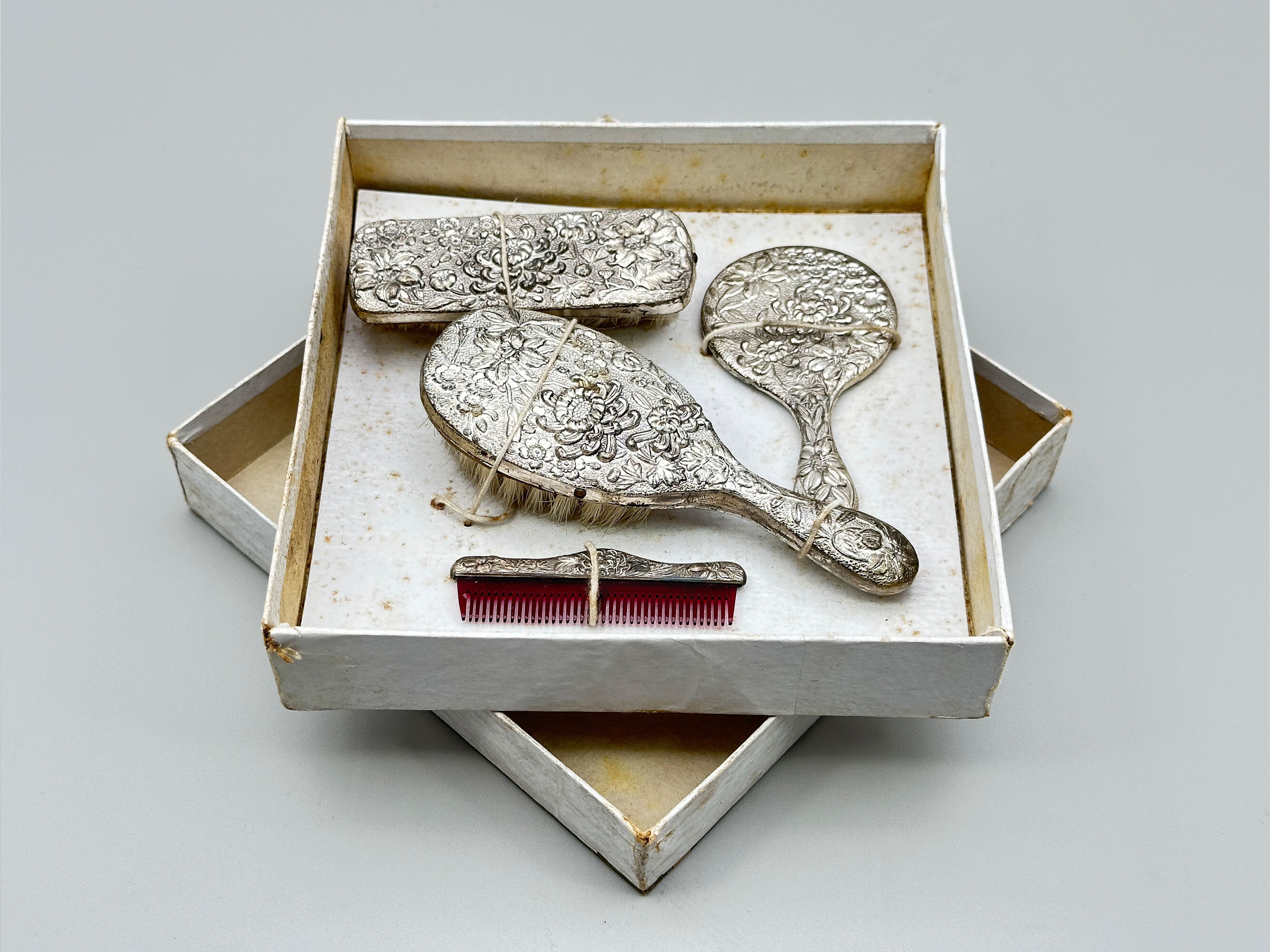
Fairylite Dollies Brush and Comb Set, mid C20th
Price: £20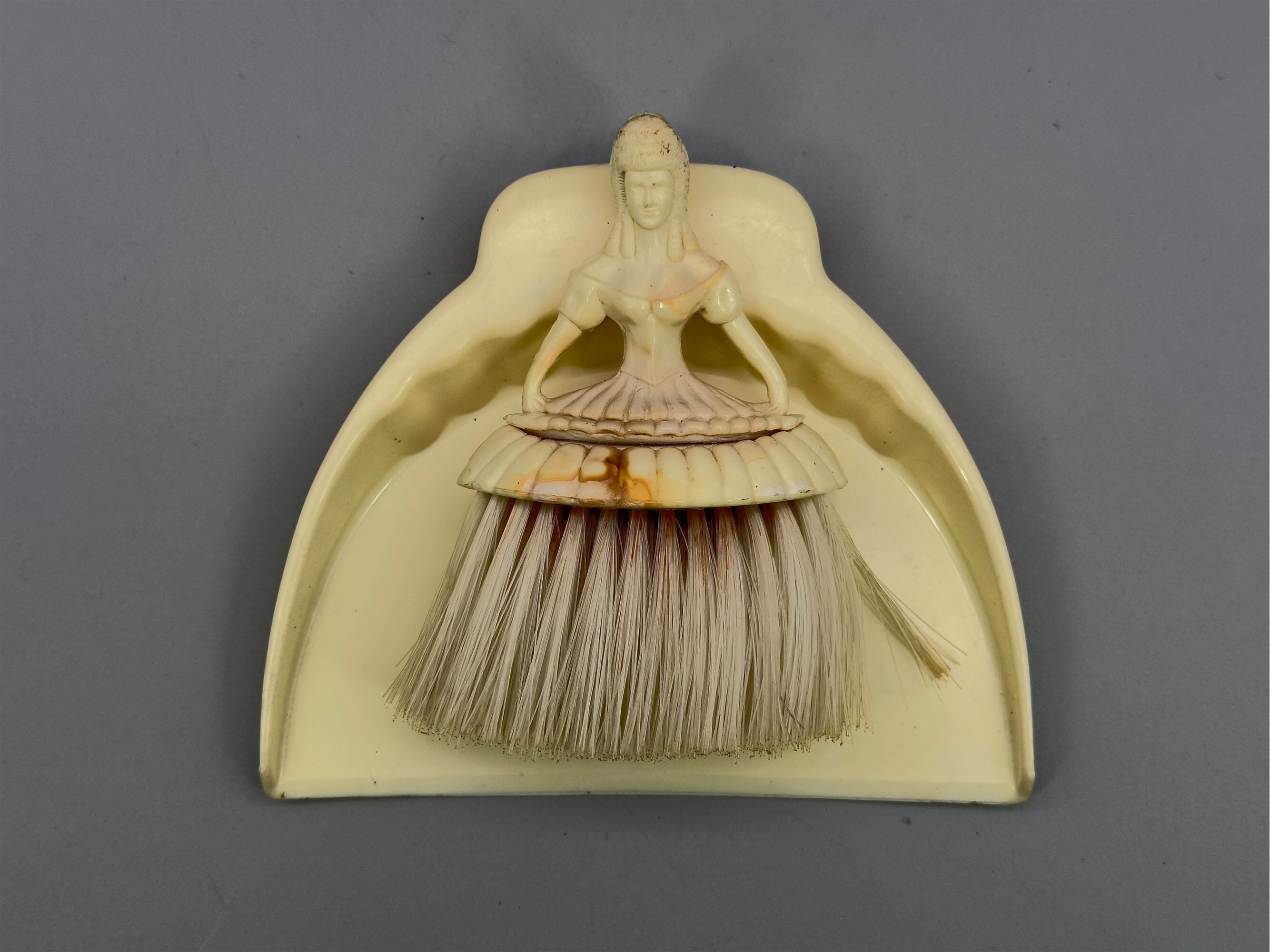
Betterwear celluloid Crinoline Lady Crumb Brush & Tray Set, mid C20th
Price: £20This crumb tray and brush was a popular design in the 1950s. Made from celluloid, the brush is in the form of a Victorian lady wearing a crinoline, the bristles forming a skirt, with the tray, which is marked ‘Betterwear’ to the reverse, modelled to fit. Elegant and practical, these pieces are now more the province of collectors than home accessories.
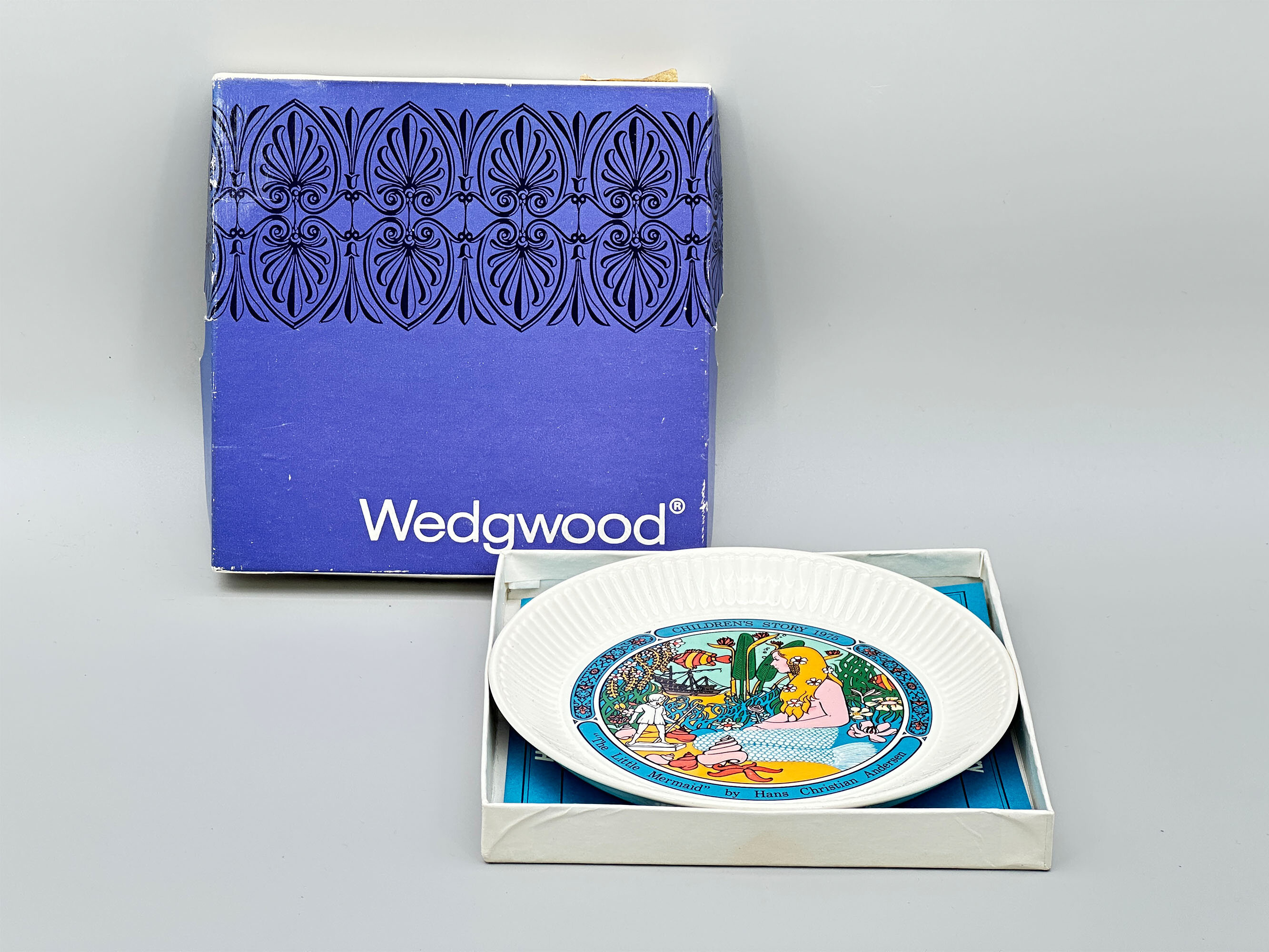
Wedgwood plate from the Childrens Story series, The Little Mermaid, with box, 1975
Price: £15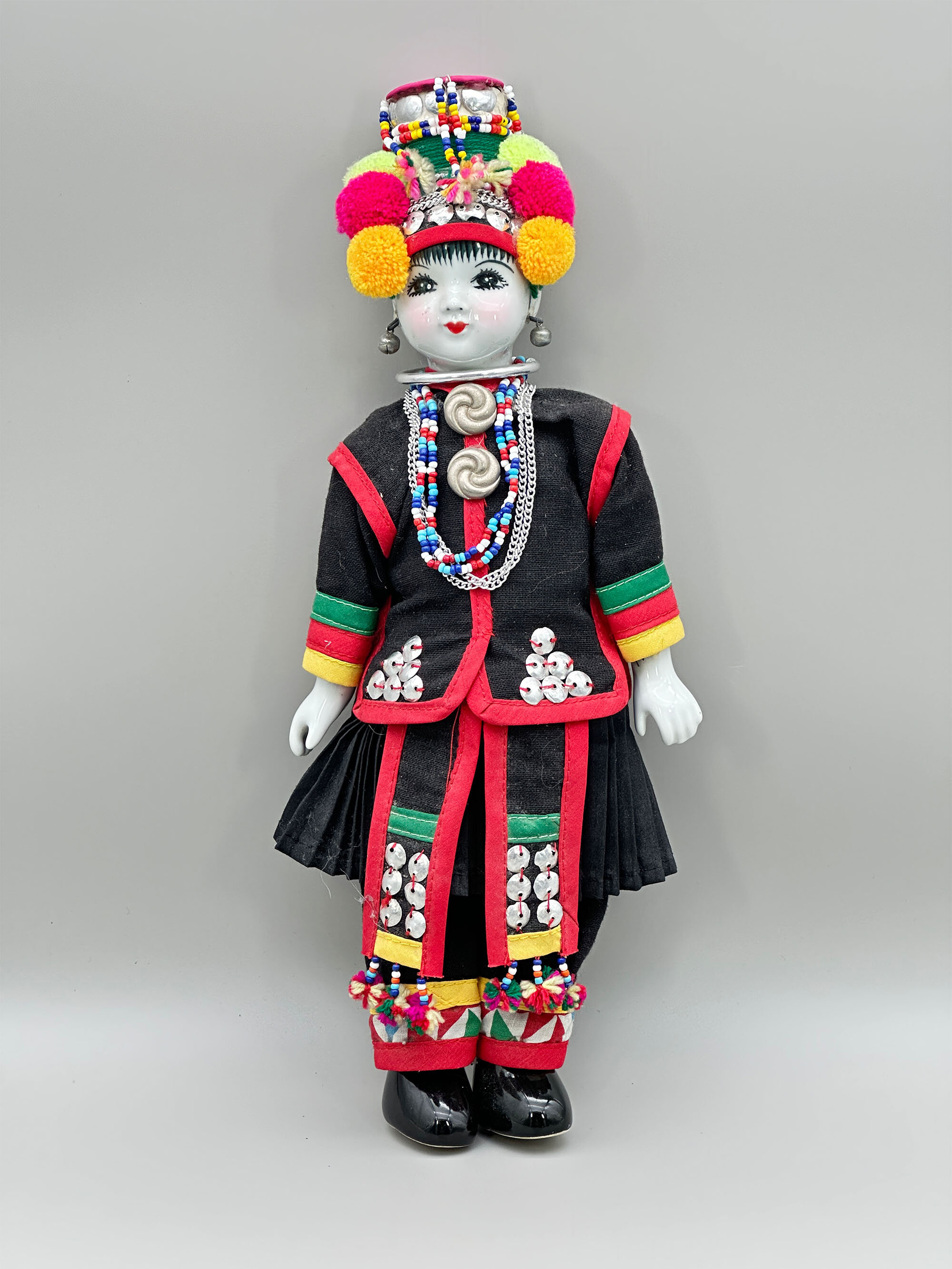
Thai Akha tribe Doll, late C20th
Price: £35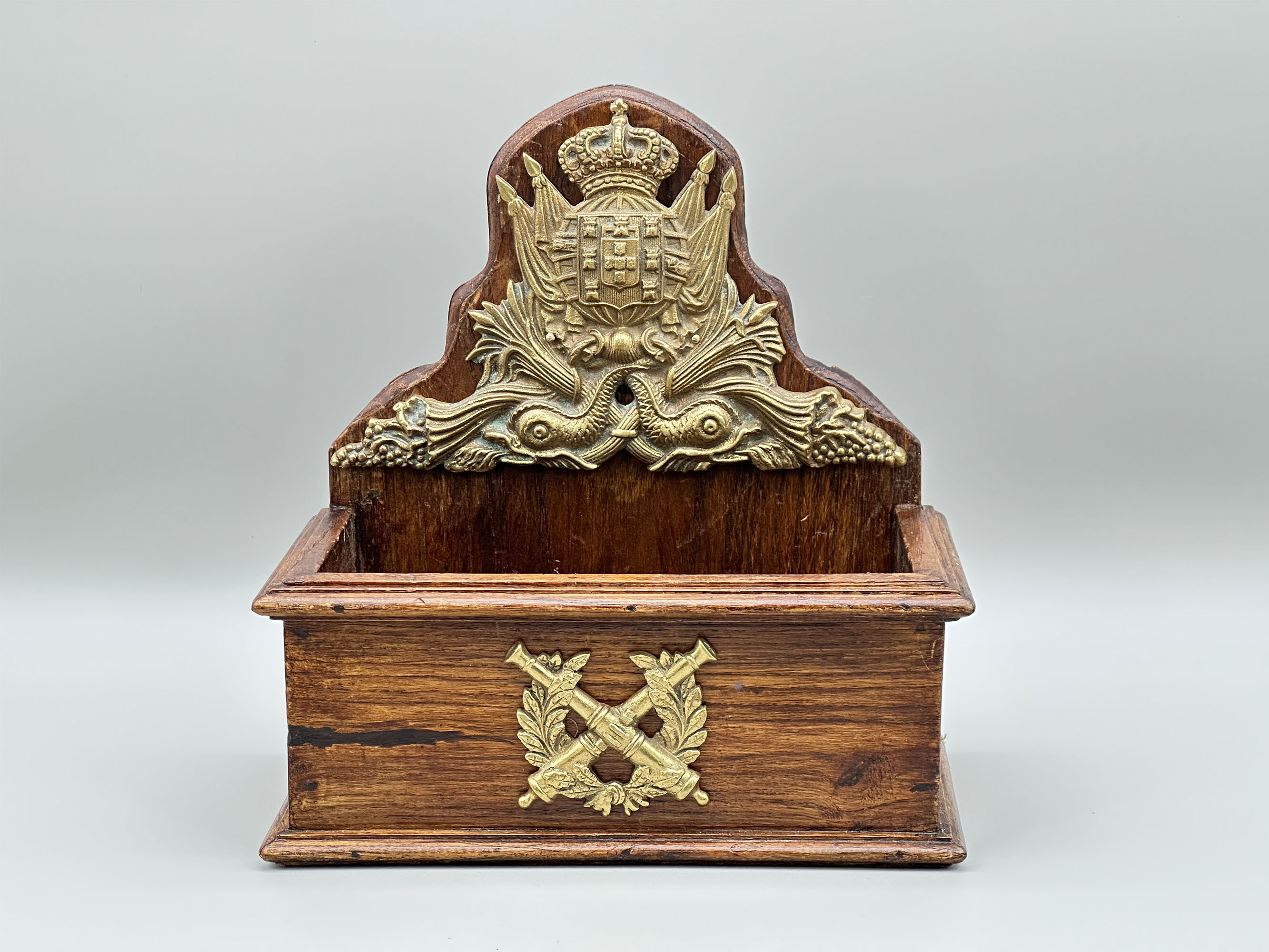
Wooden wall mounted box with the Coat of Arms of Portugal, first half C20th
Price: £75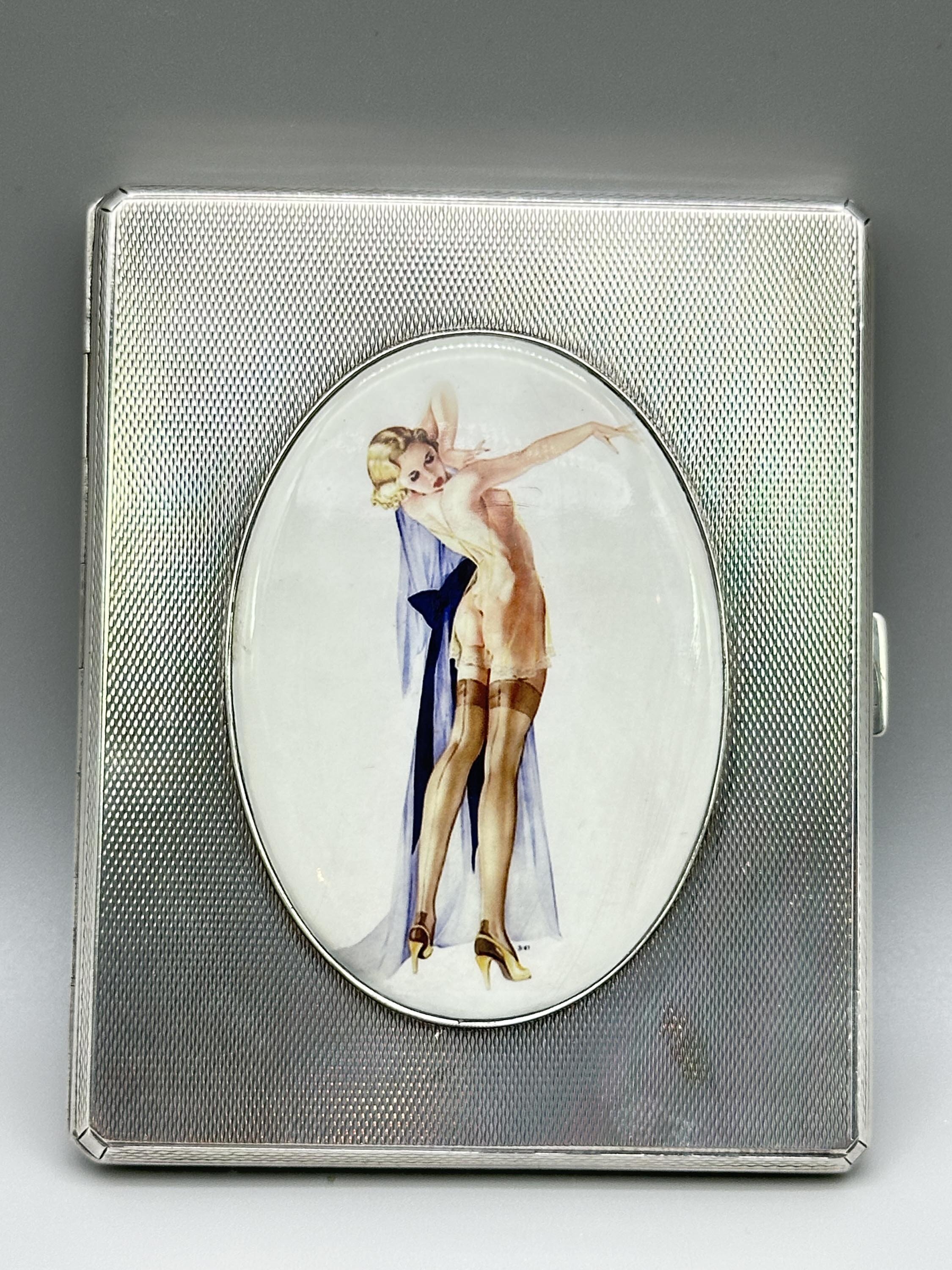
Silver cigarette case, enamel plaque of a Vargas girl, Cohen & Charles, marked London 1941, with box
Estimate: £180 – 220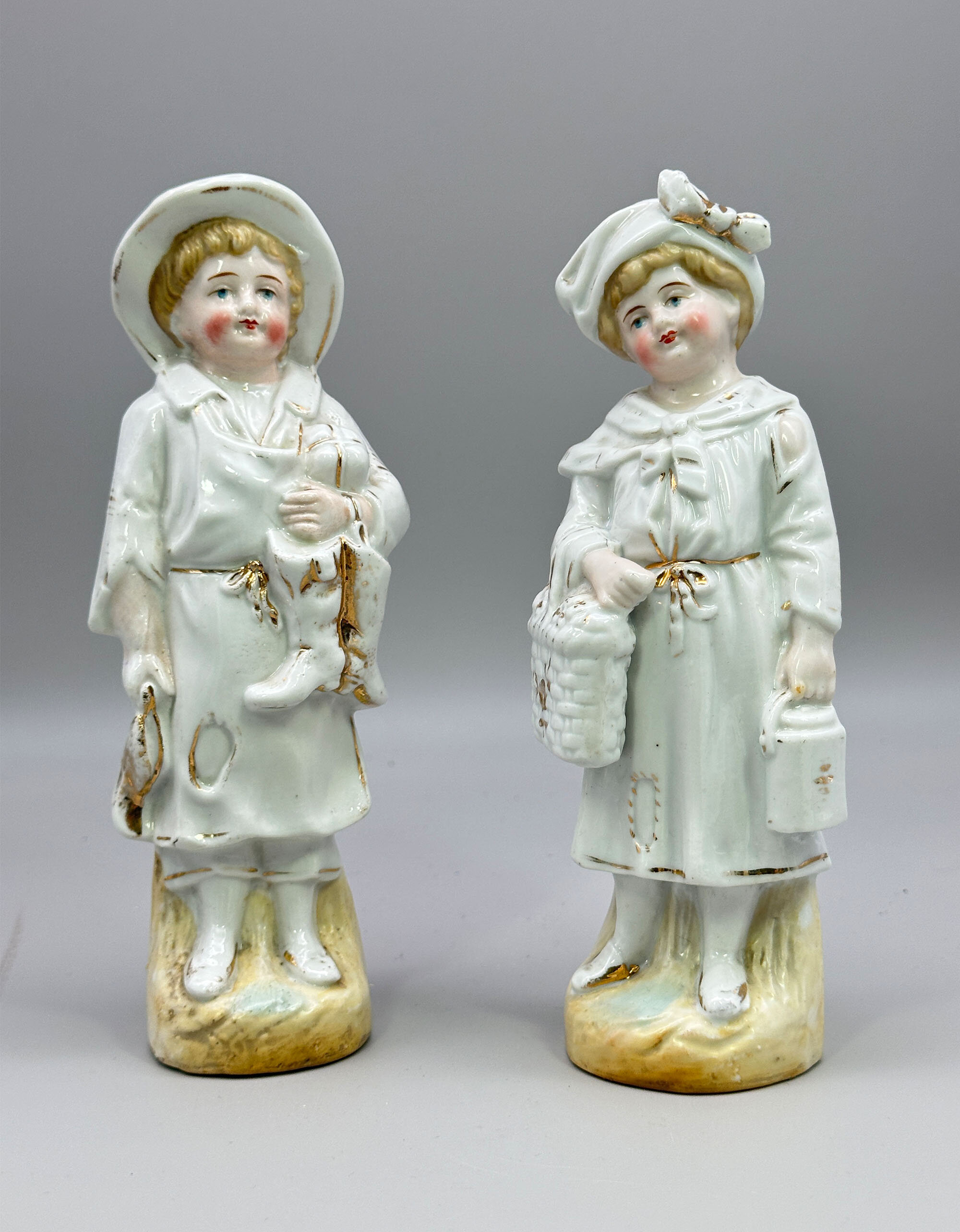
Pair of Staffordshire style figures, Boy and Girl, probably German, late C19th
Price: £75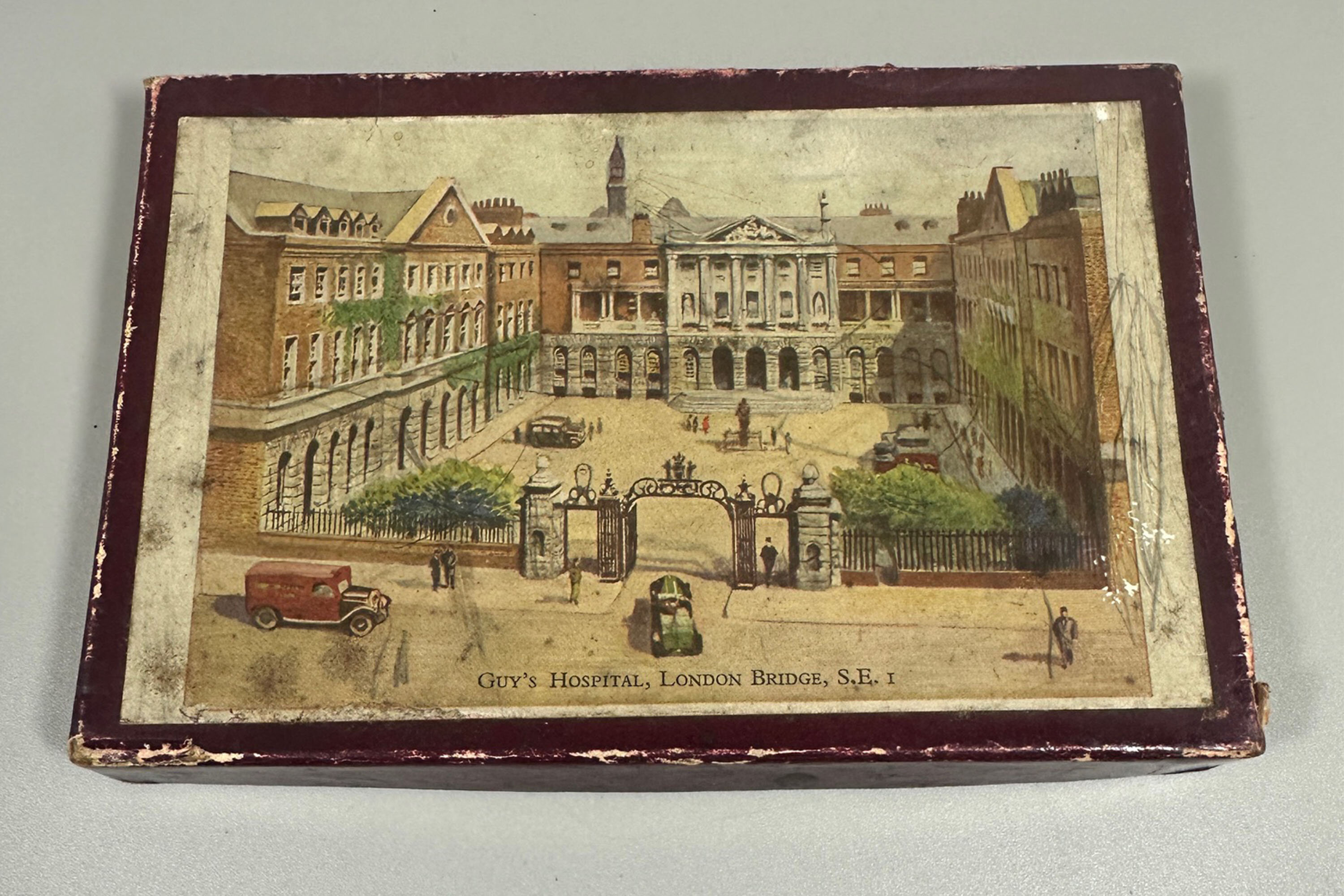
Jigsaw Puzzle of Guy’s Hospital London, with box, 1930s
Price: £10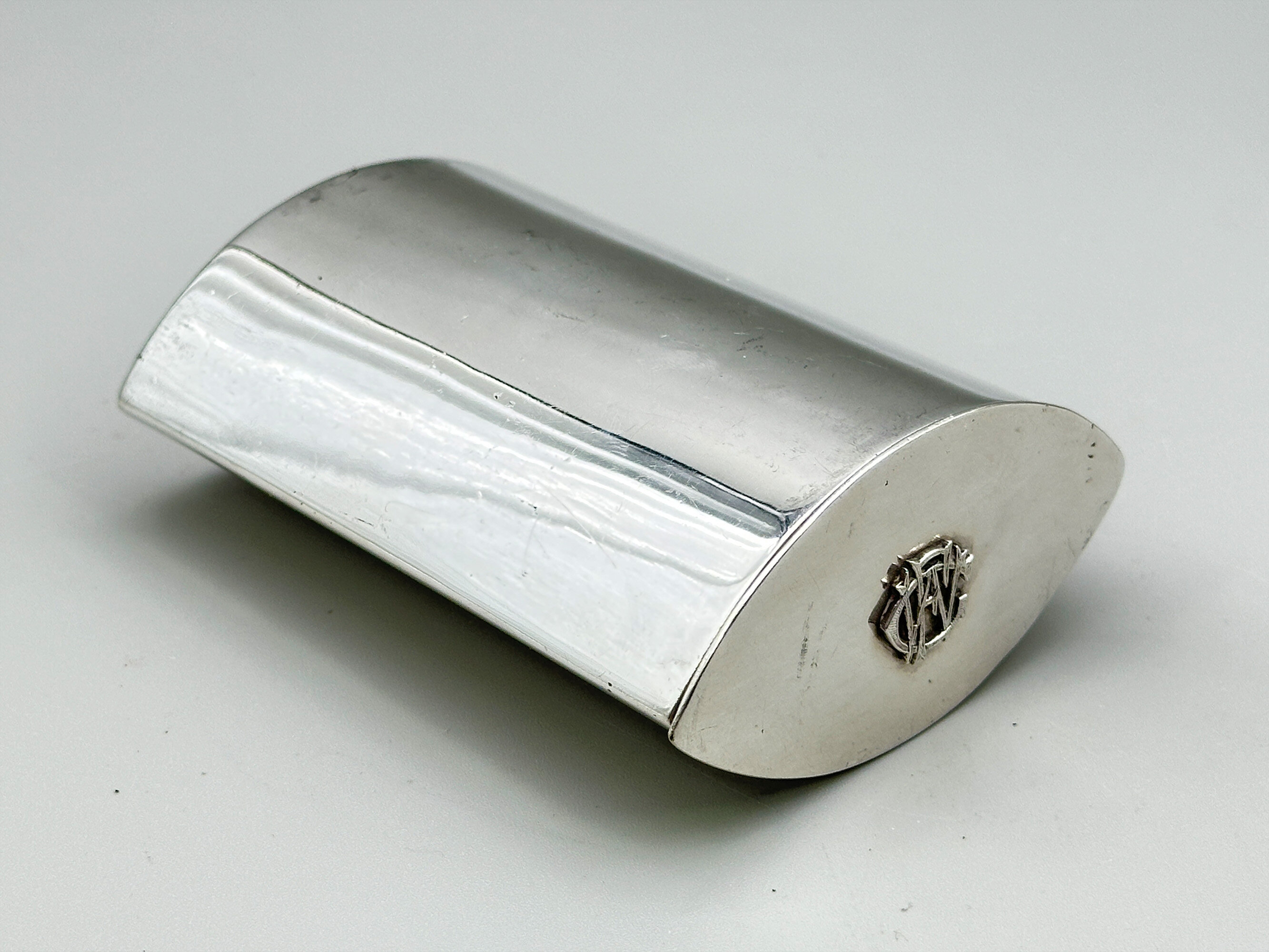
Art Deco silver plate Cigarette Box with monogram, 1930s
Price: £35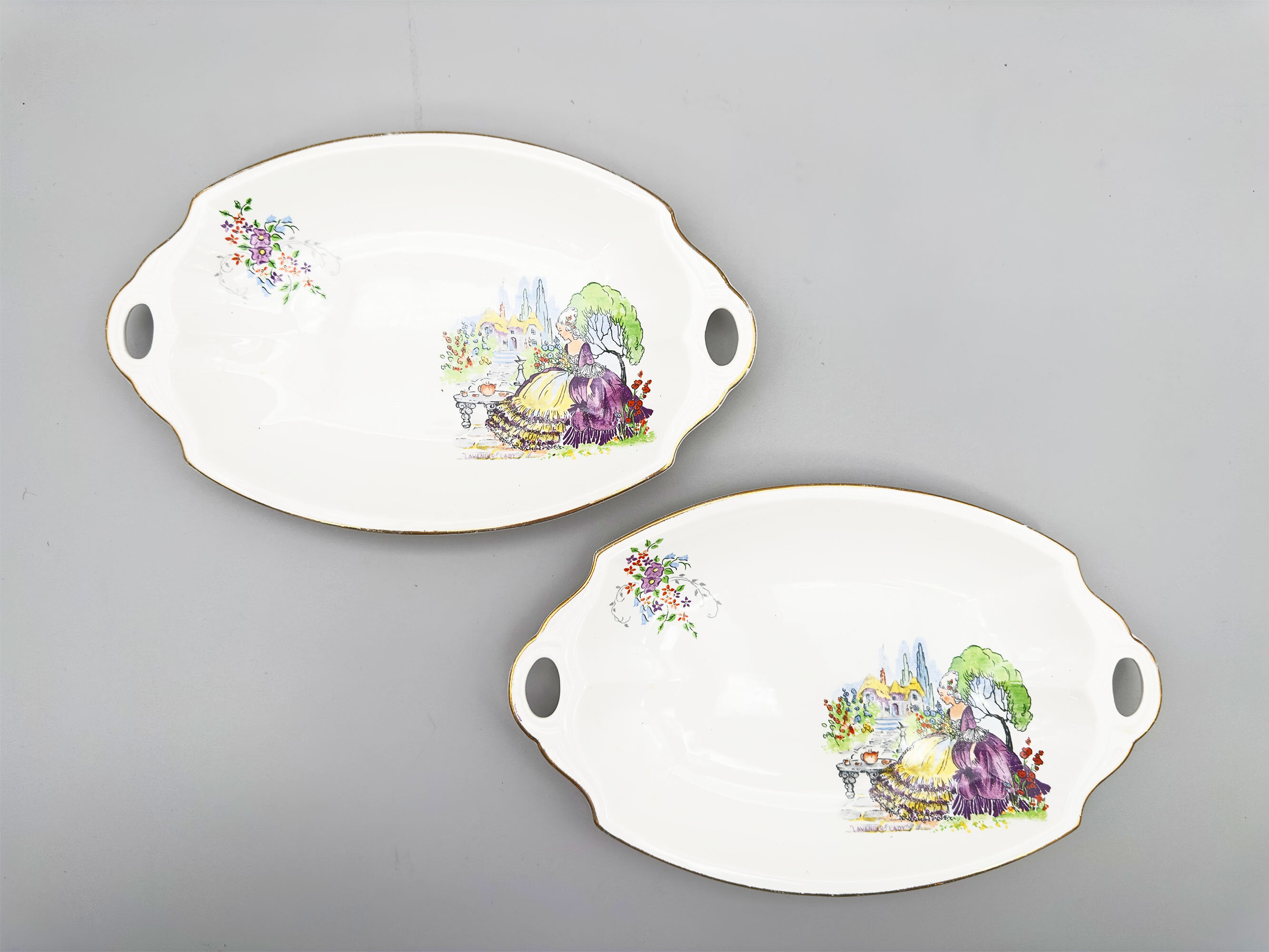
Pair of oval dishes with handles decorated lady in crinoline dress, English mid C20th
Price: £25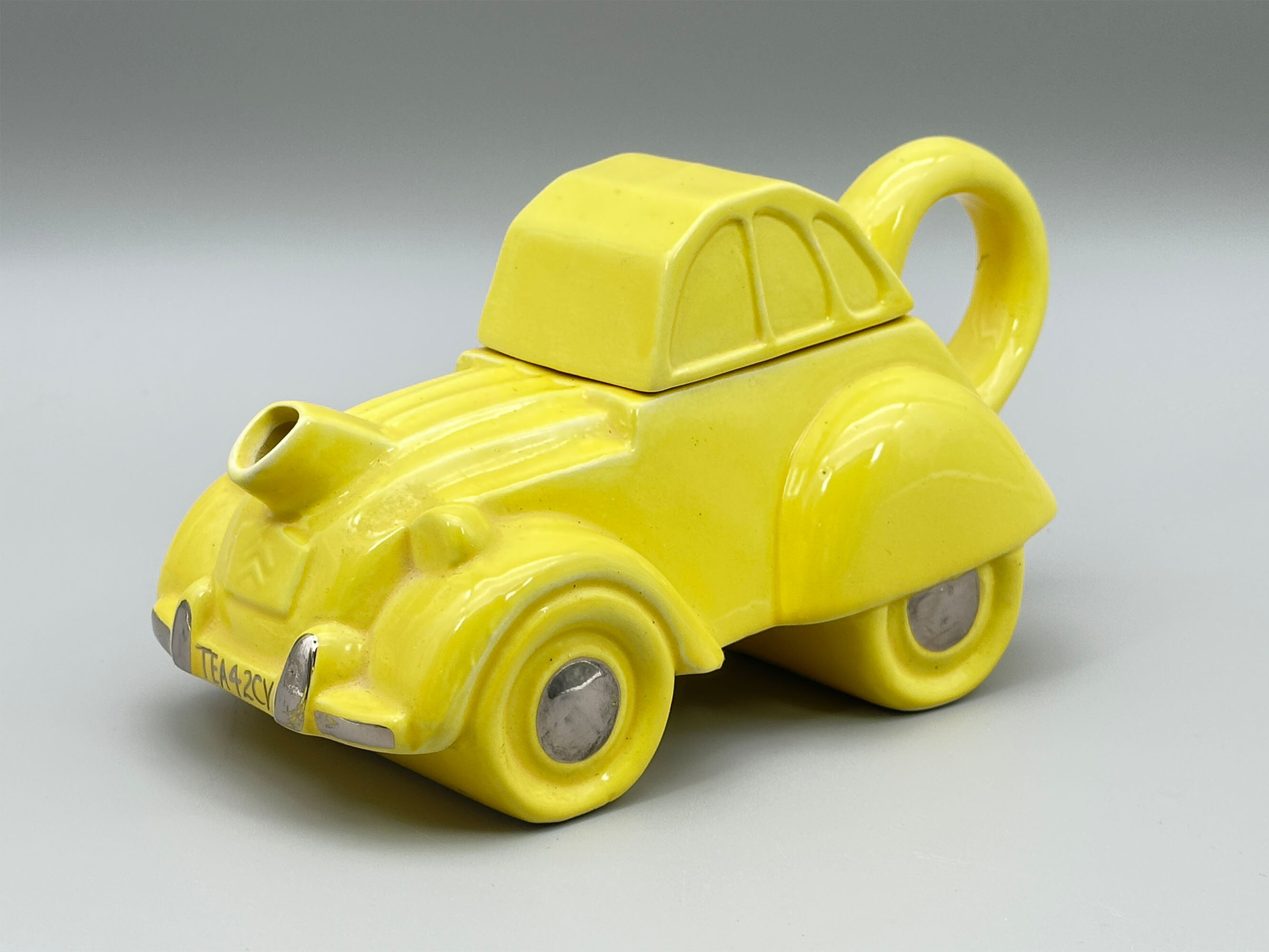
Yellow Citroen 2CV Teapot by Andy Titcomb, signed and dated, 1990
Price: £55‘I worked with Paul Cardew in his first business Sunshine Ceramics from 1978 to 1983. After a number of years making and decorating all manner of odd shaped ashtrays, punk mugs and Nat West piggy banks, I left to concentrate on my own work. I made a range of brooches which were selected by the Design Centre. In 1983 with a converted pigsty as a workshop, I made my first teapot...a black and white harlequin. Encouraged by The Teahouse in Covent Garden London I began to make many more teapots.’
By 1990, he had deserted the pigsty and had a studio in North Cornwall where he continued production until 2016 when ‘I decided that there was too much “stuff” in the world without me adding to it, so I retired from all things ceramic and gave my materials and other equipment to other potters.’
Titcomb’s grandmother owned a yellow ‘Sadler’ racing car teapot, a classic design from the 1930s which is much sought after today (see image 11) and this inspired him to make his own version in the form of a Citroen 2CV, although he also produced a model copying the Volkswagen ‘Beetle’. This reinterpretation of the 1930s original, made in 1990 soon after the move to Cornwall has great charm of its own and is as equally collectible as its prototype.
