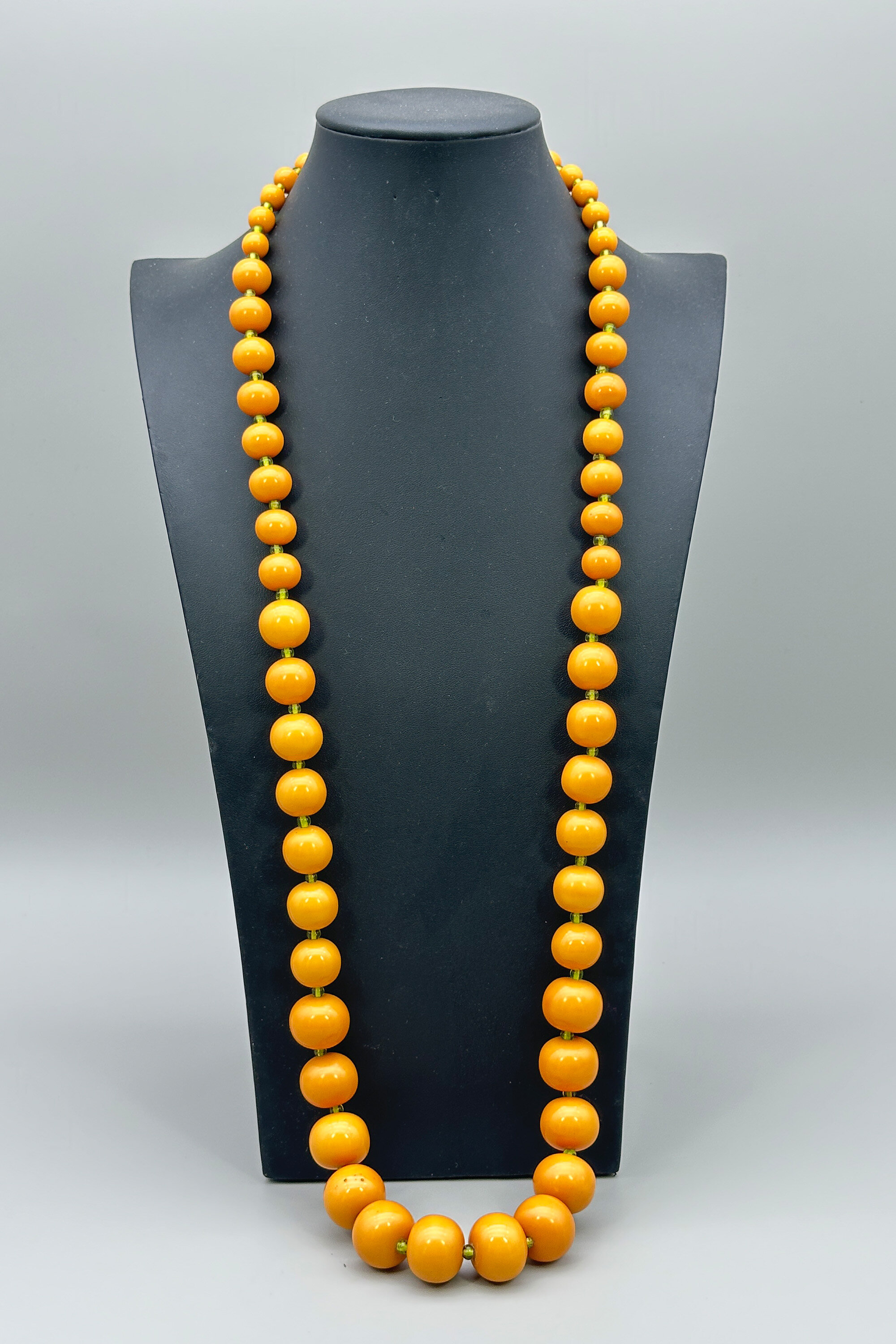
Long strand of butterscotch amber coloured beads c1960
Price: £25
This is a bold statement necklace comprising graduated round beads. These are made from an early plastic called Catalin. They have been Simichrome tested and they are not Bakelite. There are glass spacer beads and no clasp.
One of the beads has small pin prick holes as someone must have done a heated needle test for amber. See images.
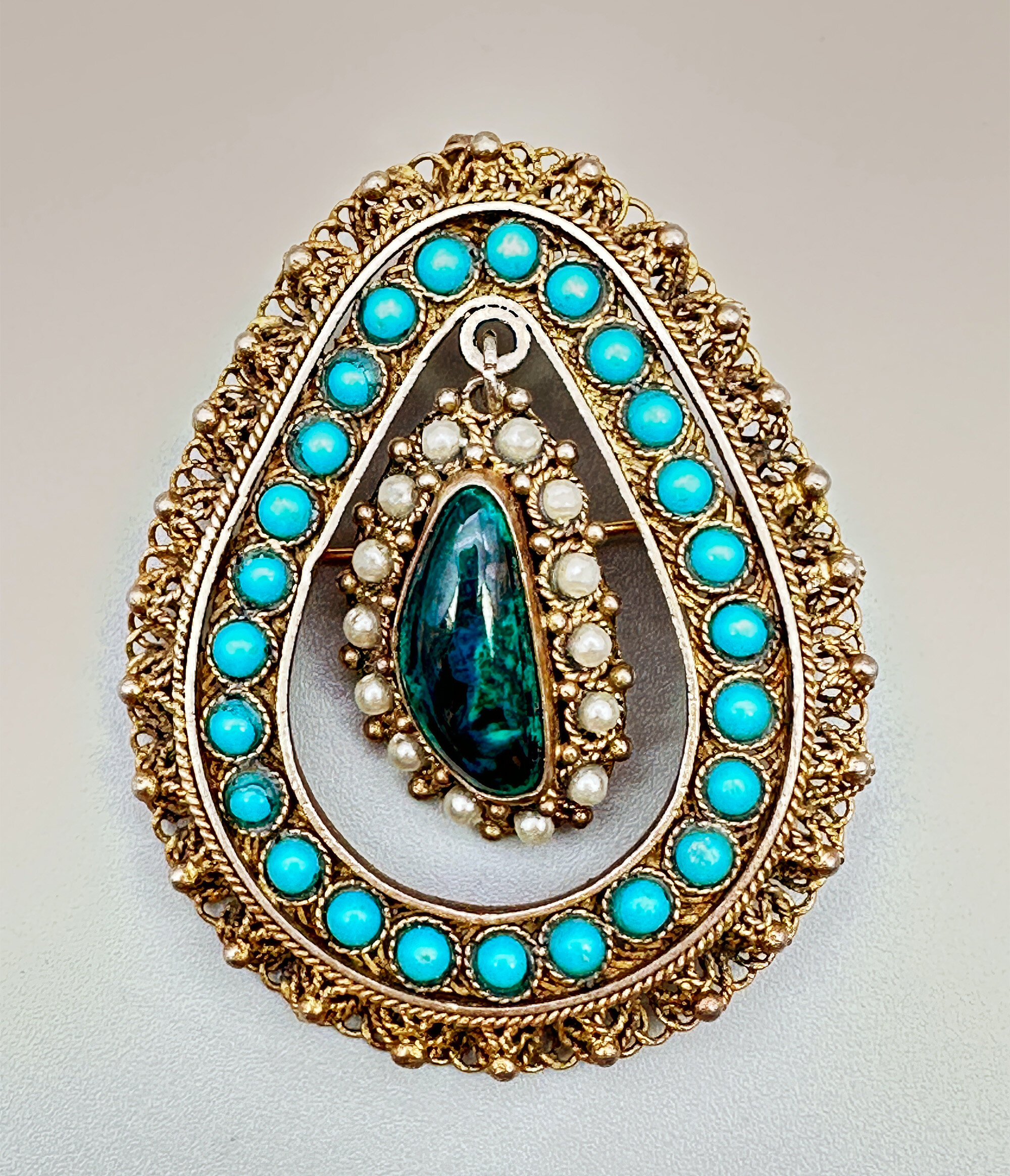
Jerusalem filigree silver gilt brooch/pendant c1950
Price: £55
This is a lovely example of filigree work. It is one of the hallmarks of Jeersualem silver. This brooch is very intricate work with inset faux turquoise, pearl and malachite stones. It is market rather illegibly but appears to be marked Israel 935.
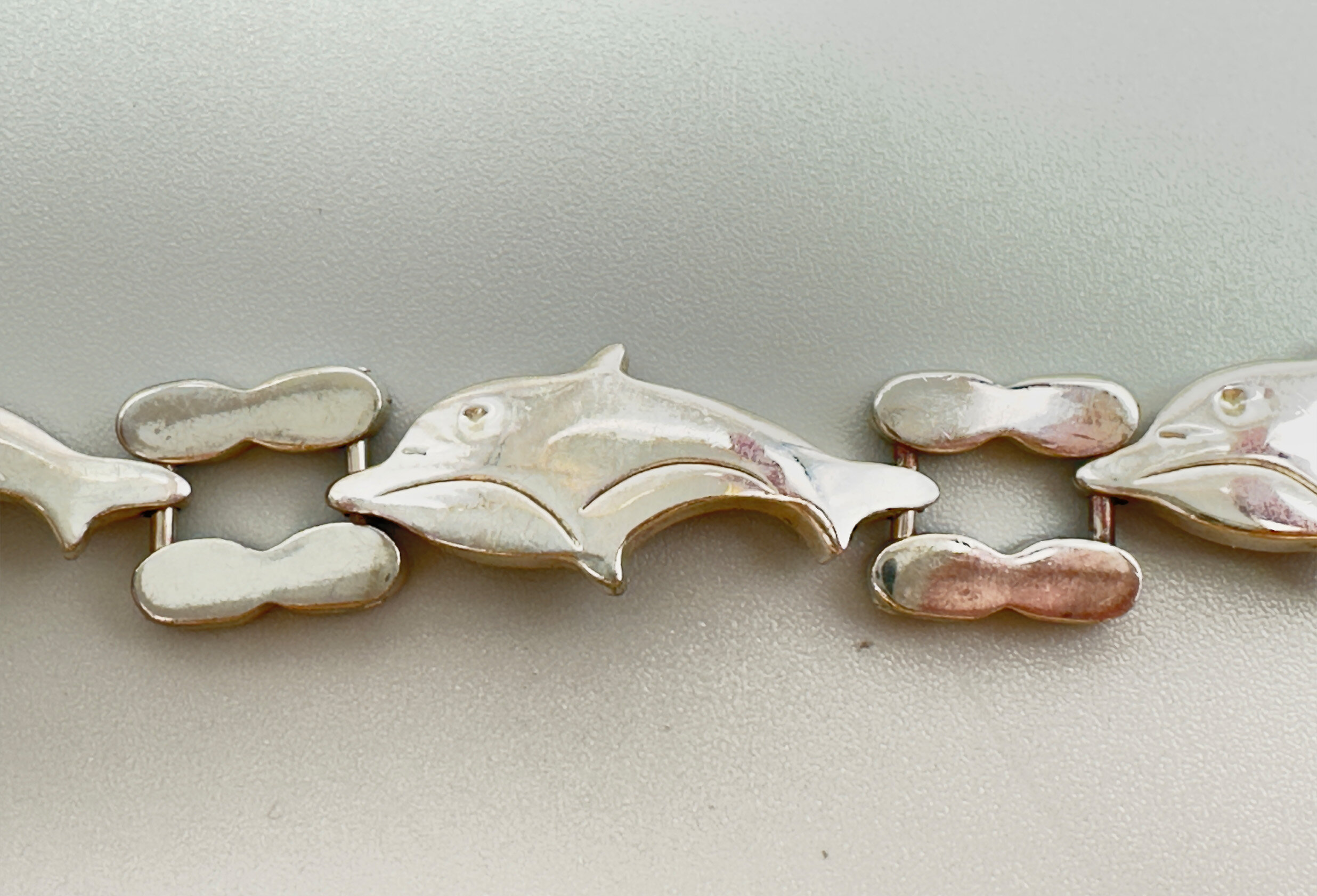
Mexican silver dolphin bracelet, c1980
Price: £55
This is a lovely bracelet that depicts dolphins frolicking. It is quite a heavy bracelet that has an intergrated clasp. It is made in Mexico although it does not appear to be made by a Taxco silver maker. The mark is partly illegible to it is difficult to pin down. It is marked 925.
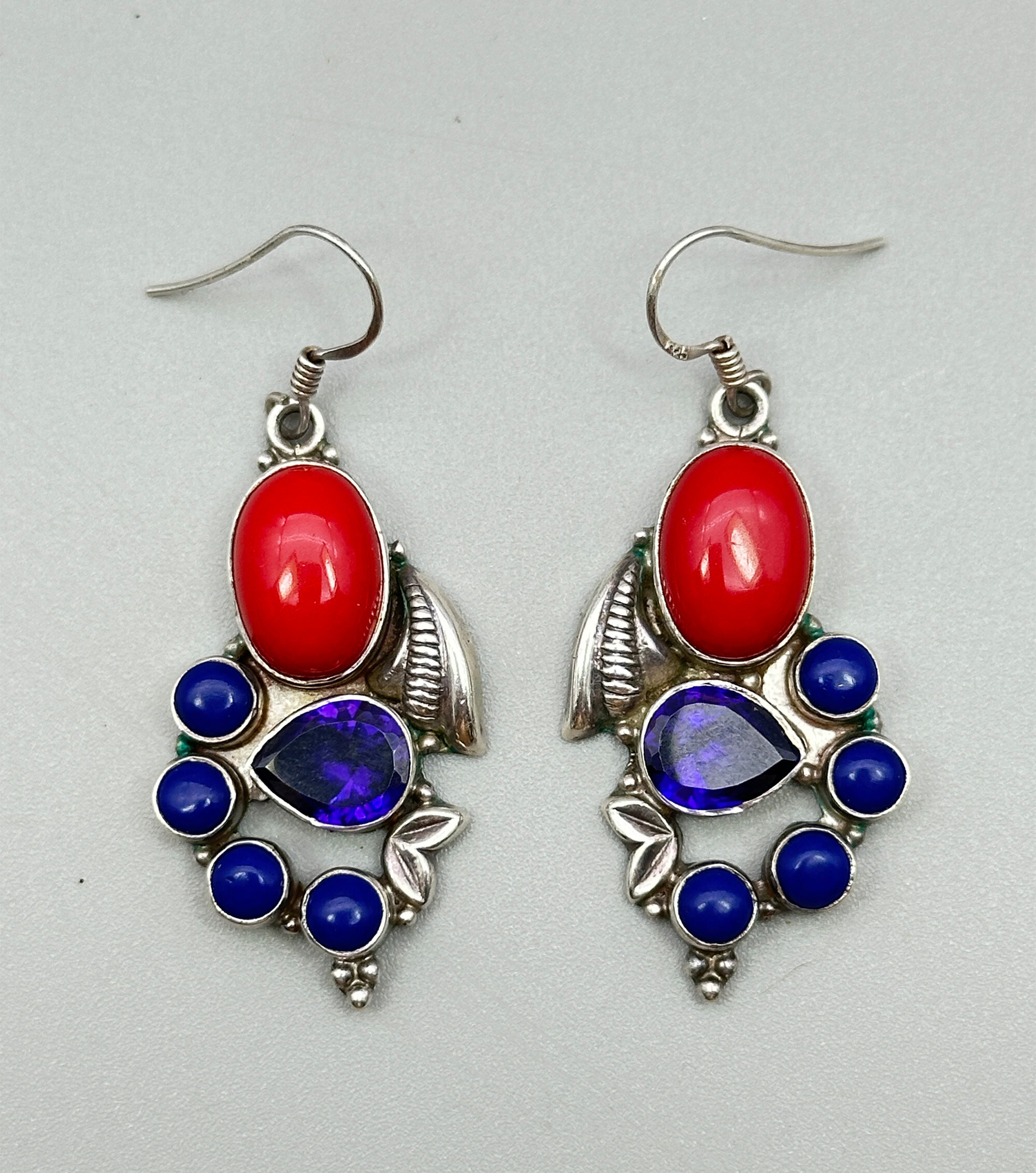
Coral, amethyst and lapis earrings c1990
Price: £65
These are a striking pair of earrings that have a lot of detail. There are large cabachons of coral with pear shaped amethysts and small lapis cabochons. This is set in a leaves and foliage deisgn. They are marked 925. They appear to be Indian in origin. The coral is most likely colour enhanced to give it that vivid colour.
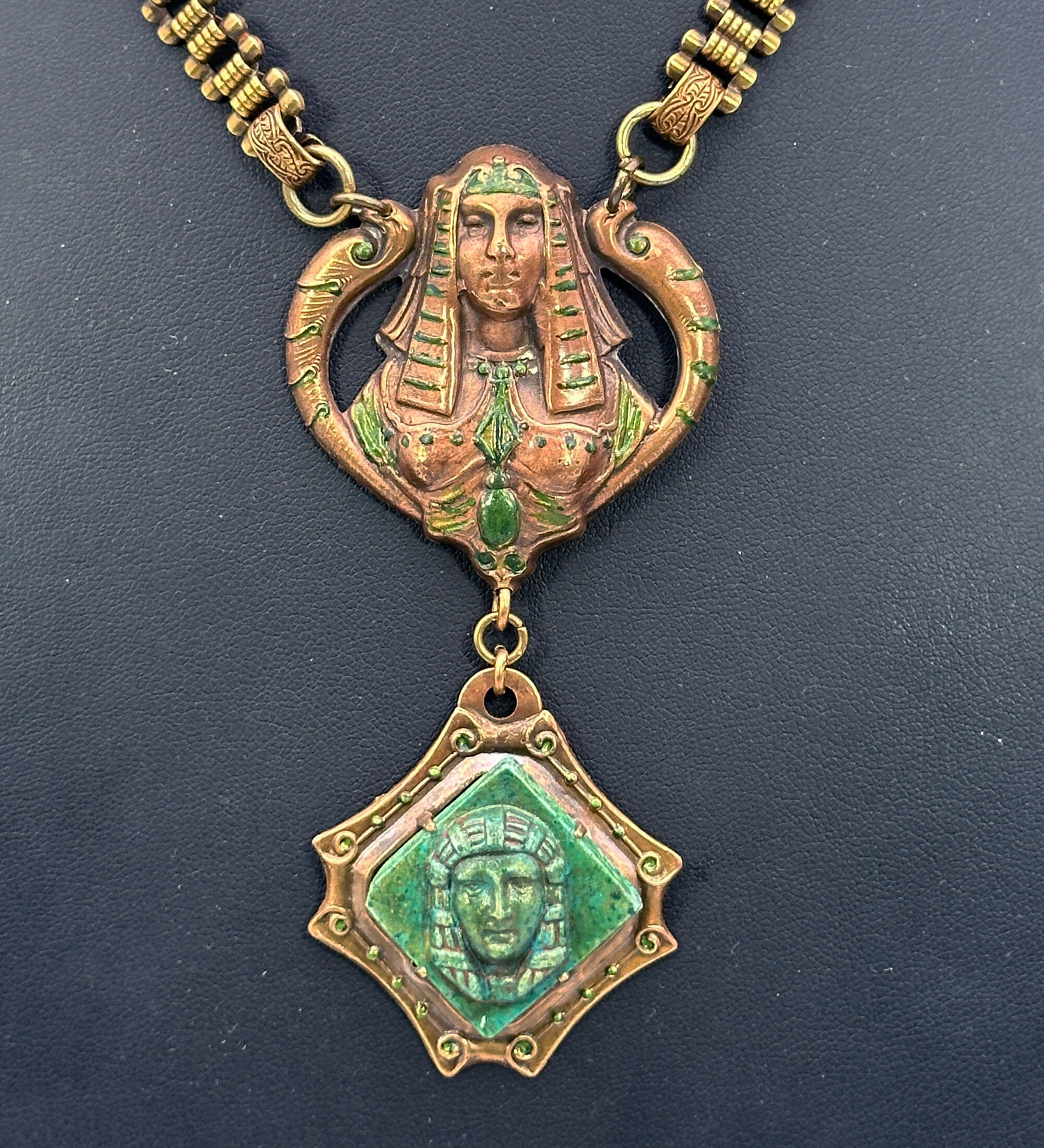
Early Neiger Brothers book chain necklace c1910
Price: £325
This is quite an early necklace by the Neiger brothers that features a large stylized central pendant depicting Sobekneferu or it might be conglomeration of different figures. This then has a hanging pendant with a molded glass plaque that depicts another Egyptian figure. The chain is interesting as it is a book chain style particularly popular in the Edwardian era.
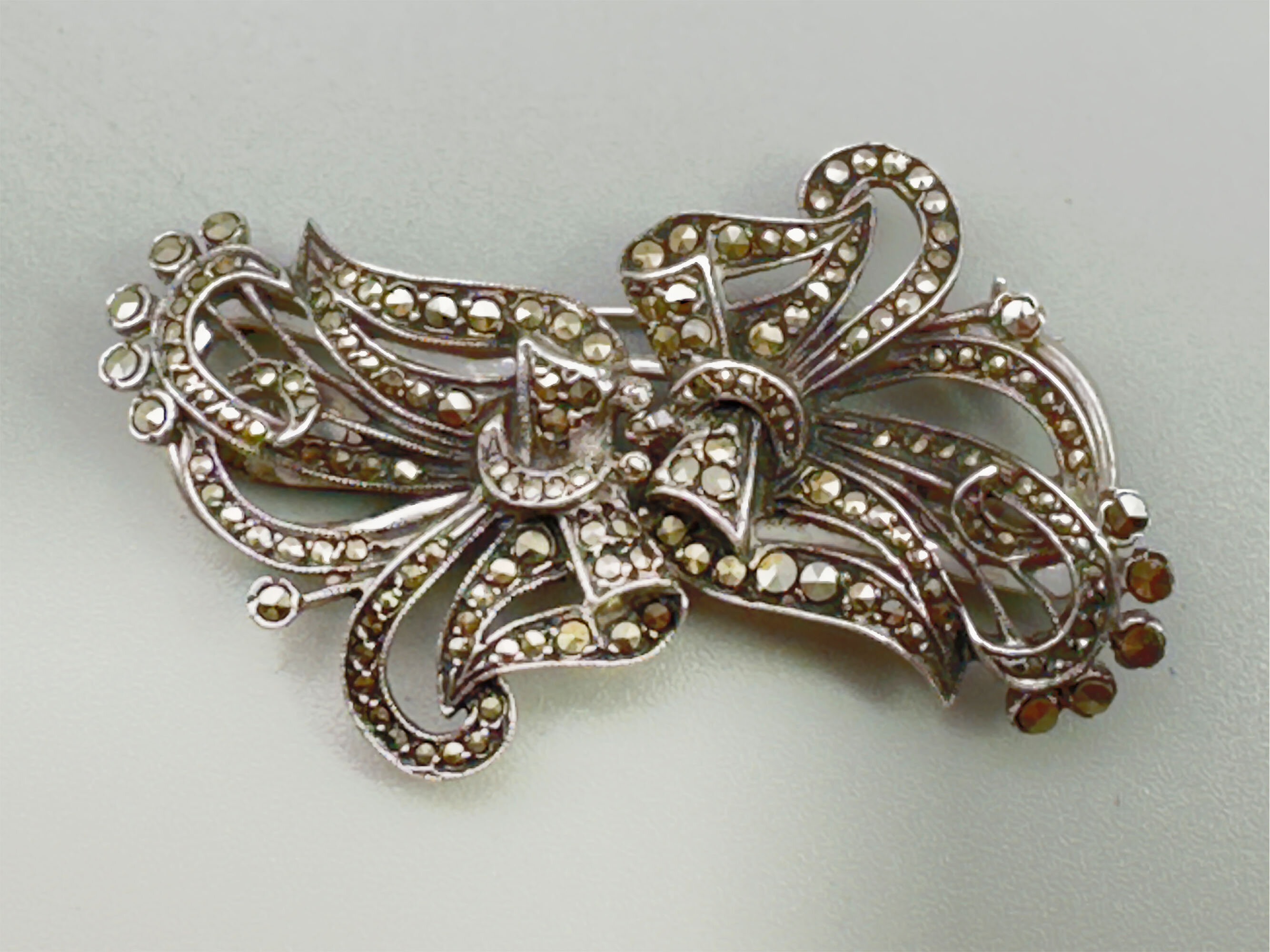
Art Deco convertible brooch dress clips c1930
Price: £95
This is a wonderful example of these types of brooches. It is silver and is set with very high quality marchasit stones. It is marked silver on both the piece and the clips.
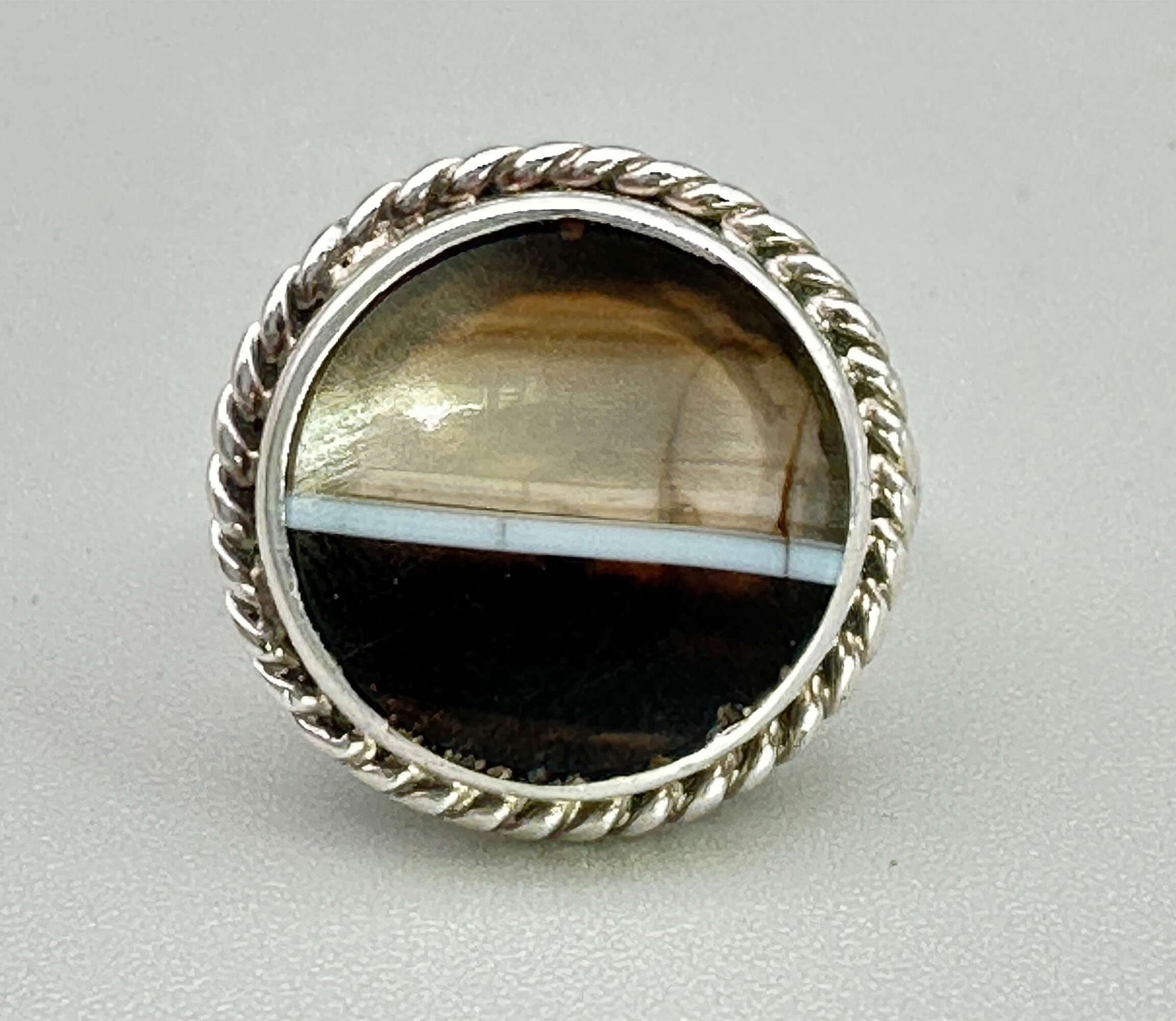
Art Deco concave cut agate ring c1930
Price: £55
This is a very usual ring due to its central stone. The stone is a typical Scottish agate that has been carved into a concave shape. It is set in silver and surrounded with milgrain work.
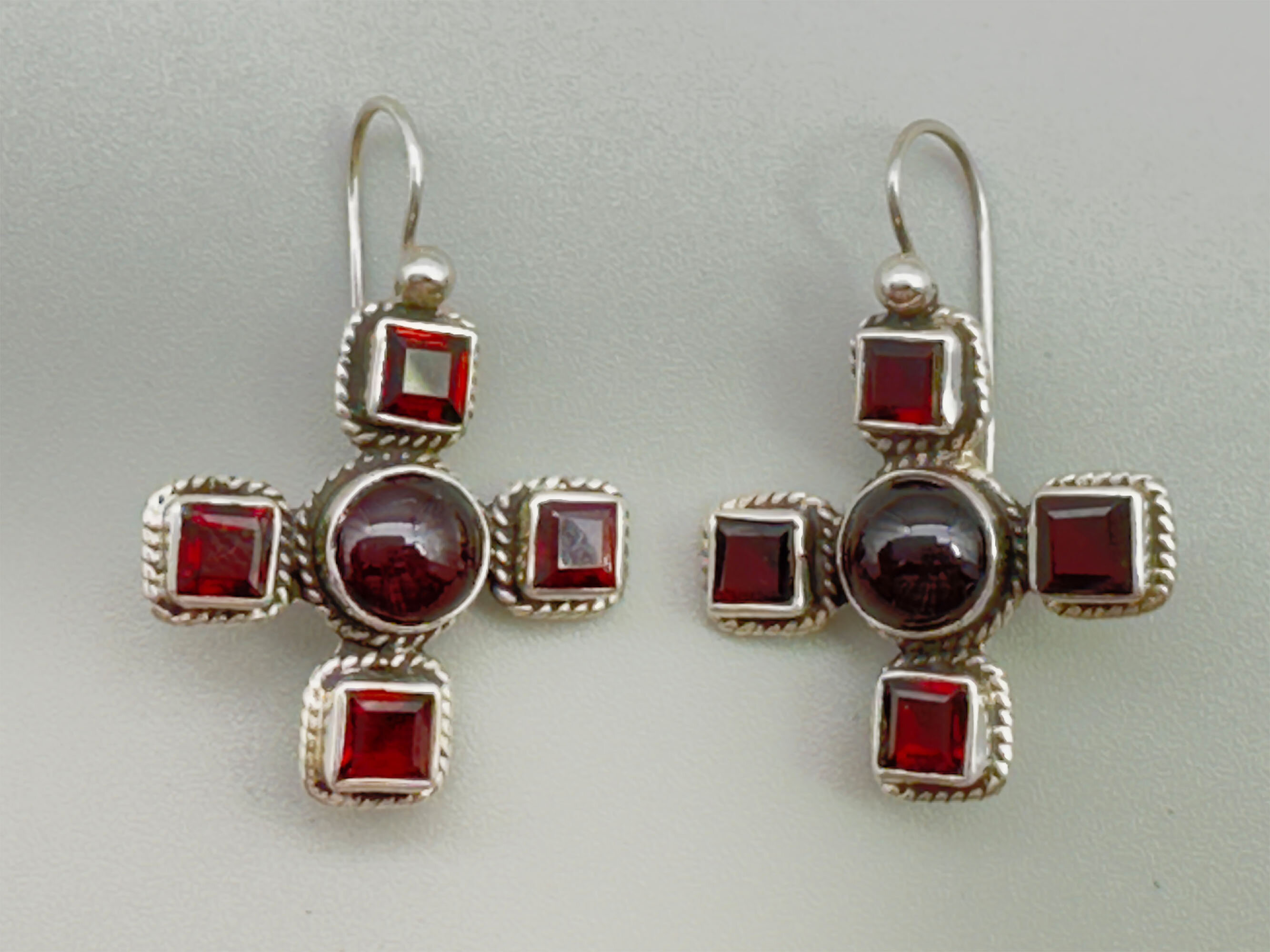
Etruscan style garnet cross earrings c1910
Price: £65
These are a lovely and delicate pair of earrings comprising square cut stones surrounding a large cabachon. They are marked illegibly. Most likely Italian in origin.
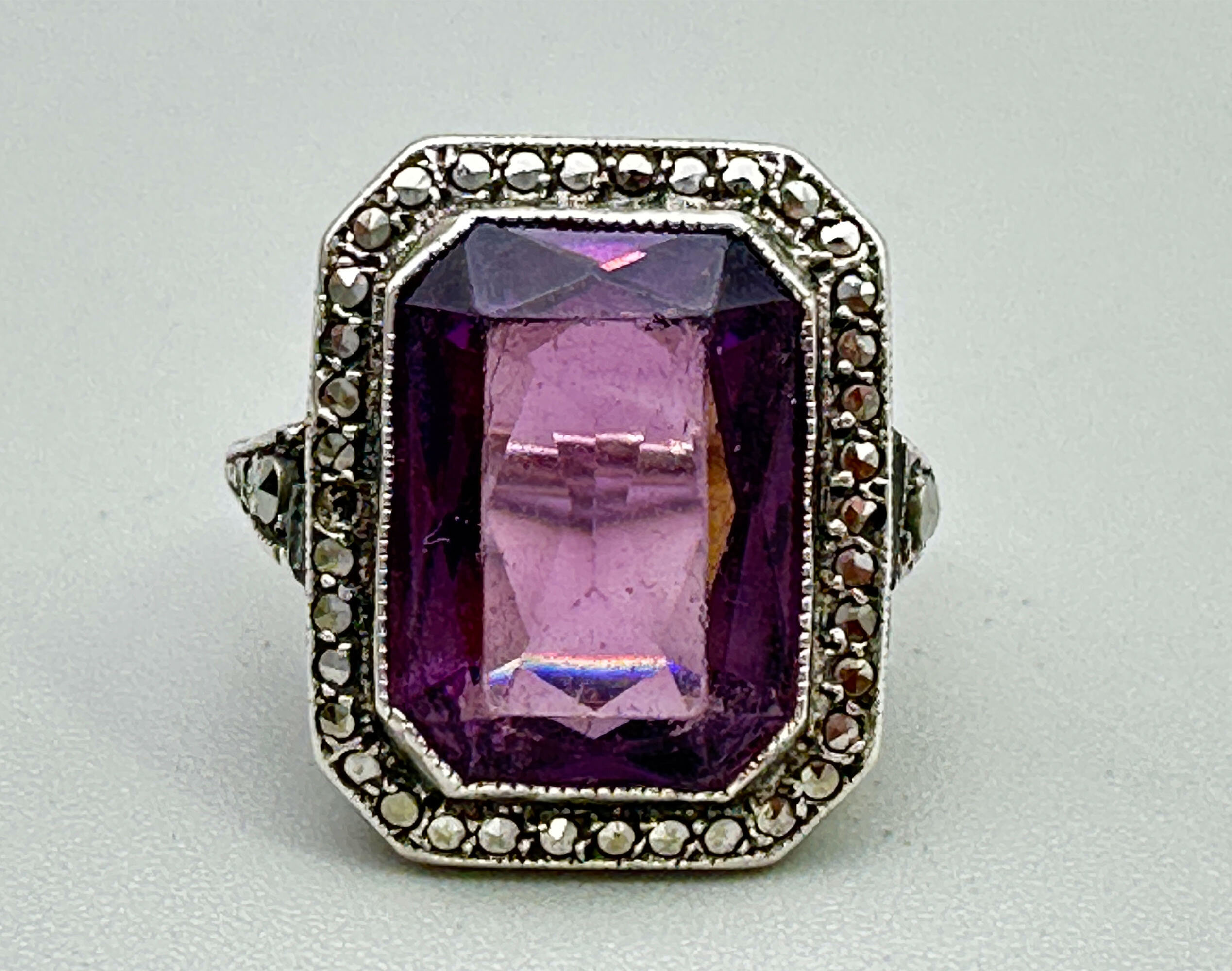
Art Deco silver ring with octagonal cut purple paste stone c1920
Price: £55
This is a very elegant ring made up of silver set with marcasite stones bordering a large octoganal cut purple paste stone. It is unmarked.
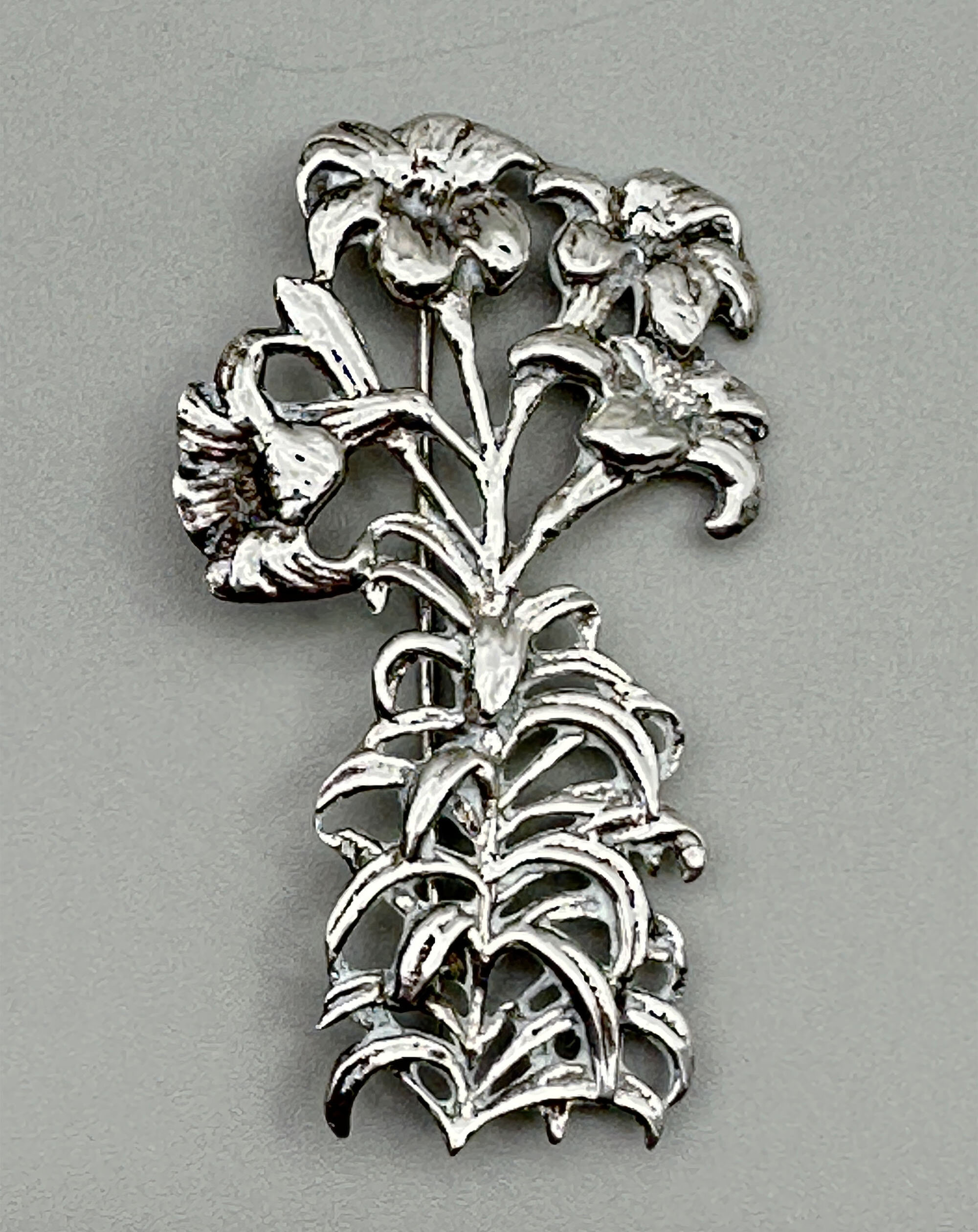
Art Nouveau style Lily bouquet brooch c1950
Price: £65
This is a large brooch with a lily spray design. It is marked 'silver' and there is a makers mark. The origin of this piece isn't clear.
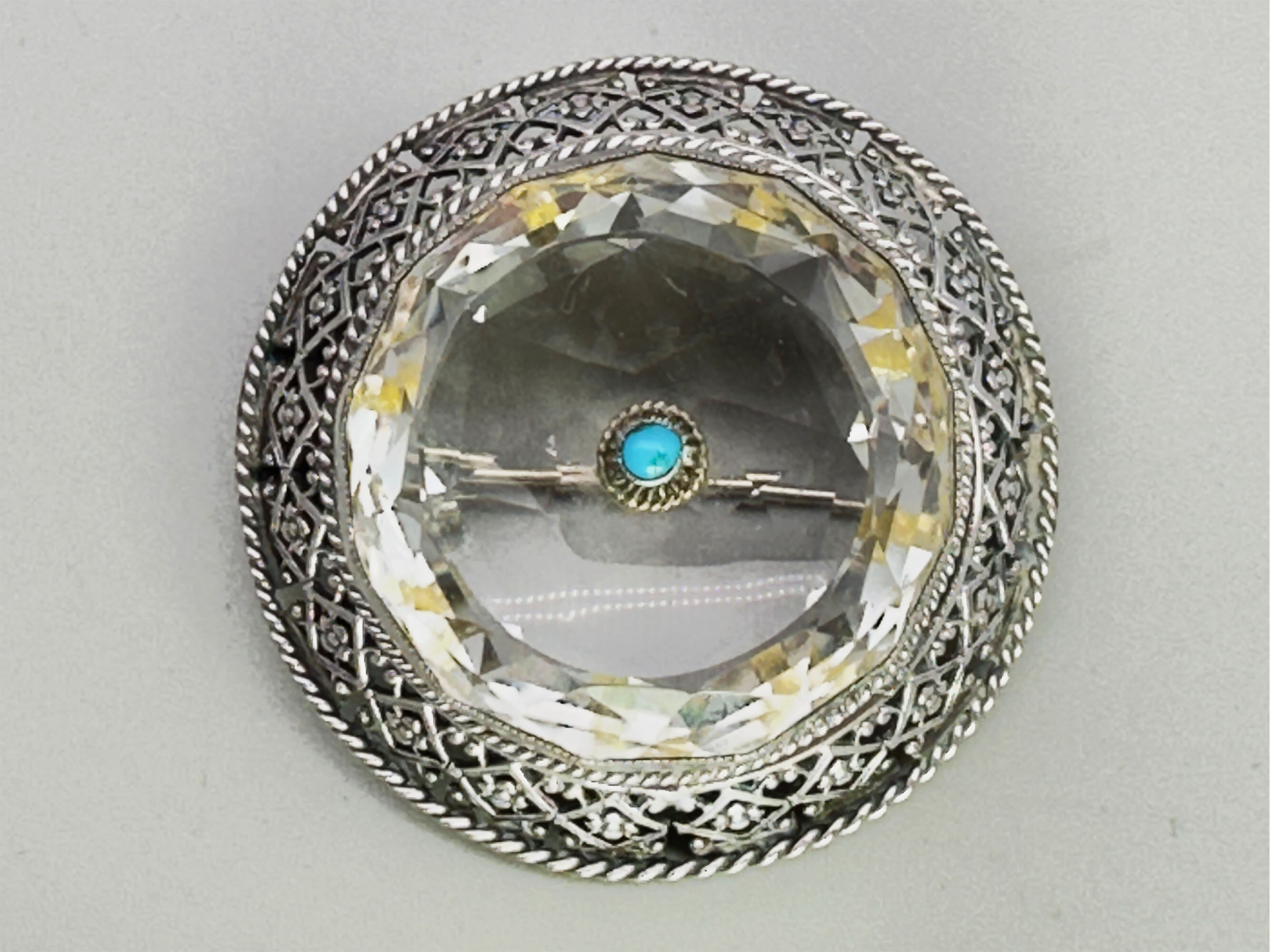
Etruscan style rock crystal and turquoise round brooch c1900
Price: £65
This is a very striking neck brooch comprising a very large facetted rock crystal stone drilled and set with a turquoise stone. It is unmarked silver. Probably Italian or Greek.
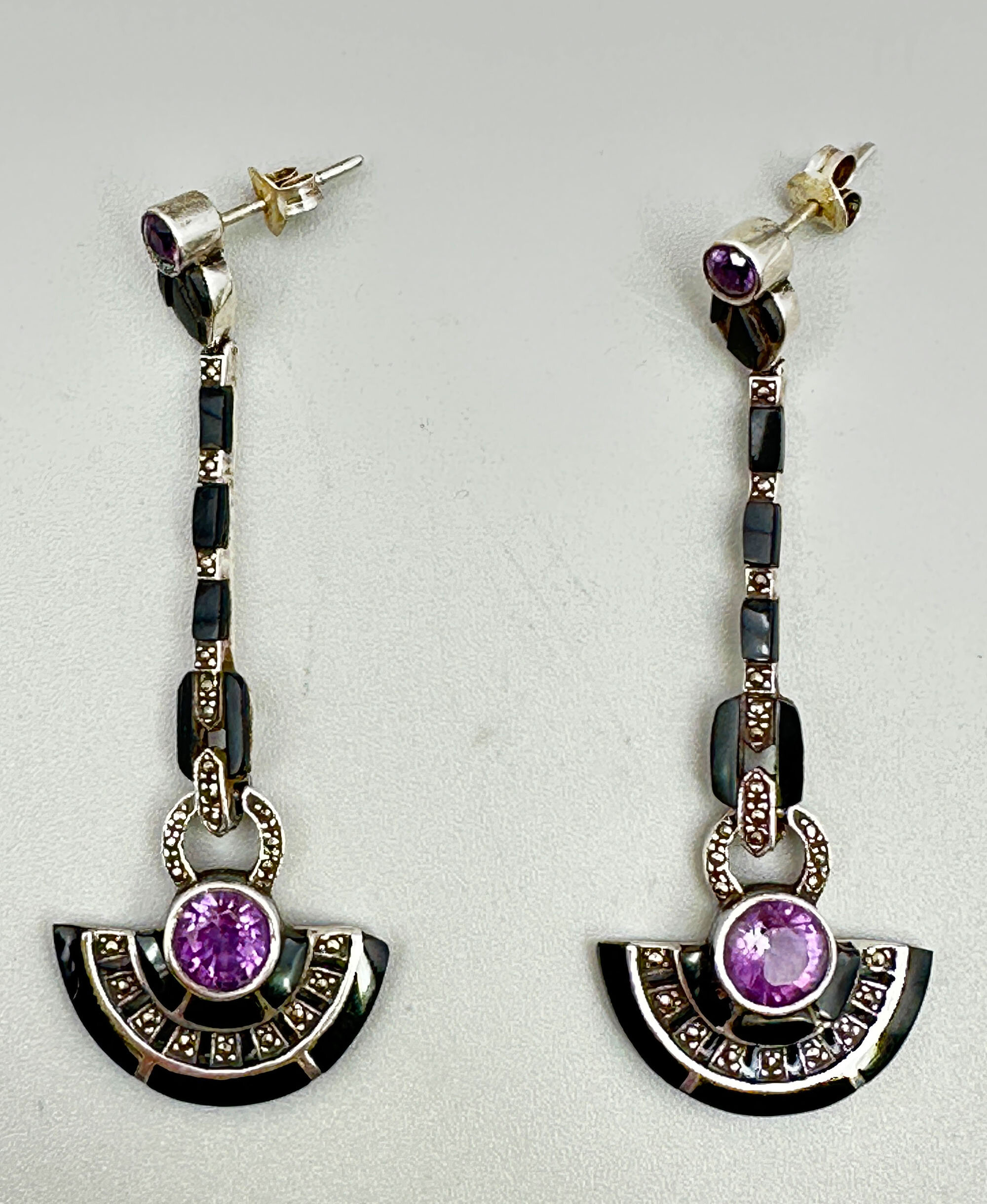
Art Deco style earrings with onyx and amethyst c1970
Price: £85
This is a pair of earrings that have a quintessential Art Deco design. They are set with onyx stones (not enamel), marcasites and amethysts. They are marked 925. These are not from the Art Deco period but show how popular these designs remain in the present day.
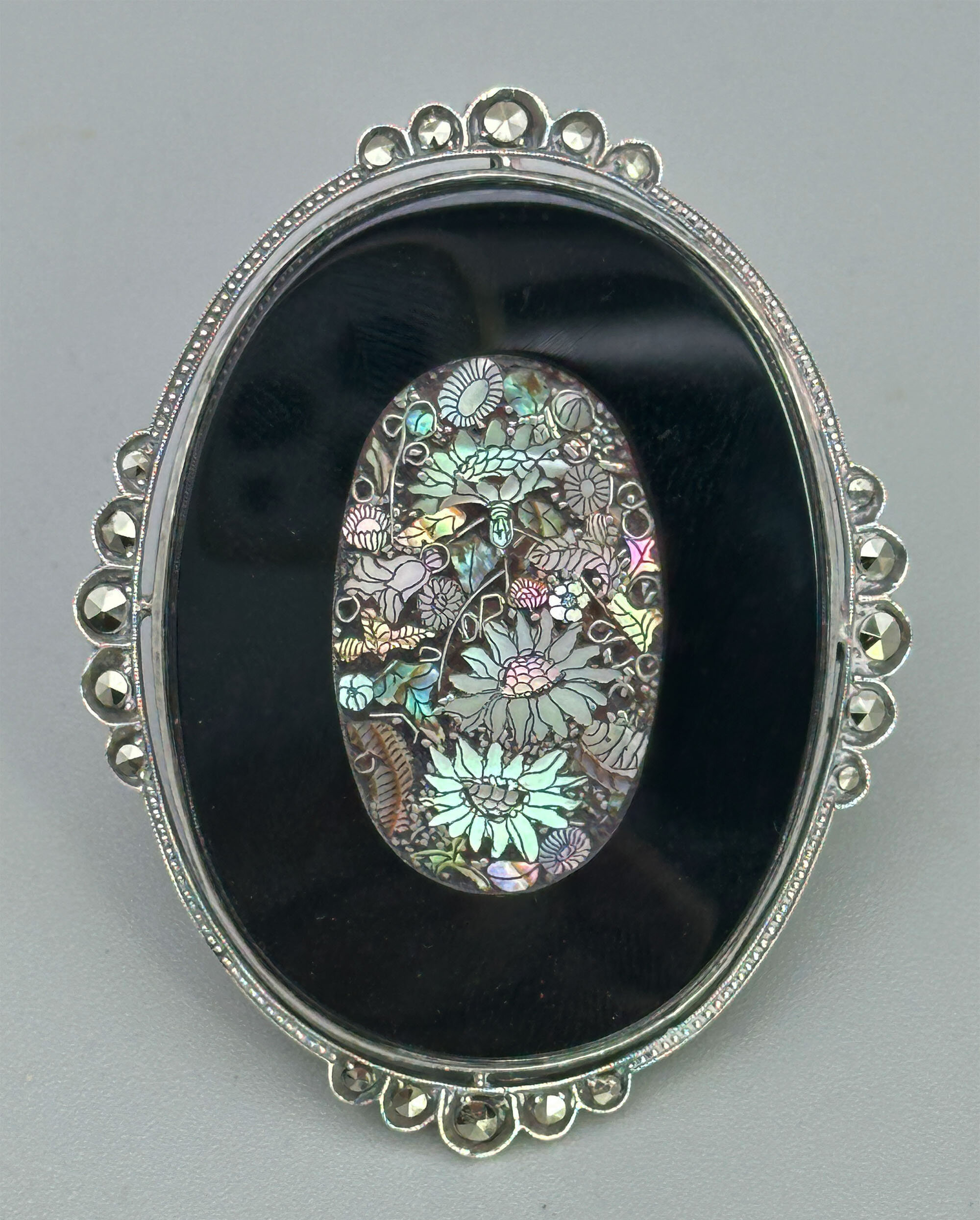
Art Deco brooch with Shibayama style mother of pearl plaque c1920
Price: £225
This is a very rare silver brooch comprising a large oval onyx stone set with a very detailed and fine carved mother of pearl plaque. This is either a nod to Japanese shibayama designs or it was indeed imported from Japan and set into the brooch. The floral pattern shimmers and dances with the light and there is so much detail. It is a real work of art. It is set wth marcasite stones around the edge. It is marked illegibly but it is continental. Most likely French or Belgian.
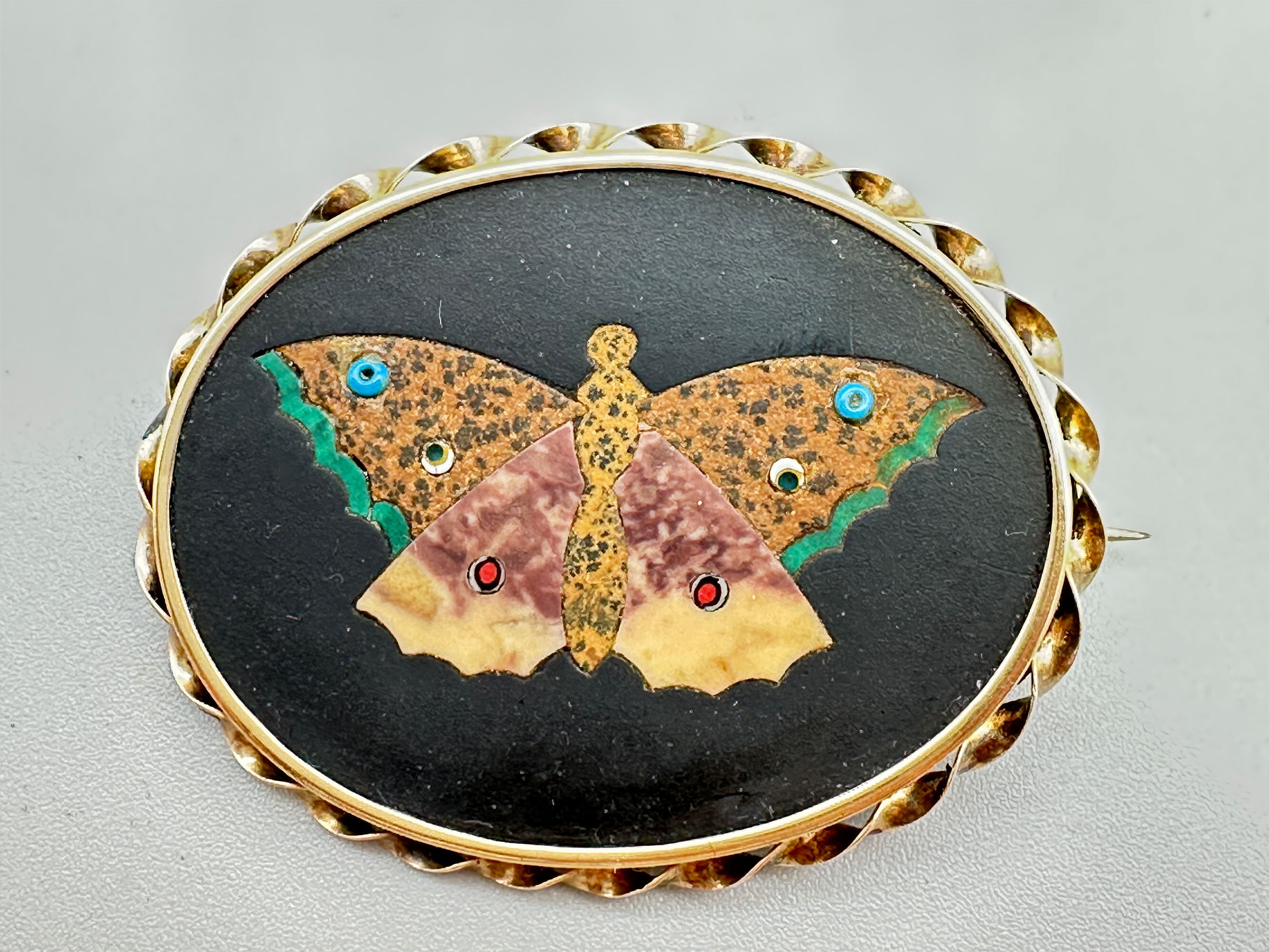
Pietra Dura jasper moth brooch c1920
Price: £175
This is a very rare pietra dura brooch that features jasper inlay in the shape of a moth. There are three types of jasper finished with malachite inlaid around the edge of the wings. There are also glass beads inset to imitate the typical markings on the wings. The panel is set in rolled gold in a typical rope twist design.
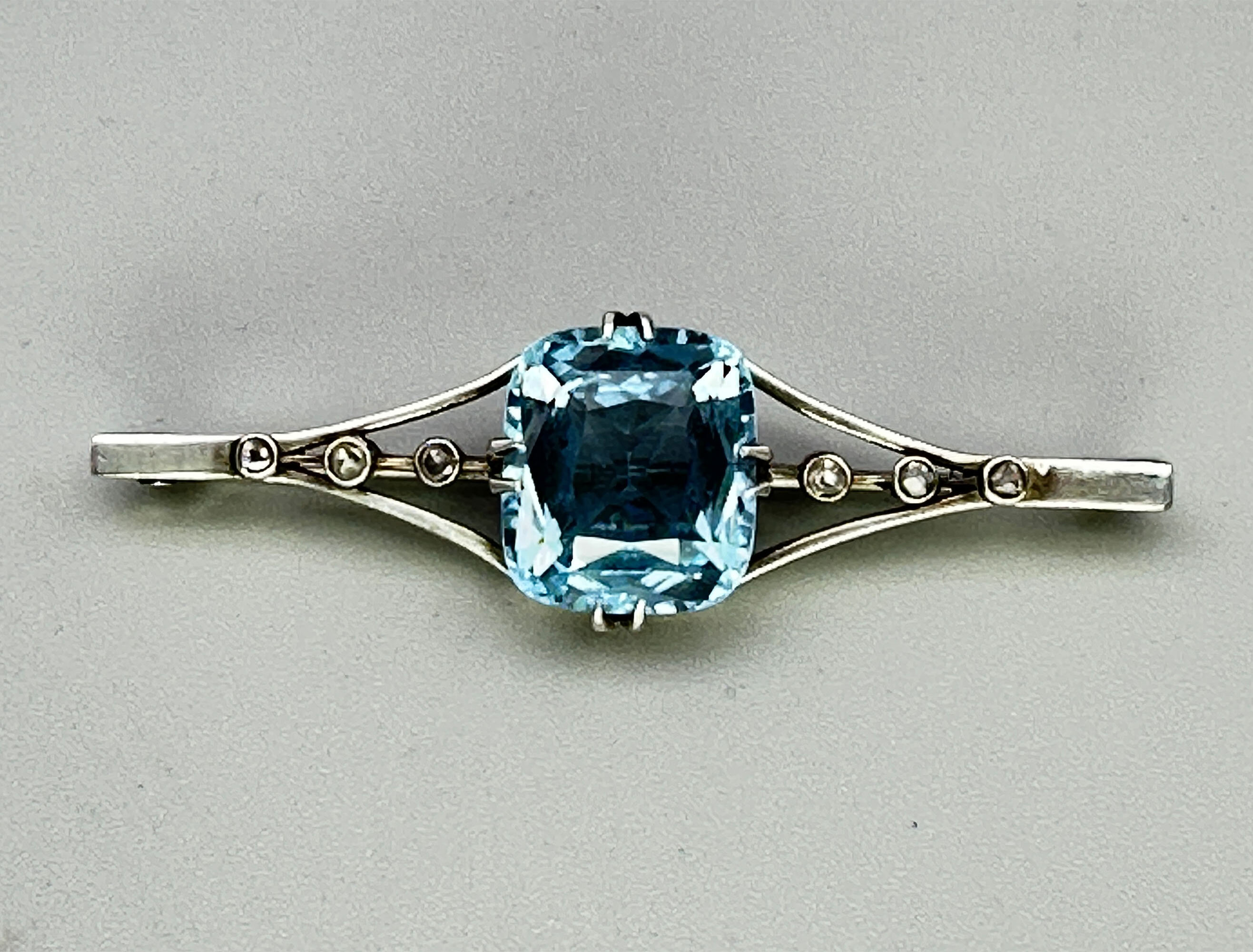
Art Deco brooch with large zircon stone c1930
Price: £175
This is a silver bar brooch set with European cut diamonds and a large blue zircon. It is set in an elegant Art Deco design that shows off the central stone. It is unmarked.
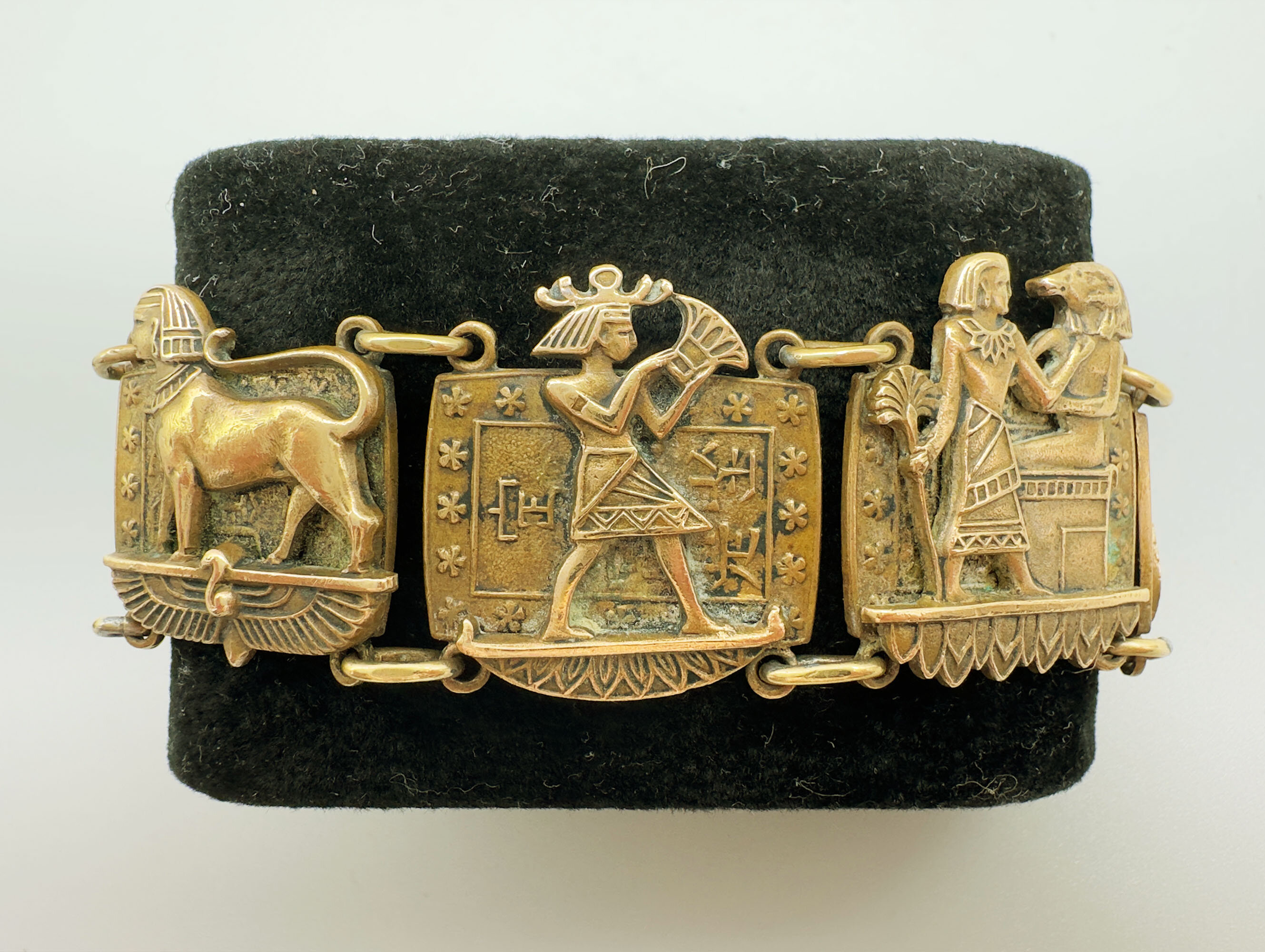
Egyptian Revival souvenir bracelet c1900
Price: £95
This is very beautiful bracelet comprising very detailed cast brass station depicting Egyptian iconography. This is most likely from the Paris Worlds Fair in 1900 that showcased Egyptian modernity, antiquities, and culture. There are six stations with a wonderful Tutankhamun charm at the closure.
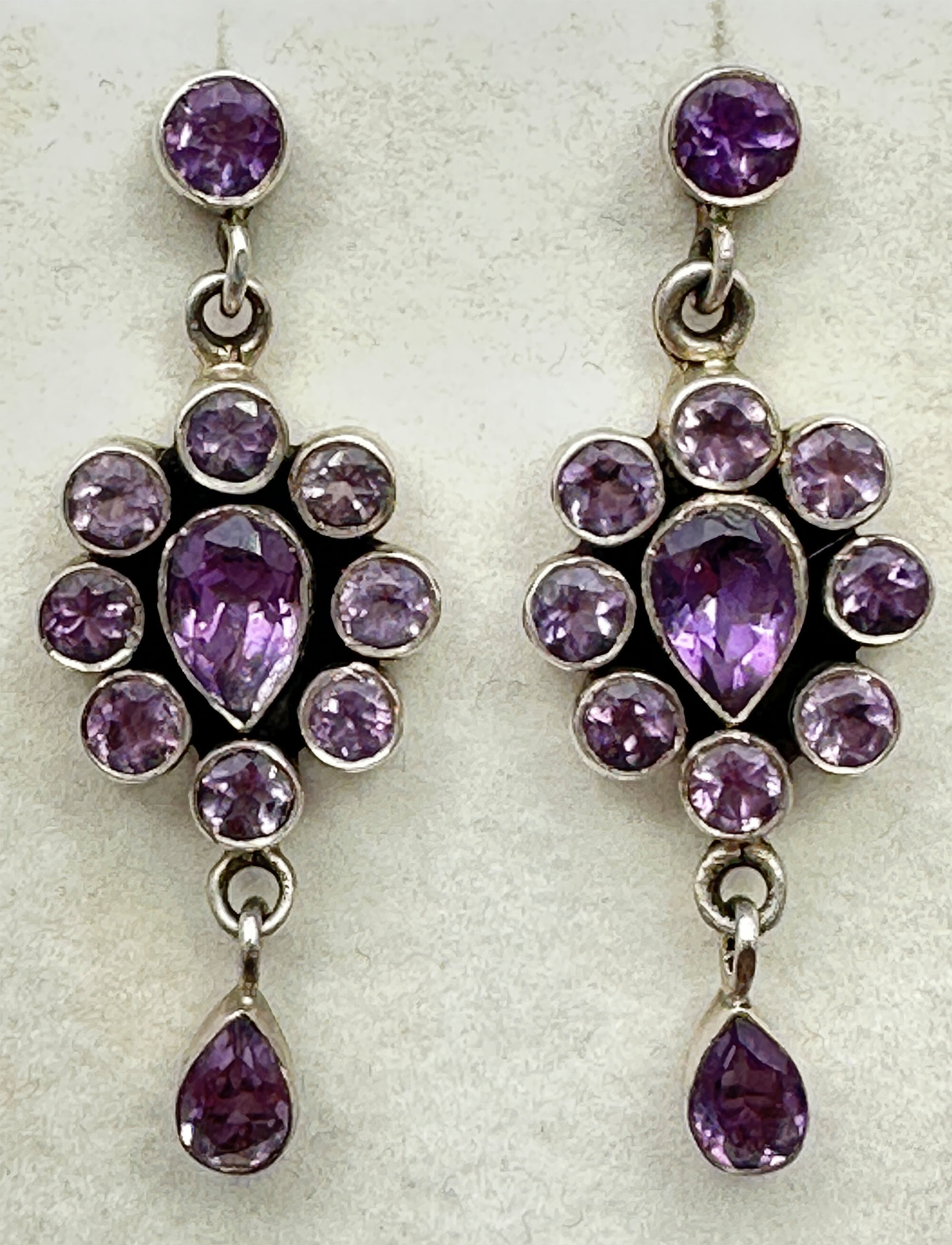
Pair of amethyst cluster earrings, c1980
Price: £65
This a quite indricate paid of earrings bezel set with 11 amethyst stones. The stones are great quality with lots of sparkle. They are post and butterfly and are marked 925. They are most likely Indian in origin.
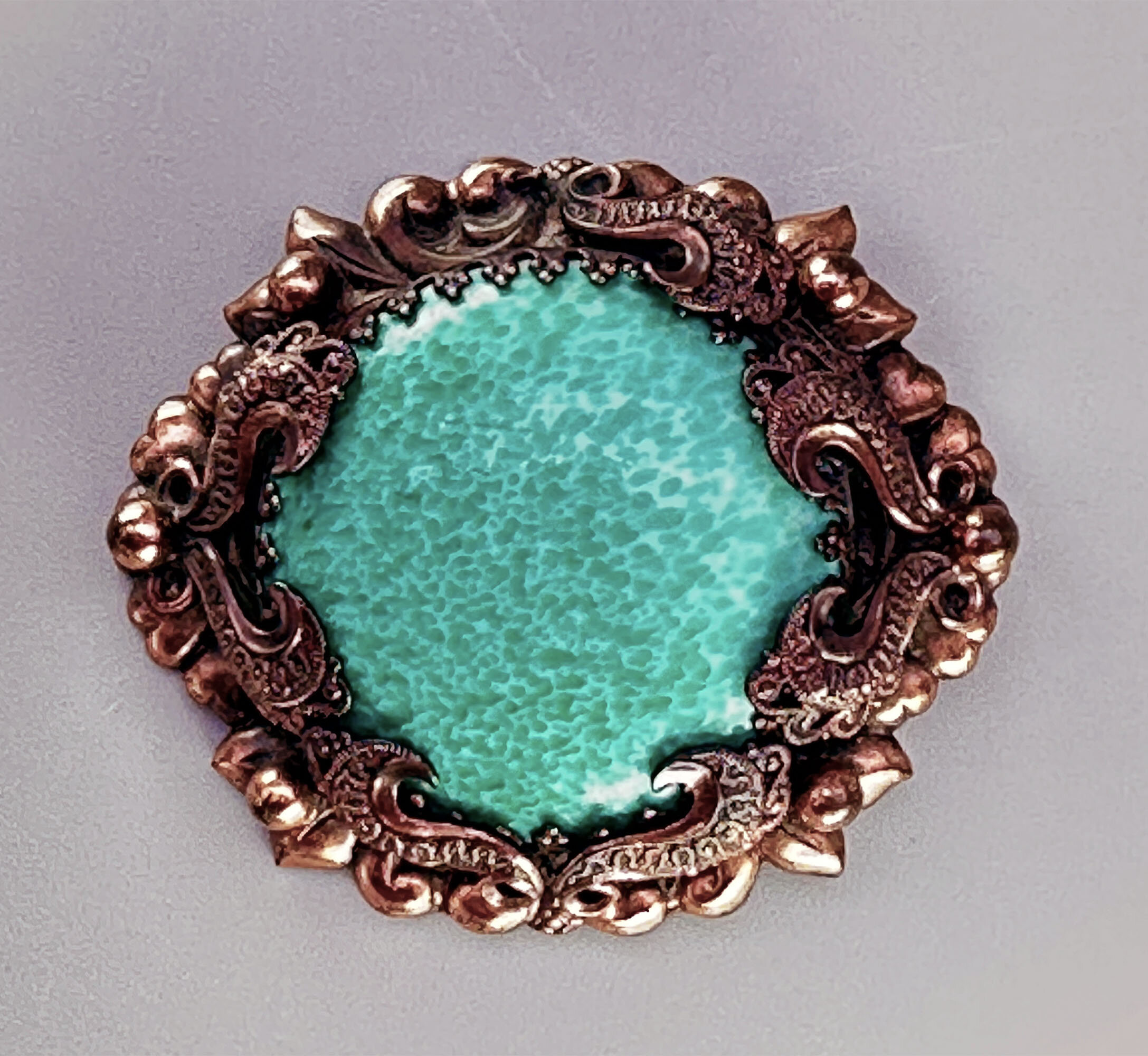
Large Peking glass brooch c1940
Price: £55
This is a very dramatic brooch that features a very intricate copper setting set with a very large Peking glass stone. The setting has a blackened effect that is somehow Victorian and modern at the same time. Another find for vintage collectors.
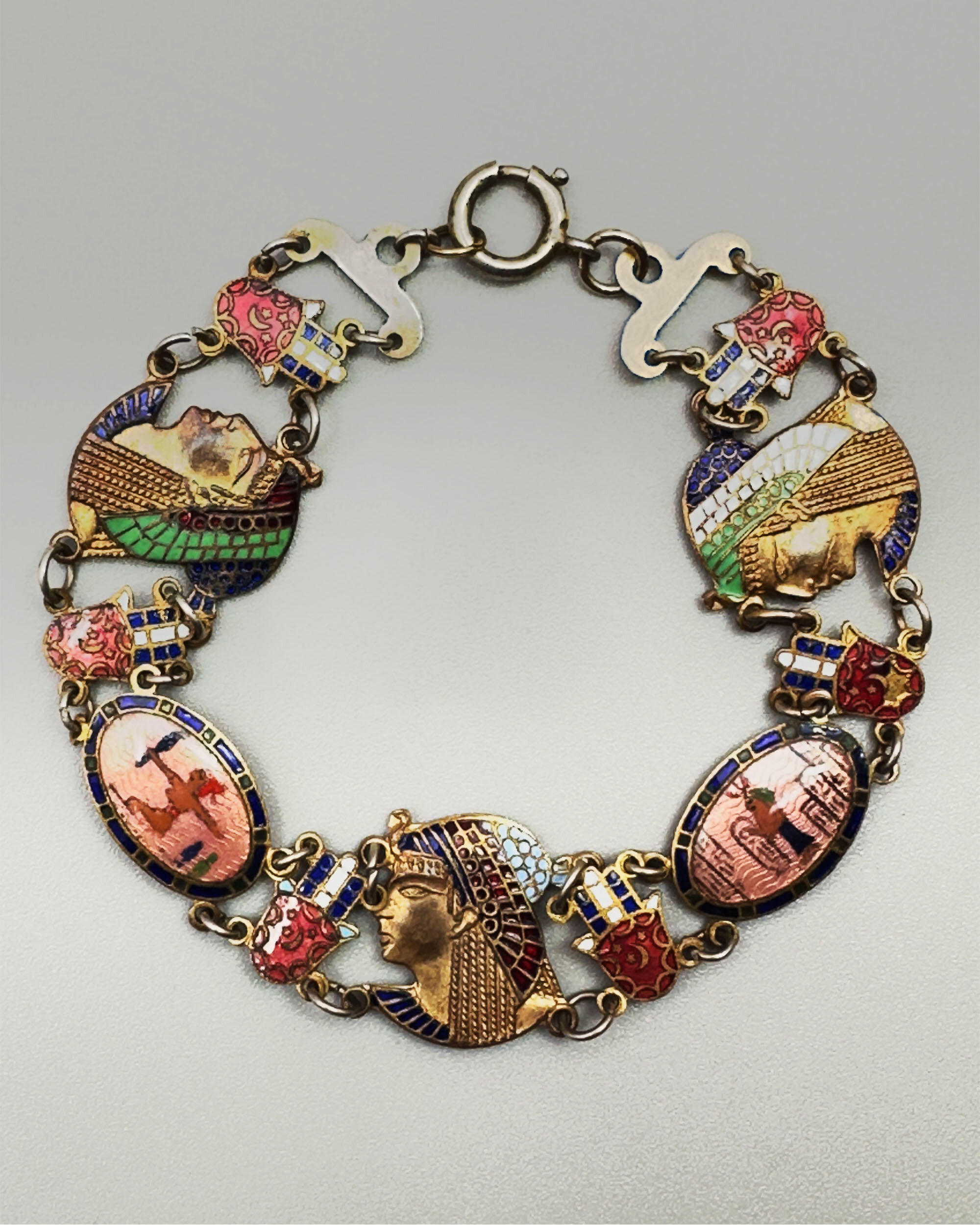
French enamel egyptian revival bracelet c1900
Price: £125
This is a very delicate bracelet comprisng stations with enamel work that depict Egyptian iconography. This was most liklely a souvenir from the Paris Worlds Fair in 1900 where Egypt featured prominently.
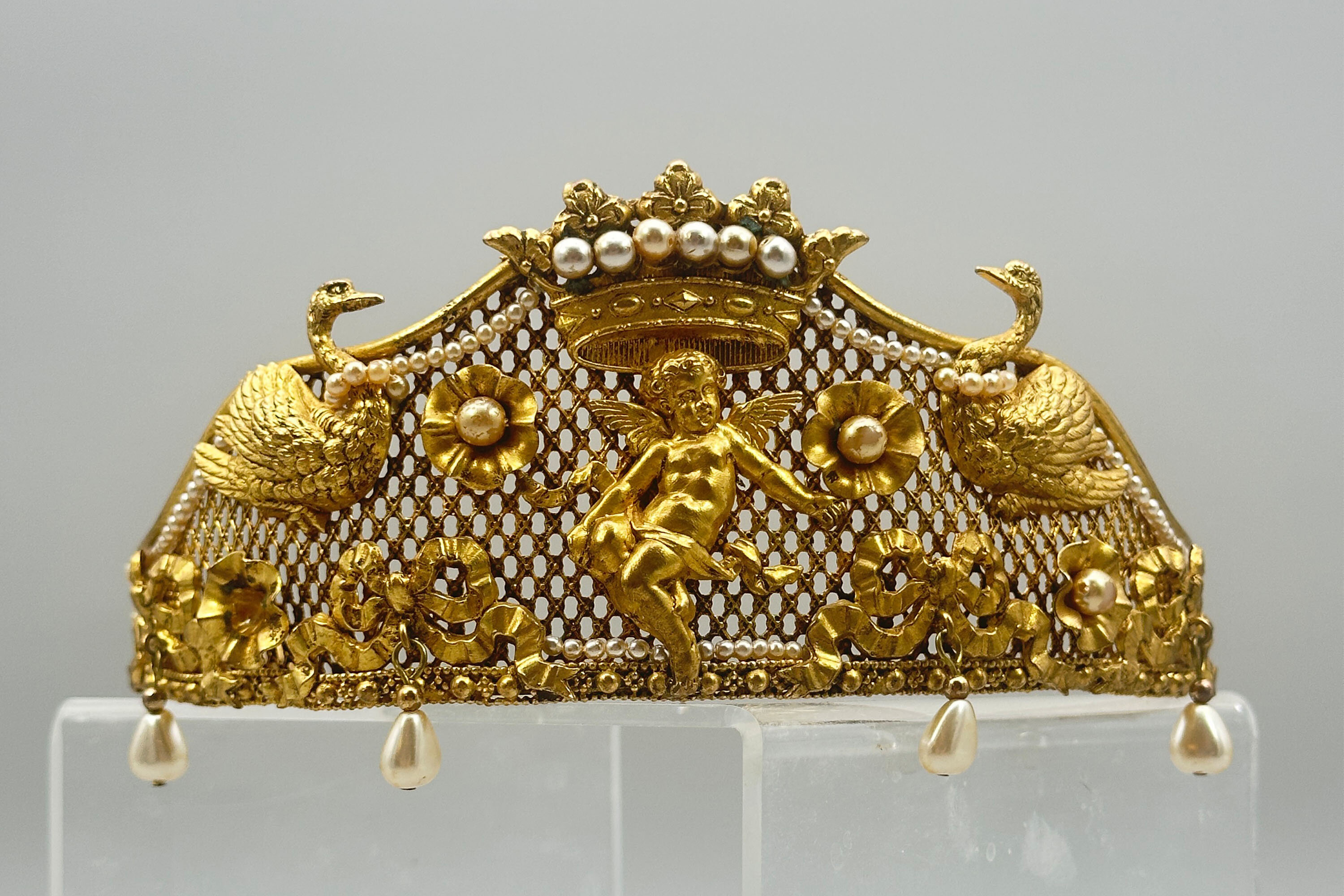
Unique Butler & Wilson Neoclassical Tiara 1980s
Price: £195
This is a very unusual piece of vintage Butler & Wilson from the 1980s. It is at the very least quite unique and it is possibly bespoke. It it extremely ornate and beautifully made with mounted festoons, putti and swans. It is finished with a large crown which is quintessential B & W. It is set with faux pearls. There are faux pearls that encircle the swans necks and hanging faux teardrop pearls along the edge. All this is built on a stiff mesh frame. It bears the Butler & Wilson mark.
As most people who love costume jewellery know, Butler & Wilson have been and are a powerhouse British brand that have been designing costume jewellery since the 1970s. Pieces like this one are quite collectable due to their age and design. There are many collectors around the world that collect both vintage and new pieces. This one is for you!
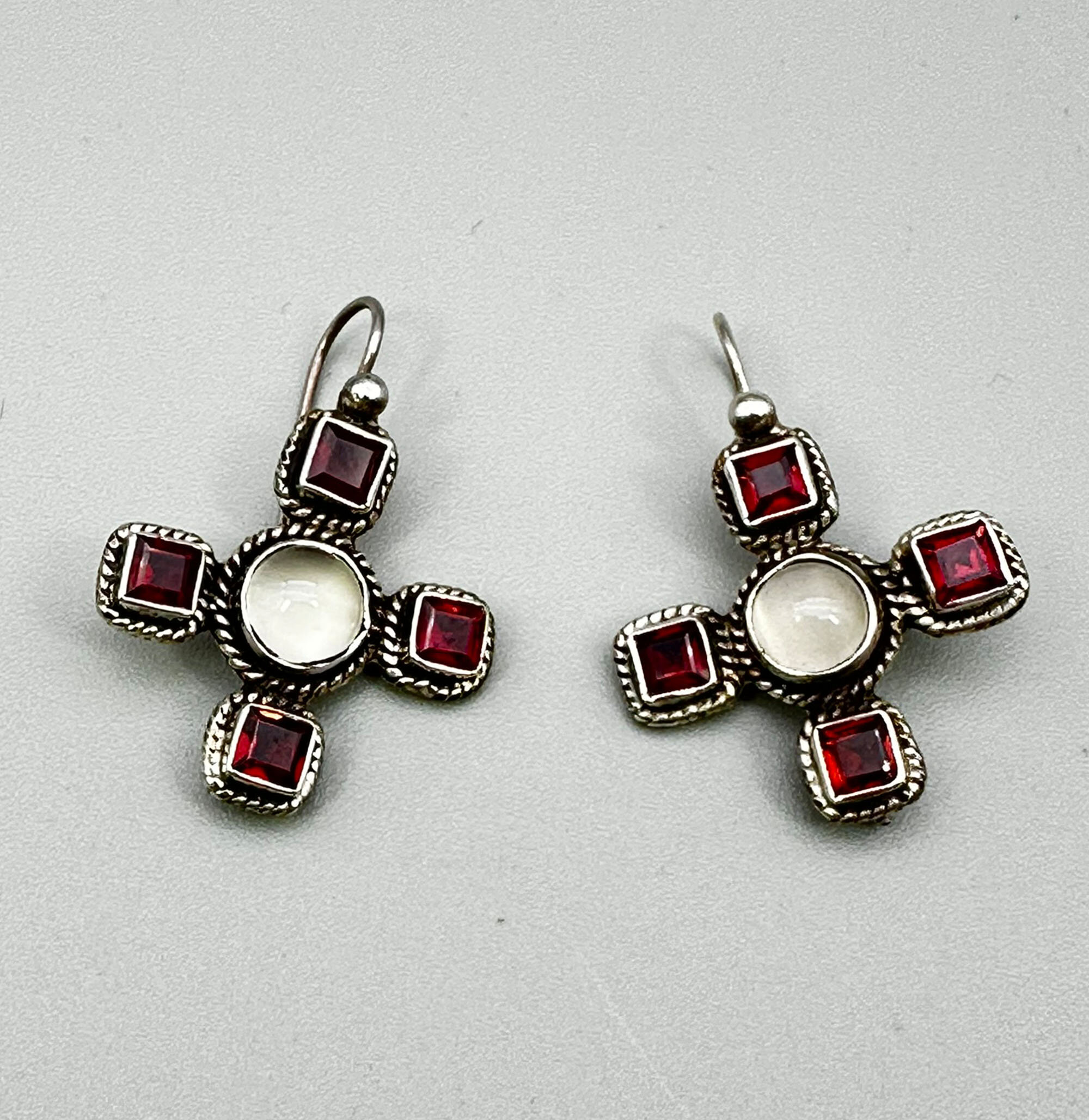
Arts and Crafts garnet and moonstone earrings c1910
Price: £55
These earrings are are wondeful quality. They are set with vibrant square cut garnets and finished with large moonstone cabachons. They are set in silver with millegrain work. They are marked 925.
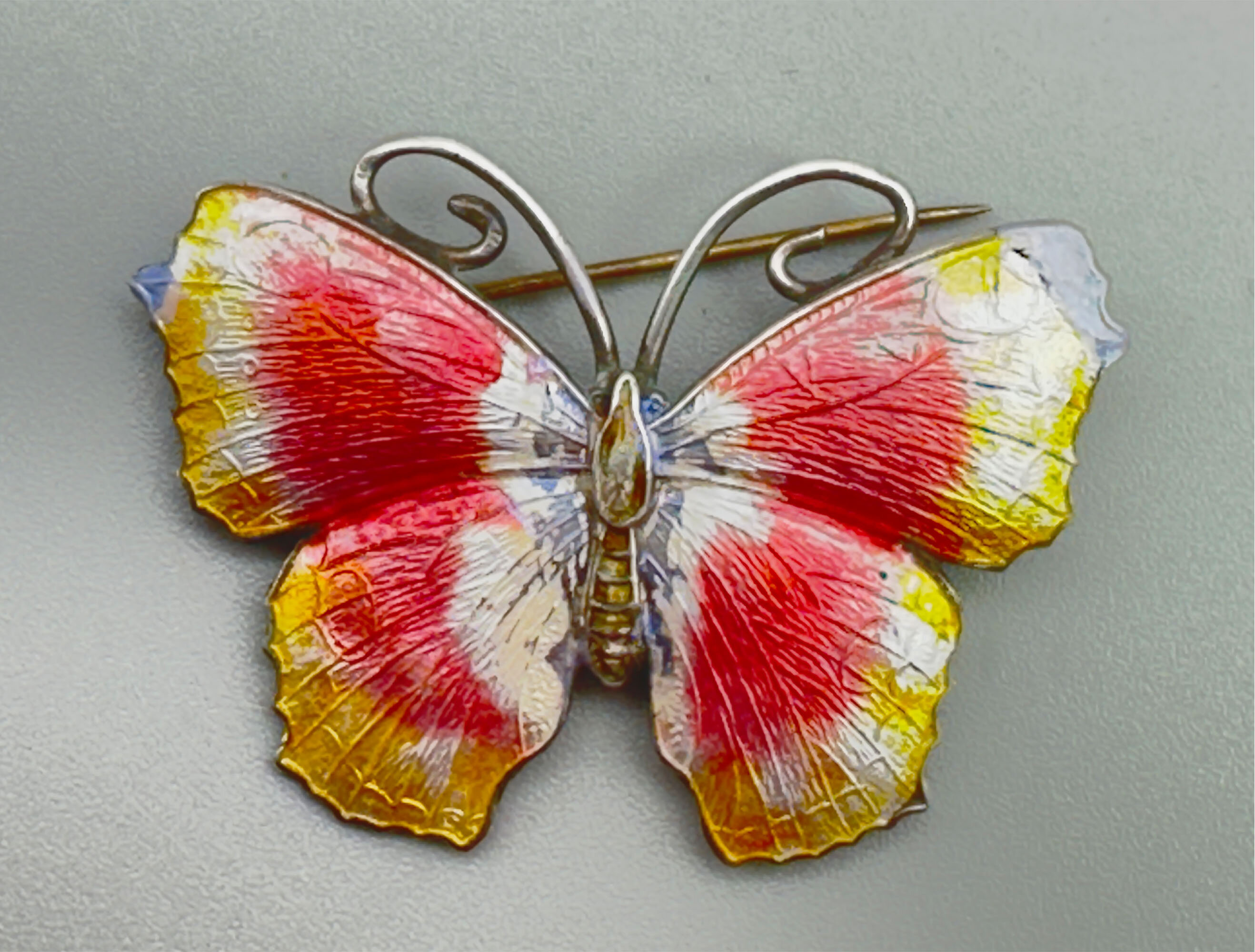
Pink and yellow enamel butterfly brooch, Norway c1950
Price: £45
This is a very lovely quality guilloche enamel butterfly brooch in pink, yellow and lavendar. It is from Norway and can be attributed to Hroar Prydz but it is not marked with his mark so it could be from another workshop. This design was very popular so there would have been those who made similar designs. It is marked Sterling.
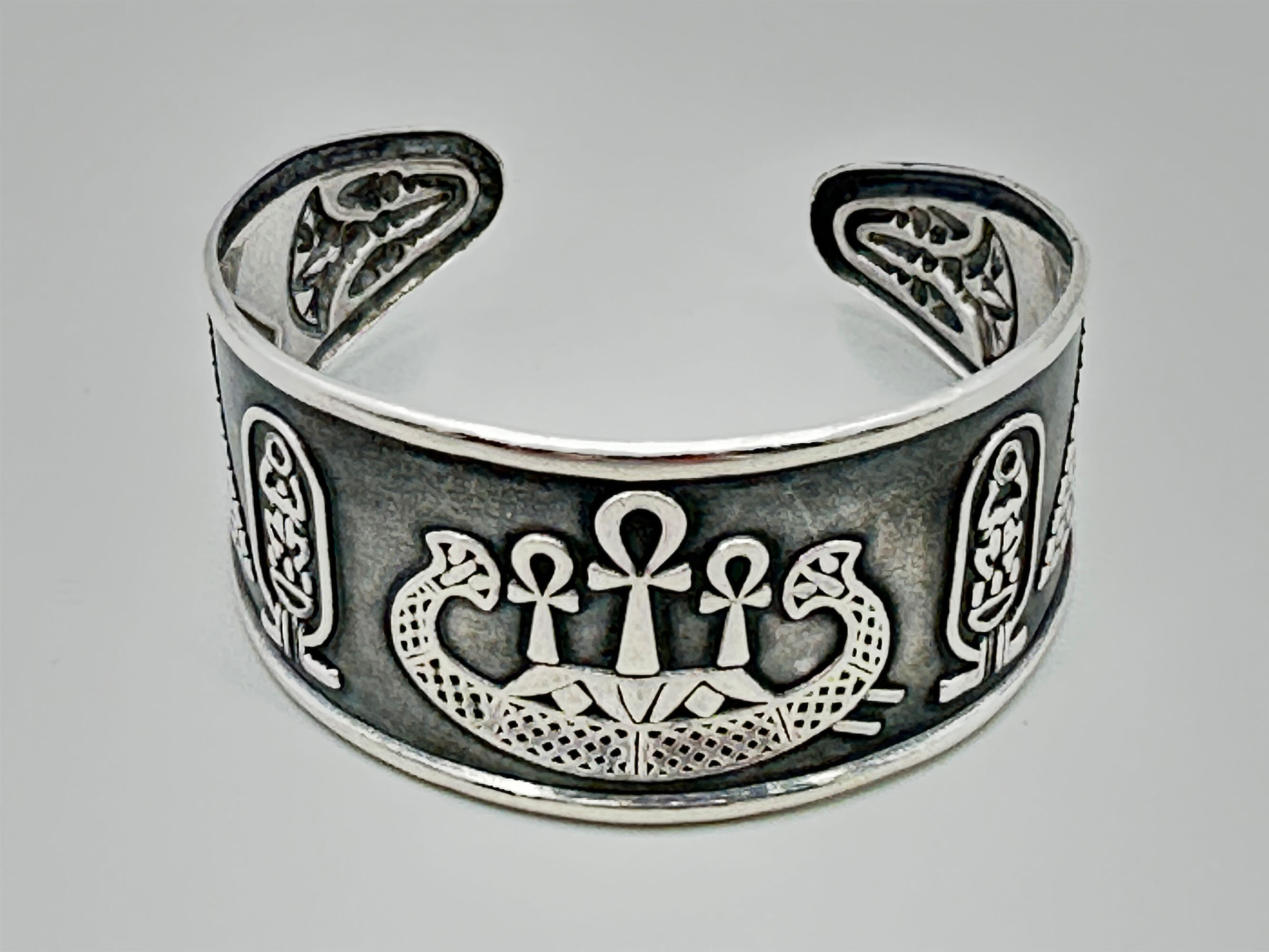
Egyptian cuff bracelet c1970
Price: £65
This is a very detailed Egyptian silver cuff bracelet that depicts many of the Egyptian hieroglyphic symbols such as the Anke, Scarab, Cartouche and Pyramid. These symbols are raised with the background being oxidized. It is unmarked, although Egyptian hallmarks can be very small and well hidden. It tests as silver.
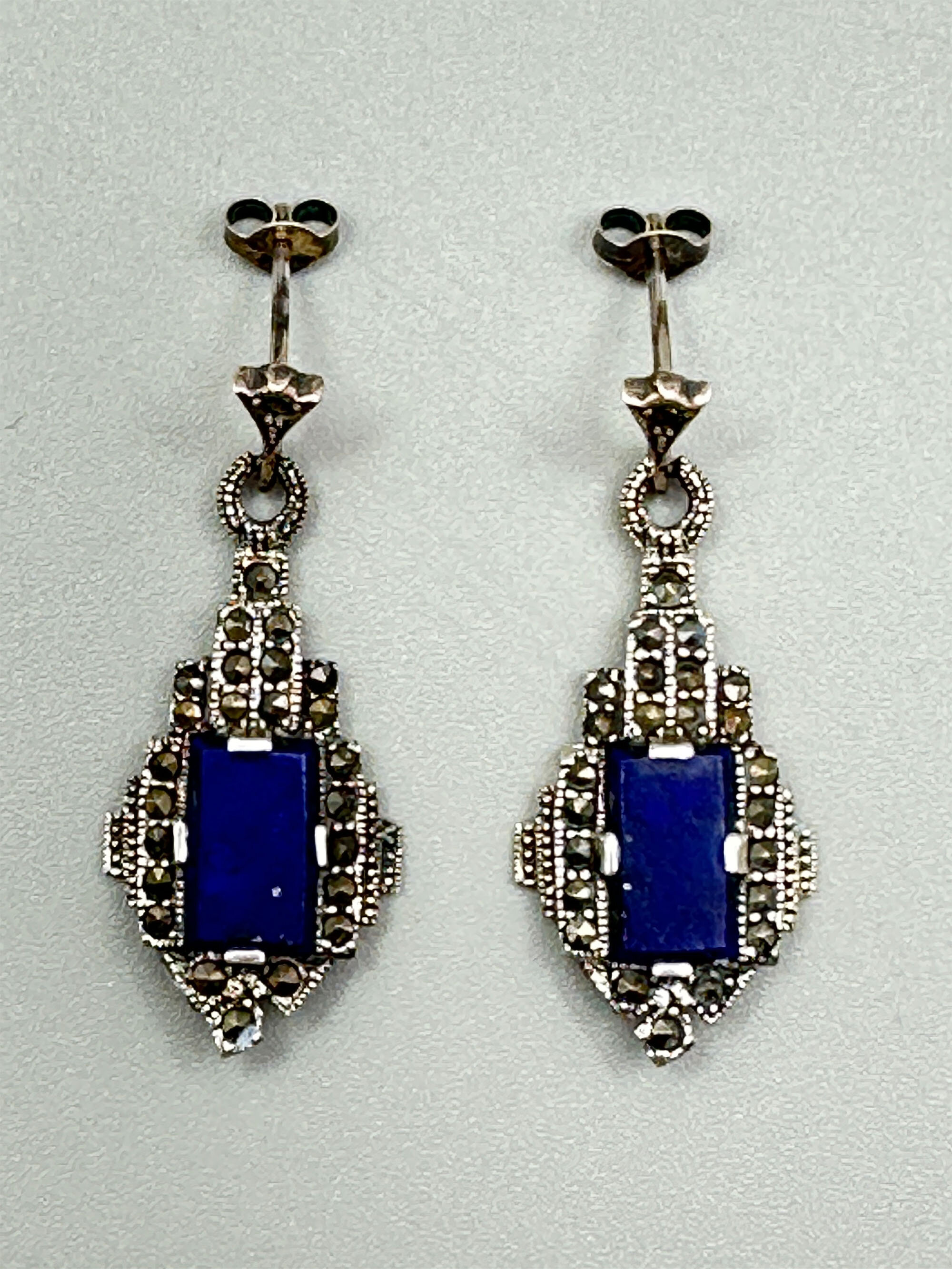
Art Deco lapis and marcasite earrings c1930
Price: £65
These are a pair of pure Art Deco earrings. They are very architectural like a skyscraper. They feature silver set with marcasite and large lapis stones. They are marked A935.
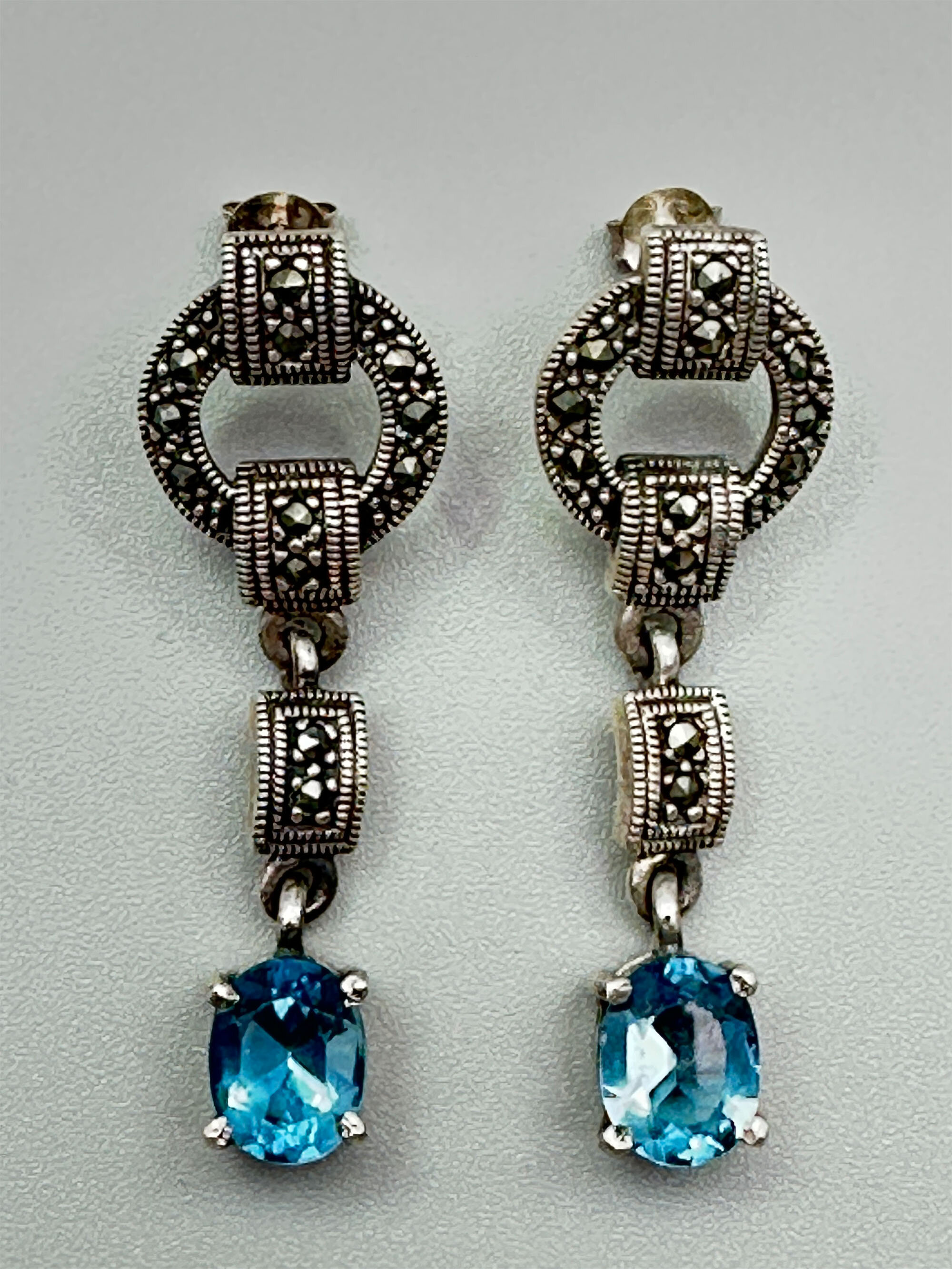
Art Deco marcasite and aquamarine earrings c1940
Price: £55
This is a lovely pair of earrings. They are in a quintessential Art Deco design set with marcasite stones and aquamarine drops. They are marked 925.
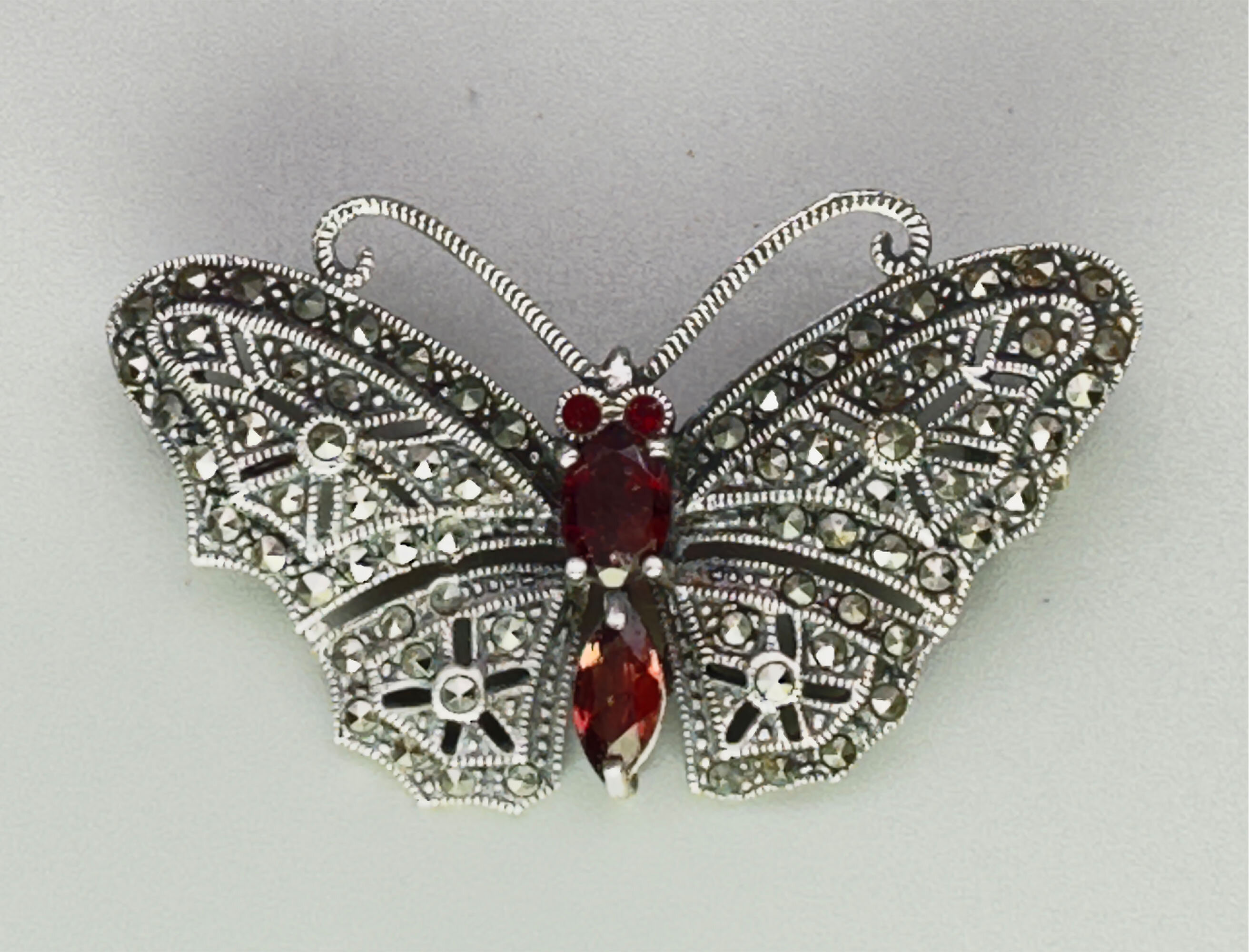
Garnet and marcasite butterfly brooch c1950
Price: £75
This a very delicate finely crafted brooch in the form of a butterfly. The wings have a very intricate design set withi marcasite stones. They body and eyes are garnets. It is marked 925.
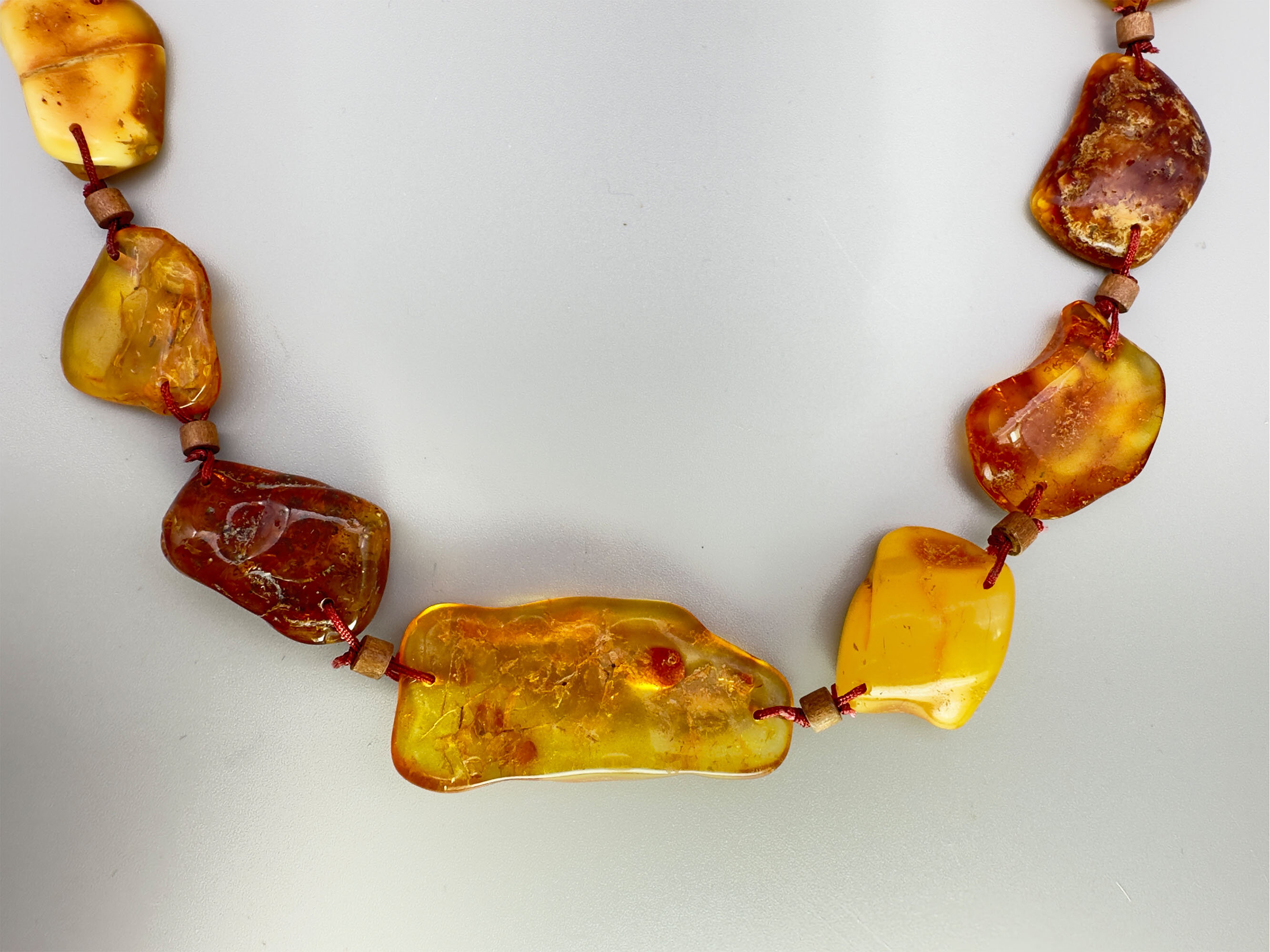
Necklace with large natural amber pieces, c1970
Price: £85
This is a really fun necklace that comprises numerous diffferent shaped and coloured pieces of amber. There are honey, congnac, egg yolk colours all polished in their natural shapes to bring out the natural inclusions. It is strung with small wooden beads on brown cord.
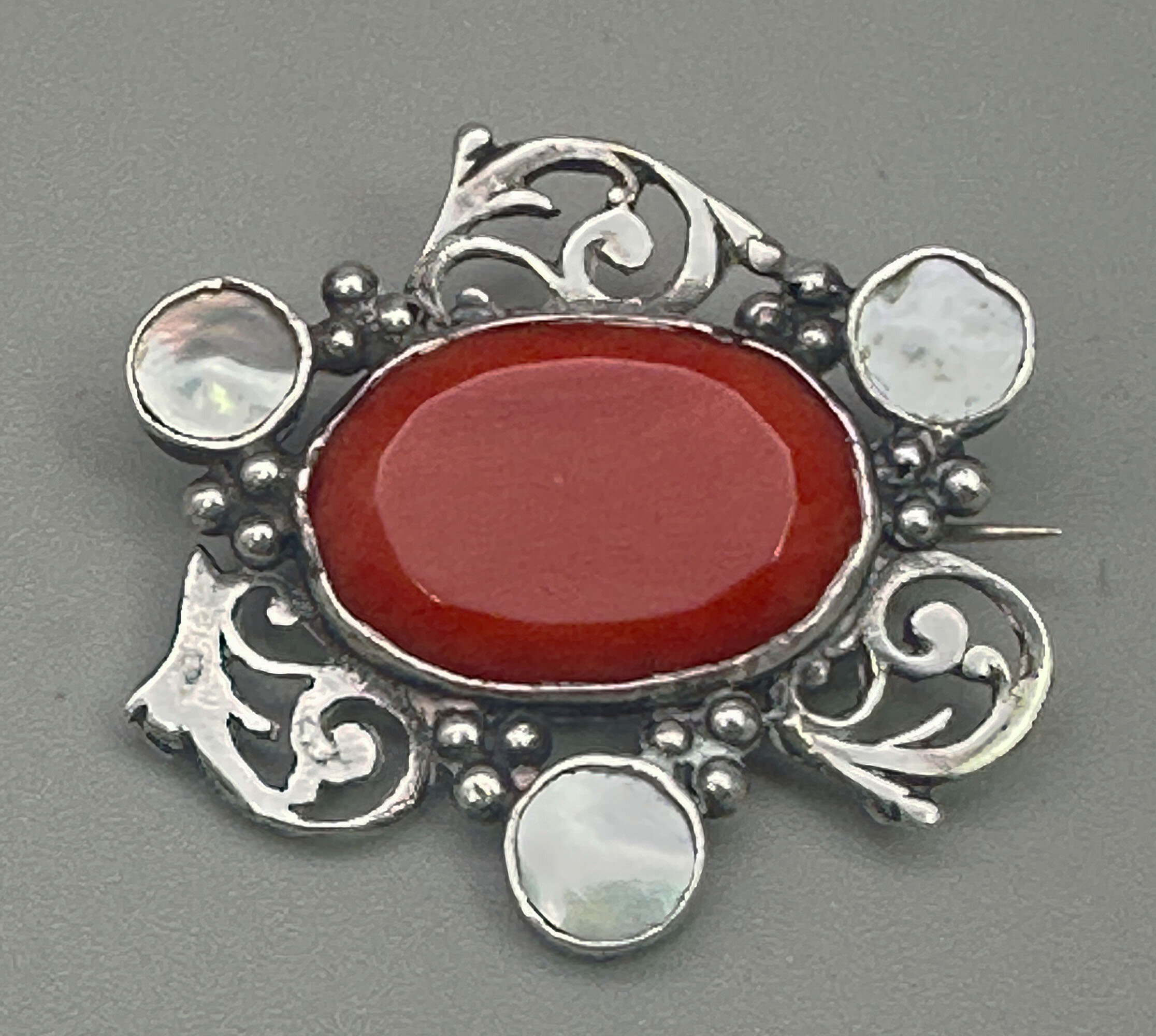
Arts and Crafts coque de perle and red carnelian brooch c1900
Price: £95
This is a very lovely good sized silver brooch with a fleur de lis and grape design that is very typical Arts and Crafts. It is set with a large central carnelian stone surounded with coque de perle stones. It is unmarket
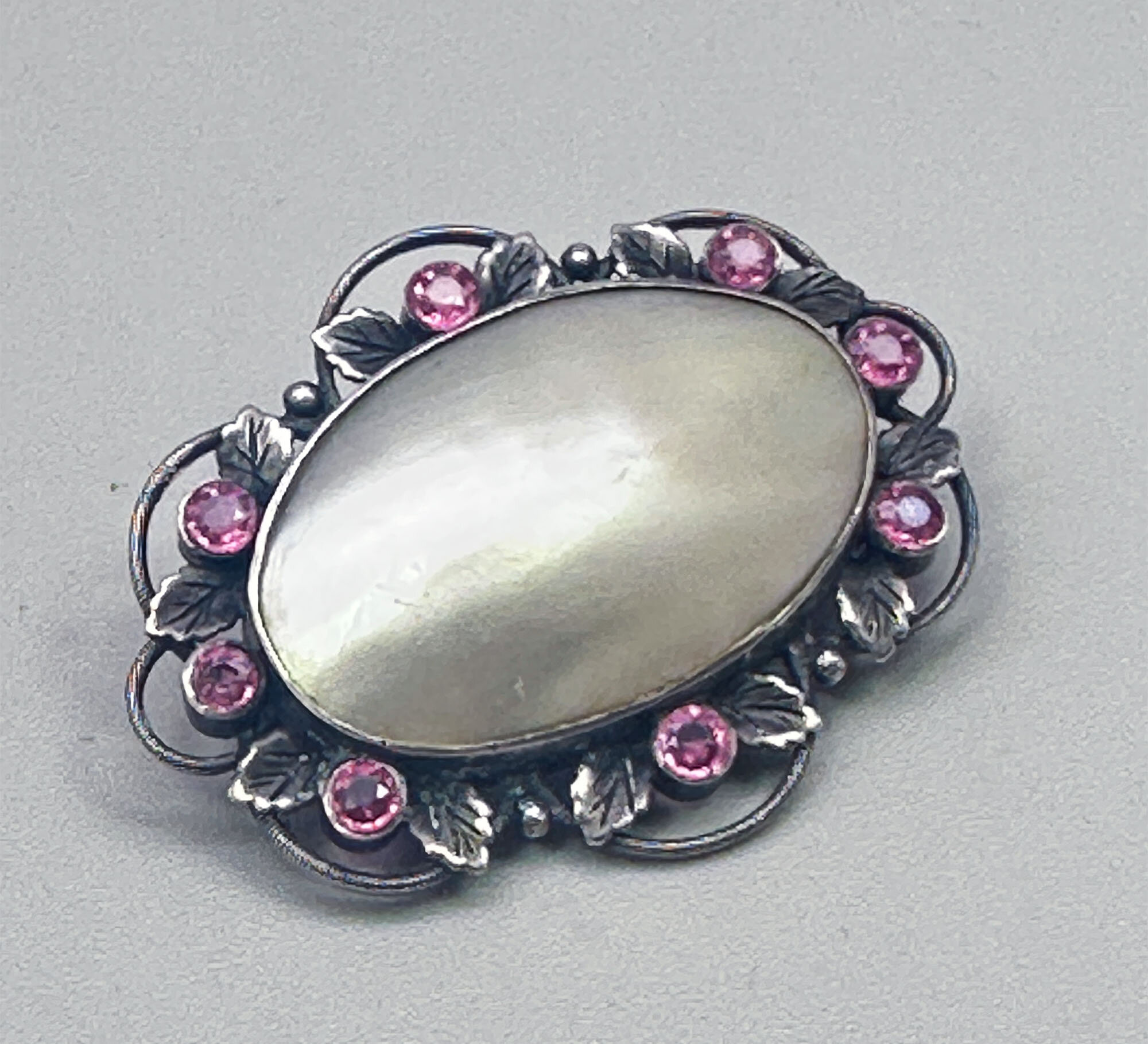
Georgian silver and coque de perle brooch c1830
Price: £95
This is a wonderful good sized silver brooch set with a large coque de perle surrounded by vivid pink paste stones. It is marked 800 which indicates it is continental or European which was common in the Georgian era.
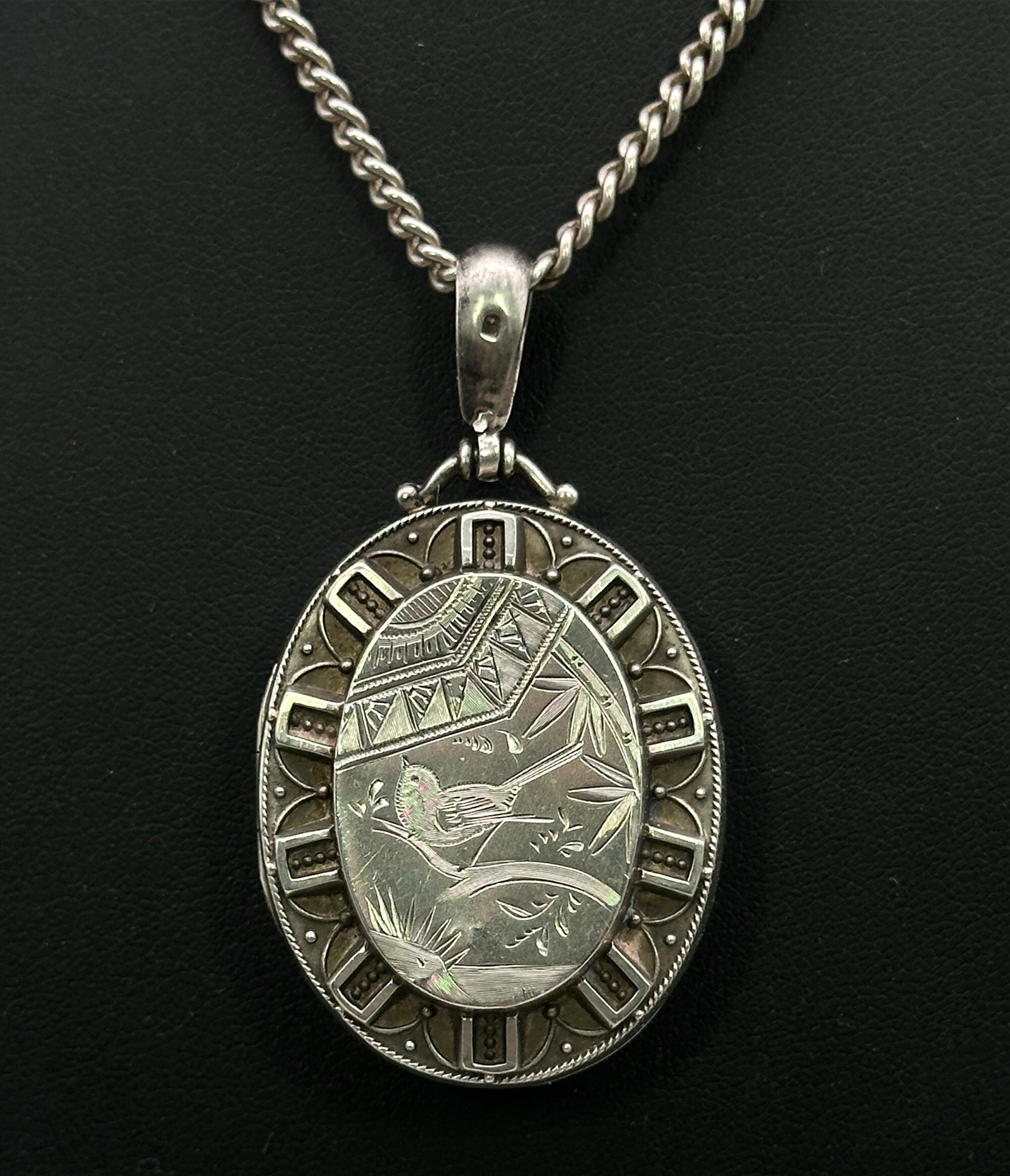
Aesthetic Movement locket on chain c1880
Price: £125
This is an amazing locket that is a perfect example of the Aesthetic Movement in Britian. This was aligned with Arts and Crafts but the Aesthetic designs featured classical and Japanese designs that were considered more opulent and elegant than the over the top designs of the Victorian period. It was a response to the mass consumerism that was taking over Britian during this time. This locket is marked with full English marks. It is paired with a belcher chain of a similar age.
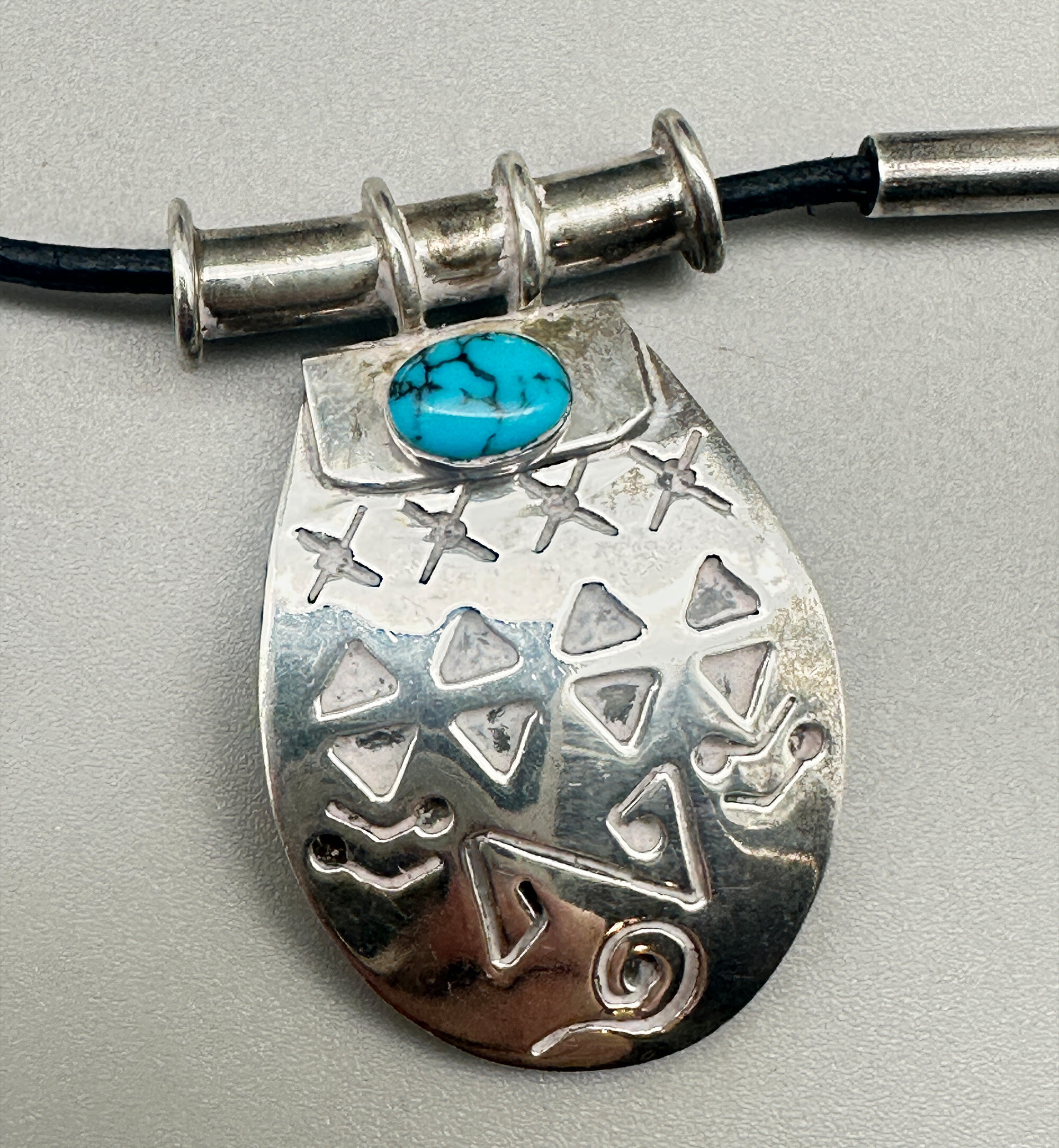
Taxco pendant on leather and silver cord c1990
Price: £85
This is a fun Taxco piece that has a large pendant in an Aztec type design set with a turquoise stone. It is strung on a leather cord that has silver links and a toggle closure. This cord is original to the piece as they cannot be seperated. It is marked Taxco, Mexico 925 with a makers mark of GJB.
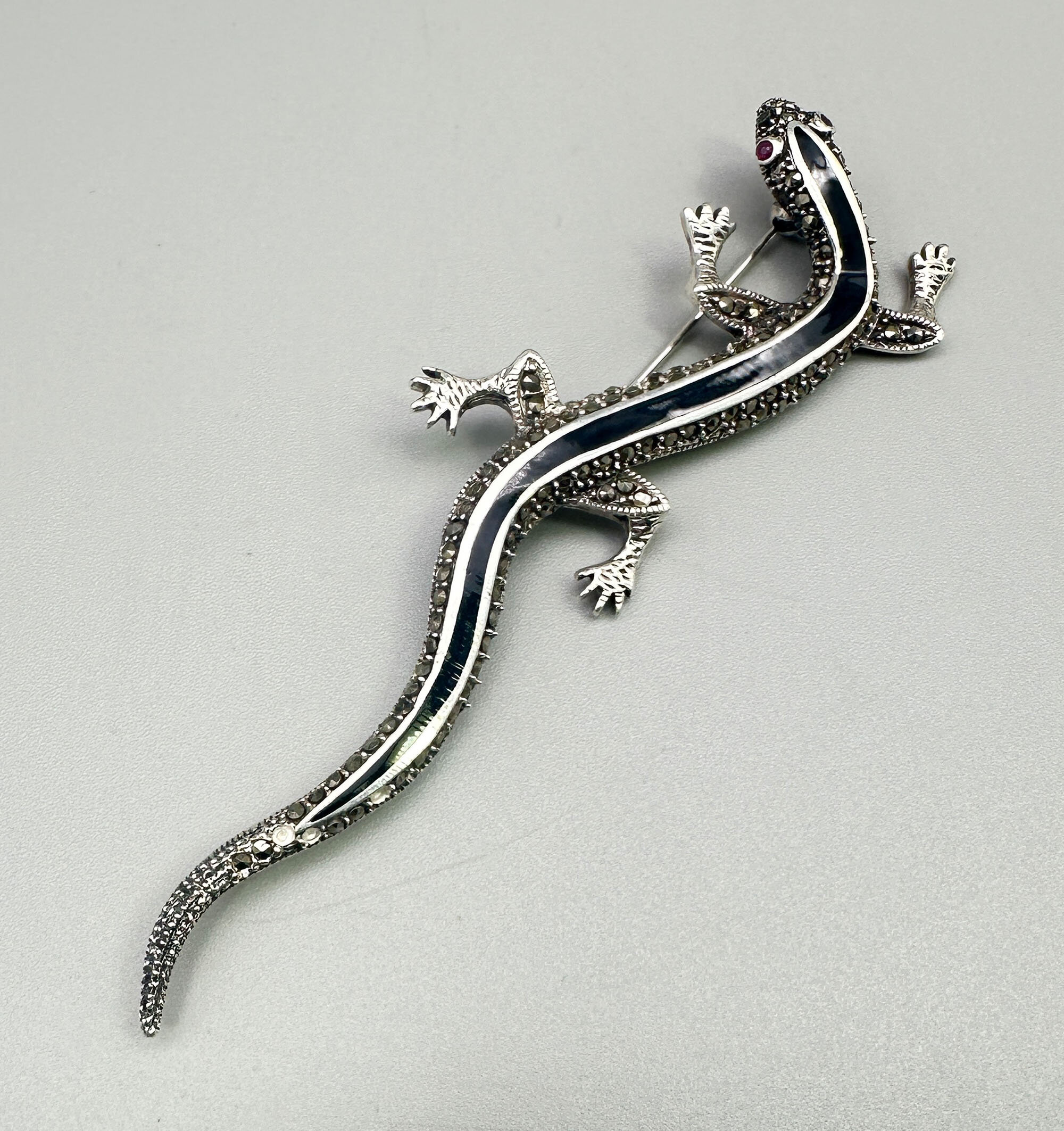
Art Deco lizard silver and enamel brooch c1940
Price: £95
This is a striking large brooch that is in the shape of a crawling lizard. It is encrusted with marcasite stones and has a black enamel back. The eyes are rubies. It is marked 925.
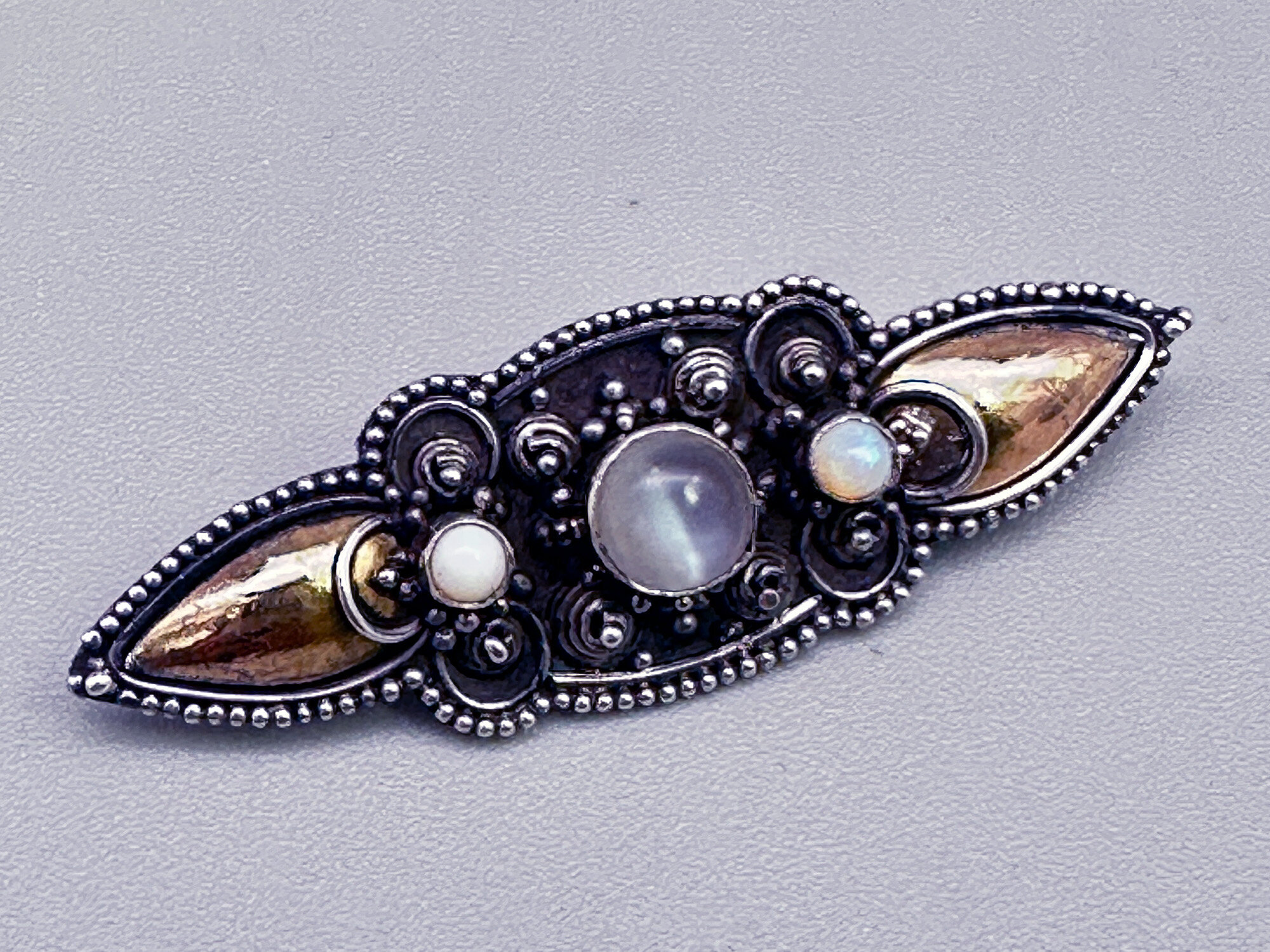
Brooch with moonstone and millegrain work c1900
Price: £35
This is a small bar brooch that features three moonstones and detailed millgrain work. It is silver with some gold wash. It is most likely Italian. It is marked with a makers mark and 925.
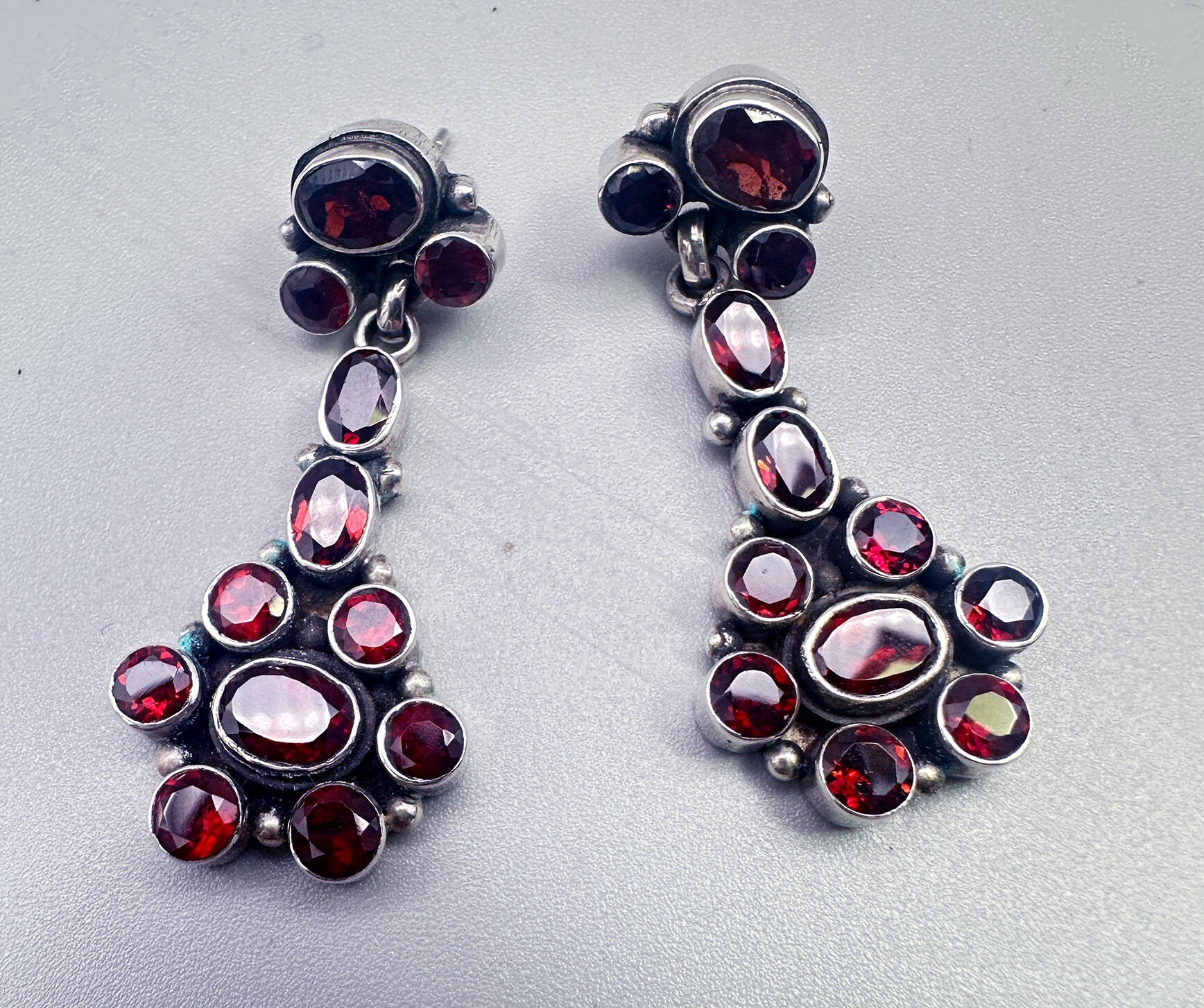
Garnet cluster earrings c1990
Price: £85
These are very vivid pair of earring that are set with beautiful garnets in both oval and round facetted stones. They are unmarked but test as 925 silver. They are Indian in origin.
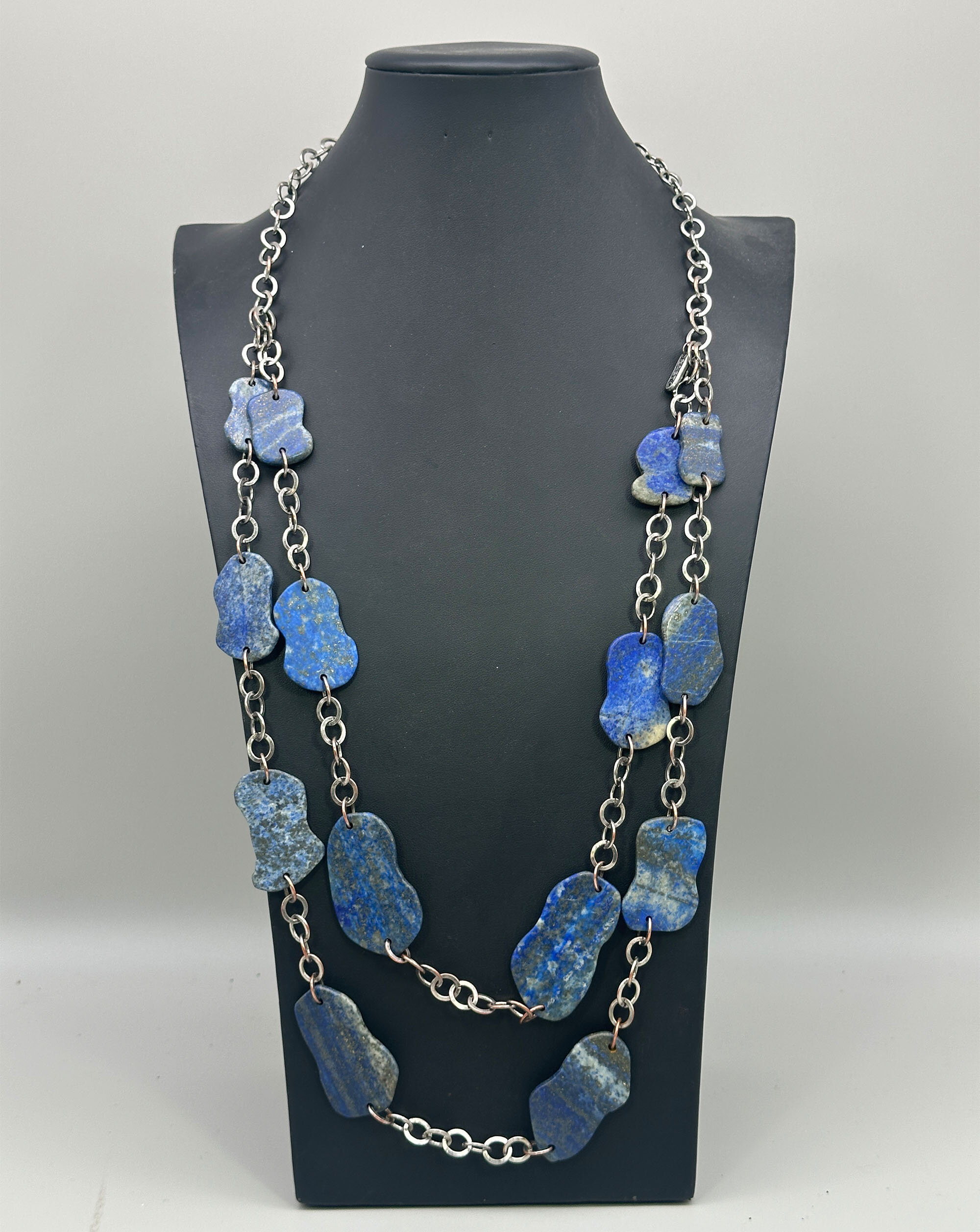
Long double necklace with large lapis pieces, c2000
Price: £75
This is an amazing necklace that has a double row with stations of graduated amoeba shaped large lapis lazuli stones. It was made by a company called East a high end fashion brand. It bears a small metal tag with the name. It is strung with gold tone circular links, that are now mostly silver in colour.
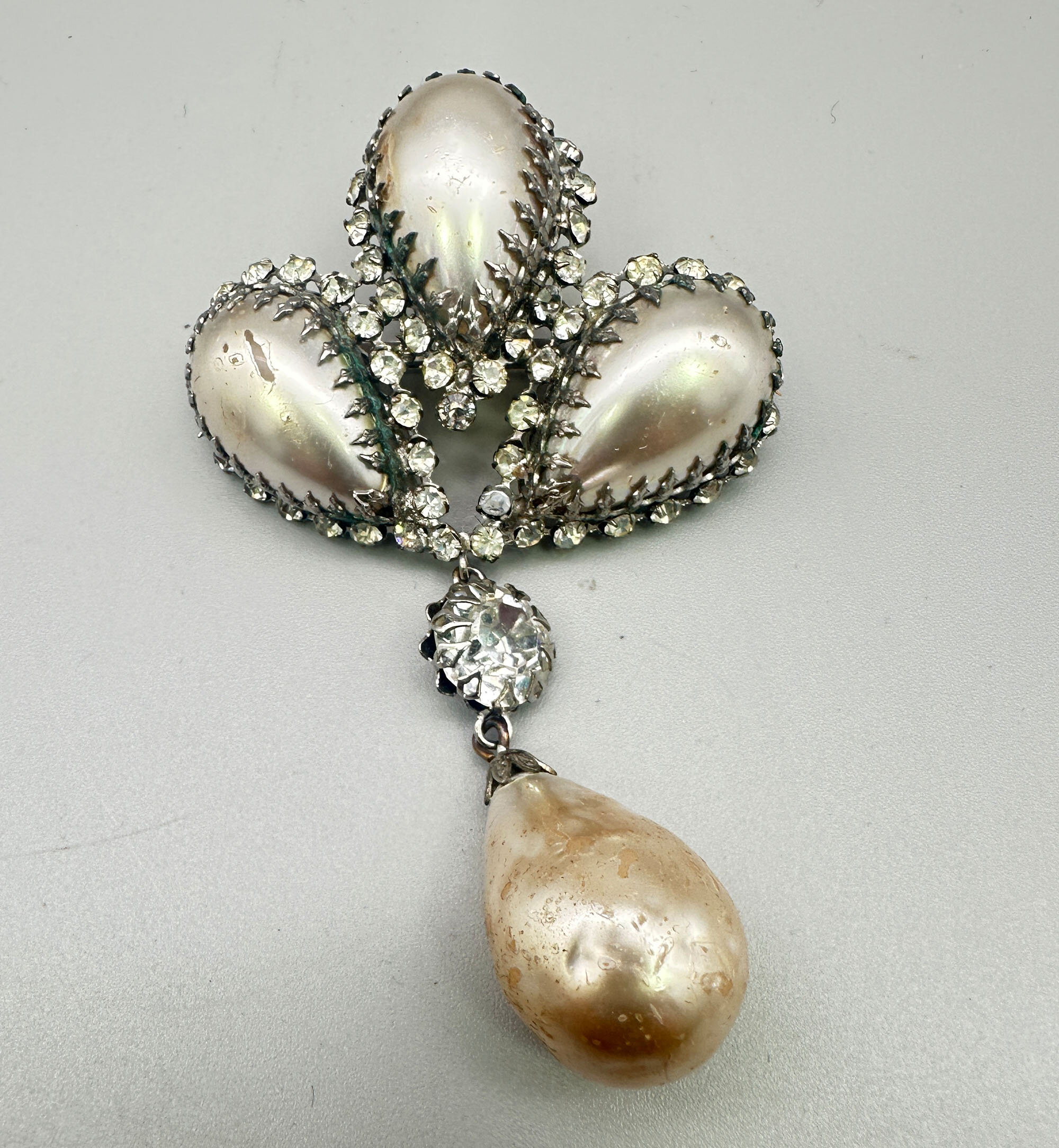
Fleur de lis style brooch with glass pearls c1940
Price: £45
This is a strking brooch that is an example of the beginning of the statement costume jewellery. It is a classic fleur de is shape set with faux pears and paste stones. It is unmarked but is probably American. There are a few of the paste stones that have been replaced and the glass pearls have lost some of their lacquer coating as commonly happens.
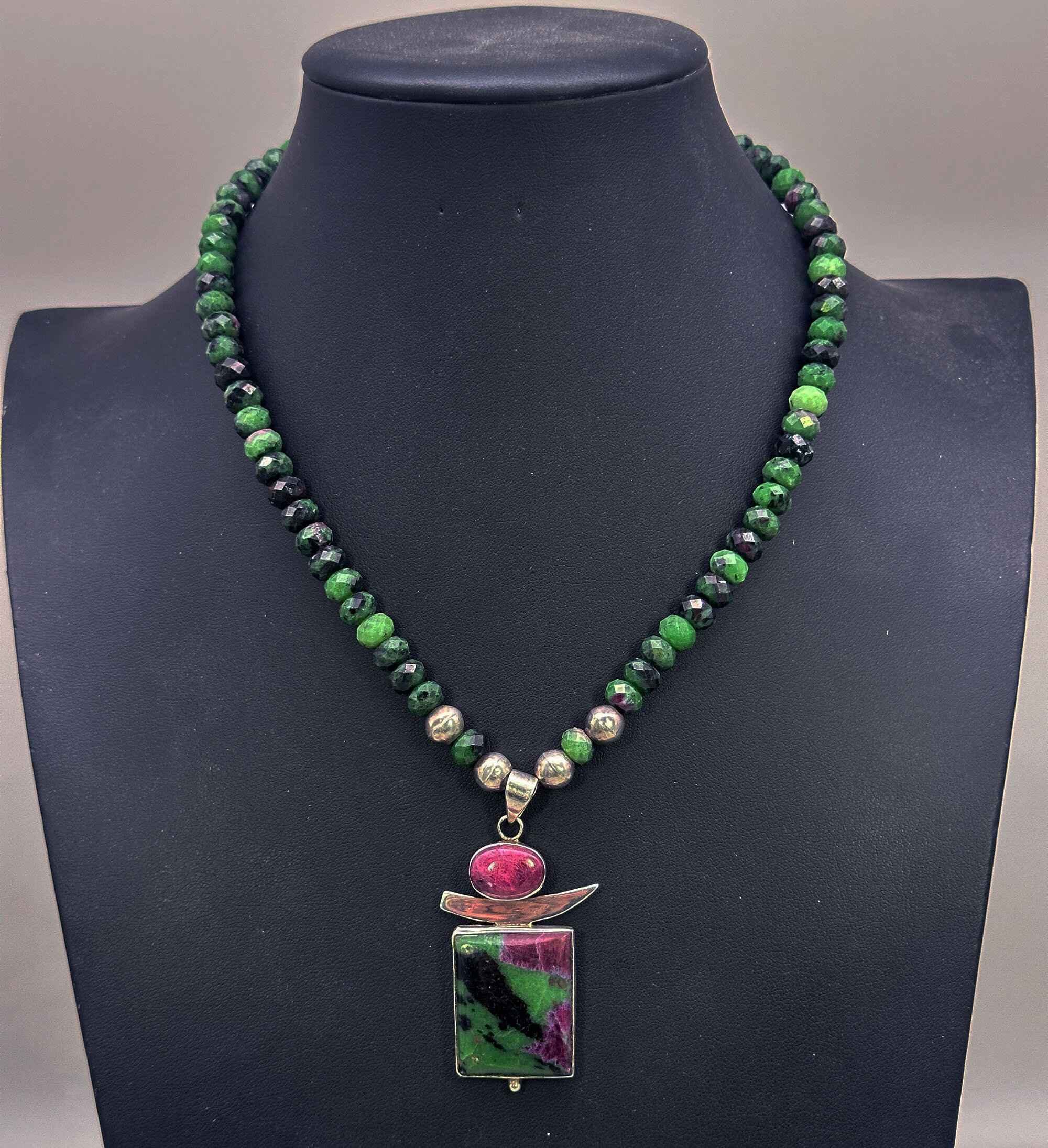
Zoisite pendant on necklace with zoisite beads, modern
Price: £75
This is a very unique and beautiful necklace that centres around a modernist pendant that has two large ruby zoisite stones. The square stone is a true work of art that only nature can create. The pendant is strung together with zoisite roundel beads and silver beads. There is a round box clasp. It is marked 925.
Ruby Zoisite, or Anyolite, is a natural combination of green zoisite and red ruby, primarily sourced from Tanzania. This pendant is most likely from Scandinavia or Eastern Europe. This necklace has been constructed using different elements. It has recently been strung on steel wire with a new silver clasp.
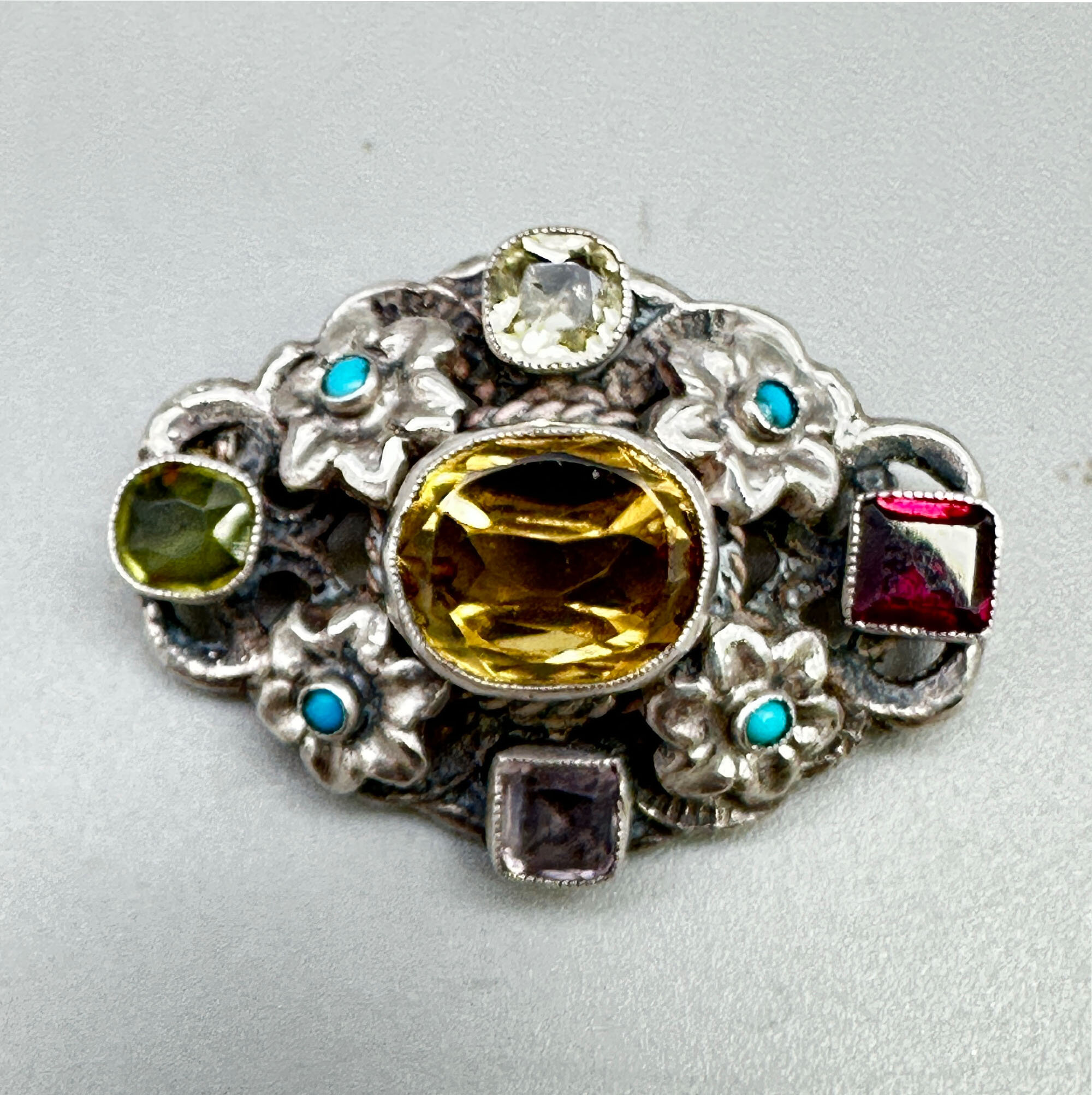
Edwardian brooch with flowers and various stones c1910
Price: £125
This is a lovely brooch in a cartouche shape that is set with flowers and five stones. There is an amethyst, peridot, citrine and rose quartz stone. The flowers are set with small turquoise cabachons. It is marked for export Made In England, Silver.
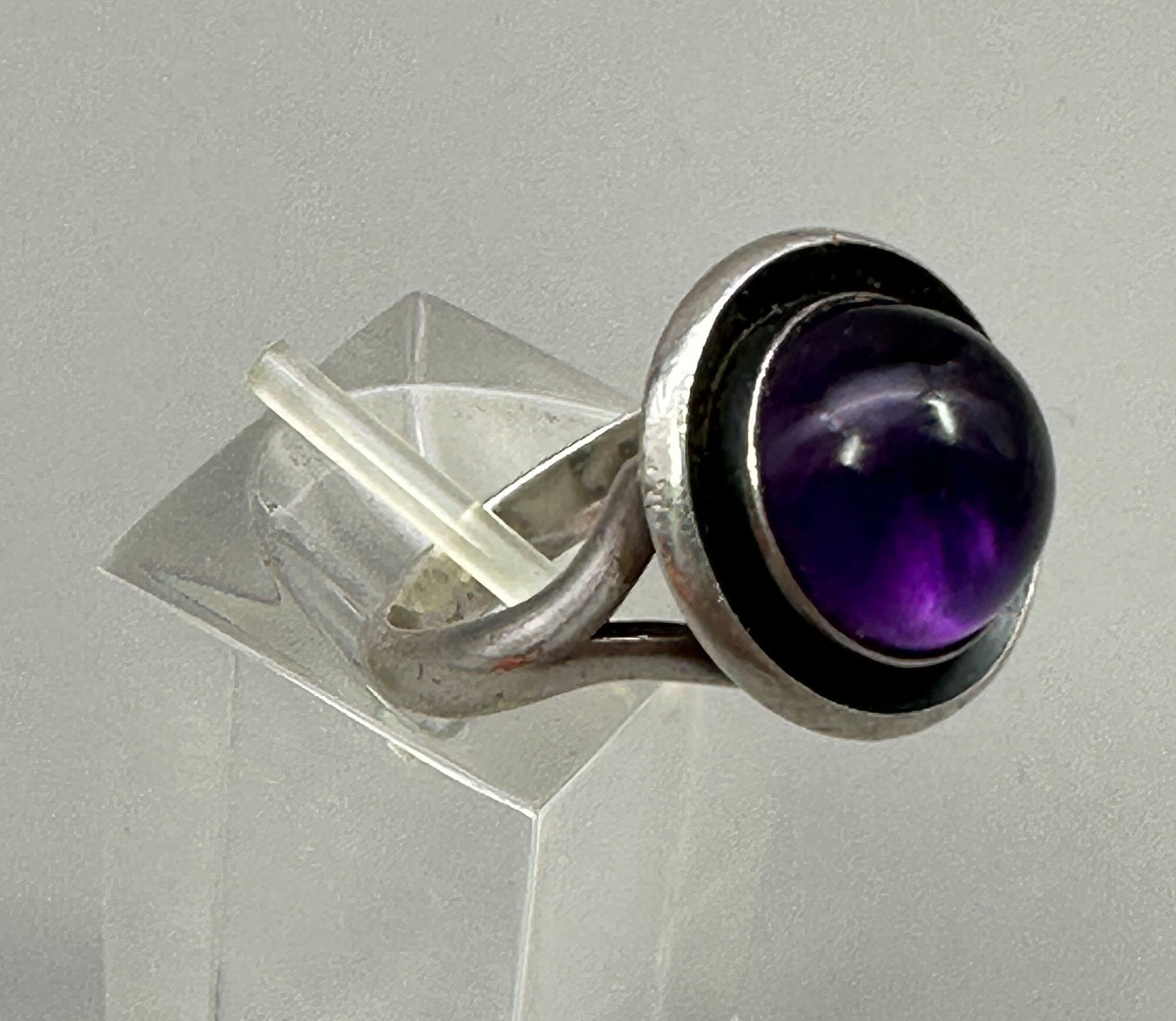
Ring by N.E From (1908-1982) Denmark, with amethyst, c1960
Price: £95
This is a very recognizable design by well known Danish silver maker Niels Erik From (1908-1982) who is was a main player in Danish jewellery between 1940 and 1970. This ring has is set with an amethyst cabachon and is surrounded with an oxidized finish. It is marked Sterling, Denmark N.E. From 925 S
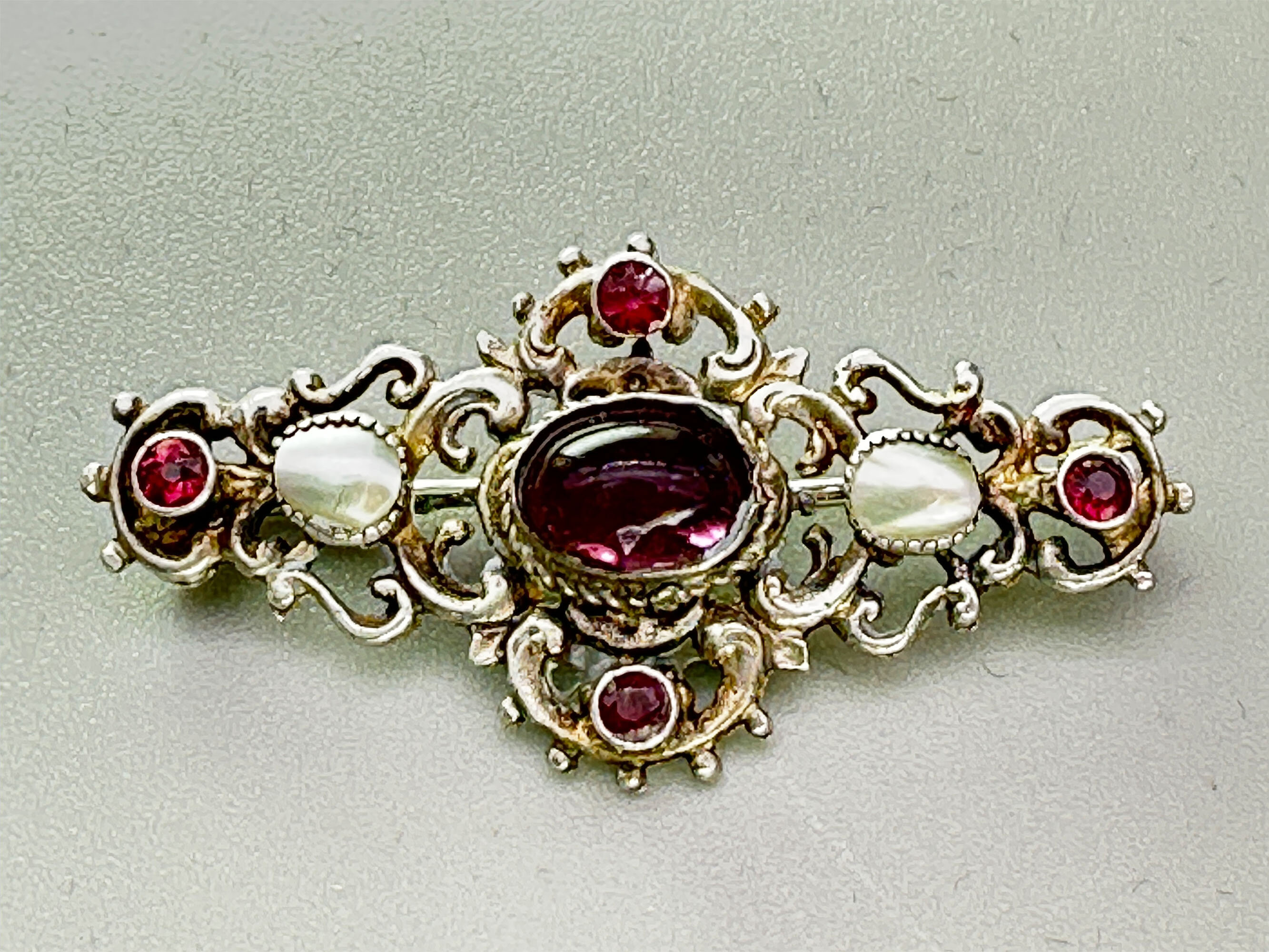
Brooch with coque de perle and garnet cabachons, Austria c1890
Price: £75
This is a beautiful small brooch in a fleur de lis design set with coque de perle and garnet stones. It is marked Austria and although there is no silver mark it is 900 grade silver.
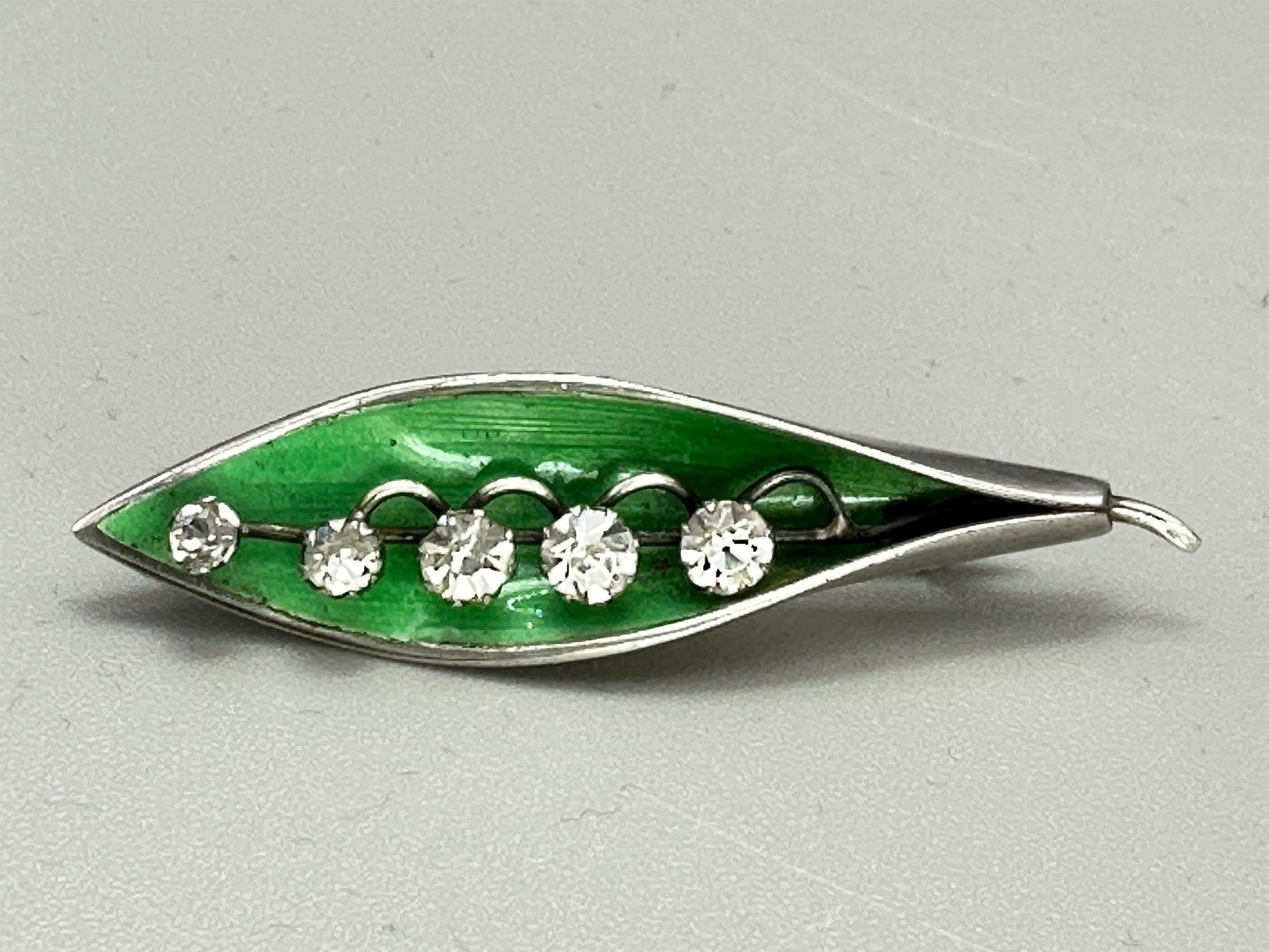
Enamel and silver peapod brooch , Birmingham 1946
Price: £95
This is a very unusual brooch that is the form of a peapod with peas formed from paste stones. The pod is silver with green enamel. It has full English hallmarks for Birmingham 1946 with a makers mark 'AJS'. It also has the Copyright registration Nr 612981 for the design.
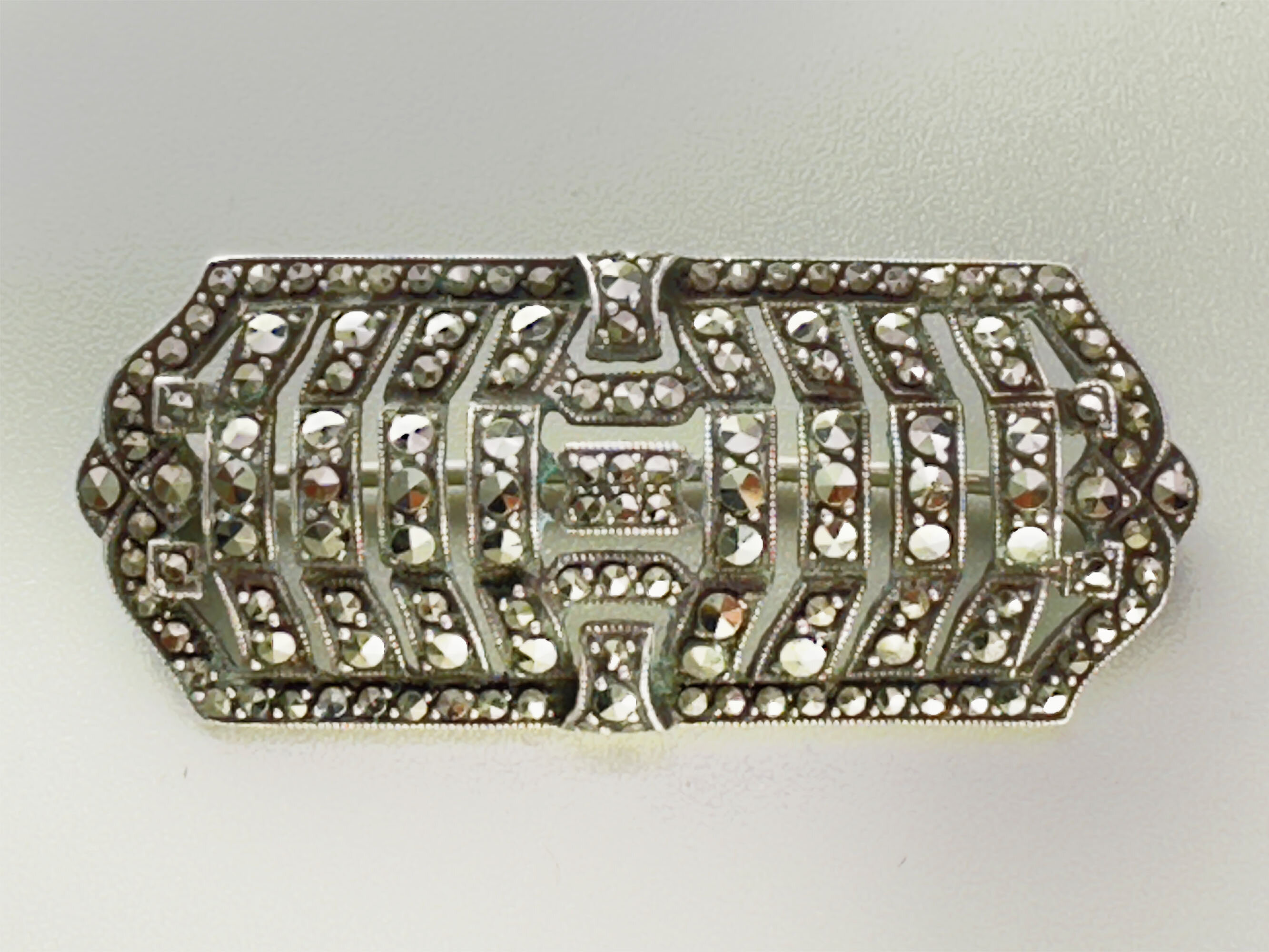
Art Deco silver and marcasite brooch c1920
Price: £75
This is an excellent example of Art Deco design with its geometric shape and elegant balance. The brooch is silver with marcasite stones and is marked 935 for French silver.
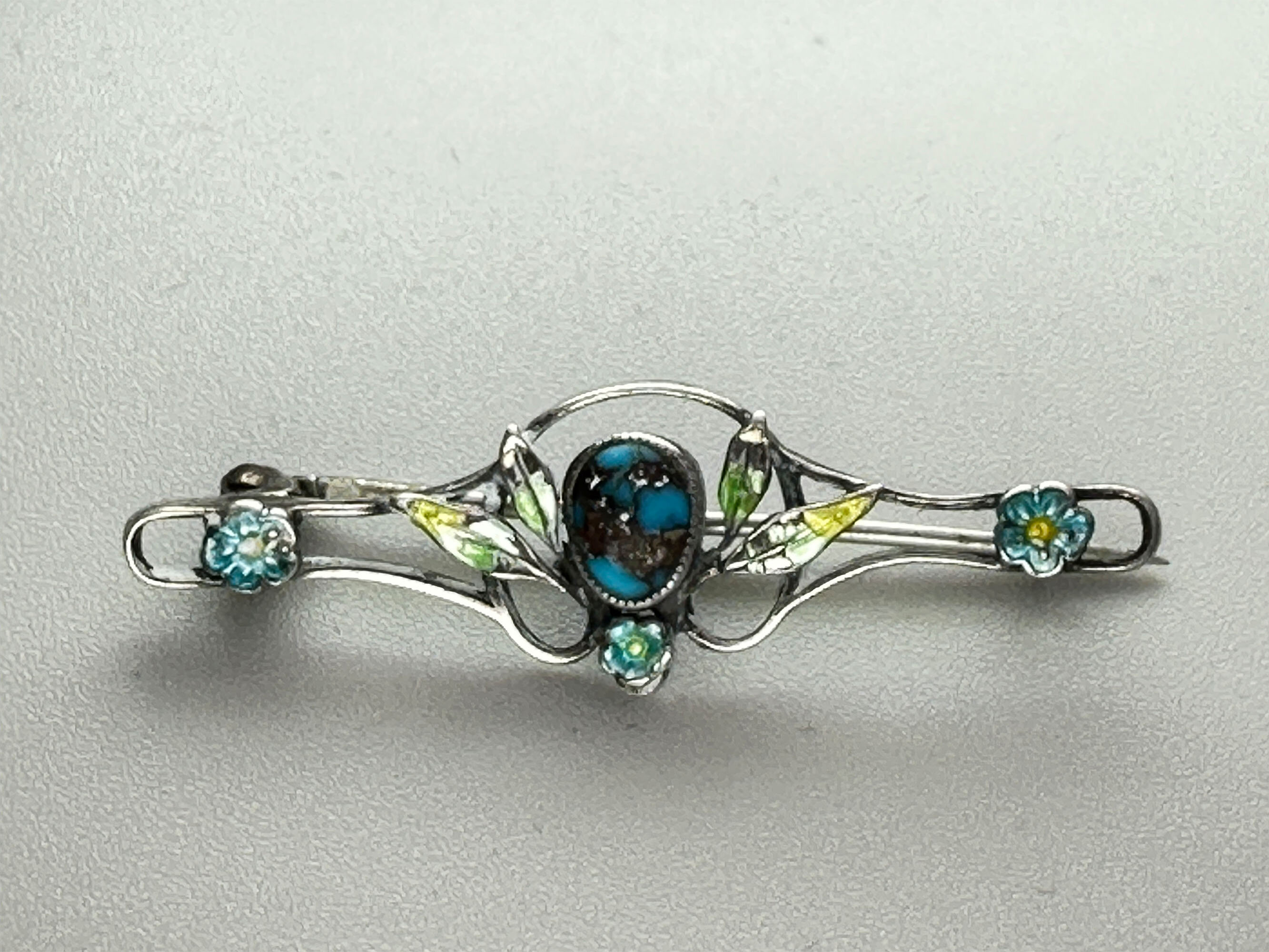
Arts and Crafts style bar brooch with matrix turquoise stone c1910
Price: £125
This is a very interesting brooch with a matrix turquoise stone in a silver setting. It is in the distinctive Arts and Crafts style with enamel flowers and leaves and is marked 'STERLING' indicating American manufacture.
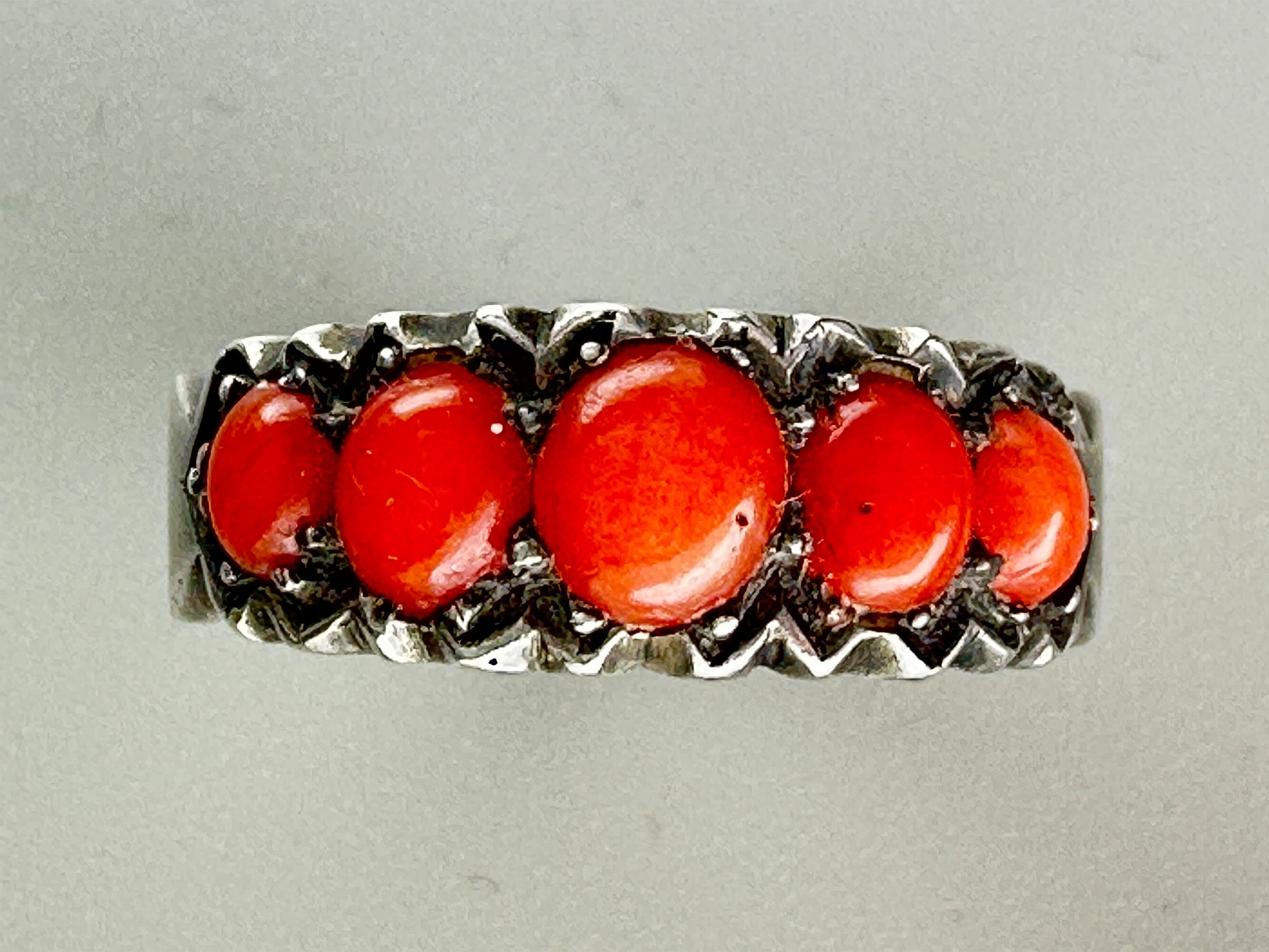
Victorian petite ring with coral stones c1900
Price: £45
This a lovely petite ring typically delicately formed in silver set with five dark orange coral stones. It is unmarked and dates to the late Victorian period.
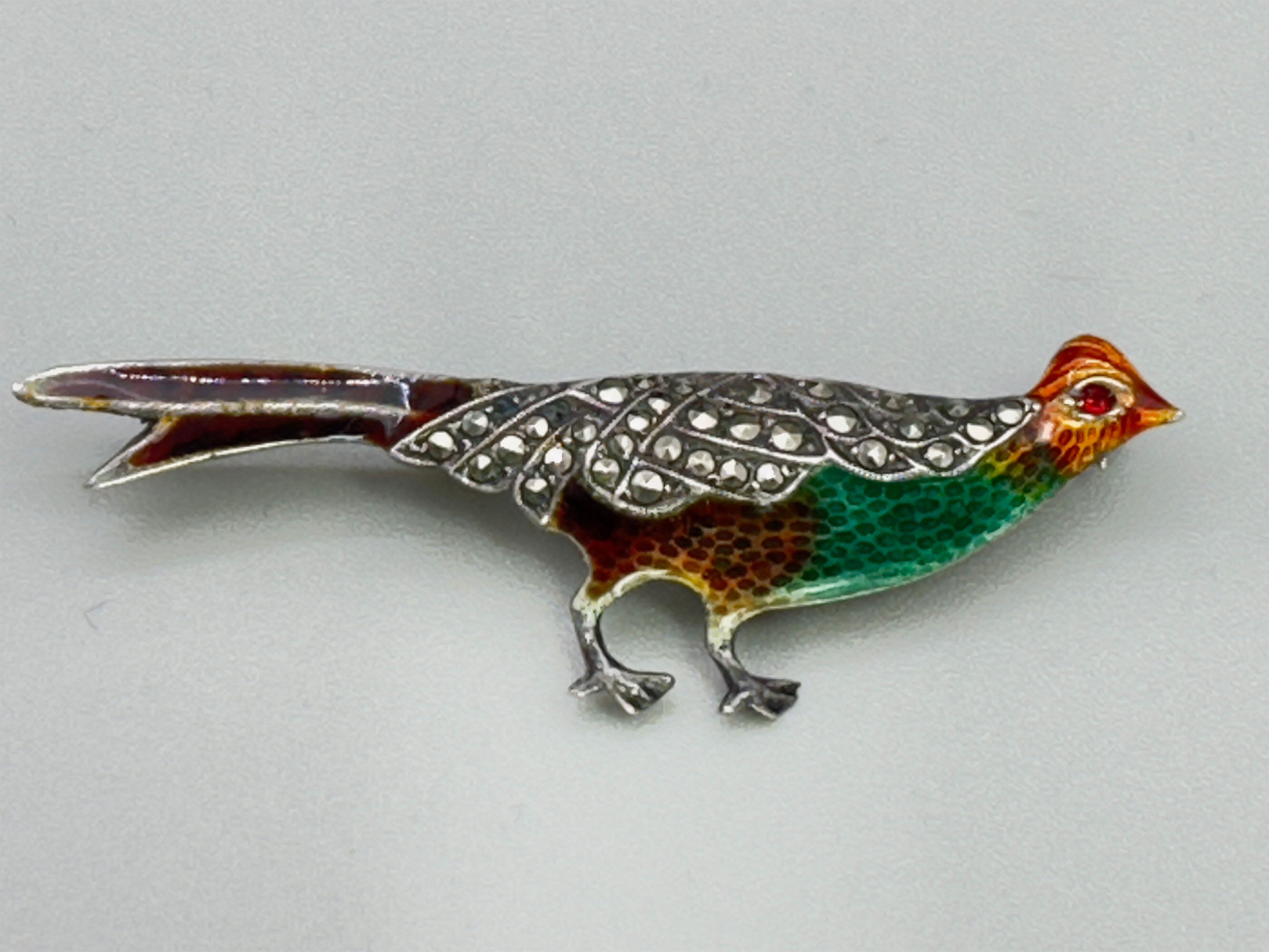
Silver and enamel pheasant brooch c1940
Price: £65
This is a medium sized brooch that has enamel work to emulate feathers and wings set with marcasite stones. It is marked 925 NE.
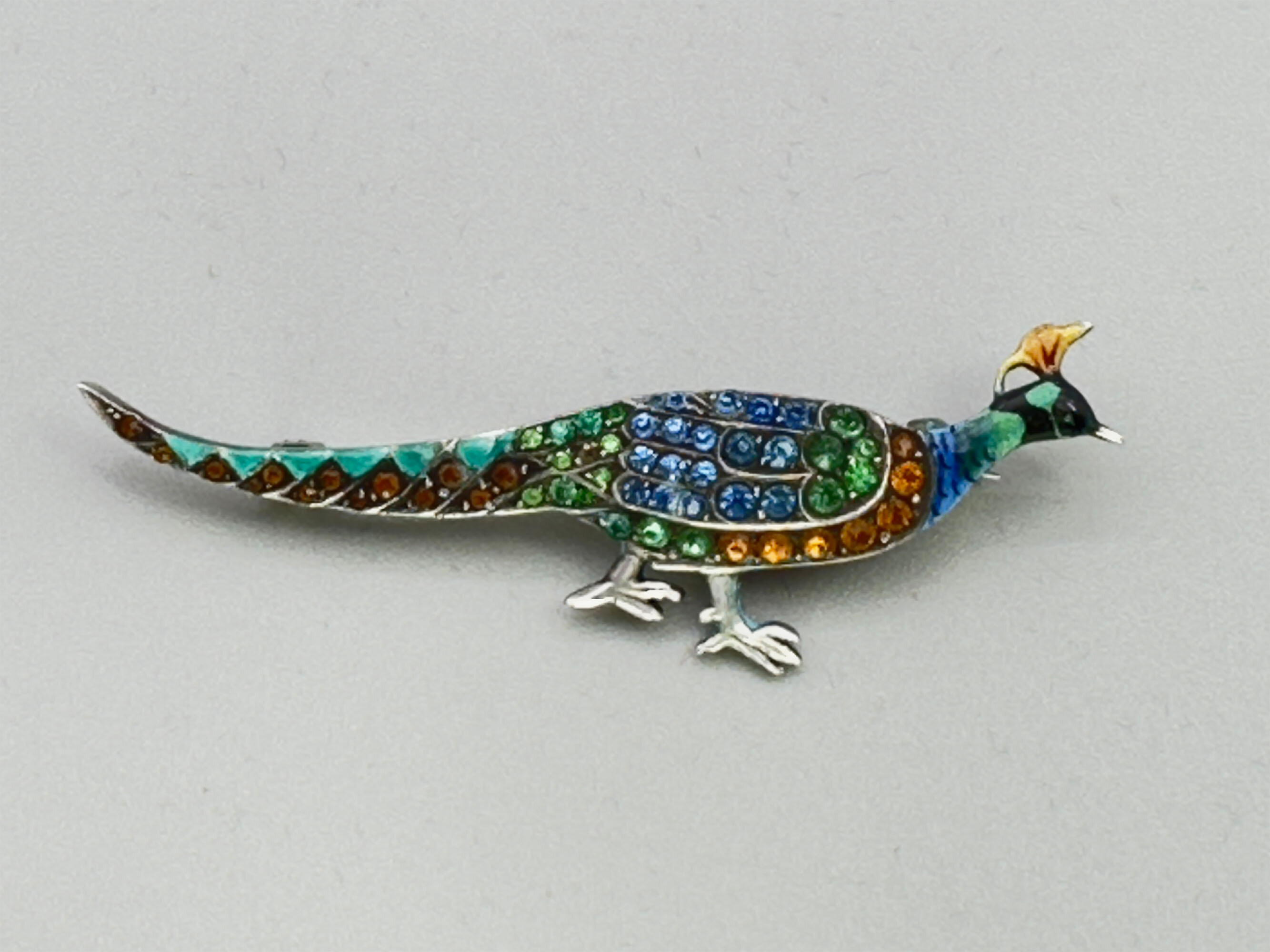
Silver peacock brooch with enamel c1930
Price: £35
This is a lovely small brooch in a peacock design. It is in silver with enamel work and set with colourful paste stones. It is marked 'STERLING' so is of American manufacture.
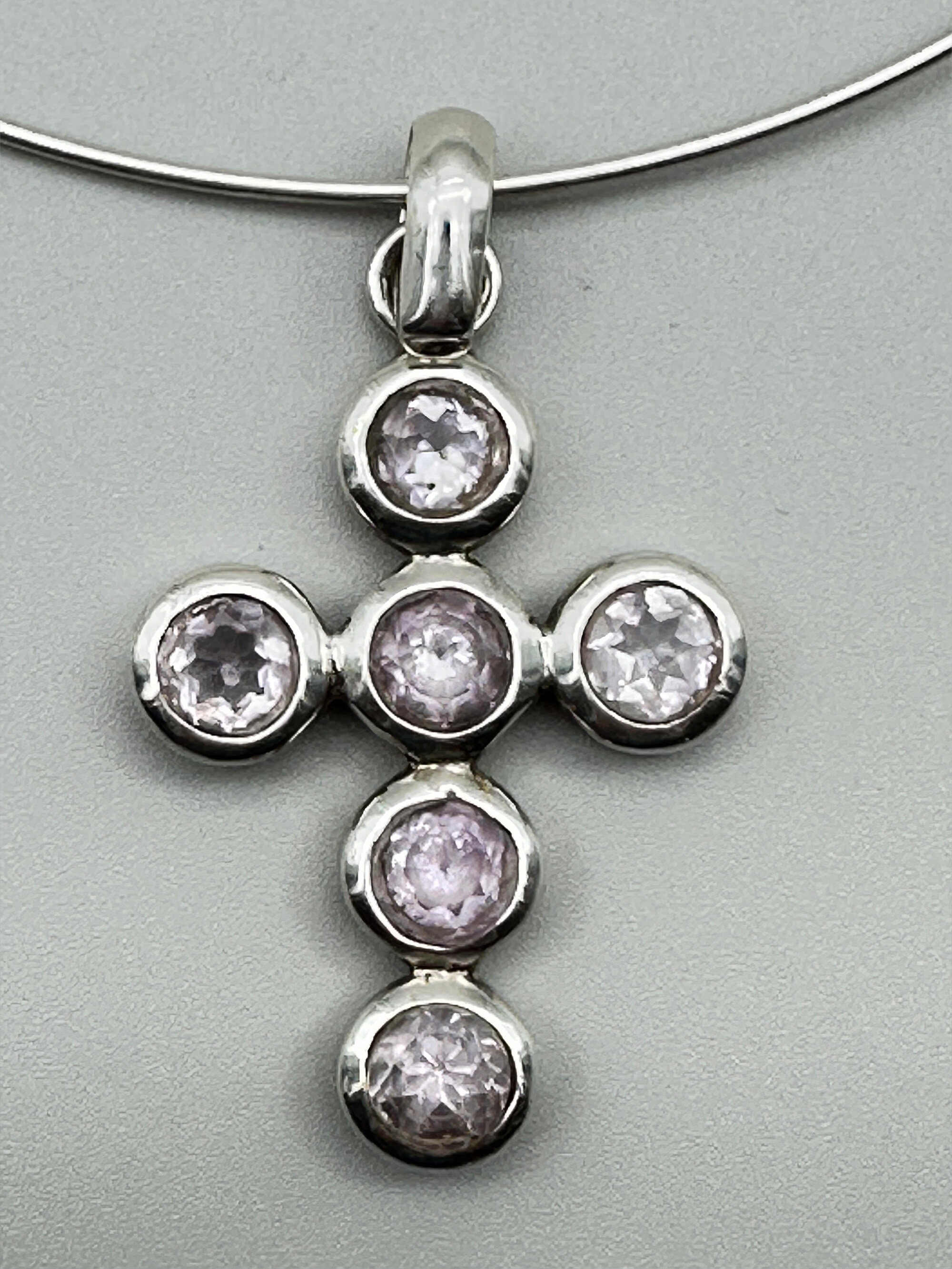
Rose de France cross on torque necklace, c2000
Price: £55
This a large necklace that comprises a large cross set with rose de france stones. Rose de france is the lighter form of amethyst. The stones are bezel set to give a bubble effect. These are together with a torque necklace. They torque has full English hallmarks. The pendant is marked 925.
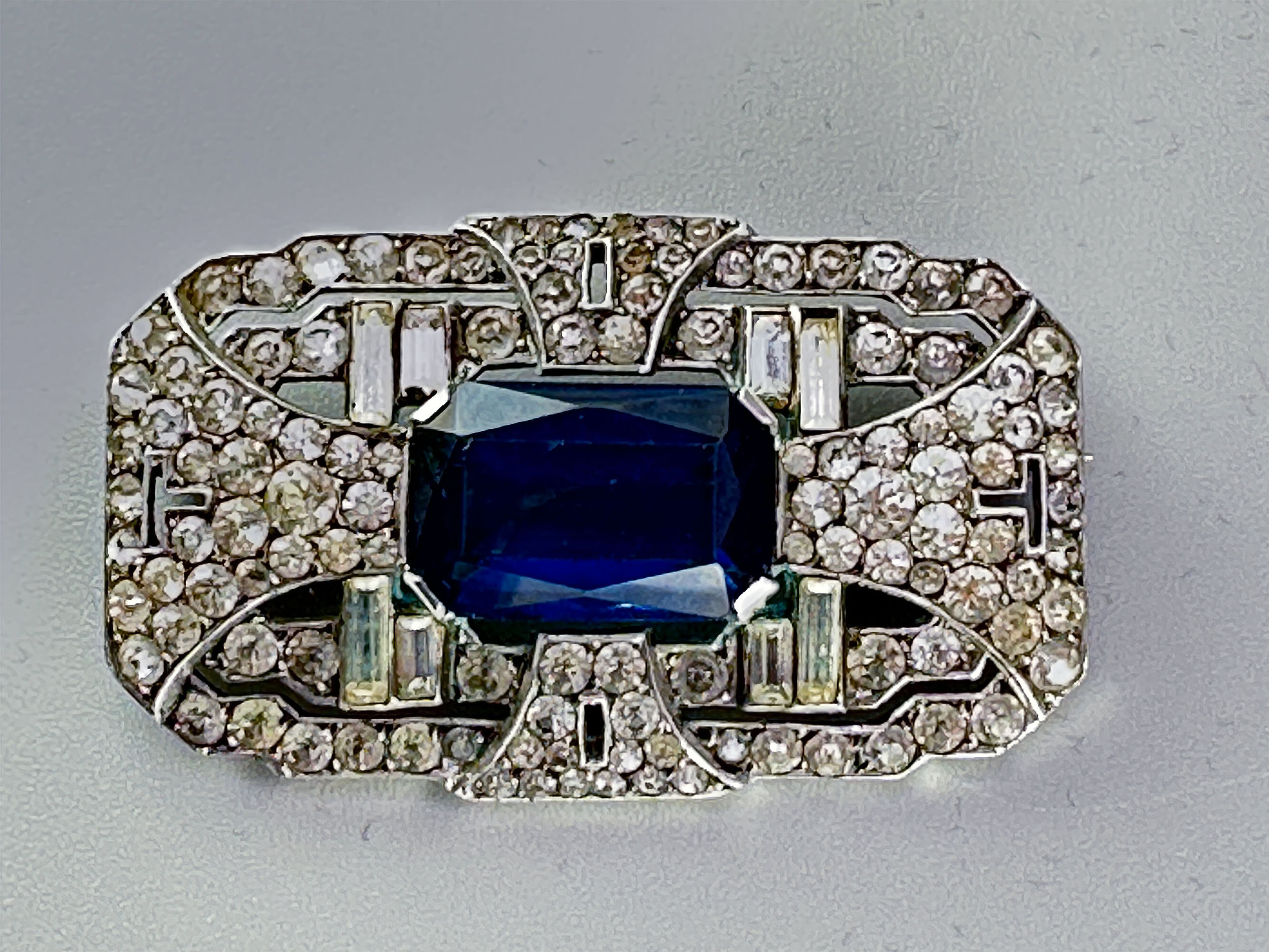
Art Deco silver brooch with paste stones c1930
Price: £85
This is a very distinctive brooch with a typical Art Deco design. It is set with large paste stones with an exceptionally large central blue stone. It is marked 935 so it is most likely French.
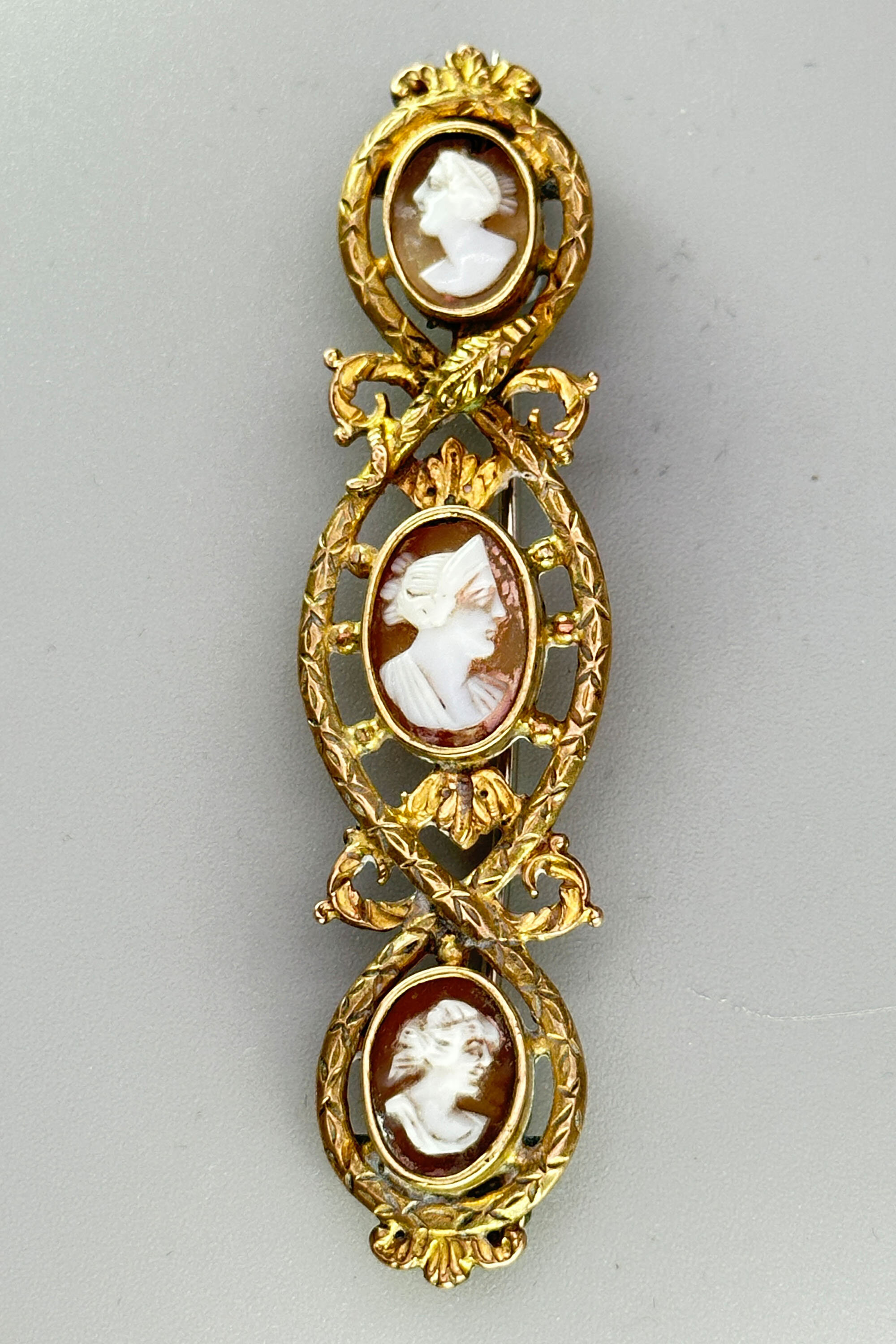
Georgian Grand Tour brooch with three neoclassical cameos c1820
Price: £250
This is a stunning brooch that has a neoclassical serpent and foliage design in bright rolled gold twisting around three portrait cameos. It is a classic example of the jewellery that was purchased by tourists in Italy during the Grand Tour period.
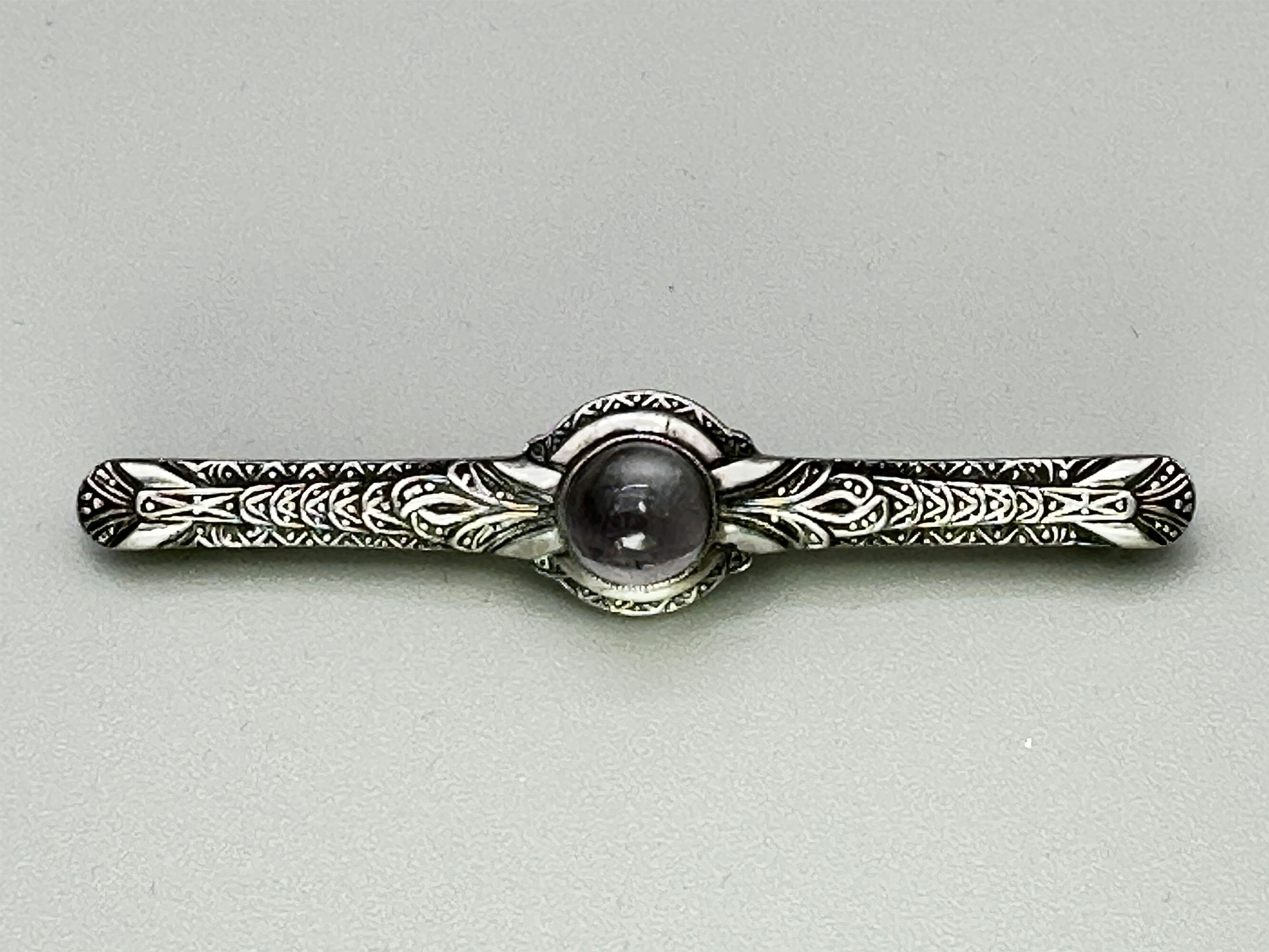
Art Deco bar brooch with moonstone cabochon, c1930
Price: £75
This is a very elegant bar brooch that has finely detailed silver work that exhibits both Art Deco and Islamic design. It is set with a bluish moonstone cabochon. It is marked 835 so most likely Austrian.
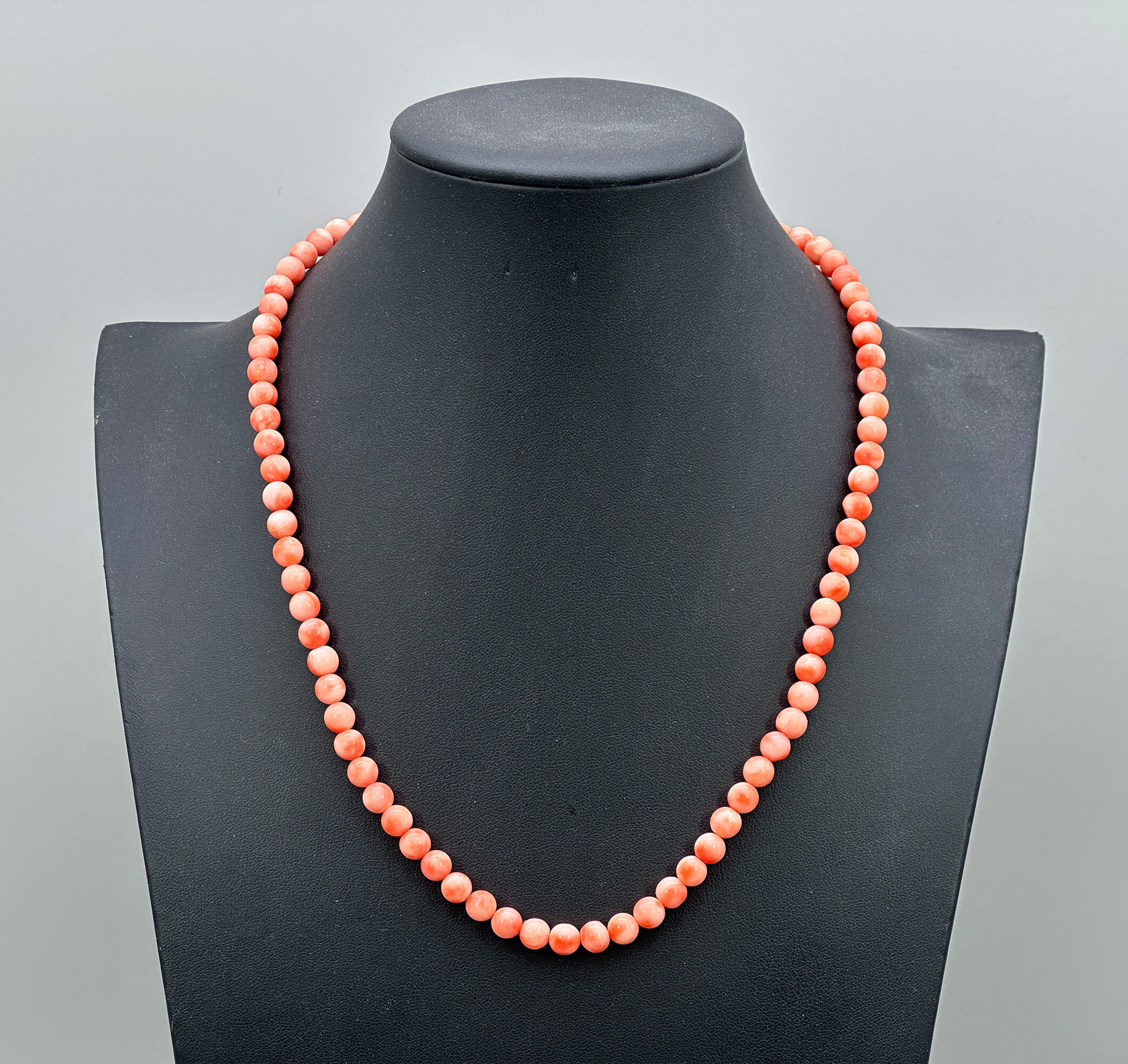
String of natural angel skin coral beads c1970
Price: £95
This is a lovely string of beads that suit any occassion. They are angel skin coral which comes from mainly Japan and Taiwan. They are all the same size and are strung with a classic gold filled clasp.
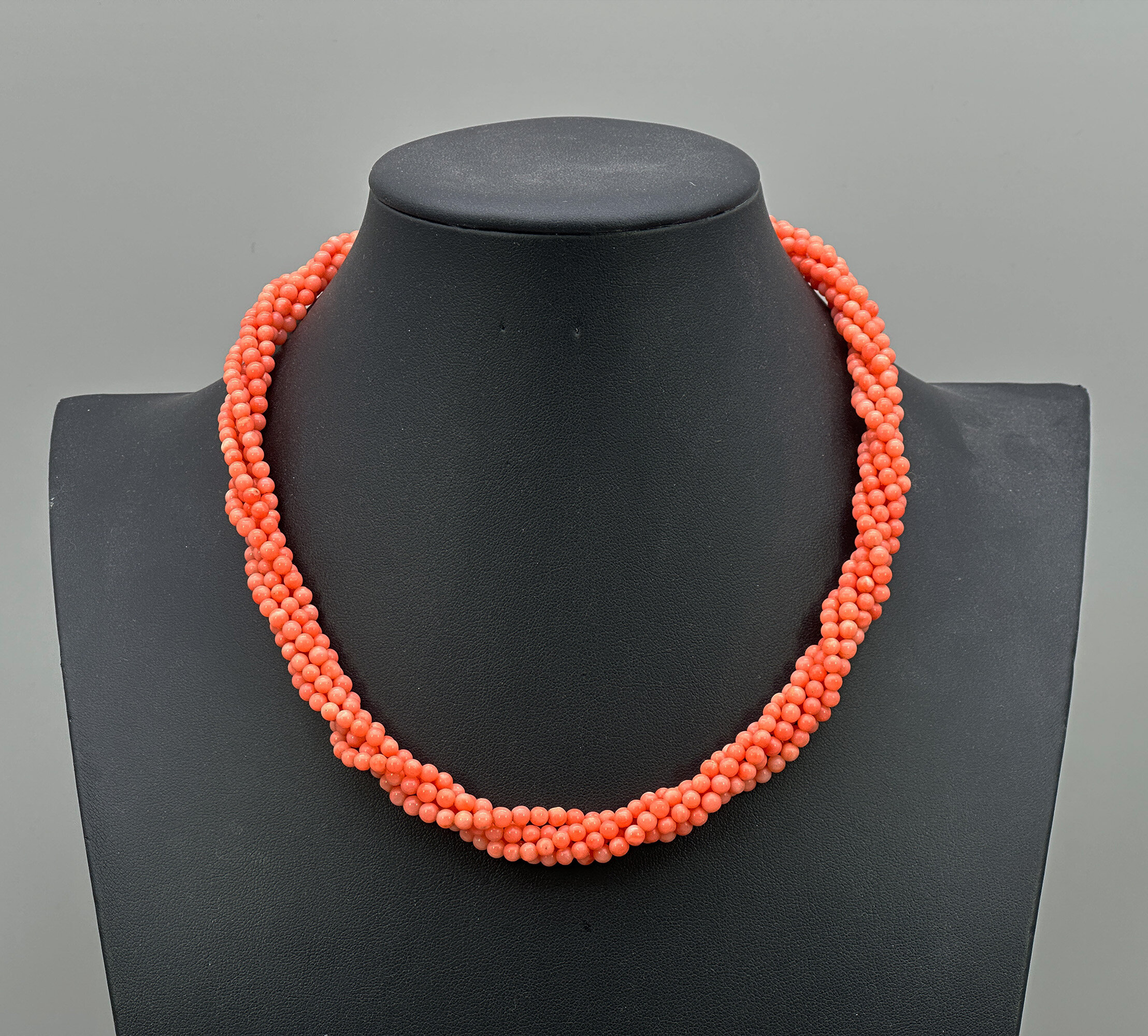
Angel skin coral twisted five strand necklace, c1970
Price: £125
This is quite an unusual necklace comprising five strands of small coral beads that are twisted together. It has a matching clasp that is set with a coral stone. The beads are angel skin coral which comes from mainly Japan and Taiwan. The clasp is gold tone. The beads are most likely colour enhanced due to the uniformity. This is very common but it does effect the value somewhat.
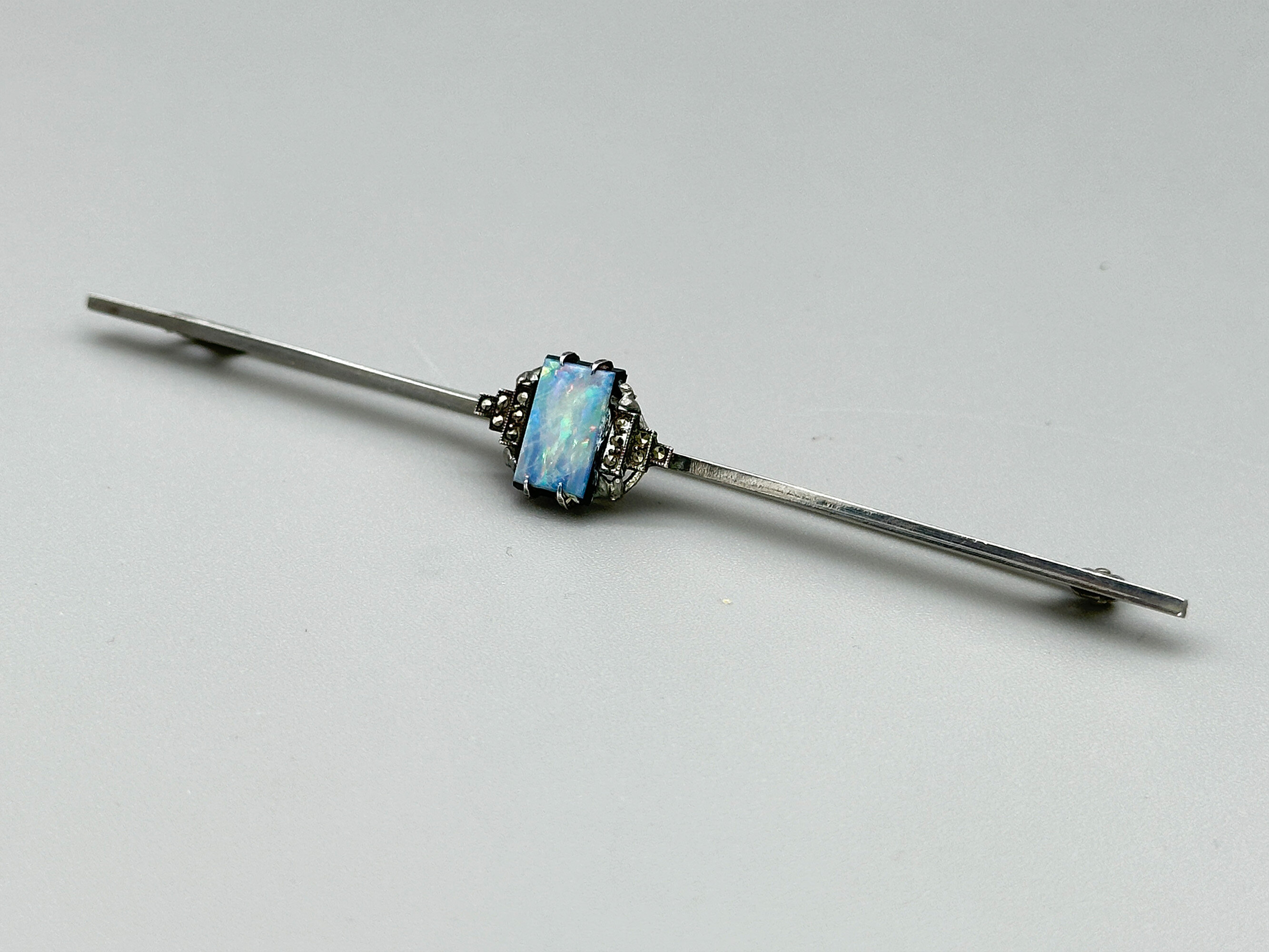
Art Deco bar brooch with rectangular opal c1920
Price: £150
This is a very elegant brooch in a long bar design set with marcasites and a large opal doublet stone where a thin, natural opal layer is adhered to a dark backing to enhance the brilliance of the colours. It is silver and unmarked so is most likely continental and might possibly have been a ring that was later converted into a brooch.
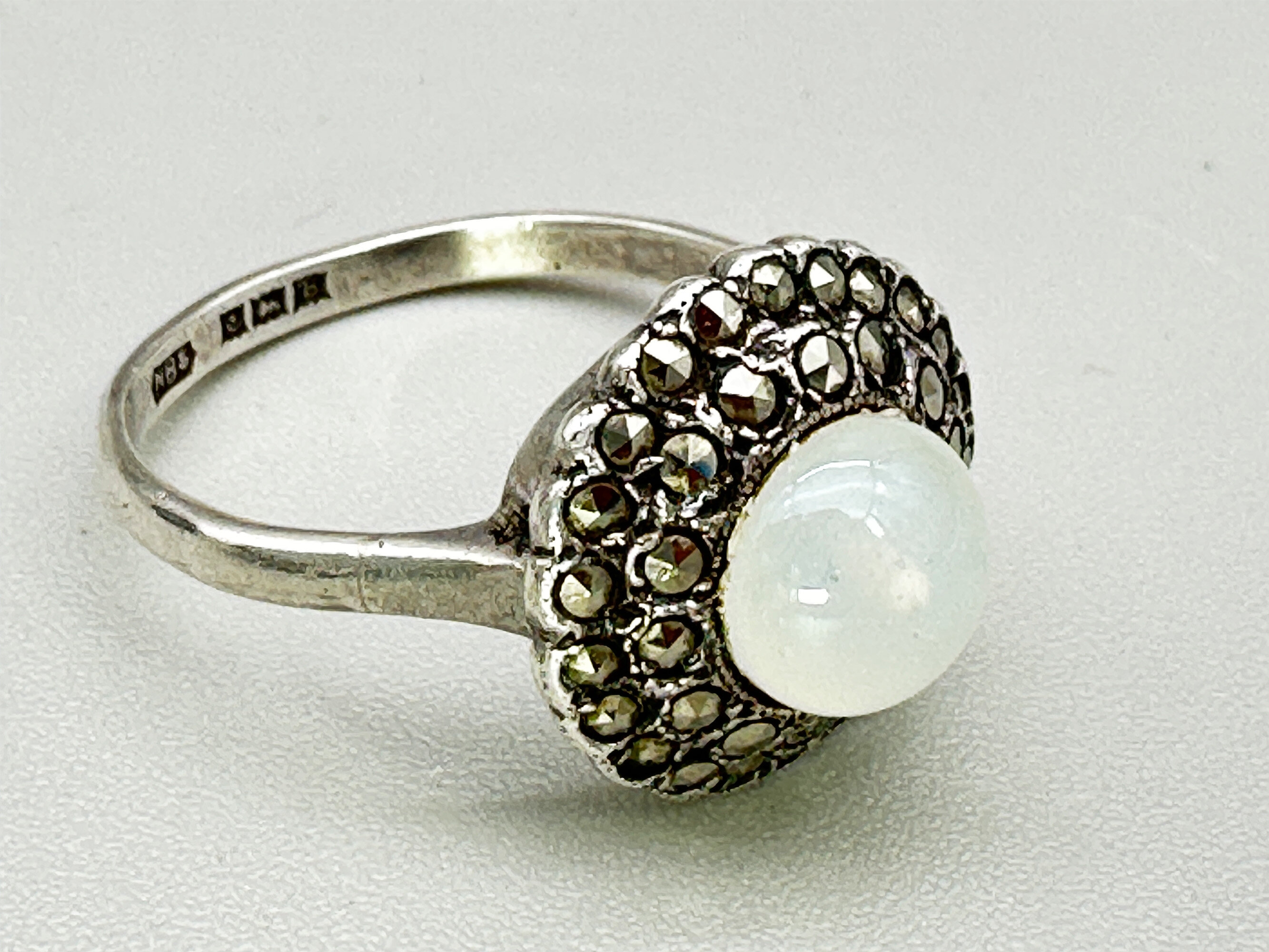
White chalcedony and marcasite ring, Birmingham 1951
Price: £65
This is lovely ring with a bright white chalcedony stone surrounded with marcasites. These are set in silver with full English hallmarks for Birmingham 1951 with a makers mark 'NBS', most likely for Neal Bros.
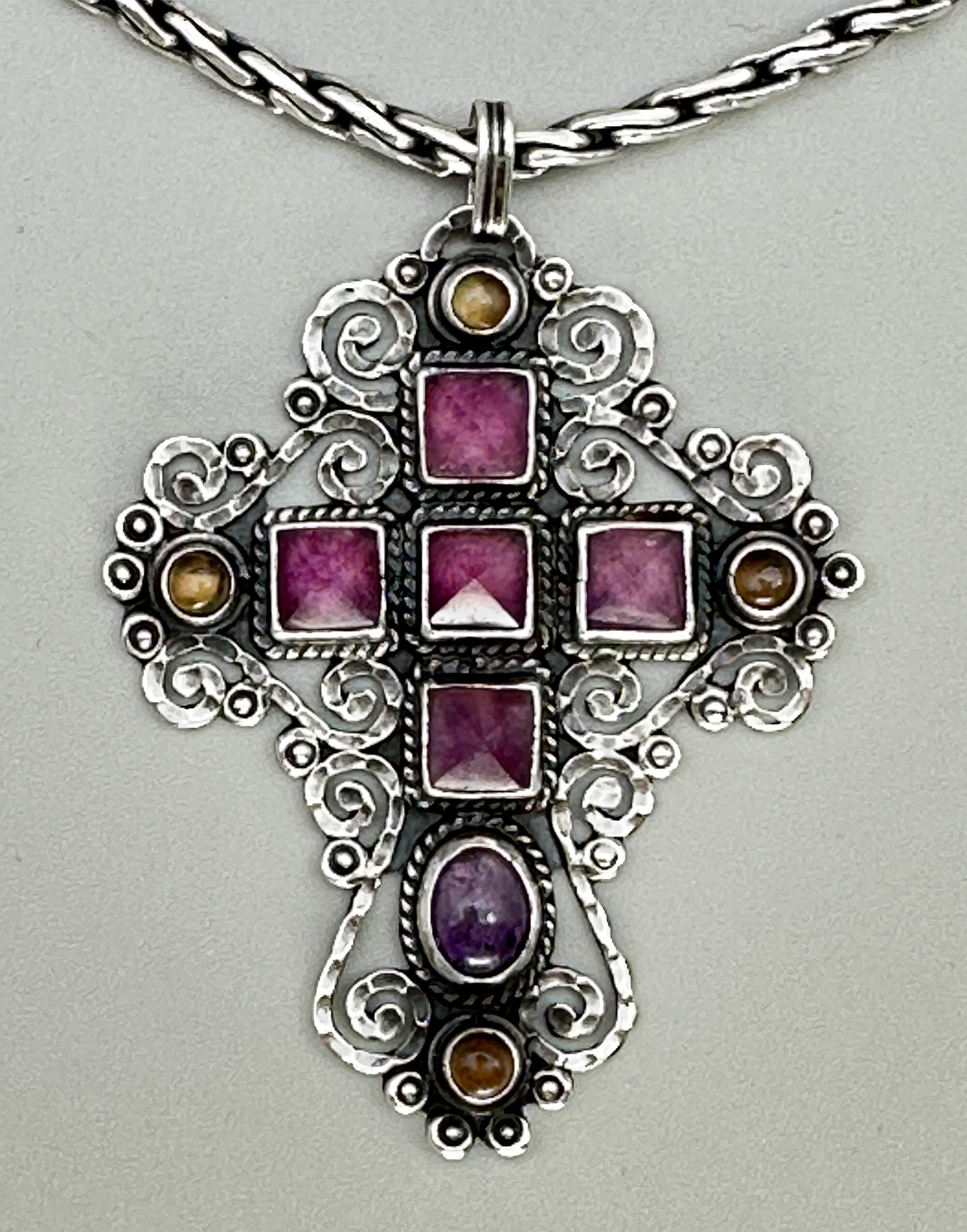
Large traditional Taxco Amethyst cross on chain c1950
Price: £175
This is a very traditional Taxco design in the form of a cross. It is set with rose cut and cabachon amethyst stones. It is marked Made in Mexico with makers mark JGD and 925. It has been paired with a complementary heavy chain that is Indian in origin.
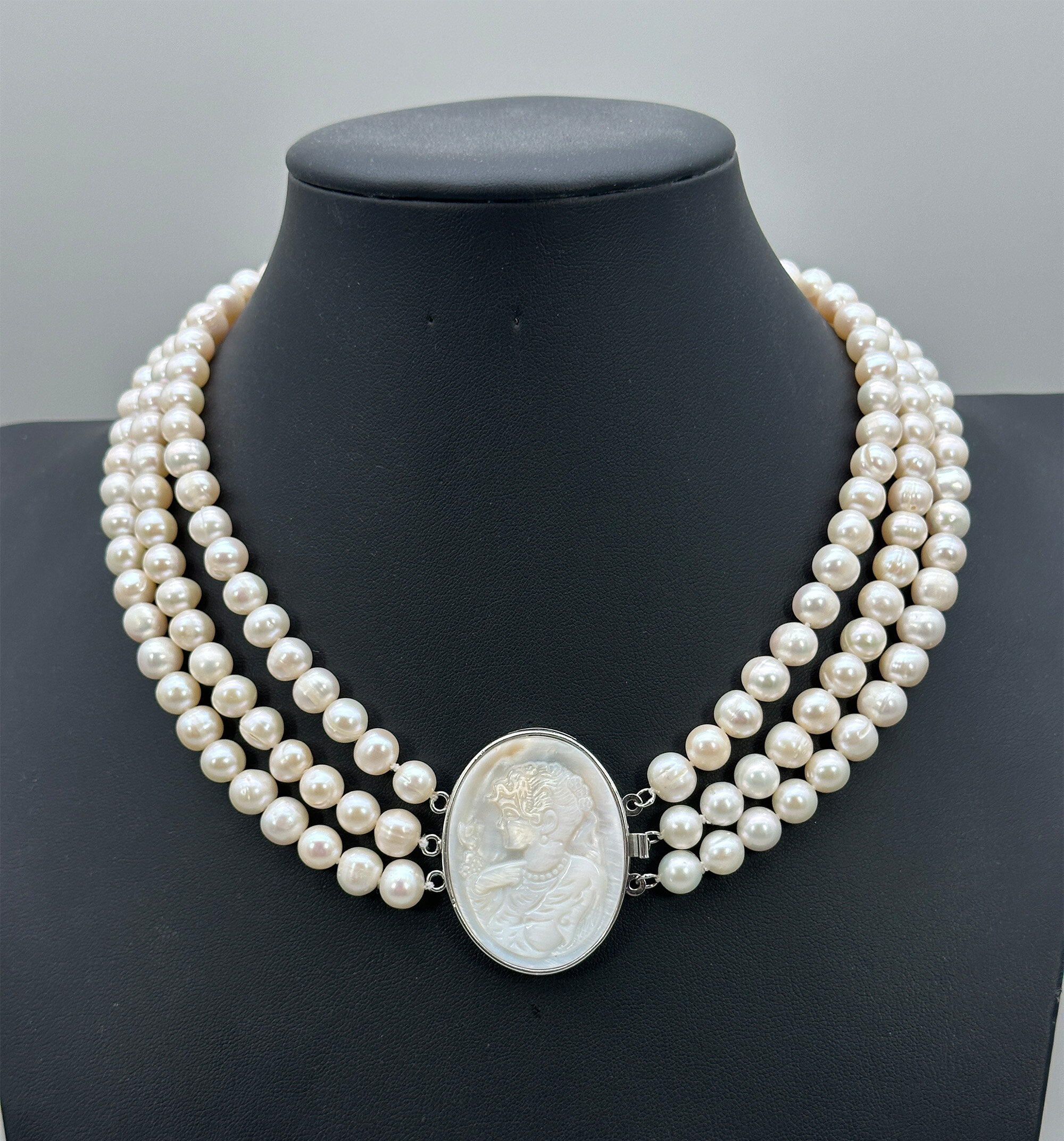
Three strand pearl necklace with mother of pearl plaque, c2000
Price: £75
This is a real show stopper of a necklace. It comprises three strands of lustrous fresh water cultured pearls that end in a feature clasp that is a carved mother of pearl plaque of a young lady. This is an modern interpretation of a 19th century design that would not have been attainable for most people. Thanks to cultured pearls these pieces are now affordable. This is an excellent example due to the quality of the pearls and the carving.
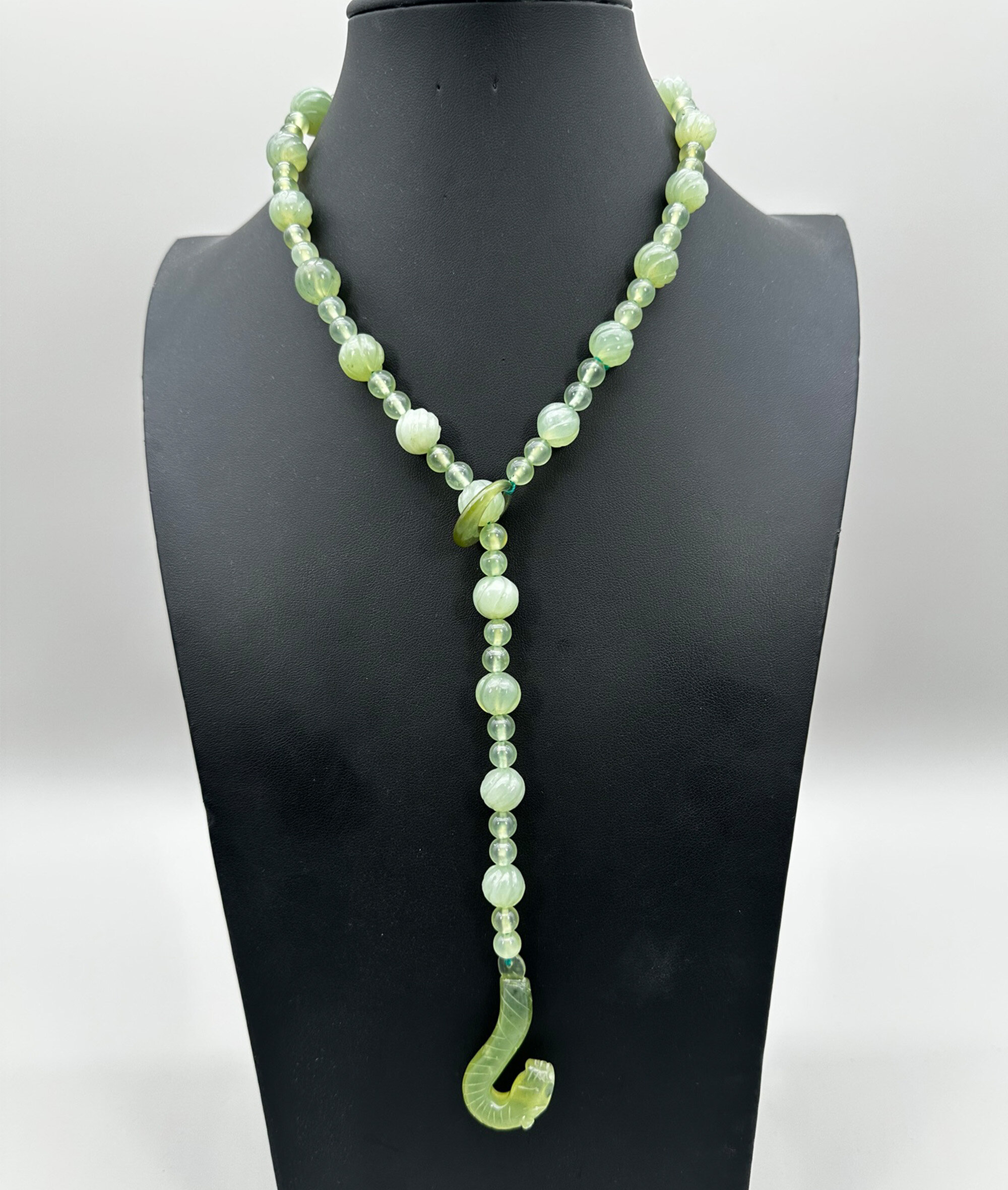
Jade bead necklace with dragon hook c1990
Price: £35
This is a very unusual design necklace that comprises jade beads in a lariat style that has a round jade bead and a hook shaped as a dragons head. This necklace can be worn in a few diffrent ways as shown. The jade beads are both carved and smooth. This necklace is made from jade that has been treated to enhance colour and hardness.
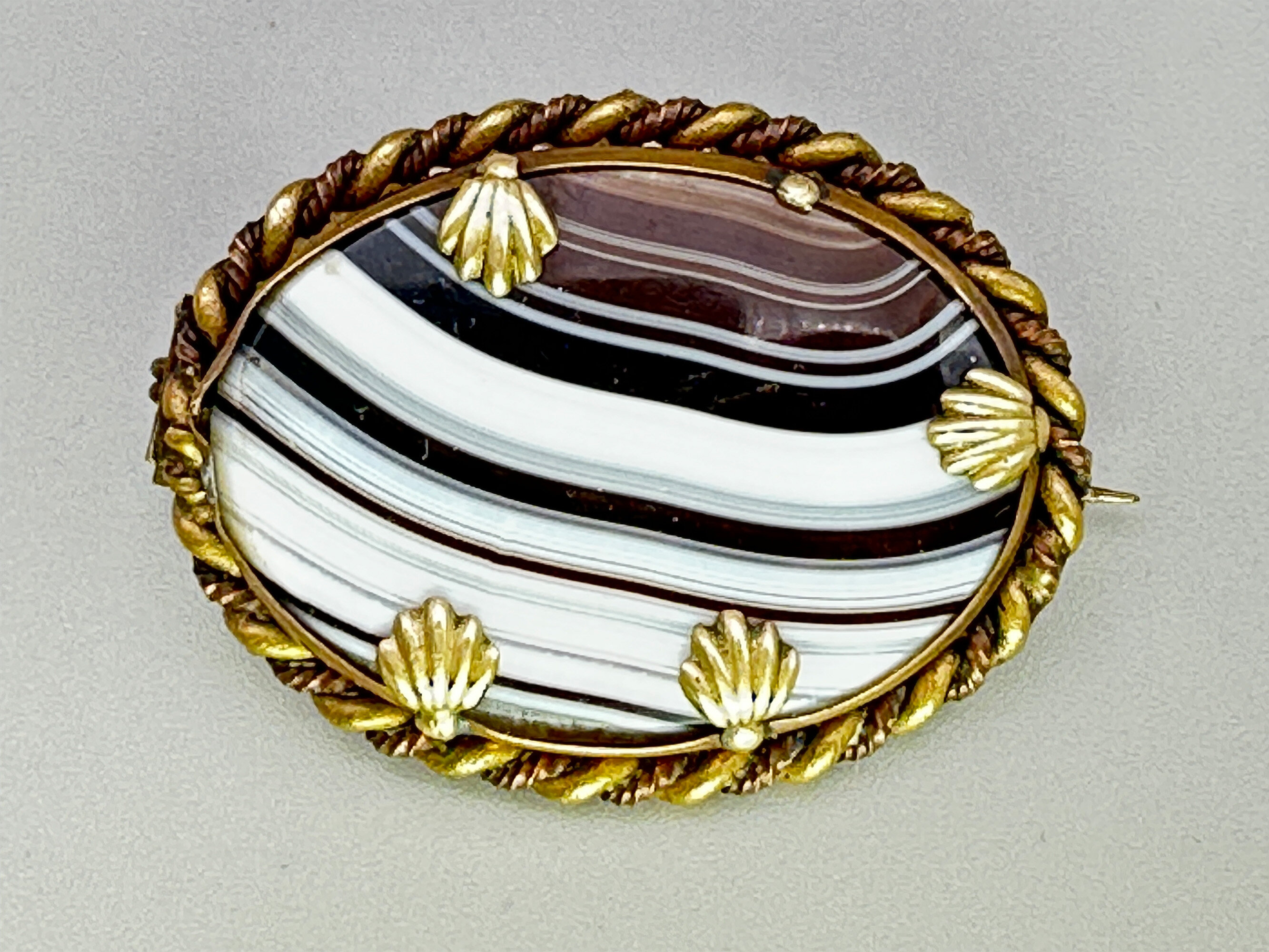
Edwardian banded agate pinchbeck brooch c1910
Price: £45
This is an oval brooch with a large oval Scottish banded agate stone set in pinchbeck, which was the faux gold of the Edwardian period. The stone is the star of the show here.
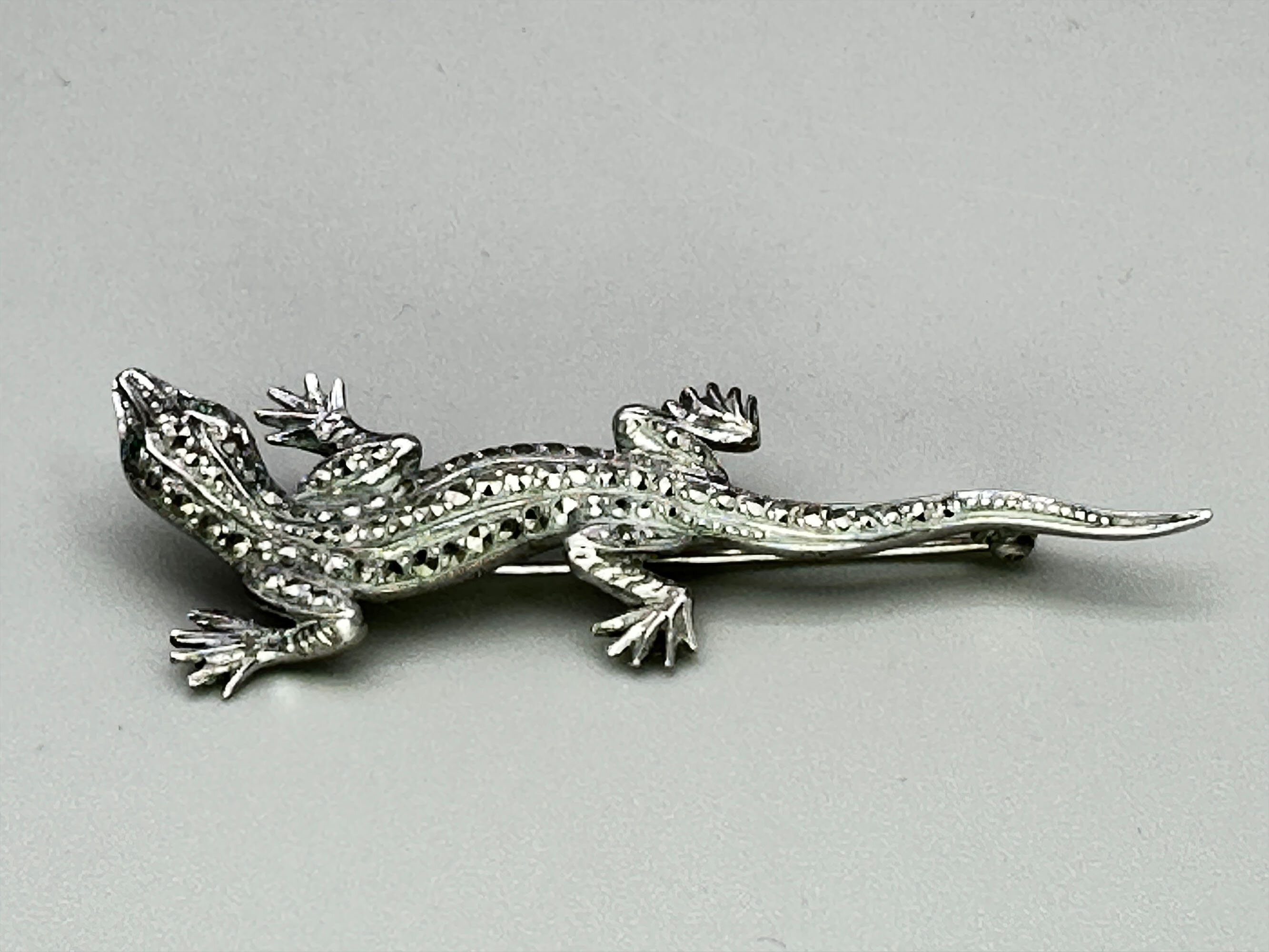
Silver and marcasite lizard brooch, American c1950
Price: £75
This is a very finely detailed brooch in the form of a lizard set with very small marcasite stones and green paste stones for the eyes. It is marked 'Sterling' which indicates American manufacture.
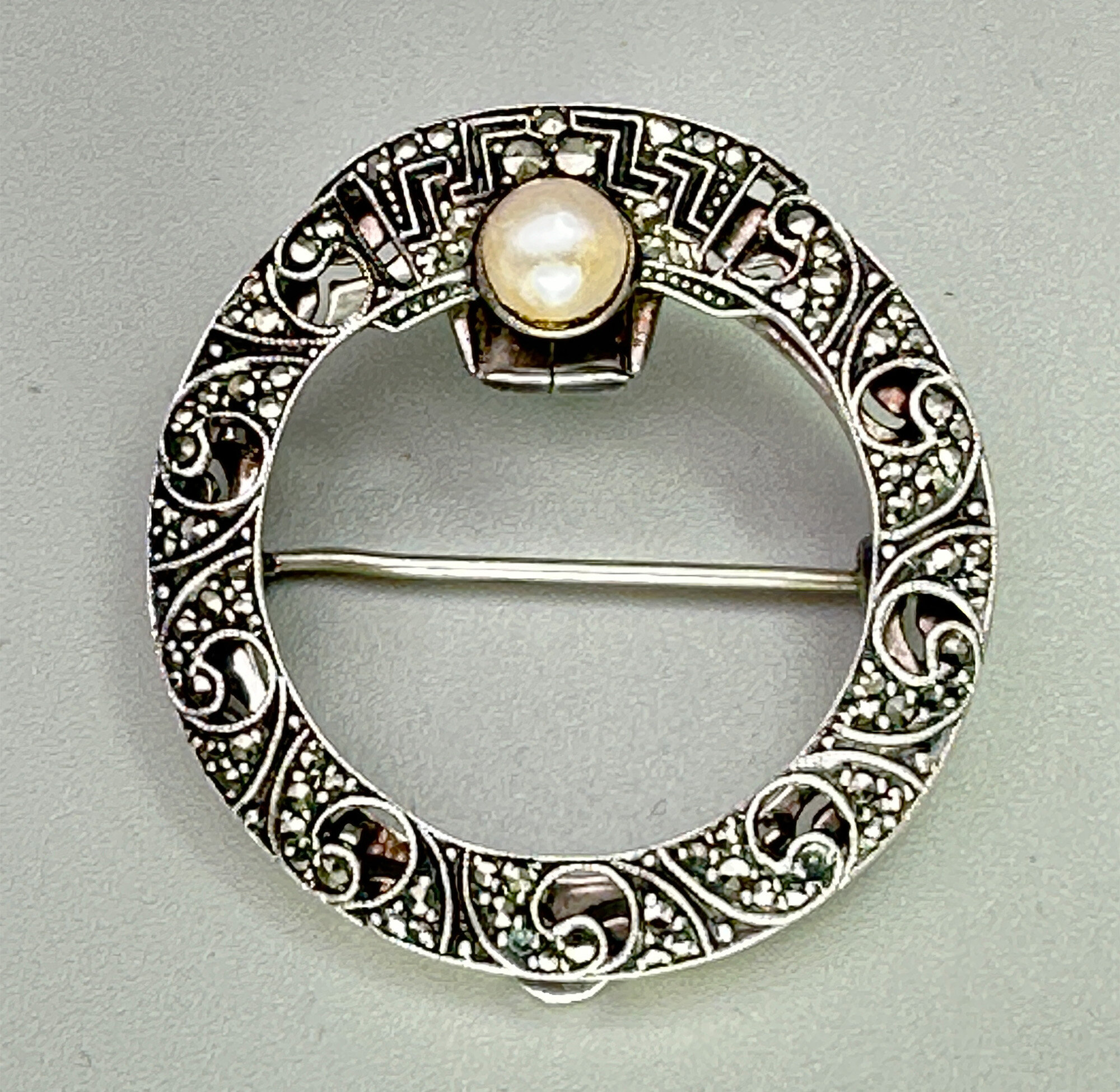
Convertible dress clip brooch with pearl and marcasite stones c1940
Price: £85
This is a silver brooch or convertible dress clip, the circular form set with a real pearl and marcasite stones. The main part of the brooch is silver and the clip fitting is most likely white metal. Although unmarked, it is probably American.
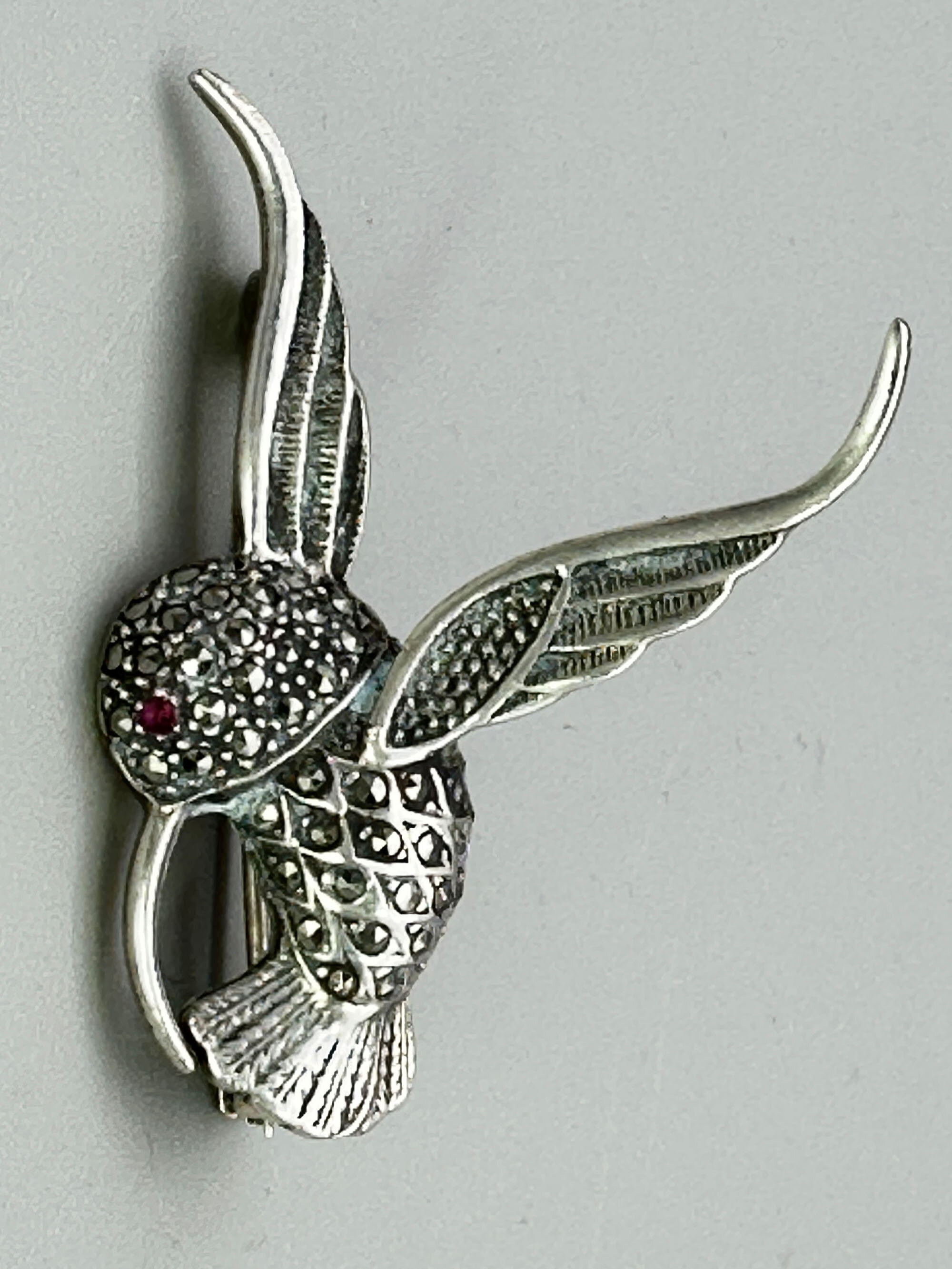
Silver hummingbird brooch with marcasite stones c1950
Price: £35
This is a lovely small brooch in a stylised hummingbird design. It is set with marcasites with a ruby eye. It is marked 925 so is most likely continental.
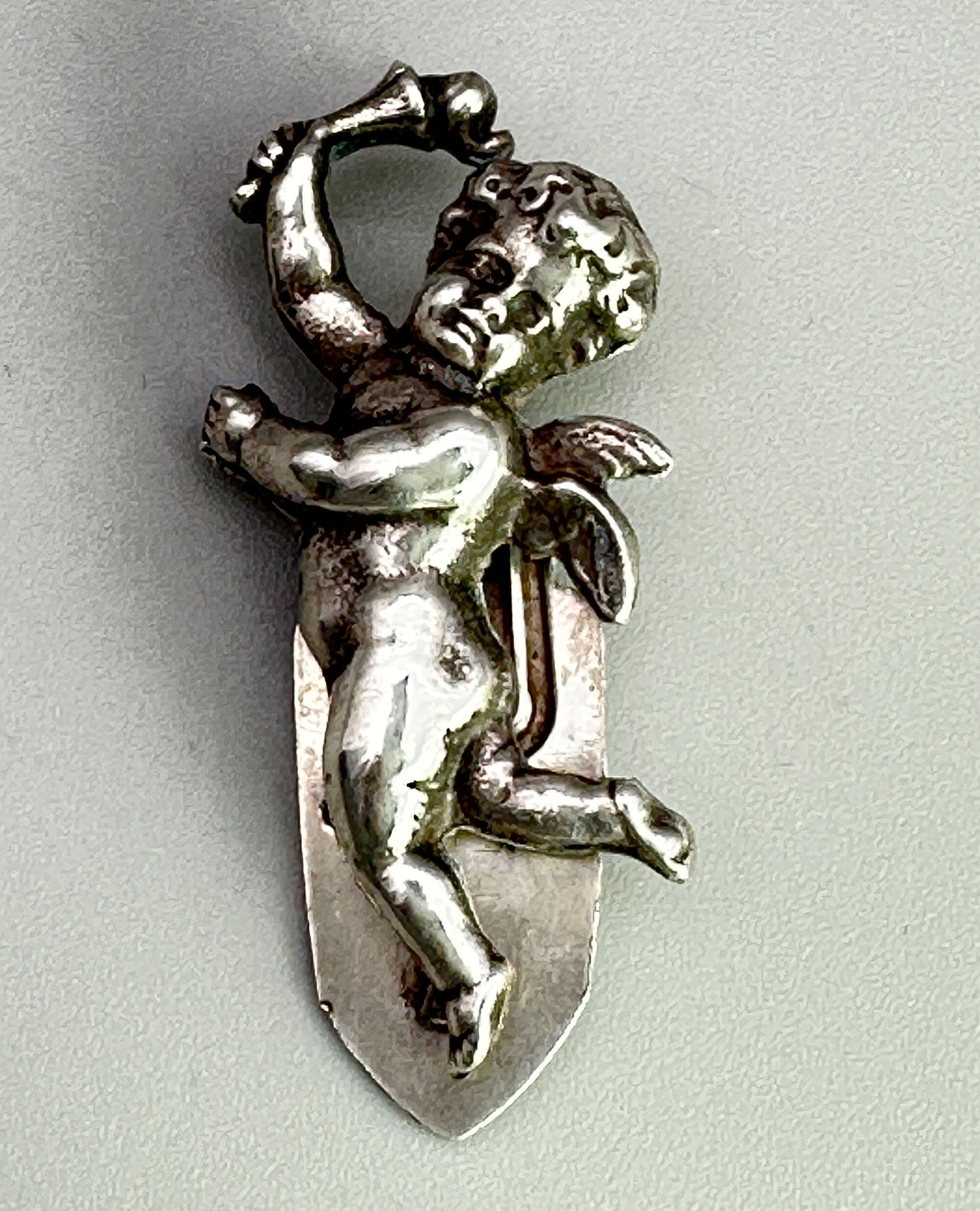
Keim Ltd London, silver putto dress clip c1930
Price: £35
This is a lovely little dress clip in the shape of a putto or cherub holding a torch. It is marked 'SILVER' with the maker's name 'KEIM LTD LONDON' and most likely dates to the 1930s.
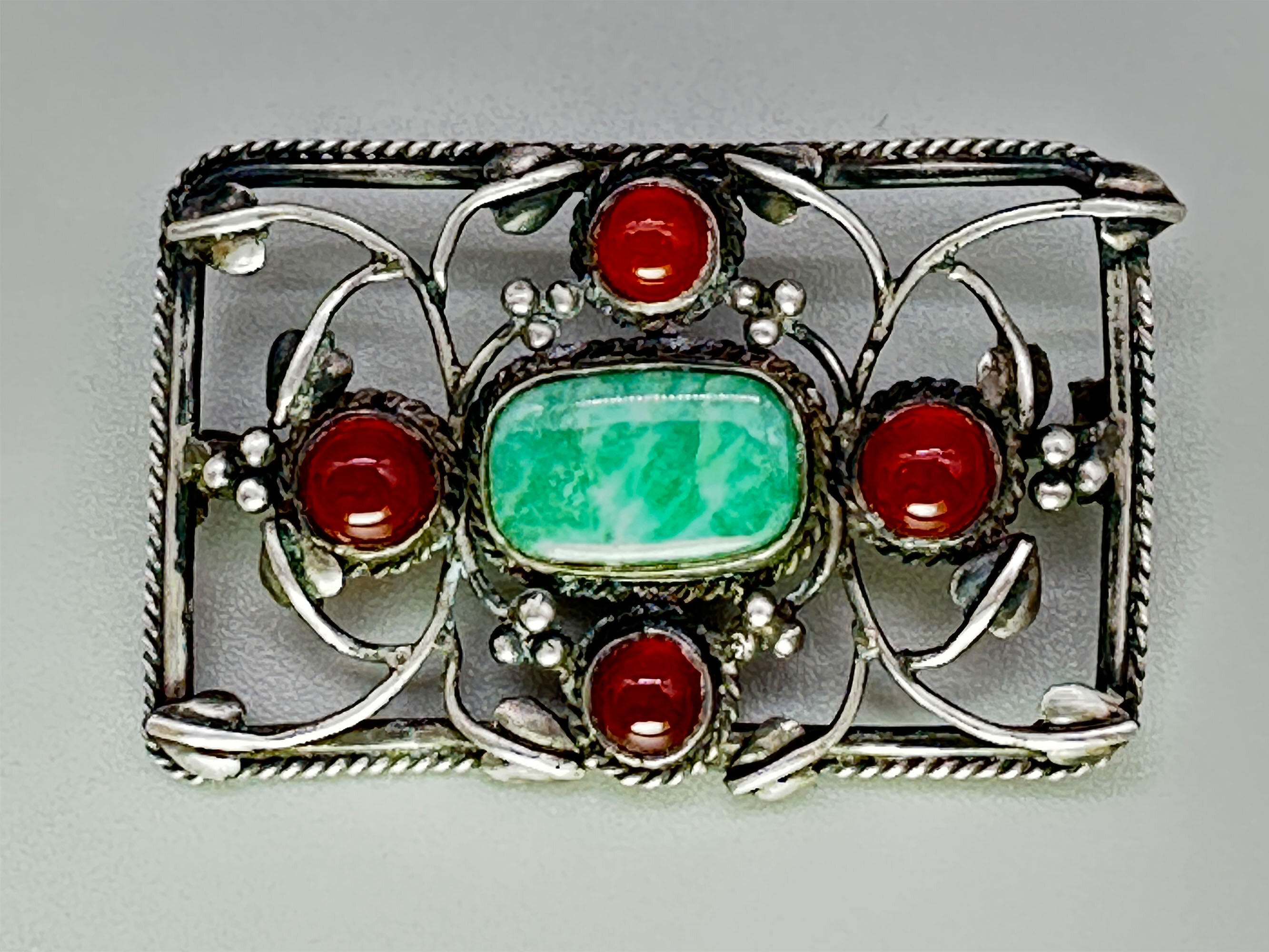
Arts and Crafts brooch with carnelian and aventurine c1910
Price: £95
This is a very striking brooch that has a very recognisable Arts and Crafts design. It looks like a precursor to the designs of Rennie Mackintosh and is possibly even from his workshop. It is set with carnelian and aventurine stones and unmarked but is most likely from Scotland.
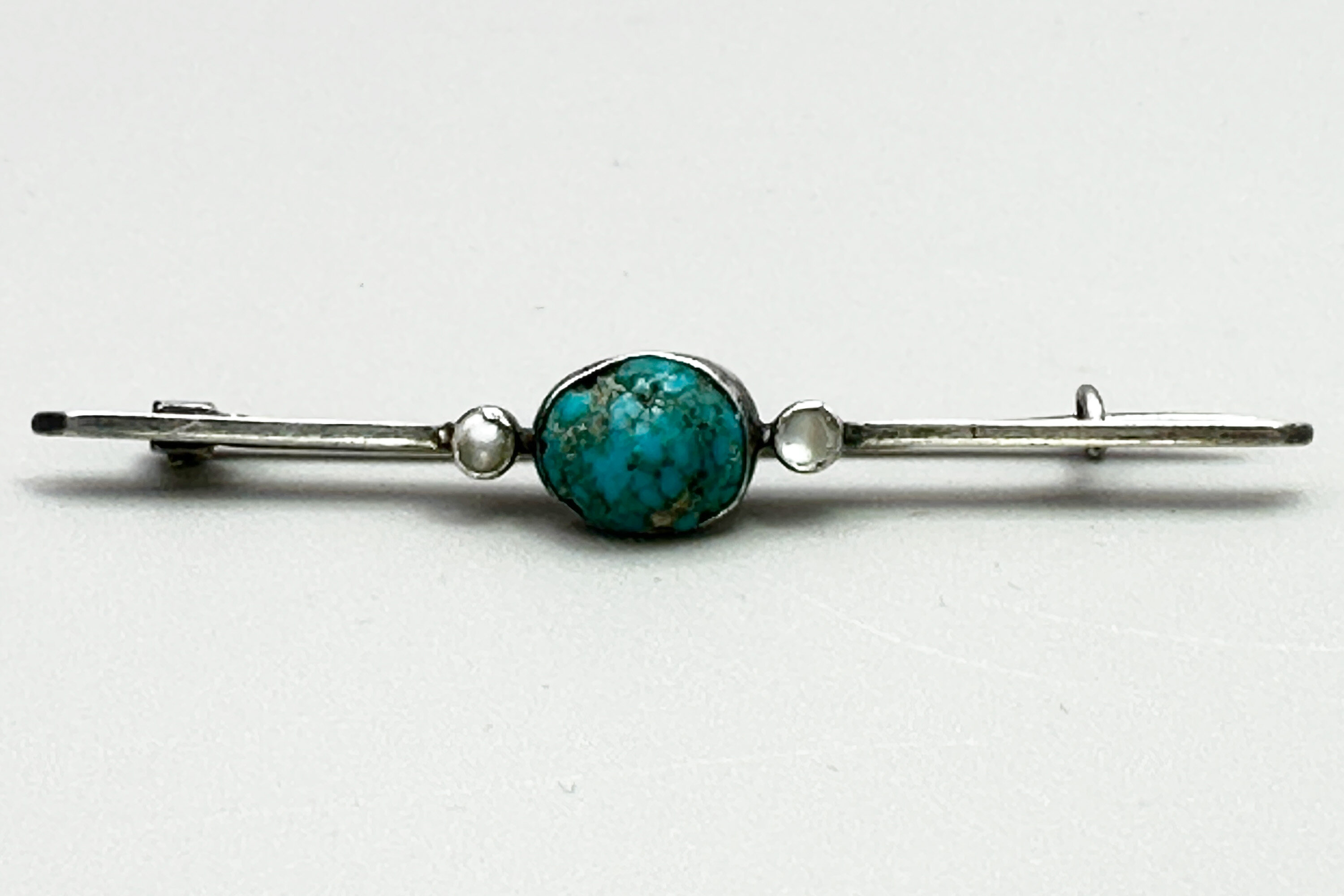
Arts and Crafts bar brooch with turquoise and coque de perle c1910
Price: £75
This is a very simple and elegant brooch typical of the Arts and Crafts style. It is set with a turquoise cabochon that is flanked by two coque de perle stones and is unmarked.
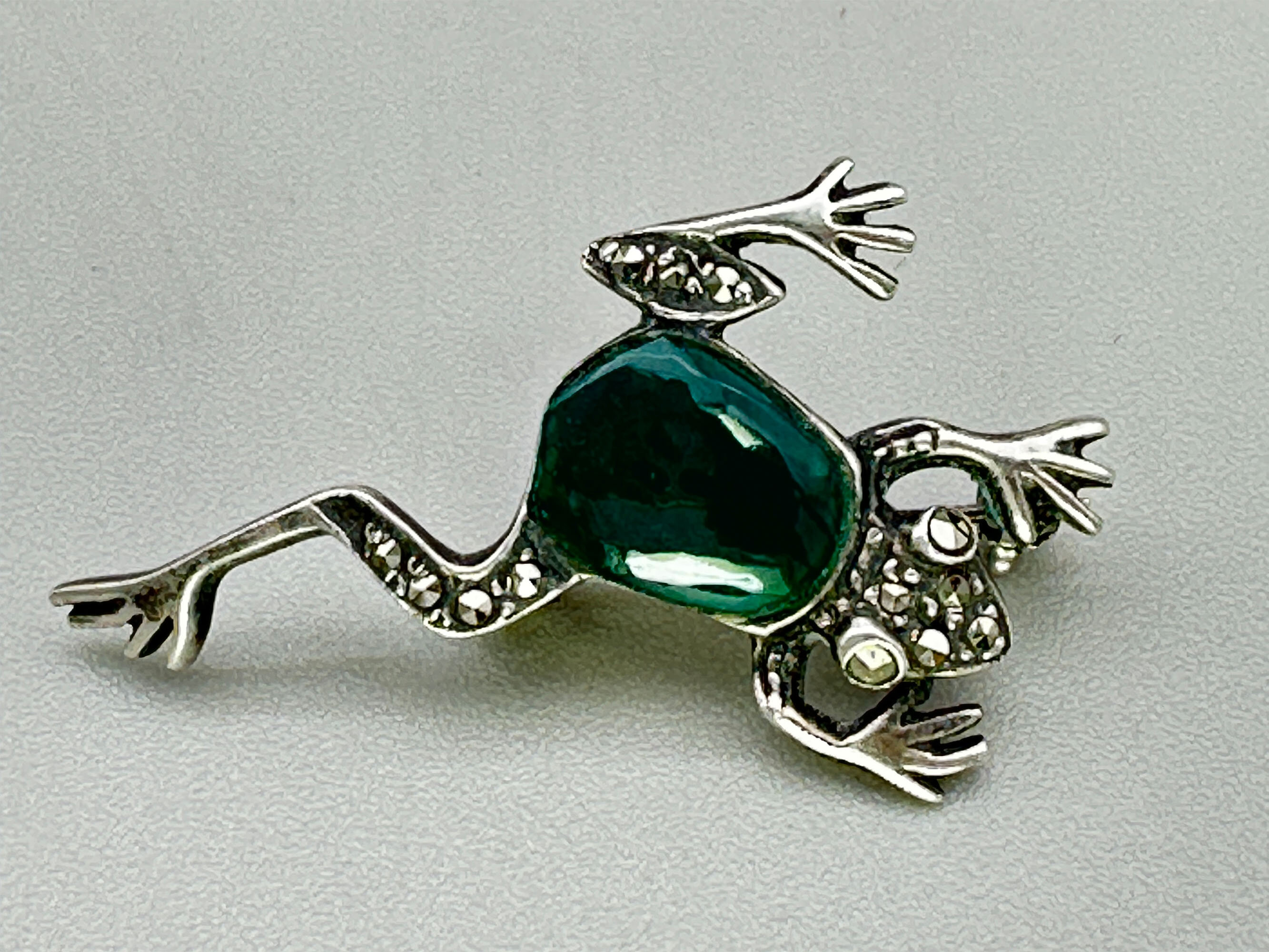
Silver frog brooch with green chalcedony c1900
Price: £35
This is a very small and elegant silver brooch from the late Victorian period in the shape of a leaping frog. It is set with green chalcedony and marcasite stones and is unmarked.
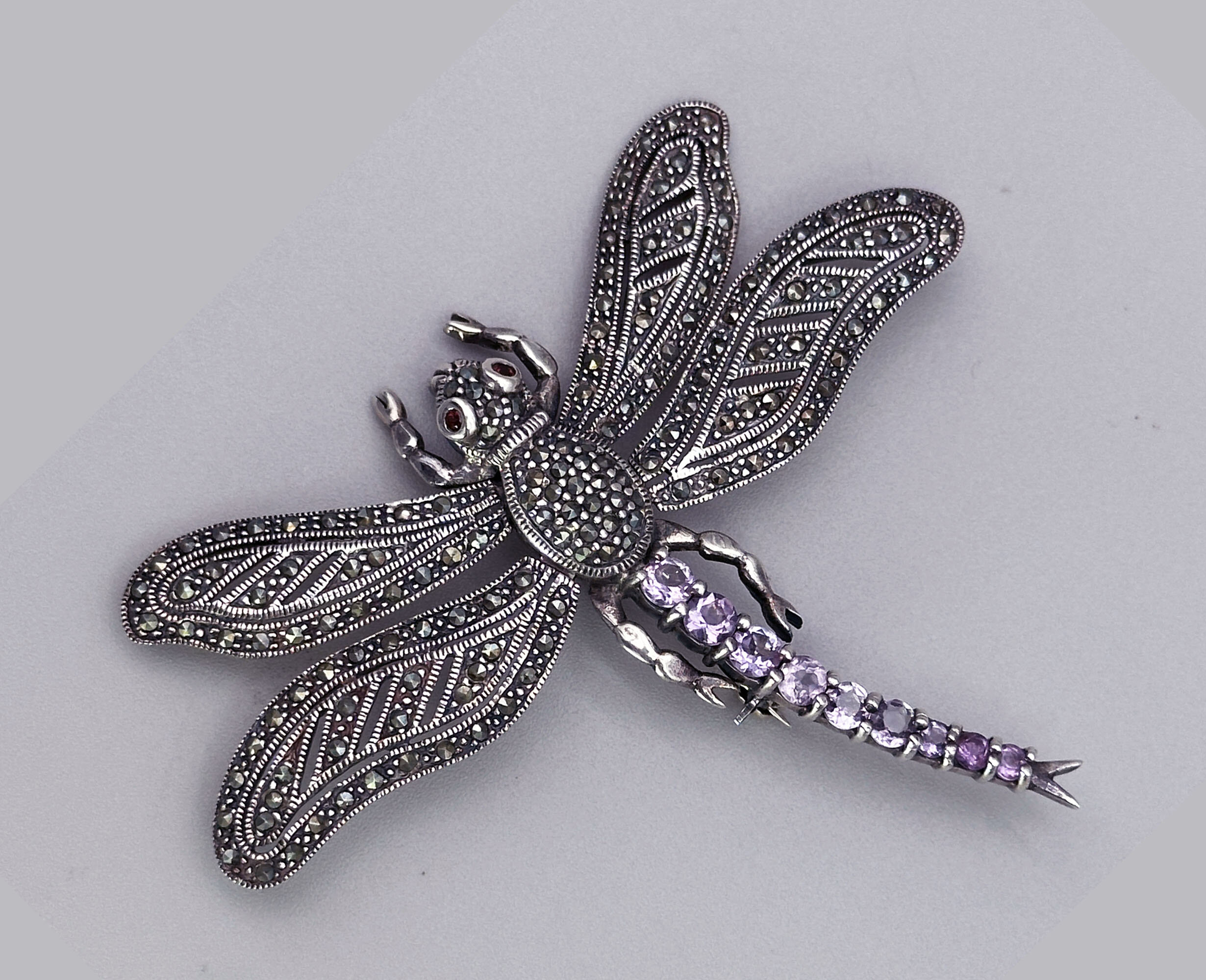
Art Nouveau style dragonfly brooch with articulated wings, c1950
Price: £145
This is a very large brooch in a dragonfly design. It is very finely set with marcasites and amethysts with garnets for the eyes. The body and wings feature very fine milgrain work and the wings are articulated allowing them to move. It is marked to the reverse '925'.