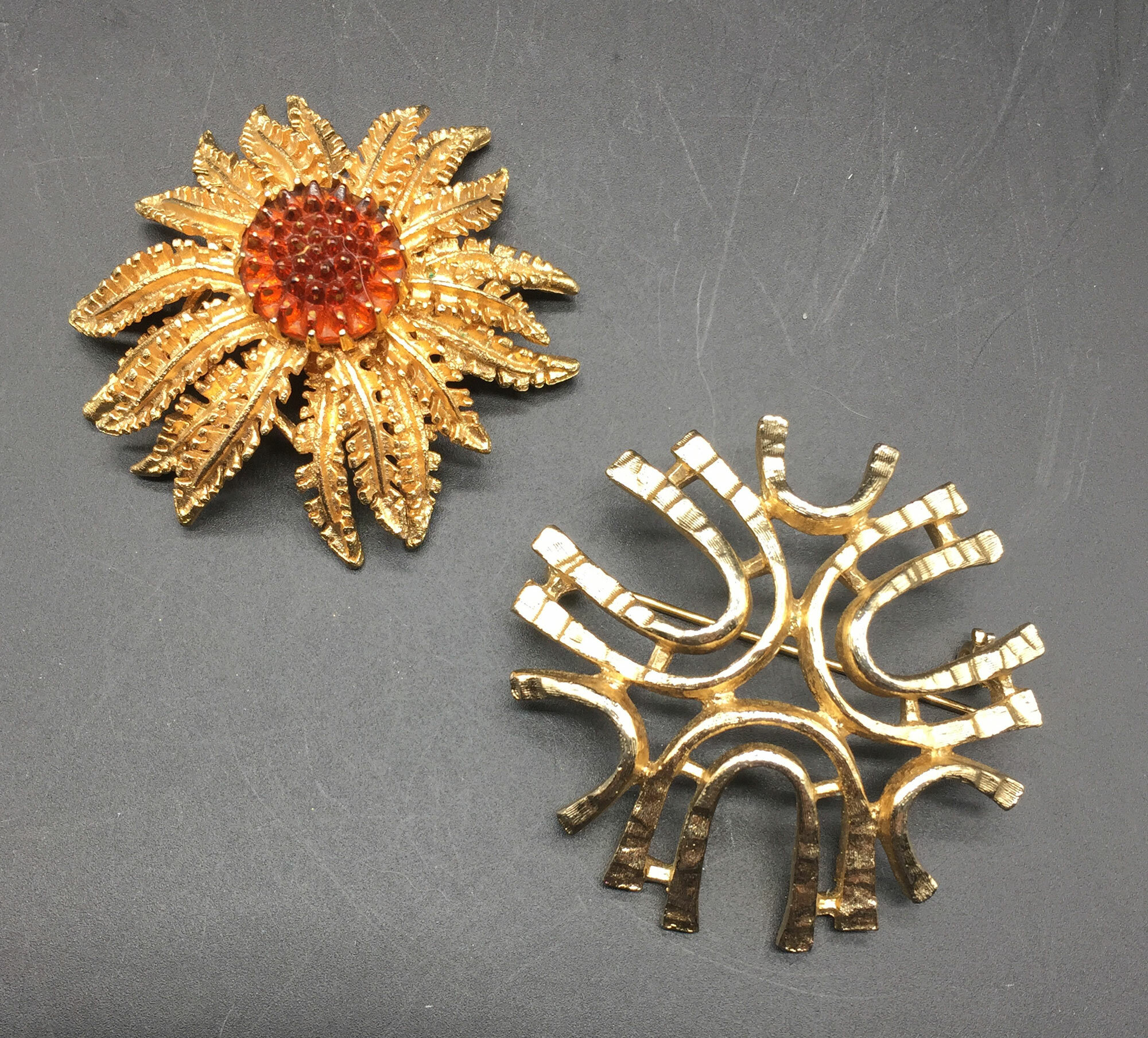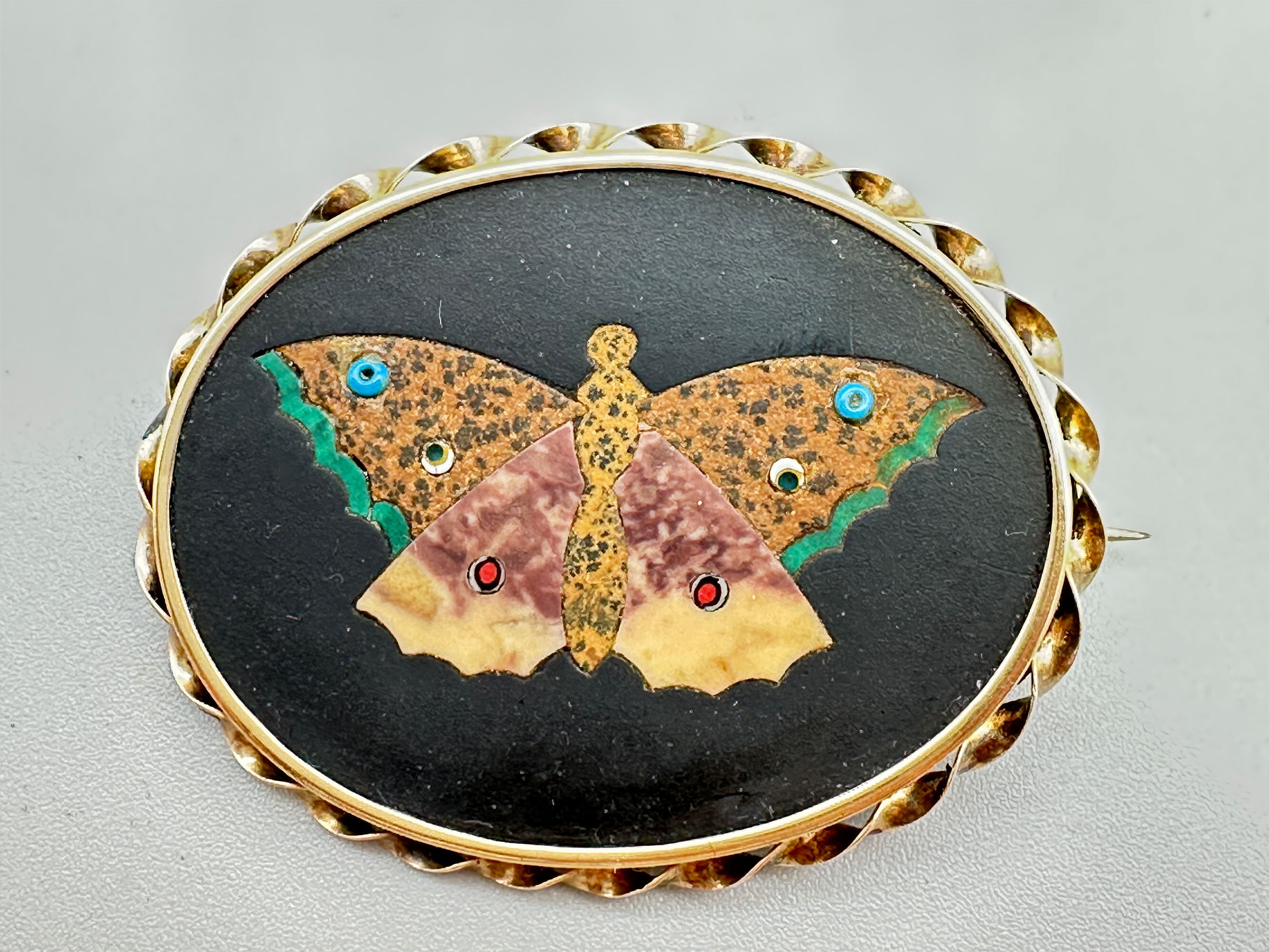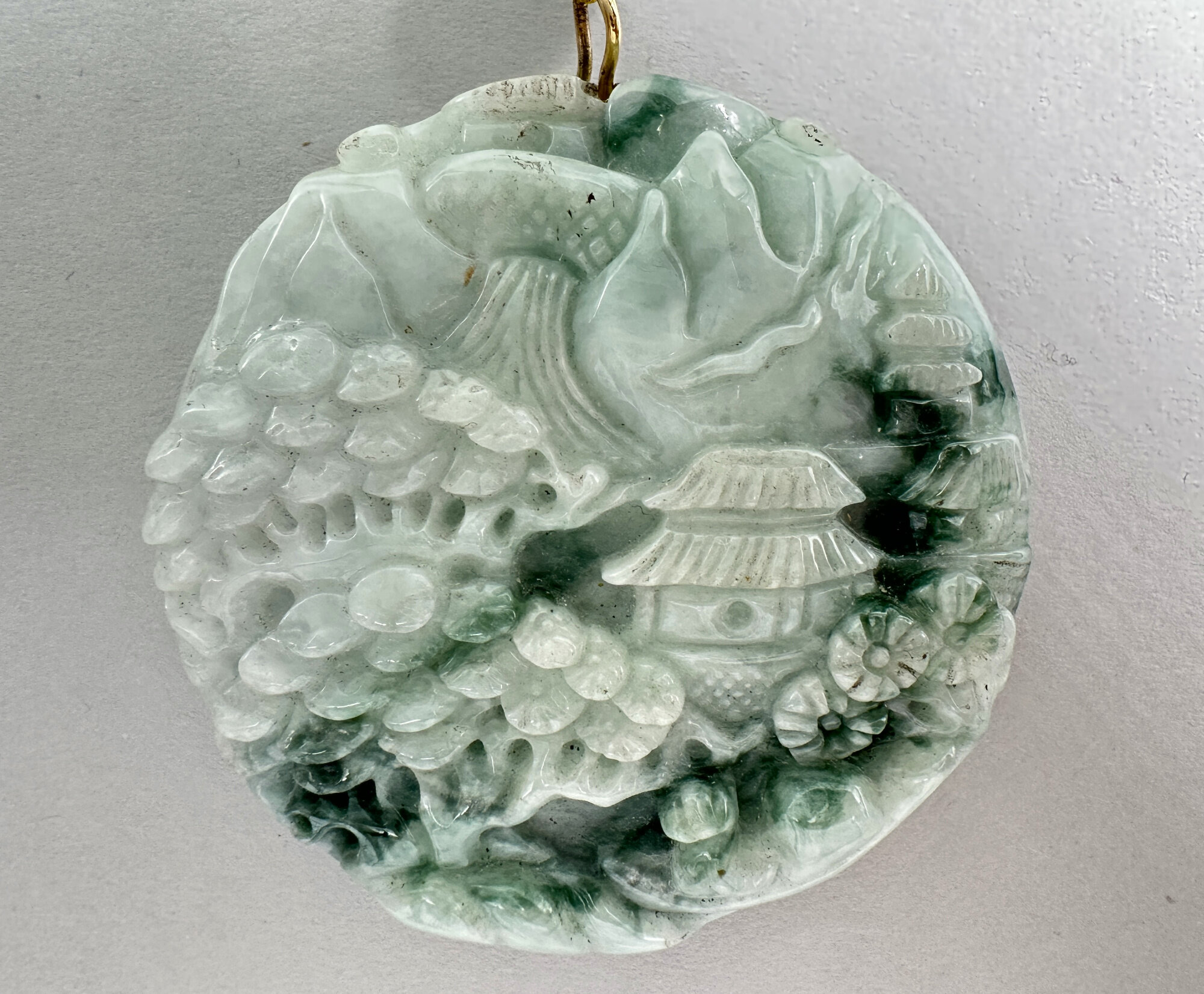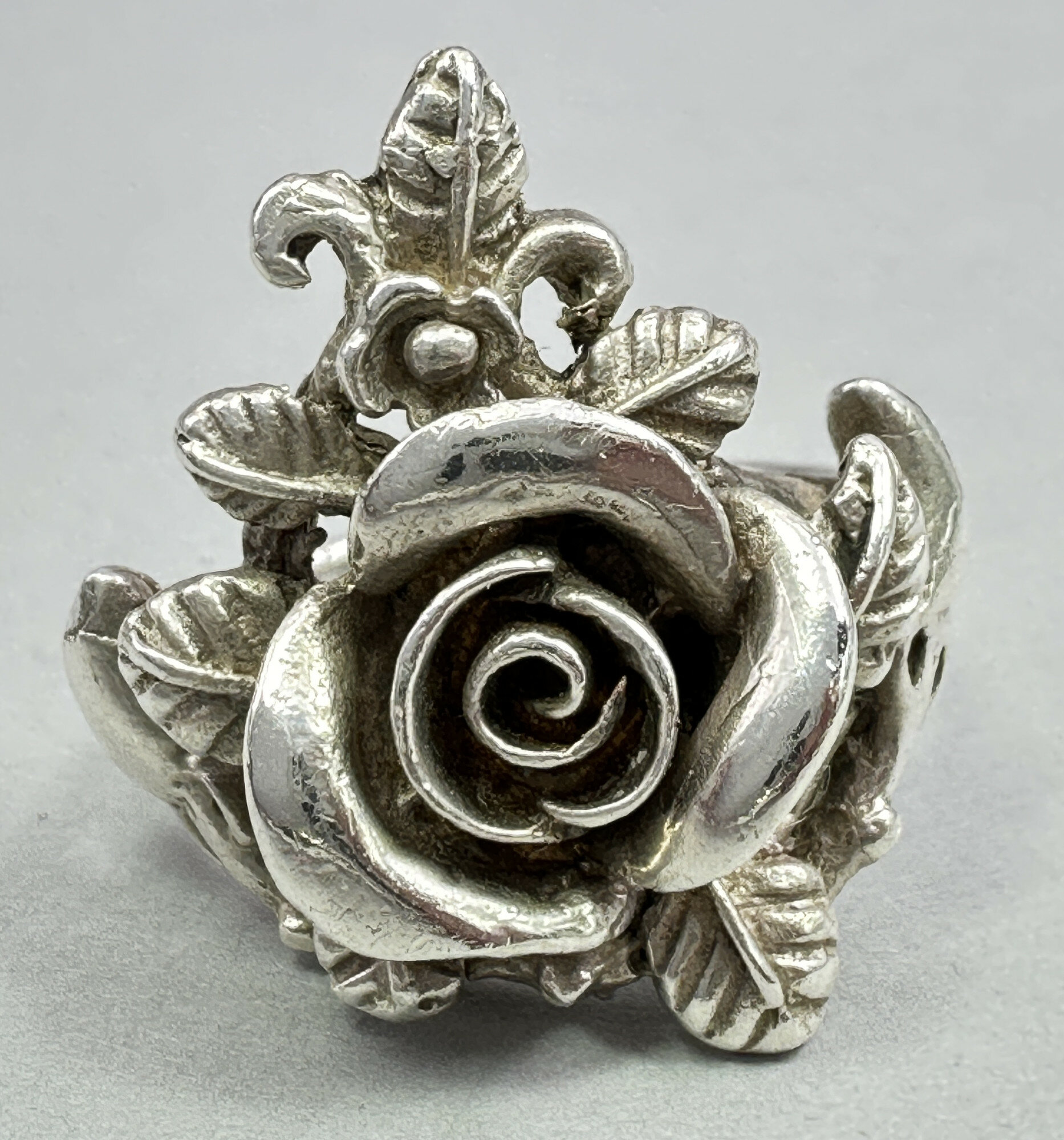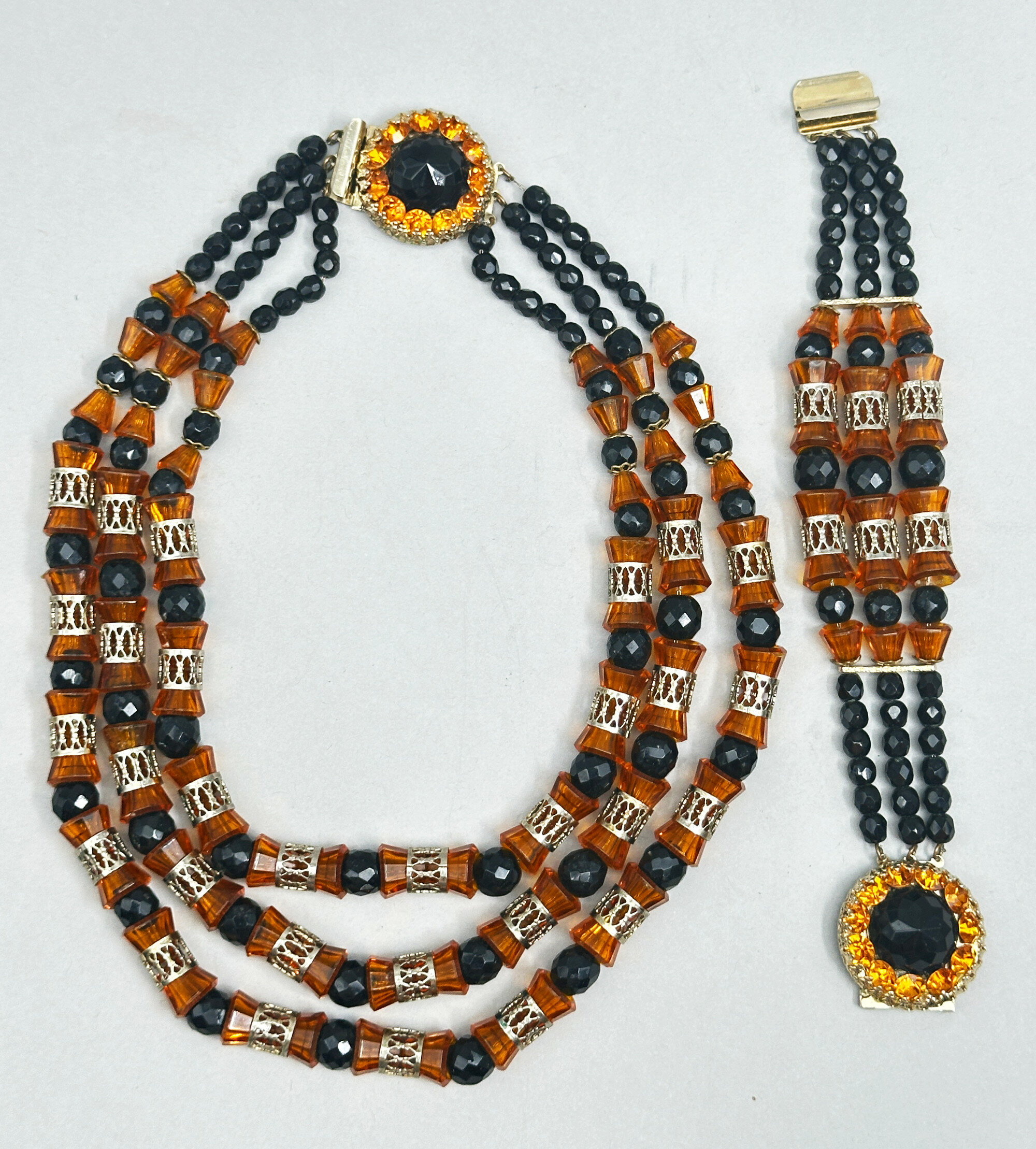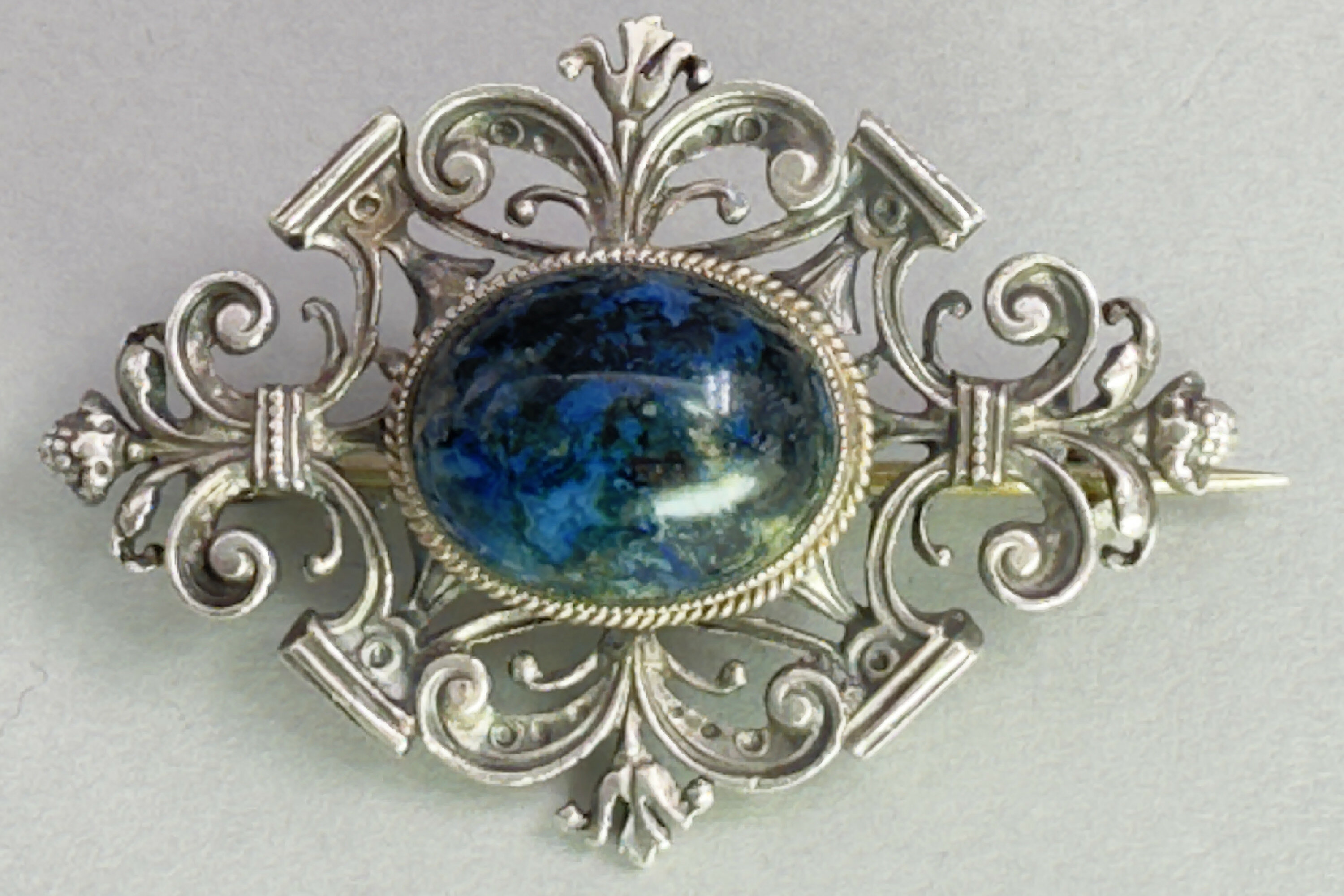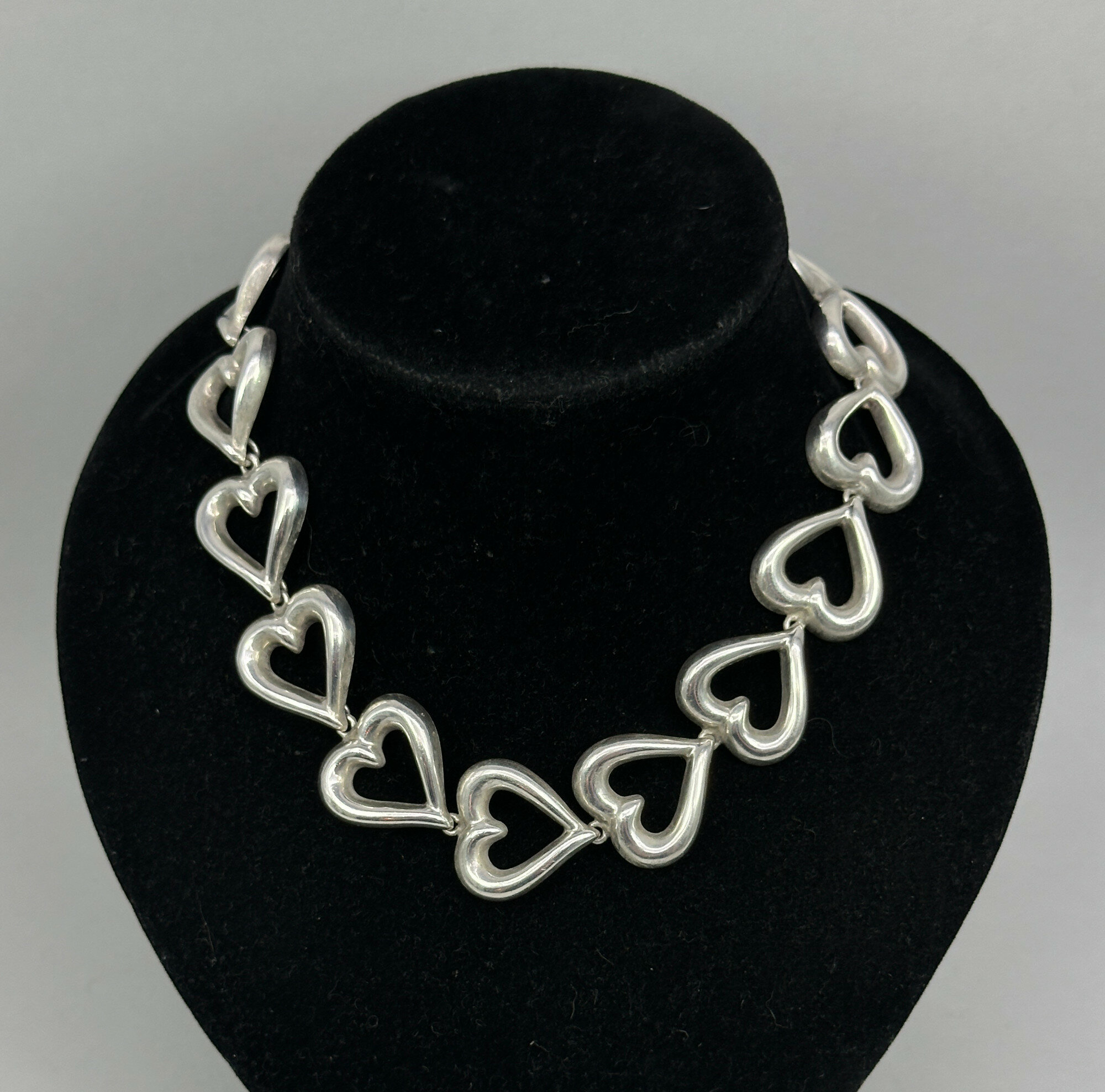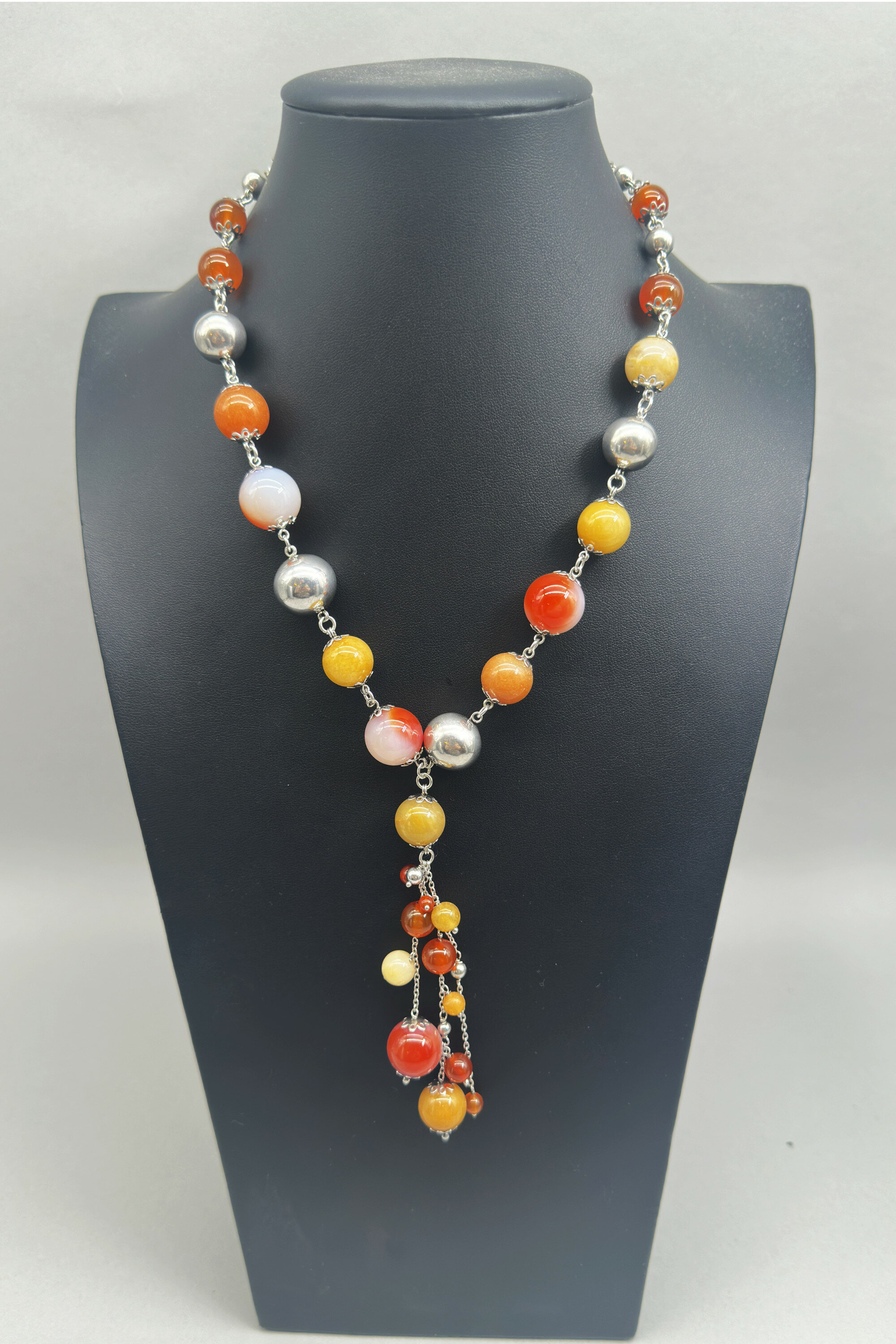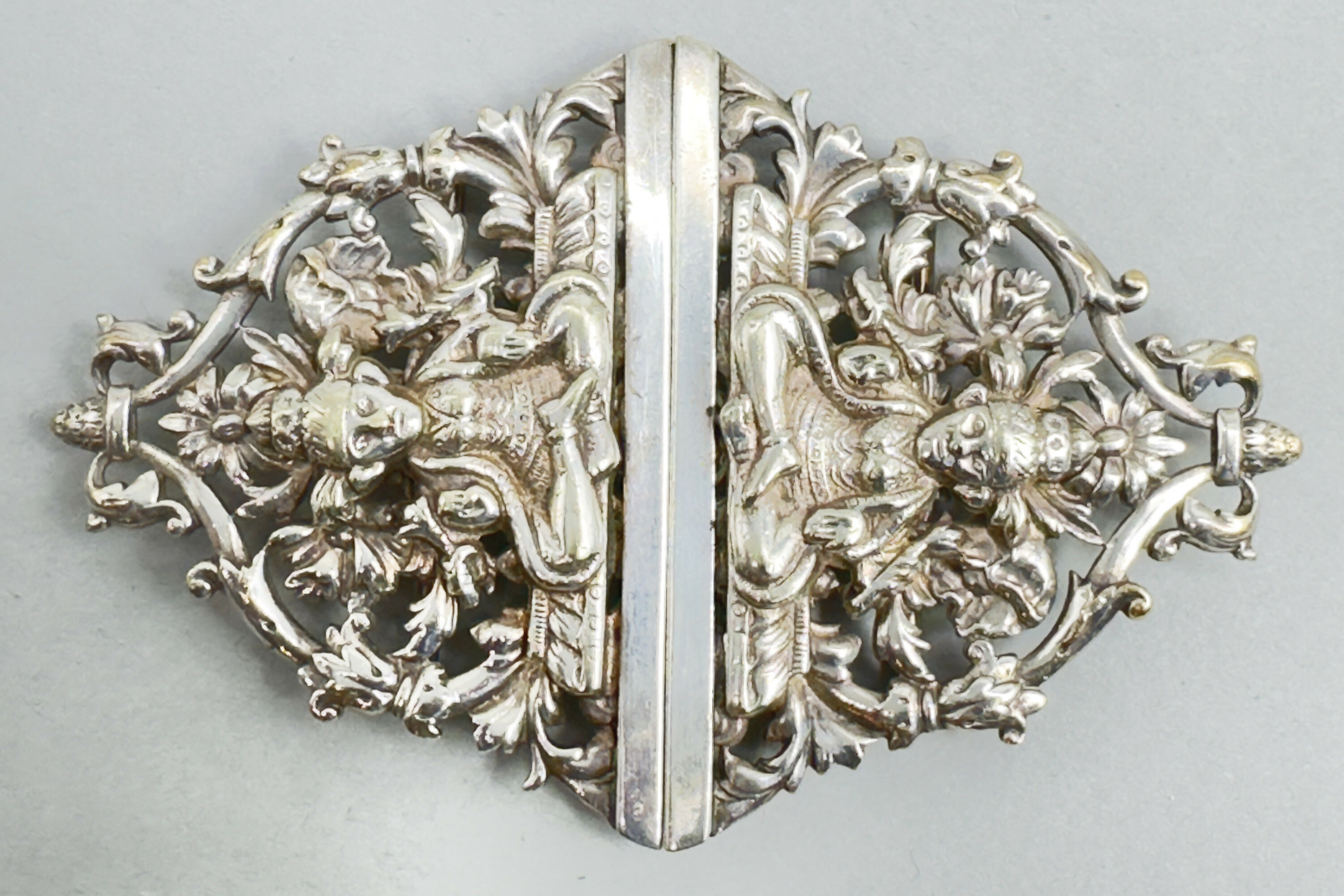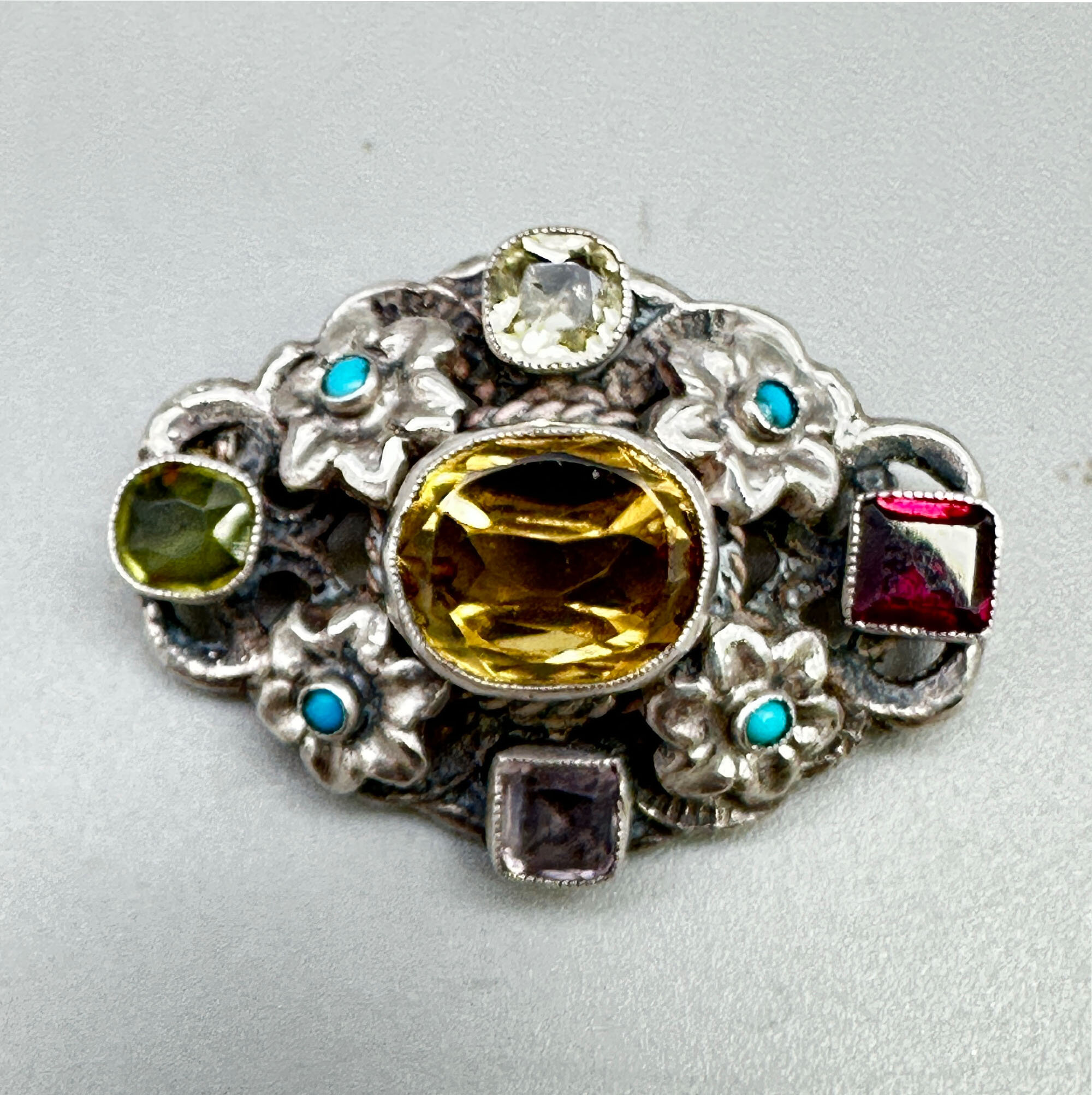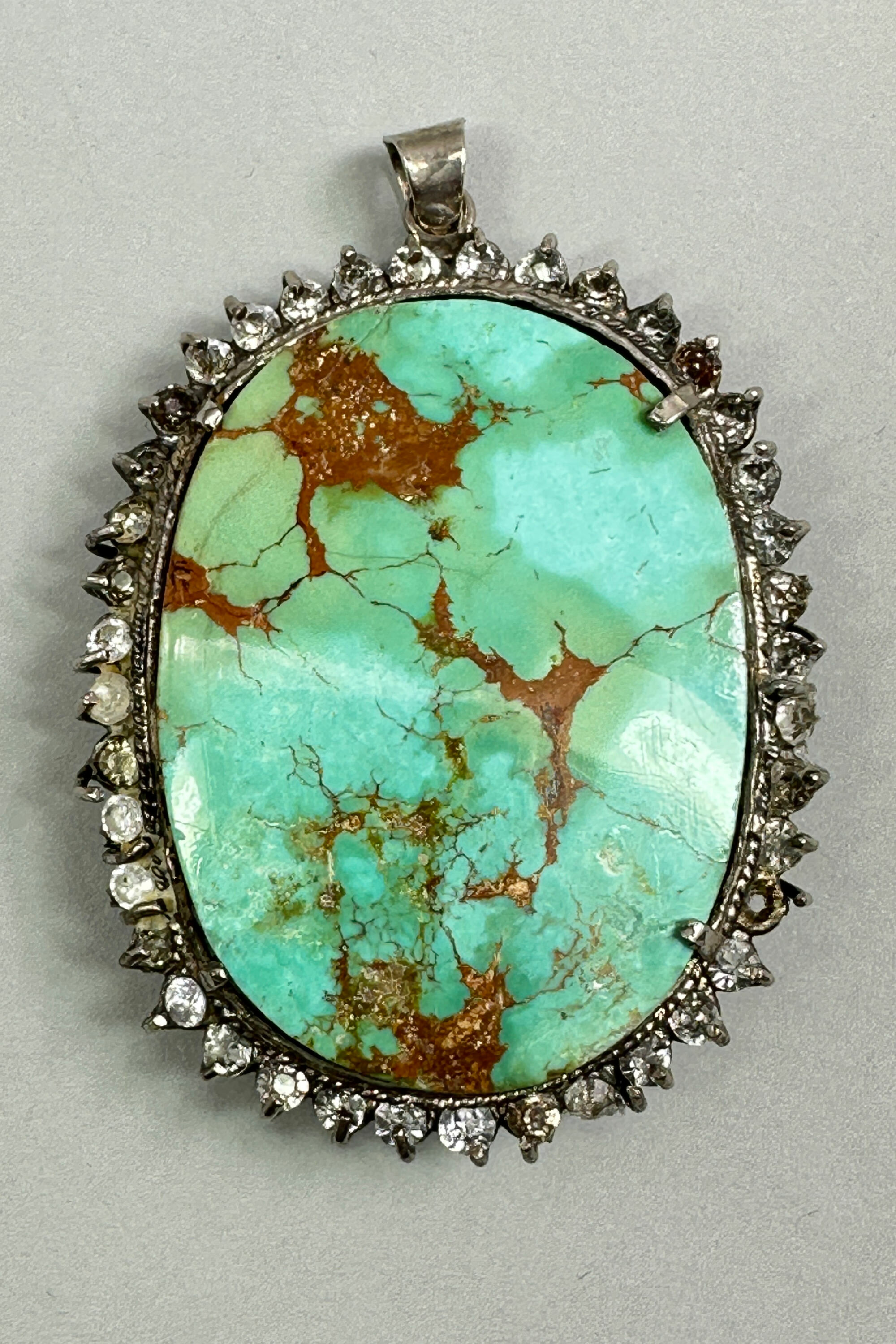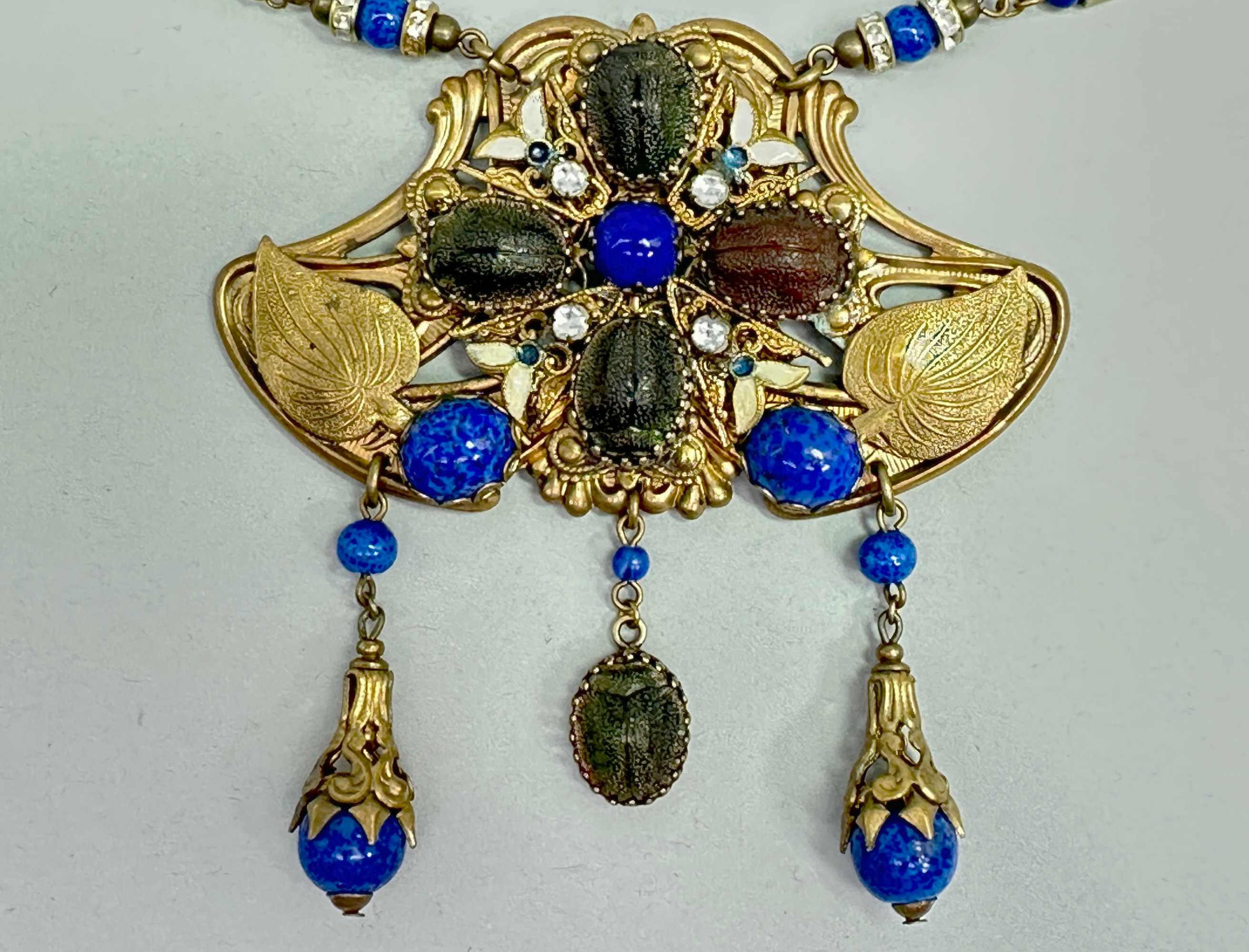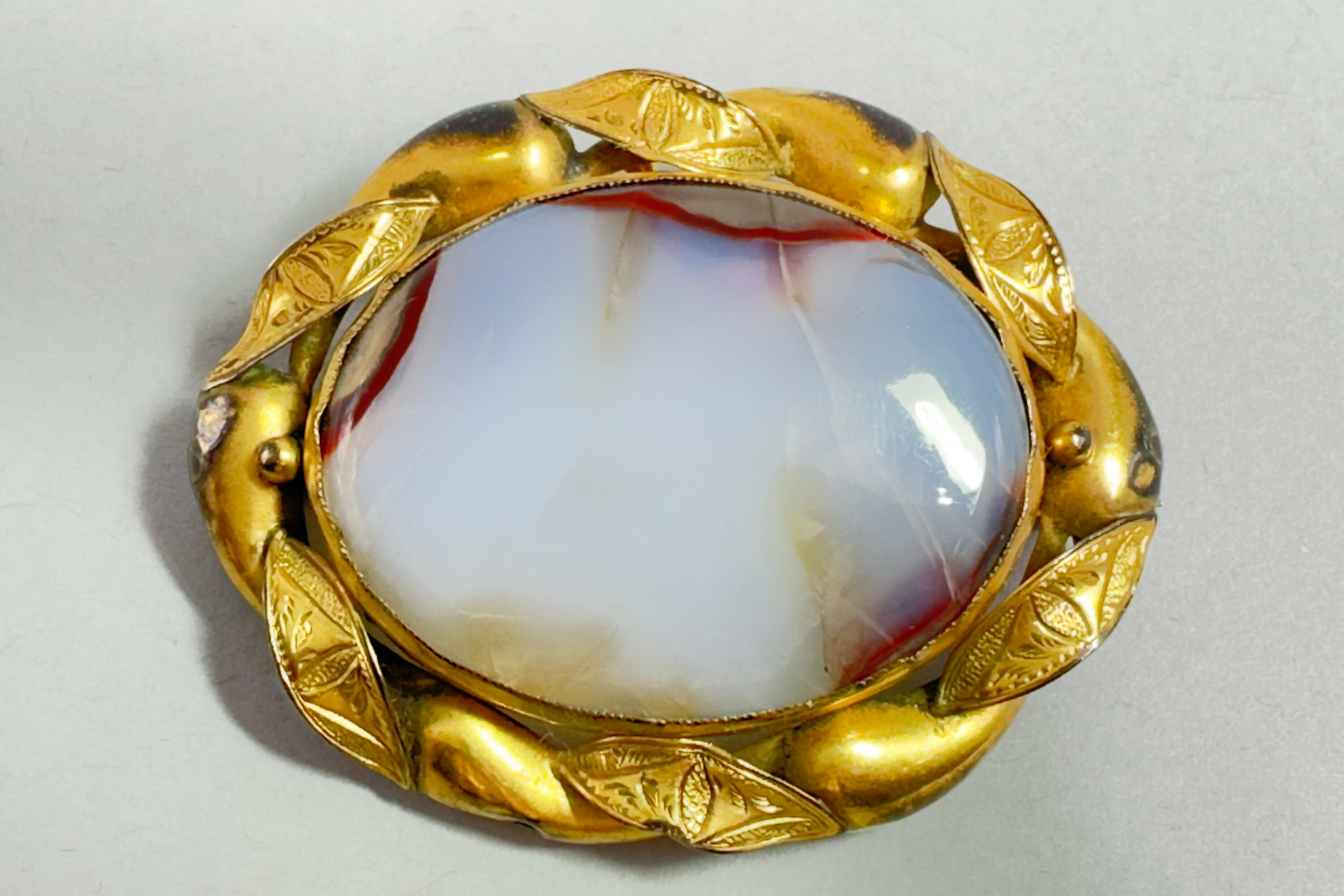
Scottish agate modernist brooch c1970
Price: £25
Cherry amber Bakelite necklace, Germany 1920s
Price: £150
Triple strand of amber Bakelite beads, British 1930s
Price: £750
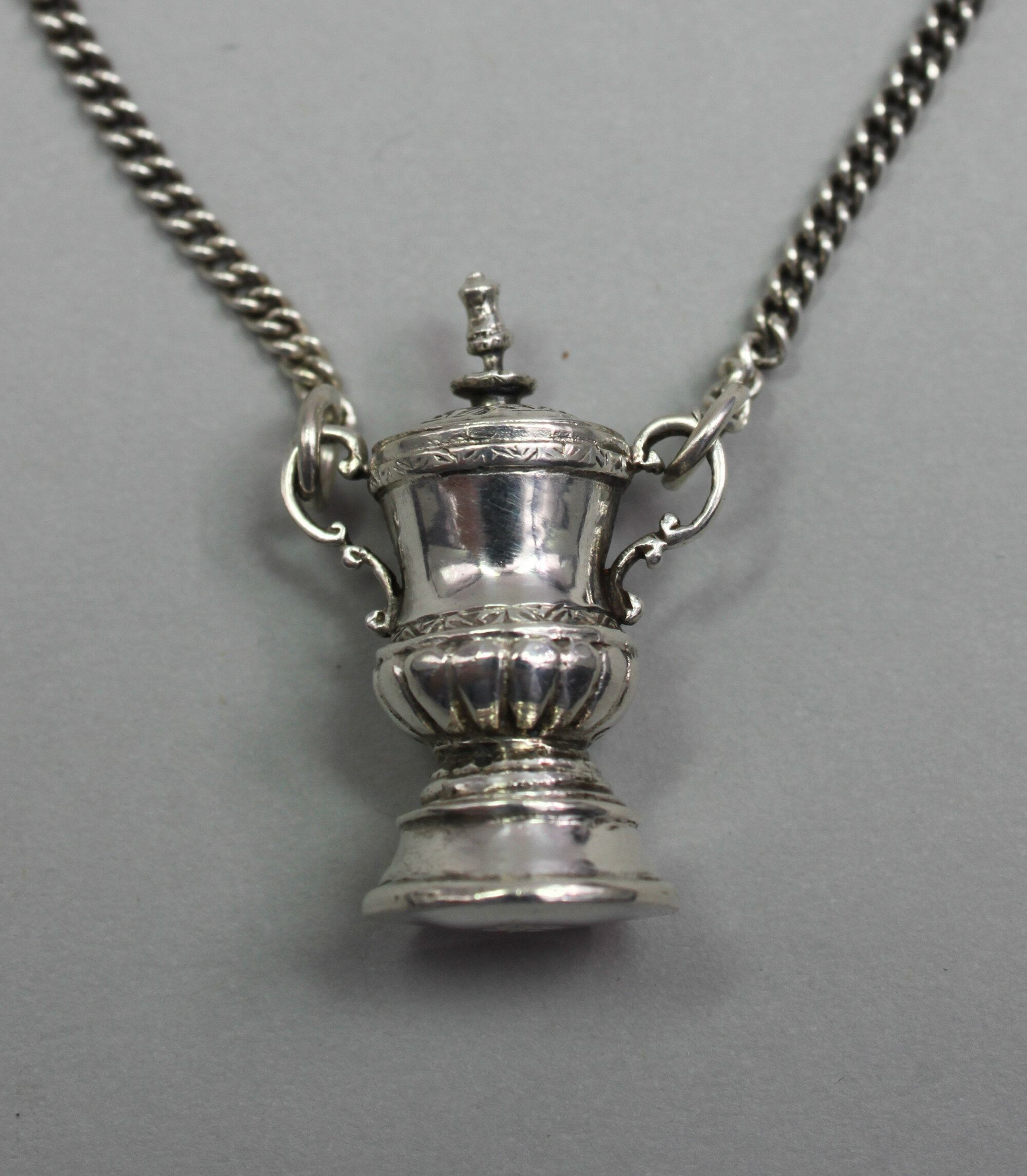
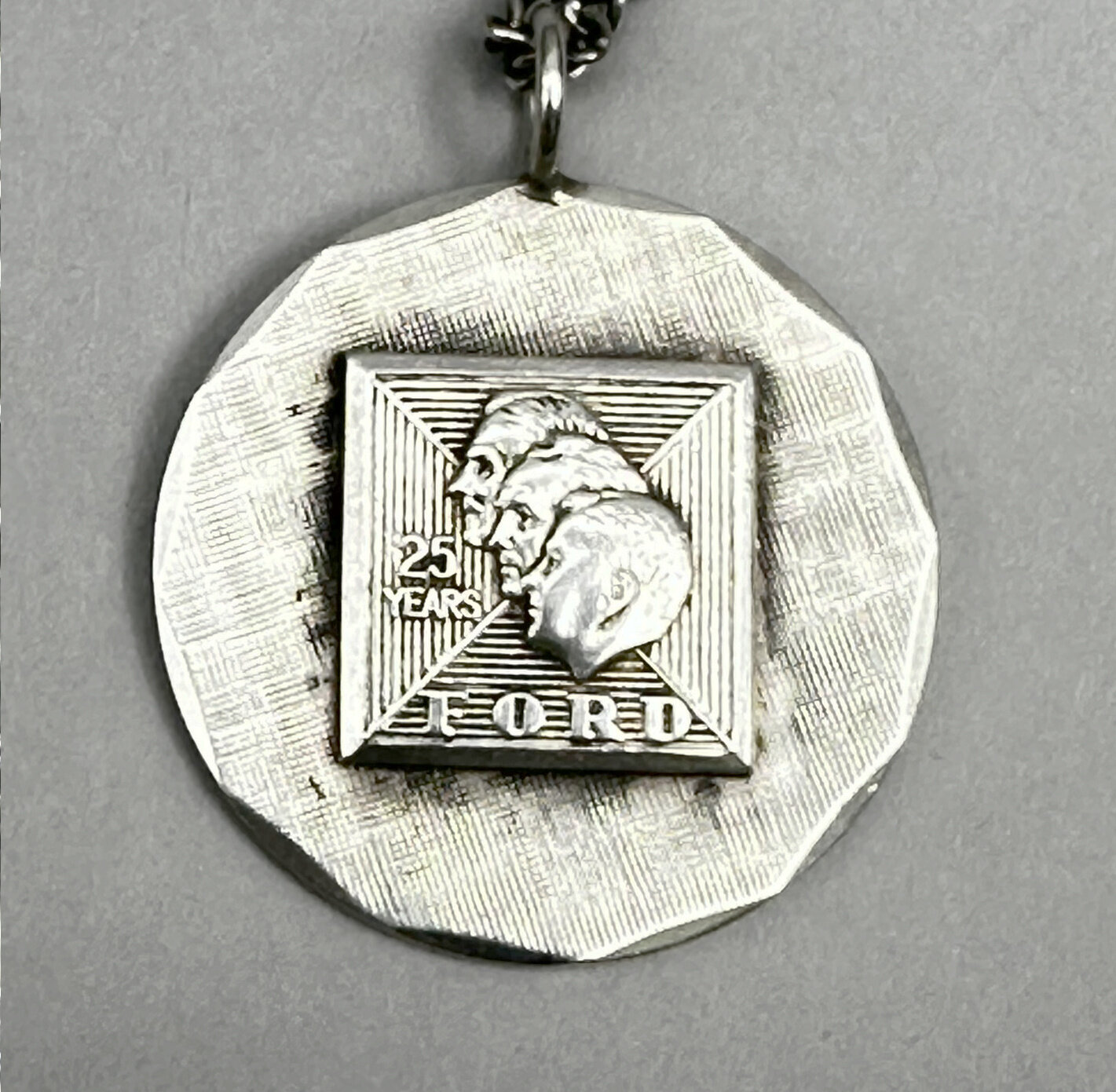
Pendant and chain commemorating 25 years of service at Ford, London 1965
Price: £35
1950s aurora borealis brooch
Price: £15
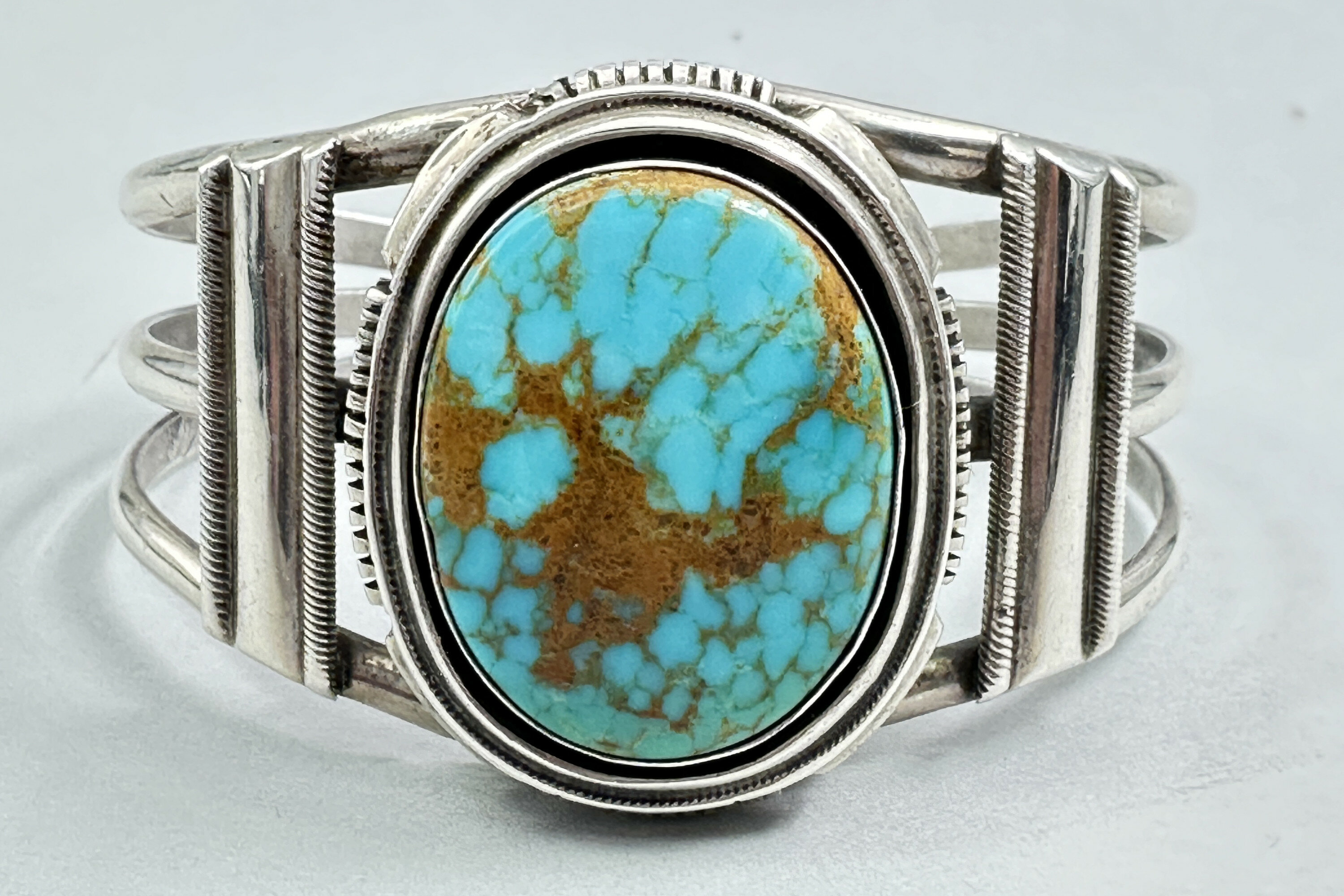
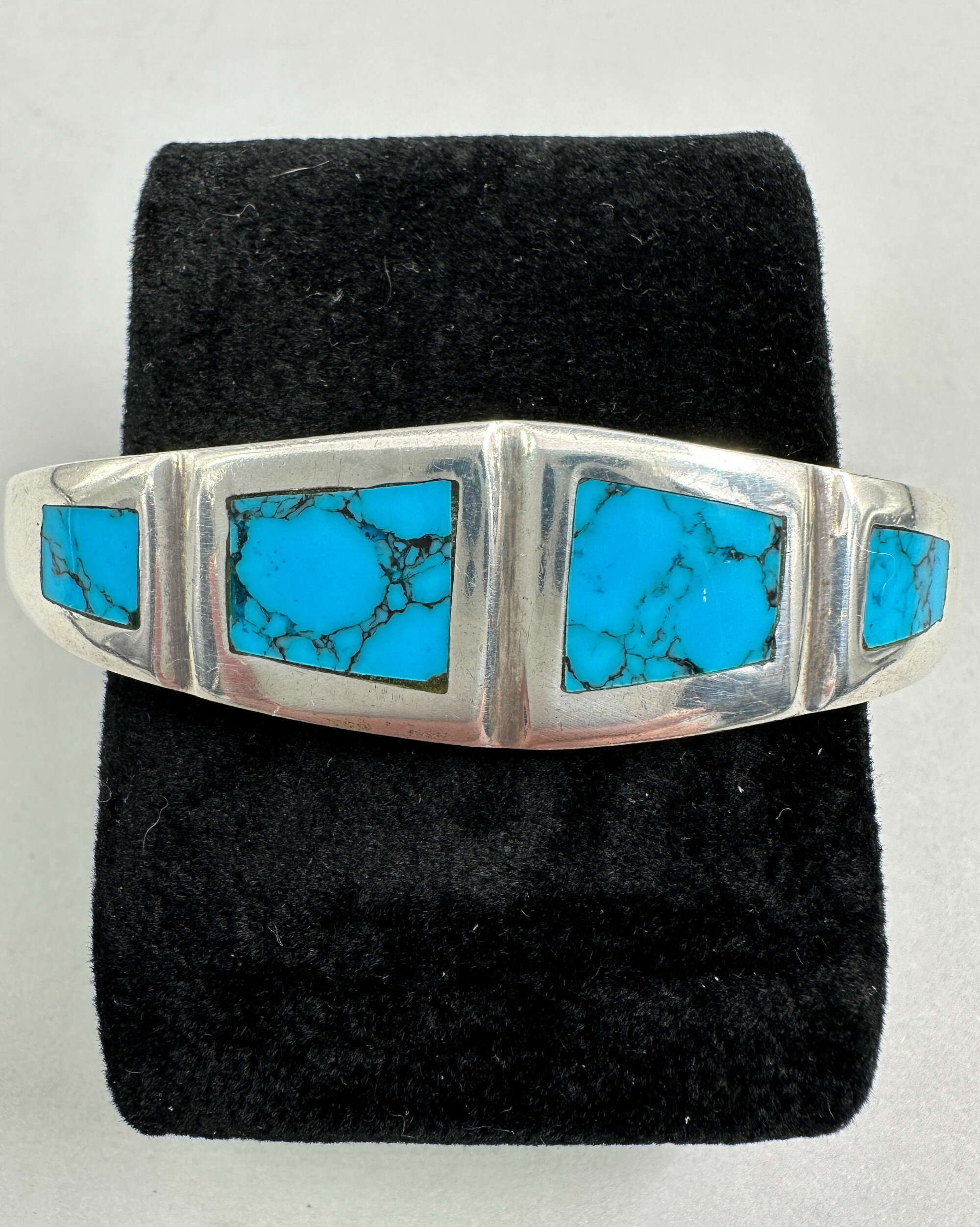
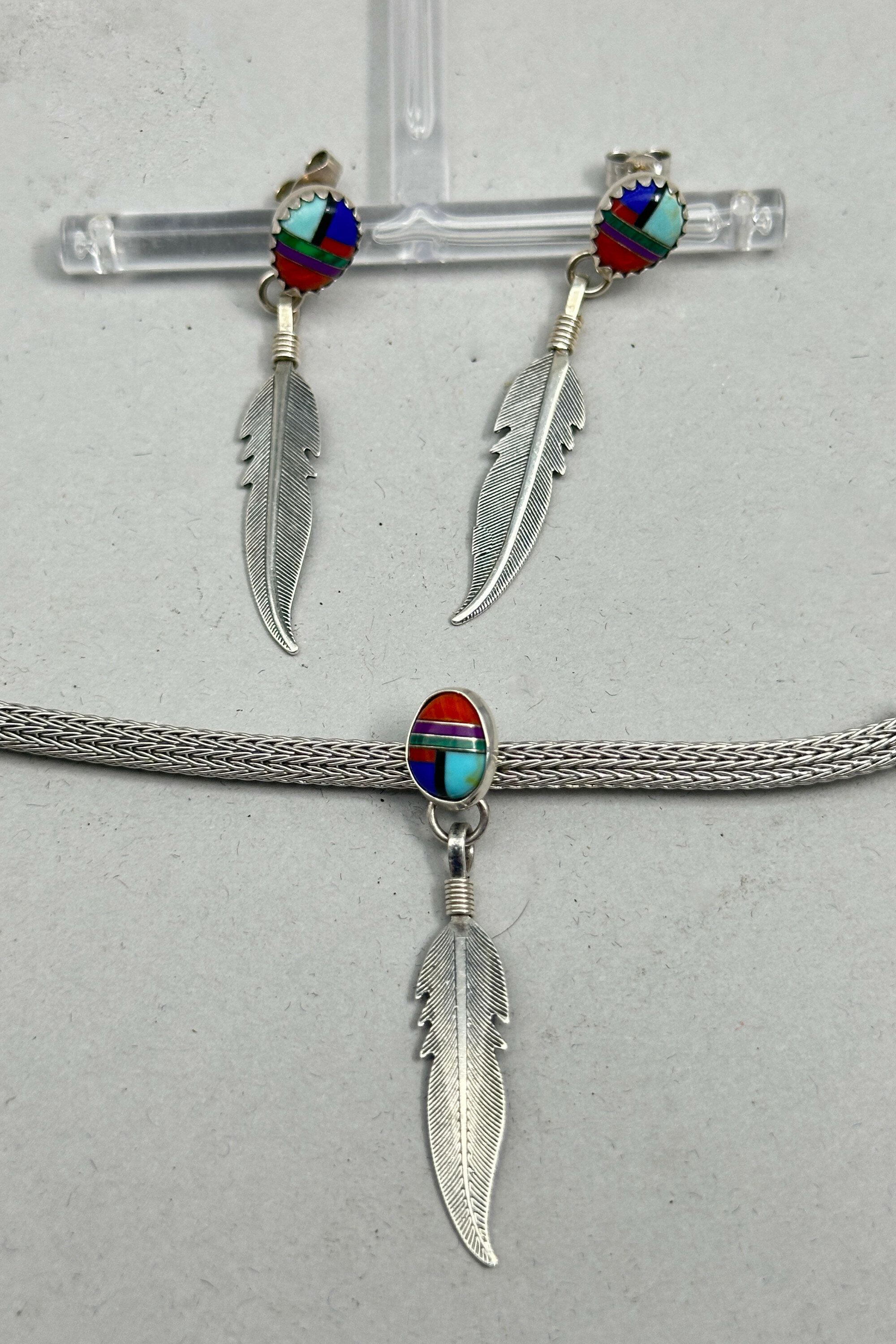
Navajo suite of Necklace and Earrings set with sleeping beauty turquoise, 1990s
Price: £250The Navajo are a Native American people of the Southwestern United States with the largest reservation in the country, mainly concentrated in Arizona and New Mexico. Their silverwork, which they began to produce in the late C19th, came to enjoy great popularity and often employed the use of turquoise. This matching suite is an excellent example of their work. The necklace is marked ‘Sterling’ for 925 silver and the same material would have been used throughout, providing a perfect backdrop to the ‘sleeping beauties’.
Massive Grotto style belt buckle c1980
Price: £25
Rare early Czech glass brooch c1920
Price: £45
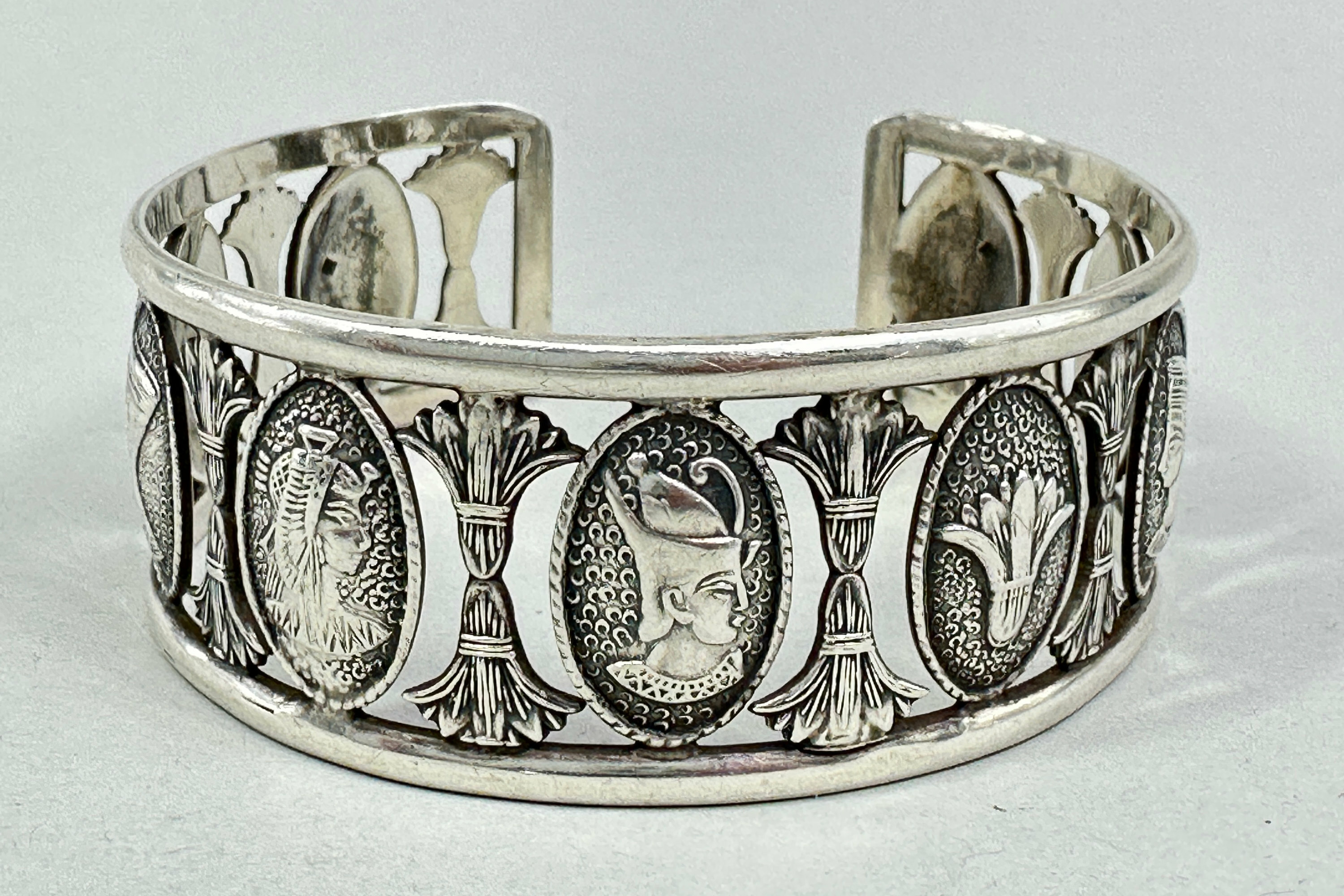
Egyptian Eye of Horus braclet c20th
Price: £25
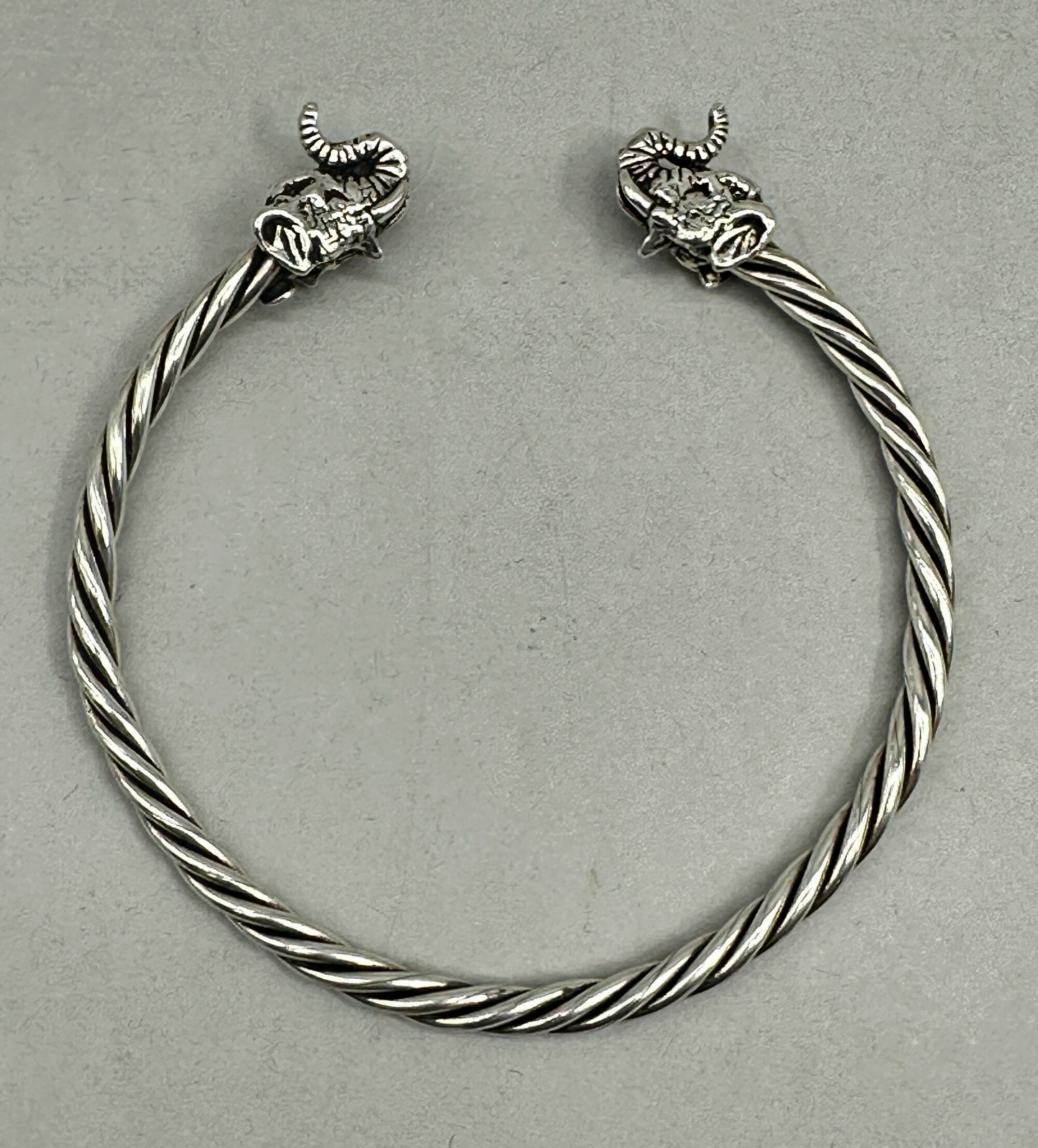
Balinese Silver Bangle with Elephant Heads, 1980s
Price: £45
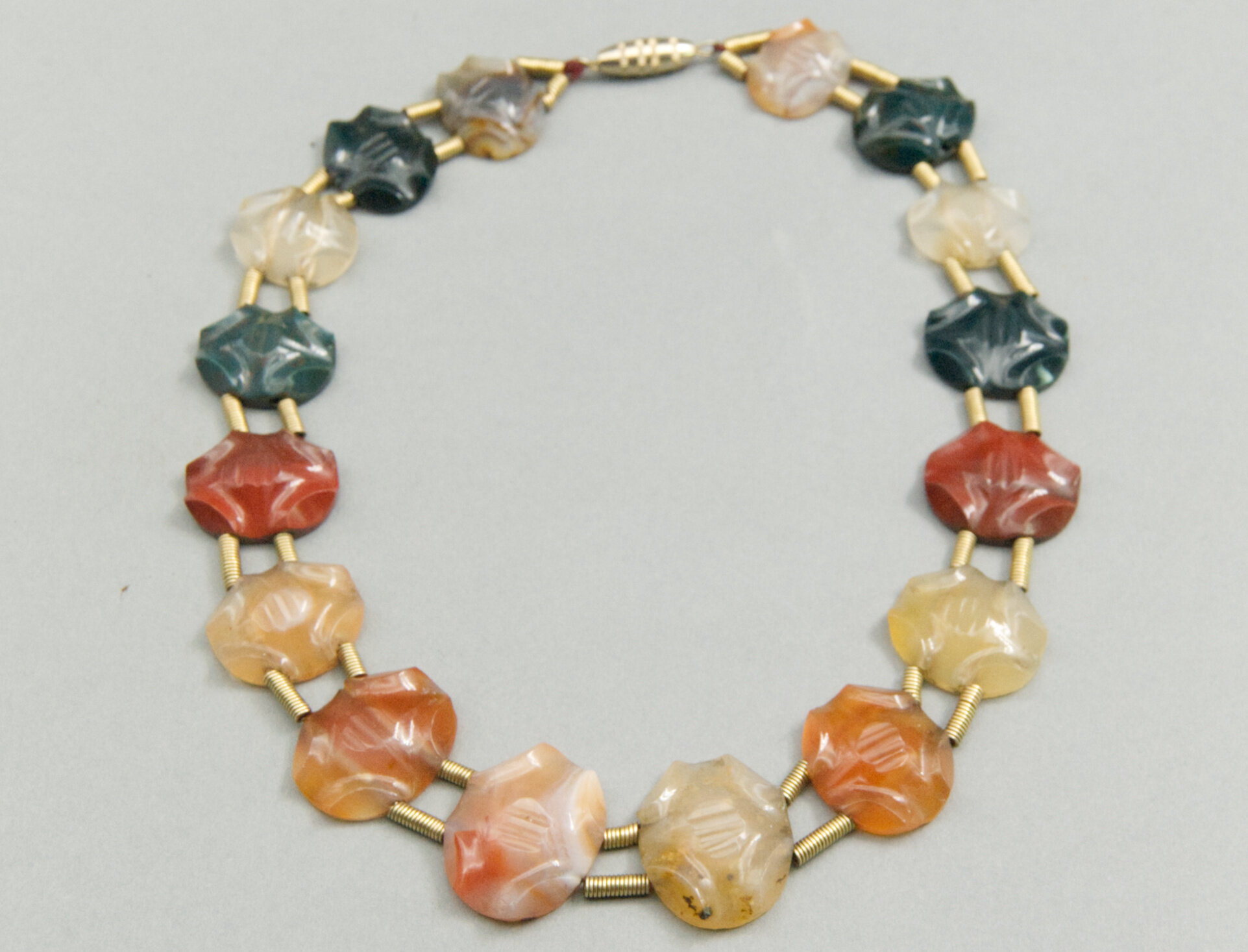
Edwardian Scottish agate panel bracelet
Price: £75
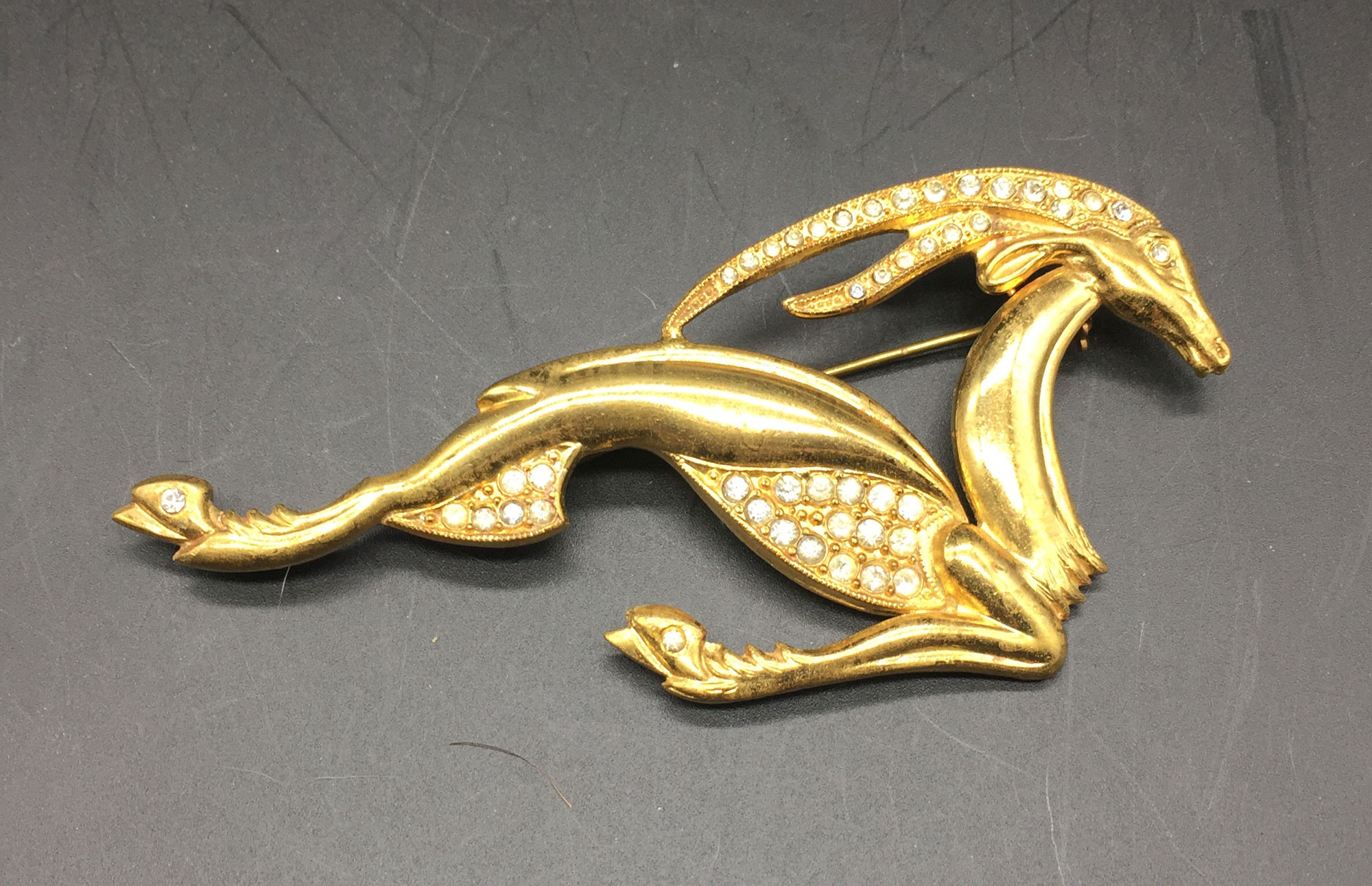
Art Deco style Antelope brooch 1940s
Price: £20
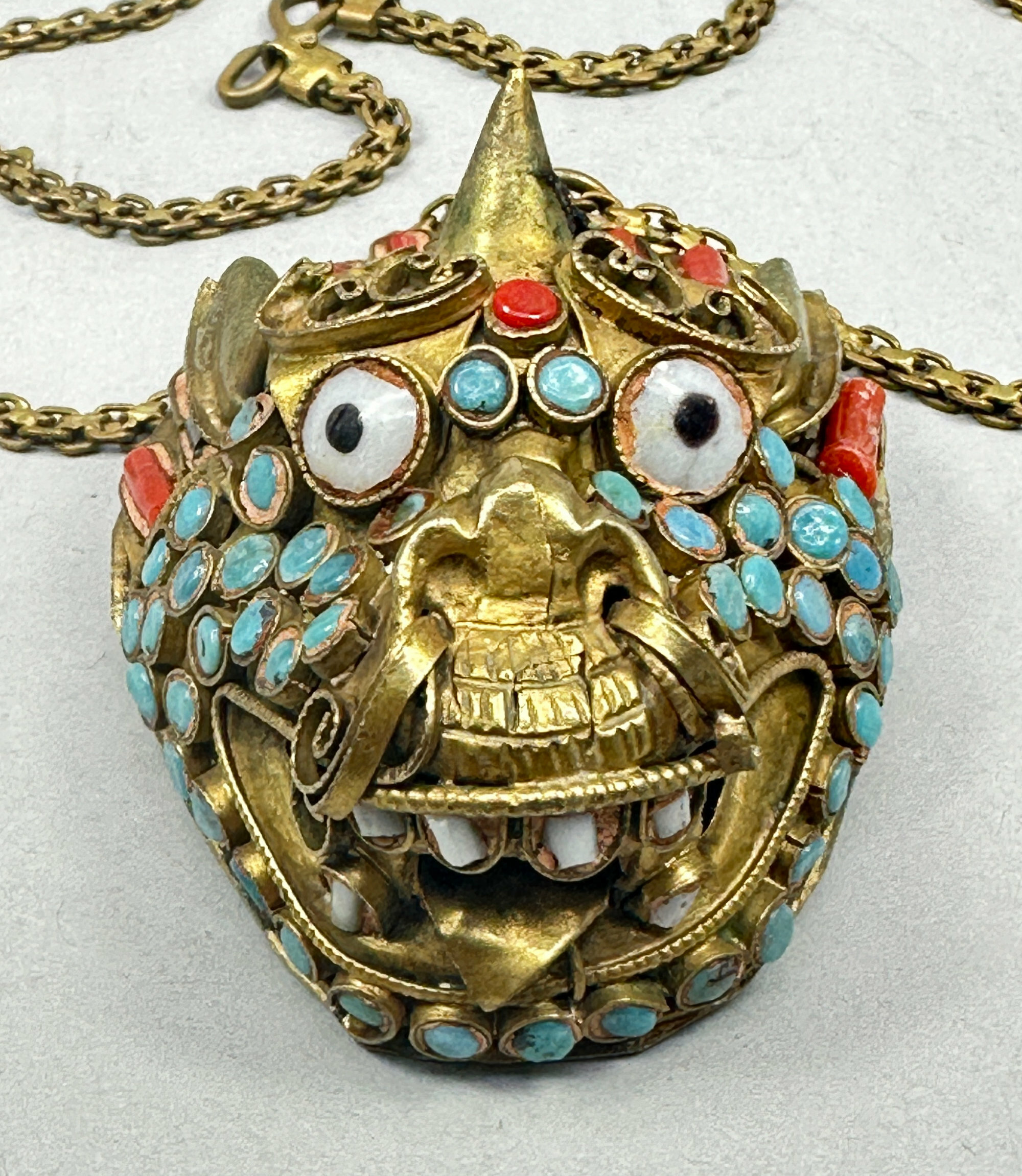
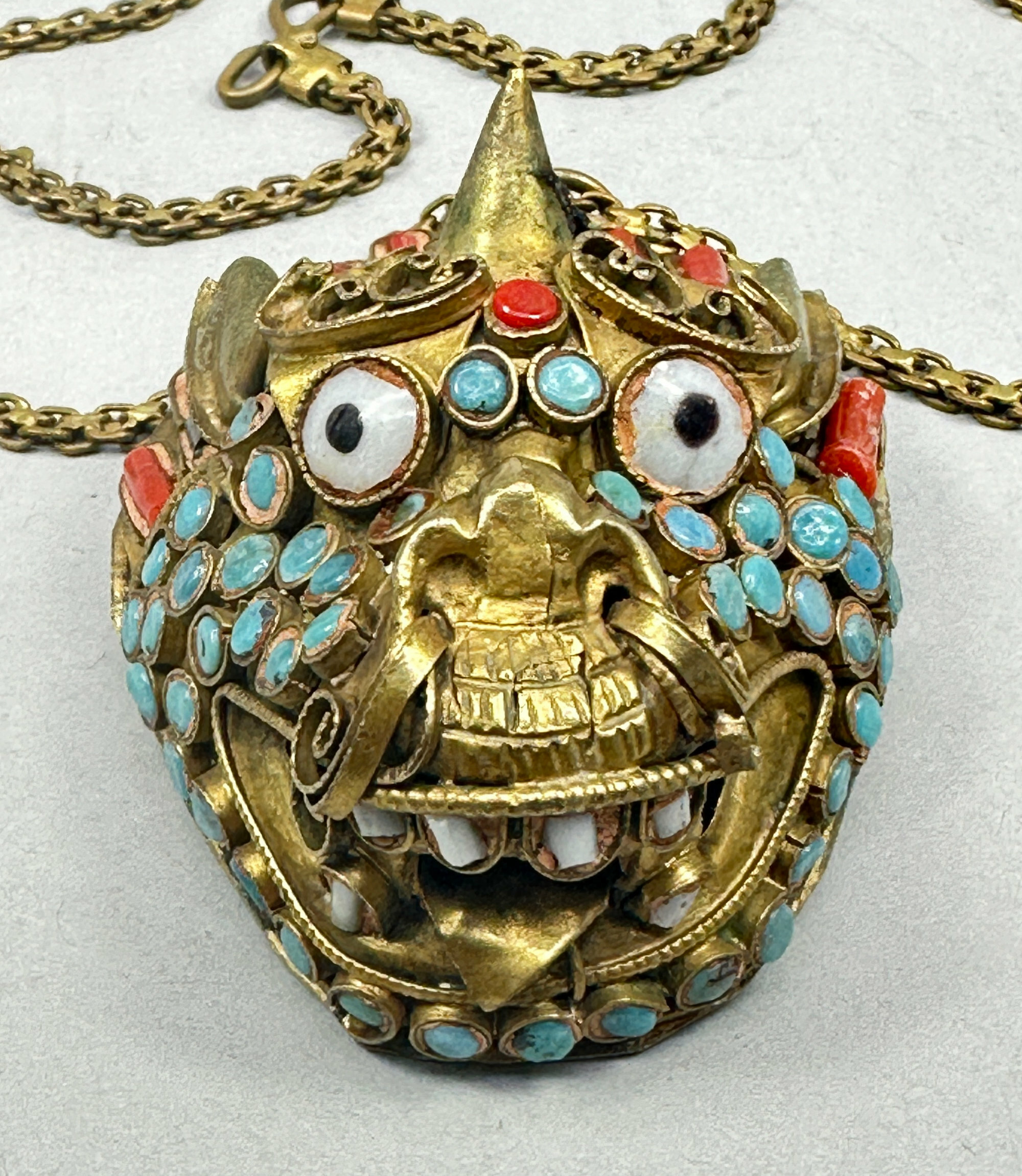
Art Deco Statement Necklace with a Demon Head Plaque, 1920s
Price: £50
Gentlemans waistcoat pin set with four watch fobs 1930s
Price: £150
Large graduated necklace of nut carving beads, 1930s
Price: £25
A Celtic or Pictish Brooch decorated with Horses, St Justin of Cornwall, circa 1980
Price: £10Inverurie is a town in Scotland where Pictish carved stones are found in the graveyard dating from the 7th Century. The Picts were a tribe of peoples living in the East and North of Scotland. Little is known of their origins but they were called 'Picts' by the Romans because of their painted and tattooed bodies. The Inverurie horse is the inspiration for this brooch. The actual design of the three horses was created by George Bain (1881-1968) the Scottish artist and teacher, famous for chronicling Celtic Art.
St Justin of Cornwall is well known for the production of 'craft' pieces in a variety of forms and materials. This piece probably dates to the 1980s and certainly cannot be found in their current catalogue.
PLEASE NOTE THAT THERE IS FREE UK SHIPPING ON THIS ITEM. For international buyers the shipping cost will be reduced by the UK shipping cost, so don't worry if you are outside the UK, you still receive this benefit!
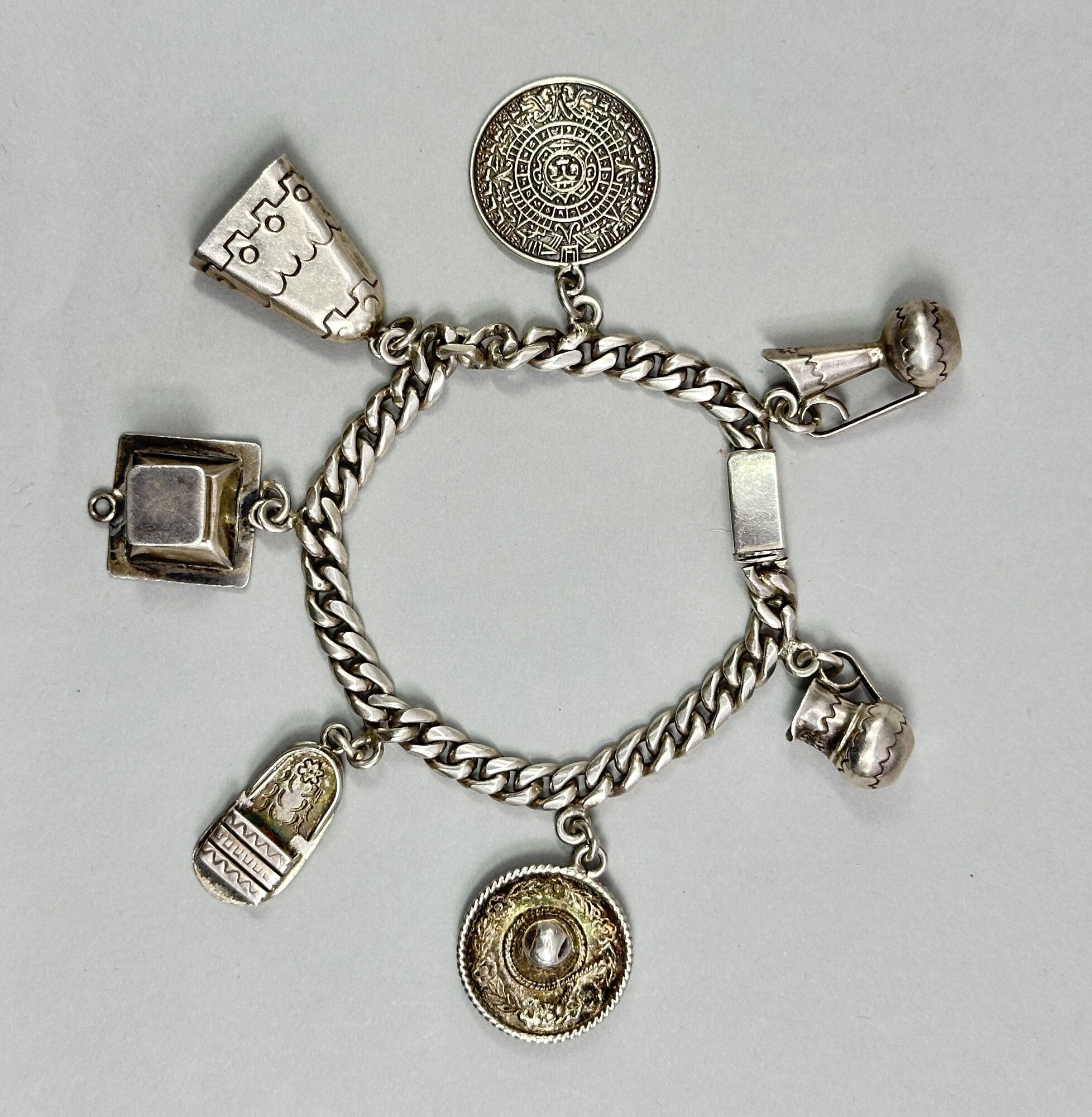
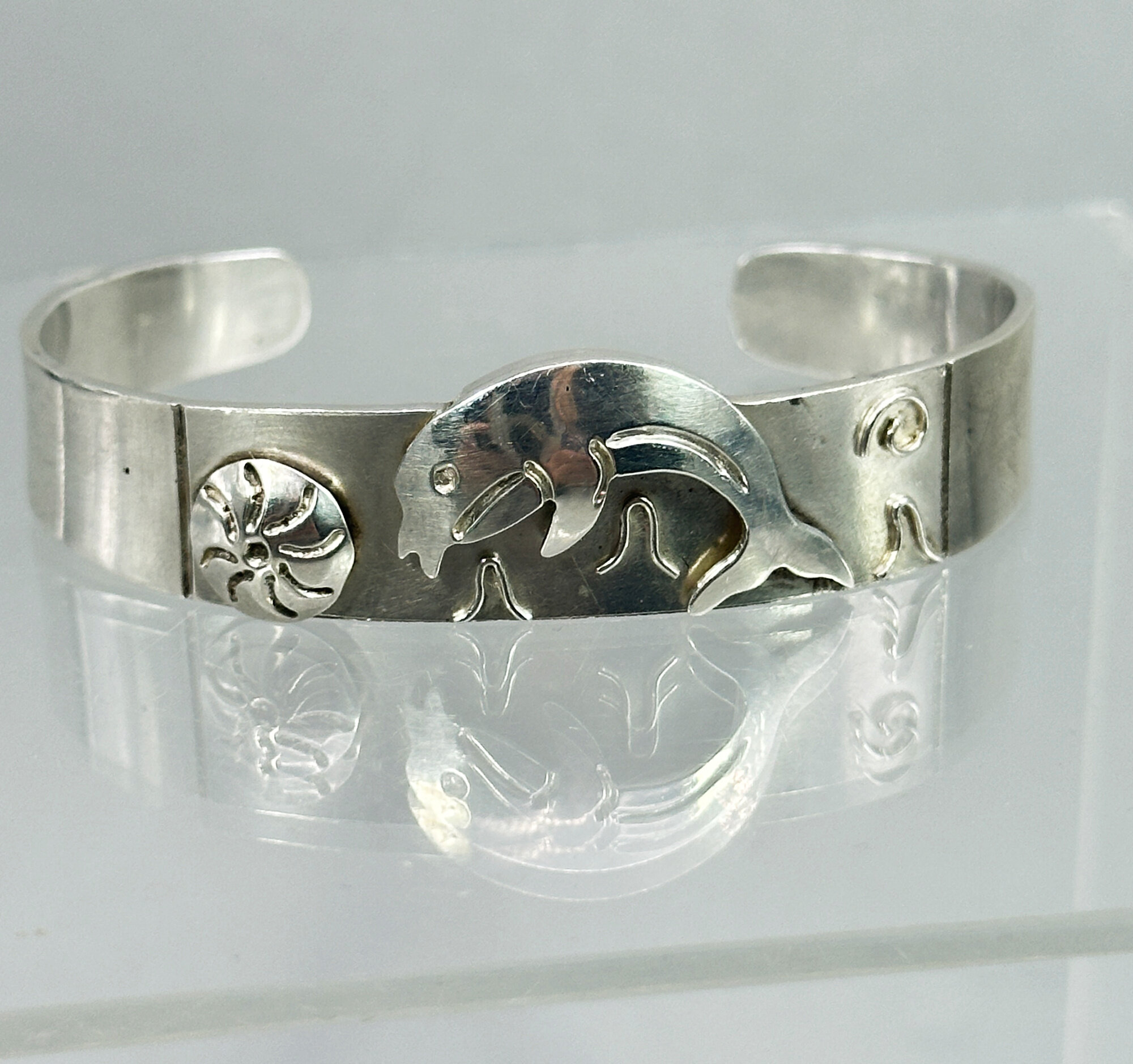
Mexican silver dolphin bangle bracelet c1990
Price: £65
Chinese Silver Bangle with Dragon Heads, C20th
Price: £45
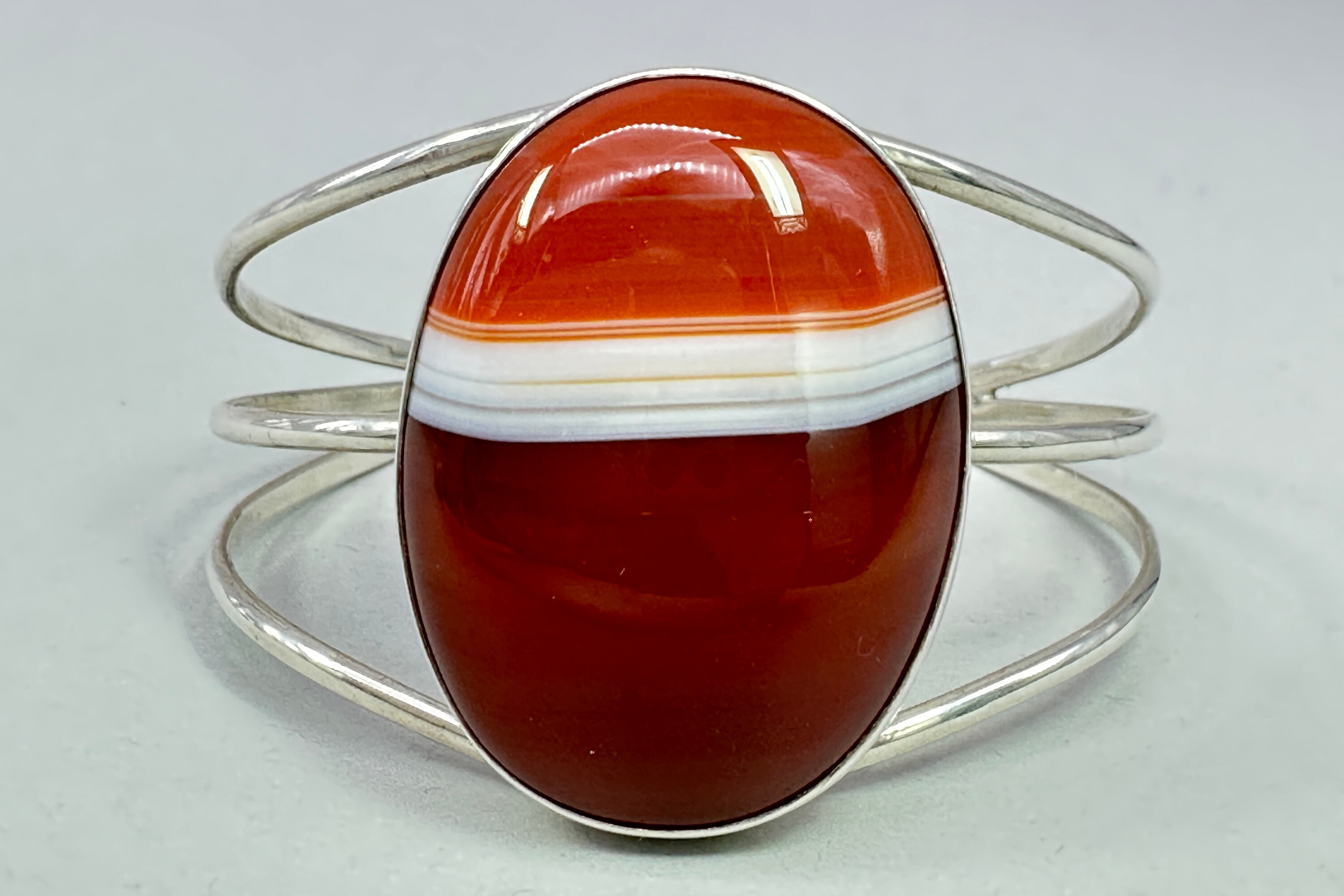
Silver cuff bracelet set with Scottish banded carnelian stone, Birmingham 1975
Price: £85
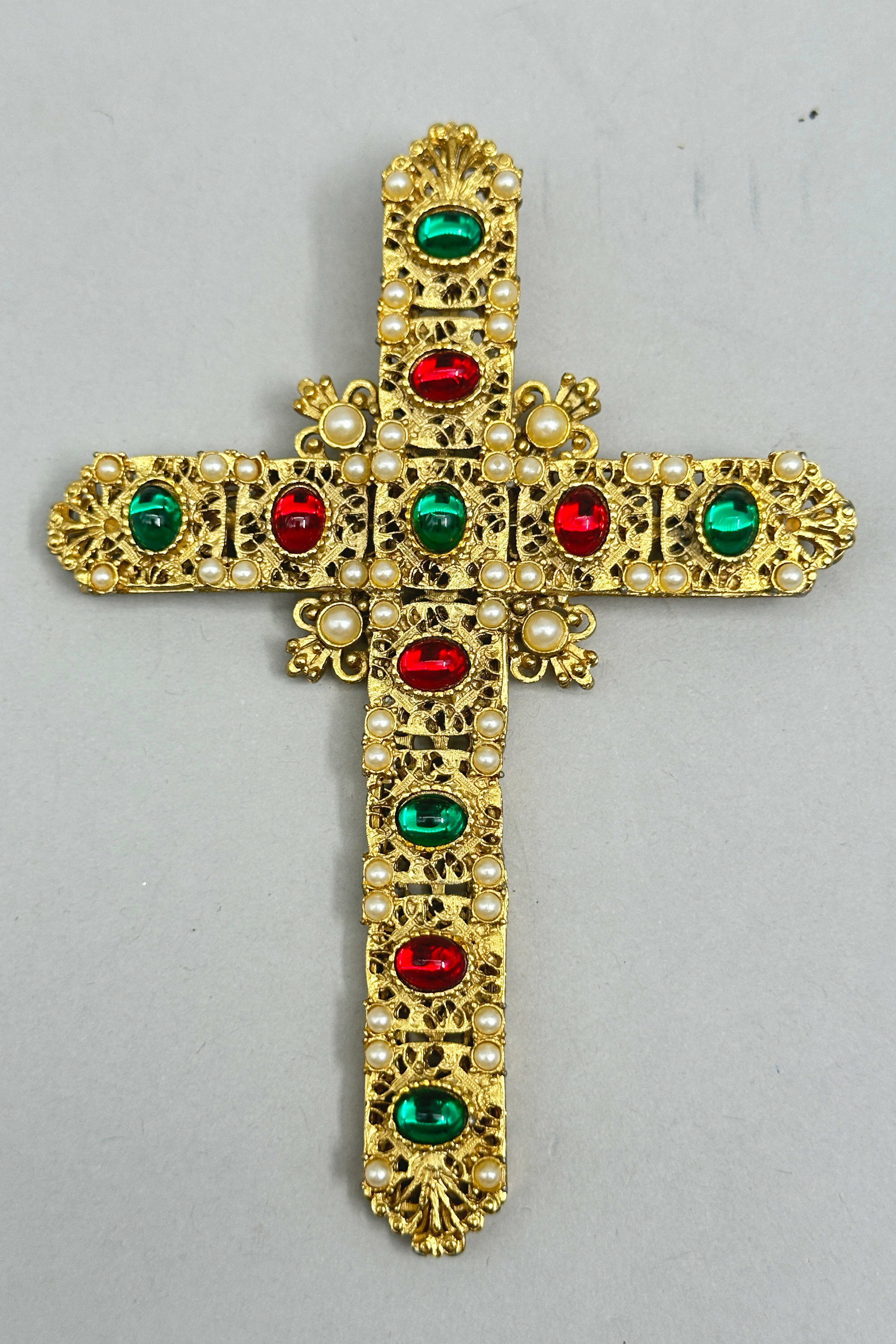
Fabulous Butler & Wilson cross on long chain
Price: £110
Butler & Wilson Renaissance style cross brooch
Price: £95
Taxco silver elephant cuff bracelet c1970
Price: £85
Taxco grape motif necklace, c1980
Price: £350
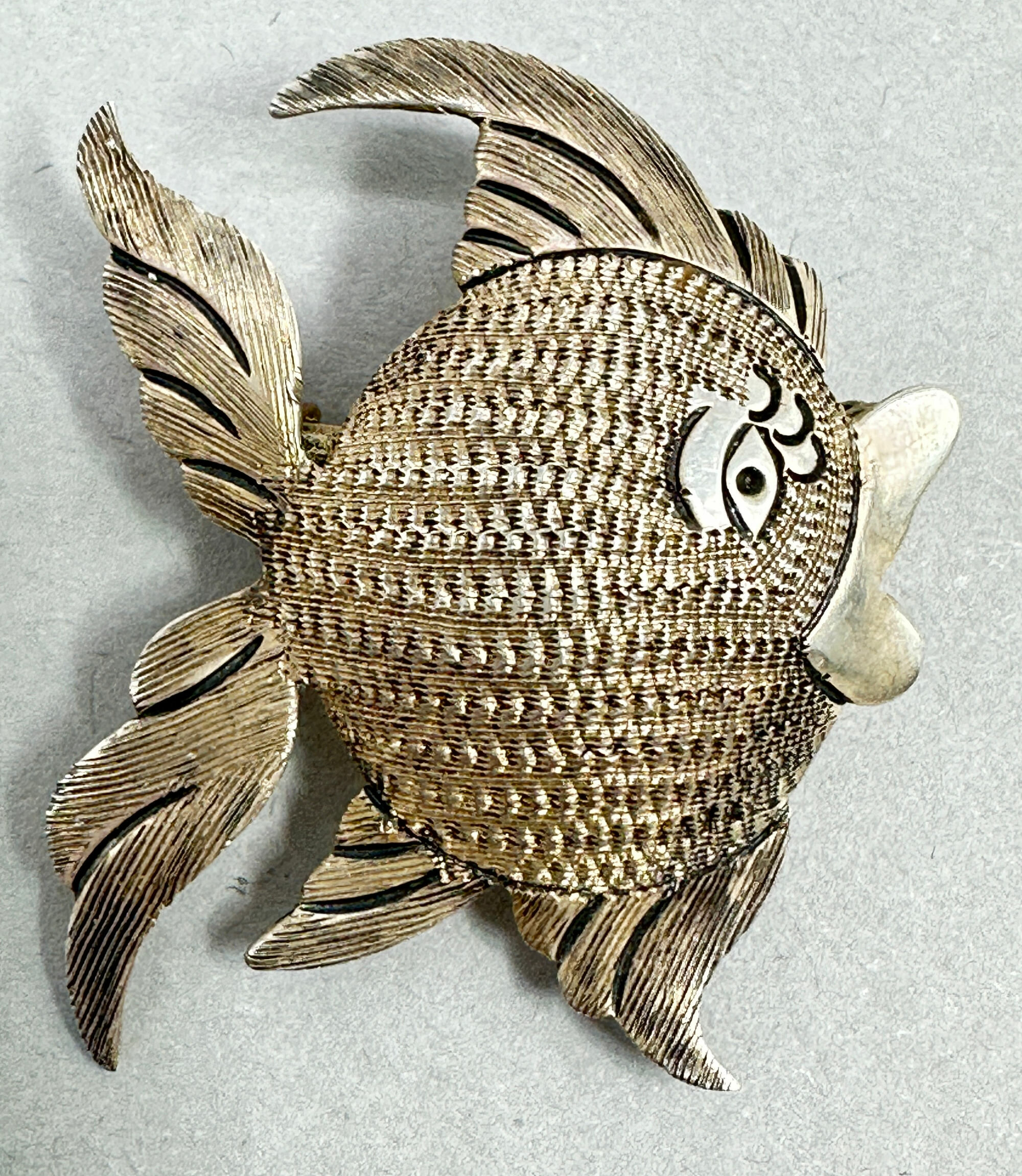
Japanese silver souvenir brooch c1950
Price: £18
Fun vintage souvenir shell necklace 1960s
Price: £15PLEASE NOTE THAT THERE IS FREE UK SHIPPING ON THIS ITEM. For international buyers the shipping cost will be reduced by the UK shipping cost, so don't worry if you are outside the UK, you still receive this benefit!
Art Nouveau Fairy earrings c1930
Price: £25
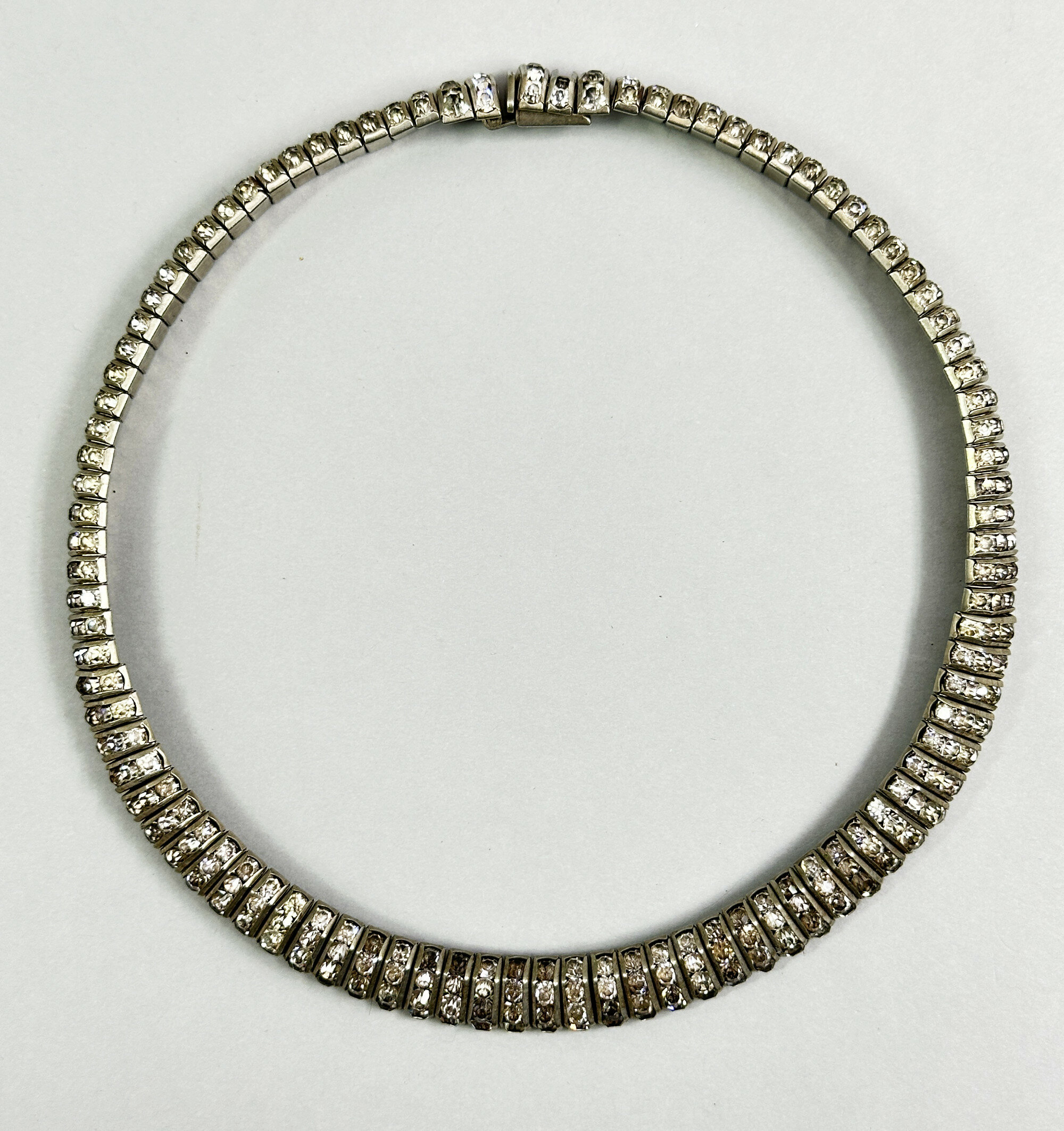
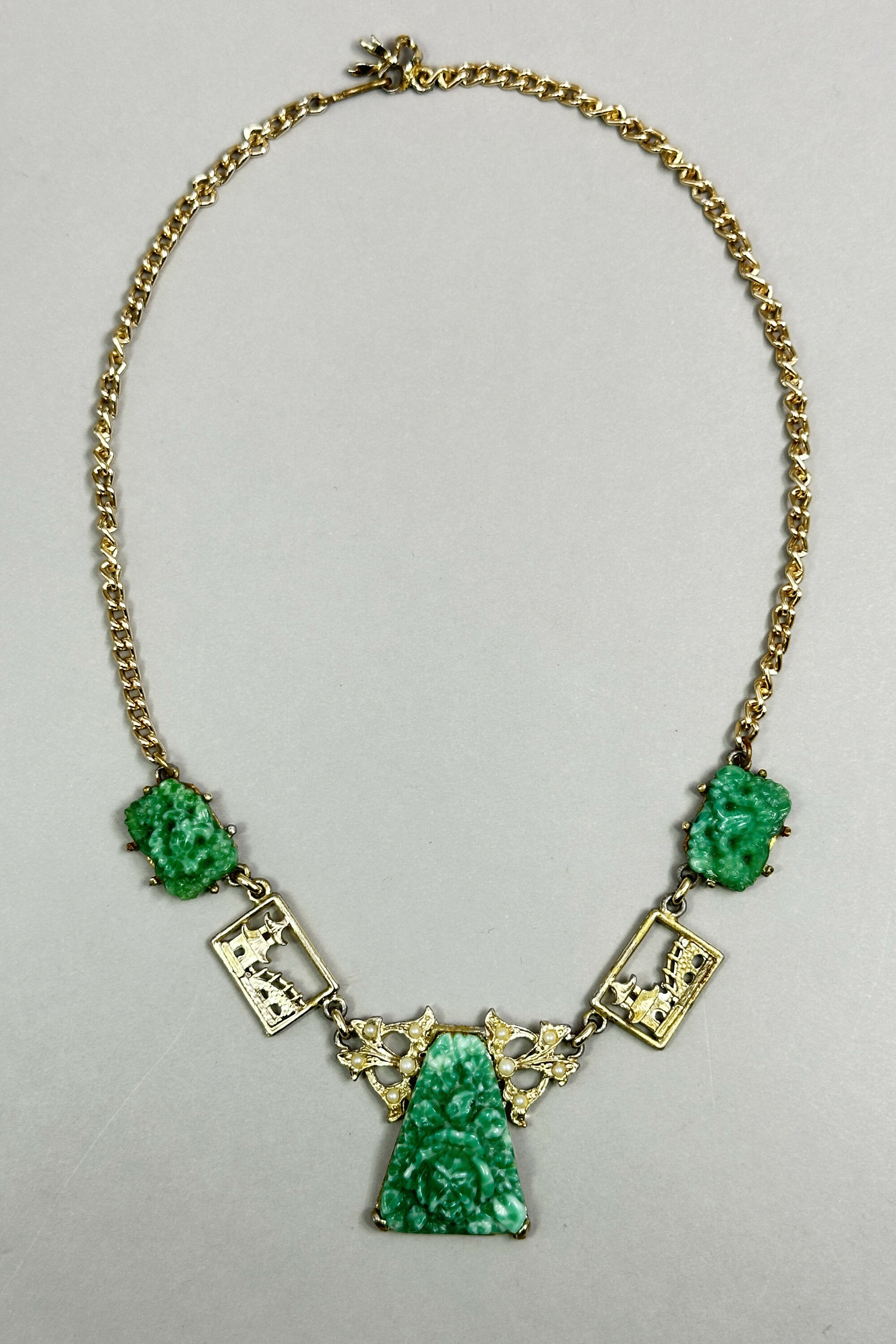
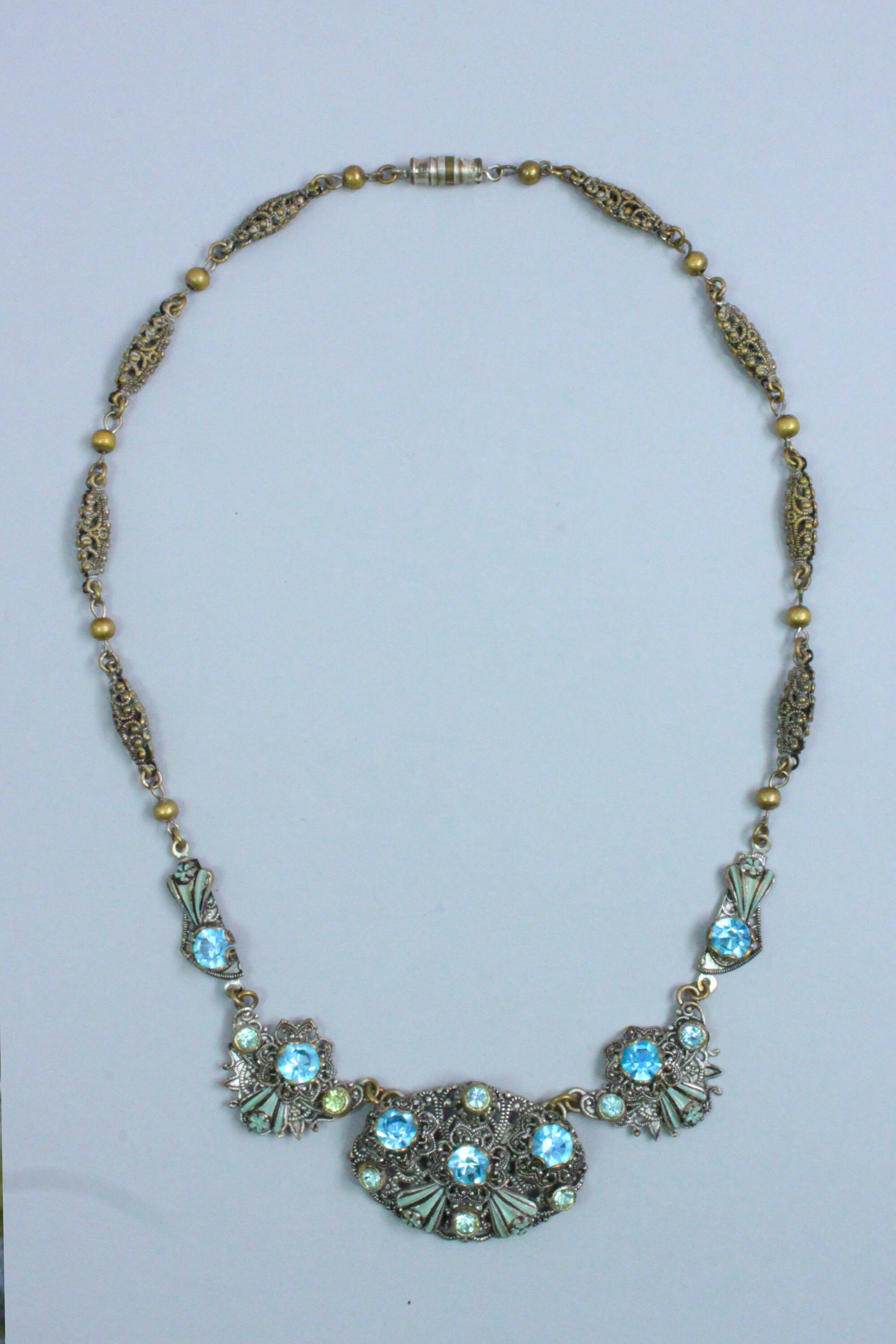
Art Deco paste collar necklace by Schreiber & Hiller c1930
Price: £125
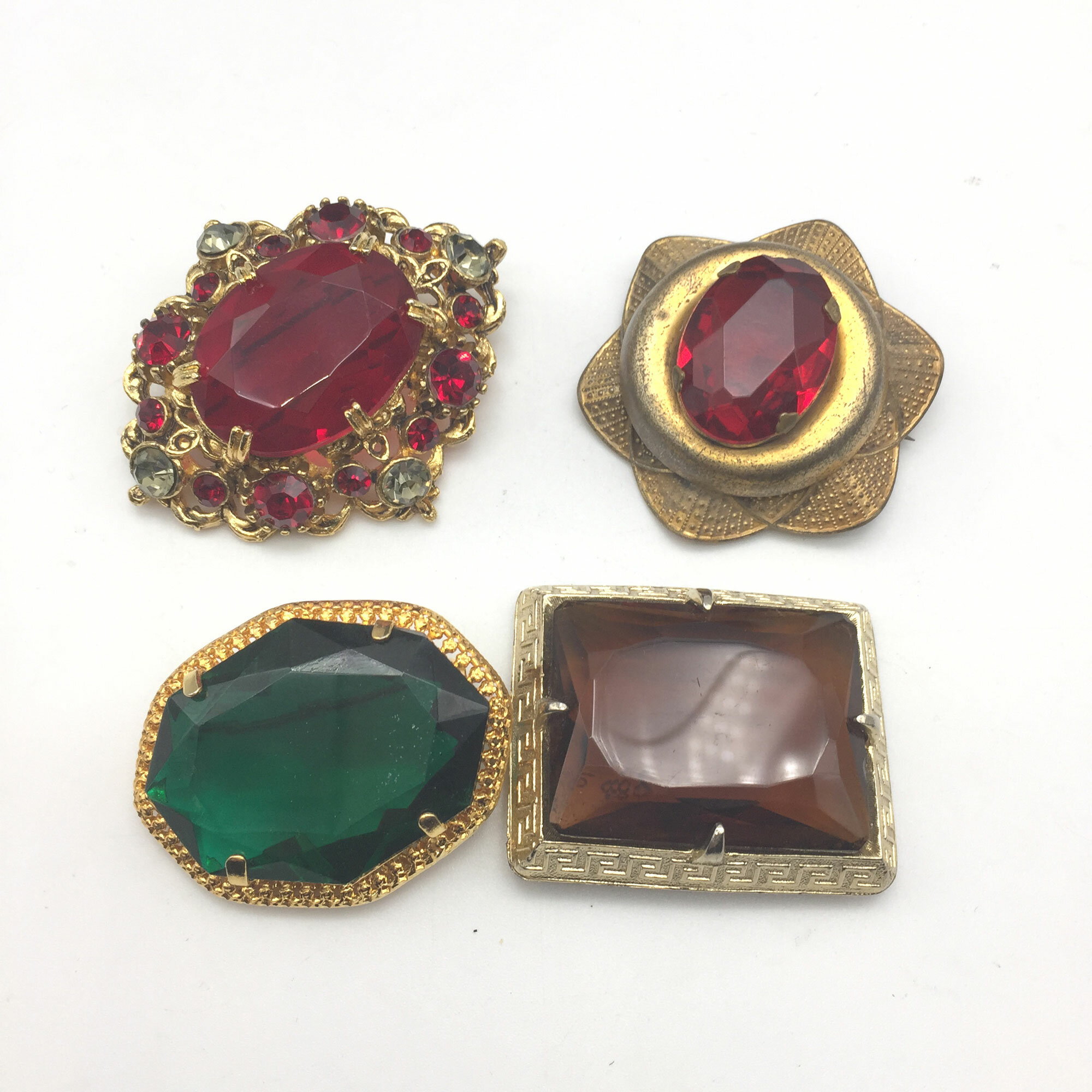
Lot of 3 costume cameo brooches, marked Sphinx and Exquisite
Price: £15
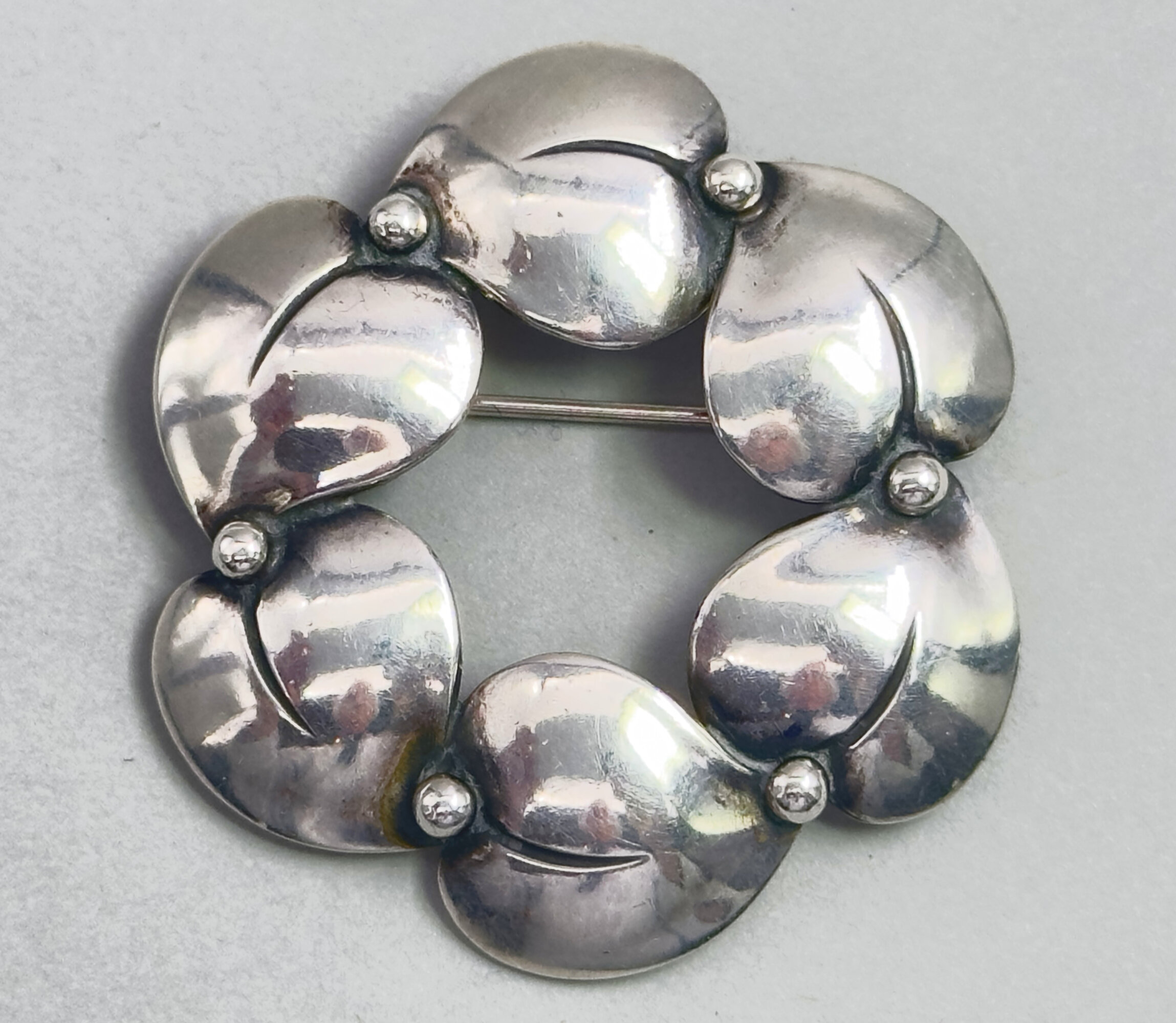
Unusual Modernist style brooch
Price: £10
Faceted Opalite statement necklace c1970
Price: £95Opalite is a type of synthetic glass often mistaken for a gemstone due to its alluring translucence and the play of colors similar to those seen in opals. Unlike natural gemstones, opalite is man-made, primarily from dolomite and metal to create its distinctive shimmering and milky appearance. It typically exhibits a soft, opalescent sheen with a blue or orange glow when light passes through it, making it popular in jewelry and decorative objects.(geologyscience.com)
Amber buddha carving on egg yolk amber and lapis necklace
Price: £175
Silver Art Nouveau Mucha style brooch c1910
Price: £25
Unusual 1950s puka shell and coral necklace
Price: £20
Victorian Silver Buckle set with Paste Stones, German circa 1900
Price: £85The sparkling stones and high quality mounting (there is a considerable weight of silver in this piece) would have made this buckle a notable addition to the Victorian ladies' wardrobe and it could equally well catch the eye today.
Unique Butler & Wilson Neoclassical Tiara 1980s
Price: £195As most people who love costume jewellery know, Butler & Wilson have been and are a powerhouse British brand that have been designing costume jewellery since the 1970s. Pieces like this one are quite collectable due to their age and design. There are many collectors around the world that collect both vintage and new pieces. This one is for you!
Lovely fleur de lis brooch 1960s
Price: £10
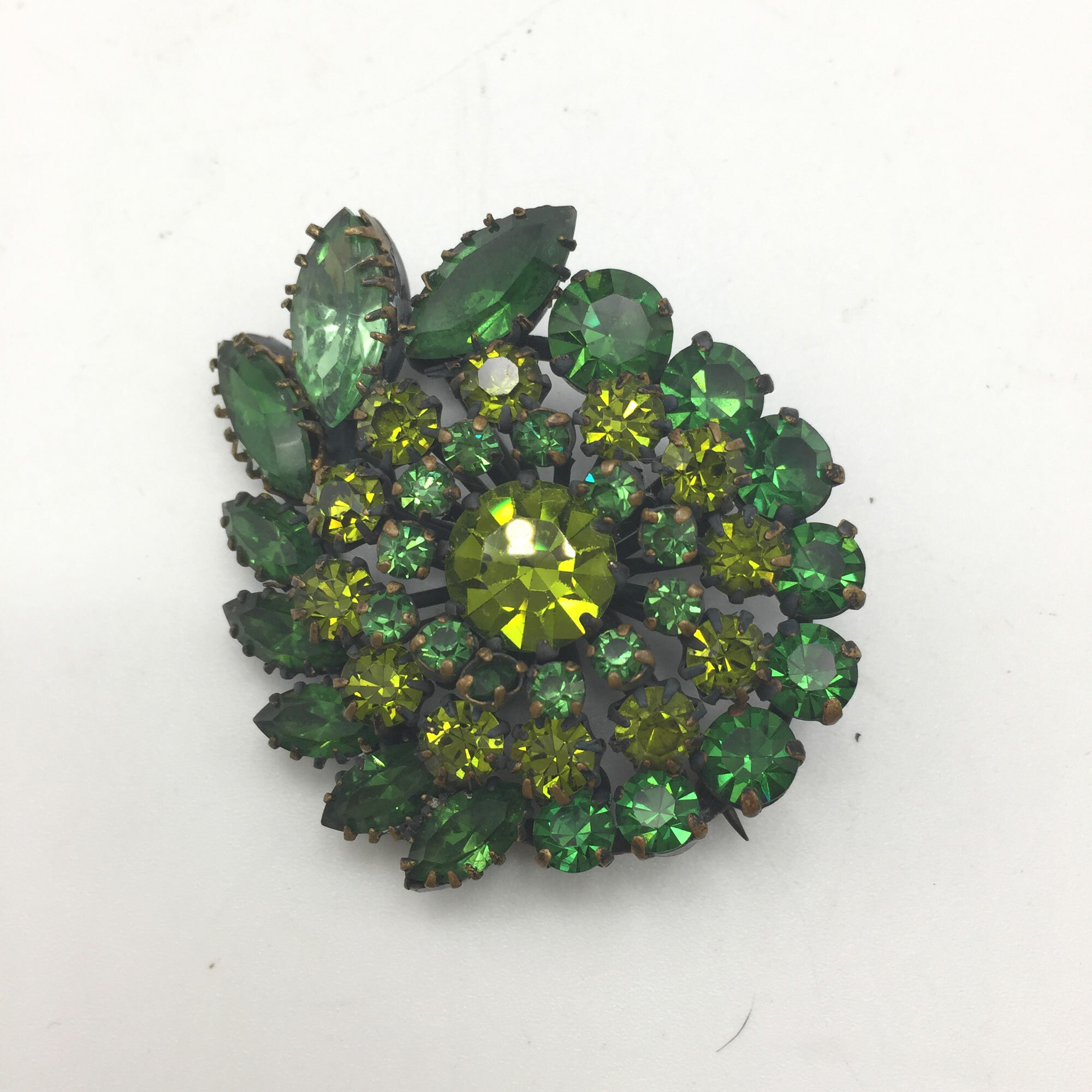
Striking green glass brooch 1950s
Price: £10
Modernist Silver White Anthurium Brooch, Mexico, 1970s
Price: £25
Very fine Berber North African necklace c1950
Price: £50
Art Deco necklace with French Jet and paste stations
Price: £25
Exceptional strand of Scottish Moss agate beads
Price: £45
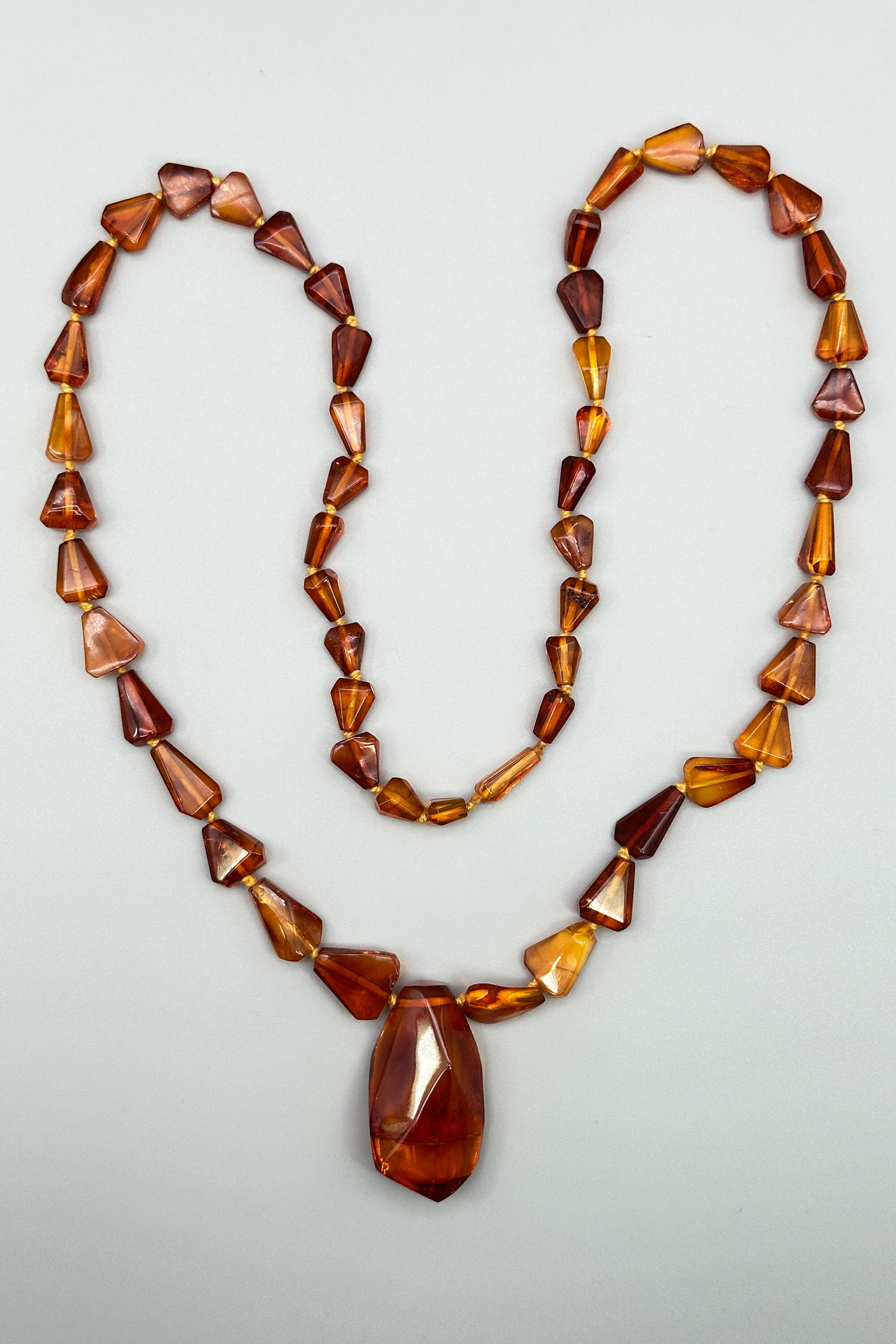
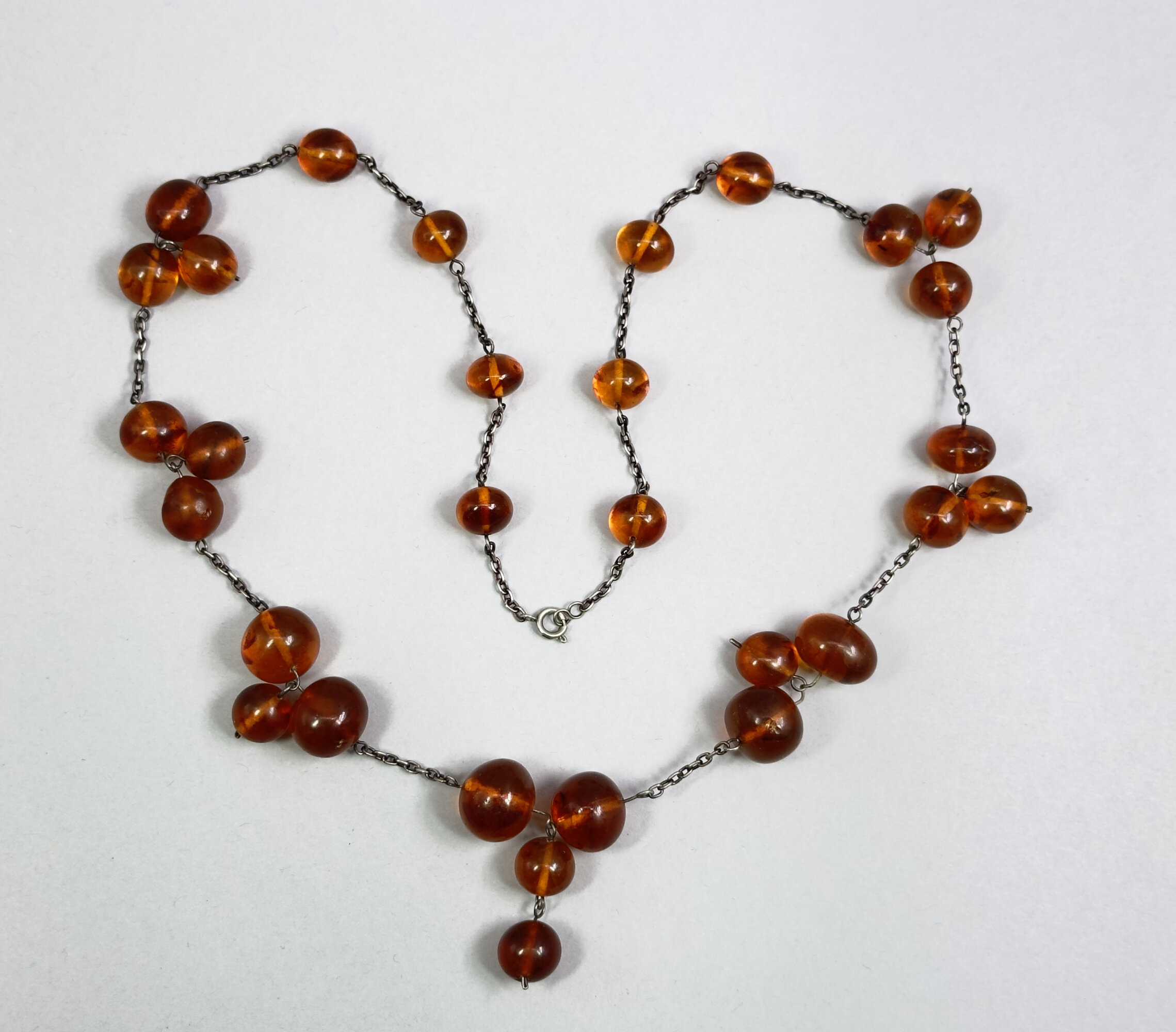
Victorian facetted cherry amber beads with intergrated clasp c1900
Price: £150
Art Nouveau comb with coral fish and pearls
Price: £45
Art Deco moulded glass necklace
Price: £25
Native American turquoise bead necklace with original clasp c1960
Price: £350
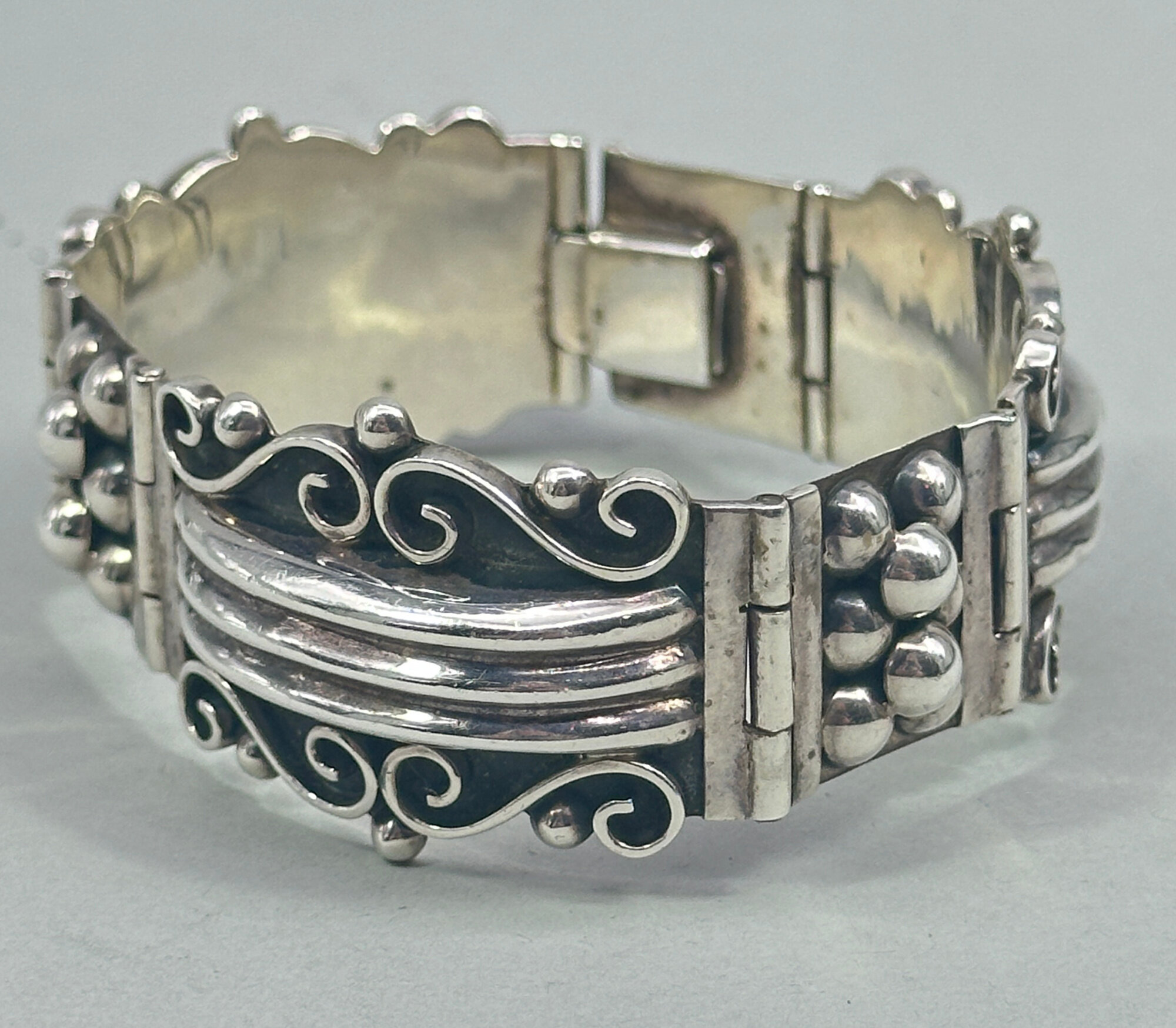
Taxco clamper bracelet, attr. to Justo or Jorge Castillo, 1940s
Price: £450Justo and Jorge Castillo come from the Los Castillo workshop. Los Castillo was an influential and ongoing design and manufacturing enterprise established in 1939 by Antonio Castillo and his brothers Justo and Jorge and their cousin Salvador Teran. Los Castillo is known for sterling jewellery and fine pieces in "married metals" combining various metals such as silver, copper and brass. Castillo who arrived in Taxco in 1923, began his long career working for William Spratling at Taller de las Delicias. He married Margot van Voorhies prior to opening Taller Los Castillo bu they were later divorced in 1946. (see The Little Book of Mexican Silver Trade and Hallmarks, 2013)
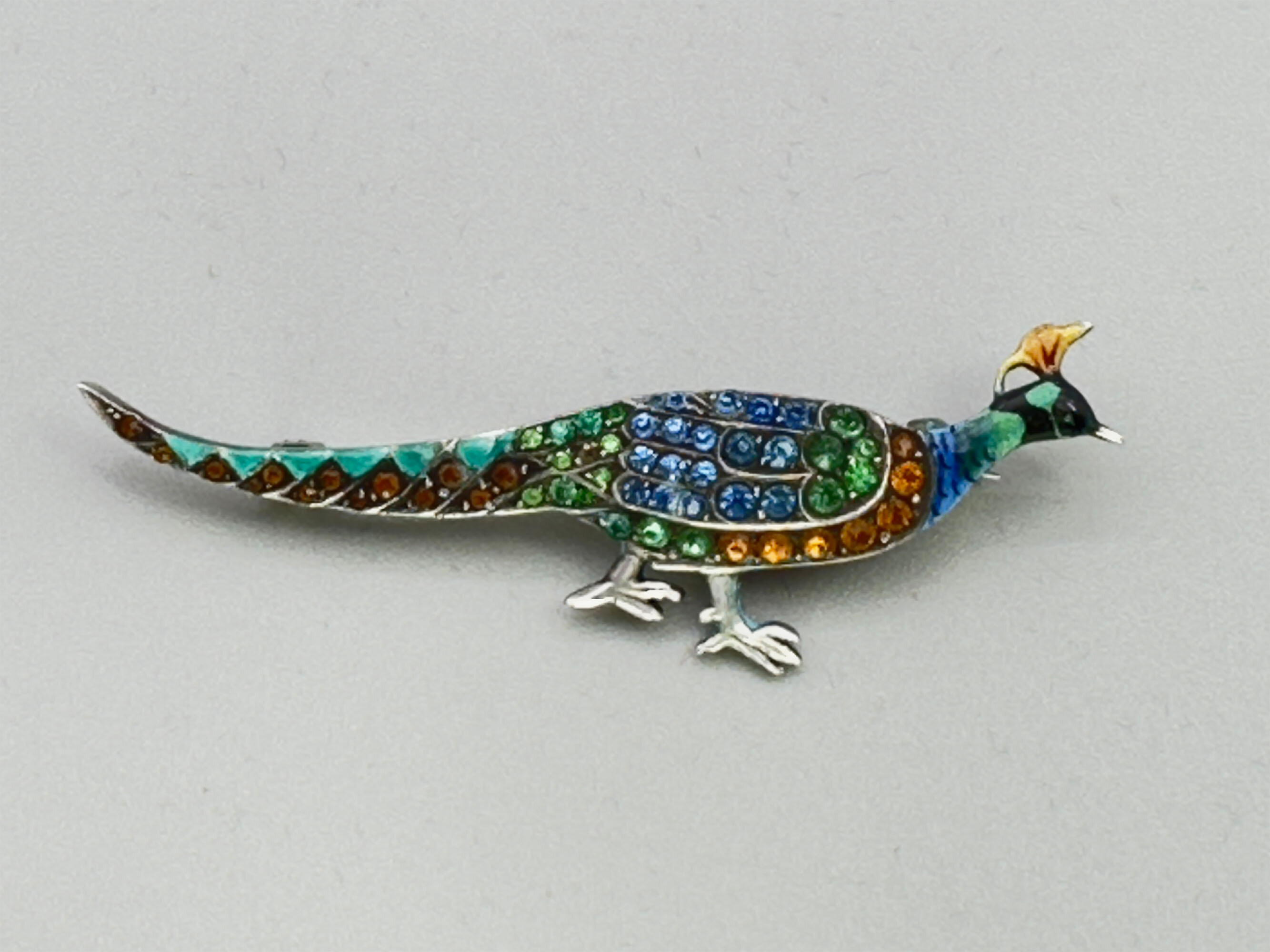
Two lacquer bird brooches 1980s
Price: £15
Art Deco Cicada Necklace, probably English 1930s
Price: £35
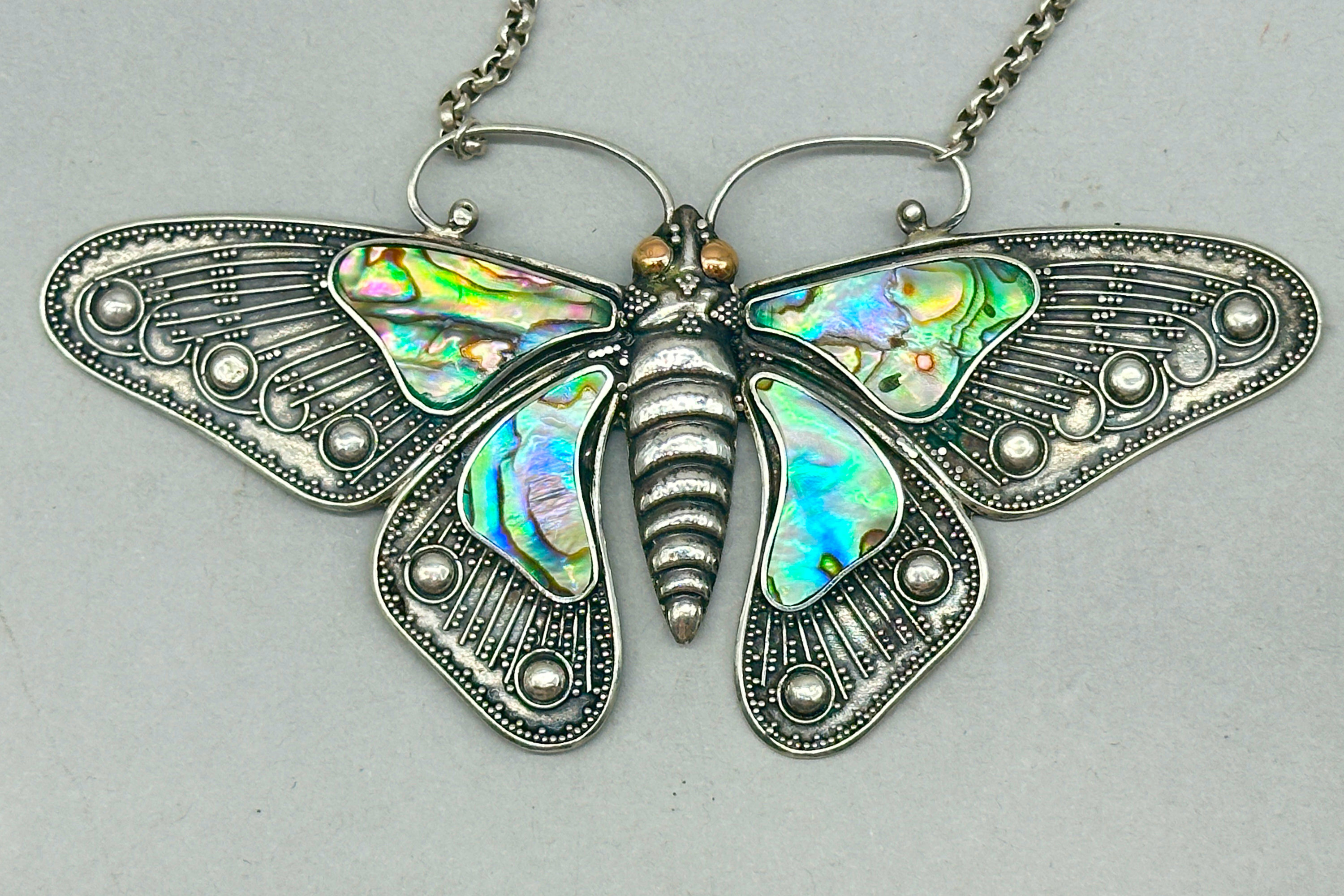
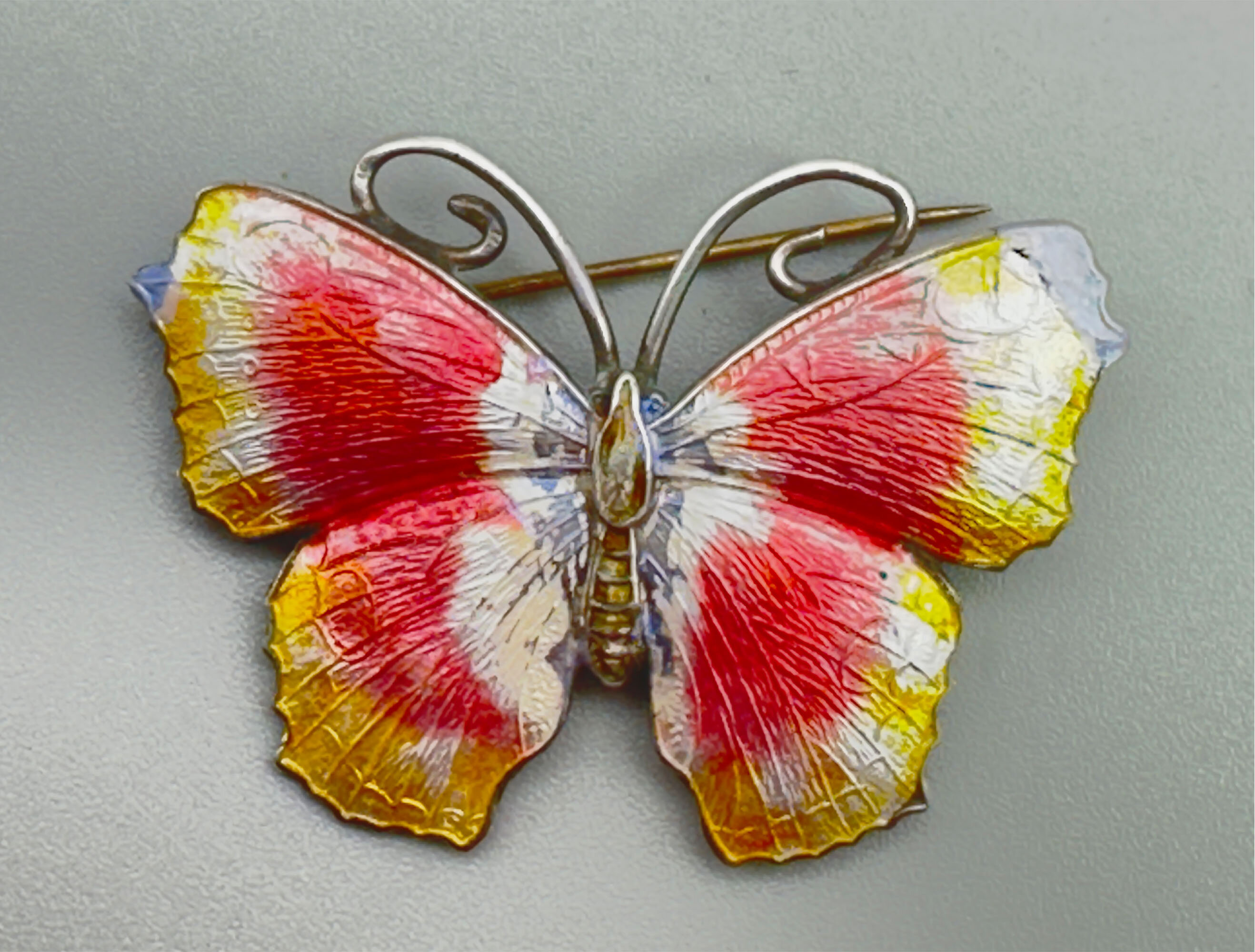
Butterfly brooch by Marius Hammer (1847-1927), Bergen, Norway
Price: £450MARIUS HAMMER BIO:
Marius Hammer built up and managed Norway's largest goldsmith's workshop in the decades around 1900. By investing heavily in marketing and international launch, he helped make Norwegian enamelwork an important export item. In a golden age for Norwegian handicrafts, Hammer's company also delivered many works that are among the main works of Norwegian goldsmithing.
Hammer was a third-generation goldsmith in the traditional craft town of Bergen. In his father's workshop, he received training in an ancient guild craft, but his ambitions were greater than running a small workshop, as his father and grandfather had done. During his studies in Hamburg and Berlin around 1870, he gained insight into new techniques and production methods, and from 1871 he built up his workshop to become the largest in Bergen in a few years. He had modern aids such as gas and electricity installed early on.
The workshop made all types of goldsmith's wares: centerpieces, jugs, coffee sets, cutlery, jewelry and much more. However, from the 1880s, Hammer focused on the tourist market and became a major producer of souvenirs and other luxury items in filigree and enamel. He built up a network of branches in the well-known tourist destinations in Western Norway, and he also supplied large quantities of goods to businesses abroad, including London. From 1885, Hammer's company was court supplier to the Prince of Wales, and somewhat later the German Emperor Wilhelm II became an avid customer. The main product was filigree work with window enamel – glass mosaics in all the colors of the rainbow built up on a fragile network of thin, gilded threads. Small and large Viking ships in various price ranges for tourists, boots, teaspoons, jewelry and much more were produced in a wide variety and in large quantities. Around 1914, the company reached its peak with about 130 employees.
The key to Hammer's success in the tourist market was very active marketing, including through participation in the major world exhibitions. Together with the Kristiania firms Tostrup and David-Andersen, Hammer made enamelware one of the most important Norwegian exports.
In addition to souvenir production, Hammer also had an important production of corpus works, i.e. objects such as bowls, jugs and mugs. He invested heavily in prestige works for exhibition purposes and for the upper bourgeoisie, and a number of essays and other large corpus works are of greater artistic interest than souvenir production. Hammer engaged outstanding designers, and over the prosperous years from about 1900 to about 1920 the firm produced works that are now considered masterpieces in the goldsmith's art of the period.
Marius Hammer became Bergen's richest craftsman; he lived at the elegant country estate Christinegård in Sandviken and had himself driven in a two-horse carriage to his shop in Strandgaten. He built up a large collection of antiques and also traded in these in his shop.
With the outbreak of World War I, the tourists disappeared, and after the war, times became tougher for the luxury production that Hammer had focused on. The company was converted into a limited liability company in 1915, with his eldest son Torolf as director. However, he died in 1920, and from then on the company went into decline. Neither the old Marius Hammer nor his youngest son Max, who took over as manager, were able to carry out the radical restructuring that was necessary to adapt to the changing times. Shortly after Marius Hammer died in 1927, the company's properties and most of the machinery were sold, and the remnants of the company went into bankruptcy in 1930. (REF: https://nbl.snl.no/Marius_Hammer)
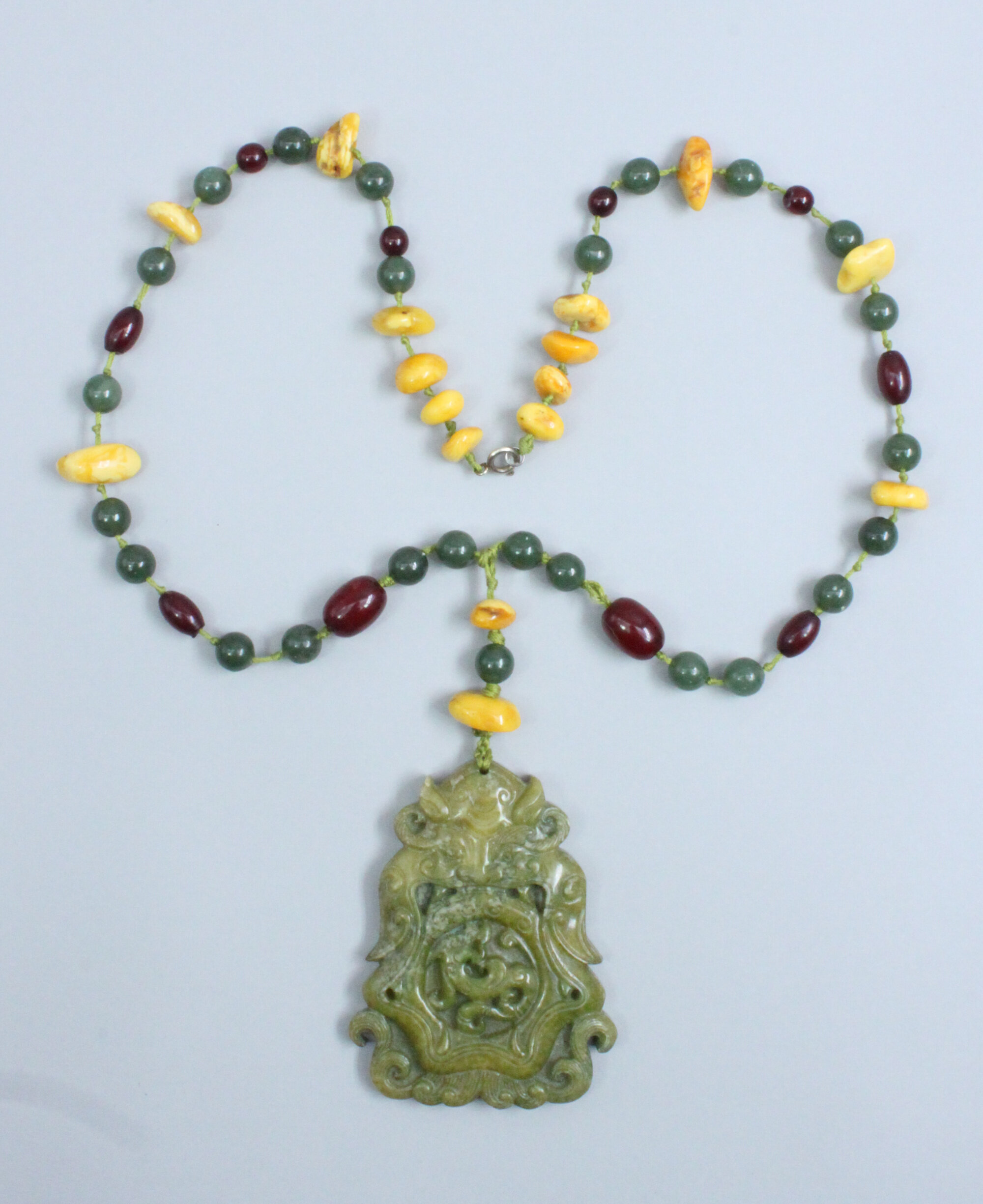
Incredible long jade necklace with large carnelian pendant
Price: £135
Art Deco Scottish shield brooch
Price: £35
DeNicola brooch and earrings 1950s
Price: £20
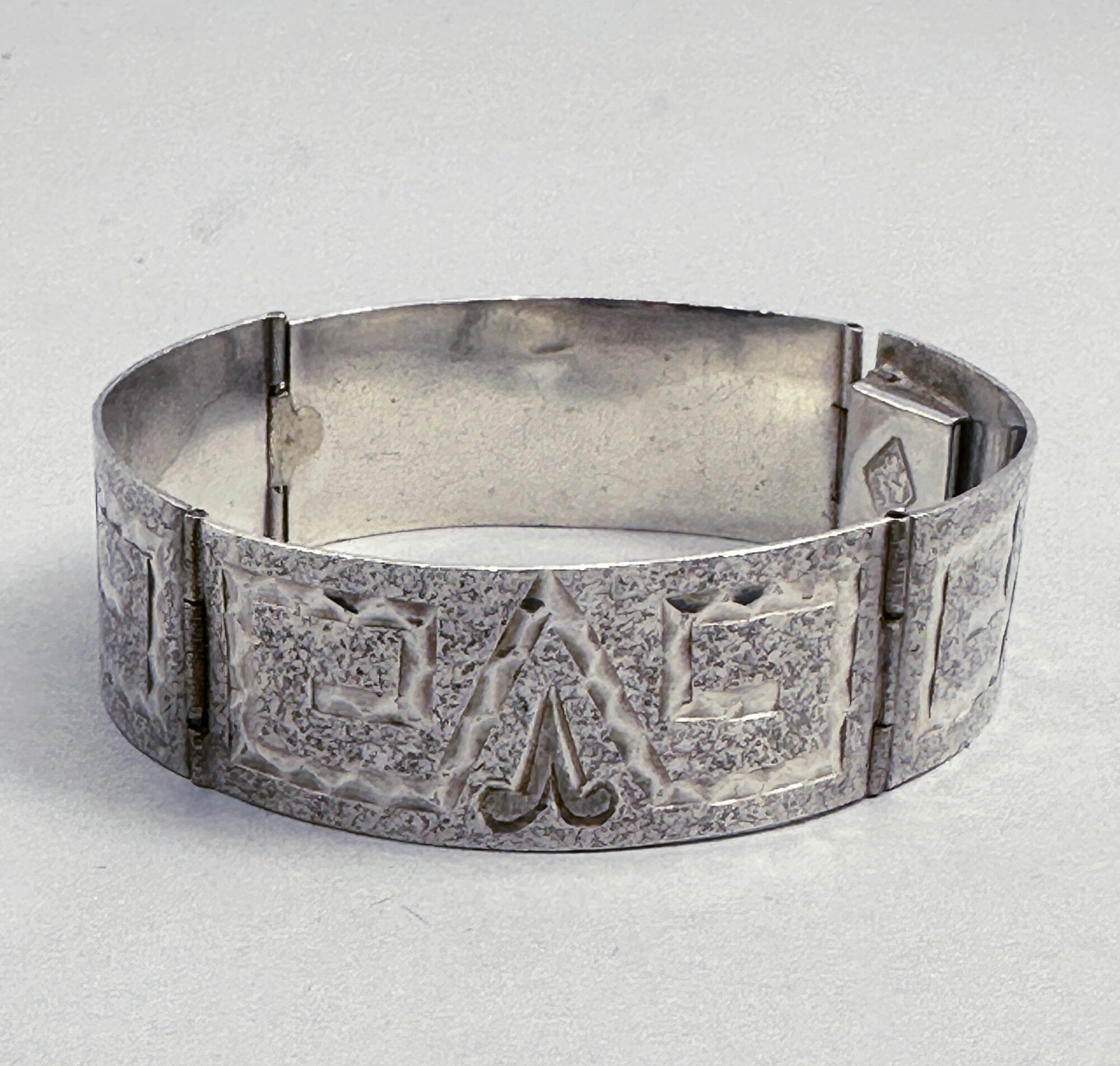
Art Deco Taxco bracelet c1940
Price: £100
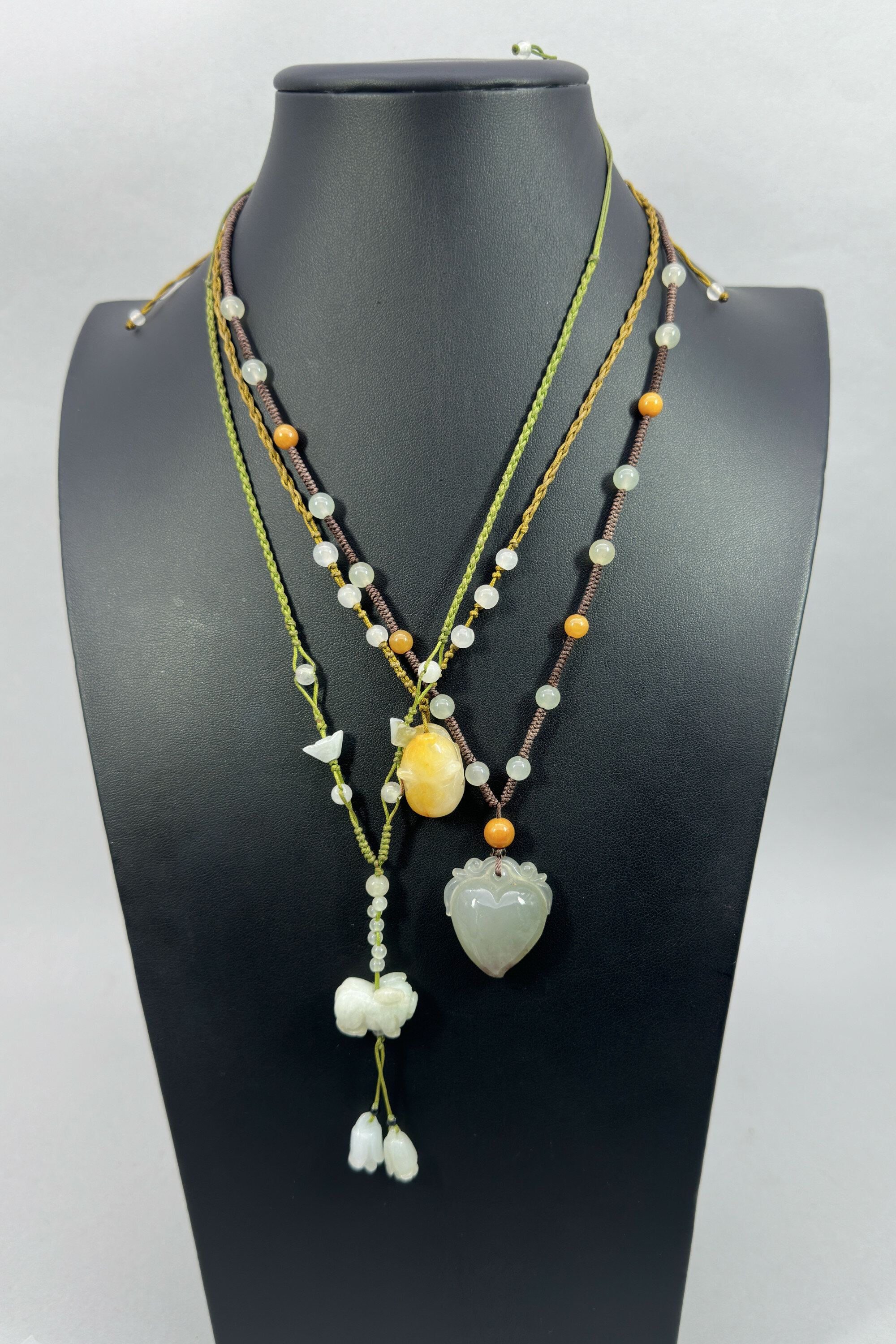
Two jade carvings mounted as a necklace
Price: £125
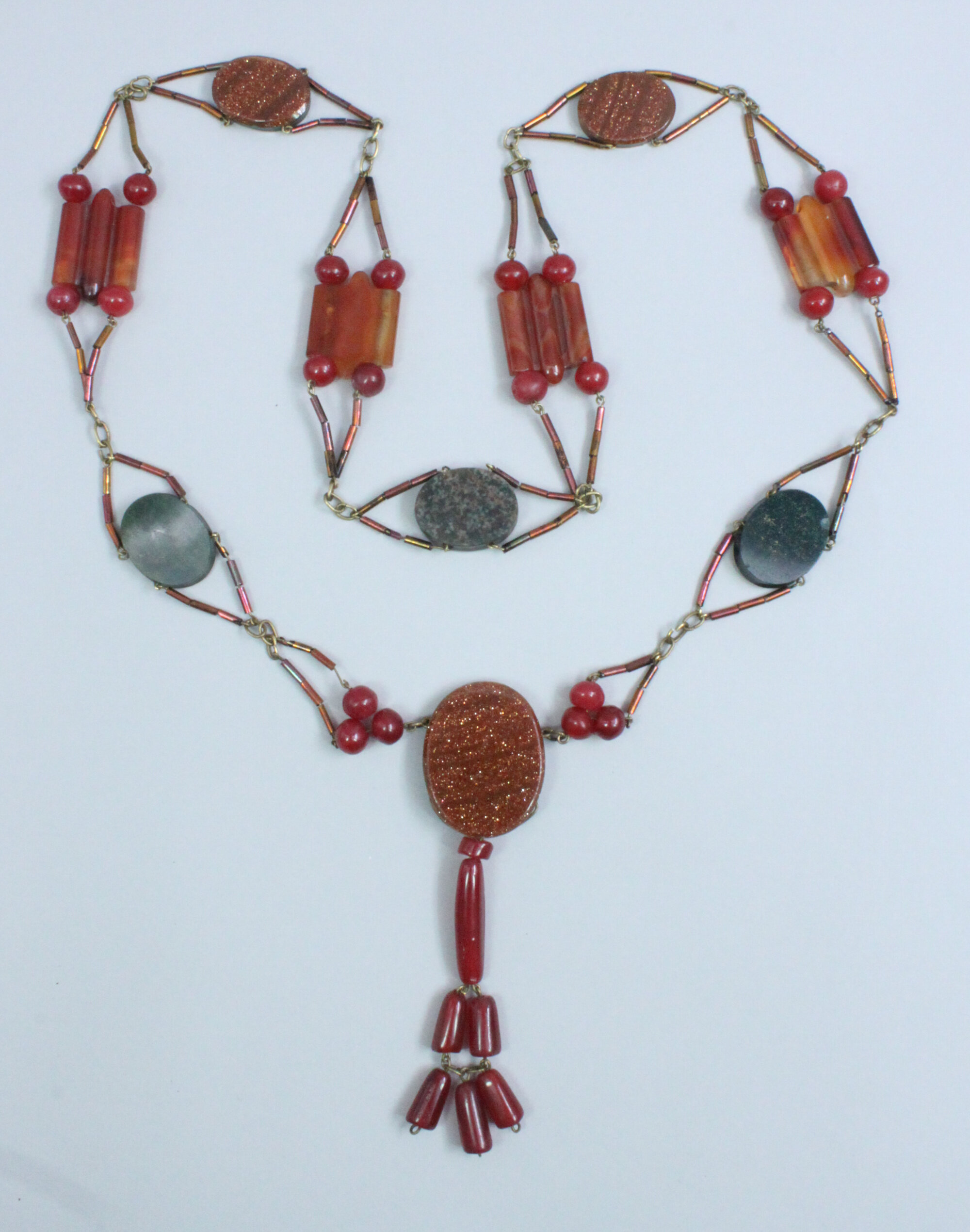
Long Art Deco carnelian, bloodstone and goldstone necklace 1930s
Price: £95Goldstone is a type of glittering glass made in a low-oxygen reducing atmosphere. The finished product can take a smooth polish and be carved into beads, figurines, or other artifacts suitable for semiprecious stone, and in fact goldstone is often mistaken for or misrepresented as a natural material. It was first made in the 17th century in Italy. (Credit: Wikipedia)
Pair of large hoop earrings with stone drops
Price: £45
French cockerel brooch 1920s
Price: £75
Art Deco Scottish agate necklace, 1920s
Price: £125
Necklace with soapstone pendant and amber beads
Price: £65
Striking Art Deco brooch
Price: £15
Tibetan amulet necklace featuring Buddhist deity c1900
Price: £25
Large round Scottish agate cloak pin c 1900
Price: £125
Tibetan turquoise and silver necklace 1930s
Price: £45
Black glass apple pendant on a long chain, 1980s
Price: £25PLEASE NOTE THAT THERE IS FREE UK SHIPPING ON THIS ITEM. For international buyers the shipping cost will be reduced by the UK shipping cost, so don't worry if you are outside the UK, you still receive this benefit!
Victorian Whitby jet mourning brooch
Price: £75
Very unusual banded carnelian panel bracelet
Price: £45
Rare Cairngorm Scottish agate bracelet
Price: £150
Antqiue Scottish agate specimen brooch/pendant
Price: £55
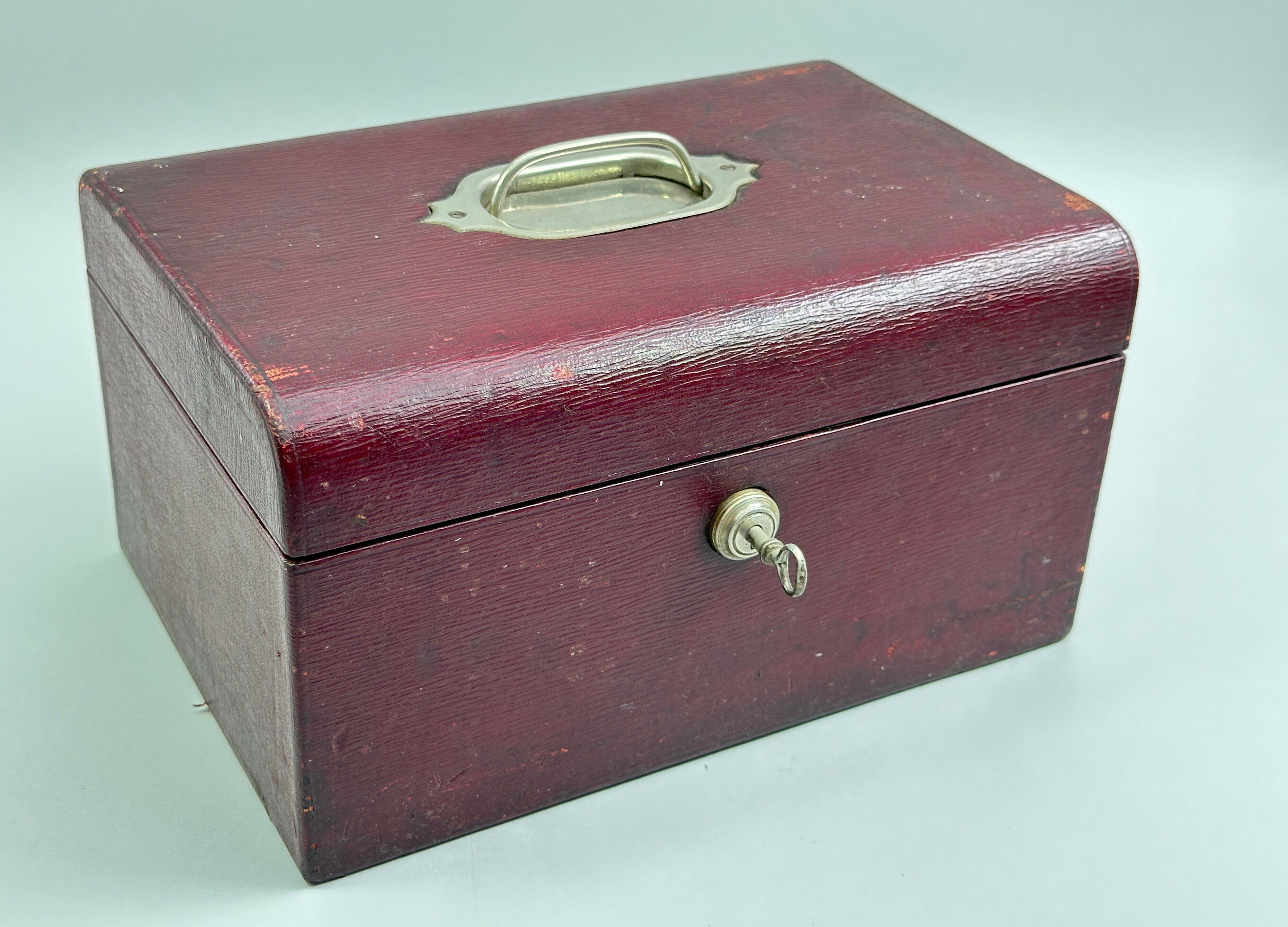
Burgundy Leather Jewellery Box with Bramah Lock, early C20th
Price: £95
Pair of Italian faux tortoiseshell earrings, 1980s
Price: £20
Silver plate Perfume Bottle with attached Stopper and Chain, Burmese late C19th
Price: £45
Exceptional Paste necklace 1940s
Price: £25
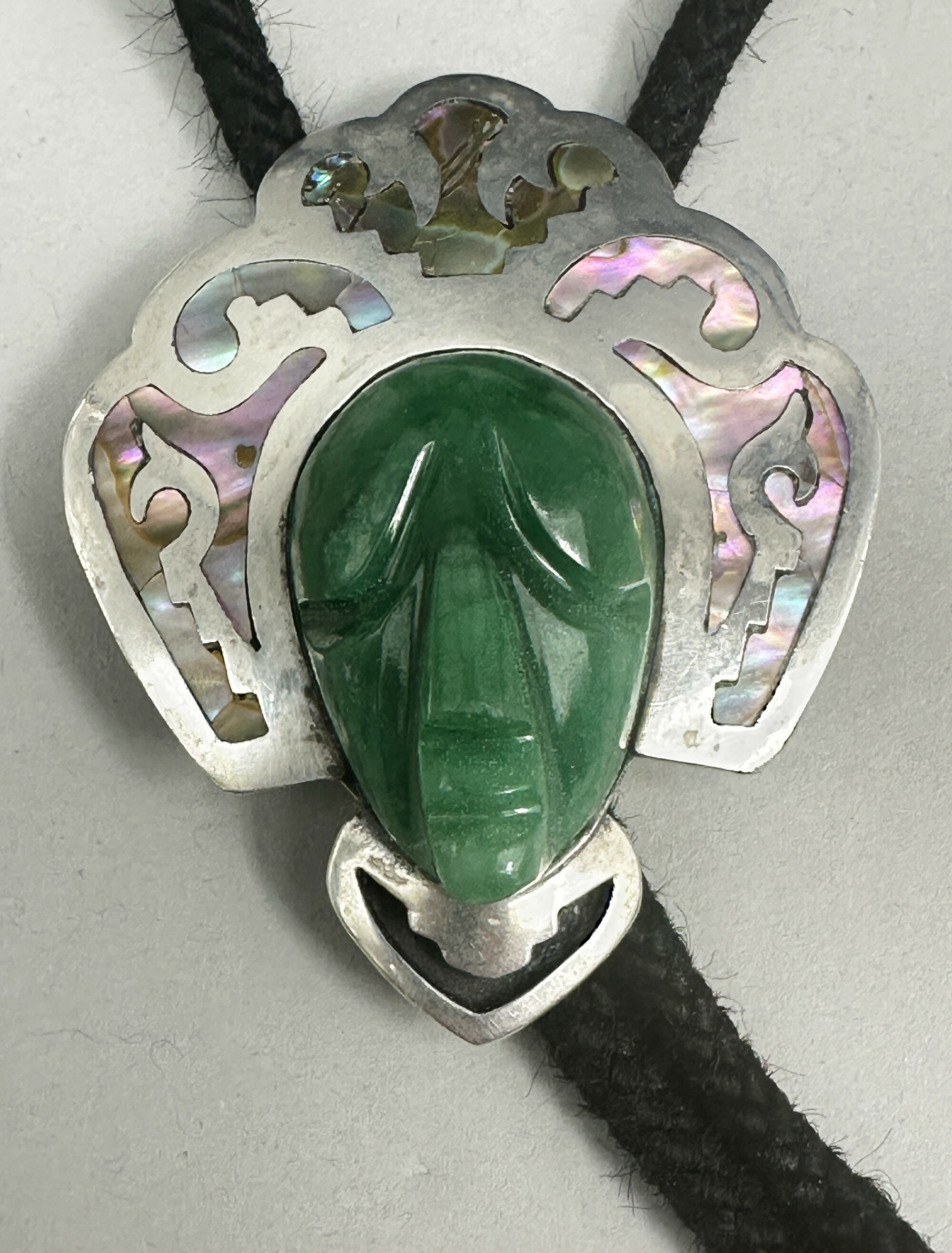
Taxco bracelet with Aztec mask motif, 1940s
Price: £65
Silver plate Perfume Bottle with attached Stopper and Chain, Burmese late C19th
Price: £45
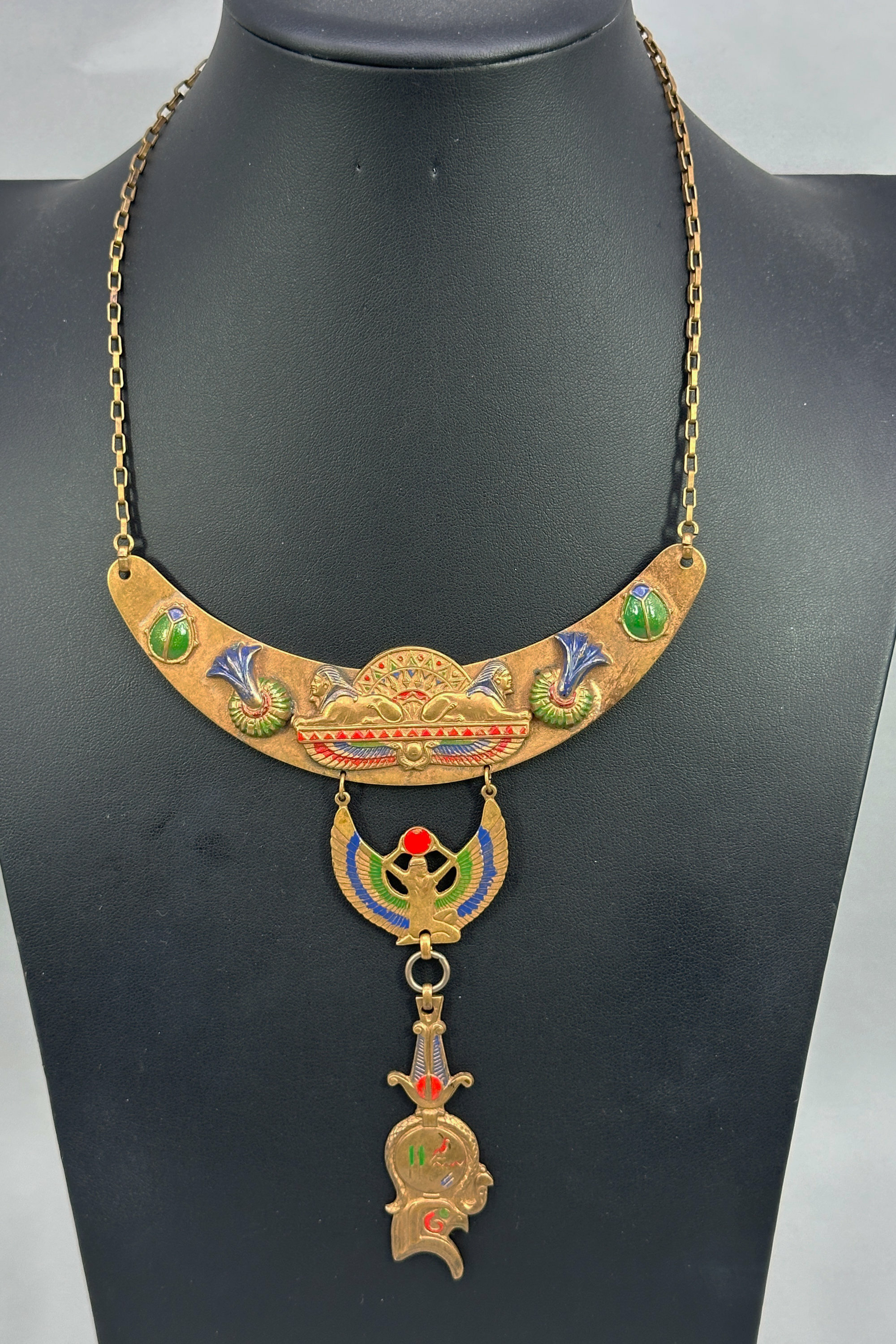
Unusual Egyptian Revival necklace with a plaque depicting Isis, 1930s
Price: £75
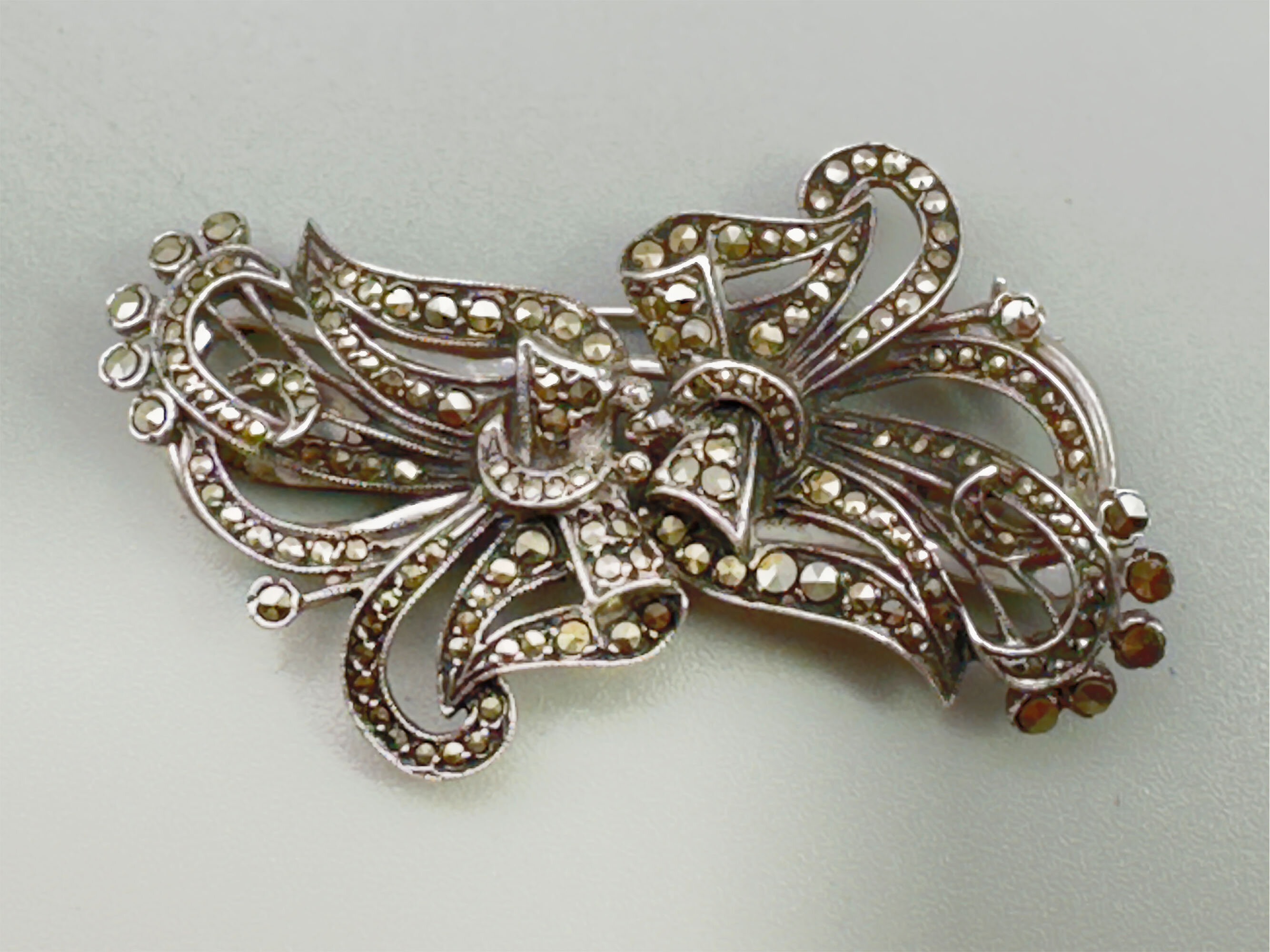
Edwardian belt buckle encrusted with marcasite stones
Price: £50
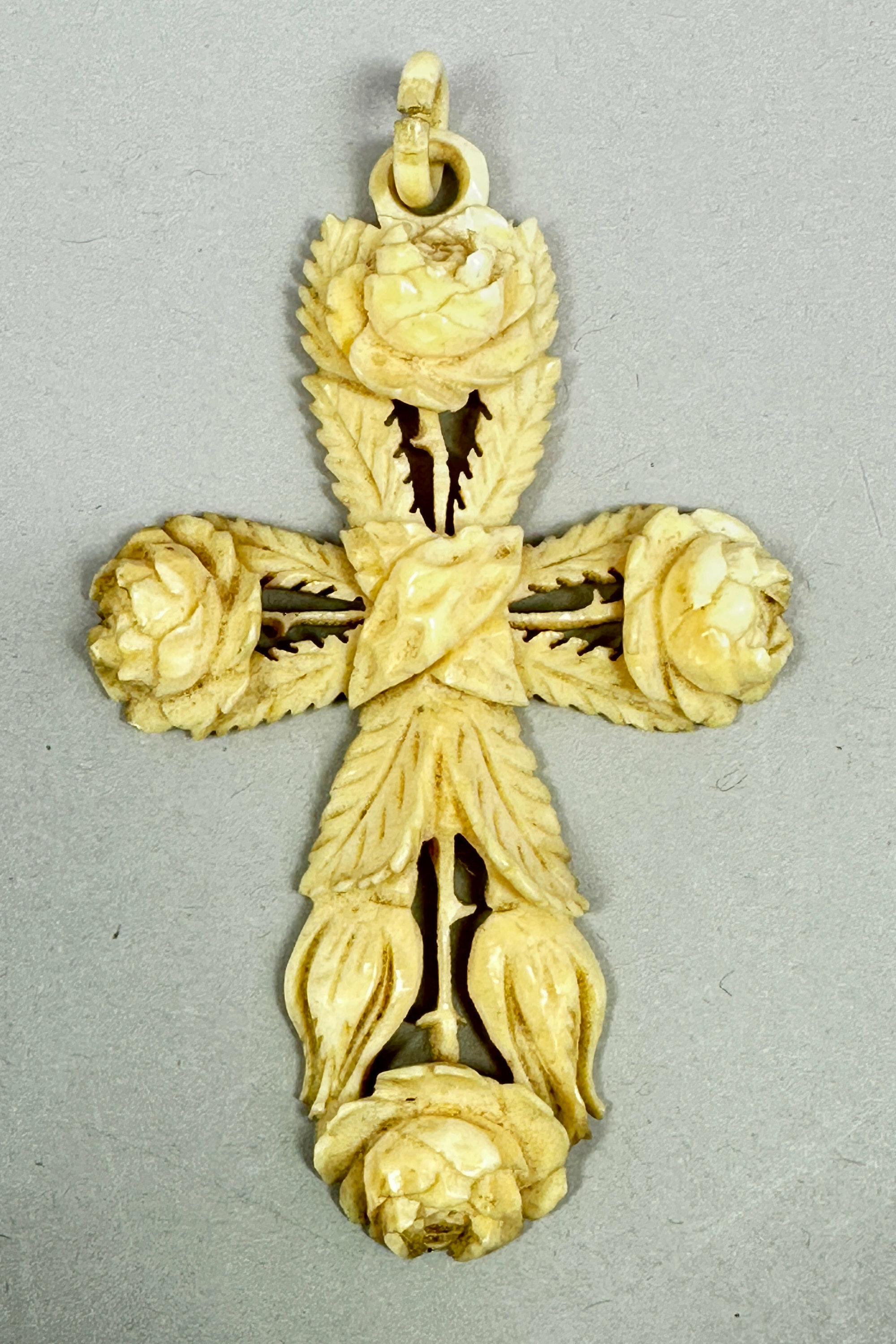
Victorian carved bovine bone necklace, Indian c1900
Price: £175
Massive natural coral beads
Price: £175
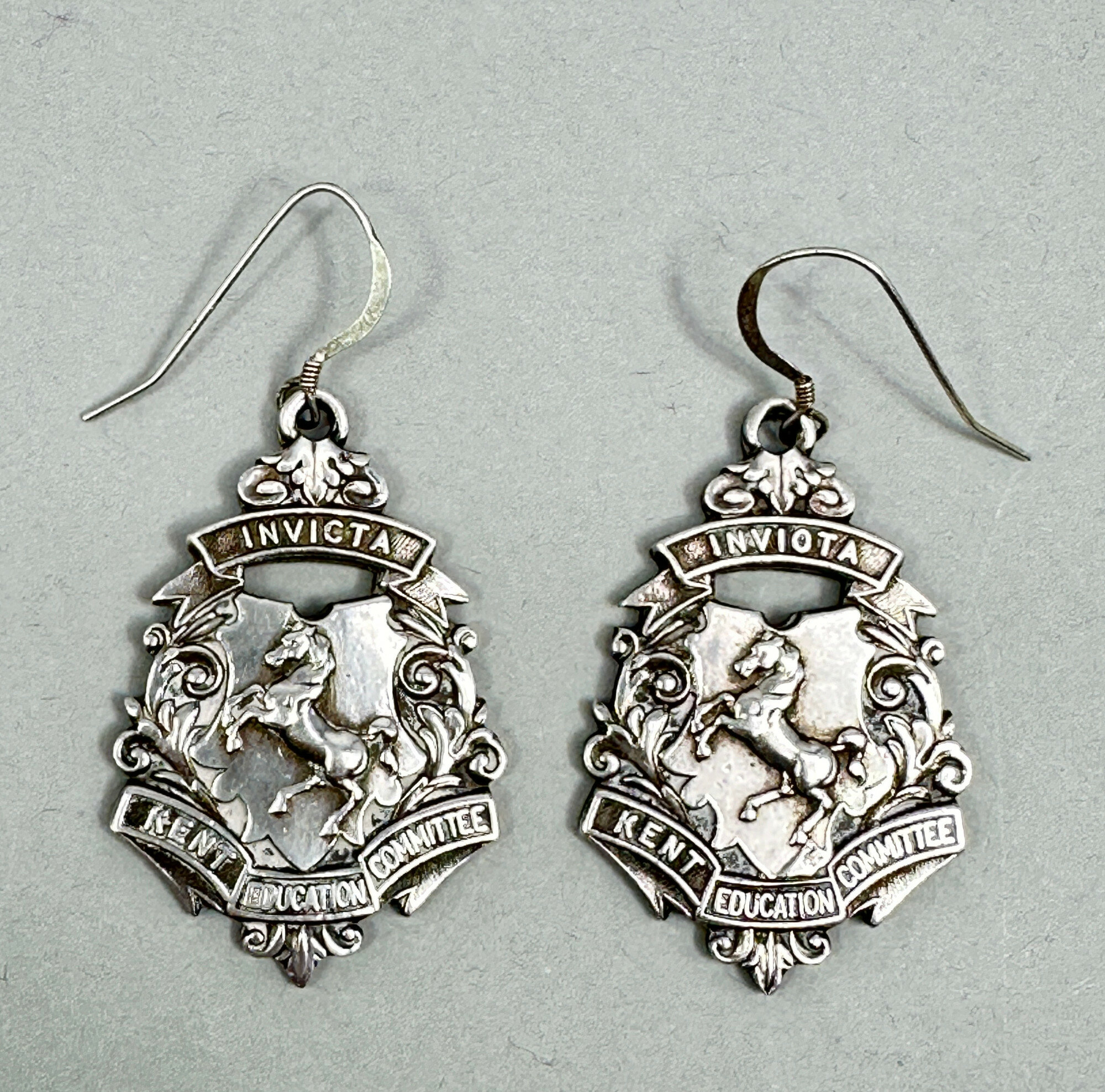
Pair of silver fobs adapted as earrings, Birmingham 1904 & 1905
Price: £75
Large Islamic silver necklace with heart shaped box c1920
Price: £85
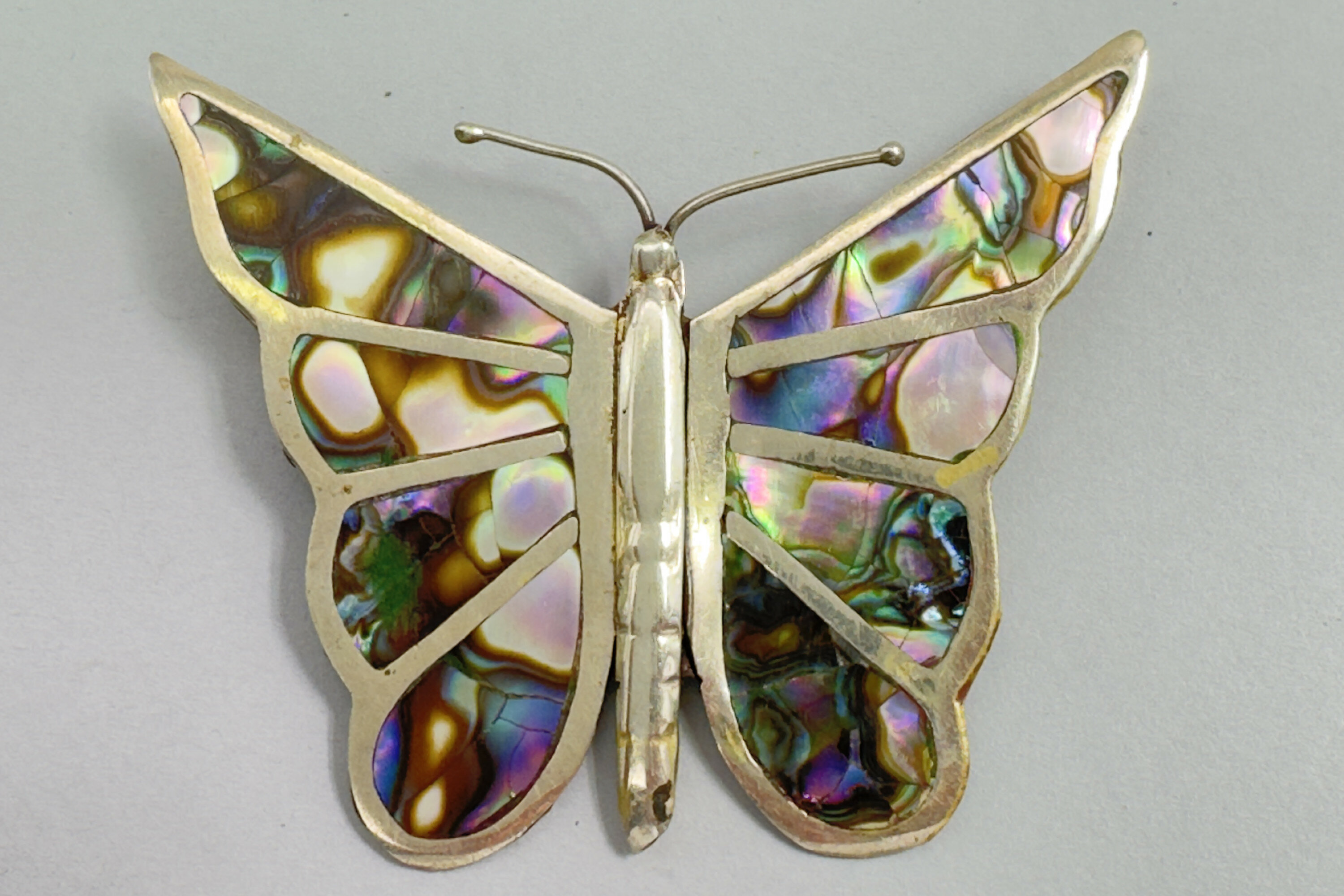
Silver Brooch in the form of a Butterfly, Taxco 1940s
Price: £65
Art Deco bee motif necklace 1930s
Price: £125
Striking Bakelite buckle in the shape of an airplane, American 1930s
Price: £45
Striking modernist necklace with large butterscotch amber pendant c1970
Price: £50
1001 Arabian Nights Brooch c1930
Price: £20
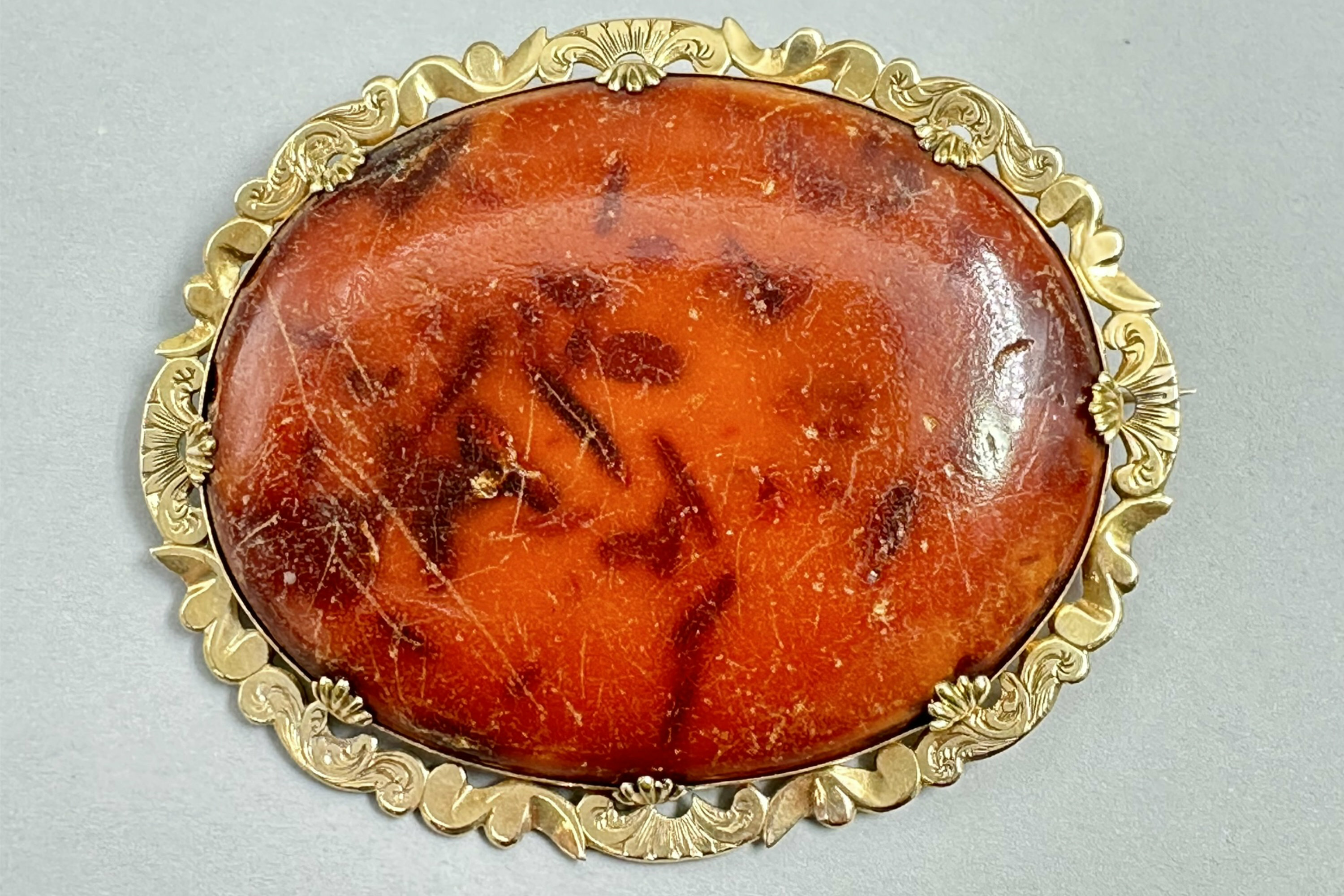
Victorian large 9ct gold brooch set with amber c1900
Price: £200
Constructed necklace with jade, egg yolk amber and cherry amber
Price: £250
Estruscan style necklace in the manner of Lalaounis c1990
Price: £75
Indian silver repousse cuff bracelet, c1920
Price: £85
Art Nouveau repousse Pendant on later chain, c1910
Price: £95
Art Deco Czech glass bracelet
Price: £35
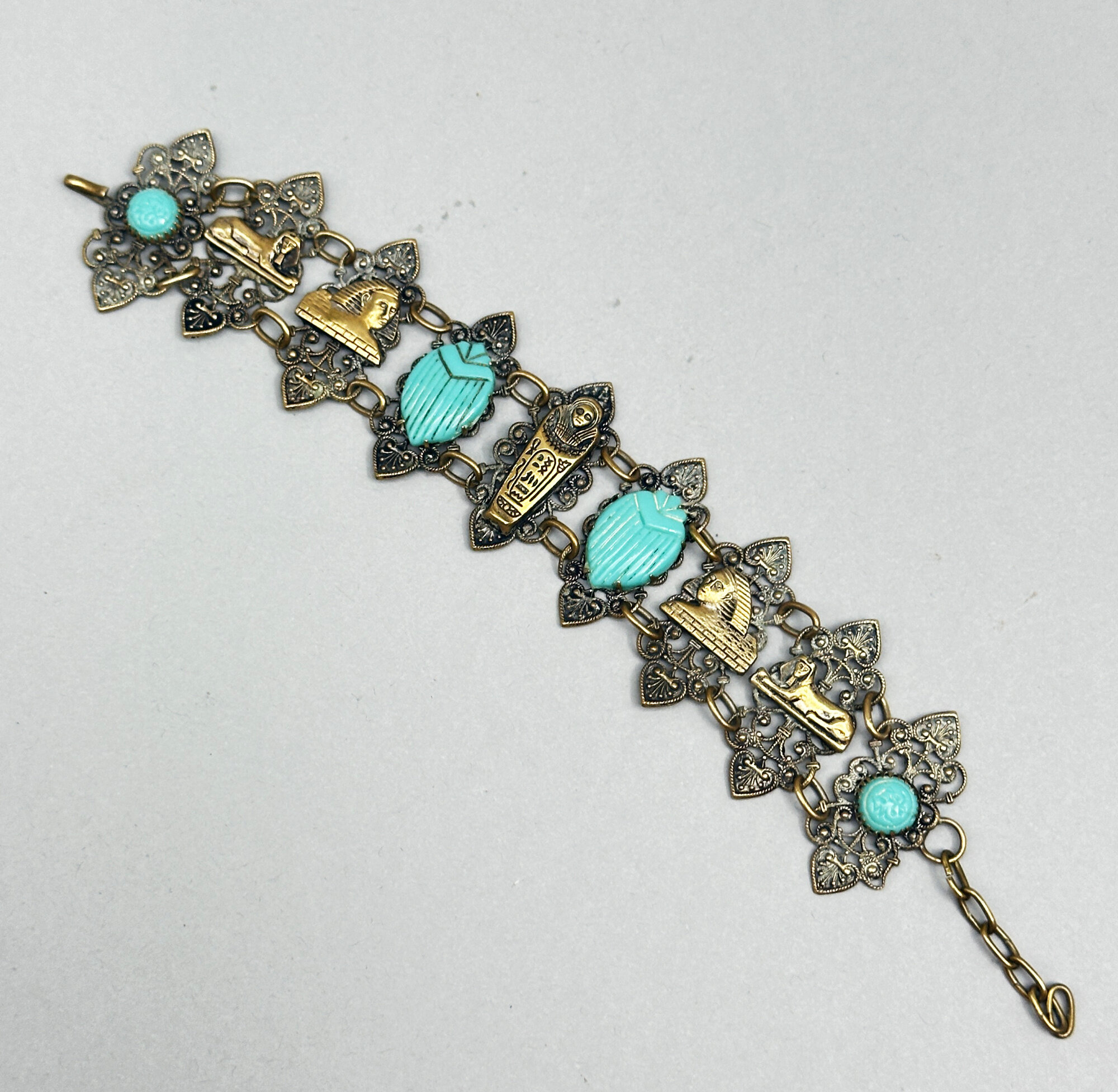
Edwardian Egyptian Revival necklace, inscribed and dated 1910
Price: £250
Etruscan style rock crystal and turquoise round brooch c1900
Price: £65
Stunning rope and tassel necklace, signed, c1990
Price: £45
Art Deco Czech glass necklace with enamel and glass stones, 1930s
Price: £25
Victorian Silver Mounted Banded Agate Brooch, late C19th
Price: £100
Islamic Silver Necklace with Niello work plaques, c1930
Price: £75The technique used is that of ‘niello’ work. (The word derives either from the classical Latin word ‘nigellum’ or the later mediaeval words ‘nigello’ or ‘neelo’.) Niello is a black mixture, usually of sulphur, copper, silver, and lead and used as an inlay on engraved or etched metal, especially silver. Added as a paste, it hardens to a black colour after firing and is then polished. Here it is the ground that formed from niello while the design shows though in silver, a less common version.
There is much skill in the craftsmanship here and the result is a piece of classic and timeless simplicity.