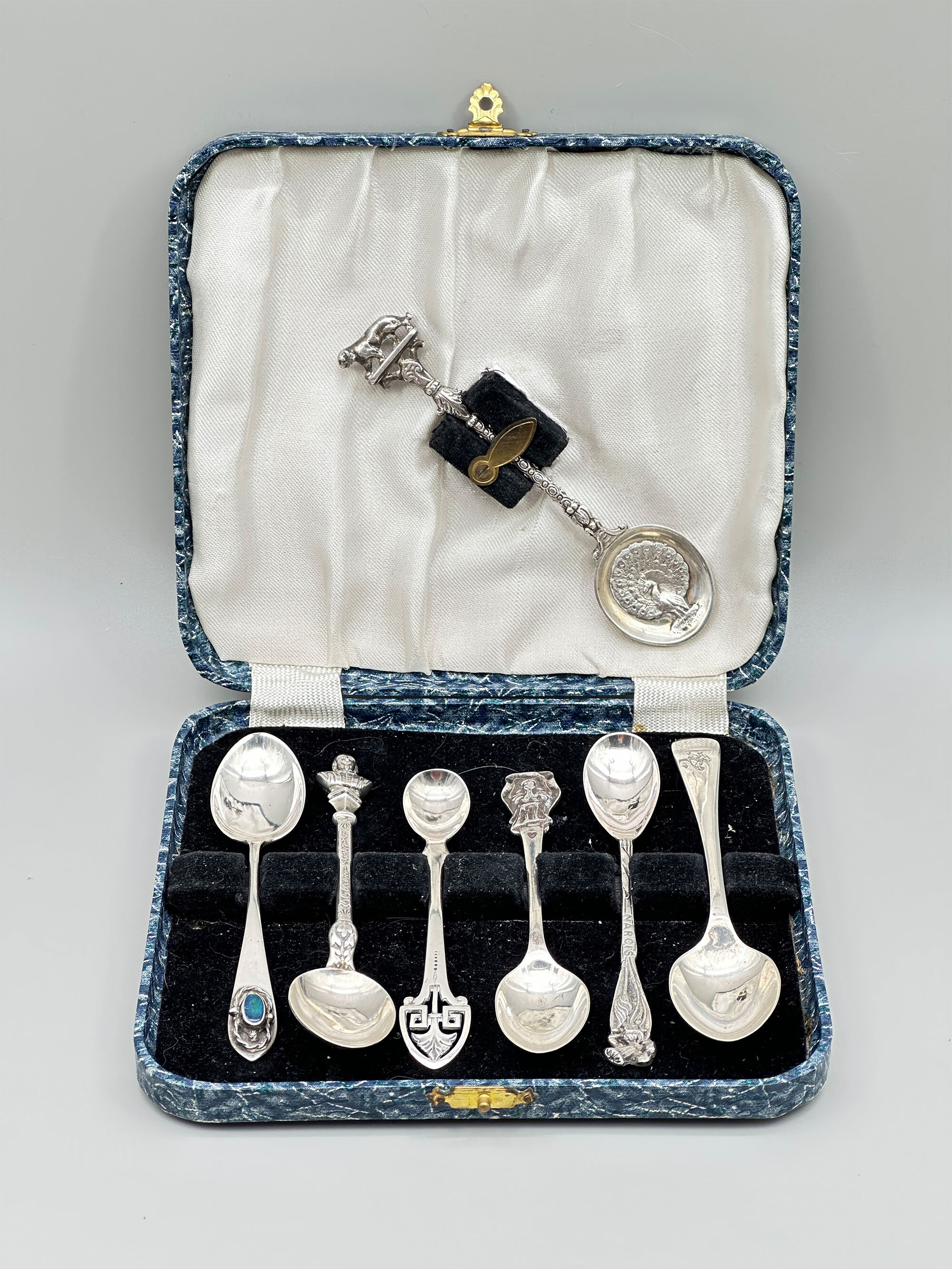
Seven silver Spoons in fitted box, six with hallmarks, England c1880-1950, one Holland c1950
Auction Ending : 16/11/26 22:34:00 GMT
Click here to go to this lot on the-saleroom.com


Seven silver Spoons in fitted box, six with hallmarks, England c1880-1950, one Holland c1950
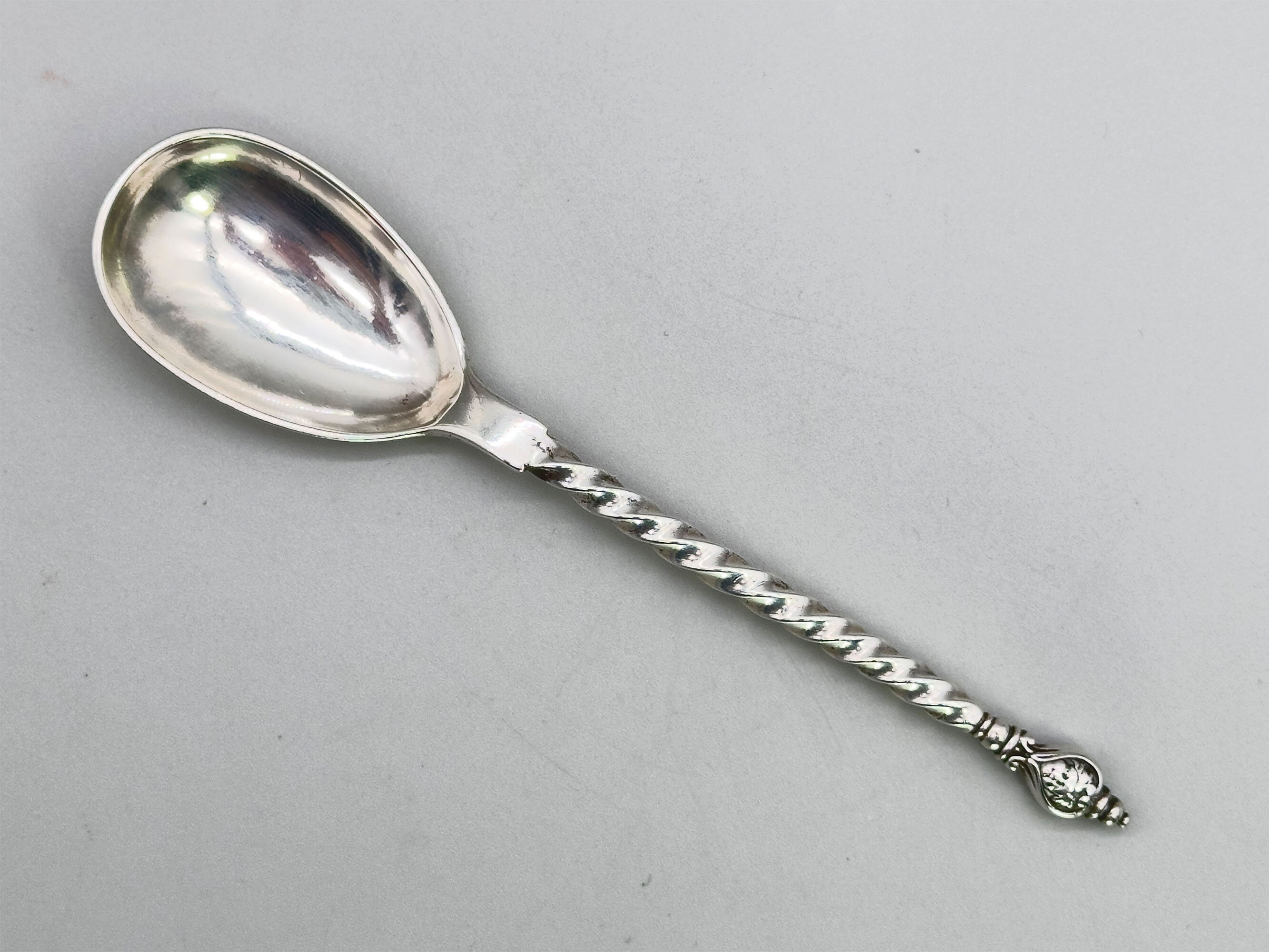
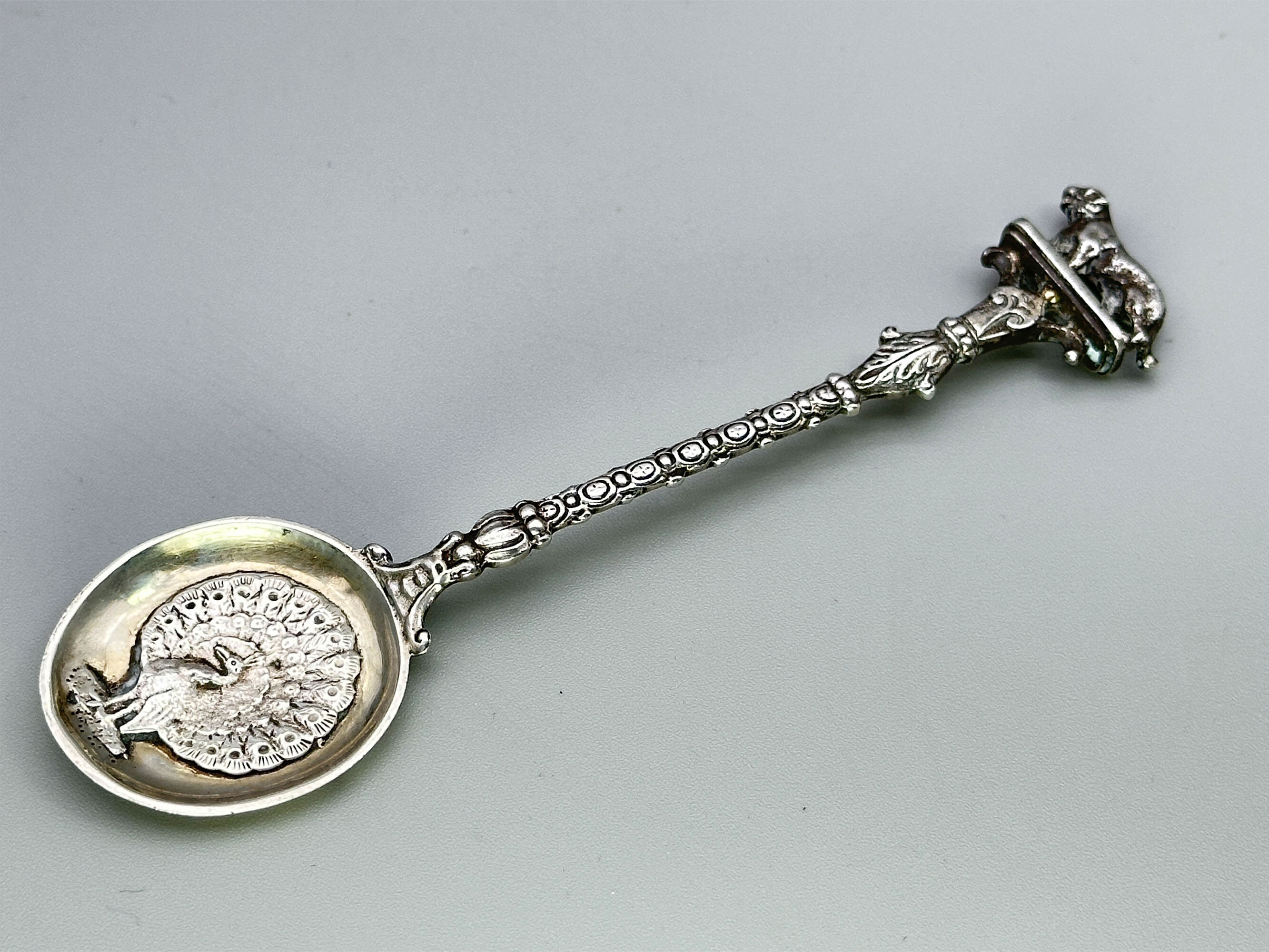
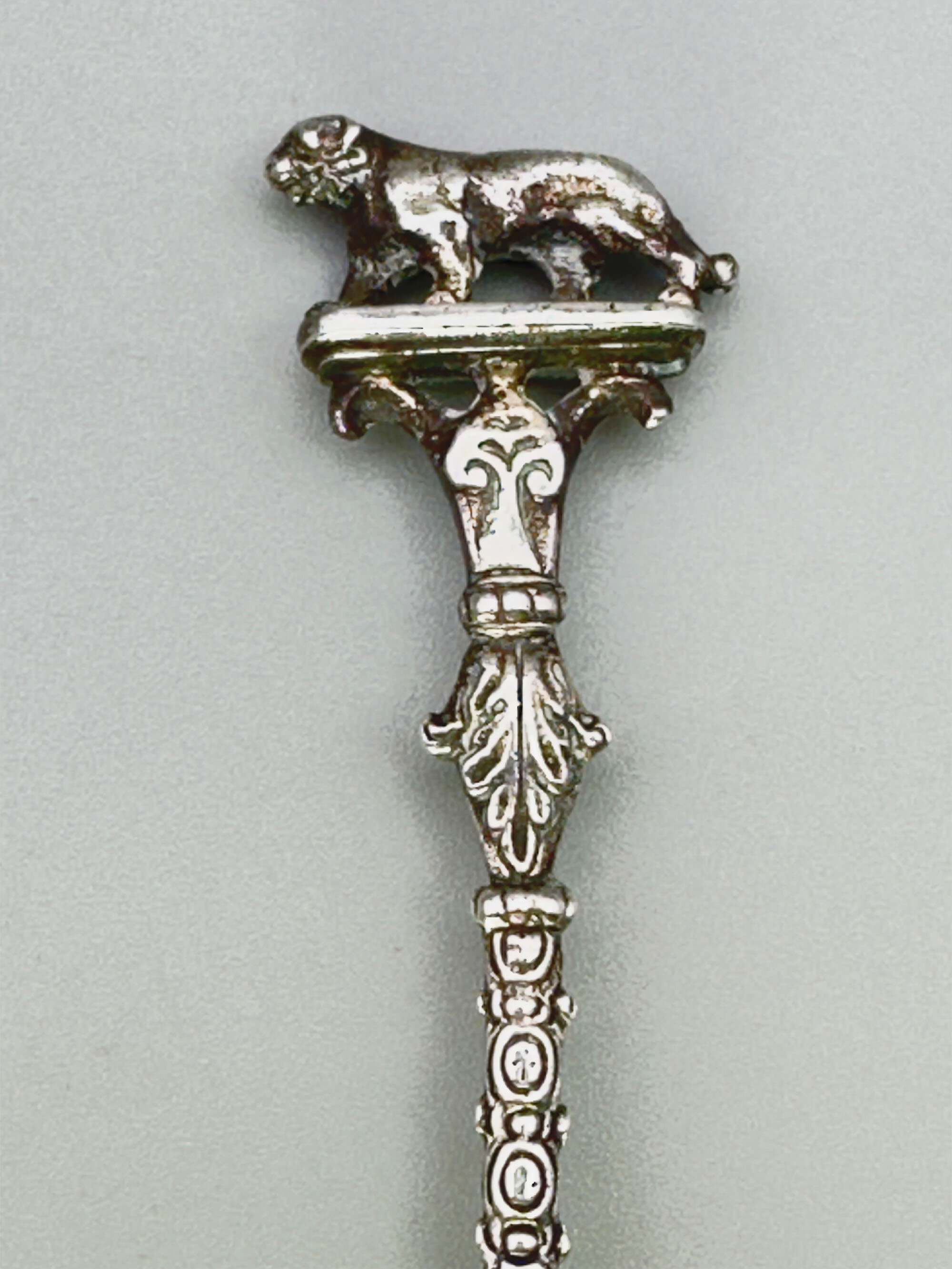
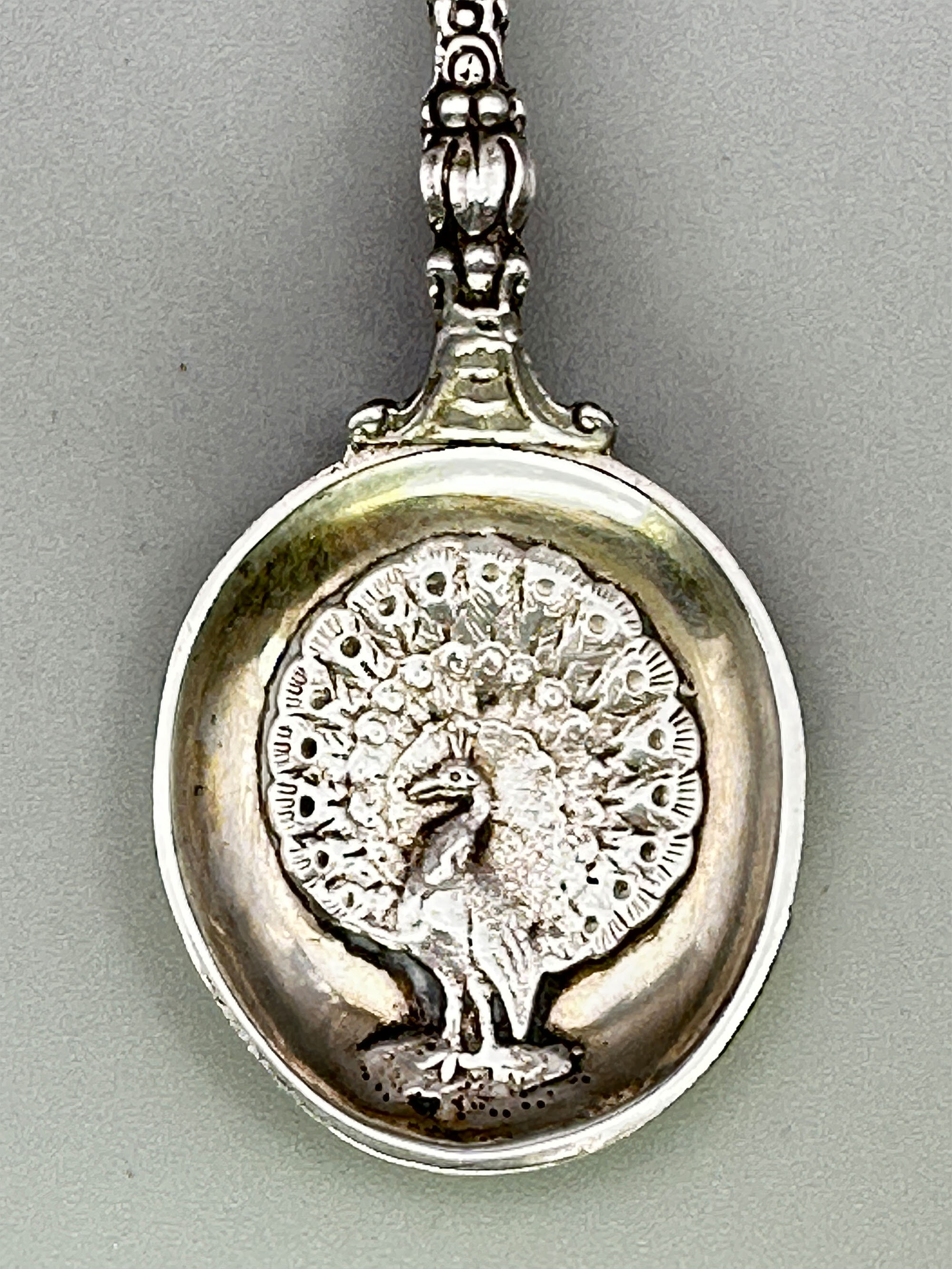
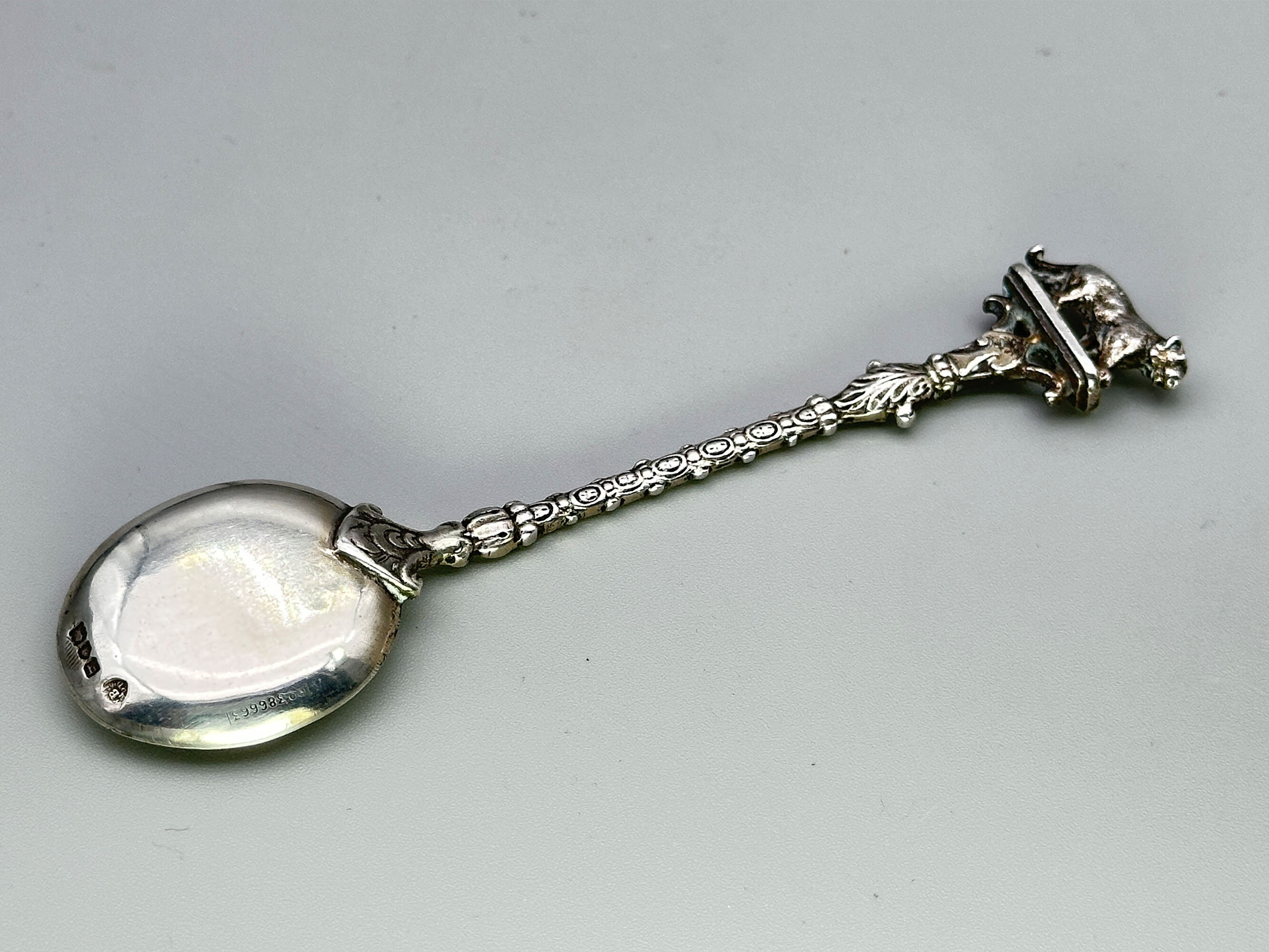
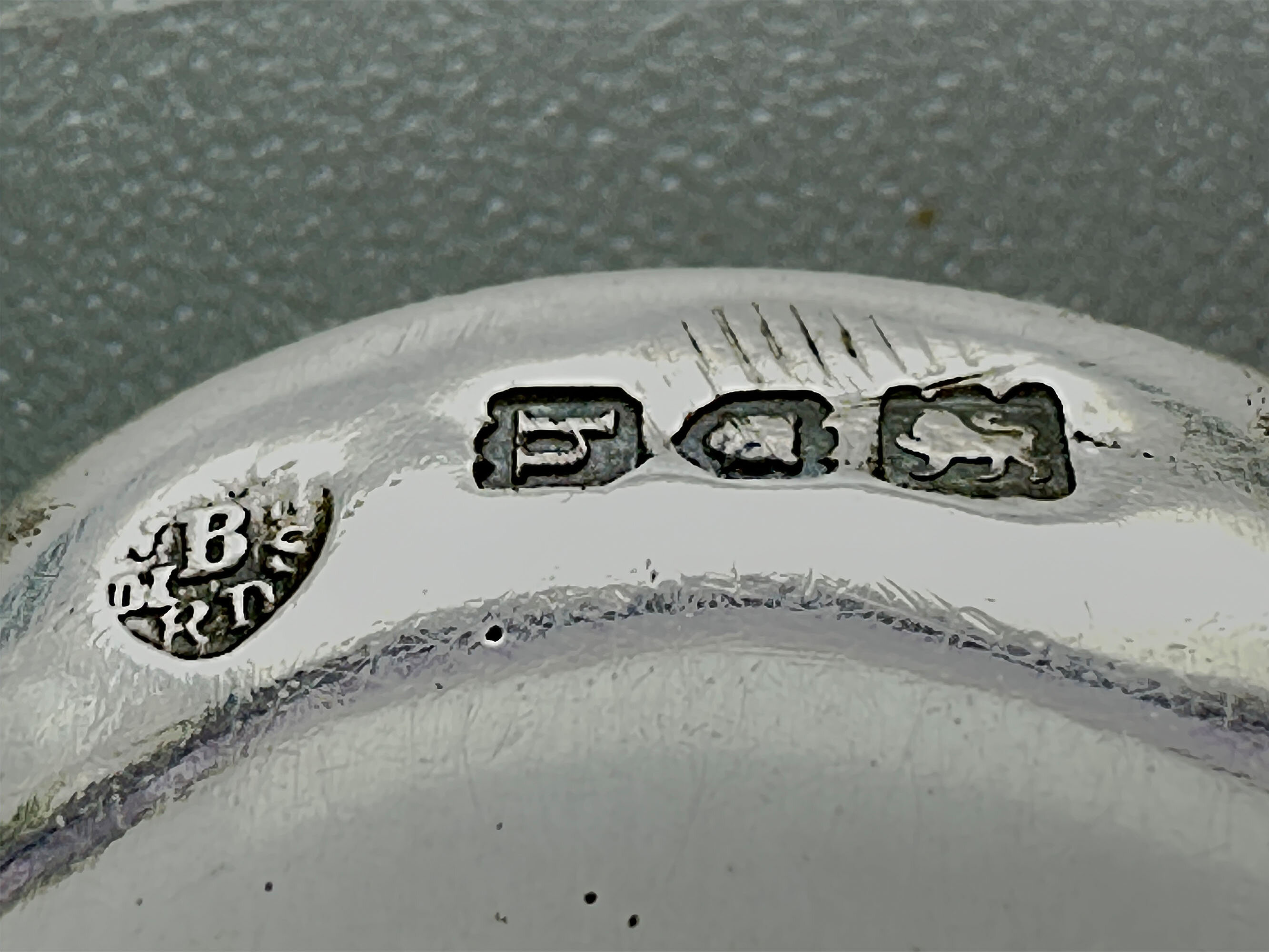
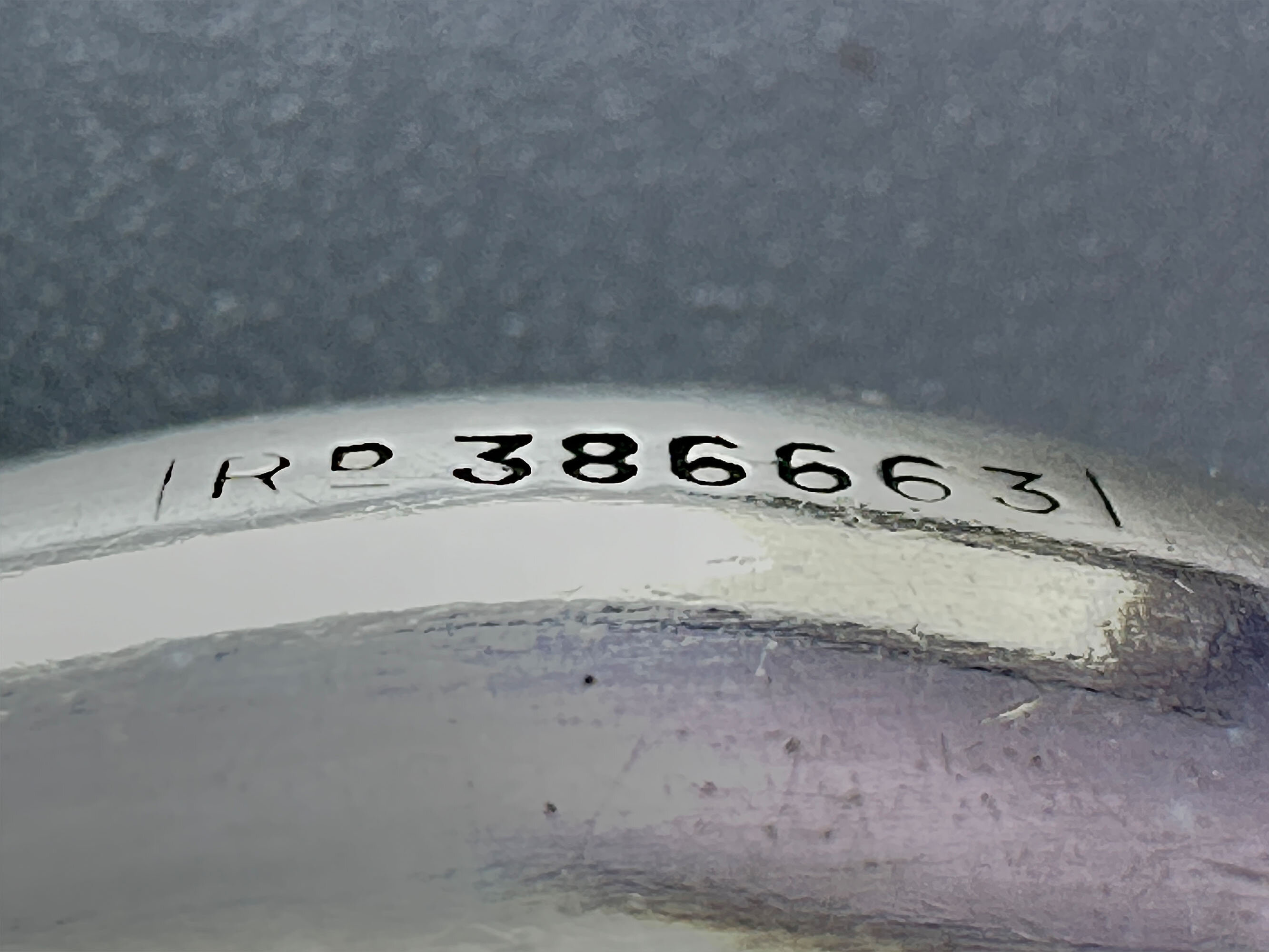
This is a collection of silver spoons in a fitted box, six with English hallmarks dating from c1880 to c1950 and one from Holland c1950(A) Caddy spoon with a near circular bowl decorated with an embossed peacock, the handle elaborately decorated in the form of a slender column with a repeating oval geometric design with stylised foliate motifs at each end, the top supporting a narrow plinth on which sits a striding leopard, the reverse of the bowl with a four character hallmark (i) maker’s mark which is hard to decipher (ii) date code letter ‘h’ (iii) assay mark for London (iv) lion passant and also a registration mark ‘386663’. Spoons in this format with an animal terminal (often a bear) and a coin like decorated bowl were produced as souvenirs on the continent in the late nineteenth and early twentieth centuries but this piece was made in England, as the hallmarks indicate, and spoons with bird design bowls were quite popular there during the same period. The registration mark can be dated to 1902 and there is apparently an entry in that year for this ‘bear-topped, coin-inset bowl’ format, although the identity of the manufacturer is as unclear as their mark.
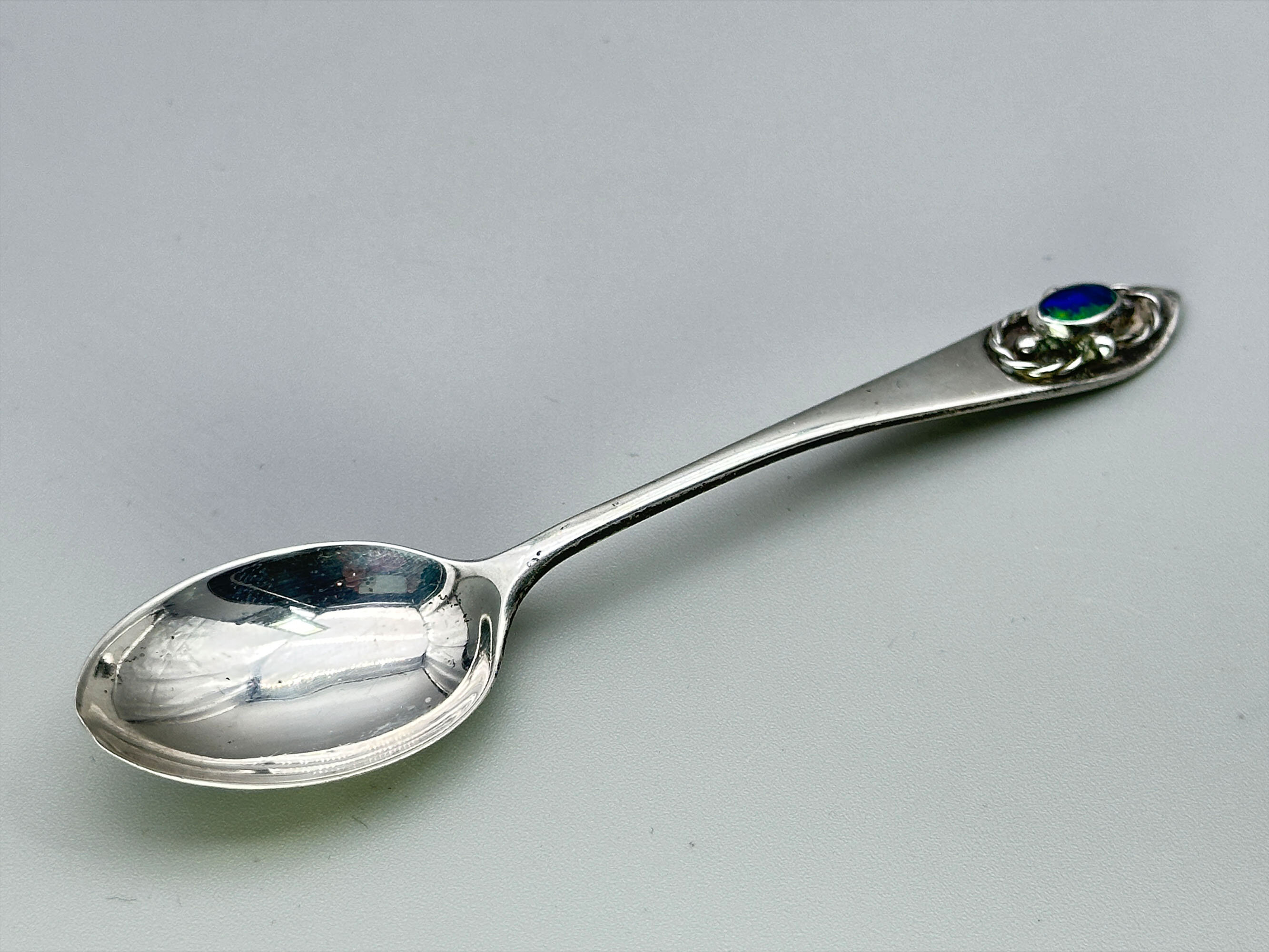
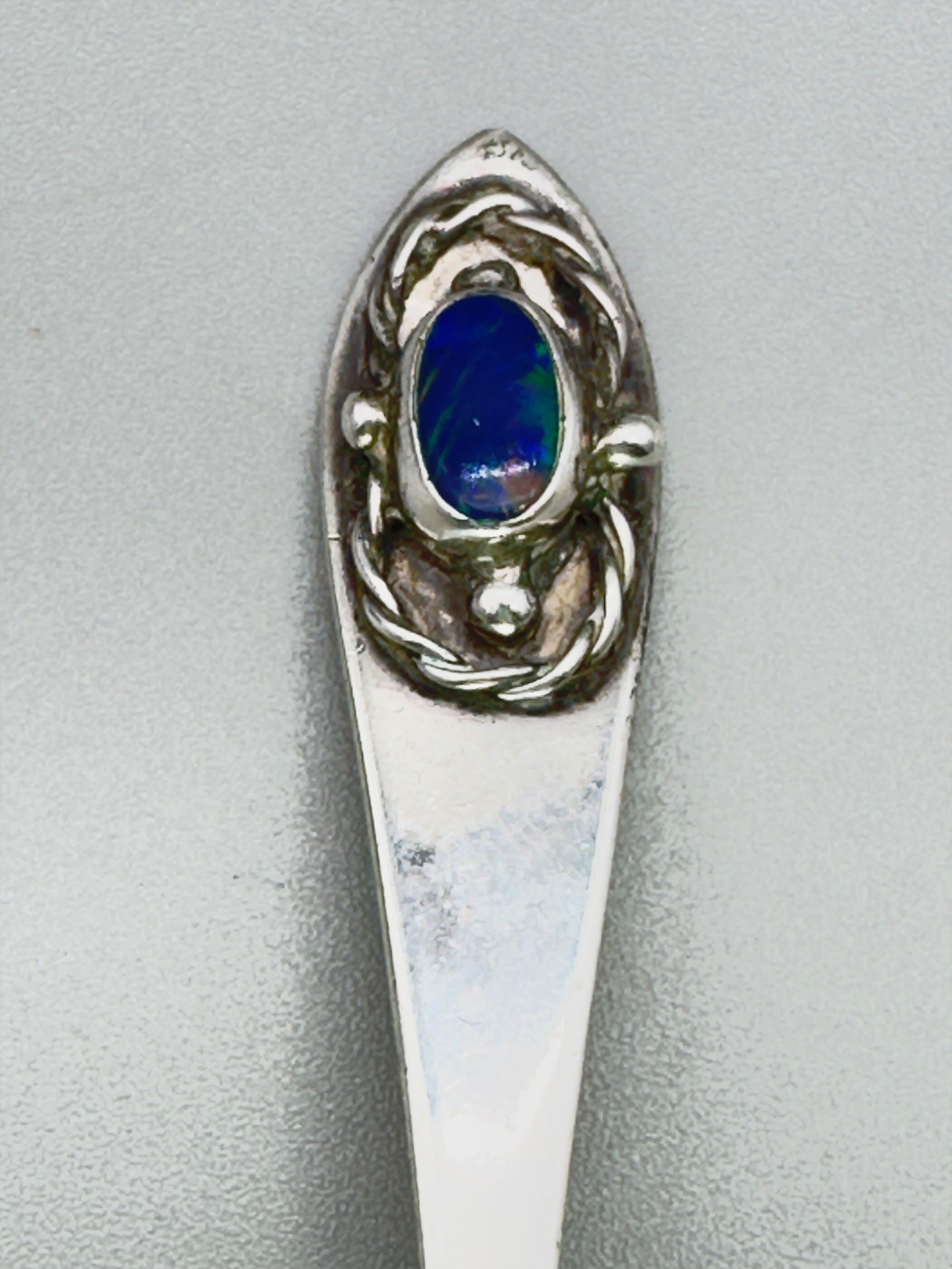
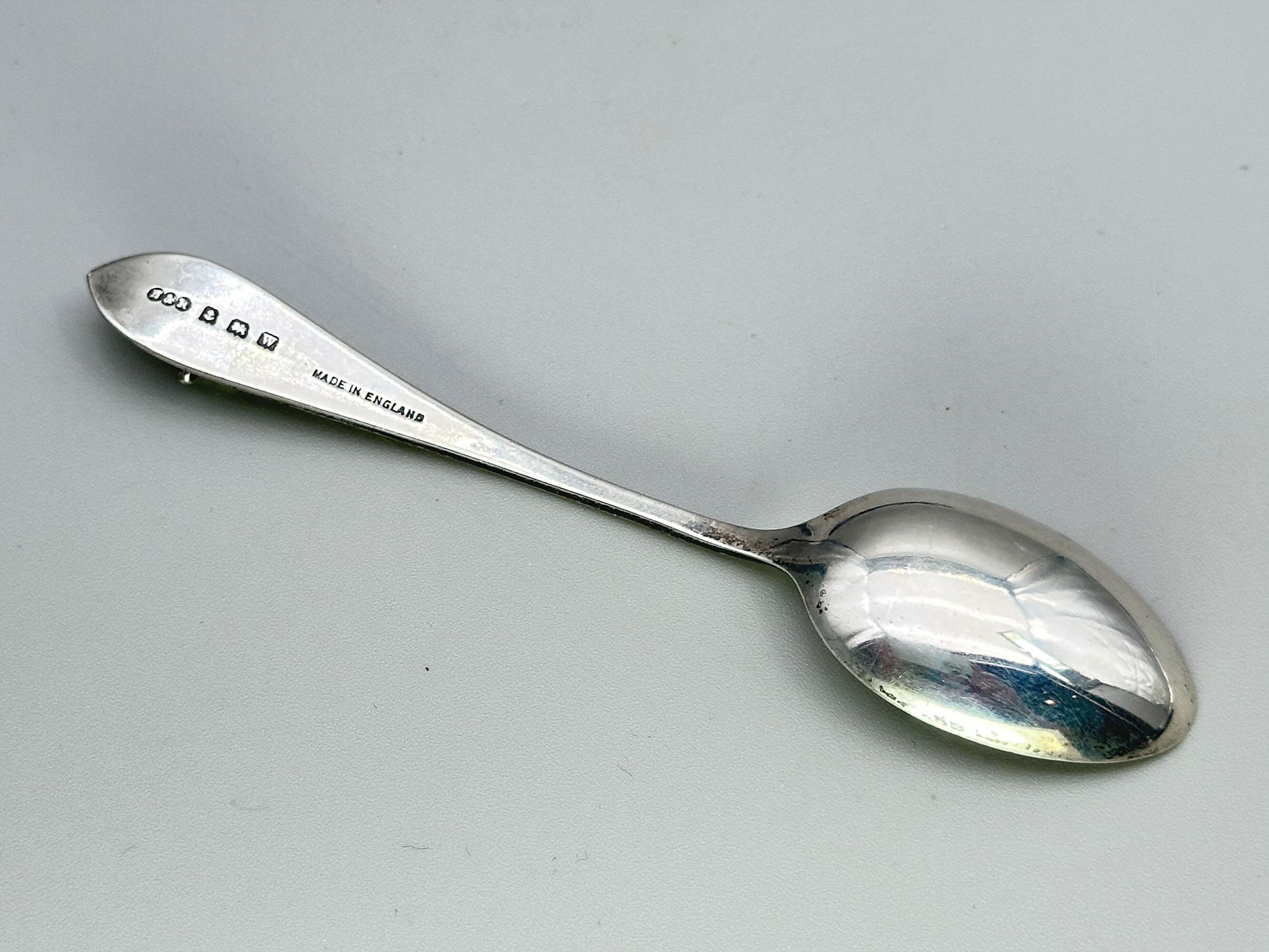
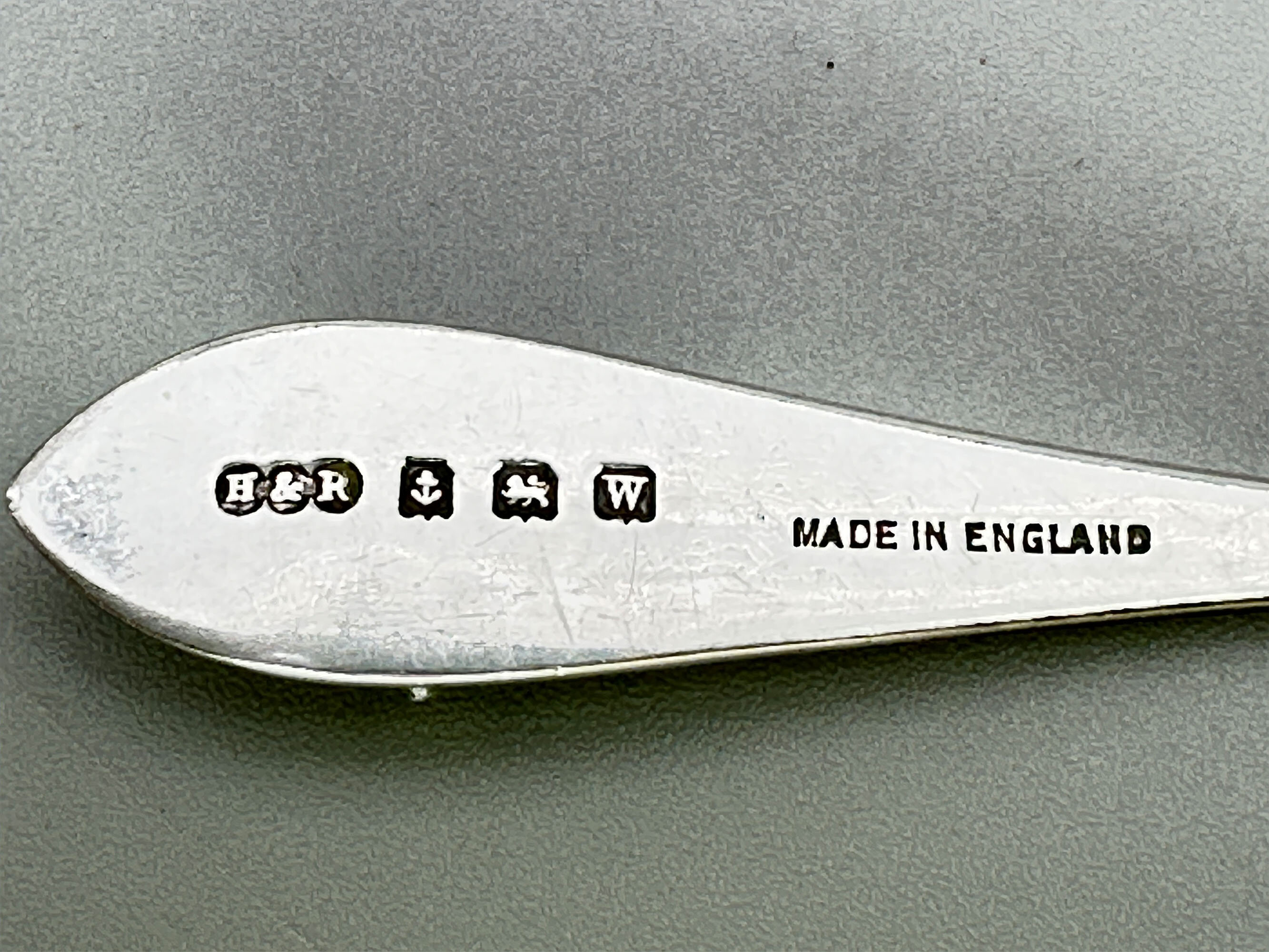
(B) Silver teaspoon with an oval polished bowl, the handle plain and flaring out to a narrow pointed oval at the top within which is a mounted small oval blue enamel plaque within a rope twist border with beads possibly celtic inspired, the reverse with the wording ‘Made in England’ and hallmarks (i) ‘H&R’ for the manufacturer (ii) assay mark for Birmingham (iii) lion passant (iv) Date mark ‘W’. The design here is either by or in the style of Archibald Knox and resembles closely pieces in the ‘Cymric’ range manufactured for Liberty & Co of London by the Birmingham silversmiths W.H. Haseler during the early years of the twentieth century. Their association with Liberty’s ended in 1926 but the firm continued to manufacture for the general retail trade moving in 1934 to 11 Warstone Lane, Birmingham where they were known as Haseler & Restall Ltd. It is the mark for Haseler & Restall Ltd which appears here and the Birmingham date code ‘W’ is for 1946. Post war English silver was often also marked ‘Made in England’, as here. Most likely, Haseler retained the moulds and models they used some years before and used them to create reproductions and recreations which is probably what we have here.
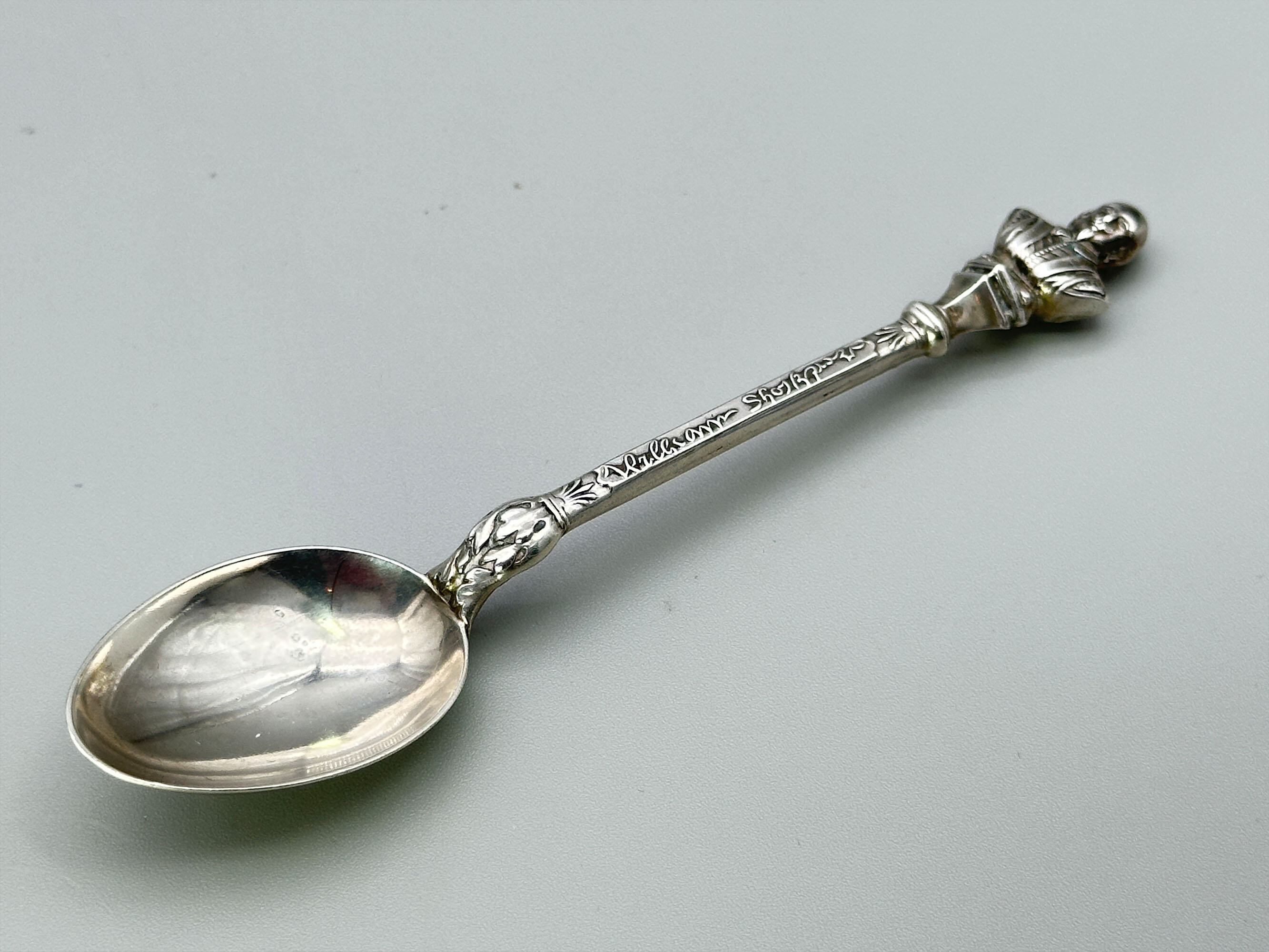
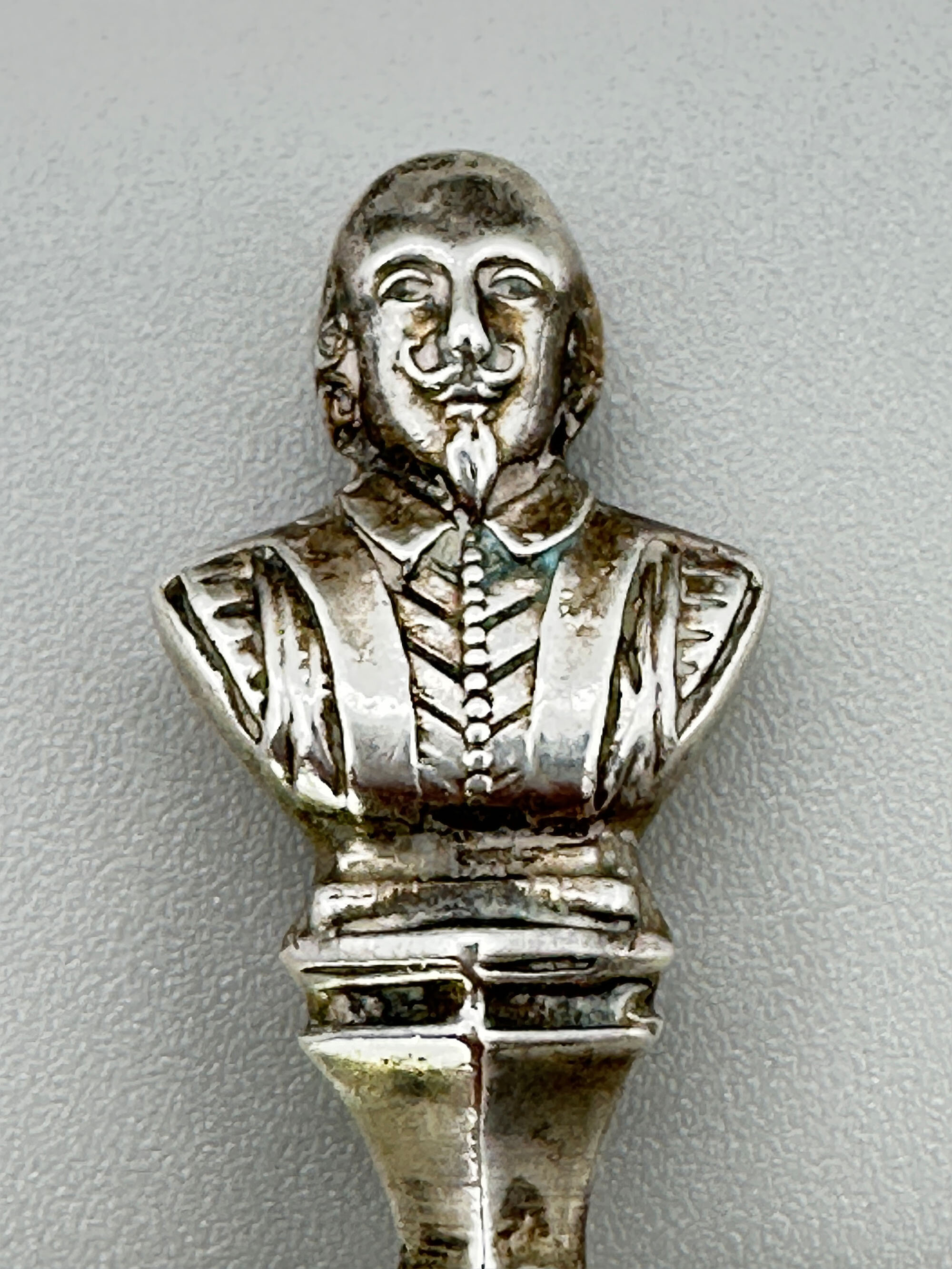
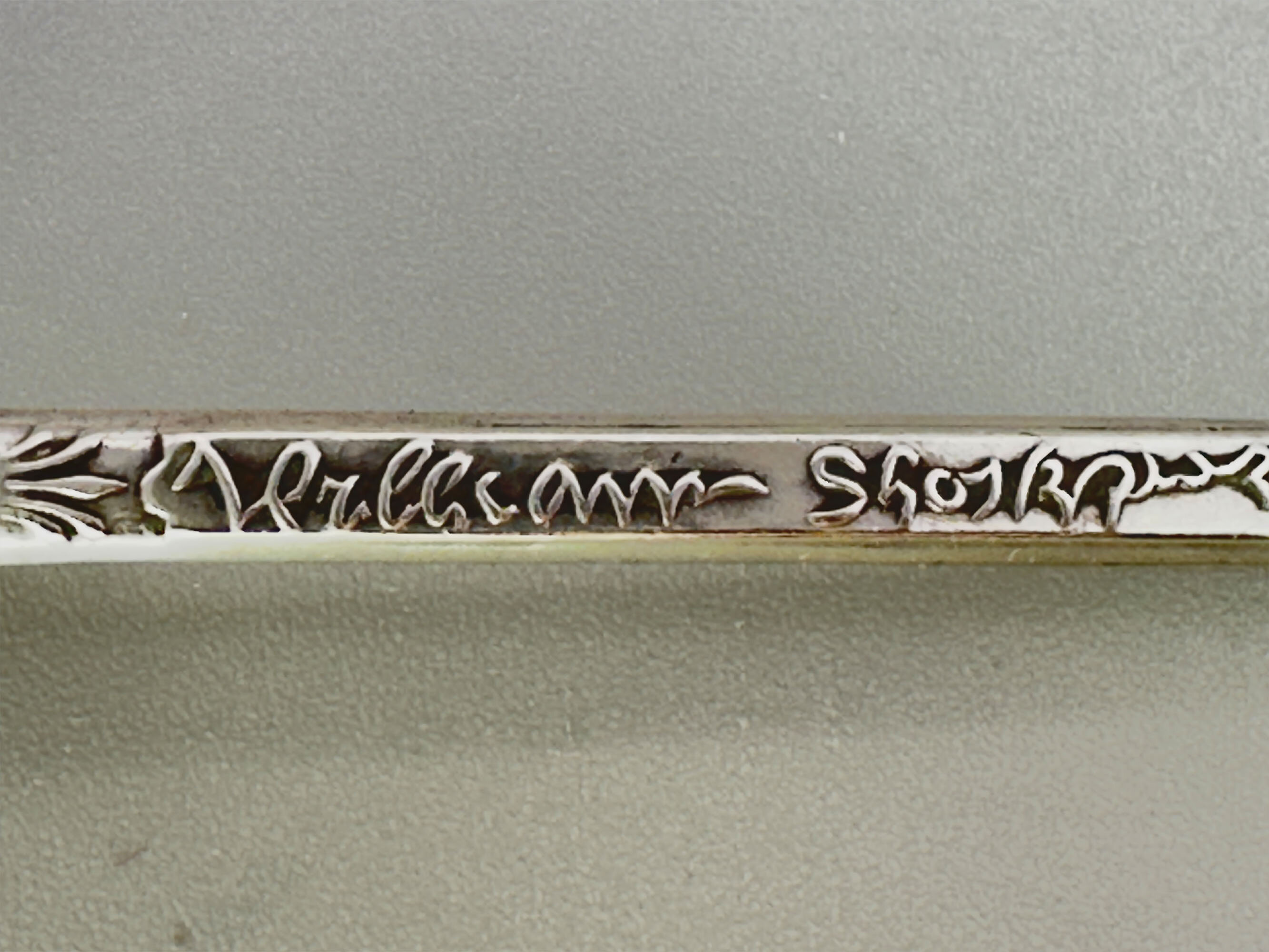
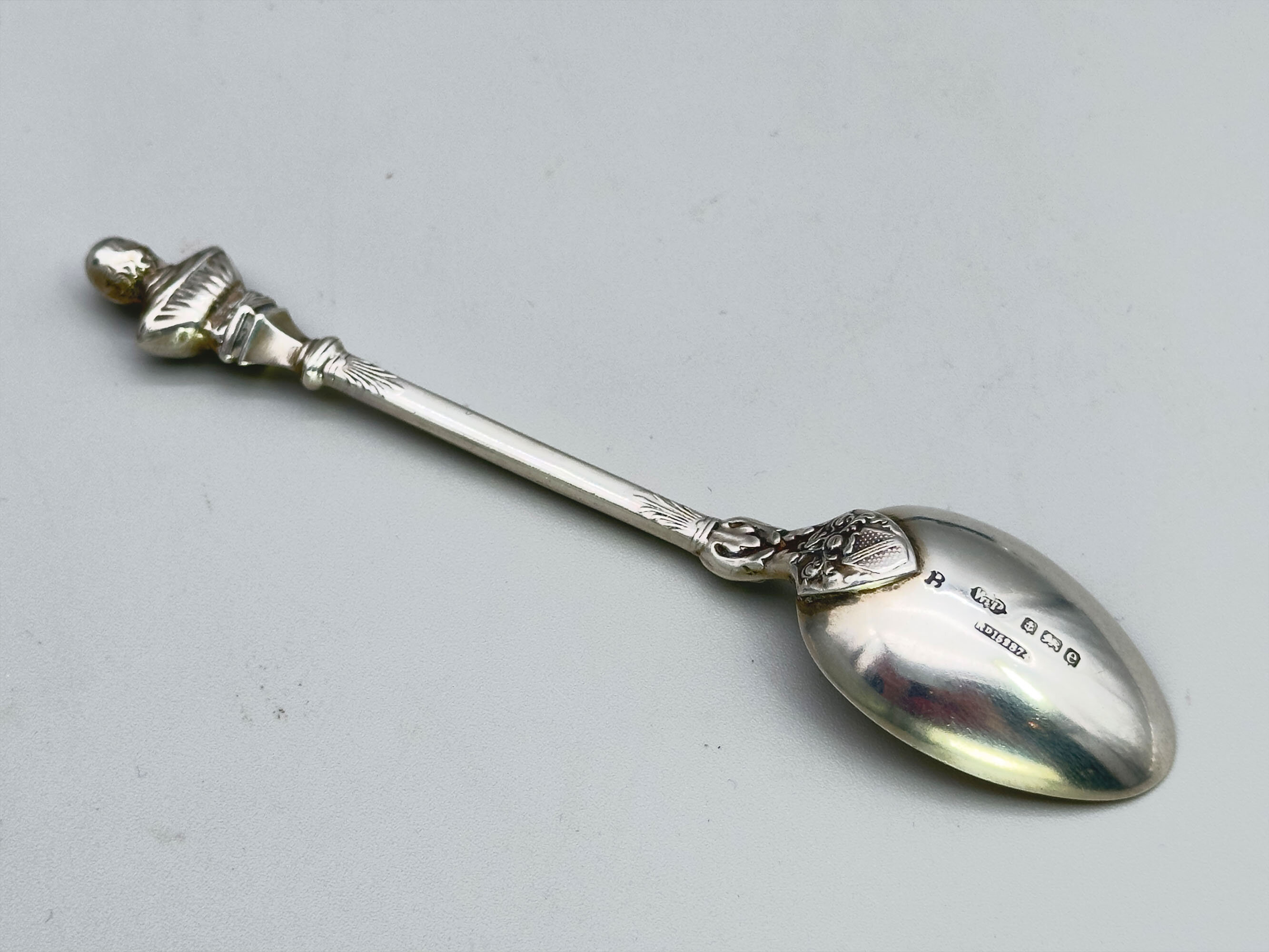
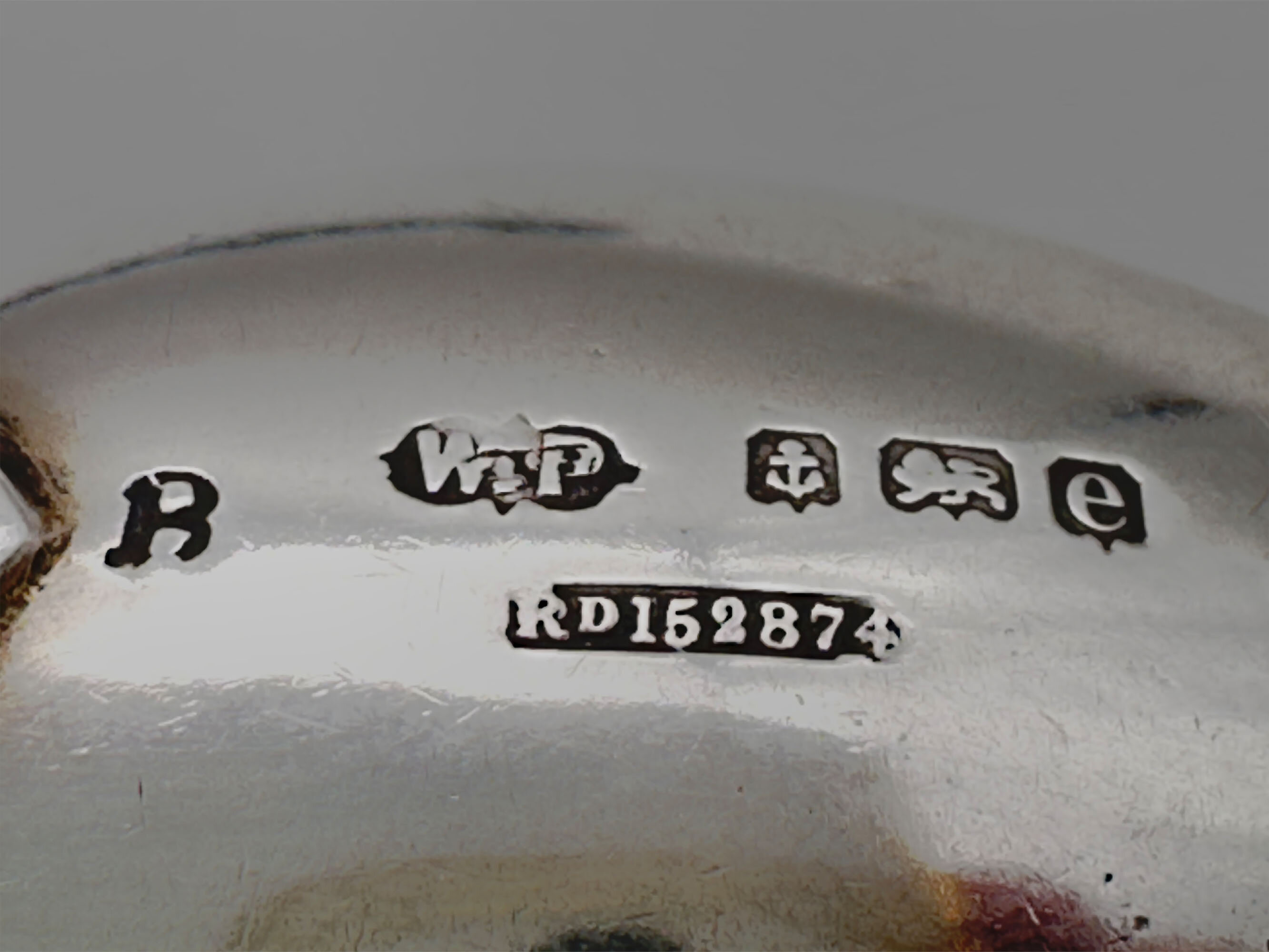
(C) Teaspoon with plain oval bowl, the handle with raised wording ‘William Shakespeare’, a floral terminal at the base and a plinth at the top supporting a bust of the playwright, the reverse with stylised leaf moulding to the top and bottom of the handle and a coat of arms where it joins the bowl which carries marks ‘R’ ‘WP’ for the manufacturer, assay mark for Birmingham, lion passant, date code letter ‘e’, Registration number ‘152874’. The subject matter of this spoon is self explanatory. The Bard of Avon appears on the top, his name is written on the handle and the Shakespeare coat of arms (see image 36) appears on the reverse where the bowl joins to it The hallmarks are for Birmingham 1904 and the maker’s mark ‘WP’ is known but cannot be identified further. The registration mark apparently dates to 1890 indicating that this particular model had been in production for some years and most likely it remained in production for a few years more since its subject was essentially of timeless appeal.
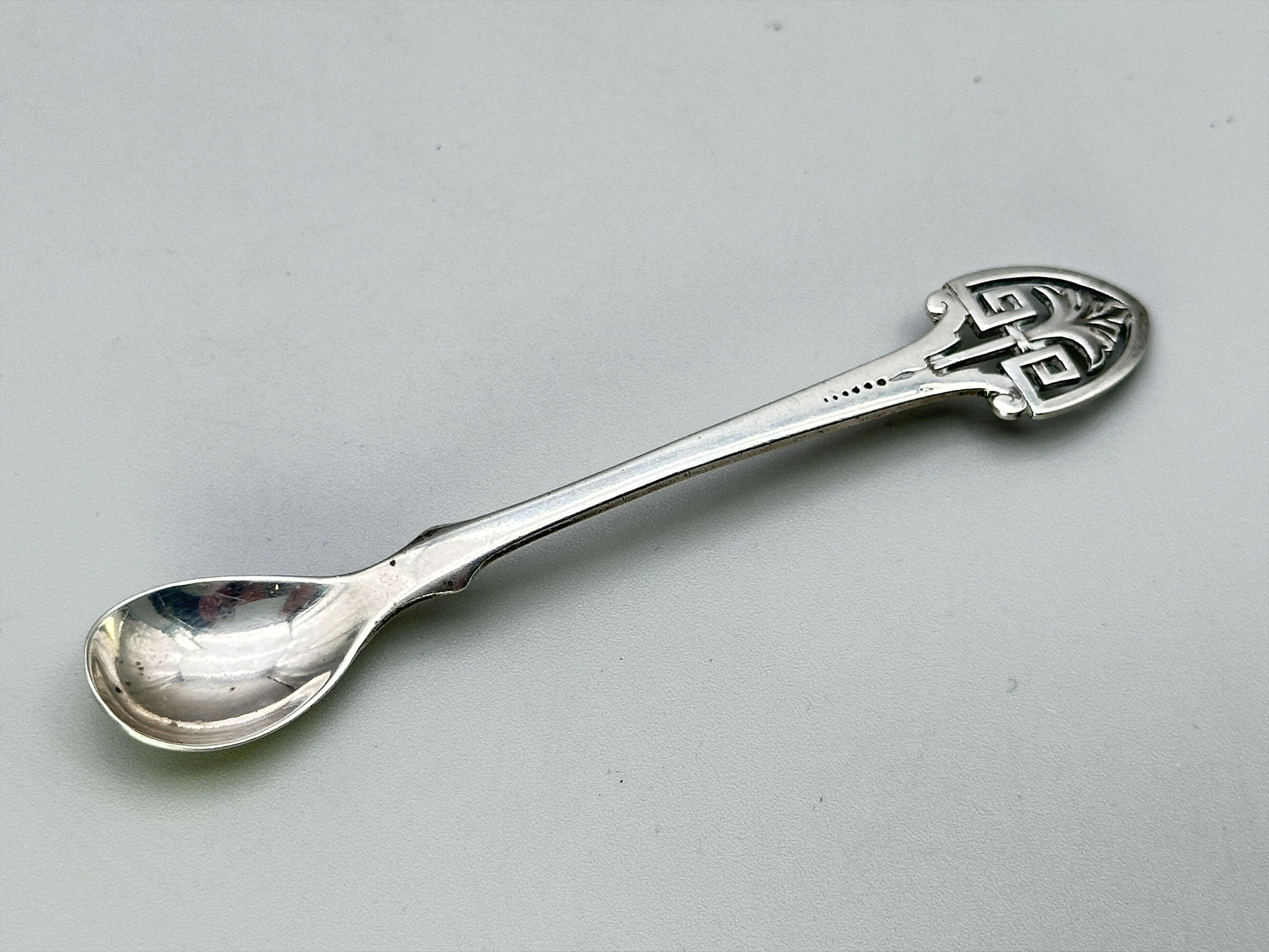
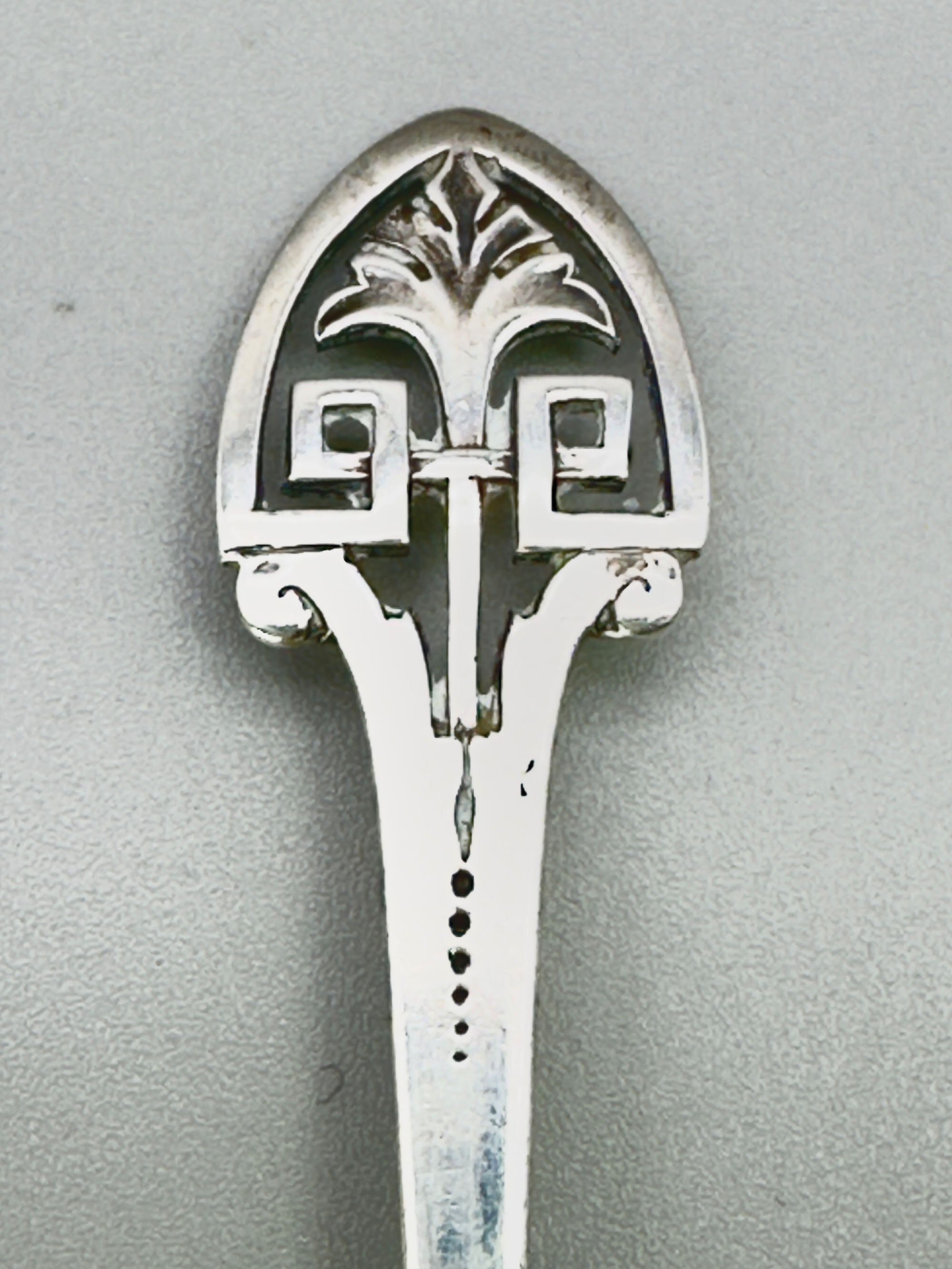
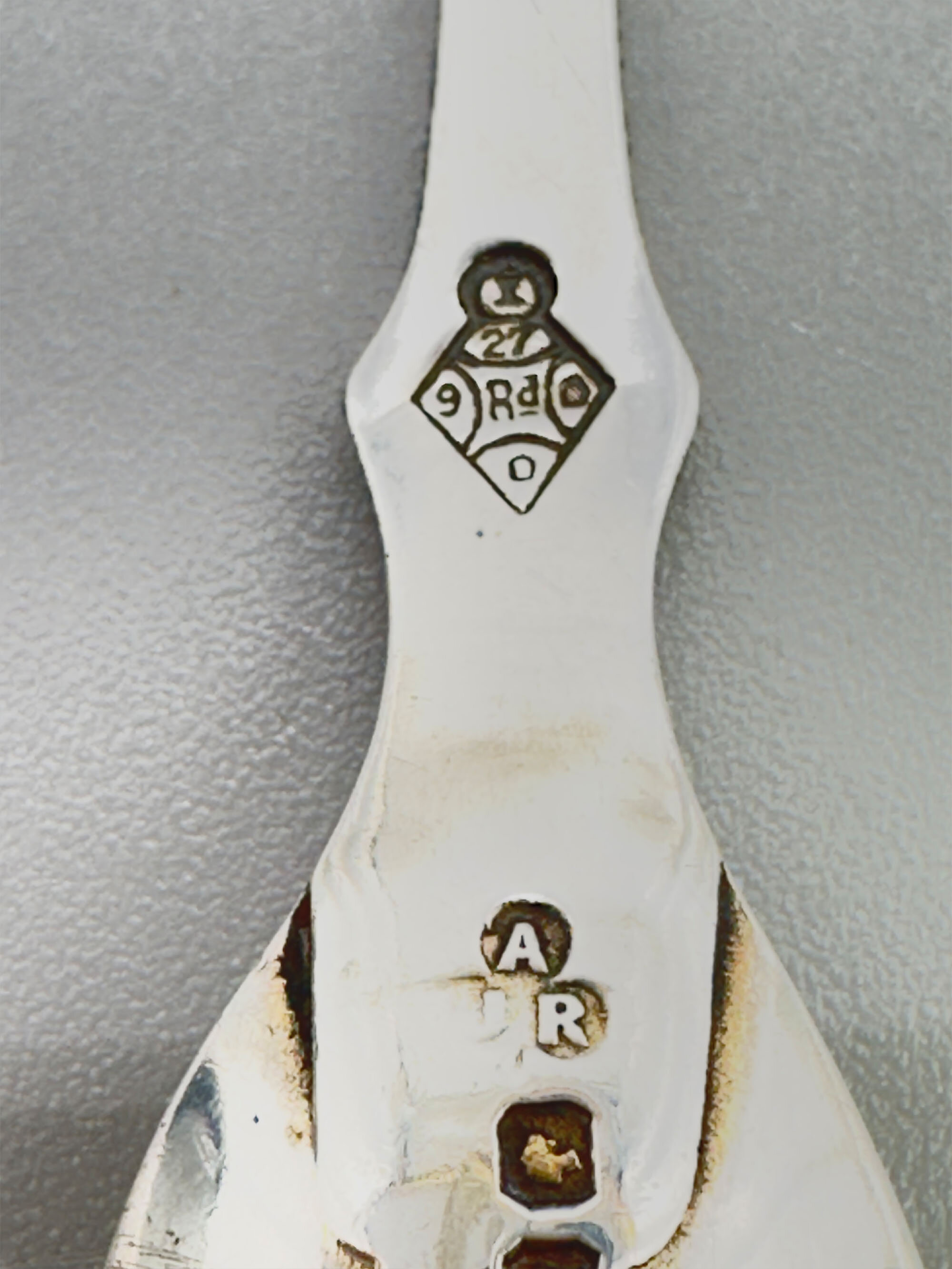
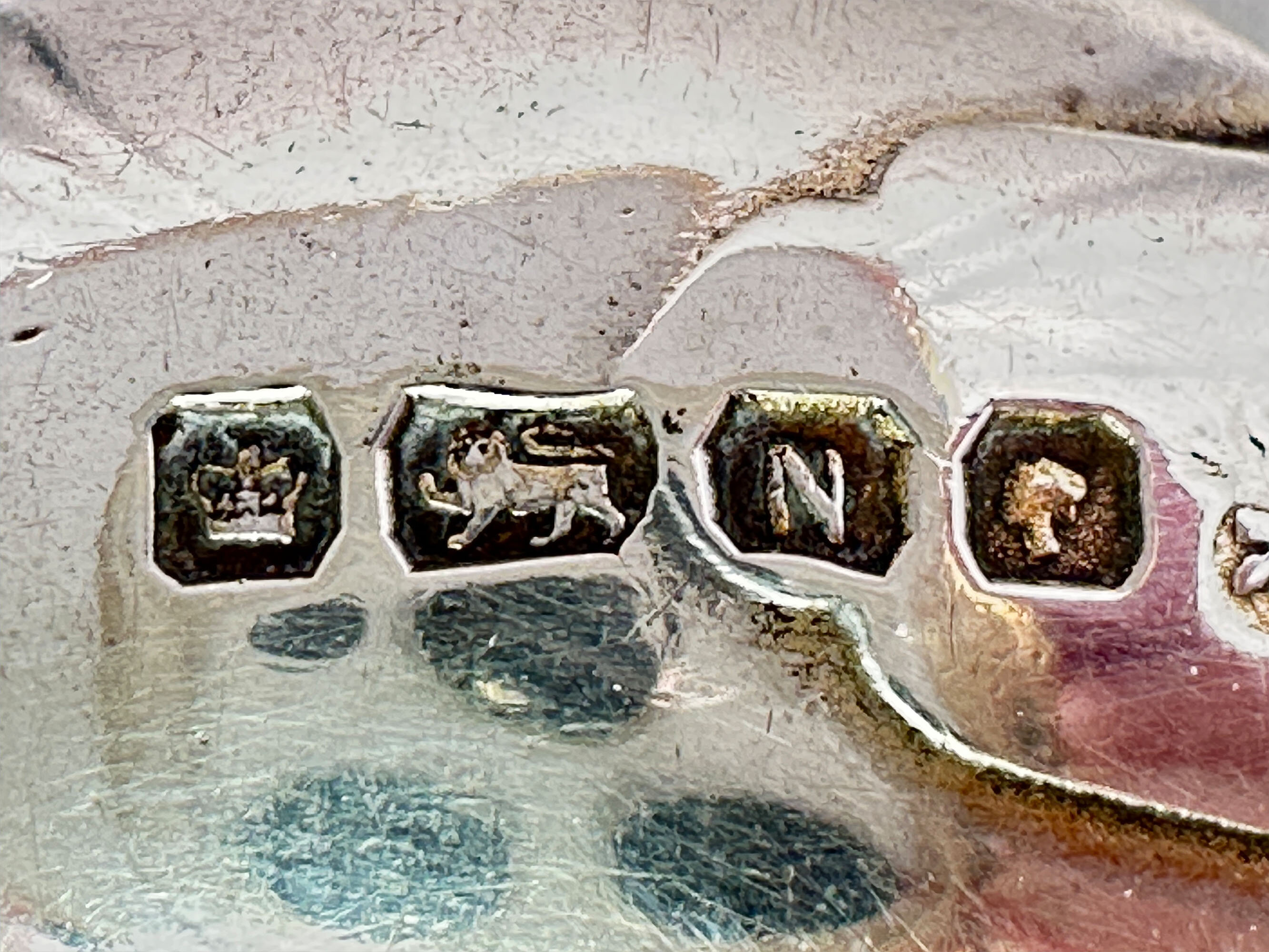
(D) Silver condiment or mustard spoon, the pear shape bowl polished and joined to a near straight handle with two triangular projections at the bottom and flaring out towards the top where there is an openwork spade shape terminal with geometric and floral designs with a row of dots at the bottom, the reverse with hallmarks (i) assay mark for Sheffield (ii) lion passant (iii) date code ‘N’ (iv) head of Queen Victoria (v) maker’s mark ‘A J R’ and above these a diamond shape mark giving the registration number of the design. The marks date this spoon to Sheffield 1880 and the registration number, which protected the copyright of the design, dates two years before, the top mark ‘27’ giving the day, the right mark ‘D’ giving the month, October, and the bottom mark ‘D’ giving the year, 1878. Below this is the maker’s mark ‘A J R’ in a clover or club shape frame which stands for Jehoiada Alsop Rhodes & Barber, Birmingham silversmiths who traded from the 1860s, at first with Rhodes as a sole trader, until the late 1880s. The design heralds the style of the Aesthetic Movement with its rejection of florid Victorian ornament and was clearly distinctive enough for the manufacturers to deem its protection desirable. The workmanship of this stylish design is of high quality making this a desirable collector’s item.
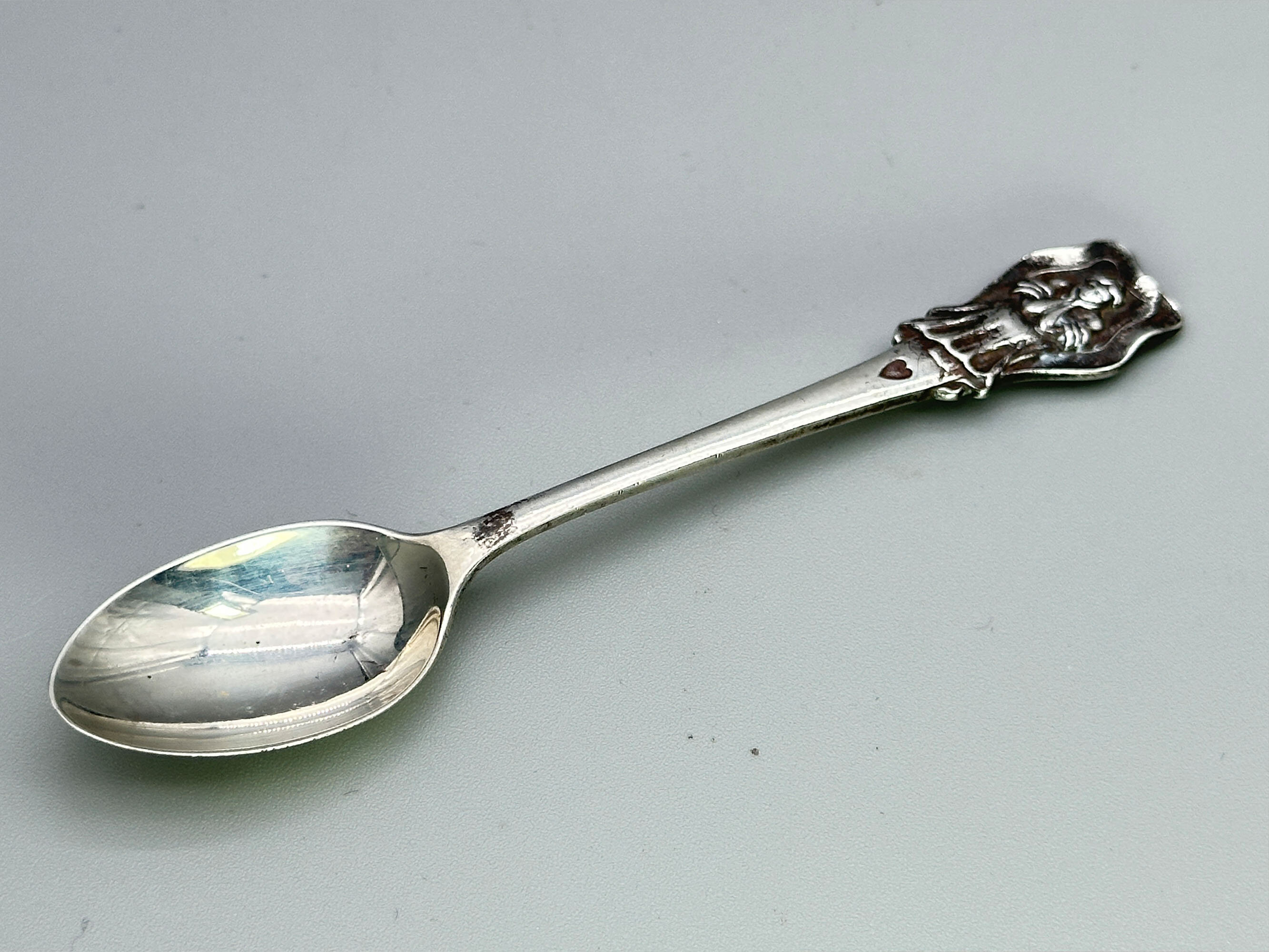
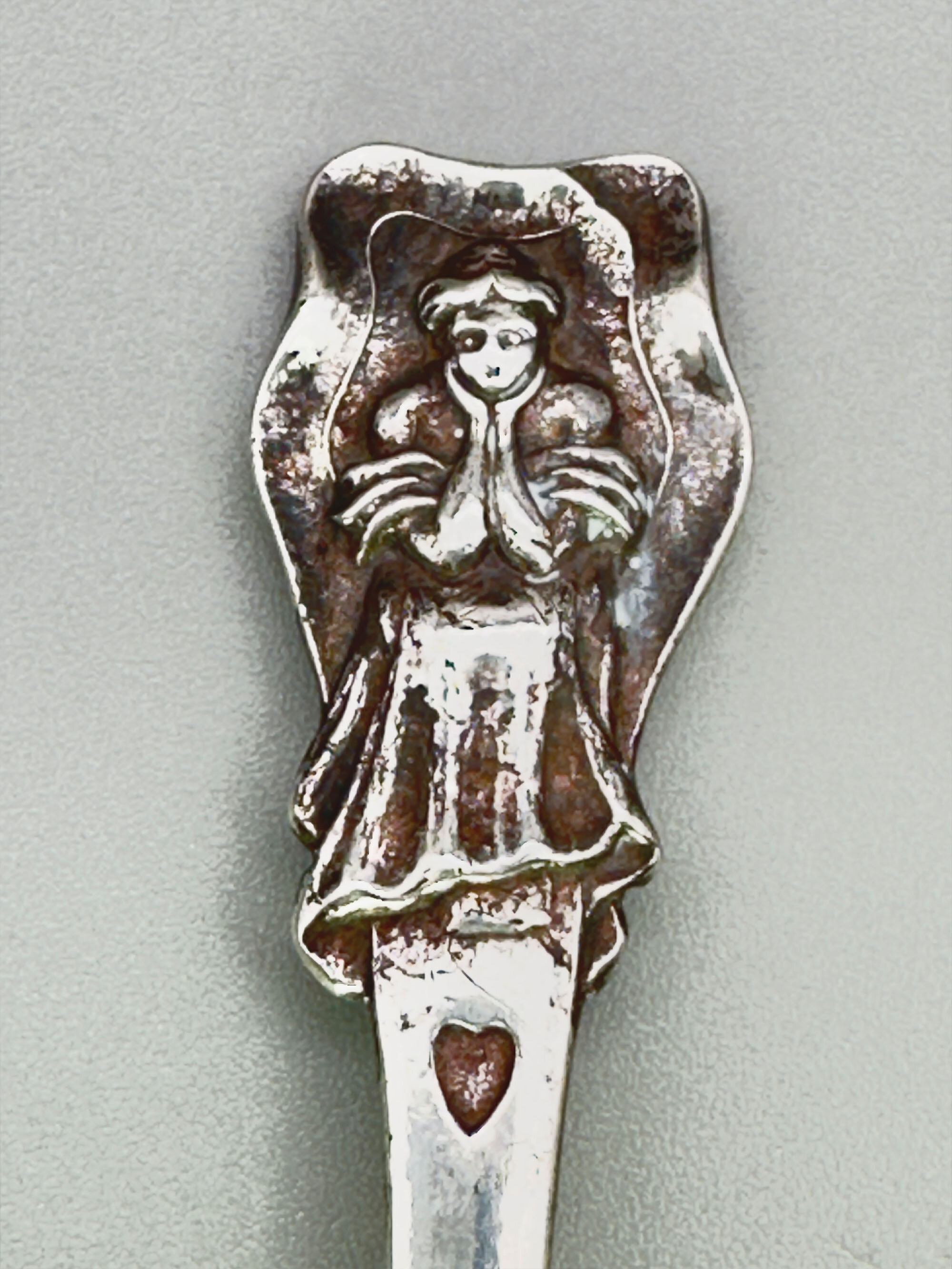
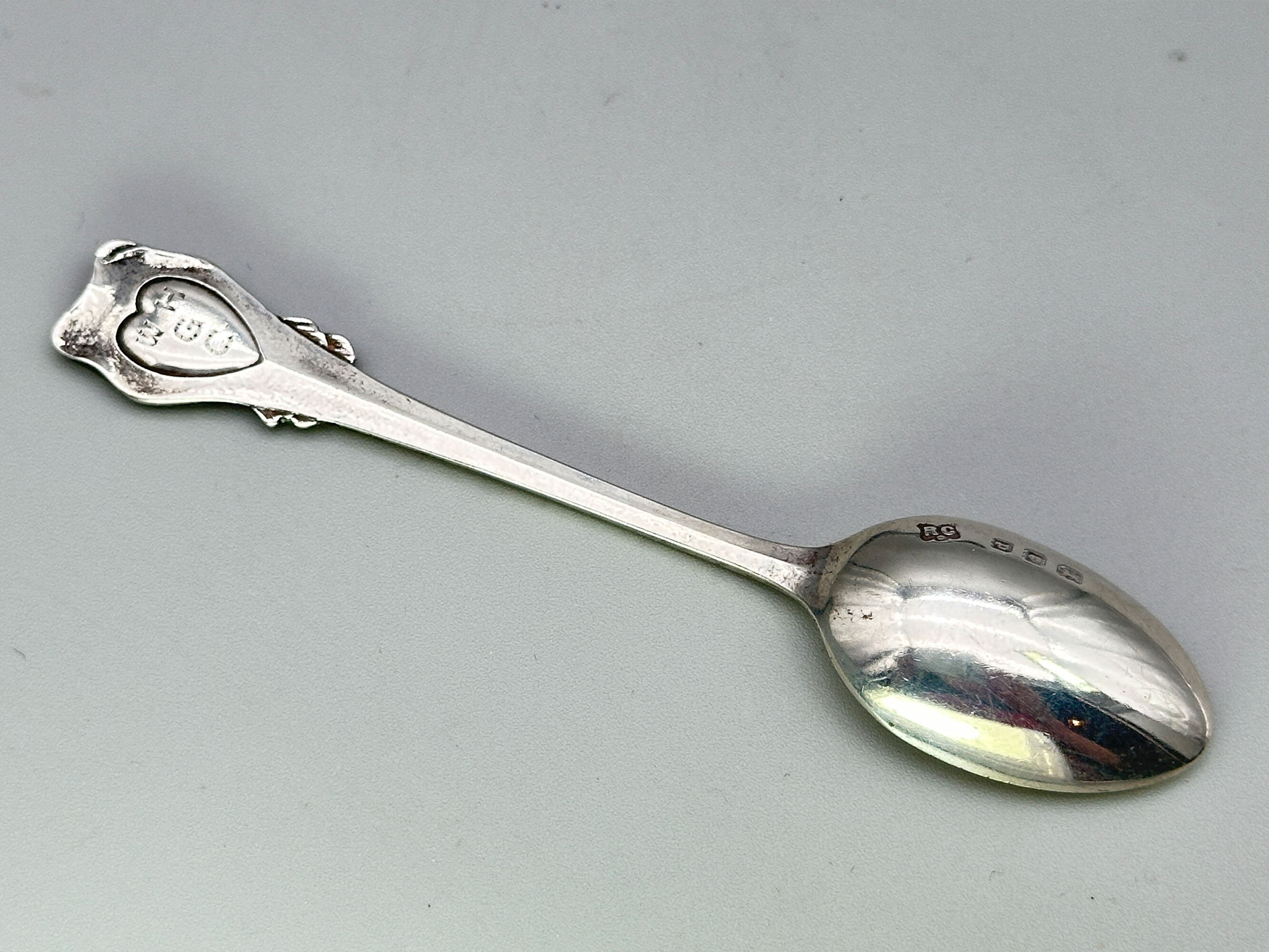
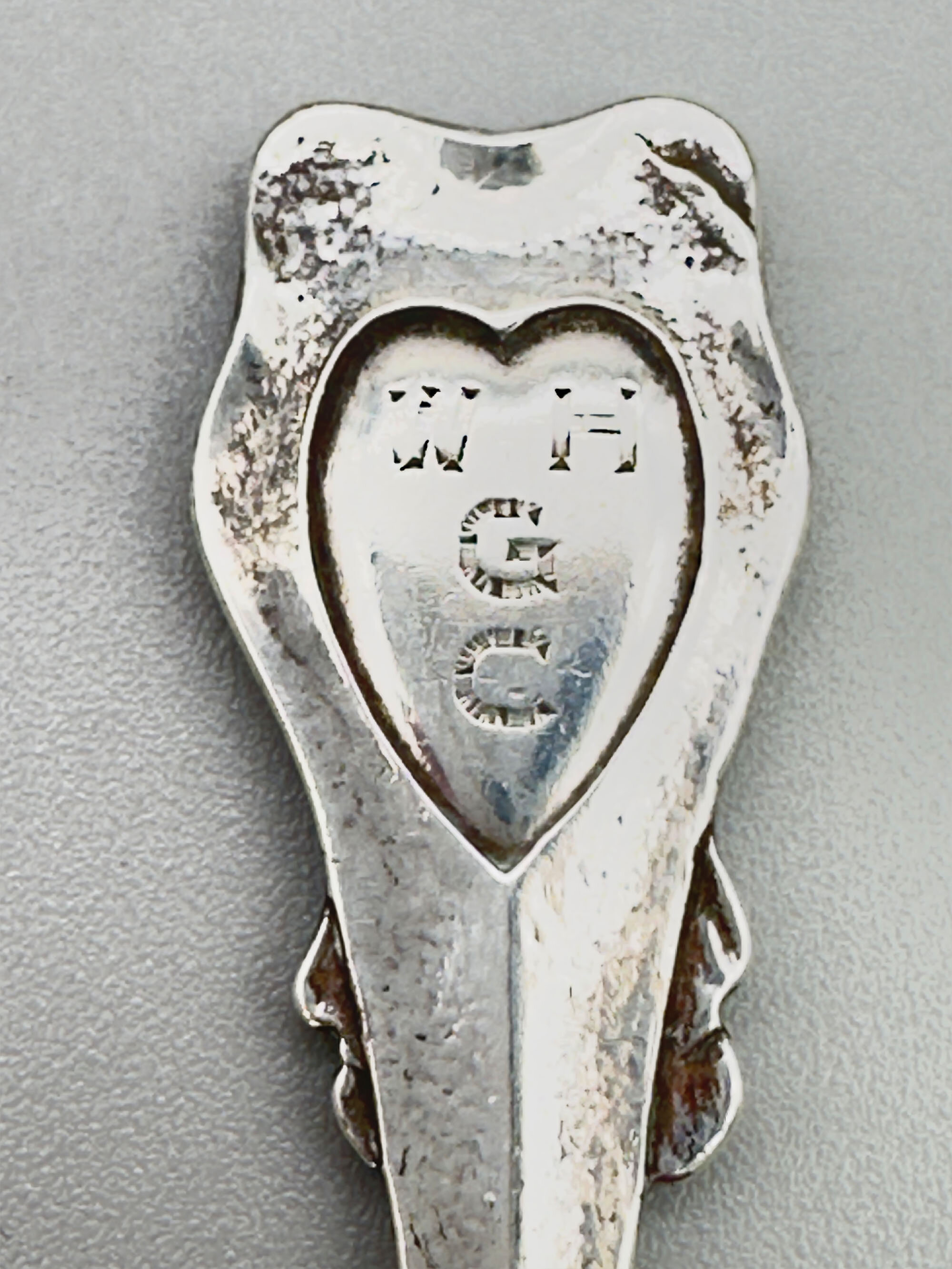
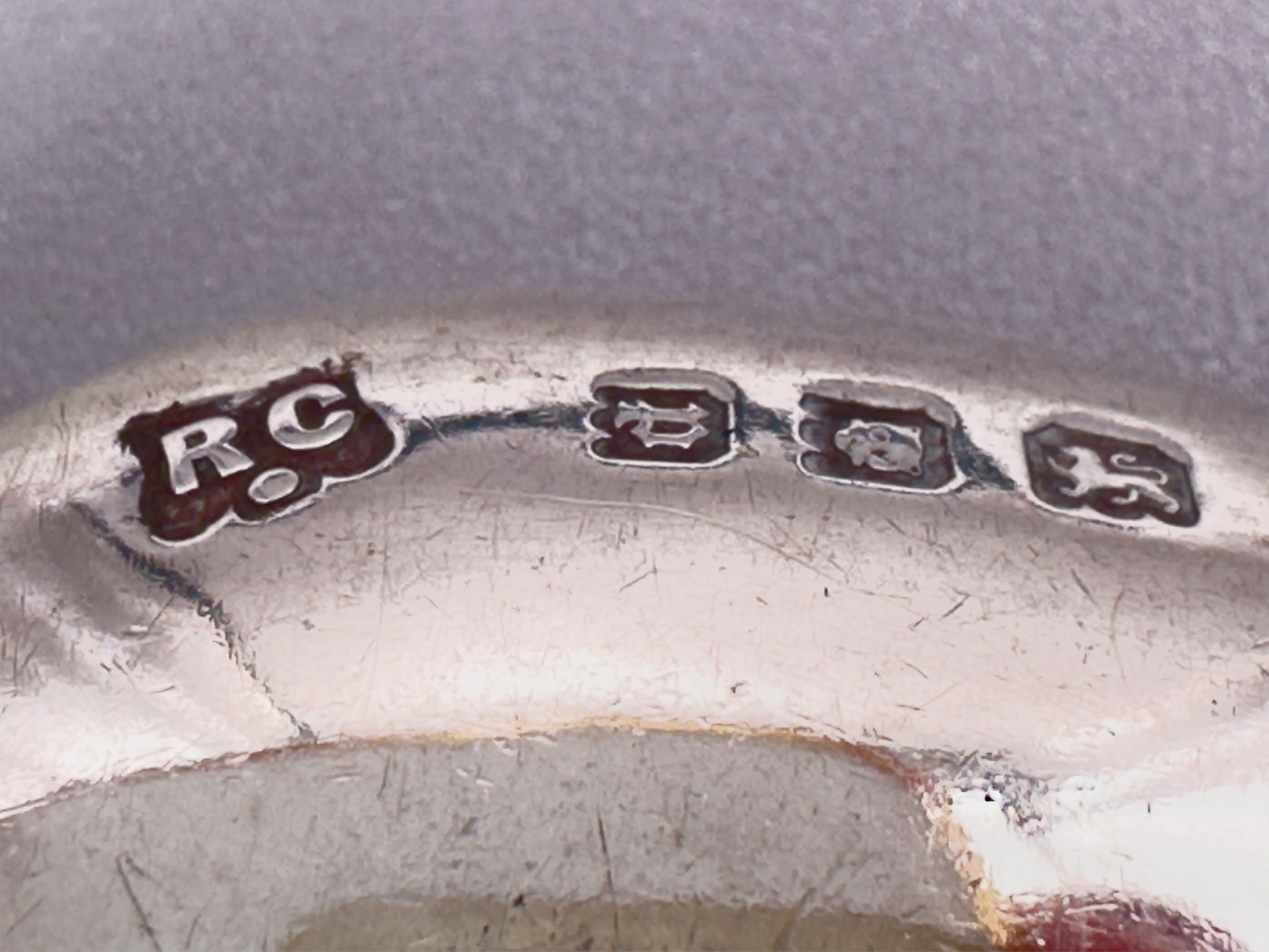
(E) Silver teaspoon, the oval bowl joined to a plain handle slightly flaring outwards towards the top, the terminal in the form of a modelled figure of a lady in flowing dress, her hands cupped at her cheeks, within a wavy edge surround, the reverse with initials engraved at the back of the terminal ‘W H G C’ and hallmarks on the bowl (i) maker’s mark ‘R C’ above a dot (ii) Date mark ‘p’ (iii) assay mark for London (iv) lion passant. The marks date this spoon to London 1930 and the makers were the London silversmiths William Comyns & Sons Ltd who traded from the mid nineteenth century to the late 1980s supplying notable retailers including Tiffany & Co and The Goldsmiths and Silversmiths Company. This spoon, presumably from an original set, was personalised with the initials of the owner’s name and seems to be a rather unusual design, not without some charm.
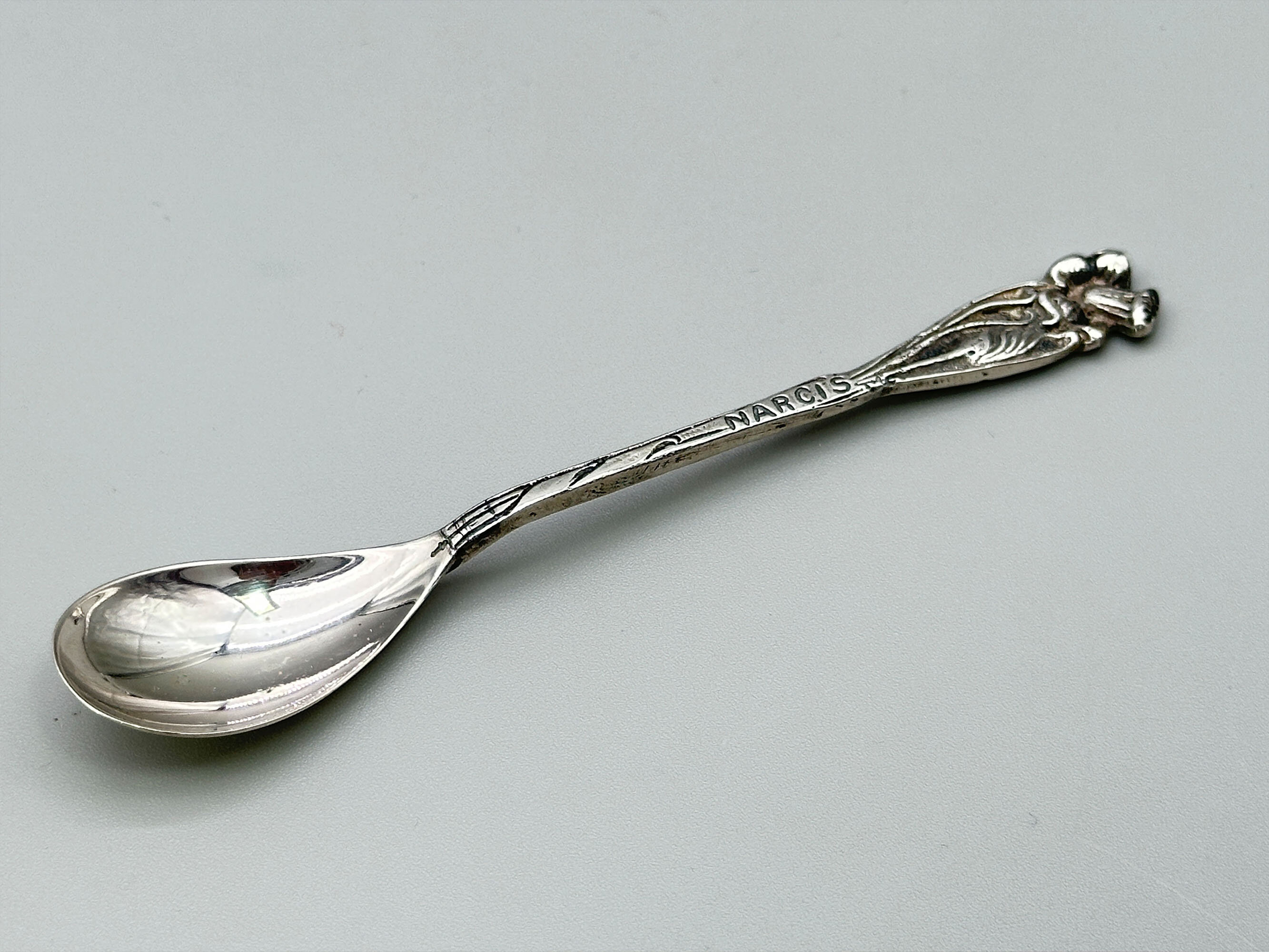
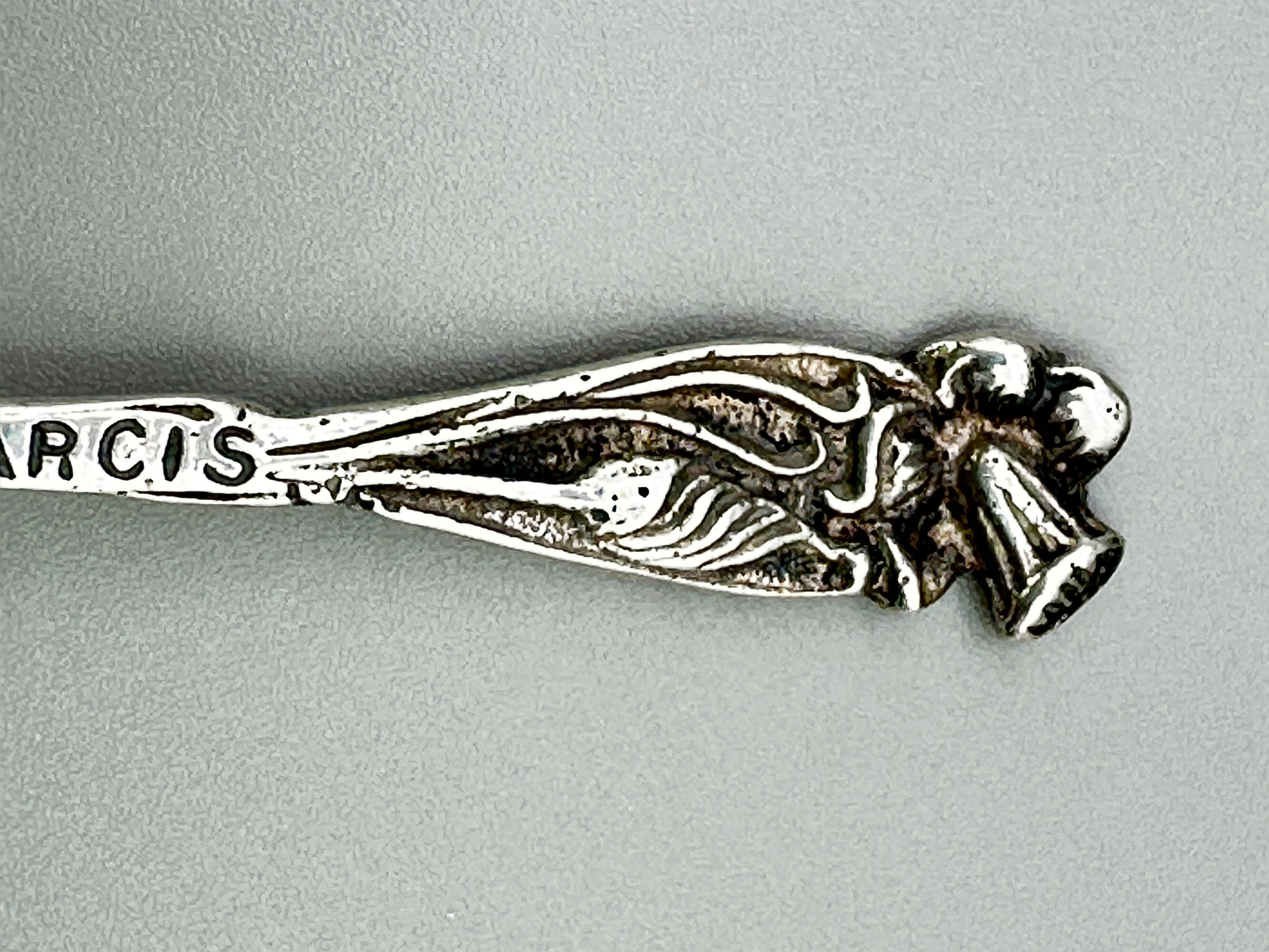
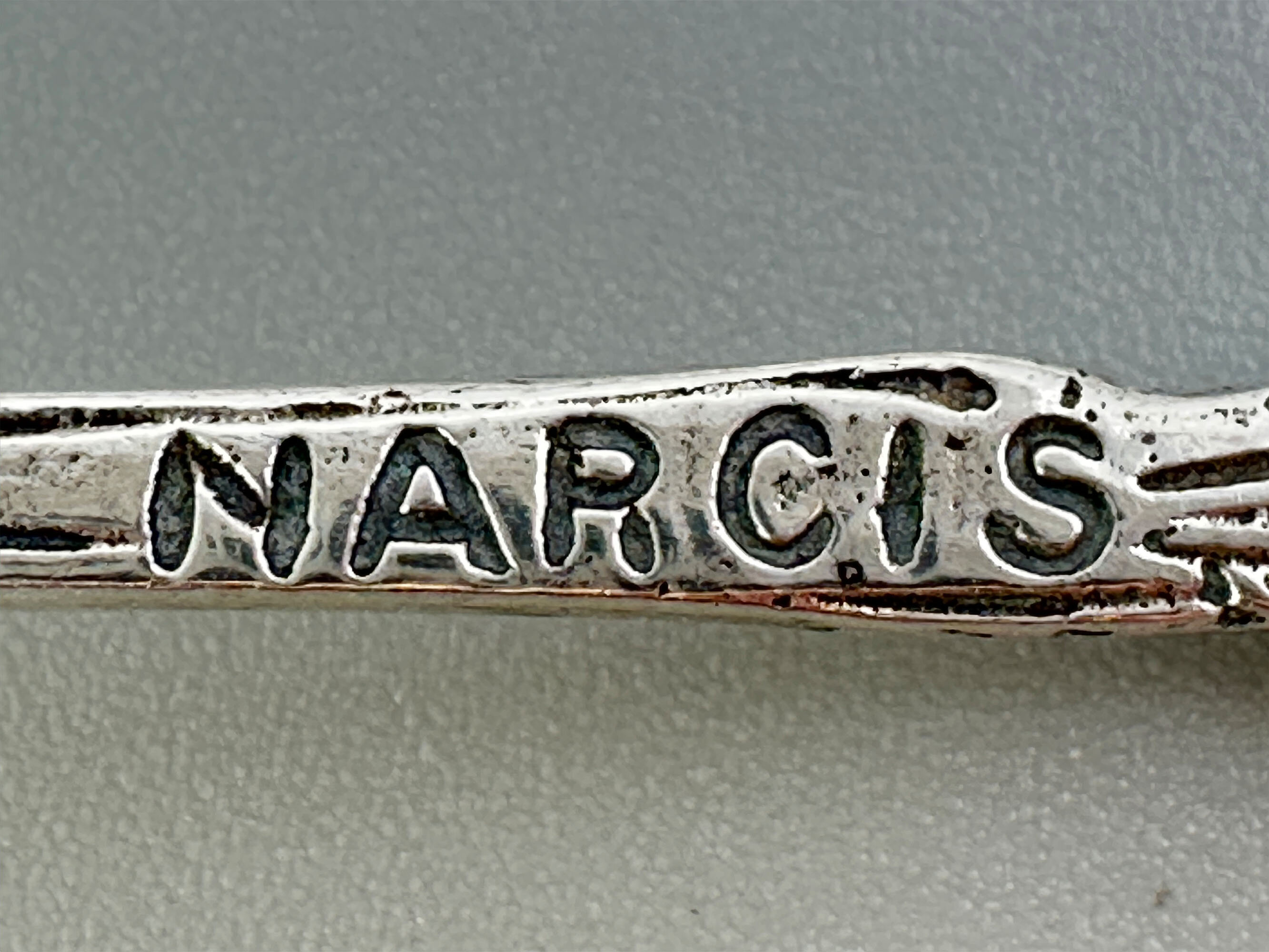
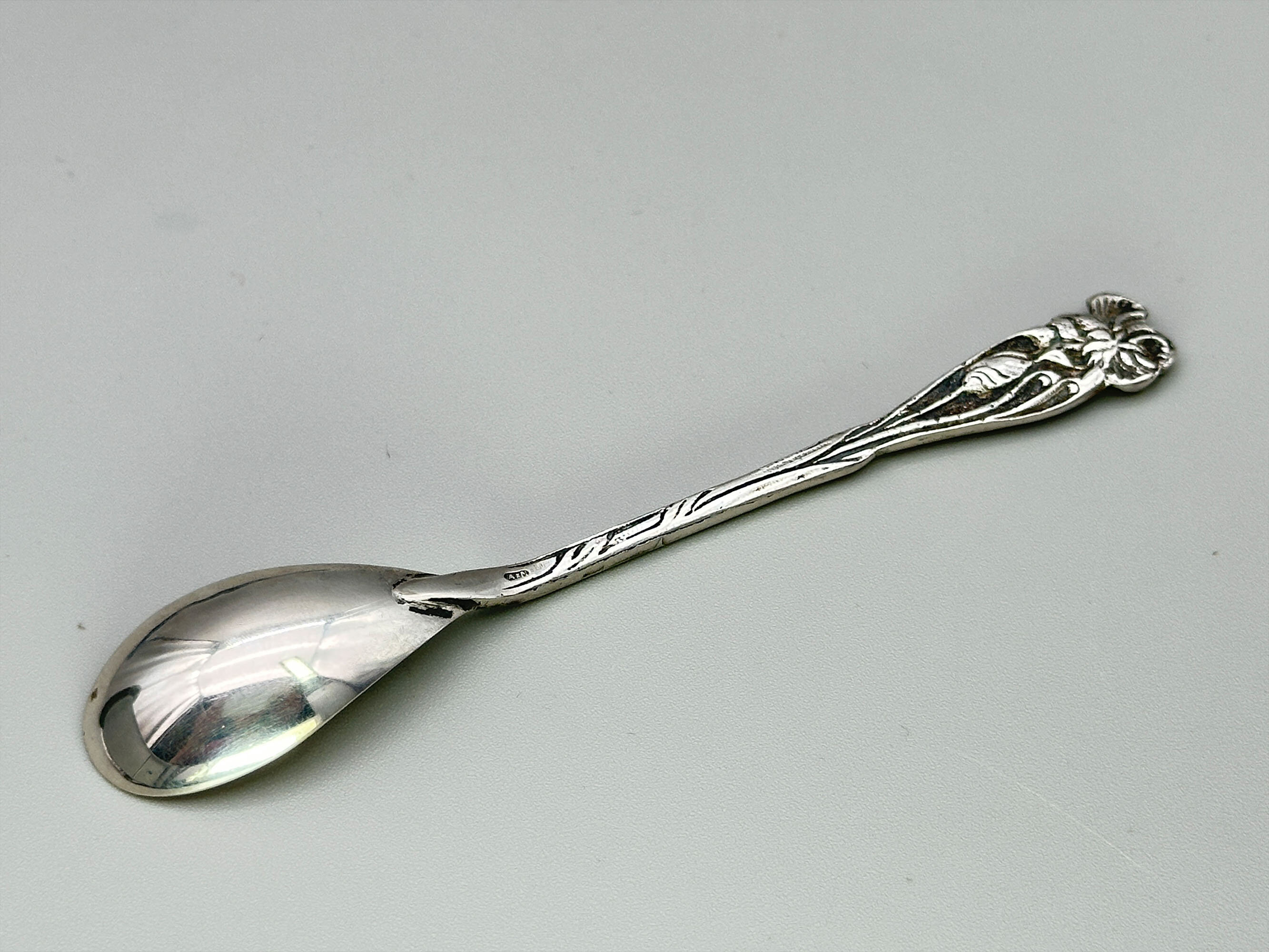
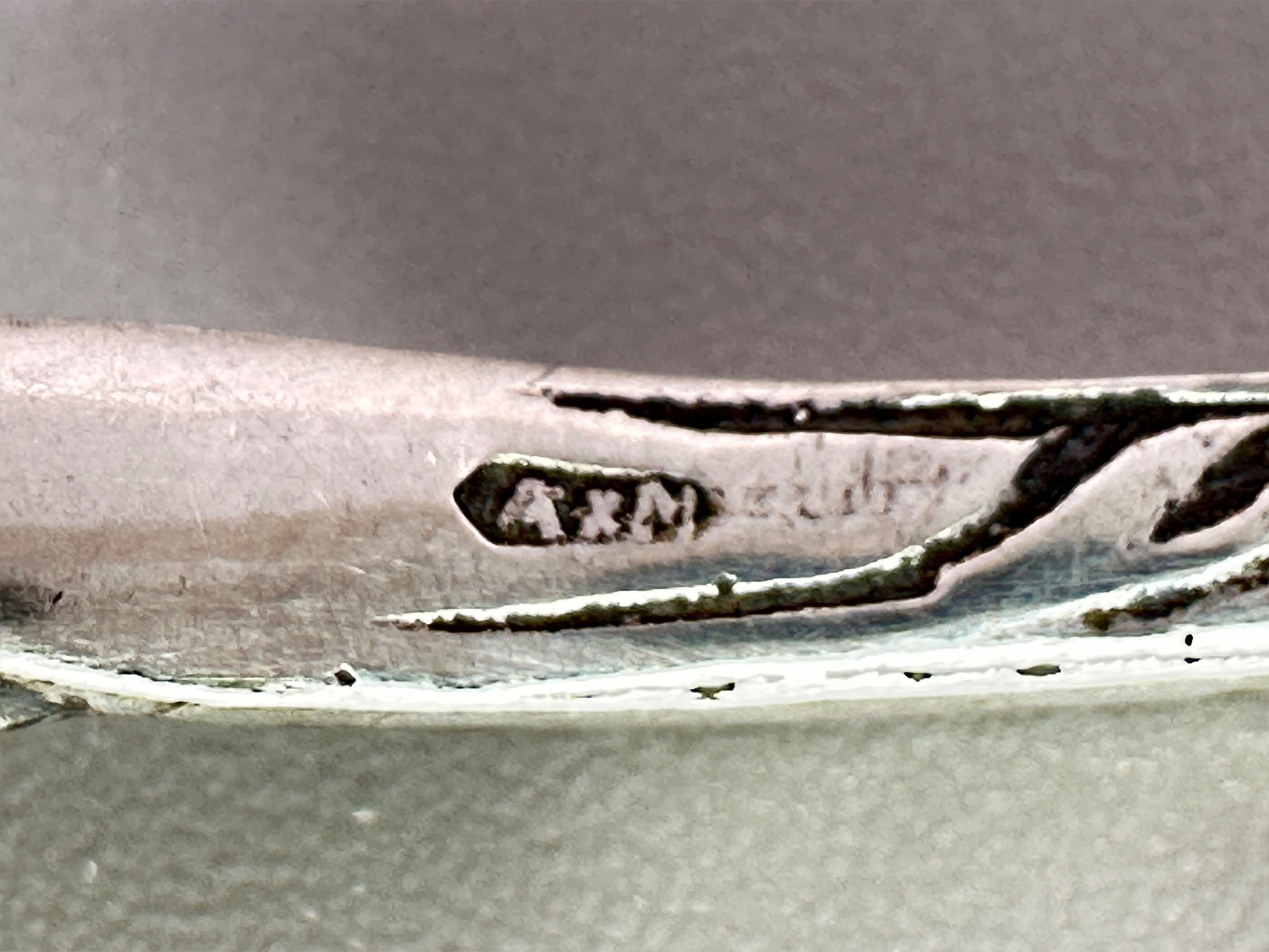
(F) A silver teaspoon, the narrow pear shaped bowl polished and joined to a slender handle with incised decoration of stylised leaves next to the word ‘NARCIS’, the terminal with elaborately cast decoration of a flowering daffodil, the reverse similarly decorated and with a small maker’s mark ‘AxM’. The maker’s mark here is for the Dutch silversmiths Alexander Meijer who apparently used this format of mark from 1928 to 1963. One of their most famous productions was a set of twelve spoons with floral designs, each spoon marked with the name of the flower which decorated it. This spoon shows the daffodil, ‘Narcis’ being the Dutch for daffodil. Like its companions, which included the rose, crocus and tulip, it is very finely worked. In the 1970s an American firm, Breck’s of Boston, produced its own version of the Dutch originals but these are much poorer and not to be confused with them.
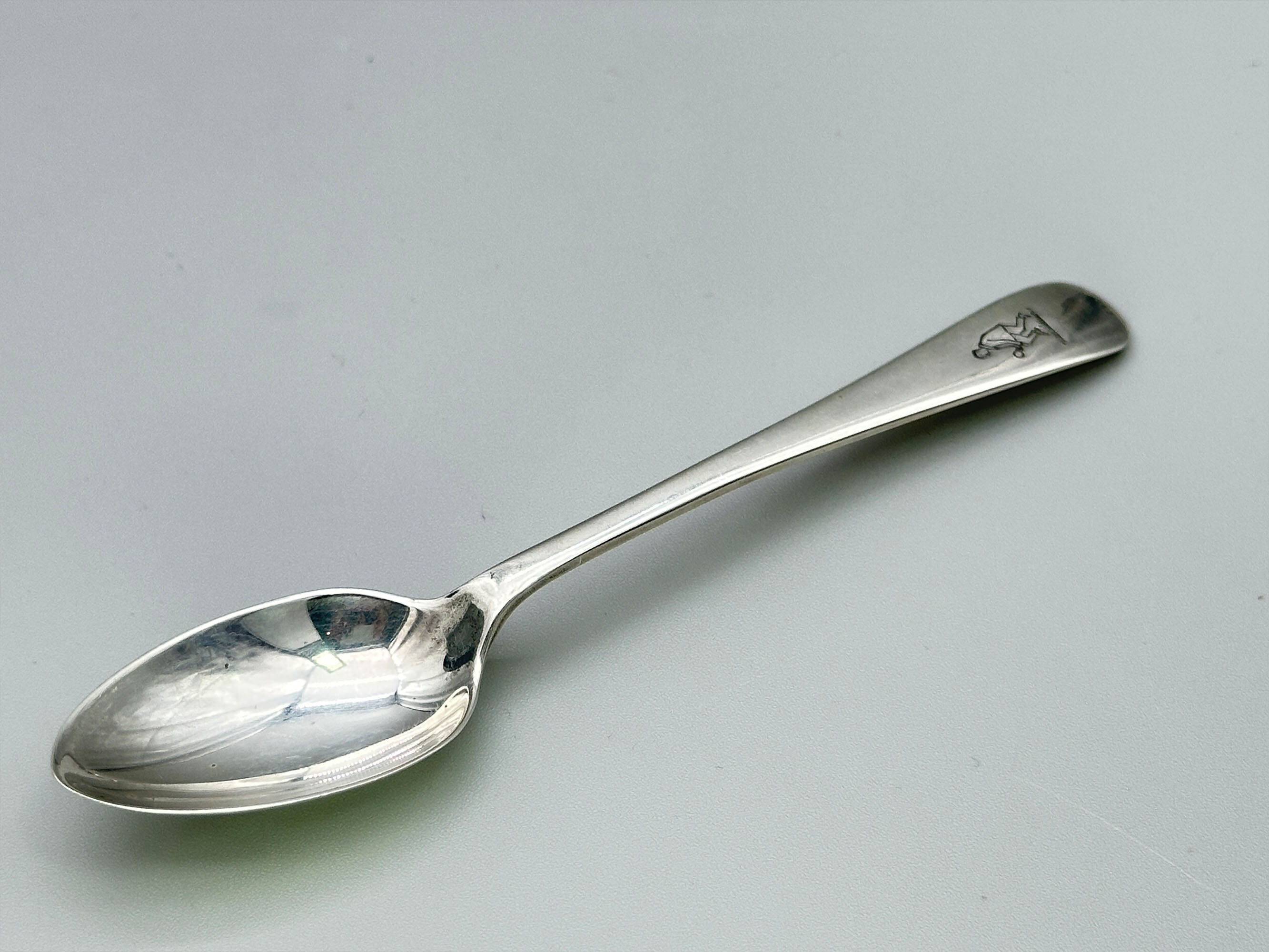
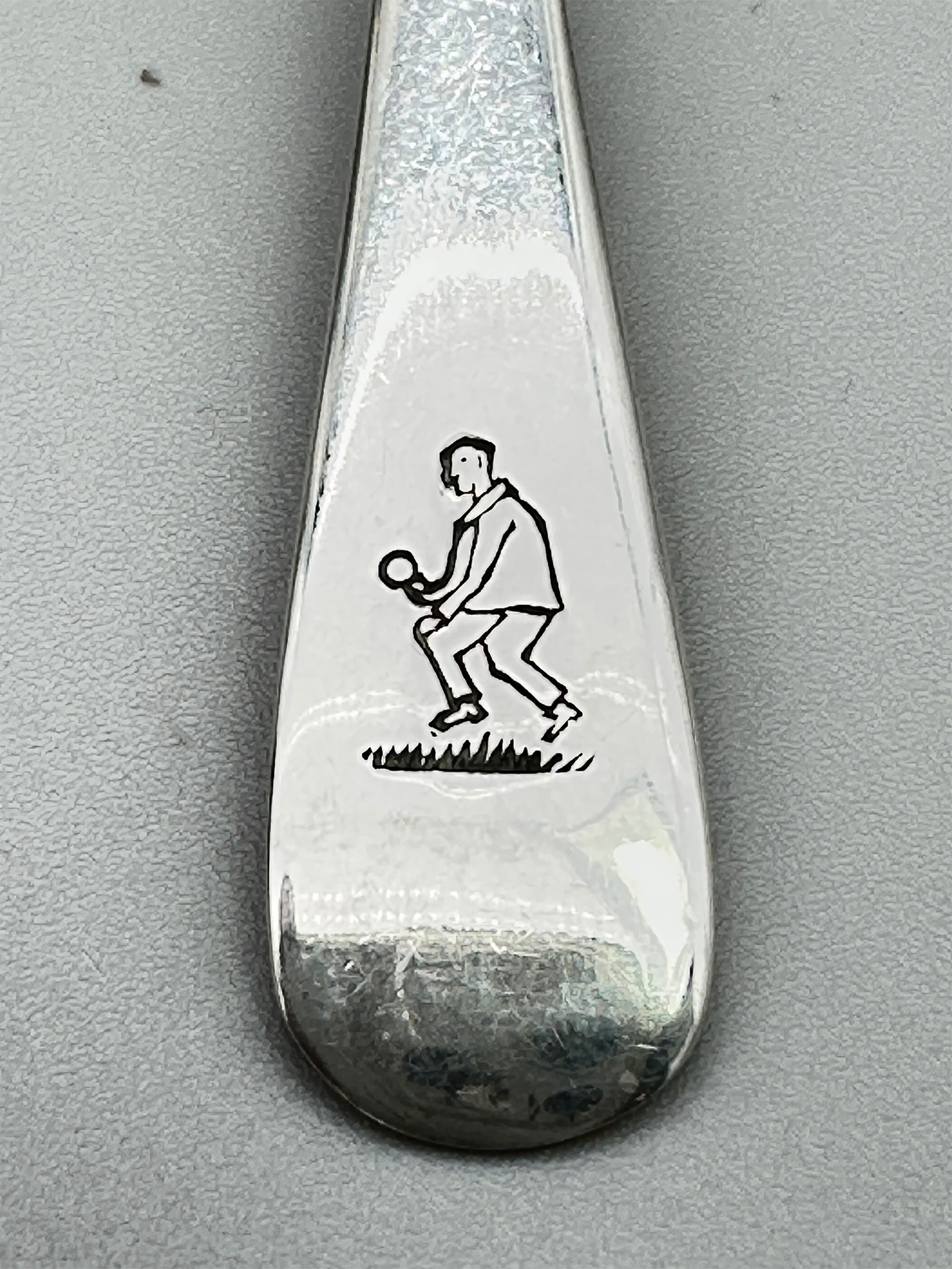
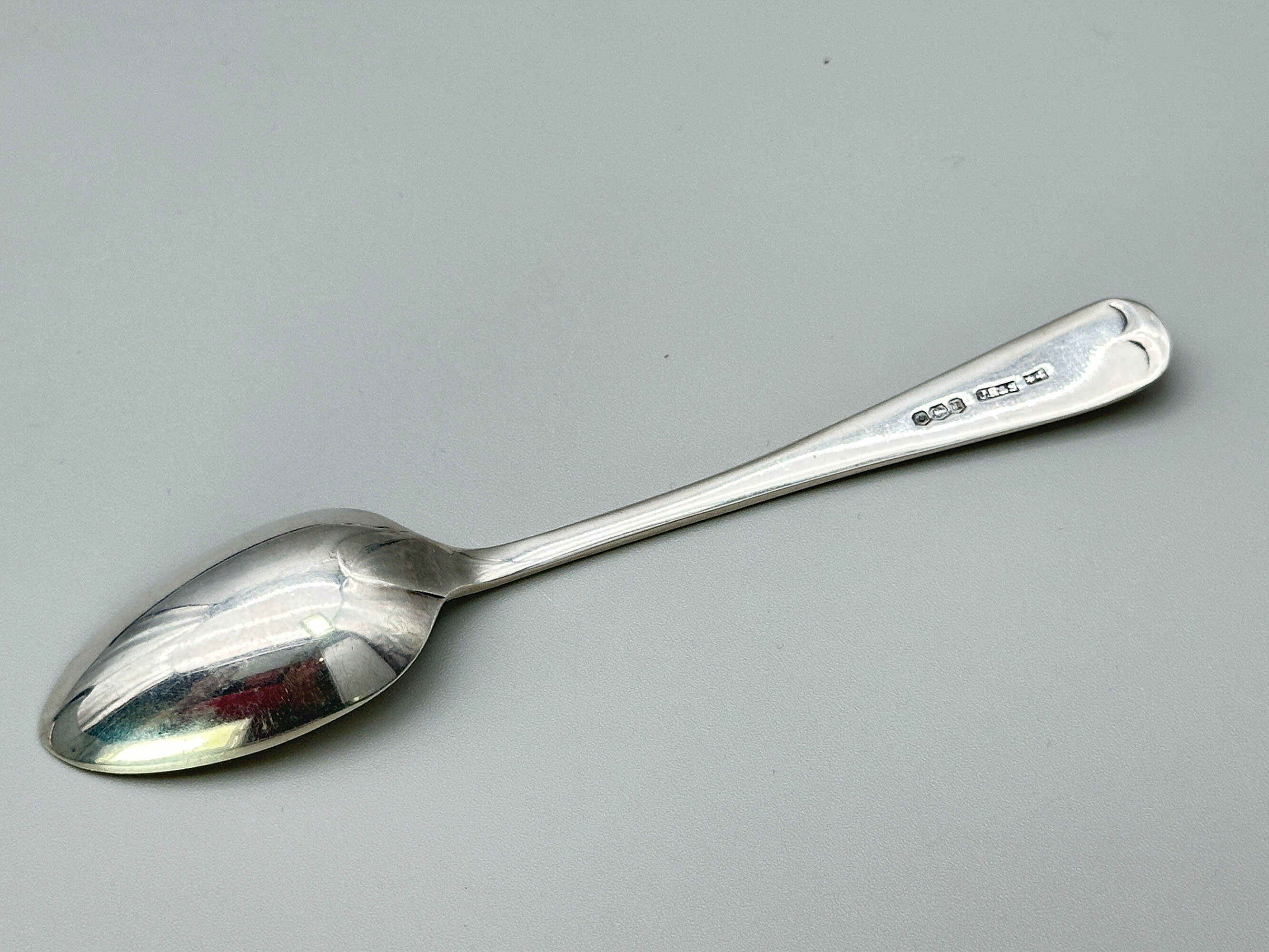
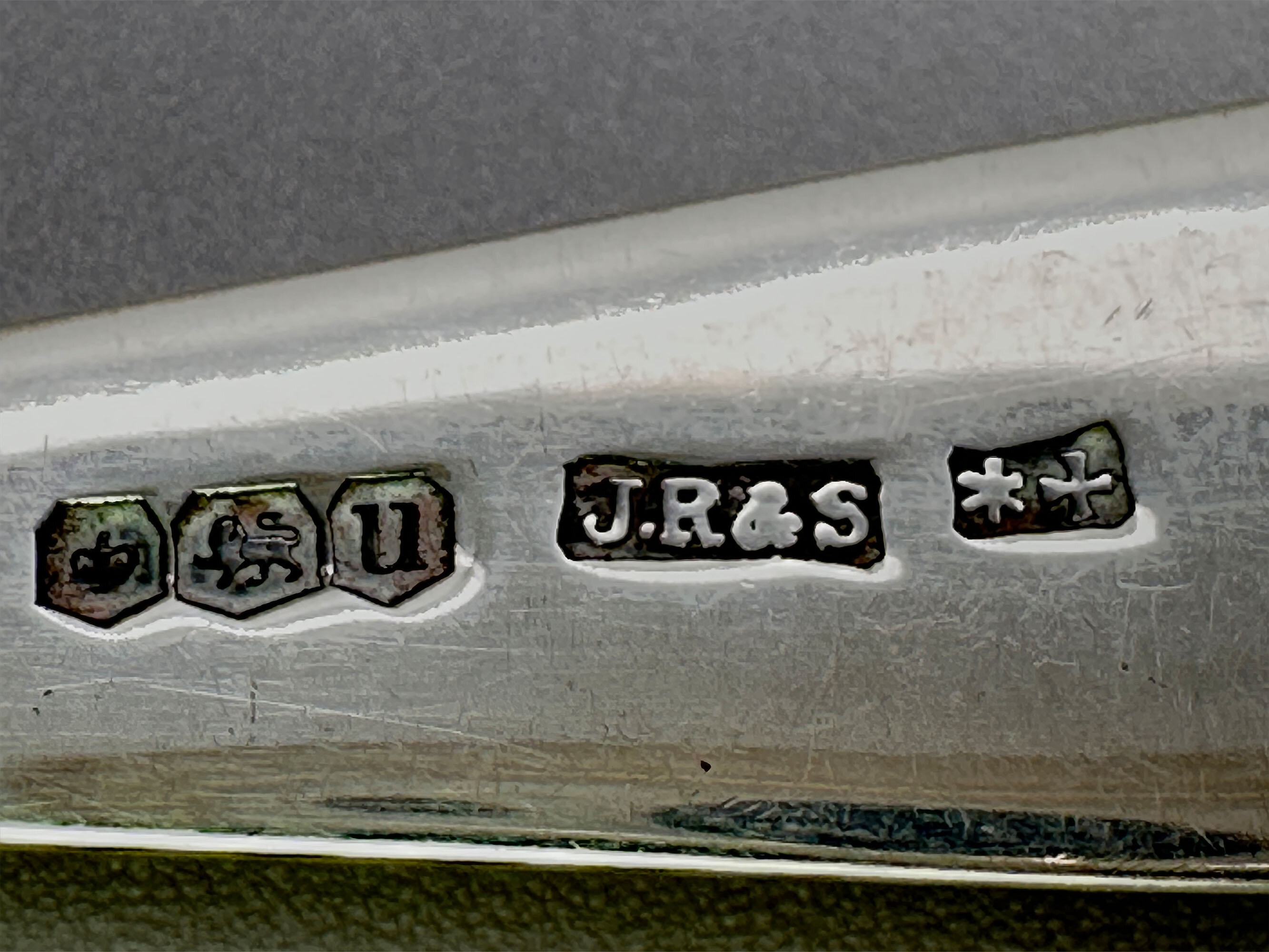
(G) A silver teaspoon with a narrow oval polished bowl joined to a plain handle flaring gently outwards towards the rounded end, the top with an engraved design of a man playing bowls, the reverse with hallmarks (i) the assay mark for Sheffield (ii) a lion passant (iii) date code letter ‘U’ (iv) manufacturer’s mark ‘J.R&S’ for J Rodgers & Sons Ltd accompanied by a star and a maltese cross which was the firm’s trademark. English Bowling Clubs in the early years of the twentieth century regularly commissioned silverware either to be used as dining or canteen cutlery during their social meetings or to be presented as prizes. The slightly utilitarian design of this spoon suggests the former but this cannot be established for certain. Whichever club commissioned this piece, they went to a well established firm of silversmiths. J Rodgers & Sons Ltd was one of Sheffield's most celebrated cutlery and silver manufacturers with a history of manufacturing dating back to the early eighteenth century when John Rodgers founded the firm in 1724 subsequently to be joined his three sons, John, Joseph and Maurice. The firm held the Royal Warrant continuously since the reign of George IV and continued in business until the early 1980s. Cutlery was one of their specialities and this spoon, dateable by its mark to Sheffield 1937, is a modest but classic example of their production.
Sizes
(A) Spoon length (max) 12cm, Bowl 3cm x 3.5cm (max), Handle length 8.5cm, width 2.2cm (max)
(B) Spoon length (max) 11cm, Bowl 2.4cm x 3.8cm (max), Handle length 7.2cm, width 1.2cm (max)
(C) Spoon length (max) 12cm, Bowl 2.5cm x 3.8cm (max), Handle length 8.3cm, width 1.5cm (max)
(D) Spoon length (max) 10cm, Bowl 1.7cm x 2.4cm (max), Handle length 7.6cm, width 1.7cm (max)
(E) Spoon length (max) 11cm, Bowl 2.2cm x 3.5cm (max), Handle length 7.5cm, width 1.5cm (max)
(F) Spoon length (max) 11.2cm, Bowl 2cm x 3.7cm (max), Handle length 7.5cm, width 1.2cm (max)
(G) Spoon length (max) 12.8cm, Bowl 2.5cm x 4.4cm (max), Handle length 8.4cm, width 1.2cm (max)
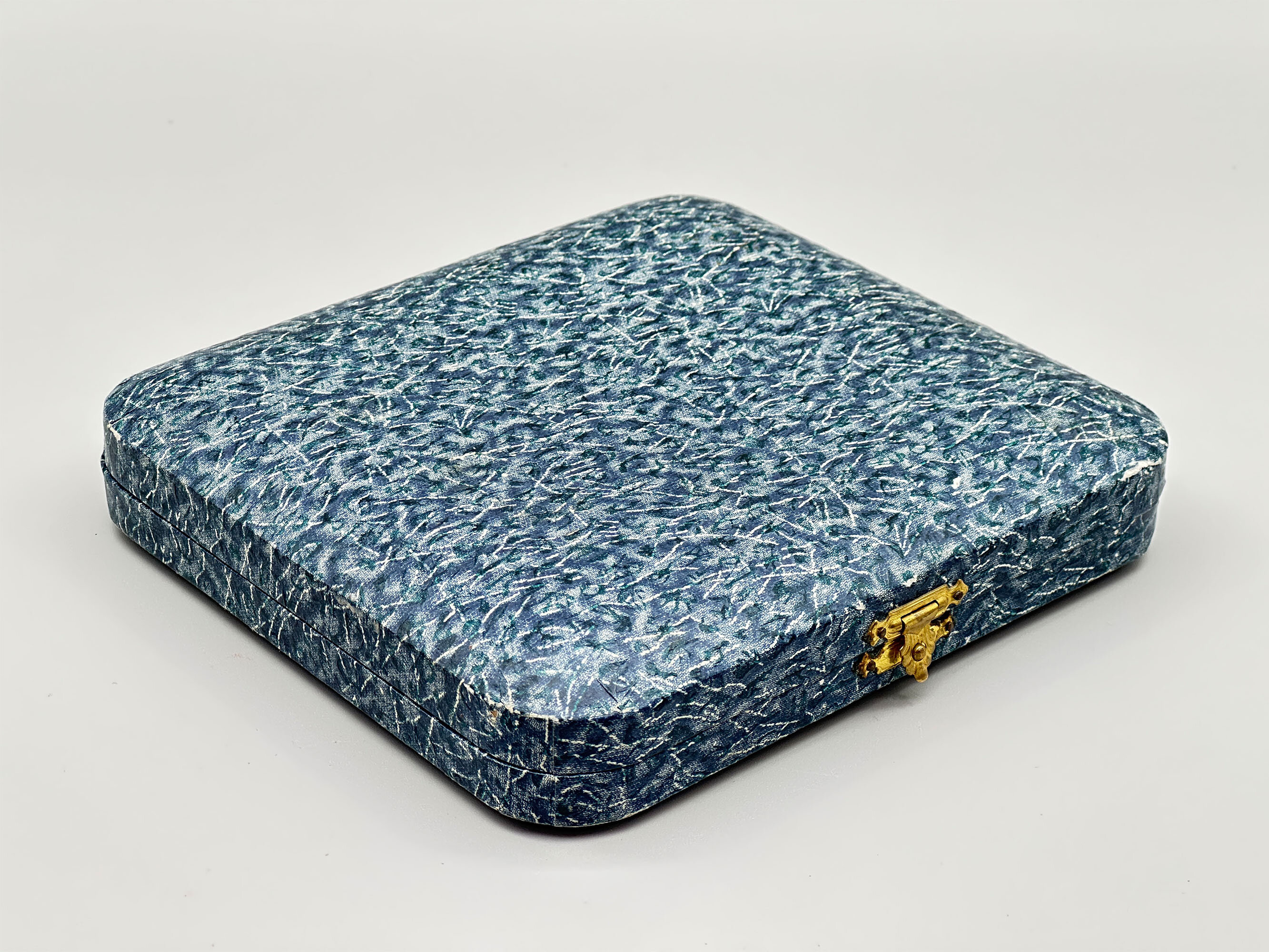
Box : 16cm x 14.5cm x 2.8cm
| Size: | See catalogue description |
| Weight: | (A) 25gm (B) 10gm (C) 10gm (D) 10gm (E) 15gm (F) 10gm (G) 10gm Overall 290gm |
| Date: | 1880-1950 |
| Condition: | Good condition, no issues |
| Estimate: | £150 – 200 |
Global shipping is available. We use standard Royal Mail Tracked and Signed For service.
If you would like a quote for the shipping cost please email us at shipping@intercollector.com.
Please see our Terms and Conditions Section 13 for more details.
Dispatched usually within 5 working days from receipt of payment.